
 by
by Why the church isn’t meant to be a spectator sport (based on a sermon by Lucas Johnson)
Every Team Needs Every Player
Think about the movie Ocean’s Eleven for a moment. Each member of Danny Ocean’s crew had a specific skill essential to pulling off their elaborate heist—the explosives expert, the tech guy, the con artist. Not everyone could be the explosives expert, and they wouldn’t succeed if they tried.
Or consider the ’90s Chicago Bulls, arguably the greatest basketball team of all time. Michael Jordan was there to win games, Scottie Pippen backed him up, Steve Kerr hit the crucial three-pointers, and Dennis Rodman dominated the rebounds while intimidating opponents. Each player had their unique role.
The same principle applies to your own life—you have specific roles in your family, at work, in your hobbies and organizations. Unfortunately, this understanding of roles and responsibilities doesn’t always carry over to the church.
The Show Must NOT Go On
Too often, the church has fallen victim to the idea that we can just show up for a performance. Someone else sings the songs, a pastor delivers a message (hopefully not too long and with a few laughs), and for at least an hour, someone else watches the kids.
I’ve heard people essentially say: “I just want to slip into the back row of the most entertaining show in town, sit back, feel spiritual, and go home.”
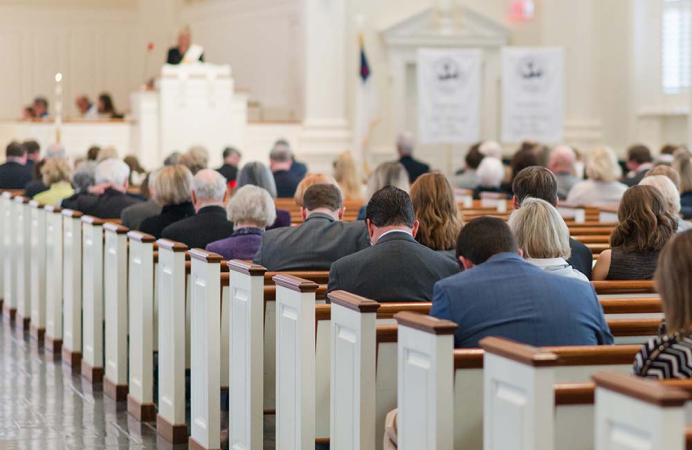
But here’s the truth: God’s plan for the church looks less like watching Ocean’s Eleven and more like BEING Ocean’s Eleven. The church isn’t a spectator sport—it’s an all-hands-on-deck mission.
God’s Distribution System
In 1 Corinthians 12:7-11, Paul explains God’s gifting strategy:
“A spiritual gift is given to each of us so we can help each other. To one person, the Spirit gives the ability to give wise advice. To another, the same Spirit gives a message of special knowledge… It is the one and only Spirit who distributes all these gifts. He alone decides which gift each person should have.”
Paul lists gifts like wisdom, knowledge, faith, healing, miracles, prophecy, discernment, and speaking in tongues. But scholars agree this isn’t exhaustive. Maybe God gave you:
- A great sense of humor that lifts spirits
- The ability to build things with your hands
- A gift for cooking that nourishes others
- The talent to calm even the fussiest babies
Some gifts feel natural—talents we’ve always had that the Holy Spirit enhances as we mature as believers. Others are more supernatural—like worship leaders who discovered musical ability only after baptism, or people with healing gifts whose prayers carry unusual power.
Regardless of whether your gifts feel natural or supernatural, God didn’t give them to bring glory to yourself. He gave them, as Paul says, “so we can help each other.”
The Body Needs Every Part
Paul continues with a powerful metaphor in verses 12-18, comparing the church to a human body. Just as your body has many parts working together, “so it is with the body of Christ.”
The church in Corinth was struggling with gift envy. Everyone wanted the flashy gifts—tongues and prophecy—because they put the spotlight on the individual. But Paul reminds them that’s not the point.
Think about a hurdler in track and field. Every part of their body must work in perfect sync—arms, legs, torso, hands, and feet firing at maximum power and speed. Their eyes track the hurdles and competition, their ears listen for the three-step rhythm (step-step-step-jump), while their cardiovascular system pumps blood, their lungs deliver oxygen, and their liver clears lactate from muscles.
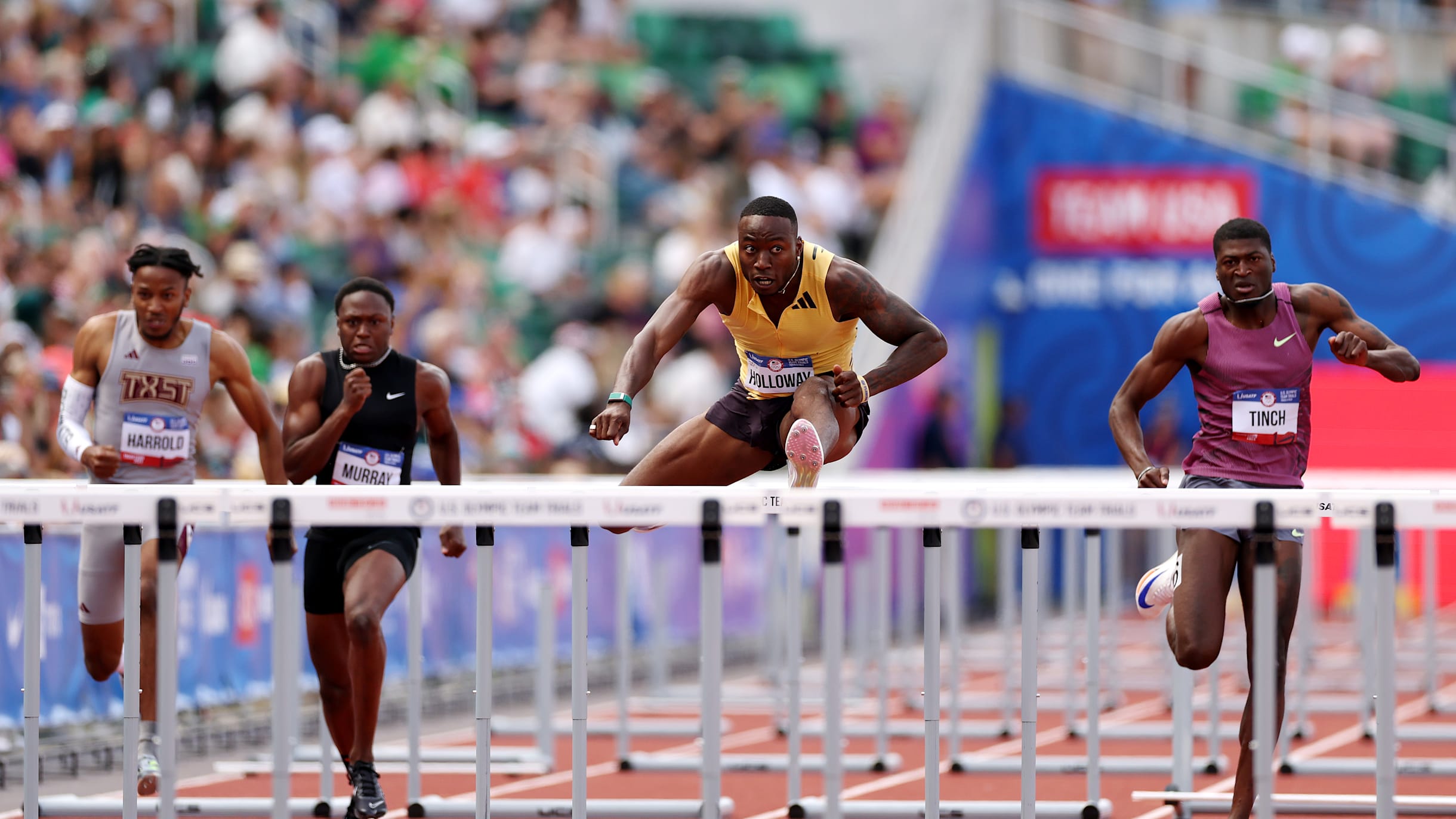
If that athlete breaks their arm and wears a sling, they can’t compete at their best—even though they use their legs to run. If their lungs aren’t working due to asthma, it doesn’t matter how healthy their muscles are. If they lose their hearing, they must relearn everything because they’ve lost a crucial sense.
The feet cannot do what the ears do. The ears cannot do what the heart does. The athlete needs everything working properly.
If this is true for something as relatively insignificant as athletics, how much more true is it for the church? When we come together and use our gifts in unity—not out of jealousy or pride—we don’t look like people watching a show. We look like a well-trained athlete at the top of their game.
And when the church operates in sync, moving fast and powerful and strong, our real competition gets nervous. I don’t mean other churches—I mean what Paul describes in Ephesians 6:12 as “the evil rulers and authorities of the unseen world.” What can they do against God’s church working according to God’s plan?
The Excellence of Love
But there’s something even more important than using our gifts in unity—using them in love. Paul transitions to what many know as the “love chapter”:
“If I could speak all the languages of earth and of angels, but didn’t love others, I would only be a noisy gong or a clanging cymbal.”
We can use our gifts in church and still put the glory on ourselves rather than lifting up the body. We can help others but remain selfish about it. Without love, even our most marvelous works become meaningless.
We should humbly use our gifts to bless the church. Full stop. Not for fame, status, or money—but to bless the church.
Paul defines what this love looks like: “Love is patient and kind. Love is not jealous or boastful or proud or rude. It does not demand its own way…”
This isn’t just wedding material. Ask yourself: Does the way I serve within my church body look like this? Does using my gifts cause me to be impatient, jealous, or impossible to work with? Does it swell me up with pride?
Or maybe more pointedly: What does it say about how I love others if I’m not using my gifts in the church at all?
What Lasts Forever
Paul closes by reminding us why we shouldn’t be jealous of others’ gifts or boast in our own. Eventually, we’ll get something much better. These gifts exist to build God’s kingdom here on earth. When God’s kingdom comes in fullness, we won’t need these building tools anymore—the job will be done, and we’ll be living in it.
“Three things will last forever: faith, hope, and love—and the greatest of these is love.”
Your Role Awaits
God has gifted you in some way to fill gaps in the church that no one else can fill. When we aren’t willing to use these gifts to bless the body, it’s like a block wall missing blocks—it can’t be built very tall or very strong.
The church isn’t here to be the best religious show in town or Jesus’ country club. The church is here to stand up to the darkness of the world and build God’s kingdom.
Even if you aren’t the one singing or preaching, you have a role to play in that mission. God has uniquely equipped you to be an active participant in building His kingdom in a way that only you can.
What gifts has God given you? How is He calling you to use them for the common good?
LISTEN TO OR WATCH THE FULL SERMON HERE:
 Daniel N. Lee