Page 49 of 70

Christianity and Technology

I may have blogged about this before, but it’s been on my mind again recently. It seems to me that the church is lagging behind in this technological age. There have been so many advancements, especially in the area of global communications (HELLO!), that it almost seems like many congregations choose not to keep up.

What worked in the ’50s and ’60s works today, right? Maybe to an extent. But we need to start doing a better job at reaching people where they are.

Facebook has over 400 million users. There are over 25 million on Blogger alone, not to mention WordPress, Tumbler, etc. Twitter has grown exponentially in the last 2 or 3 years.

And most churches can’t even figure out how to make a decent website.

Recent research has shown that more than 2/3 of first time visitors will visit a church’s website long before darkening the front doors. Wake up call, anyone?

But you may argue that the gospel message spread across the world centuries before the internet came along. You would be right about that.

But the first Christians did make use of the latest and greatest technologies available at the time. They used the fastest ships and the nicest roads. They adapted local customs and beliefs to be used in such a way that the gospel became more applicable and relevant.
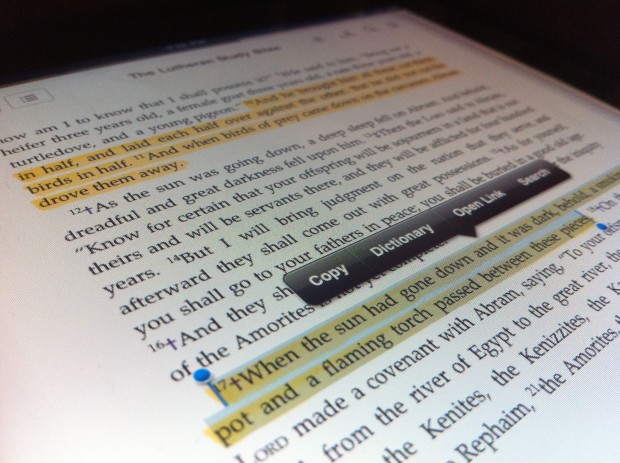
Christians were even at the forefront of arguably the single greatest advancement in human history: the book. The earliest form of the book came on the scene in 1st century Rome. It was called a Codex, and it was to the scroll what the iPad is to the typewriter. It was cheaper to make, easier to use, and much, much more portable – which comes in handy when you are fleeing persecution.

So when churchgoers today argue that we don’t need all this technology in the church and that it’s not an important part of the Great Commission, just remember that the earliest Christians would beg to differ.

Maybe we should try harder at imitating the earliest Christians by using all available means of spreading the gospel to as many people as possible as quickly as possible.

High Five Thursday!

Have you ever been reading a story in the Bible and thought, “Man, if only I could have been there!”

Top 5 Biblical Fly-On-The-Wall Moments

Elemental Escape (Exodus 14:15-31)

How awesome would it be to be standing in the crowd with God on one side in a blazing column of fire while Moses is on the other side blasting an interstate highway through the sea? The chaos, the terror, the power, the elemental forces being tamed and manipulated right before your eyes.

It gives me chills just thinking about it.
_______________

Now You See It… (Joshua 6)

There one minute; gone the next. The impenetrable walls of the mighty Jericho stood before the Israelites in all their pride and glory. After some lovely afternoon strolls around the city, a bit of yelling, and some Louis Armstrong, Jericho was reduced to a pile of rubble and ashes. Well, except for that one brothel.

Americans can’t get enough of destruction films in which the White House, the Capitol Building, and the Empire State building are destroyed by natural (or unnatural) forces, e.g. Independence Day, Deep Impact, 2012, etc.

This would be better than any of them.
_______________

The Original 300 (Judges 7)

Long before Leonidas and his merry band of Spartans held off hordes of Persians, ninjas, and rhinos (???), there was Gideon. He was chosen by God to lead Israel’s armies in a counter strike against the evil Midianites, all 150,000 of them. Israel turns out 32,000 recruits to defend their nation. Even with that they are outnumbered 5-1. Through a series of questions (Are you afraid?), and grueling physical challenges (drink from this stream), basic training narrowed the field to 300 men, armed with nothing more than a pot, a torch, and a trumpet. Sounds like they got their battle strategy from the latest issue of Martha Stewart Living.

Anyway, the part of the story I would love to overhear and see is the conversation between God and Gideon as he explains his whole plan of attack. A saner man would have just walked away, but I guess Gideon was just crazy enough to believe that God knew what he was doing.
_______________

The True Underdog Story (1 Samuel 17)

This is the story to which all other underdog scenarios are compared. The battle of David and Goliath.

We all know the story. The little shepherd boy (who for some reason always looks about 9 on the flannel graph) musters up the courage to fight the giant in a head to head (or head to waist) battle. One little stone goes up, up, up, and the giant comes tumbling down.

The part I wish I were there for is the part we don’t talk about in the children’s songs or Sunday school. After Goliath falls, David runs up, takes Goliath’s ginormous sword and beheads the not-so-friendly giant. Like a boss.
_______________

Seeing is Believing (John 20:24-29)

This scene has always fascinated me. We know that Jesus experienced a physical resurrection, yet his body no longer seems to be bound by the laws of physics. He still eats and drinks, he still walks and sits down, but he can also walk through walls or something. Not quite like Casper, but somehow able to appear and disappear in the blink of an eye.

Well, the apostles are all gathered together behind closed and locked doors (rough neighborhood?), but this time, Thomas is with them. As if on cue, Jesus appears and shows Thomas his battle scars. I’m not so interesting in seeing the resurrected Christ. I don’t need to see to believe. I’m more interested in the physical, spiritual, and emotional response given by Thomas. His is the most sincere and profound confession in all the gospels. “My Lord, and my God.”

Father

For you did not receive a Spirit of slavery to fall back into fear, but you received the Spirit of adoption, by whom we cry out, “Abba, Father!” Romans 8:15

This has been one of my favorite verses for quite some time. I love the contrast between those who cry out “Abba, Father” in this verse as opposed to those who cry out “Lord, Lord” in Matthew 25.

But I have been a father for just over 6 months now. And let me tell you (just as any new parent would) that having a child of my own has illuminated this view of God. My son cries out, I come to the rescue. He hits his head, I comfort him. He smiles at me, and my heart melts.

This is how God is with us.

Jesus repeatedly refers to God as “Father,” not just in the sense that he was literally God’s Son, but in the sense that God is the Father of all those who would be his children.

I can empathize with some of the fears, doubts, and frustrations that a new Christian might face. But God is not looking to catch them red handed when they mess up. Instead, God is there to nurture them like a Father cares for his newborn son.

I know this is nothing new in thought. But it’s a completely new experience for me.

Easy Green Tip of the Week

Since having a kid, it seems our laundry has increased many times over. Which is fine now, but a few months ago, it was driving us crazy! Which leads me to this week’s eco-tip:

Clean Out Your Dryer Vent

Our dryer was broken. Or so we thought. It was taking close to 2 hours to dry a load of wet clothes! It was frustrating to no end.

Then one day I got the bright idea to check the hose. It was fine. But the vent was being choked up by about an inch thick layer of lint. Doh!

Long story short, it took about ten minutes to correct a problem that had been driving us crazy for months. We were just a couple laundry days from going all “Office Space” on that dryer.

Crisis averted. We are no longer wasting loads of energy and loads of time just to dry a load of laundry. You can have all the energy stars you want on your dryer, but if the vent is clogged, it won’t make a lick of difference.

Now that the weather is starting to warm up, take ten minutes to check your dryer vent. It’ll save you energy, time, and potential trips to a psychotherapist.

Presence

I’ve started reading the book God’s Pursuit of Man by A.W. Tozer. The first chapter is called “The Eternal Continuum.” In it, Tozer points out something that most Christians take for granted, really to our own spiritual demise.

We get that God is the eternal I AM, as he told Moses back in the day. He was and he will be. He is self-created, self-sustained, and all-powerful. He always has been, and he always will be.

This is easy for most of us to get. We can look into the past and see what he has done. We can see how he pulled us through that struggle or that hardship. He healed a grandparent, he protected our neighbor from the storm, he provided when there seemed to be zero resources. It’s easy for us to retroactively see how God works in our lives.

It’s also easy to have faith that he will work in our lives again. He will get me that job, he will bless that mission effort, he will take us where we want to ultimately end up. We have no problem dreaming up a future in which God is an active reality.

The trouble comes when we are unable to see what God is doing in the present.

Yes, God has always been and always will be. But more than that, he always IS. He’s the I AM. God is always a present reality.

It’s a good exercise to remember the ways in which God has worked in your life previously. And it’s highly commendable and appropriate to envision God’s work in your future plans. But it’s much more critical to be able to stop for a moment and live in the present.

This moment.

This breath.

This heartbeat.

This is the only true time we have in which to experience God. Right now.

Take some time throughout your day to reflect on how God is working in the present. Through that movie. Through that book. Through this friend. Through Facebook. Through your coworker. Through the words on this screen.

Why has God brought you to this place at this moment? What is God doing right now?

God is eternal. This life is not. But the kicker is that the present is the only point at which the eternal intersects this finite world.

What is the Great I AM doing in your present? This moment is the only time in which you are guaranteed to fully experience the power of God.

Jesus Called Them One By One

My wife and I were talking the other day about how to make the Bible more relatable to teenagers. The go-to Characters seem to be Joseph, David, and Timothy. These three started out their journey with God early in their teen years. But after awhile, these stories tend to lose their novelty and their impact.

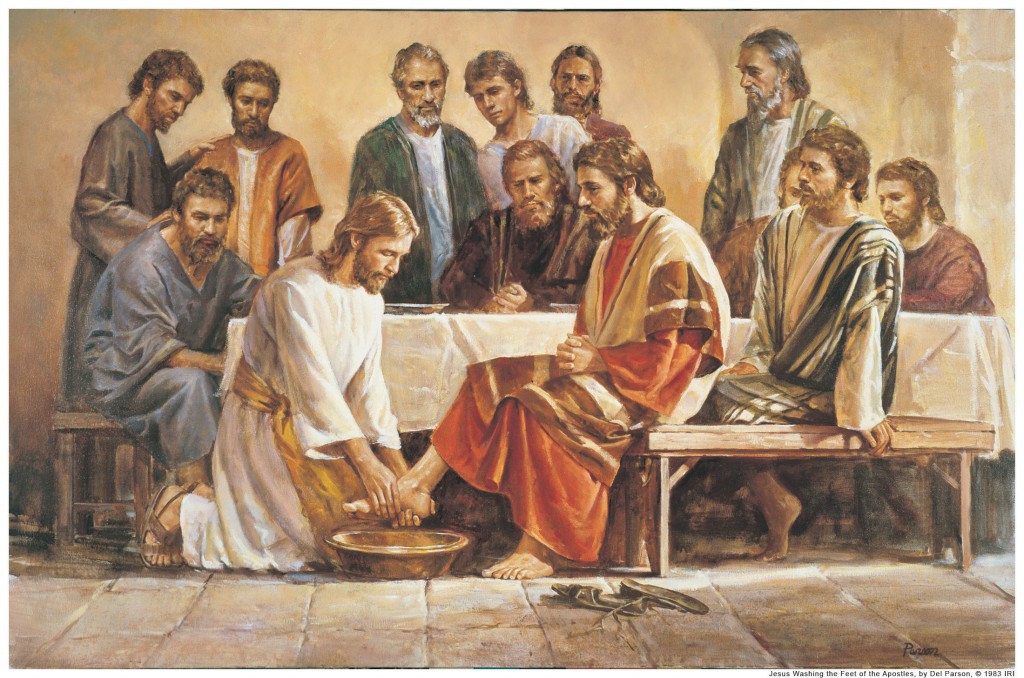
Then we got to thinking, what about the apostles? Most of our lives, we have viewed Jesus and his apostles like this:

Not only are they white (??), but they’re all old. Two even have gray beards!

But really, how old would the first disciples have been? Probably between 17-25. Barely old enough to have beards, much less gray ones!

Peter and Matthew were probably the oldest, given that Peter was married and Matthew was an established tax collector. But the others were probably not much older than high school seniors when Jesus called them. Jesus himself was only about 30. Why would he go calling disciples as old or older than he was?

Even Paul was probably not much older than 25 when he was called.

Granted, a 17 year old in 1st century Palestine was not exactly the same as a 17 year old in 21st century suburbia. But the simple realization that many of the disciples and many of Jesus’ friends (Lazarus, Mary, Martha, and others) would have been in their late teens or early twenties makes the story of Jesus that much more accessible.

Yes, Jesus said, “Let the little children come to me.” But he also called teenagers and young adults.

High Five Thursday!

APRIL FOOLS!

As many of you know, tomorrow is April 1st. This means that countless numbers of people will fall victim to some type of practical joke…and then become a hit on YouTube. I admit that I get a kick out of watching others become fodder for laughs and humiliation, but it’s no so fun when you’re the victim.

That’s the unfortunate thing about practical jokes. Someone is always singled out.

The guys at Improv Everywhere, however, are masters at the victimless practical joke. Wanna see what I mean?

Top 5 Improv Everywhere Missions

[You can click on the titles to see the whole setup and behind the scenes action or go to improveverywhere.com]

Best Buy

______________

Star Wars Subway Car

______________

Suicide Jumper

______________

Human Mirror

______________

Frozen Grand Central

Are You There, God?

[My wife and I had a conversation about this the other day. She had some really good thoughts that got me thinking more about the subject. She’s pretty amazing like that.]

Faith.

It seems simple enough. I can look around at the world and the universe and know in my gut that someone had to be behind it all. I can read the Bible and believe it’s claims that the Creator of the universe wants to have a relationship with me. My heart tells me that I am loved and that I am a part of something much greater than myself.

But what happens when the love I have for my Creator doesn’t feel requited.

What are we to do when everything around us is darkness and chaos, yet God is silent?

“If God would just speak to me like He used to speak to people, it would all be better. I would be able to fully trust and believe Him. Since I would know exactly what He wants me to do, I could better follow and serve Him. Just talk to me, God!”

I think most of God’s people think something like this sooner or later. It seems like a legit complaint. There are times when God seems distant and all we want is to hear His voice. If He would just speak to us, then everything would somehow get magically better.

But would it?

Humanity doesn’t have a very good track record when it comes to direct contact with our Creator.

Adam and Eve lived and walked with God in the garden. They still ate the fruit.

Noah was saved directly by the hand of God. He still passed out drunk and naked.

Abraham was God’s chosen man through whom He would bless all peoples of the earth. He still lied…twice.

Moses was in almost constant contact with YHWH for 40 years. He still had an anger problem.

David was anointed by God to be king. He still became a murderer, adulterer, and a liar.

Elijah was God’s chosen prophet by whom Ba’al was defeated. He still battled depression.

God told Jonah exactly what he was supposed to do. He still ran in the opposite direction.

Are you noticing a trend? Whether or not God speaks directly to you, that won’t make you any less human. It won’t make you any less angry, or afraid, or stubborn. It won’t magically make all your problems disappear.

Let’s look at one more example.

At the end of John’s gospel, we get to listen in on a conversation between Peter and the resurrected Christ.

Peter, do you love me unconditionally? [agapao]

Yes, Lord, I love you like a brother. [phileo]

Peter, do you love me unconditionally? [agapao]

Yes, Lord, I love you like a brother. [phileo]

Peter, do you [even] love me like a brother? [phileo]

Yes, Lord, you know I love you like a brother. [phileo] (John 21:15-17; my translation)

Peter was staring God in the face, looking into the very eyes of the Creator of the universe, and could not bring himself to say that he loved him unconditionally. He could only say that he loved him like a brother.

Fast forward a few decades. Peter is now writing a letter to Christians scattered across Asia minor. They were most likely 2nd generation Christians by now, far removed from Jerusalem and the time of Jesus. All they have to go on is the stories and testimonies of others. They haven’t seen Jesus or heard the voice of God. Look what Peter writes:

You love him unconditionally [agapao] though you have not seen him. And though not seeing him now, you believe in him and rejoice with inexpressible and glorious joy…” 1 Peter 1:8

Talk about swallowing your pride. I can bet that Peter never forgot that conversation with Jesus on the shoreline. He was looking right at the resurrected Christ and couldn’t say that he loved him unconditionally. But now he is commending these Christians on their faith. They love him unconditionally even though they never even saw Jesus.

I can imagine some tears welling up as he pens those words.

Peter would be the first to tell us that hearing God’s voice directly doesn’t make it all better. It doesn’t take away our faults and our frustrations. It doesn’t replace heartache with happiness.

Only full submission can do that.

Peter wrote a few verses earlier that through God’s power, we have already been given everything we need for life and godliness. We just have to listen.

Merciful Punishment: Reflections on the Good Judge

It’s sad but true. To the average person, even the average Christian, YHWH of the Old Testament and Theos of the New seem to be two completely different persons. Most associate the God of the OT with rules and regulations who dished out wrath and punishment if disobeyed. Meanwhile, they view the God of the NT as a God of love and forgiveness who tosses grace and mercy like candy flung from a float in the Independence Day Parade.

I will grant that God’s dealings with humans seems to be a bit more direct and immediate in the days of Moses and Elijah. But is His character really that different? Some of His punishments do seem a bit harsh, but is there more to them than just the surface level understanding?

The teacher of the adult class on Sunday morning briefly mentioned the infamous Bathsheba incident. David rapes and impregnates the wife of his friend and officer. To cover it up, he has him sent to the front lines and killed, thus freeing himself to take Bathsheba as his own wife. Adultery, murder, lies–doesn’t he know the Big 10?

Anyway, God calls David out through Nathan the prophet. Caught red handed. Nowhere to run; nowhere to hide. David said it himself that he deserves to die. So God strikes him dead then and there.

Wait…no he doesn’t. The punishment is carried out on the child. This is enough to get most people stirring in their seats. Is God really a baby killer? Egyptians, sure. King Herod, of course. But God?

This bothered me. It still bothers me. But God is God and I am not. His ways are higher than my ways.

Let’s take a deeper look into this punishment. Is there any mercy in it?

Yes.

If God had killed David instead of the baby:

  • Israel would be without a leader. Division would run rampant and would certainly tear the country to pieces. That happens later, but Israel wouldn’t come close to the golden era of Solomon.
  • Bathsheba would be a widowed single mother. She would have nothing. Begging or prostitution would likely be her only options to support herself and her child.
  • The child would have grown up with the label of the king’s bastard child and the son of a whore. Any hope of having a normal childhood and making any sort of living for himself would be a long shot to say the least.
But God, in His infinite wisdom, chose to spare David’s life and take the child. So the baby got to go directly to heaven (I believe baby’s are innocent, so when they die, their souls are automatically taken to be with God). Bathsheba became a queen instead of a widow. The nation of Israel continued thrive under their greatest king to date. Bathsheba gave David even more sons, one of whom became heir to the throne and ushered in Israel’s golden age.
Okay, so this is one example in which God’s punishment is also infused with mercy. But there are many, many more.
  • God could have struck Adam and Eve dead on the spot and started all over. But He killed animals in their place to make proper clothing to cover their shame and nakedness. They still lived a long life outside of the garden, started a family, and still remained close to God.
  • Cain killed his brother in cold blood. Rather than taking a life for a life, God put a mark on Cain and sent him away. But further reading reveals that Cain eventually got married, started a family, and established his own city.
  • When Israel began its conquest into the promised land, God was essentially using them as a tool for carrying out His punishment against the Canaanites. Yet if the land’s inhabitants would simply believe in the power of YHWH and repent, God was more than willing to spare their lives. Hence, Rahab and her family were the only Jericho survivors.
God is called the righteous judge because His sentences, His punishments, are naturally infused with mercy. Next time you read through the Law and the Prophets, look for the mercy within the narratives of wrath and punishment. You’ll be surprised by what you find.

Easy Green Tip of the Week

Bottled Water? Really?

In my opinion, there is no greater testament to the convenience-oriented, consumeristic society in which we live than bottled water. It’s easy, it’s cheap, it’s disposable, and it’s much better for you than sodas, right?

It’s water, folks!

I will admit, before I give the wrong impression, that if I am out and I get thirsty, I will buy the occasional bottle. But you won’t see my wife and me at the grocery store lugging 24 packs into our cart. Most of the time, the water from your tap is just as clean and filtered, if not more so, than your average bottle of water. In fact, many times it is bottled straight from municipal water sources! These companies are charging literally thousands of times the cost of tap water, for the same product.

Don’t even get me started on the damage done to the water table and the amount of plastic that winds up in the ocean because of the bottled water craze….

In the documentary Tapped, a spokesman for Dasani is interviewed. Coke pumps its water for Dasani straight out of the Atlanta municipal water supply, by the way. This guy is trying to make Coke’s product look better than tap by calling it a “healthy alternative.” I think the average person would interpret that to mean tap water is unhealthy, wouldn’t you?

Long story short: Buy a bottle. Fill up at home. You’ll save $$$$, and you will make less of an impact on the environment.

But what if your tap water does taste weird? Ours does here in Searcy. So we simply bought a Pur water filter that fits right on the faucet. One filter lasts close to three months and costs under about $7. In that same three months, we could have bought a 24 pack of bottled water every week and wasted roughly $50.

It’s a no brainer in my opinion.