12 Days of Christmas
Some of you may have heard it already, but Straight No Chaser has a Christmas album out that has my favorite version of “12 Days of Christmas.” Here it is if you want to hear it.

Understanding God, Ourselves, & the World Around Us
Some of you may have heard it already, but Straight No Chaser has a Christmas album out that has my favorite version of “12 Days of Christmas.” Here it is if you want to hear it.
Day 3: Tue 11/18/08
Tel-Dan:
When thinking about historically/biblically important cities and/or archaeological sites, the ancient city of Dan might not make the top of your list. However, as I found out today, it is actually very important for several reasons.
First, from the archaeological evidence in the layers of the city, we can tell that there were three distinct times when the city was completely destroyed and then rebuilt. The first dates back to the time of the Exodus/ Conquest of Canaan (ca. 13th Cent. BC). The second dates back to the 11th Cent. BC, which lines up perfectly with the biblical account of the tribe of Dan’s moving from southern Israel to the northernmost territory and destroying the city of Lashish. The third destruction layer dates to the approximate time of the Assyrian invasion of Israel.

Secondly, it confirms the account in the Old Testament of King Jeroboam’s construction of two cult centers for Israel, one of which was right here in Dan. The remains of the foundation for a large altar have been discovered, along with the foundation of what could have been a replica of Solomon’s Temple in Jerusalem. This is where the inhabitants of the Northern Kingdom would come and make sacrifices to an image of a golden calf, similar to the one built by Aaron at Mt. Sinai.
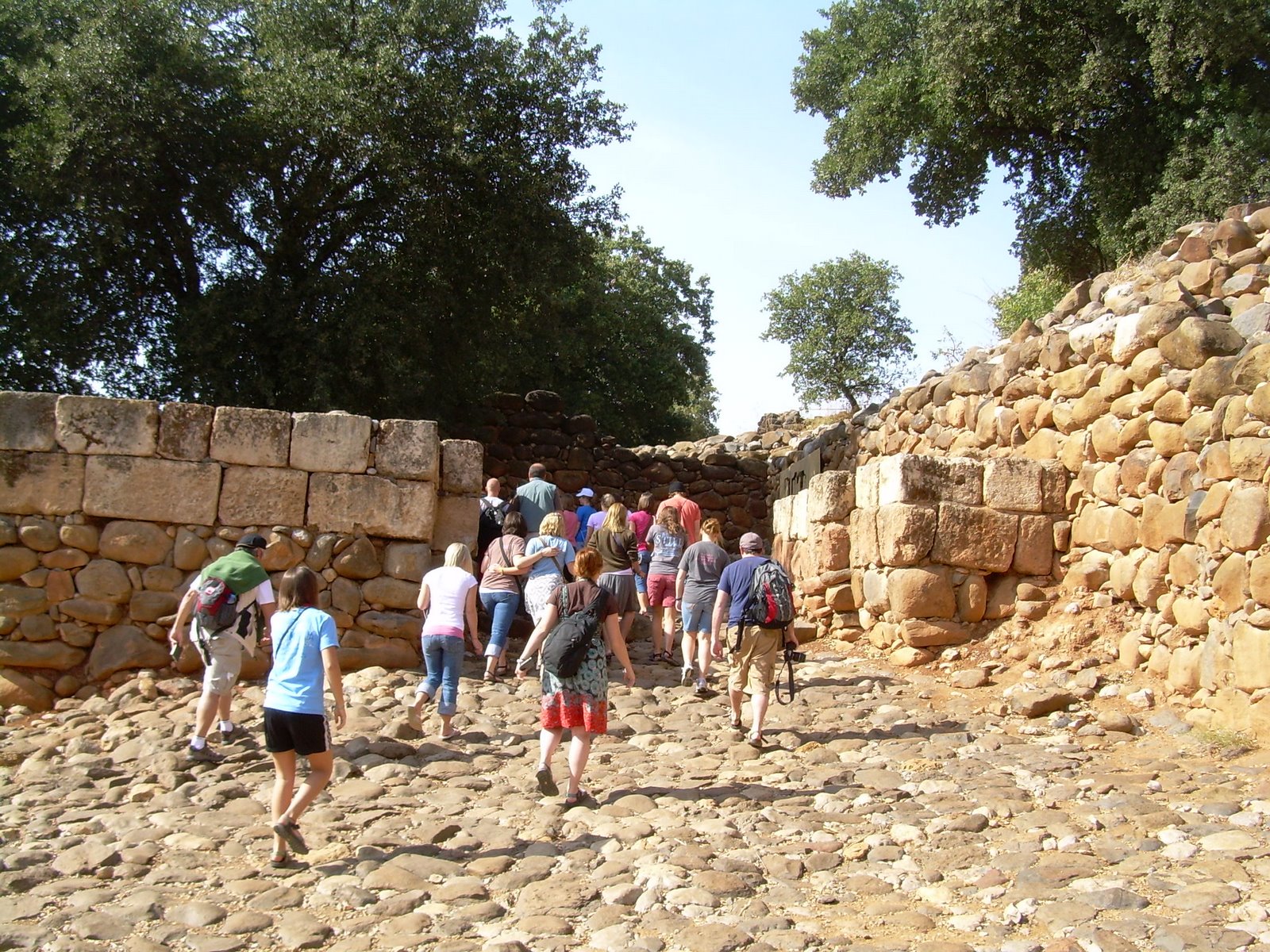
Thirdly, this city gives insight into the strategy involved in developing an ancient city. Three key ingredients to insuring the life of a city are water, fertile land surrounding the city, and a major trade/ travel route nearby. The location of Tel-Dan has all three. The city was built along the larger of the two tributaries which make up the Jordan River, flowing down from Mt. Hermon. The land surrounding the city is some of the most fertile land in Galilee. Also, there is a major trade route which was used to carry goods from the Mediterranean Sea all the way in to Damascus in order to avoid the mountainous region to the north.

The Nature Reserve around the city is one of the more beautiful places in all of Israel. There are trees and shrubs, vines and wildflowers, all flourishing around the rushing waters which flow into the Jordan.

Another amazing discovery near Tel-Dan is part of a wall from the time of Abraham. In fact, Abraham most likely saw and walked through the gate in the wall which has been preserved for nearly 4000 years. This section of the wall/ gate also contains one of the oldest arches in the world.
Tel-Dan has been one of my favorite historical sites thus far simply because it has shed so much light on some stories of the Bible. It has really brought life to the Old Testament.
Some of you may have heard it already, but Straight No Chaser has a Christmas album out that has my favorite version of “12 Days of Christmas.” Here it is if you want to hear it.
Day 2: Mon 11/17/08

Bethsaida:
This was the home town of Peter, Andrew, James, and John. It was a small fishing town off the coast of the Sea of Galilee with a population less than 800. I say “was” because Bethsaida is one of the three cities in which Jesus preached that is no longer a city. Bethsaida, Capernaum, and Korazin are the three towns that Jesus actually prophecies against because of their unbelief, and none of those three towns are functioning cities today.
One of the coolest parts about the site is the location. From the hill upon which the town was located you can see the Mount of the Beatitudes, the Mt. of Tiberius, Capernaum, and most of the rest of the Sea. I would like to have seen it in the days of Jesus.
Sea of Galilee:
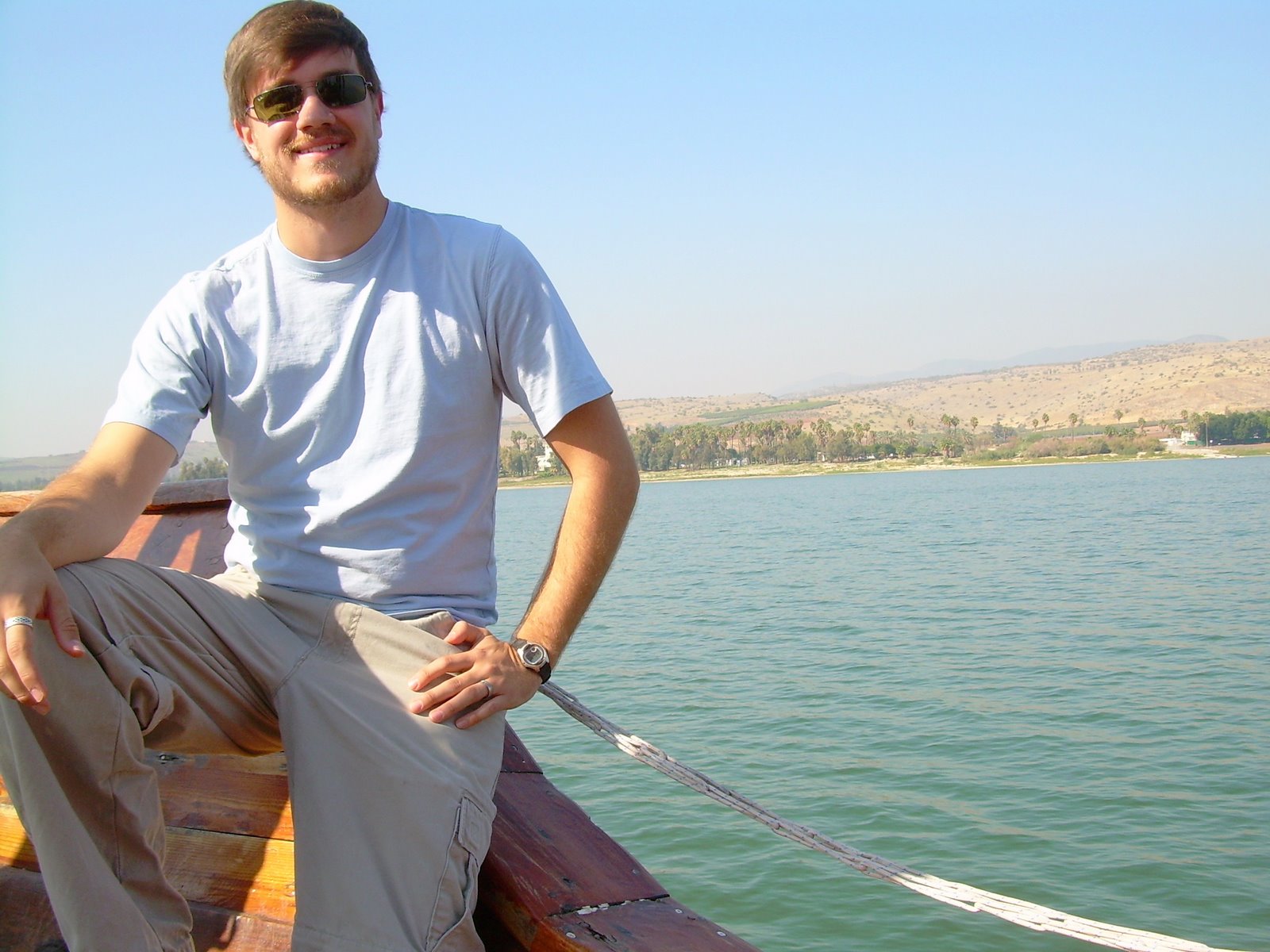
After seeing Bethsaida, we went down to the Sea of Galilee and were able to take a boat out onto the water. The feeling of being out on the very Sea that played such an important role in the ministry of Jesus was incredible. Words cannot accurately describe how awesome it was. All the Sunday school stories were flying through my head: Jesus calming the storm, walking on the water, preaching offshore in a boat, crossing the Sea to the mountains on the opposite side to find some privacy, telling the disciples to cast their nets on the other side of the boat, visiting the Sea and cooking breakfast after his resurrection. The Sea of Galilee and the surrounding cities played such a major role in his ministry that it’s difficult to even list all the events that took place in and around the Sea.
The boat ride itself was really fun. When we first set off from shore, the crew raised an American flag alongside the Israeli flag and played the national anthem, which was kind of cool. The crew also let us sing some songs and have a devotional time out on the water. After that one of the crew members gave us a fishing demonstration with the same type of net that would have been used in the first century. We didn’t catch anything (and we tried both sides), but it was still cool to see how these nets worked.
Back on shore, we went inside a small museum dedicated to the so-called “Jesus Boat.” It is the remains of a 2000 year old boat which was miraculously well preserved. It dates back to ca. 50BC, and was most likely still in use up until the Romans marched through Israel in the late AD 60s. It is speculated that this boat may have belonged to one or more of the disciples, like Peter or James. We know that very few fishermen could actually afford their own boats, much less one as large and as top-quality as this one. We do know, however, that Peter was living in the more up-scale town of Capernaum. We also know that James and John were the sons of Zebedee, who was a wealthy enough fisherman to have hired hands working for him. It’s possible that this 2000 year old boat could have either belonged to one of those families, or it could have at least been a boat in which Jesus road or from which he preached.
The Sea of Galilee may not be that large, but what it lacks in size it more than makes up for in beauty. The way the water and the surrounding mountains come together is an inspiring sight to behold. I can see why Jesus liked this area so much.

Capernaum:
There are really two main features among the ruins of Capernaum: Peter’s house and the Synagogue. Capernaum is one of those three towns which is no longer functioning as a town and stands in ruins as Jesus prophesied. We do know that it was in use for a few hundred years after the time of Jesus because of the synagogue which was built in the early 4th Century AD. This synagogue was actually built directly on top of the synagogue in which Jesus would have preached in the town on several occasions.
The most famous feature of Capernaum by far is the house of Peter, in which Jesus healed Peter’s mother-in-law. This is one of the few exact spots in Galilee of which we are completely sure that Jesus was there. We know this because after only a couple generations a shrine was set up in that exact location. Peter’s house, right off the Sea of Galilee, was well known to all the disciples and many of the early Christians, so not enough time had passed for the exact location to be forgotten.
Today, there is a Catholic church constructed virtually hovering above the foundations of the house. Thankfully, we can look below the church building and see the whole foundation of the house. Ironically, the Catholic church holds Peter to be the first “Pope,” yet the very fact that he had a mother-in-law disqualified him from actually being a priest, much less the Pope.
Mt. Tiberias:
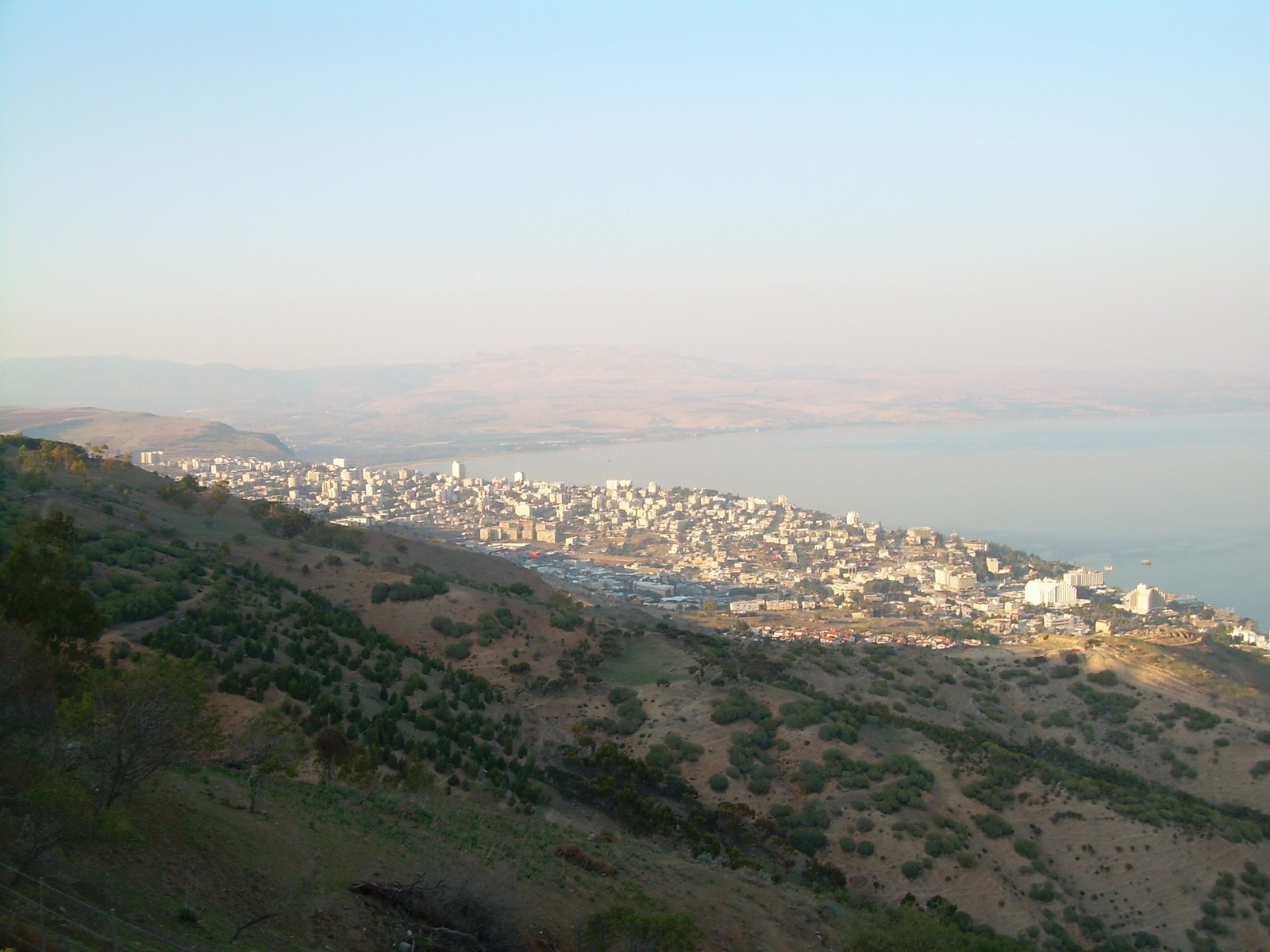
This mountain is the only lookout point (at least the only one accessible in the Israeli side) from which the entirety of the Sea of Galilee can be seen. Interestingly, the forest on the top of the mountain through which we hiked is called the “Switzerland Forest” because the majority of the funds to put in the trail and the lookout were provided by Jews who emigrated from Switzerland.
The view from the top is spectacular to say the least. By the time we got to the lookout point, the water was beginning to turn all shades of deep blues and purples. The sky around us was mellowing softly, and the breeze was blowing through the trees. It was fitting that our guide, Yosi, played a song for us on his flute that was inspired by the beauty of this region.
Mt. Tiberias overshadows the city of Tiberias, which is the largest city on the Sea of Galilee. If you remember, the Sea is called the Sea of Tiberias at many points in the gospels. The city, the mountain, and the Sea at one point were all named in honor of Emperor Tiberias who took over after Augustus. Bernice, sister of Felix (governor of the region in Paul’s day), had a palace in Tiberias. She, like many tourists today, made the city on the Sea her winter home because the climate is more tropical along the coast of the Sea. According to our guide (and Josephus) she was the most evil woman to ever step foot in Israel. I won’t go into great detail as to why he said that, but I just found it interesting.
“Mount of the Beatitudes”:
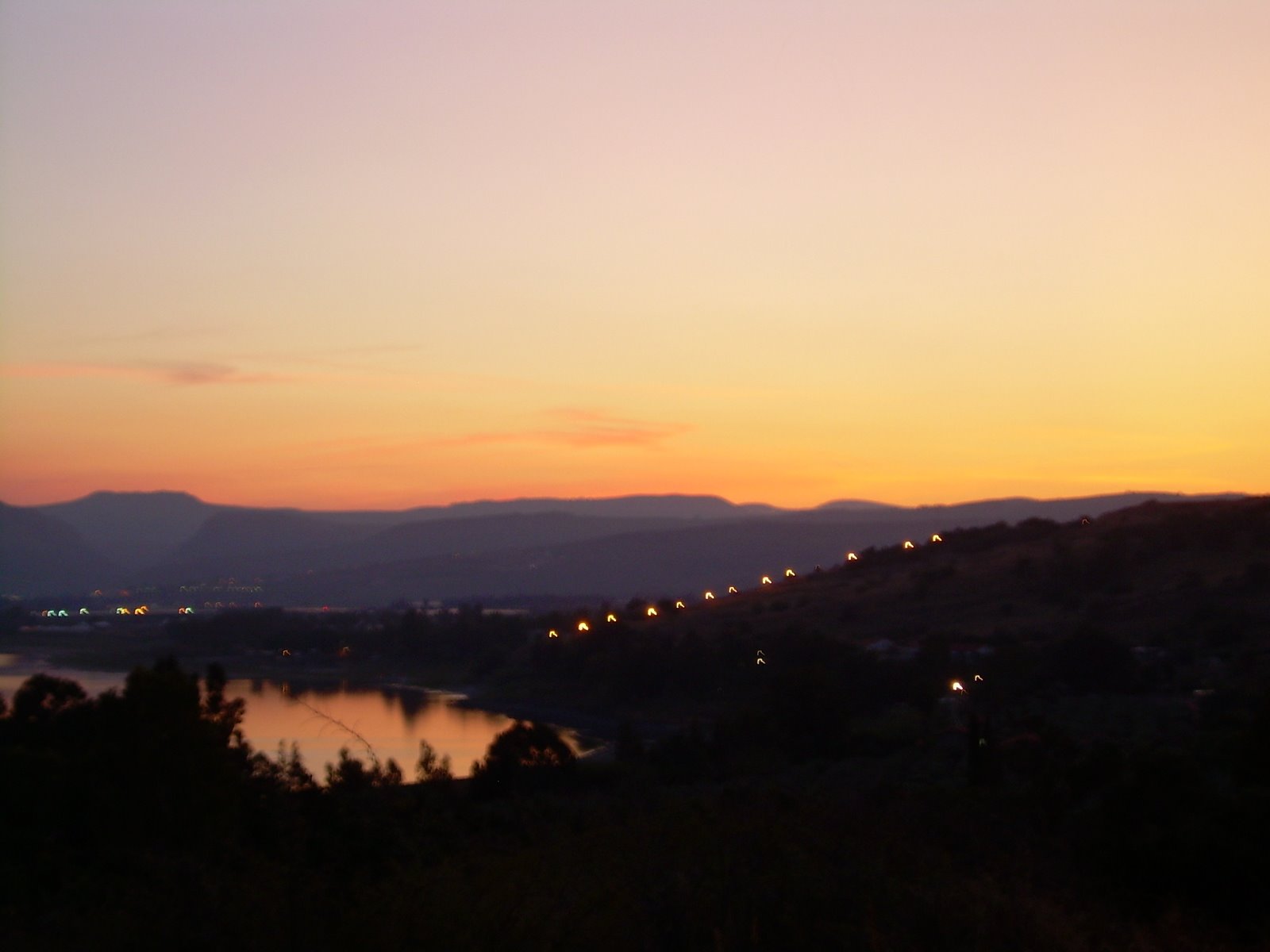
Our last stop of the day was on the Mount (hill, really) where Jesus delivered his famous Sermon on the Mount. We arrived at sunset, which was absolutely phenomenal. As the sun was dipping below the hills, we read from Matthew 5-7 in the possible location where Jesus would have given the sermon. A more perfect scene could not be set.
The way the hill is set up, it makes sense why Jesus chose this spot. The shoreline at the base of the hill is flat for about 100 yards or so. From there it rises sharply upward for about 30 feet and then levels off again for a couple hundred yards. This explains why Matthew records the sermon as taking place on a hill and Luke records the sermon as being given on a level place. It’s both, really.
Anyway, there were some key parts of the sermon that resounded more resiliently in the actual context of even modern day Israel; sayings like, “Blessed are the peacemakers…” or “Seek first the kingdom of God and His righteousness…” There is still much fighting going on between Israel and her neighboring States over land and borders. The Jewish people are still caught up in an unhealthy sense of nationalism, which I believe could parallel that of the 1st Century. Jesus was basically telling them to stop fighting, stop worrying so much about the politics of everything, and pursue those things which are more important. Be peacemakers, not rebels and rioters. Seek God’s kingdom, not the kingdoms of man. It’s a lesson the Jews needed 2000 years ago, it’s a lesson they need today, and it’s a lesson that American Christians also need to take to heart.
Day 1: Sun 11/16/08

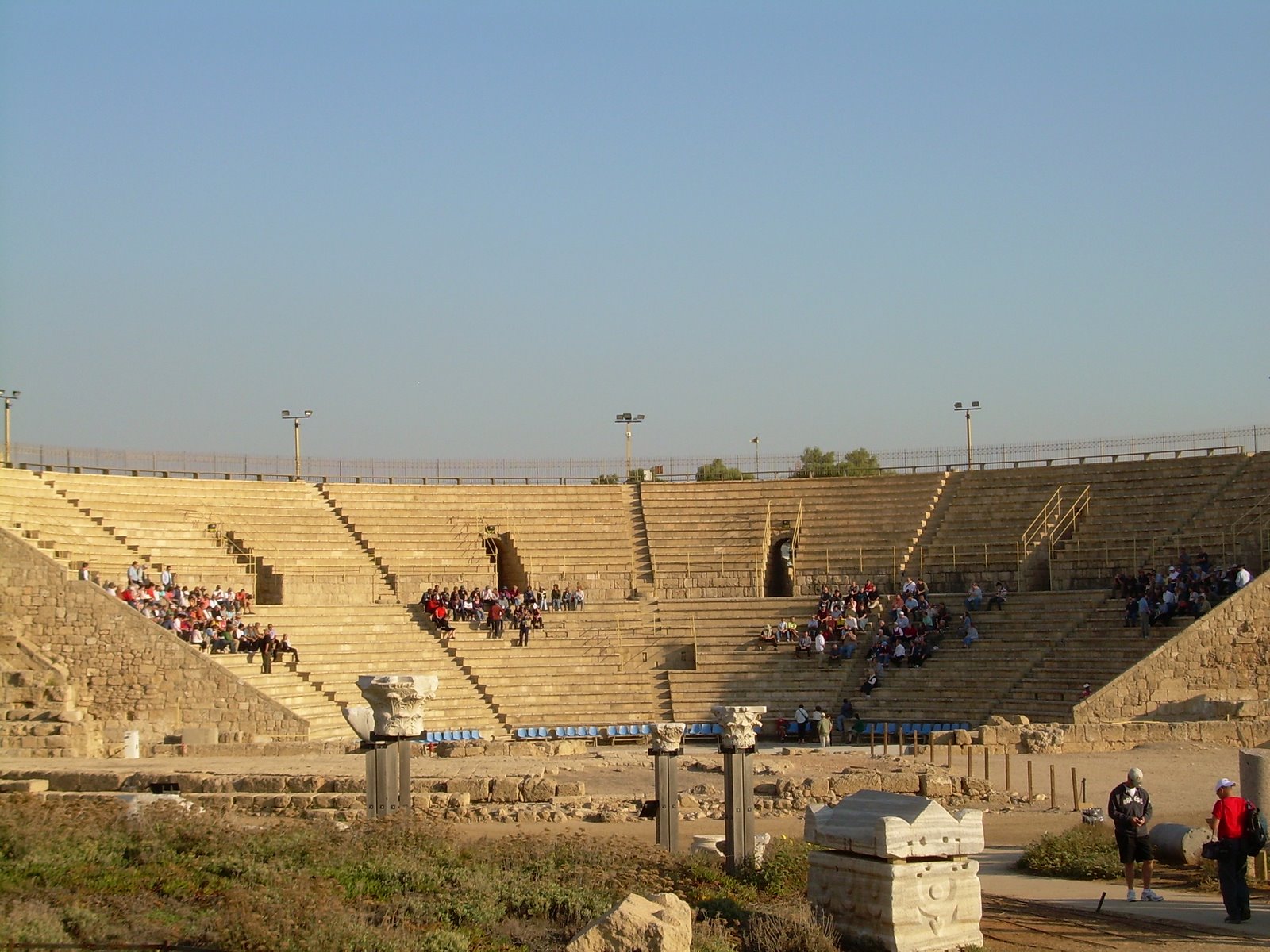
Caesarea Maritime:
The first stop on our journey through the Holy Land was Caesarea Maritime, the famous port city established by King Herod the Great, as well as the location of Paul’s trial before being sent to Rome (Acts 25).
We learned a lot about Herod the Great. As far as his kingship goes, he was a very successful leader. He remodeled the Temple, he built great palaces and fortresses (e.g. Massada), and he also constructed the first and largest man-made port in ancient Rome in the city of Caesarea. Politically, he had a very successful run. Morally, however, he was a vicious man. After marrying his wife and bearing two sons with her, he decided that anyone in the bloodline of the previous royal family had to die because they were seen as threats to his throne. Thus, he had his wife and sons murdered. When Caesar Augustus heard this news, he is recorded as saying, “It is better to be one of Herod’s pigs than one of his sons.”
This is the same king, as you might recall, that had all the baby boys in the Bethlehem region killed when he heard that the new “King” of Israel had been born. He was both paranoid and power-hungry…not a good combination.
We also learned that he may have had leprosy (a conclusion reached based on the number of bathhouses in the areas he lived) and possibly even some sort of elephantitis (speculation drawn from the asymmetrical shape of his thrones).
Caesarea is a beautiful city located directly on the coast of the Mediterranean Sea. In fact, it was the largest coastal city in the Roman Empire. There are still remains of a Roman hippodrome, a good size theater, Herod’s palace, a Byzantium church, and a mosque, just to name a few of the highlights.
We were able to stand in the place where Paul gave his defense in front of Governor Felix and Herod Agrippa, after which he made use of his Roman citizenship and appealed his case to Caesar in Rome. He didn’t have to do this. In fact, Governor Felix would have set him free. But by appealing to Caesar, Paul got a free trip to Rome, by way of shipwreck in Malta, and was able to plant seeds of the gospel in the very heart of the largest empire the world has ever known.
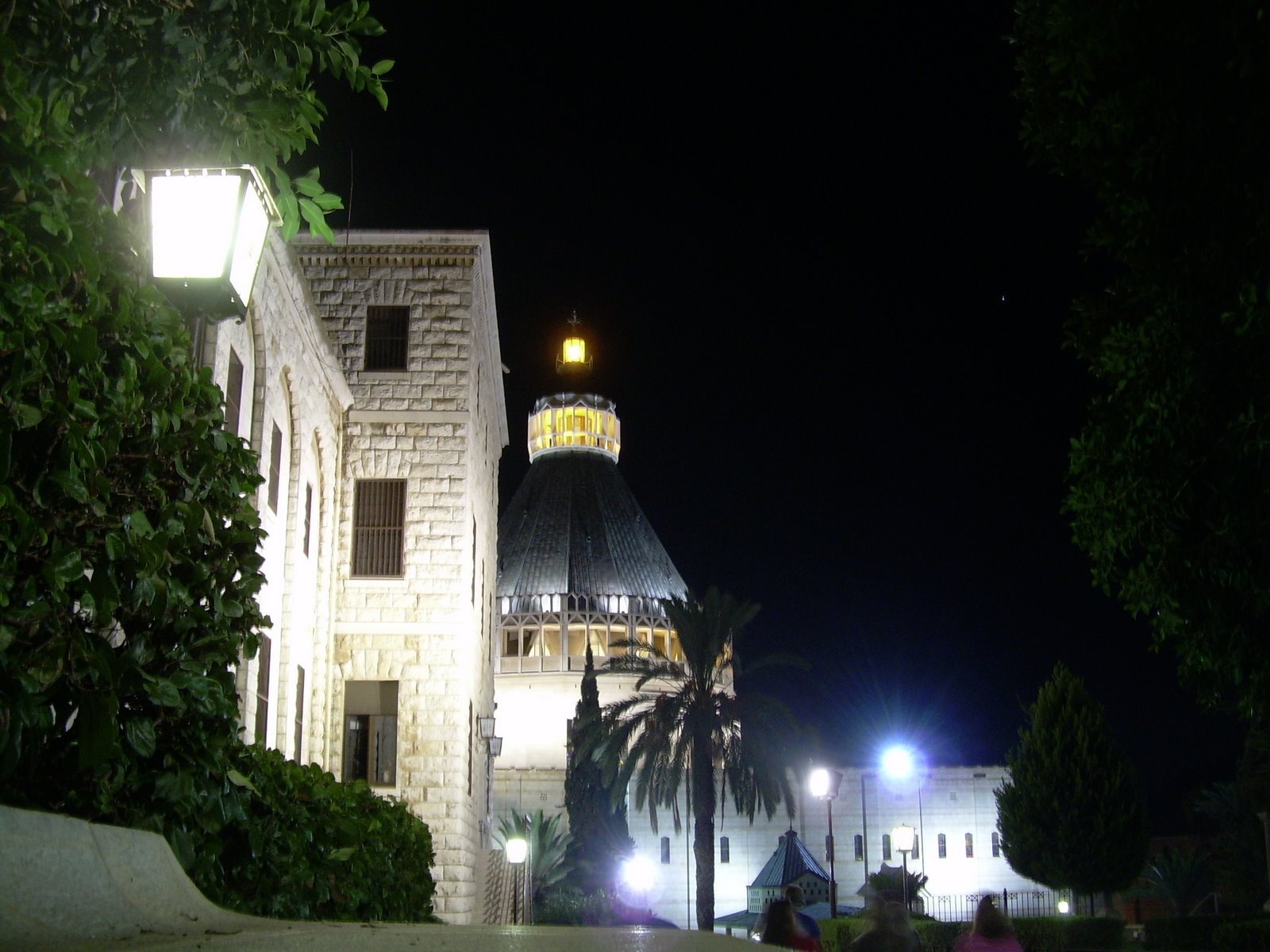
Nazareth:
By the time we actually got to Nazareth, it was already dark, and we were very pressed for time. But we did have a chance to walk quickly through the Church of Annunciation, at least one of them. The Greek Orthodox have one and the Catholics have another in a different location. I believe the one through which we walked belonged to the Greek Orthodox. It is a massive, beautiful structure built on top of the ruins of the supposed home of Mary where the angel Gabriel announced to her that she would conceive and give birth to the Messiah.
We didn’t get a chance to see many of the ruins of the ancient town, but from what our guide told us, there isn’t a whole lot to see anyway. The main remnants of the town consist of cisterns, wells, and storage rooms dug into the ground and into caves. Archaeologists suspect that there would have been no more than about 800 citizens of Nazareth in Jesus’ day – talk about a town where everyone knows everyone. This is the town where Jesus lived, played, worked, and built his first relationships. It’s no surprise that when he came back after the start of his ministry that his own people had a hard time accepting what he had to say. He was nothing special, at least in their minds. He was the son of a carpenter and a woman who, to the best of their knowledge, had an affair before she was officially married. His family wouldn’t have been the most well-respected, and he was the laughingstock of the community when he came back and tried to preach to them.
One thing I find amazing, though, is the fact that Jesus is from the lineage of King David. When Philip asked, “Can anything good come out of Nazareth?” he was unaware that the seed of King David had come from the small town in the middle of no where.
It’s not that Nazareth was a “bad” town, it just wasn’t strategically located, to say the least. There is no major trade route around, there is no great source of water nearby, and virtually none of the surrounding land is good, fertile soil for growing food. It couldn’t have supported a large population, and the only reason it has grown so much in recent years is due to the Christian influence in the city.
It was a great experience to be able to worship at the Church of Christ in Nazareth. The minister, Maurice, opened the building for us, prepared the Lord’s supper, gave a fifteen minute talk, and even had a Q&A session at the end. It was incredible to hear his testimony. When he converted from the Greek Orthodox Church, his entire family turned their backs on him. He lost his job, he was out on the streets, and the church took him in. He has a great passion for the scriptures, for God, and for Christ. It is his goal to reach out to his neighbors in the community, even in the face of persecution from many of the Muslims in Nazareth. (FYI: Nazareth has the largest Arab/Muslim population in the entire state of Israel)
As my friend, Jon, pointed out in his thoughts before the Lord’s Supper, it was incredible to be gathered in the very place where God became flesh and blood, and it is the very flesh and blood of which we partake that gives us spiritual life. Amazing.
Well, 3 plane rides, 6 hours worth of layovers, and one 30-hour day later, I am back in the United States.
I must admit, I am going through a bit of reverse culture shock. America is so different than any place on earth if by nothing more than the fact that we have by far the most diverse population demographics. I was used to looking around Greece and seeing Greeks. I looked around Italy and saw Italians. I looks around Israel and saw Jews and Palestinians. Not a whole lot of diversity around, save the tourists (like us). But when I look around America, I see people of all descents, races, nationalities, ethnicities, religions, color, body build. So much diversity leads to a very unique way of doing things.
Here are some of the key differences I see between America and the rest of the world:
These are just a few observations I wanted to share from my time overseas. While it is difficult to make the transition back to the American way of life once again, I did get to have Sonic for dinner last night and Cracker Barrel for breakfast this morning. When you spend that much time away from your home country, you start missing some things very strongly. You also dread going back to the things you definitely did not miss.
There is also a list of things I will miss from Europe and some things I’m glad to get away from:
I wouldn’t trade my experiences for anything in the world. I feel like this semester has been a turning point in my life – spiritually, politically, emotionally, mentally, etc. My eyes have been opened to another world outside the bubble that is America. I have been to the other side and back. I have walked through some of the most disputed land on the face of the earth. I have traveled deep into the Muslim world. I have wandered through the wilderness in the dark. I have traveled from the Middle East to the United Kingdom and have used 6 different types of currency. I have encountered 9 or 10 completely different cultures and have been shaped by each one. I feel that I am no longer bound by the short-sighted American lenses through which I viewed the world. I thank God for this experience and will definitely use it to the glory of his kingdom.
Well, 3 plane rides, 6 hours worth of layovers, and one 30-hour day later, I am back in the United States.
I must admit, I am going through a bit of reverse culture shock. America is so different than any place on earth if by nothing more than the fact that we have by far the most diverse population demographics. I was used to looking around Greece and seeing Greeks. I looked around Italy and saw Italians. I looks around Israel and saw Jews and Palestinians. Not a whole lot of diversity around, save the tourists (like us). But when I look around America, I see people of all descents, races, nationalities, ethnicities, religions, color, body build. So much diversity leads to a very unique way of doing things.
Here are some of the key differences I see between America and the rest of the world:
These are just a few observations I wanted to share from my time overseas. While it is difficult to make the transition back to the American way of life once again, I did get to have Sonic for dinner last night and Cracker Barrel for breakfast this morning. When you spend that much time away from your home country, you start missing some things very strongly. You also dread going back to the things you definitely did not miss.
There is also a list of things I will miss from Europe and some things I’m glad to get away from:
I wouldn’t trade my experiences for anything in the world. I feel like this semester has been a turning point in my life – spiritually, politically, emotionally, mentally, etc. My eyes have been opened to another world outside the bubble that is America. I have been to the other side and back. I have walked through some of the most disputed land on the face of the earth. I have traveled deep into the Muslim world. I have wandered through the wilderness in the dark. I have traveled from the Middle East to the United Kingdom and have used 6 different types of currency. I have encountered 9 or 10 completely different cultures and have been shaped by each one. I feel that I am no longer bound by the short-sighted American lenses through which I viewed the world. I thank God for this experience and will definitely use it to the glory of his kingdom.
It’s hard to believe, but our time here in Greece is almost up. We leave tomorrow morning, flying out of Athens to Rome to begin 13 days of travel through Europe. Along the way we will see Rome, Florence, Pisa, Paris, Dublin, Edinburgh, Glasgow, and London. It’s going to be a lot of fun but very stressful at times. Please keep us in your prayers for the next two weeks until we get back home to Columbia.
I will try to update all about Israel and free travel when I get back home.
God bless.
PS – I added my calendar to the bottom of the blog page so you can see what’s coming up on the schedule and when we’ll be where.
I don’t have time right now to update much about Israel, and I can’t guarantee that I’ll get very far this week with finals and everything coming up. Just so you know what’s coming, here’s a list of all the places/sites we visited on our trip through the Holy Land:
Yeah, we saw all these in only 9 days. It was one crazy trip. I can’t wait to share my experiences with you.
Olympia was definitely my favorite place on the Southern Greece trip. It was extremely beautiful, there were trees that were actually changing colors, and it was really the first time all semester that it actually felt like fall. I loved it there.
We started by going to a really cool museum where we got to see lots of amazing statues (Like Hermes, and Nike) and some really cool artifacts, like weapons and armor dedicated to Zeus. Speaking of Zeus, he was the patron god of Olympia (even though it is no where close to Mt. Olympus). The Olympic games, which were held every 4 years, were dedicated to Zeus. The Temple of Zeus, which is now mostly in ruins thanks to earthquakes, used to house the great statue of Zeus, one of the 7 wonders of the ancient world. Unfortunately, like all but one ancient wonder the Statue of Zeus is now destroyed. We got to see a really nice artist’s rendition of it, though…
The site of ancient Olympia was one of the prettiest places I have been in Greece. It was just a perfect day to tour the site. We saw a couple gymnasiums, the Temple of Zeus, an old basilica dating to the 4th Cent. AD, and the Temple of Hera (Zeus’ wife) where they light the Olympic Torch every 4 years.
At the end of our tour we came to the famous Olympic Stadium…more like dirt track/field. This was not the first Olympic track, technically. This one was built in order to accommodate larger crowds and more participants, but it’s close enough. We were able to race on the track, which was a lot of fun. We ran it like they would have back 2500 years ago…no, not naked…down and back one time – winner takes all. It’s 192 meters one way, and four of us, including myself, ran it in 60 seconds or less. I loved it.
____________
Well that pretty much wraps up the Peloponnese trip. Highlights: Acrocorinth, Citadel of Mycenae, Theater of Epidaurus, and the Olympic Track
Next on the agenda is a recap of our trip to Israel. I can’t wait to share my experiences with you.
 Daniel N. Lee