Page 60 of 70

Epidaurus Health Club and Resort

Epidaurus (Epidavros in Greek) is basically set up as an all-inclusive health club and resort. This is where wealthy Greeks would come for treatment of certain diseases or just to obtain better overall health. The patron god of this town was Asclepios, the healing god. His priests were also doctors at the resort. I call it a resort because it wasn’t really a town of its own. Very few people actually lived there. Most people only came for short periods of time (a few months at most) and lived in hotel rooms of sorts.

They had everything there – Roman-style baths, gymnasiums, a track, a theater for entertainment (the most well-preserved ancient theater in the world, I might add). The theater was a masterpiece, accoustic perfection. Our tour guide gave a demonstration to show us just how amazingly sound could be carried. I and several others went to the very top of the theater and could hear everything as if our guide were just a few feet away. We could hear him crumple and rip a piece of paper, whisper, even breathe. It was incredible.

If you were sick back in the day, this was definitely the place to be. You would be pampered, spoiled, and entertained until whatever ailed you eventually left.

I do find it interesting that the Greeks had a practice of making plaster molds or small sculptings of whatever body part wasn’t well and they presented that as an offering to the god Asclepios. They have found thousands of stone or plaster eyes, ears, noses, fingers, hands, feet, and certain other body parts which I will leave unnamed. I guess in the days of the early church, “miraculous” healings were promoted by the priests, but it was a big deal when Paul, Peter, and other apostles could actually do it.

Citadel of Mycenae

Yet another fortress on a hill. We see a lot of those in this part of the world, and don’t worry – there are plenty more to come.

Mycenae is one place I had been looking forward to seeing for a long time. Anyone familiar with the works of Homer or the movie Troy will recognize this as the home of the Greeks who waged war on Troy. They were very much a warrior society, with gigantic fortress walls, elaborate tombs full of votive weapons, not to mention being the victorious in one of the most famous battles in history that may not have happened…

Regardless of the accuracy of Homer as an historian, the Mycenaean civilization left behind a lot of good stuff for modern archaeologists to oogle at. The most impressive of which is definitely the Lion Gate in the “Cyclopean Wall”. It is called the Cyclopean Wall because when the classical Greeks first stumbled upon this citadel, they thought that there was no possible way humans could have built such a wall out of such large stones; therefore, it must have been built by the cyclopese (these are the same Greeks which said, “Man is the measure of all things.” How’s that for irony…). The famous Lion Gate is named such because for the two large bodies of lions carved into solid stone and placed above the lintel piece in the gate. I was impressed with this even after seeing the Great Pyramids.

The Mycenaeans also had interesting burial chambers. They were basically gigantic underground domes. The pressure of the soil above the dome actually held it in place. In fact, the dome of King Agamemnon’s Tomb (which actually pre-dates him by a couple centuries) was the largest dome ever built until I think the time of the Romans.

When all is said and done, I would not want to be on the side against the Mycenaeans in a battle. They ruled, and they ruled well. They were not afraid to raise up an army in a moment’s notice. They were also the main civilization ascribed as ancestors to the mainland Greeks, and were responsible to developing and passing on their religion and theology (mainly through the Homerian tradition). I really enjoyed walking around the citadel of this great civilization.

Nafplion – another fortress on a hill…I’m sensing a trend

Nafplion and the Fortress of Palimidis:
To be honest, although this is one of the more interesting hilltop fortresses which we have visited, it has absolutely nothing to do with ancient Greece or anything biblical (the two main focuses of all our tours thus far). The fortress itself was not even constructed until the middle ages and saw a lot of action during the skirmishes and quarrels between the Ottoman Turks and the Venetians.

This fortress, also called Acronafplion, would be a great setting for a giant game of paintball, or even hide-and-seek. The structure sits atop a hill overlooking the Sea to one side and the city of Nafplion to the other. This was a very strategic location for a fortress like this because it is basically on the other side of the isthmus from Corinth, a major trade route from Southern to Northern Greece.

It was really nice to just be able to have about 30 minutes of free time to walk around this gigantic structure exploring all the side rooms, prison cells, etc. The view from the top was absolutely beautiful. Coming down, though, was not so fun. The main way down from the hill is a series of nearly 900 steps to street level. Awesome workout for the quadriceps…

What Happens in Corinth Stays in Corinth

Well, I have completed my recap of our journey through Egypt. Some of the highlights: Abu Simbel, Great Pyramids, Luxor, Nile Cruise, breakfast at our tour guide Osman’s home. Some of the not-so-highlights: night trains from Cairo to Aswan and then Luxor to Cairo, the nasty Zoser Hotel. I know there is much more I could write about, but I feel like I have hit the main protions of our trip and must move on to tell about our trip down to the Peleponnese.

Corinth:
Our first stop on the excursion through Southern Greece was the famous (more like infamous) city of Corinth. Honestly, this has been one of my favorite ancient Greek cities…go figure. Corinth is a town where Paul spent 18 months evangelizing. It was a thriving port city located on the narrowest point between two Seas. Amazingly, before the canal was built they had a system set up to actually pull large merchant vessels out of the water, drag them across the 10-mile stretch of land, and deposit the ship on the other side. These days they have a canal built between the two where several from our group bungee-jumped.

Anyway, we got to see several cool structures in Corinth, like the remains of Apollo’s Temple, the bema where Paul gave his defence before the men of the city, the ancient road leading down to the Sea, and Acrocorinth.

Acrocorinth was a fortress/temple area situated on a moutain overlooking the city. We were able to hike to the top and see the gorgeous view from the old fortress walls. We also ate lunch on the foundations of the Temple of Aphrodite, the goddess of love, who was the main goddess of the city. Her priestesses were also temple prostitutes. It was explained to us that the prostitution/worship did not actually take place on top of Acrocorinth, but rather in the cult centers throughout the city. This was a sailor town, so think Amsterdam mixed with Las Vegas. To quote Obi-Wan, “You will never find a more wretched hive of scumb and villainy.” It’s amazing to me that even in a town with as little moral conscience as Corinth, the church thrived. Albeit, they most certainly had their share of problems, but the letters to the church in Corinth make much more sense in light of the moral compass (i.e. paganism, fornication, etc.) of the city.

Eucharistia (Thanksgiving)

My God and my Lord,
Father of mankind, and Creator of all,

Thank you. You have blessed me abundantly more than all I have asked or imagined.

I thank you for the incredible opportunities with which you have blessed me, and I am grateful for your safe-keeping on our journeys.

I am truly blessed to have been able to visit Greece, Egypt, and Israel on this trip and for the knowledge I have gained through experiencing these places. I thank you for allowing your word to come to life for me by walking where your son and servants lived, walked, talked, and interacted with your creation. May I never lose these memories, and may I use this experience to spread your word.

I thank you for blessing me with the people in my life, for my close friends, my family, and my best friend and wife, Katelyn.

Thank you for all the blessings in this life which I all too often take for granted, yet I realize that I don’t deserve any of them.

Thank you for teaching me patience in dealing with people and for giving me the ability to love as you love.

I thank you most of all for the sacrifice of your son and everything which that one act has done for my life. Thank you for not holding back your only son for my sake. Thank you for loving me enough to give me the opportunity to live with you. Thank you for the power of your gospel.

All this I pray through the name of your son and my savior,
Amen.
_________
Wonderful, merciful Savior
Precious Redeemer and Friend
Who would have thought that a Lamb could
Rescue the souls of men?
Oh, You rescue the souls of men.

Counselor, Comforter, Keeper
Spirit we long to embrace
You offer hope when our hearts have
Hopelessly lost the way.
Oh, we’ve hopelessly lost our way.

You are the one that we praise
You are the one we adore
You give the healing and grace our
Hearts always hunger for,
Oh, our hearts always hunger for.

Almighty, infinite Father
Faithfully loving Your own,
Here in our weakness You find us
Falling before Your throne.
Oh, we’re falling before Your throne

You are the one that we praise
You are the one we adore
You give the healing and grace our
Hearts always hunger for,
Oh, our hearts always hunger for.

Memphis and Saqqara

The cities of Memphis and Saqqara were the last stops on our trip to Egypt. We didn’t really spend much time at either site, so I’m combing the two into one entry.

Memphis:
There wasn’t much to see in Memphis other than a small sphinx statue and a gigantic (fallen) statue of Ramses II. I think the only reason we actually went to Memphis was the fact that it was the capital city of Egypt when Abraham and Sarah made their trip down south. This is where Abraham lied about his relationship with Sarah to the Pharaoh. Interesting story, not a very interesting place these days, though. Ironically, there are no huge pyramids in Memphis, Egypt, unlike Memphis, Tennessee, which has that obnoxious Pyramid right on the Mississippi River.

Saqqara:
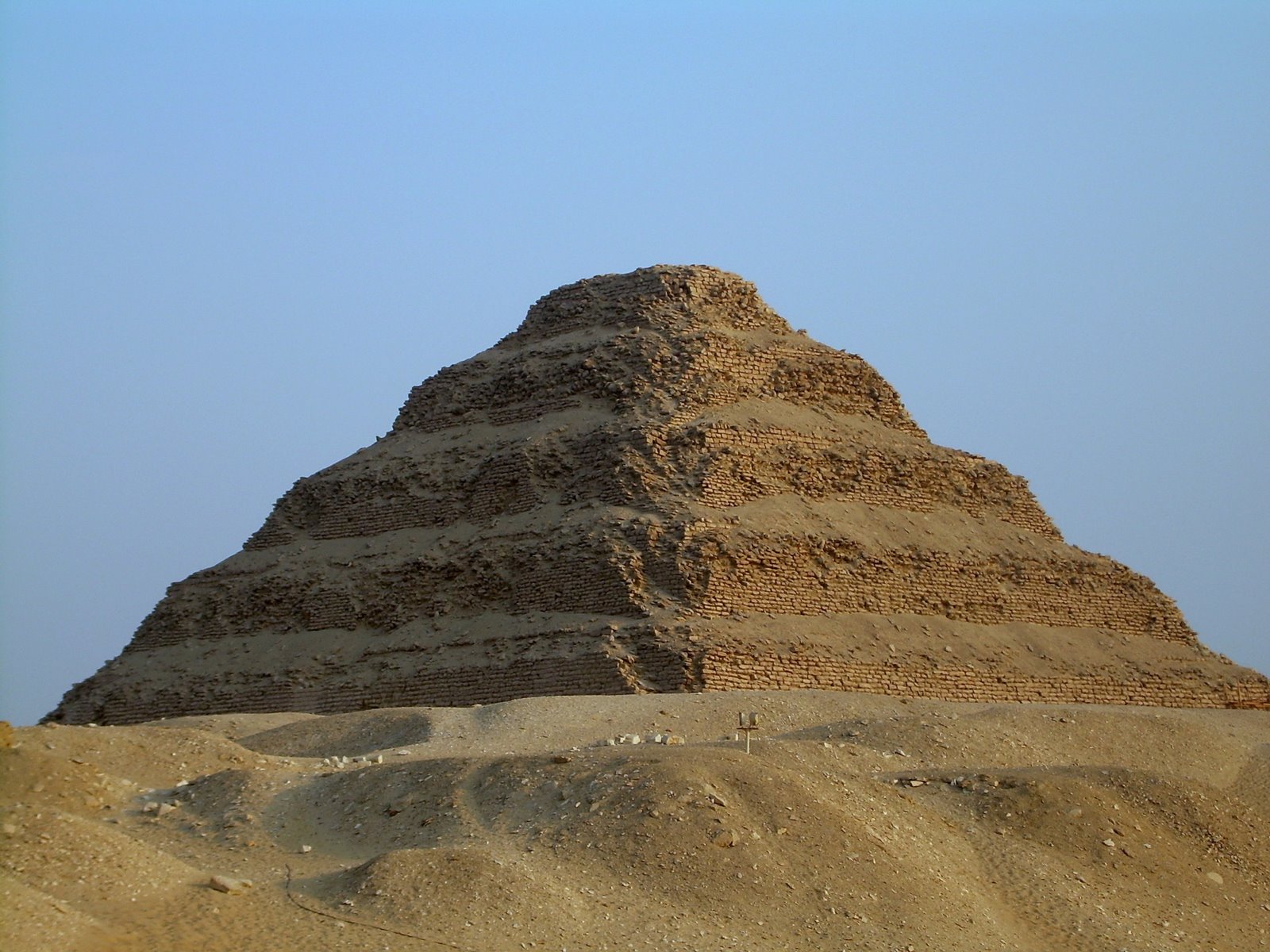
The main feature in Saqqara was the Step Pyramid of Pharaoh Zoser, which was the first burial pyramid ever built. To quote my friend Jon, “It’s not a full blooded pyramid. It’s just a step-pyramid…”

Egyptian Archaelogical Museum

We were told before we went in that if you were to spend one minute at each display in the Archaeological museum, it would take you nine months to get through it all, and I believe it. This huge building is packed with statues, pottery, jewelry, etc. from all periods of ancient Egyptian history. For time’s sake, I will only tell about three main highlights for me.

First, we had an opportunity to enter the royal mummy room. It was incredible to stare into the face of Ramses II and Queen Hatshepsut. Their bodies have been preserved so well that most of the mummies still have hair, teeth, fingernails, etc. One thing I noticed was that most of the Pharaohs on display died in their early to mid 40s, yet Ramses II lived to the grand age of 65 (granted, he suffered from numerous health problems). I couldn’t help but wonder what these rulers would think if they knew that their mummified bodies were now on display thousands of years after they died for hundreds of thousands of foreiners to gawk at? I know I would not be happy at all if that many strangers were staring at my 3000 year old body.

Second, we got to see the Stella of Meremptah, a huge stone in which the life and times of this Pharaoh are chronicled. The most interesting part about this discovery is the fact that the Pharaoh records, “There is no seed left of the Hebrews in all of Egypt.” This is one of the key archaeological finds supporting and setting a limit on the date of the Exodus.

Finally, one of the main attractions of the museum is the wing dedicated to all the assortment of stuff found in the tomb of King Tutankhamun, everything from pottery, to bed frames, to hockey sticks, to chariots, to the gold mask of his coffin. It was truely impressive to see how many treasures this short-lived Pharaoh was buried with. We’re talking about hundreds of millions of dollars worth of gold, silver, fine jewels, and other assets. Scholars have found out as much about Egyptian culture from the discoveries in Tut’s tomb than just about any other single discovery. I can’t even fathom how much more stuff would have been buried with the more important Pharaohs, like Ramses II or Thutmosis III.

Again, there is so much more I could write about, but these were the highlights of the museum.

Old City Cairo


The Old City part of Cairo, also known as Heliopolis or On, has been around from the time of Joseph and is built on the main road connecting Egypt with Palestine. This is the place where many Jews would have fled in the Babylonian conquest, and logically this is the part of Egypt where Joseph and Mary would have come to flee the wrath of King Herod.

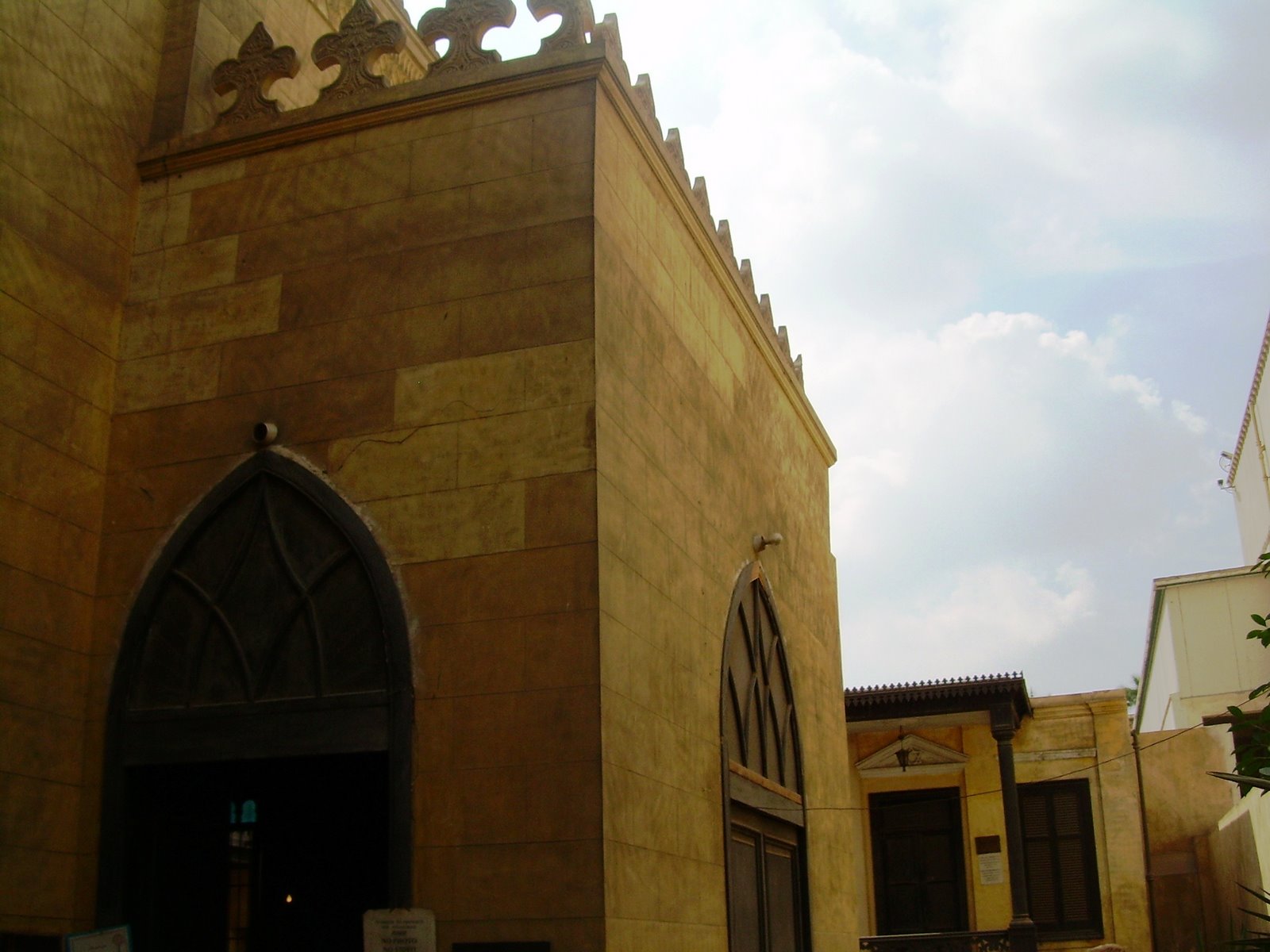
Two of the places we visited in the Old City were the Jewish Synagogue and the Abu Serga Church. The synagogue in the Old City is where the Geniza documents were discovered. They were the oldest copies of the Hebrew Bible until the discovery of the Dead Sea Scrolls. The Abu Serga Church is the oldest (or second oldest) Coptic church in Egypt, and according to the Coptic tradition is built directly over the place where Joseph, Mary, and Jesus lived for a couple years when they fled to Egypt. It is very possible, but I have never been one to put much stock in the place. It was still cool, though, because this is the first place we have visited where Jesus once was.

I wonder if Jesus was actually old enough to remember seeing the Pyramids…

The Alabaster Mosque of Muhammad Ali


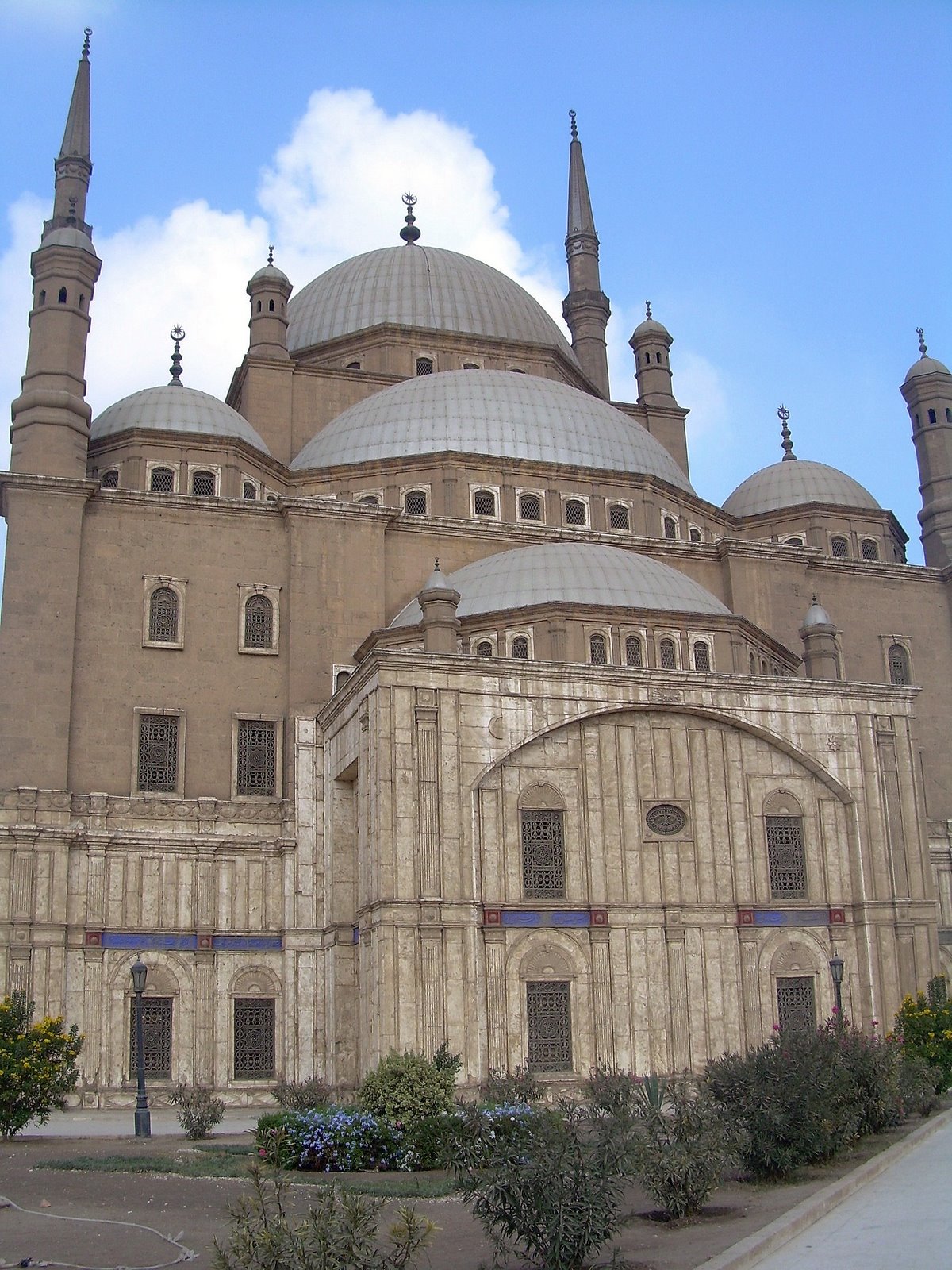
This is one of the more impressive “modern” structures I saw in Egypt, dating back to 1815. This mosque was built in honor of Muhammad Ali and is constructed entirely out of alabaster, hence the name…

The design is based off the Hagia Sofia in Istanbul, except way smaller. It’s actually built inside an ancient citadel built by Salahadin in 1187 on the only road leading from Canaan to Egypt. The mosque is no longer used as a place of worship or prayer, its main function is a monument, actually, to Muhammad Ali (not the boxer), a man who liberated Egypt from the oppressive Ottoman Empire and was crowned King of Egypt in 1840. His tomb is inside the mosque and thousands of Musilms make a pilgrimage to this mosque in Cairo to pay homage to one of the greatest Islamic leaders ever. There is also a monument to Muhammad Ali in Kavala, Greece, in honor of the help he and his army provided to Greece against the Ottoman Empire.

Temple of Luxor


This was one of the highlights of the trip for me. During the time of Moses, Luxor was the capital city of Egypt, and subsequently the Temple of Luxor was both the religious and educational center of Southern Egypt where Moses grew up and received his education. We know for a fact that if the story of Moses is accurately recorded in Exodus (as most believe it is) then this Moses spent the first 40 years of his life in and around this Temple, both worshipping and receiving a top-quality Egyptian education.

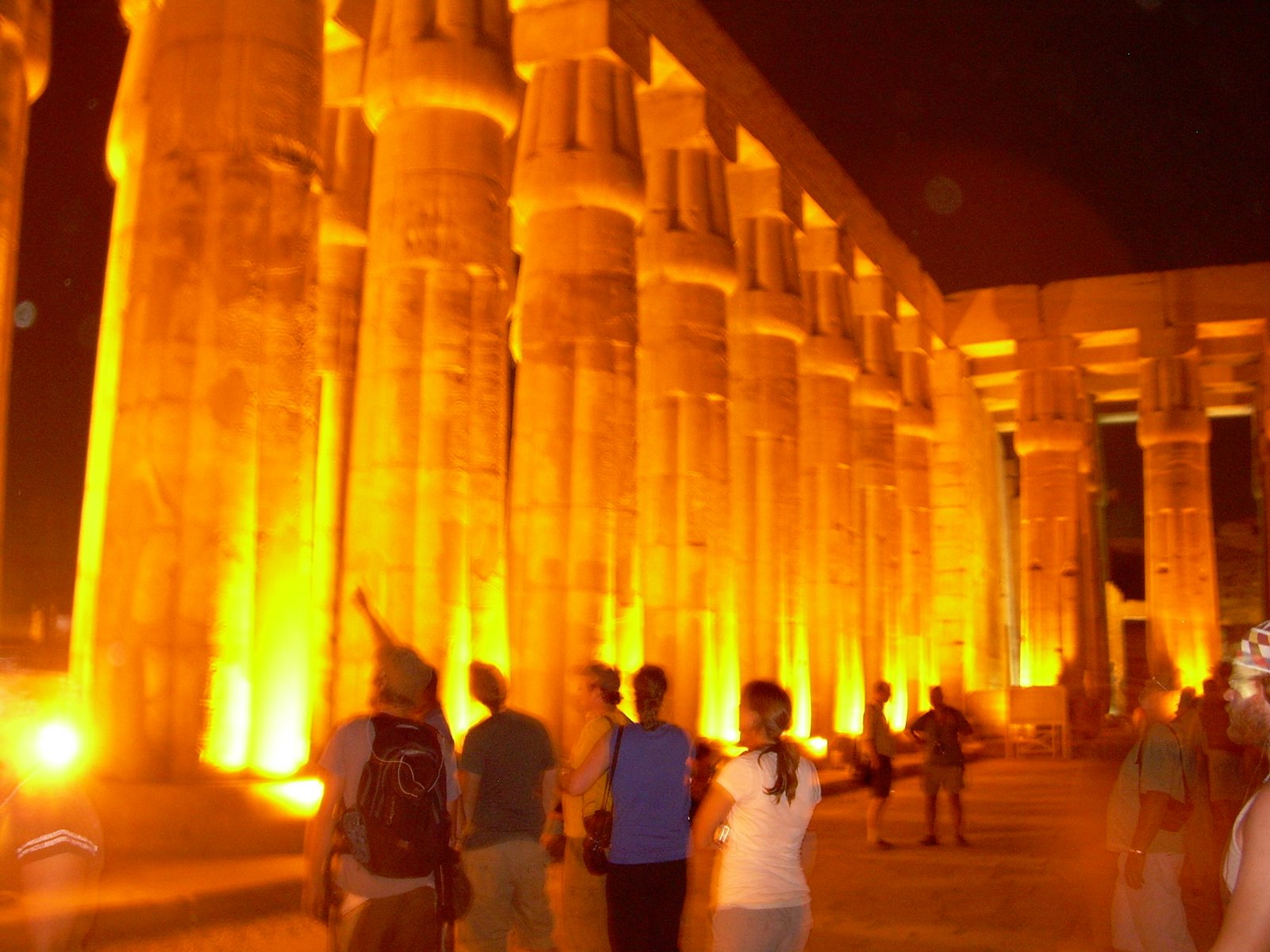
We visited the temple during at night when it was illuminated, and the yellow lights playing off the statues and columns with the clear night sky overhead was beautiful. In front of the temple are two gigantic statues of, who else?, Ramses II, followed by more gigantic statues of Ramses II and others inside the main courtyard area. All Egyptian temples are laid out in the same basic format: large front gates (called pylons) followed by an open courtyard where commoners would come and offer sacrifices and worship; then comes a half-open pillared/roofed section where only priests can enter; then comes a vestibule area reserved for the maintainence of the god (washing, feeding, etc.); then the holy of holies where the idol is kept. What makes the Temple at Luxor different is that beyond the first enclosed area for the priests comes another open courtyard area. This is where the royal family’s children would have come to receive an education, and this is where we know Moses spent most of his childhood. We were able to sit around the very place where Moses was and have a short singing devotional. For me, this was the climax of the entire trip. Everything had led up to this moment where we we sitting in the place Moses had sat some 3000+ years ago.