Page 39 of 82

These Are the Days | ELIJAH


Imagine a world in which everyone used to follow the same religion as you. You can remember a time when people served God, went to worship, and were generally good people. You knew what you could expect from people because nearly everyone held the same worldview. Your national identity was closely tied to your religious practices and stories.

Can you imagine that? Well, then imagine that one day things begin to change. You hear people talking less and less about God and more and more about foreign religions. Rather suddenly there is an influx of new ideas, worldviews, and religious teachings. People still claim to be faithful to your God, but they also start to include other gods and rituals in their faith – besides, all religions are the same, right?

As time goes on, you hardly recognize your own nation anymore. Things changed so badly in such a short amount of time that it leaves you feeling alone, isolated, holding on the whatever remnants of faith that you have left. But by and large it feels like nobody cares about the faith that everyone used to hold dear. Now you question if there is anyone else left. Are you it? What can you do? Has God abandoned us? Has God lost? Does God even care about us? Is God going to just let this happen? Should I follow the crowd and call it quits?

Does this sound familiar? Because I’m not necessarily talking about 21st Century United States. I’m talking about 9th Century BC Israel.

Things hadn’t ever been perfect in the northern kingdom of Israel. All their kings had been corrupt and did evil in the sight of the Lord. But then came King Ahab who did more evil than all the kings before him. What did he do that was so bad? He married a girl from Tyre who worshiped Ba’al. Her name will live in infamy – Jezebel.

Now Ahab didn’t go so far as to dismantle completely the worship of YHWH. But he did let Jezebel talk him into ALSO worshiping Ba’al, the Canaanite god of rain, agriculture, and fertility. They still worshiped God, but they also began to worship Ba’al and to rely on him to send the rains needed for a successful harvest.

And see, that’s a problem. It is clear to us that those idols are really no gods at all. There is no God but YHWH. When Israel began relying on Ba’al for the rains, they were essentially falling into a sense of self-reliance. We cannot serve both God and ____(fill in the blank)___. We cannot serve God and Ba’al, or God and money, or God and Buddha, or God and “progress,” or God and sports. You get the point.
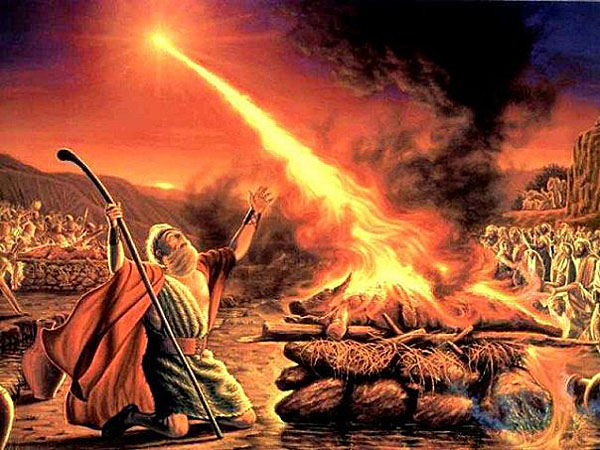
So God raised up Elijah to be his voice to the people. Elijah’s own name was itself an indictment agains the people of Israel. Elijah means “YHWH is God.” And in epic fashion atop Mount Carmel, his name was proven true. God showed up in a BIG way and proved that Ba’al was no god at all (1 Kings 18).

Boom. Drop the mic, exit stage left. Game over. Ba’al got pwned.

Elijah went on to be the hometown hero, the amazing super-prophet that everyone loved and cheered for with his own talk show and energy drink. Right? Not exactly. In the very next chapter we see Elijah running for his life on the opposite end of Israel because Queen Jezebel Lannister put a bounty on his head.

Elijah went into a deep depression and even felt suicidal at one point. Not because he was defeated, but because he felt alone in his victory. It wasn’t enough for God to show up in an epic way. Elijah felt like he was the only one left actually worshiping YHWH. Yeah, he may have won the battle, but for Elijah the war was far from over. His war was internal. We see that even for Elijah, God’s presence wasn’t enough. He wanted more. He needed to know that he was not alone, that his life still had purpose, that he wouldn’t be some one-and-done kind of prophet.
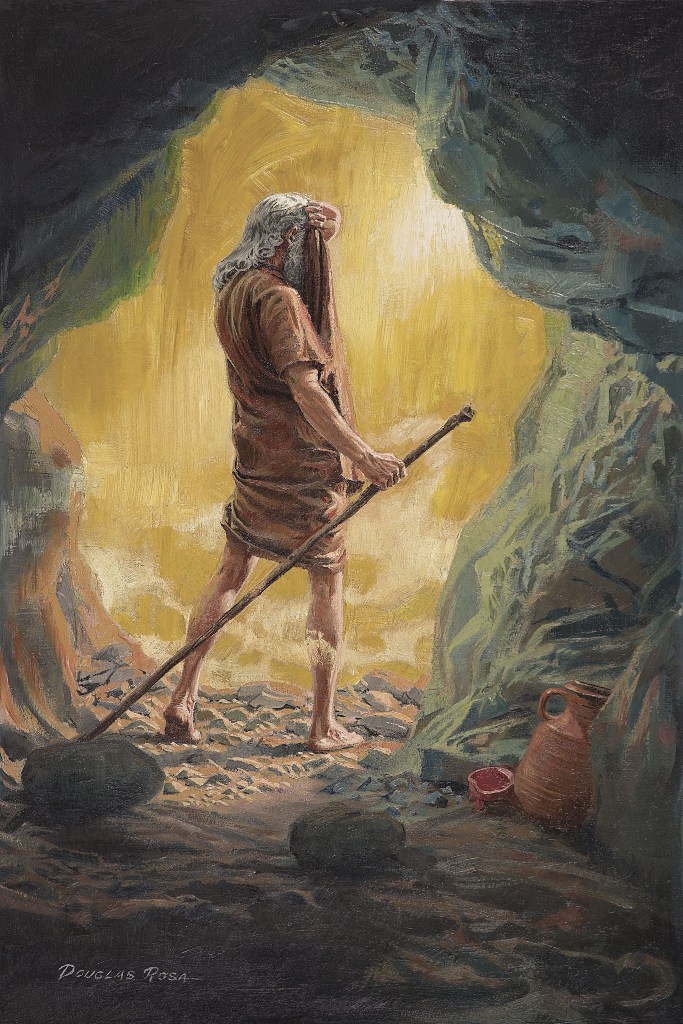
I know I can relate to Elijah. Some of the hardest days in my life have followed on the tail winds of an epic spiritual experience – a mission trip or a summer camp or some other spiritual high. God shows up in a big way, and hundreds or even thousands of people are worshiping him and experiencing his power. And then I go back home and collapse inward, believing the lie that I’m alone.

God gives Elijah a wake-up call that I know I have needed and many occasions. God sent hurricane force winds, and an earthquake, and a raging fire – but God was not “in” any of those. So often we look for God in the big production, the stage lighting, the sound systems, the charismatic speakers, the emotional drama skits, the mountain-top experiences. And it leaves us feeling empty.

We all, like Elijah, need to know that God can be found not in the show but in the silence. We need to learn to rest in him and to find him in the boring, the mundane, the common everyday experiences.

God then reveals to Elijah that he is not alone. There were still 7,000 people back home who had not bought into Ba’al worship. There were 7,000 people who were still devoted to YHWH alone. Elijah did not have to fly solo. No mission from God is ever a solo mission.

But then God turns right around and sends Elijah back into the fray. His pity-party is officially over, and it’s time to get back to work. I think God’s mission in Israel was so important that if Elijah didn’t go, God would have found someone else. God’s will is going to be accomplished, and he is looking for people to partner with him, not to do it on their own.

As I look at the story of Elijah, I am convinced more and more that these truly are the days of Elijah. We need more men and women who are willing to declare the word of the Lord to a world that is increasingly hostile toward that word. We need men and women who are willing to stand up for what is right no matter what it may cost them. We need men and women who will be there for each other and reassure each other that we are not alone. We are all in this together. And it is only by working together and partnering with God through the ordinary, mundane, common life experiences that we can truly begin to change the world for the better.

Christianicus: The Lost Book

Did you know that some researchers claim that there is a missing book from the early days of the Christian movement? It’s called Christianicus. This book, which was supposed to be contained in the holy canon, was somehow ousted by a group of progressive radicals. They claimed that the laws, regulations, and restrictions in Christianicus were too contrary to the recorded teachings of Jesus. They claimed that there was too much similarity between Christianicus and Leviticus of the Hebrew Scriptures.

Unfortunately, this small progressive movement was out-voiced by the larger, more powerful fundamentalist group. Most early churches wanted Christianicus included in the canon. After all, it held all the rules and regulations for an orderly worship, specifying who can perform which tasks at which time and place. It laid out the plan of salvation in nice, clean steps that anyone can follow and obey. It also, according to tradition, included strict warnings that anyone who strayed from the patterns and teachings found within this document would have their names blotted out of the Book of Life.

So what happened to Christianicus? As the time for official canonization drew closer, the smaller freedom movement began to gain a lot of traction. When the documents were voted Christianicus missed the cutoff by a slim margin of votes. The document lost popularity, and eventually all known copies were lost to history.
on,

And you must know that the above story is completely made up.

Seriously. I just spent about 10 minutes fabricating those paragraphs. There is nothing historical or factual about anything you just read.

But it sounds credible, right?

I read through Leviticus recently. The entire time I was reading it I couldn’t help but think how nice it would be to have a document like this for Christians. Wouldn’t it be great to have all the rules and regulations spelled out completely for us? Wouldn’t it be nice not to have the perpetual “worship wars”? Wouldn’t we rather know exactly what to do, whom should do it, and when, and where?

The fact it, we don’t have anything close to that.

Some well-intentioned men have throughout the centuries attempted to reconstruct the fabled Book of Christianicus by piecing together snippets of Paul, Jesus, Luke, and John (usually in that order). They search and study until one day – Eureka! – I’ve found THE pattern of worship! or THE pattern of salvation! It was here all along in plain sight. Anyone who reads these fourteen verses (pulled from different books and different contexts) can clearly see and understand this plan. It’s not rocket science!

No, it’s not rocket science. But it is bad exegesis.

The problem is we WANT a Leviticus for Christians. Some of us NEED a Leviticus for Christians. We have to know that we are right on every little detail, especially in regards to our Sunday morning gatherings. We have such a strong desire to get things right that we apply a phrase from Leviticus to just about everything Paul might say: “This statute is a command forever, throughout all the generations.”

Paul never said that. Paul never came close to making such claims. Paul never attempted to lay out the demands of the new covenant between God and his people – which is essentially what the books of Leviticus and Deuteronomy are. Only Jesus did that. He said, “This is the cup of the new covenant – my blood which is poured out for you.”

The thing about a covenant is that each party is expected to uphold their end of the deal. God rescued the people of Israel from Egypt and promised to care for them, prosper them, and lead them into the promised land. What was Israel’s part of the covenant? Read the last half of Exodus all the way to Deuteronomy. They had approximately 613 commands to keep.

Jesus made a new covenant. He would shed his blood on the cross, die for our sins, be resurrected, and grant us the same resurrection and eternal life with God. So what’s our end of the deal? “A new command I give you – love one another as I have loved you.”

Jesus fulfilled Israel’s end of the covenant. He kept the human side of the Law perfectly. The old covenant has been fulfilled. The new covenant, the lasting, eternal covenant only demands one thing on our end – LOVE.

God tried giving the people of Israel a Leviticus. It didn’t work so well. He DIDN’T give us a Christianicus. It wouldn’t work well, either. So let’s stop trying to recreate a document that never existed in the first place.

Love God. Love each other. That should keep us busy enough.

Things I Missed: CSI Israel

There’s a bizarre, troubling story found in Leviticus 10. It goes something like this:

The newly formed nation of Israel has exited Egypt in epic fashion thanks to their God, YHWH. God leads them down to the the same mountain on which he first appeared to Moses – Mount Sinai. The tribes of Israel are encamped around the base of the mountain while God gives the constitution, the bill of rights, and the basic laws of the land to Moses and Aaron. God goes into incredible detail of how the Tabernacle was to be built, where to place the furniture inside the Tabernacle, how the priests are supposed to dress, how the animals are to be killed and sacrificed. It’s riveting material that just keeps you on the edge of your seat.

Finally in chapter 10 of Leviticus there is a shift from Law to Narrative. Everything is ready to go. The Tabernacle has been set up, the furniture arranged, the priests purified – Lights, Camera, Action!

Well, first things first – Lights. Nadab and Abihu, the eldest sons of Aaron, kick things off by lighting the altar of incense. And that’s when things go downhill quickly. It’s the first official act of the priesthood in the Tabernacle and – boom! – they are struck dead. It’s disastrous. Tragic. Shock. Dismay. Mouths hanging open. Eyes wide and unblinking.

Did that really just happen?

God fills them in on a little key piece of advice: “Among those who approach me I will be proved holy; in the sight of all the people I will be honored.”

Turns out that Nadab and Abihu had grabbed the wrong incense or lit the fire incorrectly or…something. It simply says that the offered “strange fire” that wasn’t “authorized” by God.

…And that’s why we can’t have instruments in worship today.


Seriously.

I can’t tell you the number of times I’ve heard this story given in order to defend the use of a cappella style singing in worship. Instruments aren’t “authorized” just like the fire/incense these guys burned was not “authorized.” If God had wanted instruments, he would have “authorized” them.

I think we may have missed the point.

We may not be given the specifics of what they did or why it upset God so much, but it had more to do with their attitude and their regard for that which is holy than it did their own personal preferences. It’s not like they thought to themselves – You know, I think this incense smells WAY better. Let’s just use this. No one uses that old one anymore.


No. The thing I never noticed about this story before was what God commanded immediately afterward:

“You and your sons are not to drink wine or other fermented drink whenever you go into the tent of meeting or you will die. This is a lasting ordinance for the generations to come.”

They made a choice beforehand to get drunk before performing their priestly duties. They didn’t take their responsibilities seriously enough. They were not of sober mind and body when they approached a holy God. It’s as if God is thinking – I can’t believe I have to make this a command. It should go without saying. Don’t drink on the job!


We understand this. We don’t want police officers, fire fighters, ambulance drivers, teachers, doctors, electricians, etc., drinking while on the clock. Why? Because we can’t be trusted when we’re drinking.

The point is not that drinking is a sin. The point is holiness, reverence, and taking our responsibilities before God seriously. God made this command for his priests so that they wouldn’t lose their senses. He wanted them to be able to perform their tasks to the best of their ability. And his didn’t want them to become discredited among the people.

Who’s going to listen to a drunkard about the things of God?

Who’s going to listen to the class clown about religion?

Who’s going to be won over by a bunch of people who don’t take their faith seriously in the first place?

So when we investigate this crime scene, we find that it was the blood-alcohol level that got these two into trouble long before they offered that “strange fire.” It was their own indifference and indiscretion that got them killed.

Things I Missed: Forgetting Joseph

One thing I’ve always wondered is how the Hebrews got themselves enslaved in Egypt. Everything seemed to be going so well for them there, but then suddenly -BOOM- 400 Years a Slave. What happened? Where was God? Why did he allow his people to become slaves in a foreign land?

As you finish reading Genesis and begin the book of Exodus, there are two passages that I think make an interesting side by side comparison:

Then Joseph said to his brothers, “I am about to die. But God will surely come to your aid and take you up out of this land to the land he promised on oath to Abraham, Isaacand Jacob.” And Joseph made the Israelites swear an oath and said, “God will surely come to your aid, and then you must carry my bones up from this place.” (Genesis 50:24-25)

Now Joseph and all his brothers and all that generation died, but the Israelites were exceedingly fruitful; they multiplied greatly, increased in numbers and became so numerous that the land was filled with them.

Then a new king, to whom Joseph meant nothing, came to power in Egypt. (Exodus 1:6-8)

I had never noticed that before. Before Joseph died he basically made the rest of his family promise not to stay in Egypt but to follow God’s lead back to Canaan. He reassured them that God would help them and guide them and bring them back home.
The problem was that Egypt was home to his sons and grandsons. Canaan was never home for Ephraim or Manasseh. All they knew was Egypt – and Egypt was the place to be. It was the most powerful Empire in the world. It was wealthy and prosperous – largely thanks to Joseph himself. They lived in comfort and luxury. It was a great place to raise a family or start a business.
The Israelites were growing in strength and numbers. They had every physical blessing they could desire. This must be the will of God, right?
Maybe for a time. But the noise of comfort and power tends to drown out the voice of God. Calling Abraham out of his city to move his wife and servants across the country was one thing. Trying to get the attention of an entire nation living in luxury became all but impossible.
So the generations came and went until the memory of Joseph and his God no longer remained. The Hebrews forgot about “the promised land,” and the Pharaohs forgot about that guy named Joseph who saved their nation decades ago.
They forgot their God. They forgot their heritage. Then suddenly they lost their freedom. When all you have is wealth and power, what happens when those things are taken away?
Could the nation of Israel have avoided so many decades of slavery if they had remained faithful to God and followed his lead back to the land of their forefathers?
And what about us? Do we own our possessions or do our possessions own us? Are our ears dulled so much by the comfort and luxury around us that we can’t even hear God calling us away from our own inevitable destruction and into a better life he has prepared for us?
Jesus’ words at the end of his life sound very similar to Joseph’s last words:

Do not let your hearts be troubled. You believe in God; believe also in me. My Father’s house has many rooms; if that were not so, would I have told you that I am going there to prepare a place for you? And if I go and prepare a place for you, I will come back and take you to be with me that you also may be where I am. (John 14:1-3)

Egypt was not Israel’s home. God had something better in mind.
This world is not the disciple’s home. God has something better in mind.
Don’t forget.

Things I’ve Missed – God’s Pursuit of Israel

I must make a confession.

I’ve never read the Bible all the way through.

All told I’ve probably read a good 80-90% over my lifetime, but never cover to cover. Some books I’ve spent months at a time doing in depth study and research. Other books have gotten hardly more than a quick skim as I’m looking up one particular verse.

But with the new year I’ve set a goal for myself. I’m going to read the Bible completely and thoroughly. Not because I feel obligated in any way. But because we may never know what hidden gems are buried in Holy Scripture – those treasures hidden in a field, those pearls of great price, those fresh-air insights. As I read I am going to try to keep track of some of the bigger ones I’ve never noticed before.

And no, I’m not following any reading plan. I’m reading at the same pace I would any other book. I don’t set out to read so many chapters a day of the latest Dean Koontz novel. So why would I treat the Bible differently? But I have made this part of the goal – I’m not reading any other book until I’ve completed the last chapter of Revelation.

Anyway, on to one of those interesting tidbits in Scripture I’ve never noticed before. I’ve read Genesis more times than I can attempt to count. It’s one of the richest books, in my opinion, as far as plot, character development, and so on. Each character is so real, so vivd, so relatable. There are layers upon layers of personality.

This time through the book, the character of Jacob really stood out to me. Jacob didn’t want to believe in God. He didn’t want to follow God. He didn’t want anything to do with God. But God had other plans.

In his early years Jacob was not a nice guy. He was that character you love to hate. He was wimpy, whiny, manipulative, and heartless – especially towards his own family.

He knew his father, Isaac, served the God of his grandfather, Abraham. But early on Jacob didn’t want anything to do with this God. In what was his darkest hour Jacob steals the blessing from his older brother. I don’t have time to go into detail about what the blessing was or why it was significant, but this was a BIG deal.

Anyway, Jacob, posing as Esau, brings Isaac some stew. When Isaac asked how he got back so quickly, Jacob said “The LORD your God gave me success” (Gen. 27:20). He knew the God of Isaac, but he didn’t even pretend to claim him as his own God.

After Jacob stole the blessing away from Esau, he left home on the run from his brother. You can add “coward” to the list of descriptors. But while he’s on the run from his brother after deceiving his father and stealing what was not his – in the middle of all THAT – God appeared to him in a vision. God revealed himself to Jacob and promised to bless and protect him.

Even though Jacob had no interest in pursuing God, God pursued Jacob. God didn’t wait for Jacob to confess his sins and repent. He didn’t wait for Jacob to realized what he had done. He didn’t wait for Jacob to call out to God for deliverance.

God pursued Jacob.

And he wouldn’t take “No” for an answer.

After that vision, Jacob is still hesitant. He tries to strike a deal with God. “If God take care of me, meets my needs, and keeps me safe, THEN he will be my God.”

Even after that Jacob is quite the fence-sitter. He still tries to manipulate people to get what he wants and he still allows idols in his household. Finally, God had enough. He actually came down and had a physical altercation with Jacob. They fought and wrestled until Jacob finally learned his lesson – God is not to be toyed with. You’re either in or your out.

It took seeing God face to face and hours of wrestling with him, but Jacob finally committed. And his name was changed to Israel.

Jacob never pursued God. But God never quit pursuing Jacob.

And perhaps that’s one of the most hope-filled lessons in all of Scripture. God pursues man.

Jesus would tell similar stories about a shepherd who would not give up on his lost sheep, a woman who would not give up on her lost coin, and a father who would not give up on his lost son. God doesn’t give up on lost people.

God will pursue us, even when we don’t pursue him.

Jonah: The Storm

Here’s my sermon from last Sunday night. It’s basically a recap of my last couple of blog posts. Check out more sermons on the Sermons tab above.

Jonah: One Hell of a Storm

The Mediterranean Sea is beautiful.

I have seen it from the shores of Greece, Alexandria, and Israel – the waters are clear, the breezes are cool, and the view is breathtaking. Life as we know it began around the Mediterranean. The Sea brought life and luxuries. Trade and travel could take place between nations and continents because of the Sea. Countless myths and legends revolve around the Mediterranean. The Western world has come to almost romanticize that particular body of water.

The Mediterranean Sea off the coast of Alexandria, Egypt

But there was nothing captivating or romantic about the Sea for the Jews. From the earliest days, the Israelites had an aversion to large bodies of water. “The Sea” represented evil, chaos, danger, wildness. The sea could not be tamed. The sea was where demons lived. The sea was no place for a good Jewish boy to be.

That’s why many of the stories in the gospels are quite shocking as they take place on/in/around the Sea of Galilee.

And that’s why it would have been unthinkable for a prophet of God to head down to Joppa, a sleazy sea port, to flee from the Lord on the water.

The impact was not lost on the original audience. Jonah was “going down” into chaos, physically and spiritually.

The seasoned sailors hoist the anchors, open the sails, and head out onto the Sea to deliver the cargo all the way to Spain. These experienced seamen would never have set sail had they seen any sign of a storm on the horizon. Remember, they are sailing West from Israel to Spain – the same direction from which most storm systems would approach. It’s not like a storm could sneak up behind them.

At least not under normal circumstances.

Little did the ship captain know that he was carrying some very dangerous cargo indeed.

Suddenly and out of nowhere, the storm to end all storms was unleashed upon the Sea. The Hebrew says literally, God “hurled” the storm at the ship. Experienced sailors know what to do in the midst of a storm. I’m sure they had drills, routines, procedures, etc. A common storm was nothing to them. But this was no common storm. This was a storm that threatened to rip the vessel to pieces. This was a storm that made the sailors stare their own mortality in the face. This was a storm that caused fear and panic even in the captain. There was nothing they could do but cry out to whichever god would listen.

This was a nightmare of a storm. This was hell.

I can imagine the clouds so thick they black out the sun. I can imagine torrential rain beating against my face. Swells twenty or thirty feet tall rocking the boat so furiously that I can’t get my footing. One moment the bow is pointed straight up to the heavens, the next the bow is plummeting down toward the watery depths. Waves crash over the side of the vessel, filling my mouth and lungs with salt water. Lightning flashes all around me with a disorienting strobe effect. My stomach is churning, my feet are slipping, my eyes are stinging, and I can’t even hear myself yell over the violence of the wind and cracks of thunder.

https://warosu.org/data/tg/img/0344/85/1409342309904.jpg

And then there’s Jonah – below deck and sound asleep.

The sailors are doing everything they can to save themselves and the ship. The cargo hold is filled to capacity with spices and oriental goods. That cargo is their livelihood. If they don’t deliver the goods, they won’t get paid. But with their lives on the line the choice is obvious. Crates and baskets, bundles and barrels go plummeting over the side into the drink. The ship is lighter but the groans and creaks from the boards grows louder. Some planks in the hull give way under the strain and the Sea comes rushing into the vessel.

Hope is fading.

The captain wakes Jonah and urges him to call on his god. The sailors regroup to find out who is responsible for this storm. The lot falls to Jonah. All eyes are on him – all the exhausted, terrified, sea-sprayed eyes. They shout their questions above the storm, demanding an explanation from Jonah. Who are you? Where do you come from? From what people are you?


Jonah replies, raising his voice as if shouting to the storm itself, “I am a Hebrew, and I worship the Lord, the God of heaven, who made the sea and the land.”

Terrified, the sailors shouted, What have you done?


[Pause. Pretty much all polytheistic civilizations had a god of the sea, like Poseidon/Neptune. Those gods could control the seas, the sea creatures, even the storms. But Jonah doesn’t say God controls the sea. Jonah’s God created the sea. The Creator God always trumped the lesser gods. Jonah’s God, YHWH, was/is the highest supreme deity without any geological or societal boundaries.]

The sailors asked Jonah what they should do. Should they pray? Sing? Dance? Offer sacrifices? What? What can they do to appease Jonah’s God?

Throw me overboard.


No. We’re not into human sacrifice, they say. There must be another way, they say. Everyone grab an oar! they say.

Even though Jonah had no interest in saving their lives (he was content to sleep through the whole thing!). Even though it was Jonah’s fault they were in this hellish storm. Even though Jonah had no regard for his own life. Even though they could all still die. The sailors still did everything they could to keep from killing Jonah.

These pagan sailors who had never heard of YHWH had more courage and integrity than the prophet of YHWH!

Finally, when they realized the futility of trying to row to shore against the storm, the did what Jonah had told them to. But not before they had prayed to the Lord asking his forgiveness in what they were about to do.

They grabbed Jonah, brought him to the side of the boat, and threw him overboard. I can imagine a giant wave breaking over him as if the sea were swallowing the sacrifice. Jonah would not be seen by these men again.

Then as suddenly as the storm came upon them, the clouds dissolved, the winds became calm, and the waves leveled out. With their ship and their crew mates intact, the sailors sailed off into the blue.

They had been through hell and came out the other side – rejoicing and praising YHWH, the God of heaven, who made the sea and the dry land.

How’s that for a conversion story?

Jonah: Going Down


Life is full of ups and downs.


That sounds so cliche, doesn’t it? But  things become cliche for a reason. There is some definite truth behind that saying. One minute things are going well, the next everything seems to be falling apart. Or sometimes it’s the other way around. It feels like you can’t catch a break and then suddenly everything just seems to fall into place.

Many times the ups and downs, the thrills and disappointments, the victories and defeats are truly no fault of our own. The company is downsizing. The stock market is wavering. A natural disaster swept through and caused major damage. Those times are sad and tragic. We can easily empathize with someone going through such a rough patch in life.

I don’t think anyone deserves to have their house leveled by a tornado or their child killed by a drunk driver.

But what happens when someone sinks to the depths of despair by their own volition? What if it’s clear that a person is suffering because they have made a string of horrible choices in their life? Do we pity them? Do we empathize with them? Do we have compassion on them? Often the answer is No.

But what about God? How does God feel when his children plummet into the pit because of their own stupid decisions?

That’s where the story of Jonah comes in.

The first two chapters of Jonah stir within the reader all sorts of emotions. Confusion, anger, terror, shock, despair. If this were playing out on TV you better believe I would be one of those people shouting helplessly at the LCD, “What are you doing?!”

In fact, the sailors do just that in 1:10, “This terrified them and they asked, ‘What have you done?!'”


Jonah brought about all this suffering on himself and others because of his own stupid decisions, his own foolish actions. It’s hard to feel sorry for the guy. This is the point at which I would be yelling, “Yeah! Just through him overboard! Do what he says! Wait, what? Why are you trying to row to shore? Just dump Jonah and be done with him! Save yourselves!”


Check it out. From 1:3 all the way to 2:6 we see Jonah make decision after decision to take himself further away from God until he literally hits rock bottom.

  • But Jonah ran away from the Lord and headed for Tarshish
  • He went down to Joppa
  • But Jonah had gone below deck
  • he lay down
  • fell into a deep sleep
  • “Pick me up and throw me into the sea,” he replied
  • Jonah was in the belly of the fish three days and three nights.
  • From deep in the realm of the dead I called for help
  • You hurled me into the depths
  • To the roots of the mountains I sank down
Down, down, down. Further and further away from God, away from life, away from everything he had ever known. By the time he ends up with seaweed entangled around his head I begin to feel bad for the guy. 
But did you notice how far God let him sink before rescuing him?

To the roots of the mountains I sank down;
the earth beneath barred me in forever.
But you, Lord my God,
brought my life up from the pit. (2:6)

God let him hit rock bottom. God allowed Jonah to get to the point of no return. There was no possible way Jonah could pull himself up out of that pit he had dug himself into. Jonah could not save himself. He could not correct his own mistakes. He could not hope to swim to the surface and somehow rescue himself from drowning. God waited until Jonah knew that God was his only hope.

And Jonah got it.

I will say, ‘Salvation comes from the Lord.’ (2:9)

How does God view those who purposefully rebel against him? Sometimes he lets the consequences play out as they may. Sometimes the only way someone can truly be saved is when they get to the point of no return. Sometimes God has to wait until the rebellious one has no out, no plan B, no way of saving himself. So when God acts, there is no denying that it was only God. Salvation comes from the Lord and no one else.

Does that mean that God is unloving? Absolutely not! There are times that my sons have to learn some things through their natural consequences. I can tell my son not to touch the hot stove, but the best way for him to learn is to touch it. Once is all it will take. Then I step in to put ice on the burn and comfort my crying child. Love means the freedom to choose.

God never stopped loving Jonah even though Jonah was trying to run away from him. That’s why, to our surprise, Jonah’s prayer in chapter two is a Psalm of praise and thanksgiving, not a prayer of lament.

It’s just like what Paul describes in Romans 7:

     19 For I do not do the good I want to do, but the evil I do not want to do—this I keep on doing. 20 Now if I do what I do not want to do, it is no longer I who do it, but it is sin living in me that does it.
     21 So I find this law at work: Although I want to do good, evil is right there with me. 22 For in my inner being I delight in God’s law; 23 but I see another law at work in me, waging war against the law of my mind and making me a prisoner of the law of sin at work within me. 24 What a wretched man I am! Who will rescue me from this body that is subject to death? 25 Thanks be to God, who delivers me through Jesus Christ our Lord!

We are saved not by anything we do, because we will just make a mess of things. We are saved by God and God alone. Just as Jonah was saved by the “great fish,” so we are saved through the death, burial, and resurrection of our Lord Jesus Christ. When death seemed inevitable God rescued us from the bondage of death. We cannot save ourselves. Salvation comes only from God.

Jonah: It’s about More than a Fish

What is the story of Jonah about?

Ask that in a Sunday school or church setting and the automatic answer is “A guy who ran away from God and got swallowed by a whale big fish.” Because we church-goers know the difference between an whale and a big fish. [insert smug-face emoji here]

Seriously. The whole story of Jonah is about a guy who got swallowed by a fish? Really? That’s all we get out of the story?

Do you know how much of the story is devoted to the fish? Three verses. Yes, three. Count them:

17 Now the Lord provided a huge fish to swallow Jonah, and Jonah was in the belly of the fish three days and three nights. 1 From inside the fish Jonah prayed to the Lord his God.

10 And the Lord commanded the fish, and it vomited Jonah onto dry land. (Jonah 1:17; 2:1 & 10)

The same number of verses mention the “leafy plant” God gave Jonah for shade. So should we say that Jonah is about a guy who needed a break from the sun?

The story of Jonah is not about a storm, a fish, a plant, or a worm. It’s not about pagan sailors or wicked Assyrians or a runaway prophet. The story of Jonah is a story about God. God is the main character. God is the plot. God is the twist. God is the climax. God is the resolution. God is the moral. Creation – both human and not human – is the supporting cast.

The story of Jonah is contained in 4 chapters totaling 48 verses. By my own count, God is mentioned approximately 58 times (God, the LORD, you, He, I, etc.). Fifty-eight times in 48 verses!

This is a story about God.

But what do we learn about God? I would say that we don’t learn anything about Him that we haven’t already learned. In fact the story of Jonah is only reaffirming in narrative form what God has already told the nation of Israel all the way back in Exodus:

And he passed in front of Moses, proclaiming, “The Lord, the Lord, the compassionate and gracious God, slow to anger, abounding in love and faithfulness, maintaining love to thousands, and forgiving wickedness, rebellion and sin.Yet he does not leave the guilty unpunished; he punishes the children and their children for the sin of the parents to the third and fourth generation.” (Exodus 34:6-7)

God’s own explanation of his character here in Exodus raises certain questions: What does that look like in real life? What if we were to take that to the extreme?  Is there anyone God can’t/won’t forgive? Is his mercy and compassion limited to the children of Israel or does it apply to everyone?

In the story of Jonah we see God forgiving the sinful pagan sailors, the rebellious prophet Jonah, and the wicked citizens of Nineveh.

Who does God love? Who can God forgive? To whom is God faithful? To whom does God show his grace?

We all know the answer to those questions: “Everyone!” But Jonah knew the answer, too. It’s one thing to know the answer. It’s another thing to actually see the answer played out.

The ISIS soldier or the Samaritan’s Purse missionary – who does God love?
The raped woman or the rapist – who does God love?
The bullied or the bully – who does God love?
The one killed or the one who murdered – who does God love?
The preacher or the militant atheist – who does God love?
The nun or the lesbian – who does God love?
Israel or Assyria – who does God love?
Jonah or the pagan sailors – who does God love?

We are more like Jonah than we like to admit. He was a prophet of God. He knew God. He spoke for God. He was God’s servant. But then God called him to do the impossible, the unthinkable, the inconceivable! Jonah was called to take the word of the Lord to the archenemy of Israel.

It’s one thing to minister to the victims. It’s another thing to minister to the perpetrators. It’s one thing to comfort the abused. It’s another thing to comfort the abuser. It’s one thing to instill value in the kid who is bullied. It’s another thing to instill value in the bully.

It’s one thing to “love your neighbor and hate you enemy.” It’s another thing to “love your enemies and pray for those who persecute you.”

Jonah is the only biblical story I know of that ends with a question. It’s a rhetorical question, but one that calls the readers to action. It calls us to a change of heart, a change of understanding. It’s a question that urges us to see the world as God sees it. And if God should not be concerned about the wicked people of Nineveh, if God should not forgive the murderer, if God should not extend mercy to the rapist, if God should not show compassion toward to guilty sinner – then why should I expect him to do those things…with me?

The story of Jonah is about more than a big fish. It’s about a big God with a big love.