Page 46 of 82

Bring Out Your Dead!

Ecclesiastes has a lot to say about death. The consensus? Death sucks.

And life sucks because death is coming for you.

You’ve probably heard the phrase, “Life sucks, and then you die.” Well, Ecclesiastes would give you a much gloomier perspective. “Life sucks, and then you get cancer. You spend months in the hospital getting all sorts of nasty treatments with side effects worthy of making the list of 10 plagues. Suddenly, miraculously, the cancer goes into remission. You throw a party for the day that you are checked out of the hospital. But on the way home you get hit by a bus and die instantly.”

That’s the view of life and death we get in Ecclesiastes. If you need Prozac now, I know a guy…

Think about it. What hard evidence do we have about the afterlife? How do we know what happens when we die? Is this life all we get?

Apparently that’s the kind of outlook the Teacher had when writing Ecclesiastes. He obviously had no established concept of heaven and hell, eternal life and eternal punishment. These realities had not been revealed to Israel yet. We get glimpses as we work through the prophets, especially Daniel. But the theology of heaven and hell were not really developed until much later.

But we have the privilege of living in a post-resurrection world. We have the evidence of the resurrection that can give us faith beyond a doubt that heaven and hell are real. The resurrection means that it does, in fact, matter if you are good or sinful, if you offer sacrifices or not, if you are clean or unclean, to put it in the Teacher’s terms.

All share a common destiny—the righteous and the wicked, the good and the bad, the clean and the unclean, those who offer sacrifices and those who do not.
As it is with the good,
so with the sinful;
as it is with those who take oaths,
so with those who are afraid to take them.
(Ecclesiastes 9:2)

According to him ethics, morality, and worship are of no value when it comes time to shuffle off this mortal coil. It doesn’t matter what is in our bucket when we finally kick it. We all share a common destiny.

The resurrection of Jesus reveals to us that this is not the case. Death has been defeated. It no longer has free reign over every living person. There are those who will escape the final victory of death, and in the end death itself will die.

For the perishable must clothe itself with the imperishable, and the mortal with immortality. When the perishable has been clothed with the imperishable, and the mortal with immortality, then the saying that is written will come true: “Death has been swallowed up in victory.”

“Where, O death, is your victory?
Where, O death, is your sting?”

The sting of death is sin, and the power of sin is the law. But thanks be to God! He gives us the victory through our Lord Jesus Christ.

Therefore, my dear brothers and sisters, stand firm. Let nothing move you. Always give yourselves fully to the work of the Lord, because you know that your labor in the Lord is not in vain. (1 Corinthians 15:53-58)

Don’t get me wrong, death is still the great equalizer. But not in the way it used to be. Someone once said, “For a Christian, baptism is the only death that matters.” See, we’ve already died. And in a way, it doesn’t matter what kind of person we were before that death – whether good or bad, clean or unclean, worshipers or not. We all died. And now we do, in fact, share a common destiny!

Or don’t you know that all of us who were baptized into Christ Jesus were baptized into his death? We were therefore buried with him through baptism into death in order that, just as Christ was raised from the dead through the glory of the Father, we too may live a new life.

For if we have been united with him in a death like his, we will certainly also be united with him in a resurrection like his. For we know that our old self was crucified with him so that the body ruled by sin might be done away with, that we should no longer be slaves to sin— because anyone who has died has been set free from sin. (Romans 6:3-7)

So in a way the Teacher in Ecclesiastes is exactly right, and in a way he couldn’t be more wrong. Baptism is the only death that matters. If we’ve already died, then we’ve been set free from the cycle of sin and death and the anxiety of what happens once our hearts stop beating.
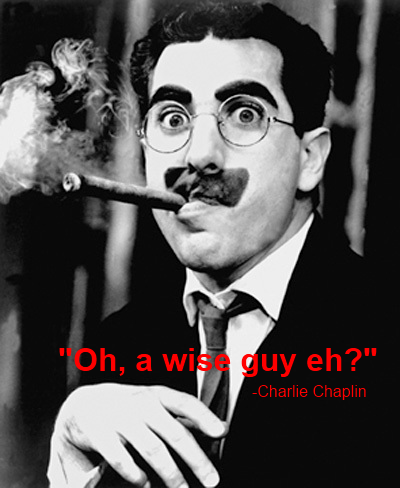
Wise Guy or a Wise Man?

The English language never ceases to bewilder me. With all of our idioms and colloquialisms it’s amazing that anyone can “talk good American” at all! I know this point has been made time and time again, but the importance of how we use language cannot be stressed enough.

Here’s one example of how ridiculous we are with out use of language:

  • Bears and worms – nothing alike until you add the word “gummy”
  • Man and guy – synonyms until you add the prefix “wise”
I want to be considered a wise man, but I’m probably more like a wise guy. I’d rather give wise sayings, but more often I give wise cracks. I’d rather my wisdom be legitimate, not ironic.
In Ecclesiastes it seems that the Teacher is using “wisdom” ironically at times. In 7:23 he says, “All this I tested by wisdom and I said, ‘I am determined to be wise’ – but this was beyond me. Whatever exists is far off and most profound – who can discover it?”
Throughout the book he claims to be pursuing the meaning of life with the help of wisdom. How does that work out for him? Sex, drugs, alcohol, girls, food, money, power, work – “wisdom” supposedly guides him through these avenues to discover meaning and purpose.
It’s all to no avail, surprise, surprise.
So my question is this: What kind of wisdom was he listening to?
But wisdom is wisdom, right? Maybe not. In his letter James makes it very clear that there is an obvious distinction between the wisdom from the world and the wisdom from God. First of all, true wisdom is given when asked for, not discovered when pursued. “If any of you lacks wisdom, you should ask God, who gives generously to all without finding fault, and it will be given to you” (James 1:5).
Remember, Solomon had to ask God for wisdom to rule the people well. God was so impressed by this request that he gave Solomon true wisdom along with wealth and longevity. The Teacher in Ecclesiastes is trying to find wisdom apart from God. He is exploring the world and all that it offers. He strives for it, adding one thing to another.
Again, to no avail.
Second, the wisdom from the world is not even true wisdom. If you get wisdom from your experience in a sinful, fallen, corrupted world, then it’s guaranteed that the wisdom you find will be sinful and corrupted. Just check out the contrast James offers:

Who is wise and understanding among you? Let them show it by their good life, by deeds done in the humility that comes from wisdom. But if you harbor bitter envy and selfish ambition in your hearts, do not boast about it or deny the truth. Such “wisdom” does not come down from heaven but is earthly, unspiritual, demonic. For where you have envy and selfish ambition, there you find disorder and every evil practice.
But the wisdom that comes from heaven is first of all pure; then peace-loving, considerate, submissive, full of mercy and good fruit, impartial and sincere. Peacemakers who sow in peace reap a harvest of righteousness. (James 3:13-18)

How much of the “wise” advice in this world is based out of envy or selfish ambition. The whole “American Dream” is based on envy and selfish ambition! Do well in school so you can go to a good college. Pick a good major so that you can get a high paying job so that you can get a big house and a nice car. Get a beautiful wife and have 2 children and a dog. You’ve got to keep up appearances. You wouldn’t want anyone thinking you are weak or incompetent. Take the best vacations. Throw the best parties. Get ahead any way you can.

It’s all about envy, competition, and selfish ambition. That’s the corrupt, sinful wisdom you’re left with if you try to get it from this world.

Wisdom from above, given by God, is all about God and others. It’s pure, first and foremost. It’s not going to be tainted by the corrosive vices of culture. It’s peace-loving, considerate, submissive, full of mercy and good fruits, impartial and sincere. Real wisdom looks out for others. Real wisdom tries to make the world a better place for everyone, not just number one. It’s more concerned with making others look good and helping others prosper and get ahead.

The results? Worldly wisdom perpetuates sin and corruption. The end product is more disorder and evil practices. Heavenly wisdom, however, combats the effects of sin. The wisdom from God, which leads to peacemaking, results in a harvest, an abundance, a cornucopia of righteousness!

So be a wise man, not a wise guy. Seek wisdom from God and nowhere else. The world needs more wise men.

Rest? Ain’t Nobody God Time for That!

One thing that is glaringly obvious to anyone who studies history or reads the Bible is that humans haven’t changed just a whole lot.

Sure, cultures change, values shift, technology improves, but humans really haven’t “improved” so to speak. Individually and collectively, we still face the very same challenges for thousands of years.

A little food/money is good. A lot is better.

Some power and authority is fine. But I need more.

If I work enough, I can get what I want. I want more, so I must work more.

He has something that I don’t. That’s a problem.

One of the most fascinating commands that God gave the Israelites, in my opinion, is the Sabbath. They had a mandatory day off every week. They could work six days, but they had to refrain from all work on the Sabbath. Compulsory rest time? Sign me up!

One thing to keep in mind when it comes to God’s commands is that God never commands something that he has not done or is not willing to do. In other words, God commands the people of Israel to rest on the seventh day because he rested on that day.

The Israelites are to observe the Sabbath, celebrating it for the generations to come as a lasting covenant. It will be a sign between me and the Israelites forever, for in six days the Lord made the heavens and the earth, and on the seventh day he rested and was refreshed.’” {Exodus 31:16-17

This passage adds something I never noticed before. It says, “he rested and was refreshed.God was refreshed. I didn’t know God needed refreshing.

Mankind is created in God’s image. His personality is the basis for our very being. If God needed a little R&R after a full work week, don’t you think we do to?

And did you notice that the Sabbath was to be a time of celebration? Creation – Celebration – Rest – Refreshment. This is a command!

Fast forward to the New Testament and what has the Sabbath been turn into by the religious establishment? A burden. A legal mandate loaded with regulations, stipulation, traditions, and loopholes. Hardly restful. Hardly celebratory. And definitely not refreshing. The Sabbath caused more arguments between Jesus and the Pharisees than just about anything else. Jesus wanted to restore the intent of the Sabbath, so the Pharisees decided to kill him because of it.

Then he said to them, “The Sabbath was made for man, not man for the Sabbath. So the Son of Man is Lord even of the Sabbath.” {Mark 2:27-28

Read through Ecclesiastes and it becomes clear that mankind has always been susceptible to workaholism. We work so that we can buy things, then we have to work more to pay off the debt we went into in order to get these things. All the while we’re working so much that we can’t even enjoy the things for which we’ve worked! Sound familiar?

Three thousand years later this is still a familiar reality. Americans, in particular, are overworked and under-rested. Check out the startling research here. Americans put in more work hours than any other developed nation. We have less paid time off, fewer vacation days, and no built-in paternity leave for new parents. And yet the standard of living is no better for the work we do.

Then we come to church on Sundays (if we have the time) and say that the Sabbath doesn’t apply to Christians anymore. Oh, good. Because I just can’t take any of that mandatory rest. I don’t need to be refreshed, and I definitely have no intention of celebrating God’s creation. Don’t burden me with that!


Sure, the Sabbath might not be an expectation for Gentile believers under the new covenant. But look again at Exodus 31. God says the Sabbath would be a sign between him and his people “forever.” Has forever ended yet?

Maybe, just maybe, God knows the heart of man enough to know that we need rest. Surely if God himself needed it, then we do too!

Now stop reading this and get some rest. You look tired.

Stupid Questions DO Exist!

If you’ve ever sat in on a high school history class, you will know for a fact that there are, indeed, stupid questions.

For instance, in my junior year American History class the teacher told us to read a section of the first chapter in our text books. We would read and then discuss the material more in depth. About three minutes into it one of my female classmates raised her hand. The teacher called on her.
“Um, I thought this was American history. What do the British have to do with American history?”
Stunned silence. Did she really just ask that? She can’t be serious, can she?
There are no stupid questions, but there are a LOT of inquisitive idiots. Can I get an “Amen?”
The questions we ask matter. In fact, I firmly believe that a person’s understanding of a subject can be determined no by the answers they give but by the questions they ask. Jesus, for instance, was in the Temple as a twelve-year-old boy conversing with the Rabbis. Those gathered around we amazed at his understanding because of the questions he was asking (Luke 2:46-47).
Which brings me to Ecclesiastes chapter 7. If we simply read straight through this part of Ecclesiastes it can seem very troubling. The Teacher makes some pretty outrageous statements that don’t seem to fit with the rest of Scripture. We can come away thinking Why is this in the Bible? Is that a typo? Nah, that can’t be right…

But if we understand that he is simply providing answers to unvoiced questions, then it makes a lot more sense. Then we can pick up on his irony, his sarcasm, and his tongue-in-cheek statements.
One of the most troubling sections in this chapter for me is 7:16-18,

Do not be overrighteous,
  neither be overwise—
  why destroy yourself?
Do not be overwicked,
  and do not be a fool—
  why die before your time?
It is good to grasp the one
  and not let go of the other.
Whoever fears God will avoid all extremes.

Is he really making a blanket statement that we should not be too righteous or too wise? Is he allowing for a little wickedness and foolishness?

Now, I can’t speak directly for the Teacher (or Solomon), but here’s what I think is going on:

If these verses could be written in sarcasm font, I think they would have been. I think the Teacher is giving bad answers to bad questions. Think about it: Where in Scripture do we see degrees of righteousness? We’re either righteous or we’re not. When Jesus challenged his disciples that their righteousness must surpass that of the Pharisees (Matthew 5:20), he would later reveal that the Pharisees were not really righteous in the first place.

The same goes for wisdom. Sure, someone might be more wise than someone else, but how can a person be too wise? That’s like saying, don’t be too good looking. Don’t be too healthy. Don’t be too good at your job.

How about wickedness? Where in Scripture does is say it’s okay to be a little wicked, just don’t overdo it. That’s like saying it’s okay to put a little bit of dog poop in the brownies, just not so much that it overpowers the chocolate flavor.

These are bad answers to bad questions. The sad part is we continue to ask these same questions expecting a different answer!

How righteous do I need to be for God to accept me?

How wise must I be in order to find my purpose in life?

How much can I sin and still be in God’s good graces?

How close can I get to that line without going over?

These are the wrong questions! Yet we continue to ask them on a daily basis.

As we read in Romans, Paul was dealing with many of the same issues. He says that our own righteousness will never be enough because NO ONE is righteous, not even ONE. Everyone has sinned and continually falls short of God’s glory. No one is wise enough, no one is good enough, no one is righteousness enough, but thanks be to God through Jesus Christ! God gives us grace enough.

So…since we have grace, how much can we sin? Stop it! That’s the wrong question. We’ve been set free from the cycle of sin and death. Why would you want to jump back on that hamster wheel of doom?

The right questions can completely shift our understanding of the problem. The key question in Ecclesiastes chapter 7 is this: “Consider what God has done: Who can straighten what He has made crooked?” (7:13)

Solomon didn’t know the answer, but we do. The one who can straighten out what has been made crooked is Jesus.

The right question gets the right answer.

I Swear to God!

We don’t talk a lot about vows and oaths in our society. The closest we come to “oath-taking” is when a witness is sworn in before taking the stand. They swear to tell the truth, the whole truth, and nothing but the truth – “so help you God.” Then they are considered “under oath.”

But then you hear people caught in a lie say things like, “I swear to God!” So if you swear on the Bible, you are bound by that oath, but if you swear to God then it doesn’t really mean anything… Hmm…

I don’t know about you, but if someone has to add I swear, I promise, or I’m not gonna lie, then that really makes me wonder how honest of a person they are. If they don’t add in those phrases am I to assume they are “gonna lie.”

The other time we think of vows and such is in the context of a wedding ceremony. The bride and the groom exchange their vows to each other in the sight of witnesses and then seal those vows with a ring. Yet how soon after the honeymoon are those vows forgotten? How long does it take for the husband to start looking at other women again? How long does it take for the wife to nag about money issues?

You can see just how seriously we take our “vows” by simply checking out the divorce rate. Last time I checked our vows don’t address allow “irreconcilable differences,” whatever that means, as an escape clause.

What about the vow we make before God. When we confess that Jesus is the Christ, the Son of God; when we repent of our sins and pursue righteousness; and when we are submerged in the water and are pulled back up we are publicly stating our vows to God.

Jesus, I will follow you no matter what the cost.

Spirit, I will go wherever you lead me.

God, everything I have is yours.

For better or worse, in wealth and in poverty, in sickness and health, in safety and in persecution, in foreign countries, in homeless shelters, in church, on sports teams, at work – God, I am yours and yours only. I will keep myself only to You for as long as I live.

What about THAT vow? How many of us delay in fulfilling our vows to God? How many of us make deals with God – I’ll follow you when (x) happens. When I’m through college. When I’ve got a job. When I get married. When I have kids. When I’ve got the car and the house paid off. When the kids are gone. When I retire.

Time and time again people came up to Jesus wanting to follow him, but more often than not there was something holding them back – I just got married. I just bought some land. I just got some new farm equipment. I want to wait until my father is dead.

“When you make a vow to God, do not delay to fulfill it. He has no pleasure in fools; fulfill your vow. It is better not to make a vow than to make one and not fulfill it.” {Ecclesiastes 5:4-5

Maybe it’s time that you renewed you vows to God. Make 2013 the year that you fulfill your vow.

Noise

My mouth gets me into trouble. Guys, can you relate? I have a knack for saying exactly the wrong thing at exactly the wrong time, especially when talking to my wife. The saying rings all too true for me: “It is better to close your mouth and be thought a fool than to open it and remove all doubt.”

Many times I find myself thinking What I should have said was…nothing.


Have you ever noticed that a lot of people are uncomfortable with silence? There always has to be music going or television playing. They fill every sound gap with more and more words until it just sounds like static. Some people just don’t like silence so they prevent it at all costs.

Other people talk a lot when they know they’ve done something wrong. They get caught up in a lie so they add more and more details to the story to make it sound believable. But they end up over-describing to the point that the story sounds obviously contrived.

Some people are nervous talkers. Whenever they’re anxious about something, their mouth takes the reins and churns into a full gallop.

Then their are those oddballs who are content not to say anything. They just sit back and let everyone else do the talking. They rarely add to the noise, and when they do speak up people listen. They’re not really oddballs – the rest of us are.

Noise.

Many of us think that they only way we can get people to listen to us is by making noise. The loudest voice is answered. The squeaky wheel gets the grease. And we use this same approach with God far too often. We’re like the prophets of Ba’al. They were getting to response from Ba’al on top of Mount Carmel so Elijah suggested they yell louder, make more noise, act more ridiculous.

They still got no answer. Elijah, on the other hand, simply knelt and prayed. No shouting, no dancing, not theatrics. Just a simple prayer.

How do you approach God? Do you come to God with singing, dancing, loud music, shouts, theatrics, and lengthy prayers? Do you try your best to get God’s attention so that he’ll listen to you?

Maybe if we stripped away all the noise then God would be able to get our attention so that we’ll listen to Him.

Guard your steps when you go to the house of God. Go near to listen rather than to offer the sacrifice of fools, who do not know that they do wrong. Do not be quick with your mouth,    do not be hasty in your heart    to utter anything before God. God is in heaven    and you are on earth,    so let your words be few.  {Ecclesiastes 5:1-2

Is listening considered an act of worship? I think it should be. It’s definitely a sign of respect.

If you were to have lunch with the President, you would probably be interested in what he had to say. You would be more focused on listening than on talking. You wouldn’t engage him in conversation like you do your buddy or your spouse. He talks, you listen.

How much more so should we be quick to listen to God? Yes, God wants you to communicate with Him, and even commands us to do so. But He also commands us to listen to Him. It’s like the old adage: You have two ears and one mouth, so do twice as much listening as talking.


This week in worship, as you approach the house of God, draw near to listen. Hear what God has to say to you. Don’t just let your mouth run wild. Listen first, then offer the sacrifice of praise.

1 Resolution, Many Goals

Here’s how I finally did on my goal for 2012. I set off to read at least 24 books, or 2 a month. I got to 25 1/2 books.

  1. King’s Cross, by Timothy Keller
  2. Forgotten God, by Francis Chan
  3. Erasing Hell, by Francis Chan
  4. Catch-22, by Joseph Heller
  5. Of Mice and Men, by John Steinbeck
  6. Miracles, by C.S. Lewis
  7. The Princess Bride, by William Goldman
  8. Amusing Ourselves to Death, by Neil Postman
  9. The Hunger Games, by Susanne Collins
  10. Catching Fire   ”   “
  11. Mockingjay    ”    “
  12. Technopoly, by Neil Postman
  13. Dirk Gently’s Holistic Detective Agency, by Douglas Adams
  14. Long, Dark Tea Time of the Soul    ”   “
  15. Shattered, by Dean Koontz
  16. Beautiful Outlaw, by John Eldredge
  17. The Practice of the Presence of God, by brother Lawrence
  18. Timeline, by Michael Crichton
  19. Kingdom Come, by John Mark Hicks and Bobby Valentine
  20. Ender’s Game, by Orson Scott Card
  21. Speaker for the Dead  ”   “
  22. Xenocide, ”  “
  23. Children of the Mind,   ”   “
  24. Fear Nothing, by Dean Koontz
  25. Surprised by Hope, by NT Wright
  26. Not a Fan., by Kyle Idleman (almost through…)
Not too shabby. I think this is the first time I’ve ever completed a year-long goal.
Here’s what I have on deck for 2013:
1. Continue reading 2(+) books per month
2. Donate blood at least 4 times
3. Run a total of 500 miles
4. Read each of the four gospels at least 3 times
I like to use the word goal instead of resolution. To resolve means “to come to a definite or earnest decision about.” The only thing I have ever resolved to do is to follow Christ. That is a definite and earnest decision. I can change or adapt my goals. I can make new goals. I can reach goals and move on to new ones. My ultimate resolution to follow Christ guides what kind of goals I set for myself.
So go ahead and set lots of goals for yourself. But only one resolution ever needs to be made. If you haven’t made that resolution yet, then make 2013 the year you make a definite and earnest decision to follow Christ.

No Vacancy – Oh, Joy…

One of my favorite “Christmas” hymns is Joy to the World. It’s a simple but powerful song. It’s few short verses are packed with high Christology, the redemption of creation itself, and the sovereignty of Christ over all the universe.

But the most convicting line in the song, in my opinion, comes in the first verse: Let every heart prepare Him room.

The arrival of Emmanuel is ripe with bittersweet irony. The King of kings, the Prince of Peace, was not born in a palace, but in a stable. He was not birthed in a sterile birthing room in the maternity ward of the local hospital. His first sensations included the scent of day-old animal dung, the sound of domesticated livestock, and the scratching of dried out hay, which was likely infested with small biting insects similar to bed bugs.

God made room within this infantile body, enough room for His fullness to dwell. Yet there was no room in the town for this newborn baby. It’s even more heartbreaking to understand that it wasn’t an “inn” like a Motel 6. They were most likely trying to bunk with relatives overnight. The word often translated “inn” is more like a guest room on the upper floor of the house.

The NIV 2011 get’s it right: “There was no guest room available for them.” (Lk 2:7)

Joseph’s own family members relegate him and his full-term fiance to the basement with the animals gathered for the night. There was no room for him.

But zoom out a bit and the picture becomes even more disappointing.

“The true light that gives light to everyone was coming into the world. He was in the world, and though the world was made through Him, the world did not recognize Him. He came to that which was His own, but his own did not receive Him.” John 1:9-11

Jesus was the catalyst for creation. Without Jesus nothing would exist. The entire world was made through Him. But when He came into the world, that which was His own, His own (people) did not make room for Him. He pitched His tent alongside us, but no one welcomed Him to the neighborhood.

And yet…His current mission is to prepare room for us in the kingdom of heaven (John 14:1-4).

I also love how Isaac Watts phrased the opening line of the song: Joy to the world, the Lord is come!

Not has come, not did come, not came…the Lord is come. It’s not enough to focus on the one time birth of Christ. Rather, He is in a constant state of “coming.” His coming to earth is an ongoing process, and we must always be in the process of preparing room for Jesus.

Here I am! I stand at the door and knock. If anyone hears my voice and opens the door, I will come in and eat with that person and they with me.” Revelation 3:20

Are the No’s still lit up on our Vacancy signs? Is there room for Christ in your heart? your home? your workplace? your ball team? Is there room for Jesus in your church?

Or is Jesus relegated to the basement…again…

Christmas Songs vs. Christ Songs

I like Christmas music. The music is one of my favorite parts of this time of year. Just like all good movies have killer sound tracks, it isn’t really Christmas without those heart-warming songs. But there are a few things that make me sad about Christmas music:

  1. Folks who work retail are sick of it by mid-December.
  2. The growing emphasis seems to be on the more secular songs that have nothing to do with the holiday (by which I mean the “holy-day”).
  3. It’s awkward to sing Christmas hymns any other time of the year in our worship services.
I want to focus on number 3 for a few blog posts leading up to Christmas. I don’t know about you, but in my religious tribe and upbringing, Christmas was met with a certain level of taboo. Most families celebrated it, but as a church we never really did. Some families didn’t celebrate ANY holidays, which is fine… But the church didn’t emphasize Christmas in order to avoid offending those families, or in order to appear as non-Catholic as possible.
So we didn’t really sing Christmas hymns a whole lot during the holiday season, and we didn’t sing them the rest of the year. They became sort of the black sheep of the song book.
This is a shame. Really, it is. Because some of these Christmas hymns contain the highest Christology in our song books. They don’t focus just on the birth of Christ, the little Lord Jesus asleep on the hay, like Ricky Bobby imagines. These songs emphasize the preexistent Christ, the Word who became flesh, the sovereign reign of God through Christ over all creation.
Let’s take a look at one: Hark! The Herald Angels Sing
“Peace on earth and mercy mild; God and sinners reconciled!”
  • Through Jesus, God was ushering in his shalom, his peace, his wholeness to creation once again. Through Jesus we have been reconciled to God, brought back into a state of pure relationship with the Father.
“Joyful, all ye nations rise; join the triumph of the skies”
  • Jesus is the fulfillment of the Abrahamic covenant. Through Abraham’s seed, Jesus, all nations of the earth will be blessed. Jesus is the messiah not just for Israel but for all humanity.
“Veiled in flesh the God-head see; hail the incarnate Deity
Pleased as man with men to dwell, Jesus our Emmanuel”
  • God had tried everything – communing with man in the garden, calling out one family to save humanity, choosing one man through whom all nations would be blessed. He tried calling out one nation, giving them his law, dwelling with them in his Temple, removing sins through animal sacrifices. Nothing worked. Finally, he pulled out all the stops. God himself became a man and pitched his tent along with us. This was the only way to bring true reconciliation to humanity. God with us.
“Born to raise the sons of earth, born to give them second birth.”
  • Jesus was born once so that we might be born twice. Just as he was born as the incarnate Son of God, so we are re-born as adopted sons of God with his Spirit dwelling in us.
Sure, Hark! The Herald Angels Sing is a “Christmas” song, but it’s more than that. It’s a Christ song, proclaiming a higher view of Christ than most songs we sing.
Maybe we don’t need more Christmas songs; maybe we need more Christ songs.
Like this one:

“The Son is the image of the invisible God, the firstborn over all creation. For in him all things were created: things in heaven and on earth, visible and invisible, whether thrones or powers or rulers or authorities; all things have been created through him and for him. He is before all things, and in him all things hold together. And he is the head of the body, the church; he is the beginning and the firstborn from among the dead, so that in everything he might have the supremacy. For God was pleased to have all his fullness dwell in him, and through him to reconcile to himself all things, whether things on earth or things in heaven, by making peace through his blood, shed on the cross.” – Colossians 1:15-20

Time-Out!

There is a time for everything,
and a season for every activity under the heavens:

a time to be born and a time to die,
a time to plant and a time to uproot,
a time to kill and a time to heal,
a time to tear down and a time to build,
a time to weep and a time to laugh,
a time to mourn and a time to dance,
a time to scatter stones and a time to gather them,
a time to embrace and a time to refrain from embracing,
a time to search and a time to give up,
a time to keep and a time to throw away,
a time to tear and a time to mend,
a time to be silent and a time to speak,
a time to love and a time to hate,
a time for war and a time for peace. – Ecclesiastes 1:1-8

Time is such a weird thing. It’s constantly moving forward, yet there is no end in mind. The more things change, the more they stay the same. There is nothing new under the sun.
Yet this thing called “time,” enigmatic as it may be, is of utmost importance to us. Animals don’t really have a sense of time. The eat whenever they’re fed. They sleep whenever they’re tired. They don’t care that it’s one o’clock in the morning; they want to go outside, now! We humans, however, are swimming in the awareness of time. It’s on our wrists, our cell phones, our computers, our microwaves, our dashboards, our building signs, and in nearly ever room we walk into. There is a constant tick from the analog clocks sounding off the seconds. There is a constant blink from the digital clocks reminding us that we haven’t properly reset it since the last power outage.
Time is everywhere.
In the above poem Solomon observes that everything has it’s time. Of the 28 events, 14 couplets, only 2 events are beyond our ability to control (mostly). There is a time to be born and a time to die. Did you have any say about your birthday? If I had, I would not have chosen December. That’s a horrible month for a birthday.
Do most people get any say about when they will die? Only in such saddening cases of suicide that are heard far too frequently. Nobody wakes up in the morning knowing they are going to be hit by a drunk driver. None of the parents, children, or teachers knew that a crazed gunman was going to terrorize their school last Friday.
Everything else in life is up to us. It’s our choice when to hug and when not to. It’s our choice when to build and when to demolish. It’s our choice when to speak and when to shut up – a choice more people should choose…just sayin’. Every activity has it’s time and place, and it takes a wise man to know when and where all things are appropriate.
So what’s to glean from all of his discussion on time in Ecclesiastes chapter 3? It’s summed up in two words: Carpe Diem.
Carpe diem is NOT the same as “YOLO!” “You only live once” is used as an excuse to act like a moron. It’s something to yell as you try to play human Frogger with interstate traffic. Carpe diem, seize the day, is a reminder that each day is a gift not to be wasted. Make the most of your life. Spend your time doing what you love, with whom you love, for the One who loves you.

I know that there is nothing better for people than to be happy and to do good while they live. That each of them may eat and drink, and find satisfaction in all their toil—this is the gift of God. I know that everything God does will endure forever; nothing can be added to it and nothing taken from it. God does it so that people will fear him. -Ecclesiastes 3:12-15

Every time a tragedy hits, no matter what it is – hurricane, mass murder, drunk driver, cancer, etc – it brings us to our knees. We were a nations brought to our knees this weekend. Life and time, I think, are seen a bit more clearly on your knees, close to the ground, beneath the smog and smoke that keeps us in a haze all day long. When we have nothing left to stand on we realize who is holding us up. Our life is but a mist – here for a moment and then gone. But everything God does endures forever.

Use your time to do what you love – with whom you love – for the One who loves you. Carpe that diem.