Page 48 of 82

Never Meet Your Heroes, Round 3

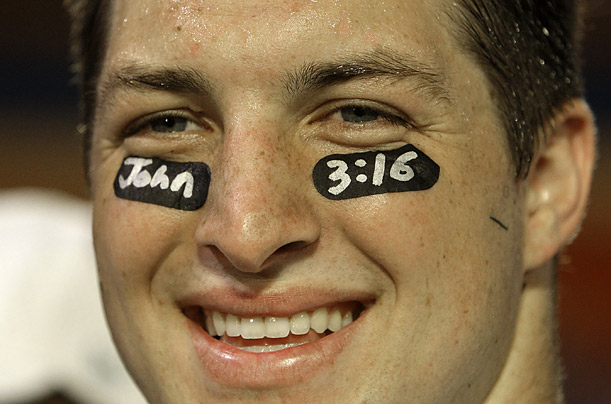
Can you believe this guy? He’s messing with John 3:16. Who does he think he is?


No doubt, if you went to Sunday school then you probably memorized this verse at one point or another. And it’s a great verse. I think it speaks volumes in only a few words – the summation of the entire gospel message.

Here’s how it reads in most translations:

For God so loved the world that he gave his one and only Son, that whoever believes in him shall not perish but have eternal life. (NIV 2011)

And here’s how some translations have rendered it:

God loved the world so very, very much that he gave his only Son. Because he did that, everyone who believes in him will not lose his life, but will live for ever. (Worldwide English Translation)

It’s an English idiom to use the word “so” as a qualifier. I love you soooo much. That soup is sooo gross. This blog post is sooo boring.

When we say “so” we mean “a lot” or “very.” This causes us to read this verse as saying, “God loved the world a whole lot. And because he so very much loved the world, he sent His Son to die for us.”
There is no denying the God loves the world. The thing is – His love is so whole, so complete, that it does not need qualifiers. And indeed, John does not try to do so. (In writing this post, I have come to realize how much I actually use the word “so.”)

In Greek, the word “so” would more accurately mean “thus” or “in this way.” John is trying to reveal the way in which God loved the world. God loves perfectly and completely, and this is how He has shown us that love.

For this is how God loved the world: he gave his one and only Son that everyone who believes in him should not perish but have eternal life. (Mounce Reverse-Interlinear New Testament)

For God loved the world in this way: He gave His One and Only Son, so that everyone who believes in Him will not perish but have eternal life. (Holman Christian Standard)

John is trying to show, not necessarily the degree to which God loved us, but the way in which He loved us, the extent to which He was willing to go for that love.
Here’s another bombshell: We’re not 100% sure that Jesus said this. The Greek shows no clear break or continuation of quotation. What follows from 16-21 could very well be the words of Jesus, or they could be the words of John added as commentary on the discussion that just took place.
Some versions will have these words in red, others in black. Does it make them any less true? Not at all.
Always remember: God loves you – perfectly, completely, and unconditionally. He has proven His love for you by sending is only child into this world and gave him as a sacrifice for your sin. If you believe in the Son, Jesus, then you will not have to suffer the fate of the unbelieving, evil world around you. Instead, you will have the promise of life everlasting, life to the ages, eternal life.

Never Meet Your Heroes, Round 2

We Christians, especially in the West, love to try and make Scripture speak favorably of the “American Dream.” We take verses like Philippians 4:13, as we saw yesterday, and shove them into a part of the puzzle where they just don’t quite fit. I want Paul to be saying that I can be whatever I want to be and do whatever I want to do as long as I’m keeping my eyes on Jesus. That sounds like a brilliant plan for successful “Christian living.” But that’s simply not what he says.

Another well known verse in a similar vein is Jeremiah 29:11. The unfortunate thing is that most people who claim this as their favorite Bible verse *probably* have never read the context, much less the rest of Jeremiah.

“For I know the plans I have for you,” declares the Lord, “plans to prosper you and not to harm you, plans to give you hope and a future.”

If there ever was a verse indicating that the American Dream is in line with Scripture, it’s this one. It’s like a pep talk before the big game. It’s the reassuring send off to a college freshman. It’s the hope that overcomes the butterflies as you begin a new career.

Or is it?

This is in the context of a letter written from Jeremiah to those carted away into exile in Babylon. Everything they have ever known has been taken with them. If they’re lucky, they might have some family members of friends around them.

Their country is in shambles. Their home is hundreds of miles away. People all around them have been killed. They have no money, no possessions. Their God has abandoned them. They are now forced to live in a pagan land among brutal people who worship false gods.

Complete and utter decimation of everything they had ever known.

And now they get this letter from a prophet back home telling them to get comfortable?! Are you kidding me?

Get married. Start a family. Buy a home. Plant a garden. Get settled and cozy because you’re going to be here a while. It’ll be your grandkids who make it back home, not you. And while you’re at it, go ahead and pray for the prosperity of the very country that ruined your life because if they prosper, you will prosper.

Wow.

When we’re in the midst of a crisis, the last thing we want to hear is that it’ll all be okay. Things will get better soon.

God doesn’t do that. He essentially says, “I warned you this would happen. I told you. But this is your new life now. Get used to it. See you in seventy years!”

You see, all their lives the people of Judah had been looking after themselves. If you trace your way back through Kings and Chronicles you will see that most of their decisions were extremely selfish and short sighted. But now, for the first time ever, God is challenging them to think about future generations. When God says, “I know the plans I have for you,” He’s not talking specifically about the recipients of that letter. He means their grand children.

The readers are stuck. They got themselves in a bind and now they can’t get out. Tough luck. But in seventy years, God would return, gather their grand children and great grand children, and lead them all back home. Or at least He would lead all those who wanted to leave Babylon, which by that time would become their home.

So when you read this verse, Jeremiah 29:11, it’s still a verse loaded with hope. But it’s not hope for you. It’s hope for your grand children if you do the right things today.

This is not a verse of hope and comfort, it’s a verse of challenge. Are you up to the challenge? Will your grand children be better off because of the choices you are making right now?

“When seventy years are completed for Babylon, I will come to you and fulfill my good promise to bring you back to this place. For I know the plans I have for you,” declares the Lord, “plans to prosper you and not to harm you, plans to give you hope and a future. Then you will call on me and come and pray to me, and I will listen to you. You will seek me and find me when you seek me with all your heart. I will be found by you,” declares the Lord, “and will bring you back from captivity. I will gather you from all the nations and places where I have banished you, “declares the Lord, “and will bring you back to the place from which I carried you into exile.” Jeremiah 29:10-14

Never Meet Your Heroes

According to the popular proverb, “You should never meet your hero.” The idea is that this person has become so idolized in your mind and your imagination that you are bound to be disappointed if you actually get to know them. They are human, after all. They will probably end up ruining your dreams and fantasies. You will never be able to watch their movies, read their books, or buy into their hype ever again.

Sometimes that can be a good thing, though.
There are a lot of athletes, pop stars, and movie stars that are brilliant at what they do, but I would NEVER want them to be a personal role model for my son.
And it got me thinking, in a weird “minister’s only” connection sort of way… Why do we claim certain Bible verses as our favorites? I’m not knocking the whole “favorite Bible verse” system. I’m just doing a double-take at some of the verses people choose as their faves. The ones they know by heart. The ones they post on Facebook and highlight in their Bibles. The ones they go to for comfort.
I think it’s time we got to know some of our heroes a little better.
One of the verses most commonly given as a favorite is Philippians 4:13, so let’s start with that one.
“I can do everything through Him who gives me strength.” (NIV 1984)
We Western, American Christians LOVE this verse! Who doesn’t love a good underdog story? This verse plays well to our individualism, our motivation, our desire for success. When things aren’t going our way, we look to Jesus who gives us the strength to make it through.

With the strength of Jesus I can get my degree and start my career.

With the strength of Jesus I can score the game winning touchdown.

With the strength of Jesus I can overcome this disease.

With the strength of Jesus I can repel down this glacier…?

We take the phrase translated “everything” or “all things” a bit too generally. We act as if Paul had been talking about fighting wild beasts, standing up to kings, surviving ship wrecks, driving out demons, all sorts of heroic and manly stuff (which he did, by the way). But that verse is taken HORRIBLY out of context.

Here’s how the NIV 2011 reads: “I can do all this through Him who gives me strength.”

That reading is a bit harder to take out of context and apply to just about anything. “All this” forces you to look back at what “this” really is. Look at the whole thought in context:

I rejoiced greatly in the Lord that at last you renewed your concern for me. Indeed, you were concerned, but you had no opportunity to show it. I am not saying this because I am in need, for I have learned to be content whatever the circumstances. I know what it is to be in need, and I know what it is to have plenty. I have learned the secret of being content in any and every situation, whether well fed or hungry, whether living in plenty or in want. I can do all this through him who gives me strength.

What Paul is claiming to be able to do in any and every situation through the strength of Jesus is to be content. I can be CONTENT through Him who gives me strength. Well that certainly changes things. He’s not talking about overcoming anything. He’s not talking about getting out of a jam. He’s not talking about doing heroic things for God. He’s talking about being content.

You see, this broader context does not mesh well with our Western worldview. Not at all. If you want something, go get it. If you need something, you have a right for it to be provided. No one should have to be poor. Everyone should be given an equal chance to become millionaires. Your life is not complete unless you have X, Y, and Z.

But we don’t even hear this sermon preached much in the church. When was the last time you heard a preacher talk about being content with what you have? Okay, but when was the last time you saw the church actually doing that?

You see, I think the true spirit of this passage speaks volumes to our society. We don’t need Scripture to tell us that we can accomplish anything, that we can be and do whatever we set our minds to. The world tells us that already! We need Scripture to tell us that no matter where we find ourselves, God is there to take care of us. We don’t have to have it all together. We don’t have to have the biggest house, the nicest cars, the trendiest clothes. It doesn’t matter what’s in our bank account. It doesn’t matter what’s in our wallets. God will take care of you!

This is what Paul says just after that:

Not that I desire your gifts; what I desire is that more be credited to your account. I have received full payment and have more than enough. I am amply supplied, now that I have received from Epaphroditus the gifts you sent. They are a fragrant offering, an acceptable sacrifice, pleasing to God. And my God will meet all your needs according to the riches of his glory in Christ Jesus.

I think it’s time for Christians, myself included, to take a look around and realize that we are amply supplied. If anyone has ever had more than enough, it’s us! But it’s time to stop relying on anyone but God to meet our needs.

Now that’ll preach.

Songs We Don’t Sing in Church

As a worship leader flipping through the song book week after week to get ready for Sunday morning, I am amazed at the vast array of songs we don’t know. Occasionally one will catch my eye, and I will do a quick search on YouTube to learn it.

That happened to me today. I came across song #93 in Songs of Faith and Praise. The tune was composed in the early 1800s and the lyrics were written in the mid-1960s.

It’s called “God, Who Stretched the Spangled Heavens.” Not the catchiest title, but check out the lyrics:

God, who stretched the spangled heavens
Infinite in time and place
Flung the suns in burning radiance
Thru the silent fields of space
We, Your children, in Your likeness
Share inventive powers with You
Great Creator, still creating
Show us what we yet may do
We have conquered worlds undreamed of
Since the childhood of our race
Known the ecstasy of winging
Thru uncharted realms of space
Probed the secrets of the atom
Wielding unimagined power
Facing us with life’s destruction
Or our most triumphant hour
As each far horizon beckons
May it challenge us anew
Children of creative purpose
Serving others, honoring You
May our dreams prove rich with promise
Each endeavor well begun
Great Creator, give us guidance
Till our goals and Yours are one

I wish we knew this song! I think I will try to teach it sometime soon. How cool would it be to sing in church about space travel and atom splitting?

But not only that. I think this song points out a fact that we don’t really acknowledge a lot. Humanity was created to share in the creative process. That’s why God gave us the cognitive skills to rule, subdue, and fill the earth. That’s why he allowed us to name and categorize the animals. He entrusted us with the power to create, to explore, to discover, to enjoy, to advance.

The debate between science and faith is not going away any time soon, as far as I can tell. As God’s children, we should not think that any scientific discovery could somehow “disprove” God. If we think the universe is too mysterious, too complex, too vast for it to be created by God, then our idea God is too small.

The author of this song also points out that our scientific and technological advancements have the potential for either great evil or great good, to heal or to kill, to create or destroy.

Read these lyrics again. Let the message really soak in deep. With this song in mind, go back and read Genesis 1-4.

And let us all pray that God will be the one to guide us in our scientific and technological advancements, that He will lead us as we join in the creative process with Him until our goals and His are one.

Destroy Your Ba’als

“You shall have no other gods before me.

“You shall not make for yourself an image in the form of anything in heaven above or on the earth beneath or in the waters below. You shall not bow down to them or worship them; for I, the Lord your God, am a jealous God, punishing the children for the sin of the parents to the third and fourth generation of those who hate me, but showing love to a thousand generations of those who love me and keep my commandments.”

Exodus 20:3-6

How much more plainly could God put it? He’s God. Period. Don’t serve or worship or exalt anyone or anything else. Just don’t do it! This is one of the most clearly stated commands we’re given. He even goes to great lengths to explain all the things we’re not supposed to do and the reason for the command.

You don’t get that a lot. 

Yet there is one name that keeps popping up: Ba’al.

It literally means “Lord,” similar to adonai or kyrios. Various deities were given the title “Ba’al” from Ur to Canaan to Carthage. A quick word search through the NIV shows the name “Ba’al” in its various forms and contexts used 134 times from Genesis all the way to Romans.

Ba’al is hidden inside the name of Babylon (Ba-baal-on). The name was even tossed around during the time of Christ. The head of the demonic forces, according to the Jews, was Beelzebul, which means “Lord of the High Place,” or “High Lord.” But the Jews, clever with word plays, switched the name to Beelzebub, or “Lord of the Flies.”

Ba’al took on various forms and functions from place to place. In Canaan Ba’al was known as the God of Thunder, Rain, Weather, and Agriculture. Knowing this helps us understand the actions taken by YHWH through his prophet, Elijah, in 1 Kings 17-18.

Ahab married Jezebel, a woman that today’s rappers would write ugly songs about. She lured Ahab into Ba’al worship to the extent that Ahab built a temple and an altar to Ba’al in the capital city. Elijah says don’t do it. Ahab says I’m gonna. Elijah says stop it. Ahab says make me. Elijah says okay.

So Elijah prays to YHWH, not Ba’al, and God withholds rain for three years. Ba’al is powerless to do anything about it. The ground dries up. Crops fail. The economy collapses. People suffer. But YHWH, not Ba’al, provides for his people.

That leads up to the famous showdown on Mt. Carmel. Two altars, two bulls, two deities, only one pillar of all-consuming fire.

God wins. YHWH is Lord.

Ba’al should have bit the dust. Word should have spread that Ba’al is utterly powerless. All his worshipers and prophets should have raised the white flag and turned to YHWH.

So if God could display his supreme power over all other gods, then why are false gods still being worshiped long after the BC-AD switch over??

I think it’s because idols and other gods are things we think we can control. We make up these gods and then think we can manipulate them into giving us what we want.

We create the iPhone and think that if we just use it correctly then it will bring us a sense of connection, fulfillment, entertainment, and efficiency.

We create cosmetic procedures and think that if we just get the right surgeon with the latest techniques we can turn back the clock on the aging process.

We create capitalism and believe that if we just use the system, invest here, spend there, sell that, buy this, then we will somehow come out on top.

We create social environments in which we put on our best show in order to gain acceptance and validation from those around us.

We create Ba’als in our image, and then they turn around and shape us into theirs. We become tools of our tools. We surrender power to that which we created to give us power. This is a miserable way to live!

River vs. iPhone – who wins?
Tornado vs. Mansion
Gravity vs. Cosmetic surgery
Death vs. Doctor
Time vs. Money

God wins. He won in Genesis, he won in 1 Kings, he wins in Revelation, and he still wins today. Everything you own will eventually end up in a land fill. You body will die and return to the earth.

So if your Ba’al is god, then worship him/it. But if YHWH is God, then worship him (1 Kings 18:21).

Bring Back the Real Refs!

The talk of the NFL season thus far has been the replacements referees. The veteran referees are holding out on some labor dispute with the NFL and have been in a lockout for the past few months. So the NFL decided to bring in a bunch of replacement referees.

I bet football fans never thought they would be wanting their officials back!

The discontent has been growing over the past couple of weeks. A bad call here. A missed call there. Confusion about the call followed by a five minute staff meeting on the field.

But last night and this morning, all of football fandom is in an uproar over a botched call on the last play of Monday Night Football between the Green Bay Packers and the Seattle Seahawks.

On a last minute Hail Mary to win the game, the Seahawks’ quarter back tossed a jump ball into the end zone. The Packers’ defensive back came down with the ball. Game over.

Except that the Seahawks’ receiver had one arm wrapped around the defender with his hand touching the ball. The replacement refs signaled a touchdown, giving the Seahawks the victory.

Now, all of the fans, commentators, players, and coaches know the call should have gone in favor of the defender who clearly had first possession of the football. But the officials signaled the call, the officials reviewed the call, the officials confirmed the call. There is nothing else to be done. Game over. Seahawks win.

Think about it. The ruling of a few trumps what everyone else knows to be true. Even when the ruling is clearly inaccurate, the ruling still stands.

Now think about how this works in society.

Nietzche declared in the late 1800s that God is dead.

Richard Dawkins, Christopher Hitchens, Stephen Hawking, Sam Harris, and others have devoted their lives to “proving” that God does not exist.

Philosophy classes in colleges across the country declare that God does not exist.

Okay. If you say so!

But who put these guys in charge? Why do they get to make the call? Where do they get their authority?

There are literally billions of people worldwide who would beg to differ. Why does the ruling of a few declare something to be universally true?

Their bad call could cost millions of people more than just losing a game. This missed call will cost people their souls for all eternity.

These “Brights,” as they call themselves, are no better than the replacement referees.

The Bigger Picture

Ya know, there are some verses in the Bible that I think we would rather ignore. I’m not necessarily talking about the difficult parts of Scripture dealing with war, slavery, women’s roles, hell, etc. I’m talking about the simpler, toe-stepping passages that make you think, Yeah, but… or even, He’s talking about someone else, not me…


As Mark Twain famously stated, “It ain’t those parts of the Bible that I can’t understand that bother me, it is the parts that I do understand.”


I agree, Mr. Twain.


And one of those passages is this:

Do everything without grumbling<sup class="crossreference" style="font-weight: bold; vertical-align: top;" value="(Y)”> or arguing, so that you may become blameless<sup class="crossreference" style="font-weight: bold; vertical-align: top;" value="(Z)”> and pure, “children of God<sup class="crossreference" style="font-weight: bold; vertical-align: top;" value="(AA)”> without fault in a warped and crooked generation.” Philippians 2:14-15

How many people in your church need to hear that preached from the pulpit? As you’re tallying the number in your head, go on and include yourself in that. I know I sure need it.


How many times have you caught yourself complaining about things at church? The sermon’s too long. The songs were all old and slow. The lady behind you has way too much perfume. The building is too hot. These young people have no reverence. Those old people need to loosen up.


Complaining is the norm, if you haven’t noticed. We have entire reality shows based around people complaining about other people. In this political season, especially, the poor complain that they aren’t being helped enough while the rich folks complain that they’re having to pick up the slack with their hard earned money.


We complain, grumble, and argue about everything under the sun. We even complain about complainers! If things don’t go your way, just throw a fit until someone greases your squeaky wheel. That’s what my two-year-old does, at least. If it works for him, it could work for me, right?


But I think most complaining and grumbling, especially in the church, occurs when we lose sight of the bigger picture. I mean, the return of Christ and eternal life with him in heaven should outweigh the date in which a song was written. Christ dying on the cross should force us to put things into perspective.


And that’s exactly what Paul was trying to get across. Christ emptied himself of all his rights, all his privileges, all his powers and became a man. As a man he became obedient to the point of death on a cross. And if you recall, he didn’t gripe and complain all the way up to Golgotha.


Jesus had the bigger picture in mind – the redemption of all humanity.


Paul also gives the example of Timothy and Epaphroditus. Timothy, he says, is constantly putting the interests of Christ and others above his own agenda. Epaphroditus once fell sick and nearly died in the service of Christ – and he was upset that he caused the Philippians to worry about him!


Do everything without complaining or arguing. That becomes a lot easier once you realize how trivial most of the things in this life are.


Let’s keep it in perspective.


Unity in Christ is more important than our own agenda.


Preaching Christ is more important than the methods by which he is preached.


Our heavenly citizenship trumps our earthly citizenship.


The goal of eternity in heaven far outweighs any suffering here on planet earth.


The peace of God outshines the clouds of doubt and anxiety.


Paul, as tactfully and lovingly as I’ve ever seen anyone, basically tells individuals in the church at Philippi to get over themselves and start focusing on the bigger picture.


Is there a message today’s church needs to hear more than this?

Joan of Arc was Noah’s wife, right?

Here’s a little sneak-peak of my sermon this Sunday morning.

These videos won’t be shown, but they will certainly help you understand one of the biggest threats to Christianity in the West.

Wow.

If you are a follower of Christ, a believer in His Word, then these videos should probably give you a sinking feeling in the pit of your stomach. Somewhere along the lines we have failed. I mean, people don’t even know their basic info about the Bible – much less how to make it all fit into one coherent story of creation and redemption!

And we like to think that it’s just those people over there. Well, take a look around next Sunday. How many folks actually bring their Bibles to class or worship? Of those, how many people actually open them and follow along?

Somewhere along the lines we’ve gotten confused. We want to read Colossians 3:16 like this:

Let the word of Christ dwell in red ink on paper bound in leather collecting dust on your shelf next to your Grisham novels.

Or this:

Let the word of Christ dwell in pixels and bytes on your smartphone app that you only open so that people won’t think you’re playing Angry Birds during church.

But look what it ACTUALLY says:

Let the word of Christ dwell IN YOU richly as you teach and admonish one another in all wisdom… – Colossians 3:16

You want to see change happen in America? You want the church to start impacting the world like we’re supposed to? You want to see Christians start living up to their namesake?

I believe we would see all this and more if we would unleash the power of the Word in our hearts and minds. Get in the Word and start changing the World.

Learn it.
Live it.
Love it.

Are We There Yet?

For this very reason, make every effort to add to your faith goodness; and to goodness, knowledge; and to knowledge, self-control; and to self-control, perseverance; and to perseverance, godliness; and to godliness, mutual affection; and to mutual affection, love. – 2 Peter 1:5-7


Love is a many splendid thing. Love lifts us up where we belong. All you need is love.


We started this journey with faith. We’re ending it with love. If faith is the foundation of the house, love is the open door, the welcome mat, and the smell of fresh baked cookies. It is the storm doors that keep the chaos out. It’s the AC unit out back that no one notices but everyone enjoys.


I think Peter fastened all these virtues together beautifully. I think we often begin with faith and are all too eager to skip ahead to loving anybody and everybody. Yes, love involves risk. But it also requires a thick skin sometimes.


If all Jesus had was faith alone, he would never have been able to forgive and sincerely love those who were nailing him to that cross.


Our walk with Christ is not a “just add water” kind of deal. It’s less like EasyMac and more like an all out Thanksgiving dinner. It’s a process. You can’t skip steps.


Granted, loving comes more naturally to some than it does others. There are those people you meet that have never met a stranger. They’re all smiles and hugs and laughs. And sometimes that just makes you sick. These people will strike up conversations in the line at Wal-Mart. They will go to the ends of the earth to meet a need.


But how much self-control do they have? When was the last time they said no? Or how much actual Bible knowledge do they have? Are they content to keep Scripture in the “personal devotional” category, never really dealing with the down and dirty parts of the Bible?


You see, we will almost always fault someone who has all sorts of head-knowledge but very little outward showing of love. Yet we are hesitant to fault those who have this love-thing down but don’t really know the Word of God.


I’m going somewhere with this, I promise.


Paul says in 1 Corinthians 13:13, then end of the great “Love Chapter,” that three things remain: faith, hope, and love. But the greatest of these is love. Think about it. When we all get to heaven, our faith will finally become sight. But faith in what is seen is not really faith anymore. Faith will have served its purpose in full. It will have reached its “Sell By” date. It’s the same with hope. We will no longer need hope because we will have the very thing we were hoping for. Faith – fulfilled. Hope – fulfilled.


Love will live on forever. For where God is there is love.


But take a look around. Are we there yet? I don’t think so.


So while we are still on this earth, by all means let us LOVE! But let us not forget faith and hope.


This is not to be taken lightly:

For if you possess these qualities in increasing measure, they will keep you from being ineffective and unproductive in your knowledge of our Lord Jesus Christ. But whoever does not have them is nearsighted and blind, forgetting that they have been cleansed from their past sins. – 2 Peter 1:8-9

Notice he does not say, “If you possess love in increasing measure.” He says, “these qualities.” All of them. All of these combined will keep you from being ineffective and unproductive. Stated positively, all of these qualities will allow you to be effective and productive.


By all means, let us love one another as Christ has loved us. Let us continue to love our neighbors as ourselves. But love without a foundation is like a beautiful bouquet of cut flowers. It looks pretty. It smells nice. It will make someone feel happy. But that beauty is fleeting. The colors quickly fade because they have been separated from their roots – the source of life for the flower.


For true love to be sustained, it must be built on the foundation of faith, goodness, knowledge, self-control, perseverance, godliness, and mutual affection.


And one final benefit to going through this process – it will give you assurance of life everlasting.

Therefore, my brothers and sisters, make every effort to confirm your calling and election. For if you do these things, you will never stumble, and you will receive a rich welcome into the eternal kingdom of our Lord and Savior Jesus Christ. – 2 Peter 1:10-11

What a promise!


Always remember that neither faith nor love, knowledge nor godliness, is an end in itself. All these qualities are but a means to an end – that glorious end in heaven (which is really just a whole new beginning).

You’ve Got a Friend in Me

For this very reason, make every effort to add to your faith goodness; and to goodness, knowledge; and to knowledge, self-control; and to self-control, perseverance; and to perseverance, godliness; and to godliness, mutual affection…   2 Peter 1:5-7


How many Facebook friends do you have? Go ahead. Open up a new tab, go to your profile, and see what it says.


I have 612. Six hundred twelve “friends”.


But can anyone really have THAT many friends? Is it even possible?


I know what you’re thinking. Most of your Facebook friends are more like acquaintances. You’ve met them once or twice and now they blow up your news feed. Or they’re people you went to high school with and now you want to catch up – and by “catch up” you mean you want to see how much better your life has turned out than theirs.


Yet study after study shows that we only have a handful of true FRIENDS – and that number tends to slide as we get older. When you’re in preschool, everyone is your friend! As you get into elementary, you begin to weed out those you like best and those who have cooties. Entering into junior high, cliques begin to form. Those cliques solidify in high school, yet even within your clique you have some you like better than others.


Then comes college. For most people, if they don’t find their niche as quickly as possible freshman year, it can be a long and lonely road through higher education.


Then you graduate and enter the work force. Think about it. This is the first time in your entire life that you have not been consistently surrounded by people your own age. For 20-25 years of your life you have had a peer group by default. But now the closest person in age at work might be 15 years older than you, married with children.


And it’s not that much better in the church.


Jack Johnson had a song several years ago that asked, “Where’d all the good people go?” I look around the church and I think, “Where’d all the young people go?” I can testify that for a twenty-something, the church can be one of the loneliest places. Oh sure, the older people are nice and friendly. Some might even invite you over for dinner on occasion. But the fact is that sometimes we just NEED mutual affection, brotherly love, philadelphia.


Jesus had that need. He had hundreds of “followers.” He had dozens of “disciples.” He had twelve “apostles.” But he only had a few friends – Peter, James, John, Mary, Martha, and Lazarus.


I think there is something inherent within us that drives us toward connection with others. Humans were meant to live in community. Think about it – even GOD lives in constant, loving community within Himself. God the Father, Son, and Holy Spirit are all loving, glorifying, and encouraging each other for all eternity.


I think that Peter is giving us a reminder – we can’t do this Christianity thing on our own. I also think this is why philadelphia comes before agape. Yes, we’re supposed to agapao (love unconditionally) everyone. But it’s practically impossible, even for Jesus, to have philadelphia, brotherly love, with every person we contact.


When it comes to Christianity, there are no lone rangers. There is no flying solo. If Jesus couldn’t do it on His own, then neither can or should we. We need brotherly love friendships in our lives. We need companionship, encouragement, laughter, accountability, a shoulder to cry on, a phone to call at 2 am. We were built for relationships. Without that support system, our godliness, perseverance, and self-control won’t last very long.


We need each other.


Faith – Goodness – Knowledge – Self-control – Perseverance – Godliness – Brotherly Love