Page 6 of 82

SALVATION AND BELONGING: Dinner at Zacchaeus’ House

Throughout the Gospels, Jesus was known for sharing meals with people – so much so that his critics labeled him a “drunkard and a glutton” and “a friend of all the wrong people.” Luke’s Gospel, in particular, records numerous instances of Jesus eating with others, showing how breaking bread together was central to his ministry.

In Luke 19:1-10, we encounter one of the most memorable meal-sharing stories: Jesus’ encounter with Zacchaeus. As Jesus was passing through Jericho (yes, that Jericho from Joshua’s famous battle), he met a man who would forever be remembered for two things: being short and climbing a tree. Poor guy – immortalized in a children’s song as “a wee little man,” Zacchaeus’s physical stature has overshadowed his bigger story of transformation.

Continue reading → SALVATION AND BELONGING: Dinner at Zacchaeus’ House

FORGIVENESS AND FRESH STARTS: Dinner at Simon’s House

There’s something special about sharing a meal together. As we begin 2025, I’ve been reflecting on how much of Jesus’ ministry revolved around the dinner table. His outreach to people often centered around meals and showing hospitality. In fact, research shows that sharing food together releases oxytocin, the “bonding hormone” that promotes social connection and cooperation. Perhaps that’s why church potlucks and small group dinners have always been such powerful tools for building community.

Jesus certainly understood the power of a shared meal. In Luke’s Gospel, we find Him frequently dining with all sorts of people – from close friends to strangers, from the respected to the rejected. When criticized for this practice, Jesus pointed out the irony of His critics: “John the Baptist came neither eating bread nor drinking wine, and you say, ‘He has a demon.’ The Son of Man came eating and drinking, and you say, ‘Here is a glutton and a drunkard, a friend of tax collectors and sinners'” (Luke 7:33-34).

Continue reading → FORGIVENESS AND FRESH STARTS: Dinner at Simon’s House

Characteristics of Christ | THANKFUL

A 40 Day Journey to Becoming Like the One We Follow

Day 40: Thankful (Luke 22:19)

What are you thankful for today?

In the Gospels we see Jesus giving thanks for bread, for food, for God’s providence. The night before he went to the cross, Jesus presided over the Passover meal with his disciples. He took the bread and the cup, offering thanks for them.

He knew full well what those items would come to represent. He even gave the bread and wine new meaning at the meal with his friends – this is my body broken for you; this is my blood of the new covenant poured out for you. He knew what was coming, and yet he offered thanks.

Today is Holy Saturday and the final day of Lent. It’s a day of reflection on the cross and the sacrifice of Christ. We remember his broken body and his blood which washes away our own uncleanness and unrighteousness. May we never take these things for granted as long as we live.

I simply want to leave you with some Scriptures to reflect on for a few minutes today.

God made Him who knew no sin to be sin on our behalf, so that in Him we might become the righteousness of God. (2 Corinthians 5:21)

I have been crucified with Christ, and I no longer live, but Christ lives in me. The life I live in the body, I live by faith in the Son of God, who loved me and gave Himself up for me. (Galatians 2:20)

For at just the right time, while we were still powerless, Christ died for the ungodly. Very rarely will anyone die for a righteous man, though for a good man someone might possibly dare to die. But God proves His love for us in this: While we were still sinners, Christ died for us. (Romans 5:6-8)

Let us fix our eyes on Jesus, the author and perfecter of our faith, who for the joy set before Him endured the cross, scorning its shame, and sat down at the right hand of the throne of God. (Hebrews 12:2)

This is how God’s love was revealed among us: God sent His one and only Son into the world, so that we might live through Him. And love consists in this: not that we loved God, but that He loved us and sent His Son as the atoning sacrificed for our sins. (1 John 4:9-10)

Amen.

Characteristics of Christ | FOCUSED ON HIS PURPOSE

A 40 Day Journey to Becoming Like the One We Follow

Day 39: Focused on His Purpose (John 12:23 & 32)

I just finished listening to the audiobook Start with Why, by Simon Sinek. You can watch his TED Talks and other videos of his online to get the gist of his book. It’s excellent stuff. He writes mostly for businesses and entrepreneurs, but most of what he writes is applicable to all aspects of life, including our faith and ministries.

The distinguishing factor between two businesses might not be what they do or even how they do it. The real difference is in why they do what they do. When we get our WHY figured out, the how and the what naturally flow from it. Sinek says, “People don’t buy what you do, they buy why you do it.” Having a clear WHY breeds loyalty, creates dynamic cultures, and builds trust.

People need to know your core, underlying beliefs and values that drive you to do what you do in the first place.

Jesus knew why he came. It all comes down to LOVE. Say it with me: “For God so loved the world that he gave his one and only Son, so that whoever believes in him should not perish but have eternal life.”

Dozens of other would-be Messiah figures came and went. Even during Jesus’ lifetime there were others who made claims and gathered followings. But each of them was focused on the wrong thing; they had the wrong WHY. Ultimately they would fail to unite the people of Israel and overthrow their Roman oppressors.

God, in Isaiah, warned about having the wrong WHY:

He says: “It is not enough for You to be My Servant,

to raise up the tribes of Jacob,

and to restore the protected ones of Israel.

I will also make You a light for the nations,

to bring My salvation to the ends of the earth.”

Did you catch that? Restoring Israel was too small of a task. It was the wrong WHY. Jesus was crystal clear and laser focused on his task. He knew his purpose – to bring the kingdom of heaven fully on earth and to open it up to everyone – Jews and Gentiles, slave and free, male and female – and to make all people into one new humanity.

And he knew the only way to accomplish this task was through the cross. When he was lifted up, he would be the light to the nations and draw all people to himself, bringing salvation to the ends of the earth.

Characteristics of Christ | SERVANT

A 40 Day Journey to Becoming Like the One We Follow

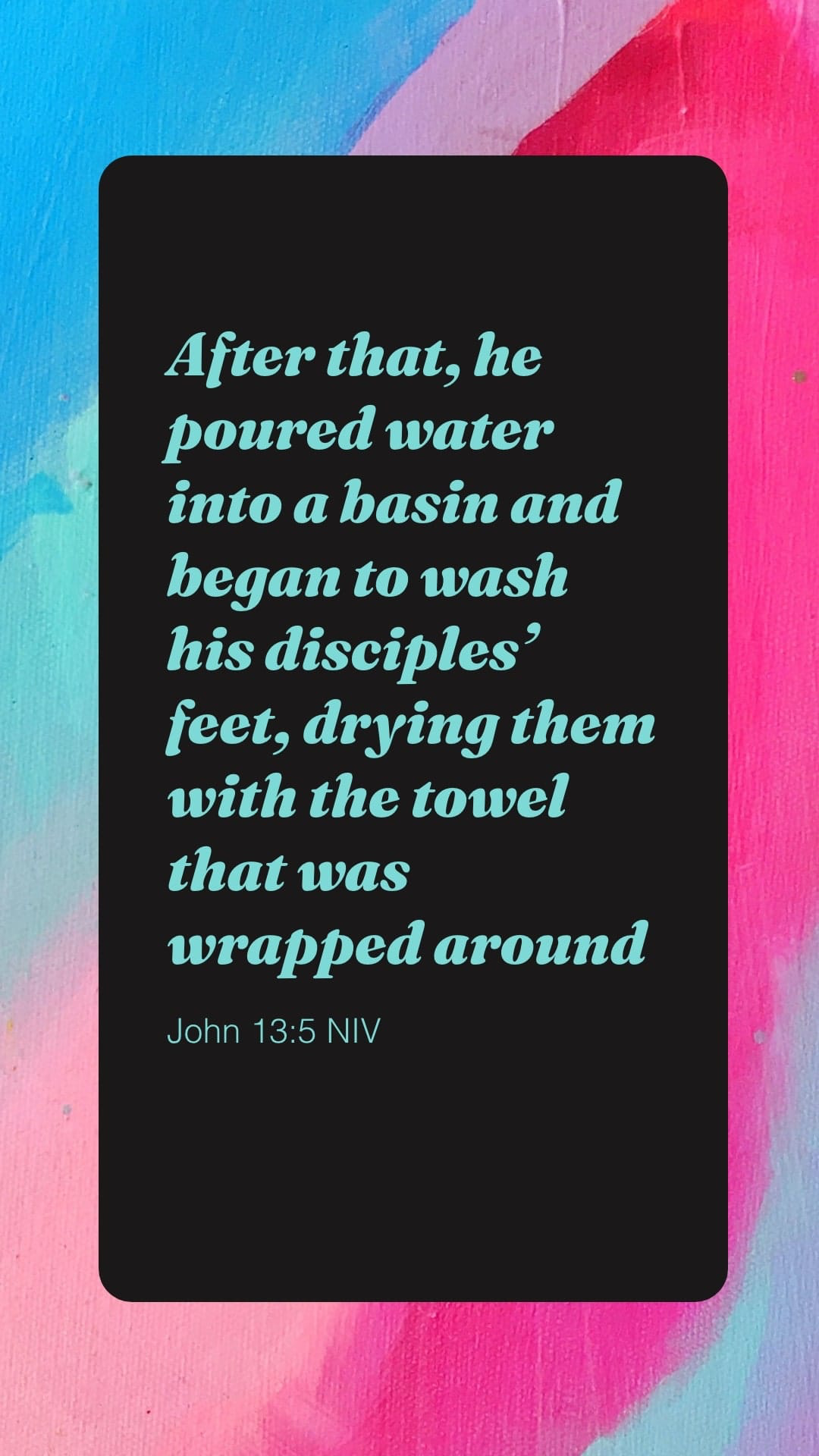
Day 38: Servant (John 13:4-5)

His service. His sacrifice. His grace. His love. It’s all connected.

For Jesus, becoming a servant wasn’t just a means to an end for his mission. Service WAS his mission. He didn’t come to be served but to serve. He took on the form of a servant and became obedient to the point of death – even death on a cross.

The scene around the dinner table in John 13 encapsulates everything Jesus came to do. He left his place at the head of the table, humbled himself and took on the task of the lowest servant. Love compelled him to serve those gathered with him – even Judas, knowing the betrayal to come. It’s a symbol of his incarnation, ministry, death, resurrection, and ascension. Love stooped down.

And he calls us to do the same.

Jesus reminded his disciples time and time again that the first would be last and the last would be first. He told them the greatest among them would be servant of all. After he washed their feet, he said they should also wash one another’s feet.

In the gospels there is no such term as “servant leadership.” There is only service. True leaders are servants, no strings attached. Servants are leaders, showing others how we are to treat and honor everyone around us.

A student is not above his master, Jesus reminds us. We’re not better than him. There is no task beneath us, no person unworthy of our service, no situation in which we can sit back and let someone else do it.

The love of Christ compels us – “Love one another as I have loved you.” We show our faith by our actions, particularly in service to others. What really matters is faith expressing itself through love. So let’s not just love in word only, but in truth and in action.

It is better to serve than to be served. It is better to give than to receive. (Social sciences back up that claim with research into generosity versus selfishness.) And whatever we do for “the least of these,” it’s like we’re doing it for Jesus himself.

So look for opportunities to serve, to show kindness and honor, to humble yourself and become servant of all.

Characteristics of Christ | UN-RETALIATORY

A 40 Day Journey to Becoming Like the One We Follow

Day 37: Un-Retaliatory (Matthew 5:38-39)

We live in a world that loves revenge, payback, getting even. You hit me, I hit you back harder. But as anyone with an ounce of understanding knows, violence breeds more violence. There is no end to “getting even.” It’s never even. It’s never payback, it’s always payback with interest.

Martin Luther King, Jr., knew this full well. The African American communities across the country during the Jim Crow era witnessed atrocities on a regular basis. Any perceived slight against a white citizen by a person of color could lead to entire towns being razed to the ground. Lynching was a terror-inducing threat hanging over the head of every little boy with darker skin.

It was never about payback. It was always about upping the violence to exert power and control. If only it had stopped with “an eye for an eye, and a tooth for a tooth.” Violence breeds nothing but more violence. That’s why violence must be met with non-violence in return. That’s the only way to break the cycle. Someone has to say “enough.”

So MLK and his branch of the civil rights movement were focused on non-violent resistance.

In telling his followers to “turn the other cheek,” Jesus is urging us to put an end to the vicious cycle of violence, revenge, and payback. “Eye for an eye” is one of the oldest legal codes in the world. But as Gandhi famously said, “An eye for an eye leaves the whole world blind.”

I hope this week you are taking some time to reflect on the Passion narratives in the Gospels. Jesus was beaten, mocked, spit on, slapped, beaten some more, falsely accused of all sorts of things – but he never spoke up in his own defense. He never retaliated. He was the one who truly held all power and authority. But as his enemies were nailing him to a cross and hurling insults at him, he cried out, “Father, forgive them, for they know not what they do.”

Paul, drawing on the example of Christ, urges us not to return evil for evil, but overcome evil by doing good. That’s the only way any of us can keep the world from going blind.

Characteristics of Christ | WILLING TO SACRIFICE

A 40 Day Journey to Becoming Like the One We Follow

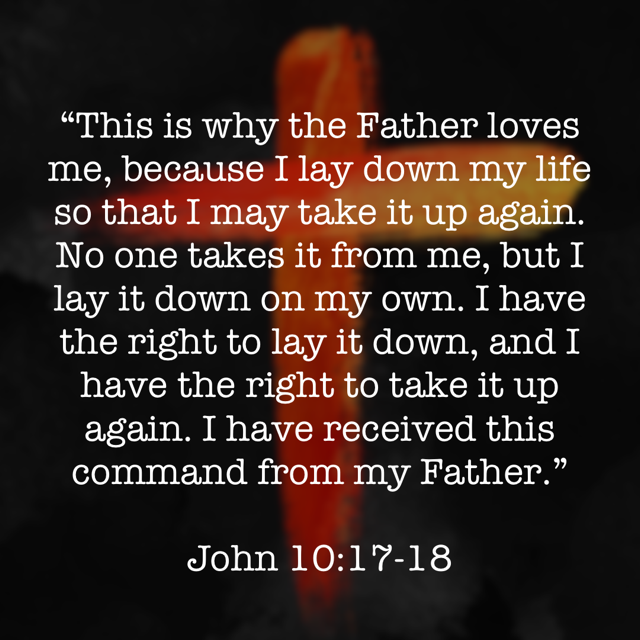
Day 36: Willing to Sacrifice (John 10:17-18)

When Jesus says in John 10 that he is “The Good Shepherd,” it can sound sort of weird to our modern ears. To his original audience, though, it would have immediately triggered thoughts about one man – one boy rather – the shepherd boy who would slay giants, route armies, and become king: David.

It would be like someone saying, “I’m the Terminator.” We all automatically think of a robot from the future in the skin of Arnold Schwarzenegger.

What made David a good shepherd? What made David a good general? What made David a good king? He definitely wasn’t perfect, but he will forever be remembered as “a man after God’s own heart.” What set David apart, among other things, was his willingness to lay his own life on the line.

He warded off threats to the flock by facing the danger head on. Most guys would run away from a bear or a lion, but not David. This same spirit drove him to take a stand against Goliath. It compelled him to lead his men into battle, not just call the shots from behind. It was only when he snuffed out this self-sacrificial attitude that he got into major trouble and destroyed lives.

A good shepherd lays down his life for his sheep. A good commander lays down his life for his soldiers. A good king lays down his life for his people. A loving friend lays down his life for his companions.

There’s one particular story about David that intrigues me. David wanted to set up an altar to offer sacrifices to God in order to stop a plague. He approached a man about buying a particular piece of property for this. The man offered to give the property freely, and would throw in the animals for free, too. But David insisted on paying a fair price for it, saying, “I will not offer to the Lord my God that which costs me nothing.”

It’s not a sacrifice if it doesn’t cost you something. Jesus embodies this most fully by freely offering his whole life as a sacrifice to overcome the plague of sin and death. Paul urges us to follow in Christ’s footsteps by offering our bodies as living sacrifices to the Lord.

Say it with me: “I will not offer to the Lord that which costs me nothing.”

Characteristics of Christ | SHREWD

A 40 Day Journey to Becoming Like the One We Follow

Day 35: Shrewd (John 2:24-25)

I admire the fact that Jesus could see through people. No, not like X-ray vision. He could see through their gestures, their outward actions and appearances, and he could see into the heart.

He knew the leper needed to be touched. He knew the woman at the well needed a deep conversation with a man who respected her humanity. He knew the lame man at the pool would be resistant to healing. He knew when the Pharisees and other Rabbis were engaging in bad faith arguments and trying to trap him.

Jesus had an amazing insight into the human psyche. He gave Simon the name Peter, which means rock, despite how unstable he was. He knew Peter would ultimately become a foundational pillar in the kingdom.

He knew the little girl would need something to eat after he brought her back to life.

He knew the formerly demon possessed man needed to go back home among his own people to share his story with family and friends.

And because he knows, Jesus is able to take the most dire situations, the most helpless cases, or the most hostile aggressors and shape the outcome of the situation to bring glory to God. He knows just what to say or do in order to bring about the most good for the most people, rather than being outmaneuvered by his enemies.

At one point he sent his disciples out into the world on a mission. He told them to be as innocent as doves and as shrewd as serpents.

Most of us don’t have nearly the level of intuition as Jesus had. But we do have scientific studies and research into human psychology that can help us become more shrewd in our encounters. We can learn about cognitive biases and distortions. We can learn how to connect to people on an emotional level. We can learn to develop greater empathy. We can access all sorts of tools to improve communication, conflict resolution, and community building.

But maybe some of us need to begin with knowing ourselves better. Allow God to search you and lead you on a journey of self-discovery THEN come back and try to understand your neighbor in a healthier way.

Characteristics of Christ | SUBMISSIVE

A 40 Day Journey to Becoming Like the One We Follow

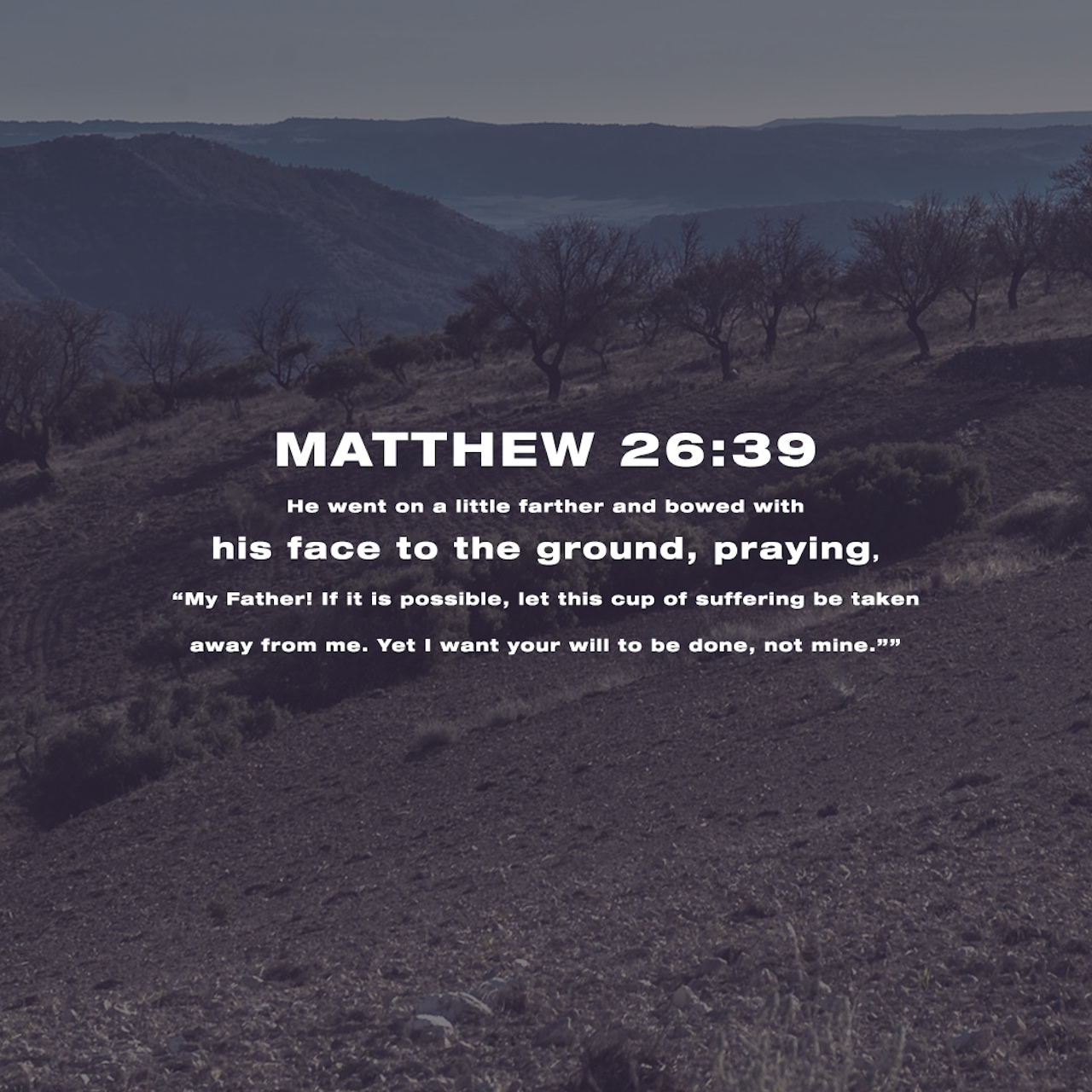
Day 34: Submissive (Matthew 26:39)

Let’s face it. No one likes to submit. We don’t like being told what to do or having others control our plans.

Being strong willed and independent can, like most traits, be a virtue or it can become a vice. In our society, you’ve got to look out for yourself. You have to advocate for yourself and those closest to you. But rugged individualism is antithetical to living in a well ordered society.

It’s even worse when it comes to religion. The prosperity preachers will tell you all you have to do is “name it and claim it.” If you pray hard enough, believe strongly enough, and send your tithe money to the right address, then God will bless you with a good life full of material wealth.

We like to call the shots. We like to be in control of our own destiny. We think we can “manifest” goodness in the world by our own volition. How’s that workin’ out for ya?

But what about Jesus?

If anyone in the history of the world could have taken matters into his own hands and reshaped society to benefit himself, it would have been Jesus. But throughout his ministry he makes it clear – he is only ever doing what the Father told him to do and saying what the Father told him to say. Apart from the Father he could do nothing. And apart from Christ we can do nothing.

His life and ministry was a living testimony for the power of submission. True freedom is found in surrendering to God’s will. True power is in realizing our own powerlessness. God is all sufficient when we aren’t good enough. God is all powerful when we are incompetent. God is the giver of all good things even when we have nothing to offer. God is our strength when we are weak.

The world fundamentally changed the day Jesus went to the cross. He didn’t have to, but he willingly surrendered his own life into the will of the Father.

Do you trust God enough to submit to his will for your life?

Characteristics of Christ | ZEAL

A 40 Day Journey to Becoming Like the One We Follow

Day 33: Zeal (John 2:16-17)

In the time of Jesus there was a sect of devout Jews who were patriots to the extreme. Rome would label them as terrorists. They devoted themselves to God and country, specializing in guerrilla warfare and stealth assassinations. They were militia men in civilian clothing. Ultimately they would be the last holdouts in a devastating war against Rome that would end with a mass suicide within the confines of the desert fortress known as Masada.

These were the Zealots.

Were they right? In their own eyes, obviously. As the name implies they were definitely zealous – meaning they were full of “great energy or enthusiasm in pursuit of a cause or an objective.” The objective was to bring about the kingdom of God and reestablish Israel as an independent nation by defeating and driving out the Roman occupation.

Zeal can be a virtue or a vice depending on where it’s focused. Many people across our nation are zealous about pro-life issues or environmental protections. Others are zealous about preserving tax cuts for the rich and upholding the causes of multi-billion dollar corporations. Some are zealous defenders of the status quo and will fight against any sort of change.

What was Jesus zealous about?

When he cleared the Temple of those clogging up the space with price-gouged sacrificial animals and rip-off rates of money exchange, his disciples couldn’t help but think of the Scripture that says, “Zeal for your house has consumed me.”

Jesus’ zeal, his cause or objective which he pursued with energy and enthusiasm, was not preserving the status quo. Jesus was passionate about opening up access to the Father as wide as he could. He wanted all people from everywhere to be able to worship God freely at the Temple. He wanted his followers to know and experience the Father just like he did. He is the Way, the Truth, and the Life, opening up access to everyone to come to the Father through himself.

What are you zealous for? When was the last time you felt zeal about something? Where are you directing your energy and enthusiasm? What cause or objective are you pursuing?

Let Jesus be our guide, to focus on the things that mattered most to him.