Page 61 of 82

Tents and Tarps

Harding University is heading up a fund raising campaign calls Tents and Tarps. A $50 donation will enable us to send a large tent and a large tarp to homeless Haitians. Not only have most of them lost their homes, but most people are afraid to be inside the remaining structures! These tents will address one of their most pressing needs right now: shelter. These tents will enable an entire family to stay warm and dry until permanent, safe shelters can be built.

So help us out by donating today!

The King will reply, ‘I tell you the truth, whatever you did for one of the least of these brothers of mine, you did for me.’ -Matthew 25:40
_____________________

Love

One of the greatest limitations of the English language is that we only have one word for love. The most common Greek lesson in our churches concerns the Greek forms of love, especially in regards to John 21:15-17. The two words used by Peter and Jesus would best be translated something like this…

When they had finished eating, Jesus said to Simon Peter, “Simon son of John, do you truly love me [unconditionally] more than these?”
“Yes, Lord,” he said, “you know that I love you [like a brother].”
Jesus said, “Feed my lambs.”

Again Jesus said, “Simon son of John, do you truly love me [unconditionally]?”
He answered, “Yes, Lord, you know that I love you [like a brother].”
Jesus said, “Take care of my sheep.”

The third time he said to him, “Simon son of John, do you [even] love me [like a brother]?”
Peter was hurt because Jesus asked him the third time, “Do you [even] love me [like a brother]?” He said, “Lord, you know all things; you know that I love you [like a brother].”

Jesus said, “Feed my sheep.”

Jesus began by asking Peter if he loved him unconditionally (agapo). Peter replied by saying that he loved him like a brother or close friend (philo). Peter was not at the point that he could answer truthfully that he loved Jesus unconditionally with all his heart, soul, mind, and strength. Peter was staring God in the face and could not bring himself to express this agape love which God expressed to mankind so clearly.

Fast forward a few decades and Peter is writing a letter to the scattered believers. The church has spread throughout most of the known world. Men and women were fully committed in love and devotion to this Jesus of Nazareth. Look what Peter had to say to these Christians:

“Though you have not seen him, you love him [unconditionally]; and even though you do not see him now, you believe in him and are filled with an inexpressible and glorious joy, for you are receiving the goal of your faith, the salvation of your souls.” 1 Peter 1:8-9

These people had never seen Jesus. They had never been to Jerusalem or the Sea of Galilee. They never saw a miracle, never heard a parable, and had no physical proof that the resurrection ever even happened. Yet they believed. What’s more – they loved him…unconditionally. They had this agape love for Jesus that Peter himself could not express even while looking into the eyes of the resurrected Lord.

Now think about it. How many times have you caught yourself thinking that you would believe more fully if you could just see God. You would truly learn to love Him if only he show himself to you. So what is it going to take? Action on God’s part or commitment on yours? Are you going to be just one more generation that “asks for a sign,” or are you going to take a look around and see the signs that are already there?

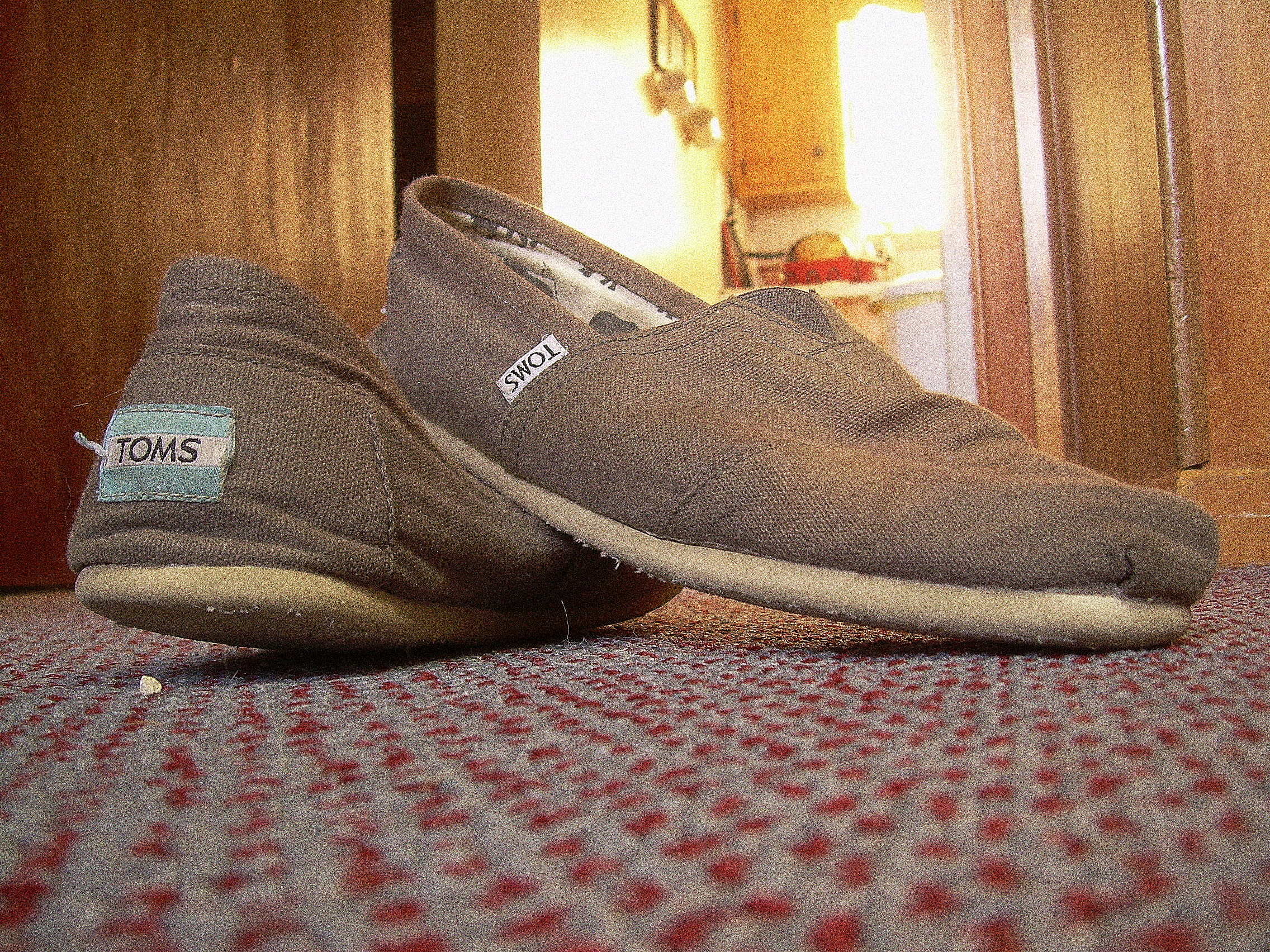
Who is Tom and why do you have his shoes?

TOMS shoes are the latest craze going around Harding. In case you haven’t heard, TOMS is the company that for every pair purchased will give a pair to a child in need. “One for One” is their motto. To date they have given away over 200,000 pairs of shoes to children in Argentina, Haiti, Ethiopia and other places. It’s an awesome movement, and it’s really cool to see how many of my fellow college students have joined in. You can read more about more about TOMS shoes here.

And in case you’re wondering, they are some of the most comfortable shoes I’ve ever had.

Post-Modern advertising at its finest (or worst)

Have you seen this Gap commercial?


Globalization, acceptance, diversity are all good things, but I think this is pushing it…”Happy Do-Whatever-You-Wan-ukah!” Really?

I also find it very interesting that they would include a Wiccan holiday but leave out any of the Muslim holidays during these months…

Worship

Wow, so it’s been almost two months. Crazy how its already November. 2009 is almost over and I will soon be entering my last semester of college.

Anyway, my excuse for not having updated in nearly two months fall into the realm of club stuff and research papers. I’m finishing up my 2nd term paper of the semester tonight, but I am taking a little mental break to write freely (i.e., not having to cite any sources for what comes out of my head).

Both of my research papers have been on the topic of worship. The first was based on Jeremiah 7:1-15, better known as Jeremiah’s Temple sermon. The second, which I am still working on (oh man, I just used a preposition incorrectly. Take that!) is an attempt to establish the principles of biblical worship. I thought that they were pretty good principles for Christian worship, so I would like to share them briefly.

1) Biblical worship is concerned first and foremost with the acknowledgment and glorification of God. That part did not change from Judaism to Christianity. We still worship God as sovereign creator and sustainer of life. It is God who took initiative in reconciling us to Himself, and for that He deserves all our honor and praise.

2) Biblical worship submits to the Lordship of Christ. Jesus is the head of the church. The church is His, and He alone has authority over her. In practical terms, this means that no human should dictate what goes on in the worship assembly. Every member has a function. Each one has a song, a prayer, a testimony, a word of encouragement (see 1 Cor 14:26ff). Each member of the body is guided by the head of the body who is Christ.

3) Biblical worship does everything it can to promote unity in the body of believers. Through the gathered worship assembly, Christians engage each other in holy fellowship (or koinonia). The church should be a place of encouragement, support, righteousness, accountability, love, and justice. Worship is not about you (singular) and God, it is about you (plural) and God. This is why it shouldn’t matter if the worship is what you want or what you need or what you like. Worship involves equal submission to each other as everyone submits to God and Christ.

Worship

Wow, so it’s been almost two months. Crazy how its already November. 2009 is almost over and I will soon be entering my last semester of college.

Anyway, my excuse for not having updated in nearly two months fall into the realm of club stuff and research papers. I’m finishing up my 2nd term paper of the semester tonight, but I am taking a little mental break to write freely (i.e., not having to cite any sources for what comes out of my head).

Both of my research papers have been on the topic of worship. The first was based on Jeremiah 7:1-15, better known as Jeremiah’s Temple sermon. The second, which I am still working on (oh man, I just used a preposition incorrectly. Take that!) is an attempt to establish the principles of biblical worship. I thought that they were pretty good principles for Christian worship, so I would like to share them briefly.

1) Biblical worship is concerned first and foremost with the acknowledgment and glorification of God. That part did not change from Judaism to Christianity. We still worship God as sovereign creator and sustainer of life. It is God who took initiative in reconciling us to Himself, and for that He deserves all our honor and praise.

2) Biblical worship submits to the Lordship of Christ. Jesus is the head of the church. The church is His, and He alone has authority over her. In practical terms, this means that no human should dictate what goes on in the worship assembly. Every member has a function. Each one has a song, a prayer, a testimony, a word of encouragement (see 1 Cor 14:26ff). Each member of the body is guided by the head of the body who is Christ.

3) Biblical worship does everything it can to promote unity in the body of believers. Through the gathered worship assembly, Christians engage each other in holy fellowship (or koinonia). The church should be a place of encouragement, support, righteousness, accountability, love, and justice. Worship is not about you (singular) and God, it is about you (plural) and God. This is why it shouldn’t matter if the worship is what you want or what you need or what you like. Worship involves equal submission to each other as everyone submits to God and Christ.

Terrifying Peace


The Master had been surrounded by huge crowds all day. Hours he spent teaching them, trying to explain faith and heaven through stories about seeds. It was getting late, and the Master was exhausted from the crowds. He gave the word and we loaded up the boats and set sail on the Sea toward the other side. As we set sail the sun was setting over the mountains to the West and the whole body of water was transformed into brilliant shades of purples and pinks as the sky dimmed orange and then red.

The sun dipped behind the hills, and as the sky grew darker some clouds began to blow in on an east wind. The wind blew harder, and the sea once smooth was now tossing the boats like a child’s plaything. Our boats had been blown off course and there was no way to tell which direction we were heading. The waves grew taller, the winds grew fiercer, and the rain began pouring down upon us.

We were all frantically rowing, steering, and bailing water out of the boat, for the waves were now breaking violently over the sides as if begging to steal us away to the bottom of the sea. Panic, fear, dread. Would our boats hold together – our only source of income? Would we live to see our families again? We had been caught in storms like this many times before, but nothing could have prepared us for the veracity of this squall.

Looking around I noticed five men at their stations when we started out with six. Where was the Master? Frantically I looked the length of the boat. Relief, bewilderment, and alarm swept over me all at once as I found that the Master was asleep on a cushion in the stern of the boat. Anxiously I awoke him, yelling through the wind and the rain, “Master! Don’t you care that we’re going to die?”

His demeanor remained eerily calm as he stood up, walked to the edge of the boat and said right into the face of the storm, “Peace! Be still.”

The final syllable had hardly left his rain-battered lips before the wind died, the rain ceased, the waves grew calm, and the clouds went on their way. Suddenly what had been a great, horrific squall was now as serene as heaven itself. The sea lit up from the reflection of the moon and the stars. Perfect calm.

The Master watched the scene unfold along with us. Then he turned back to face us and asked point-blank, “Why are you afraid? Do you still have no faith?”

We just turned and stared at each other as the Master went back to the stern. Wiping the rain and sea water from our faces terror once again swelled through us as we tried to come to grips with what just happened. “Who is this man,” I asked with trembling lips, “that even the wind and the waves obey him?”

I never knew that perfect peace could be so terrifying when you are in the presence of the Almighty God.

(from Mark 4:35-41)

Terrifying Peace


The Master had been surrounded by huge crowds all day. Hours he spent teaching them, trying to explain faith and heaven through stories about seeds. It was getting late, and the Master was exhausted from the crowds. He gave the word and we loaded up the boats and set sail on the Sea toward the other side. As we set sail the sun was setting over the mountains to the West and the whole body of water was transformed into brilliant shades of purples and pinks as the sky dimmed orange and then red.

The sun dipped behind the hills, and as the sky grew darker some clouds began to blow in on an east wind. The wind blew harder, and the sea once smooth was now tossing the boats like a child’s plaything. Our boats had been blown off course and there was no way to tell which direction we were heading. The waves grew taller, the winds grew fiercer, and the rain began pouring down upon us.

We were all frantically rowing, steering, and bailing water out of the boat, for the waves were now breaking violently over the sides as if begging to steal us away to the bottom of the sea. Panic, fear, dread. Would our boats hold together – our only source of income? Would we live to see our families again? We had been caught in storms like this many times before, but nothing could have prepared us for the veracity of this squall.

Looking around I noticed five men at their stations when we started out with six. Where was the Master? Frantically I looked the length of the boat. Relief, bewilderment, and alarm swept over me all at once as I found that the Master was asleep on a cushion in the stern of the boat. Anxiously I awoke him, yelling through the wind and the rain, “Master! Don’t you care that we’re going to die?”

His demeanor remained eerily calm as he stood up, walked to the edge of the boat and said right into the face of the storm, “Peace! Be still.”

The final syllable had hardly left his rain-battered lips before the wind died, the rain ceased, the waves grew calm, and the clouds went on their way. Suddenly what had been a great, horrific squall was now as serene as heaven itself. The sea lit up from the reflection of the moon and the stars. Perfect calm.

The Master watched the scene unfold along with us. Then he turned back to face us and asked point-blank, “Why are you afraid? Do you still have no faith?”

We just turned and stared at each other as the Master went back to the stern. Wiping the rain and sea water from our faces terror once again swelled through us as we tried to come to grips with what just happened. “Who is this man,” I asked with trembling lips, “that even the wind and the waves obey him?”

I never knew that perfect peace could be so terrifying when you are in the presence of the Almighty God.

(from Mark 4:35-41)