Page 70 of 82

The Alabaster Mosque of Muhammad Ali


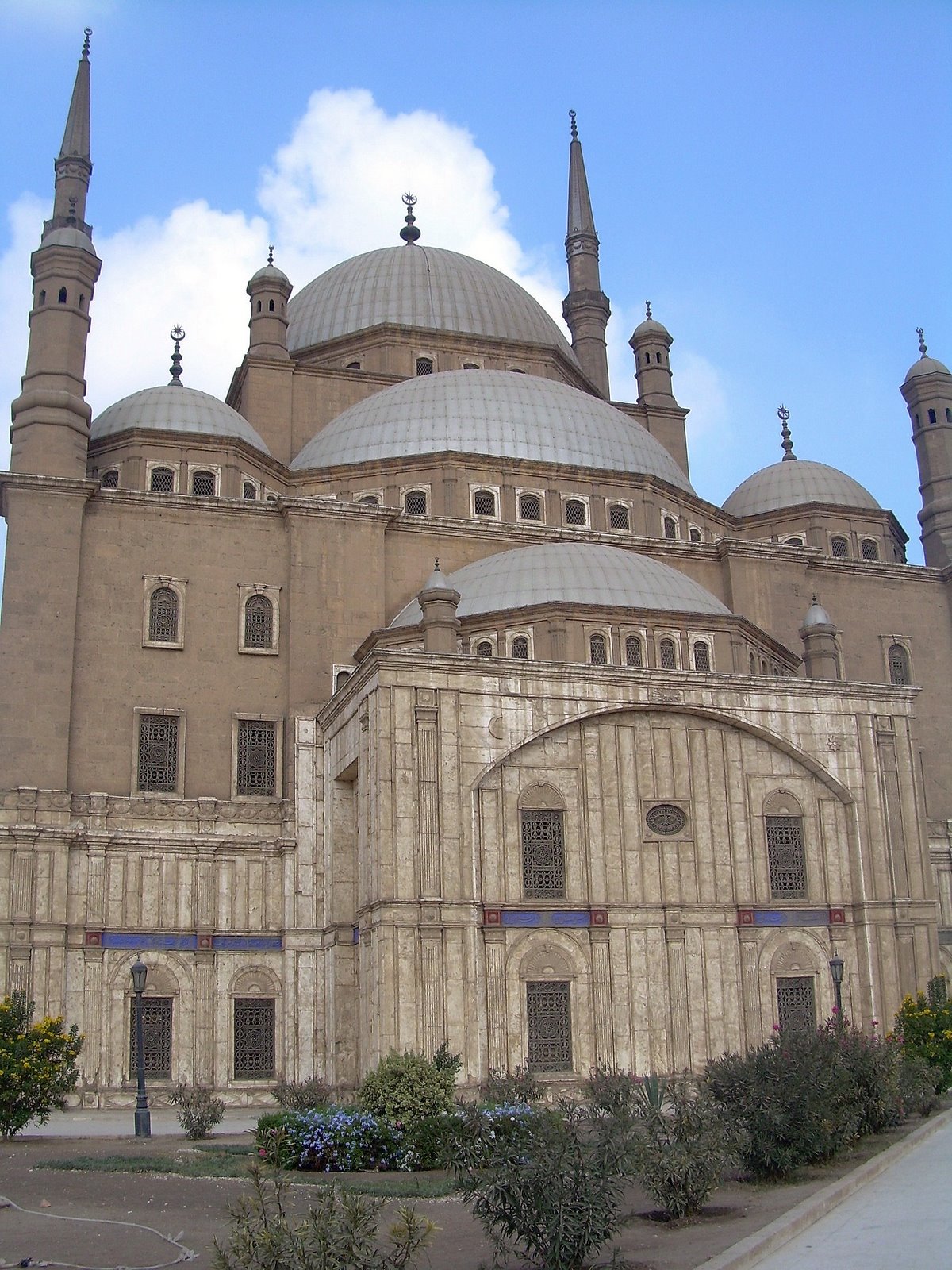
This is one of the more impressive “modern” structures I saw in Egypt, dating back to 1815. This mosque was built in honor of Muhammad Ali and is constructed entirely out of alabaster, hence the name…

The design is based off the Hagia Sofia in Istanbul, except way smaller. It’s actually built inside an ancient citadel built by Salahadin in 1187 on the only road leading from Canaan to Egypt. The mosque is no longer used as a place of worship or prayer, its main function is a monument, actually, to Muhammad Ali (not the boxer), a man who liberated Egypt from the oppressive Ottoman Empire and was crowned King of Egypt in 1840. His tomb is inside the mosque and thousands of Musilms make a pilgrimage to this mosque in Cairo to pay homage to one of the greatest Islamic leaders ever. There is also a monument to Muhammad Ali in Kavala, Greece, in honor of the help he and his army provided to Greece against the Ottoman Empire.

Temple of Luxor


This was one of the highlights of the trip for me. During the time of Moses, Luxor was the capital city of Egypt, and subsequently the Temple of Luxor was both the religious and educational center of Southern Egypt where Moses grew up and received his education. We know for a fact that if the story of Moses is accurately recorded in Exodus (as most believe it is) then this Moses spent the first 40 years of his life in and around this Temple, both worshipping and receiving a top-quality Egyptian education.

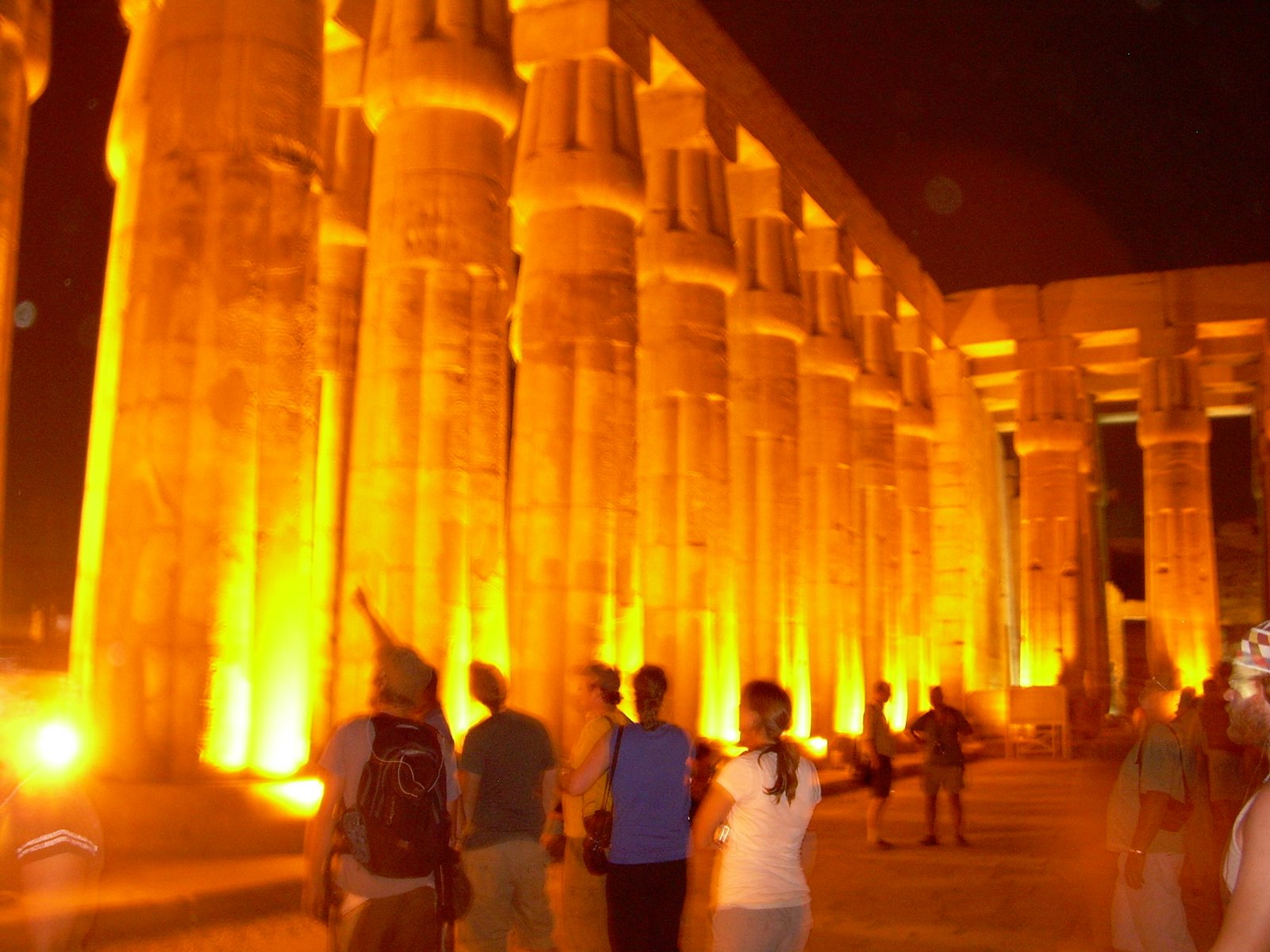
We visited the temple during at night when it was illuminated, and the yellow lights playing off the statues and columns with the clear night sky overhead was beautiful. In front of the temple are two gigantic statues of, who else?, Ramses II, followed by more gigantic statues of Ramses II and others inside the main courtyard area. All Egyptian temples are laid out in the same basic format: large front gates (called pylons) followed by an open courtyard where commoners would come and offer sacrifices and worship; then comes a half-open pillared/roofed section where only priests can enter; then comes a vestibule area reserved for the maintainence of the god (washing, feeding, etc.); then the holy of holies where the idol is kept. What makes the Temple at Luxor different is that beyond the first enclosed area for the priests comes another open courtyard area. This is where the royal family’s children would have come to receive an education, and this is where we know Moses spent most of his childhood. We were able to sit around the very place where Moses was and have a short singing devotional. For me, this was the climax of the entire trip. Everything had led up to this moment where we we sitting in the place Moses had sat some 3000+ years ago.

Eucharistia (Thanksgiving)

My God and my Lord,
Father of mankind, and Creator of all,

Thank you. You have blessed me abundantly more than all I have asked or imagined.

I thank you for the incredible opportunities with which you have blessed me, and I am grateful for your safe-keeping on our journeys.

I am truly blessed to have been able to visit Greece, Egypt, and Israel on this trip and for the knowledge I have gained through experiencing these places. I thank you for allowing your word to come to life for me by walking where your son and servants lived, walked, talked, and interacted with your creation. May I never lose these memories, and may I use this experience to spread your word.

I thank you for blessing me with the people in my life, for my close friends, my family, and my best friend and wife, Katelyn.

Thank you for all the blessings in this life which I all too often take for granted, yet I realize that I don’t deserve any of them.

Thank you for teaching me patience in dealing with people and for giving me the ability to love as you love.

I thank you most of all for the sacrifice of your son and everything which that one act has done for my life. Thank you for not holding back your only son for my sake. Thank you for loving me enough to give me the opportunity to live with you. Thank you for the power of your gospel.

All this I pray through the name of your son and my savior,
Amen.
_________
Wonderful, merciful Savior
Precious Redeemer and Friend
Who would have thought that a Lamb could
Rescue the souls of men?
Oh, You rescue the souls of men.

Counselor, Comforter, Keeper
Spirit we long to embrace
You offer hope when our hearts have
Hopelessly lost the way.
Oh, we’ve hopelessly lost our way.

You are the one that we praise
You are the one we adore
You give the healing and grace our
Hearts always hunger for,
Oh, our hearts always hunger for.

Almighty, infinite Father
Faithfully loving Your own,
Here in our weakness You find us
Falling before Your throne.
Oh, we’re falling before Your throne

You are the one that we praise
You are the one we adore
You give the healing and grace our
Hearts always hunger for,
Oh, our hearts always hunger for.

Memphis and Saqqara

The cities of Memphis and Saqqara were the last stops on our trip to Egypt. We didn’t really spend much time at either site, so I’m combing the two into one entry.

Memphis:
There wasn’t much to see in Memphis other than a small sphinx statue and a gigantic (fallen) statue of Ramses II. I think the only reason we actually went to Memphis was the fact that it was the capital city of Egypt when Abraham and Sarah made their trip down south. This is where Abraham lied about his relationship with Sarah to the Pharaoh. Interesting story, not a very interesting place these days, though. Ironically, there are no huge pyramids in Memphis, Egypt, unlike Memphis, Tennessee, which has that obnoxious Pyramid right on the Mississippi River.

Saqqara:
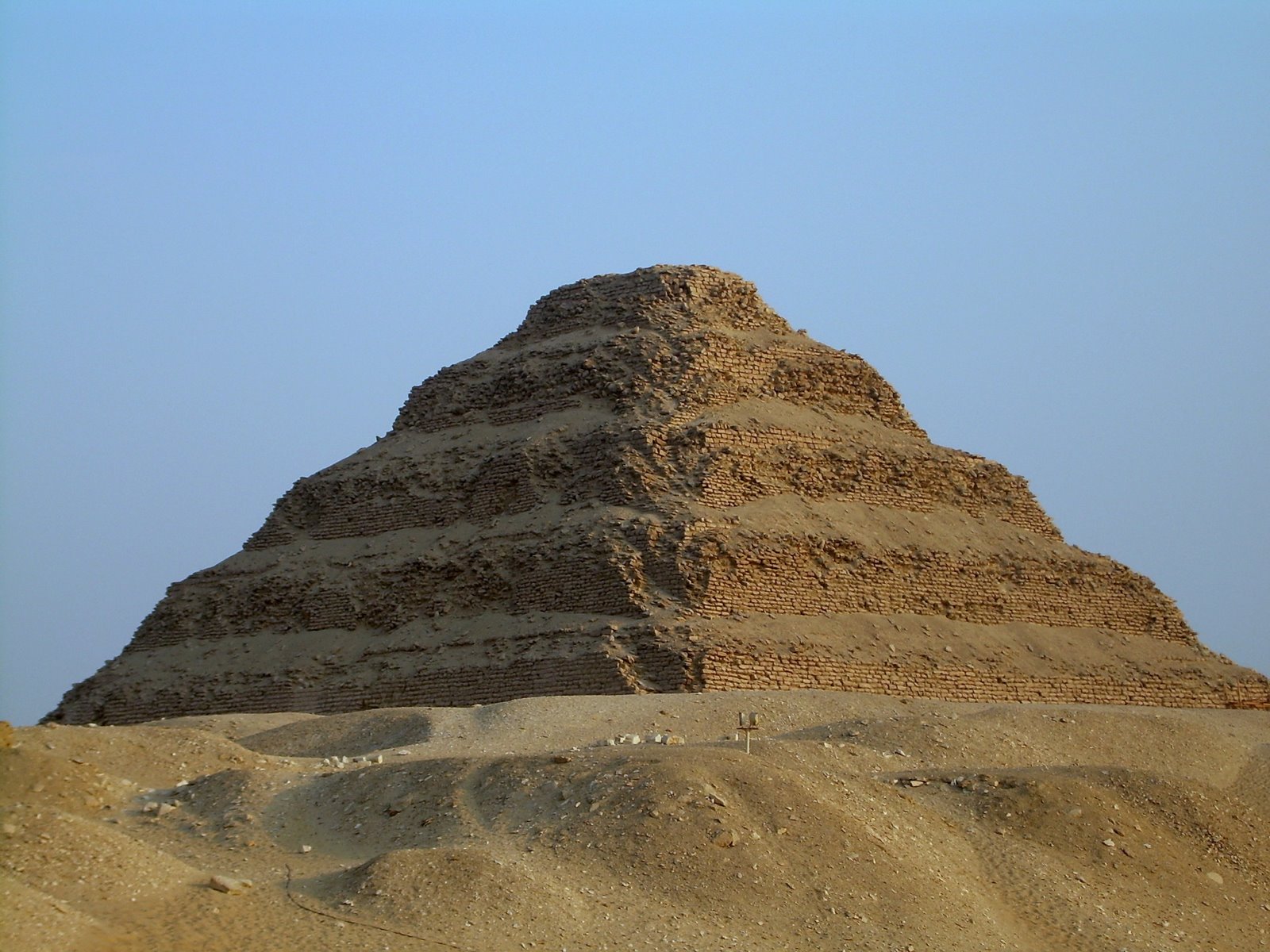
The main feature in Saqqara was the Step Pyramid of Pharaoh Zoser, which was the first burial pyramid ever built. To quote my friend Jon, “It’s not a full blooded pyramid. It’s just a step-pyramid…”

Egyptian Archaelogical Museum

We were told before we went in that if you were to spend one minute at each display in the Archaeological museum, it would take you nine months to get through it all, and I believe it. This huge building is packed with statues, pottery, jewelry, etc. from all periods of ancient Egyptian history. For time’s sake, I will only tell about three main highlights for me.

First, we had an opportunity to enter the royal mummy room. It was incredible to stare into the face of Ramses II and Queen Hatshepsut. Their bodies have been preserved so well that most of the mummies still have hair, teeth, fingernails, etc. One thing I noticed was that most of the Pharaohs on display died in their early to mid 40s, yet Ramses II lived to the grand age of 65 (granted, he suffered from numerous health problems). I couldn’t help but wonder what these rulers would think if they knew that their mummified bodies were now on display thousands of years after they died for hundreds of thousands of foreiners to gawk at? I know I would not be happy at all if that many strangers were staring at my 3000 year old body.

Second, we got to see the Stella of Meremptah, a huge stone in which the life and times of this Pharaoh are chronicled. The most interesting part about this discovery is the fact that the Pharaoh records, “There is no seed left of the Hebrews in all of Egypt.” This is one of the key archaeological finds supporting and setting a limit on the date of the Exodus.

Finally, one of the main attractions of the museum is the wing dedicated to all the assortment of stuff found in the tomb of King Tutankhamun, everything from pottery, to bed frames, to hockey sticks, to chariots, to the gold mask of his coffin. It was truely impressive to see how many treasures this short-lived Pharaoh was buried with. We’re talking about hundreds of millions of dollars worth of gold, silver, fine jewels, and other assets. Scholars have found out as much about Egyptian culture from the discoveries in Tut’s tomb than just about any other single discovery. I can’t even fathom how much more stuff would have been buried with the more important Pharaohs, like Ramses II or Thutmosis III.

Again, there is so much more I could write about, but these were the highlights of the museum.

Old City Cairo


The Old City part of Cairo, also known as Heliopolis or On, has been around from the time of Joseph and is built on the main road connecting Egypt with Palestine. This is the place where many Jews would have fled in the Babylonian conquest, and logically this is the part of Egypt where Joseph and Mary would have come to flee the wrath of King Herod.

Two of the places we visited in the Old City were the Jewish Synagogue and the Abu Serga Church. The synagogue in the Old City is where the Geniza documents were discovered. They were the oldest copies of the Hebrew Bible until the discovery of the Dead Sea Scrolls. The Abu Serga Church is the oldest (or second oldest) Coptic church in Egypt, and according to the Coptic tradition is built directly over the place where Joseph, Mary, and Jesus lived for a couple years when they fled to Egypt. It is very possible, but I have never been one to put much stock in the place. It was still cool, though, because this is the first place we have visited where Jesus once was.

I wonder if Jesus was actually old enough to remember seeing the Pyramids…

The Alabaster Mosque of Muhammad Ali


This is one of the more impressive “modern” structures I saw in Egypt, dating back to 1815. This mosque was built in honor of Muhammad Ali and is constructed entirely out of alabaster, hence the name…

The design is based off the Hagia Sofia in Istanbul, except way smaller. It’s actually built inside an ancient citadel built by Salahadin in 1187 on the only road leading from Canaan to Egypt. The mosque is no longer used as a place of worship or prayer, its main function is a monument, actually, to Muhammad Ali (not the boxer), a man who liberated Egypt from the oppressive Ottoman Empire and was crowned King of Egypt in 1840. His tomb is inside the mosque and thousands of Musilms make a pilgrimage to this mosque in Cairo to pay homage to one of the greatest Islamic leaders ever. There is also a monument to Muhammad Ali in Kavala, Greece, in honor of the help he and his army provided to Greece against the Ottoman Empire.

Temple of Luxor


This was one of the highlights of the trip for me. During the time of Moses, Luxor was the capital city of Egypt, and subsequently the Temple of Luxor was both the religious and educational center of Southern Egypt where Moses grew up and received his education. We know for a fact that if the story of Moses is accurately recorded in Exodus (as most believe it is) then this Moses spent the first 40 years of his life in and around this Temple, both worshipping and receiving a top-quality Egyptian education.

We visited the temple during at night when it was illuminated, and the yellow lights playing off the statues and columns with the clear night sky overhead was beautiful. In front of the temple are two gigantic statues of, who else?, Ramses II, followed by more gigantic statues of Ramses II and others inside the main courtyard area. All Egyptian temples are laid out in the same basic format: large front gates (called pylons) followed by an open courtyard where commoners would come and offer sacrifices and worship; then comes a half-open pillared/roofed section where only priests can enter; then comes a vestibule area reserved for the maintainence of the god (washing, feeding, etc.); then the holy of holies where the idol is kept. What makes the Temple at Luxor different is that beyond the first enclosed area for the priests comes another open courtyard area. This is where the royal family’s children would have come to receive an education, and this is where we know Moses spent most of his childhood. We were able to sit around the very place where Moses was and have a short singing devotional. For me, this was the climax of the entire trip. Everything had led up to this moment where we we sitting in the place Moses had sat some 3000+ years ago.

Temple of Karnak

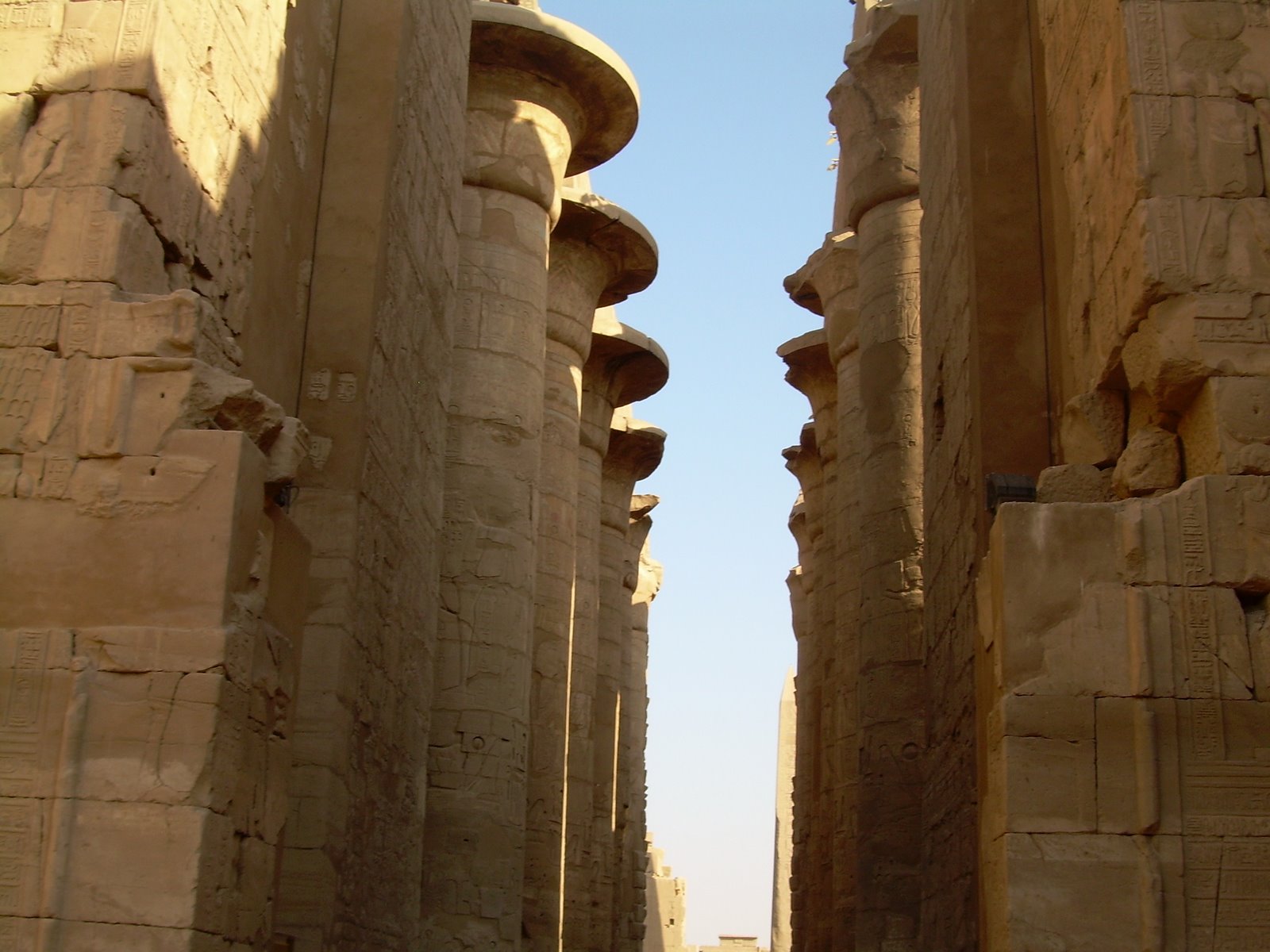
When ancient Egyptian authors talk about “The Temple”, they are most likely making a reference to the Temple at Karnak, which is the largest temple complex in the world. This temple complex, dedicated to “Amen” (the head creator god) was built over the span of 2,ooo years by multiple Pharaohs and covers 102 acres (not including the large garden areas). That’s 26 times the size of the Temple Mount in Jerusalem. It has 6 gigantic gates, each one built by a different Pharoah. The last gate was built by Pharaoh Niku, the ruler who killed King Josiah in a battle against Israel. In front of the temple is a long “Ram Avenue” built by Ramses II which stretches all the way to the Luxor Temple complex, about a mile and a half away. Inside the temple are 134 gigantic columns, many of which are well over 60 feet tall (the number of columns in a temple represents the number of priests serving in it). Also inside the Temple are (or were) 6 giant obelisks (think Washington Monument), each carved from one huge piece of granite. This place is impressive now, and I can only imagine how much more so it would have been 2500 years ago.

One of the coolest parts about the Temple, for me at least, was the fact that some of the carvings in the stones help us to set a biblical timeline, especially for the Old Testament era. The Pharaoh Shishank, who marched on Jerusalem, made a list of all the peoples and regions which he defeated or brought under his rule. This was during the reign of Rehaboam. In the Temple of Karnak we find inscriptions of both “Hebrews” and “Galilee”. It was really awesome to see those inscriptions which were thousands of years old.

This Temple also has on its complex an “Absolution Lake”, which is basically a large artificial pond used for ceremonial cleansing. There was also a large scarab statue which people walk around a certain number of times for wealth, fertility, etc. I thought it was a bit silly, but we walked around it anyway (for wealth, not fertility).

Temple of Karnak

When ancient Egyptian authors talk about “The Temple”, they are most likely making a reference to the Temple at Karnak, which is the largest temple complex in the world. This temple complex, dedicated to “Amen” (the head creator god) was built over the span of 2,ooo years by multiple Pharaohs and covers 102 acres (not including the large garden areas). That’s 26 times the size of the Temple Mount in Jerusalem. It has 6 gigantic gates, each one built by a different Pharoah. The last gate was built by Pharaoh Niku, the ruler who killed King Josiah in a battle against Israel. In front of the temple is a long “Ram Avenue” built by Ramses II which stretches all the way to the Luxor Temple complex, about a mile and a half away. Inside the temple are 134 gigantic columns, many of which are well over 60 feet tall (the number of columns in a temple represents the number of priests serving in it). Also inside the Temple are (or were) 6 giant obelisks (think Washington Monument), each carved from one huge piece of granite. This place is impressive now, and I can only imagine how much more so it would have been 2500 years ago.

One of the coolest parts about the Temple, for me at least, was the fact that some of the carvings in the stones help us to set a biblical timeline, especially for the Old Testament era. The Pharaoh Shishank, who marched on Jerusalem, made a list of all the peoples and regions which he defeated or brought under his rule. This was during the reign of Rehaboam. In the Temple of Karnak we find inscriptions of both “Hebrews” and “Galilee”. It was really awesome to see those inscriptions which were thousands of years old.

This Temple also has on its complex an “Absolution Lake”, which is basically a large artificial pond used for ceremonial cleansing. There was also a large scarab statue which people walk around a certain number of times for wealth, fertility, etc. I thought it was a bit silly, but we walked around it anyway (for wealth, not fertility).