Page 71 of 82

Valley of the Workers


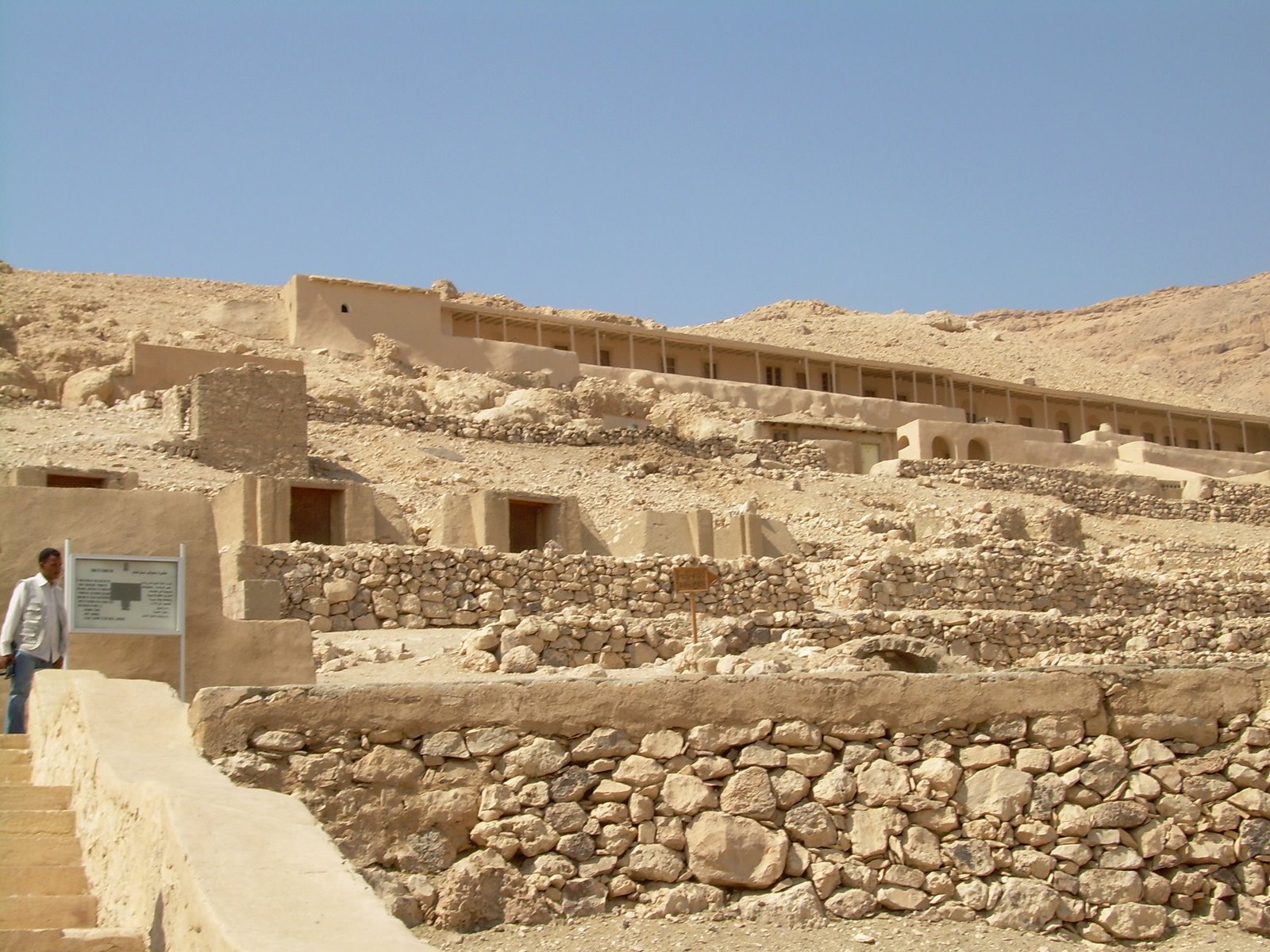
On the other side of the mountains from the Valley of the Kings lies the Valley of the Workers which is the best preserved working-class village in all of Egypt. Down in the valley are the ruins of about 73 houses and some other structures, even one of the earliest paved roads in the world. This village dates back to ca. 1450BC or earlier and gives us the earliest clues as to what life was like for the working class citizens of Egypt.

Up on the hill beside the village is a series of tombs which the workers prepared for themselves. We were able to enter 2 of the better preserved tombs which both had frescoes painted on the walls which are much more well-preserved than any paintings in ancient Egypt.

With as much fame as the Pharaohs receive because of their massive building projects, the workers who actually built those structures also built some impressive, smaller structures, like smaller pyramids on top of some tombs, paved roads, and vaulted ceilings dating back to at least 1450BC. It was nice to see how normal people lived in ancient Egypt, especially after spending so much time around gigantic temples and palaces.

Valley of the Kings


The Valley of the Kings is really the most visited site in all of Egypt, surpassing even the Great Pyramids in tourism. I find it interesting that the two most visited sites in the country have to deal with death and human efforts to preserve whatever they could.

The days of the Pyramids had long since passed by the time the tombs in the Valley of the Kings were dug. The Pharaohs of the Pyramid era (Old Kingdom, before the time of Abraham) were believed to be the full manifestation of the gods on earth, so their tombs were much more elaborate, much more magnificent, and much more a target for grave robbers. By the time the Middle Kingdom rolled around, the Pharaohs only considered themselves as half-gods, or demi-gods, yet it is clear from reliefs and tomb paintings that the Pharaohs held a lower position to the gods of the Egyptian pantheon. The Valley of the Kings contains 64 known graves of Pharaohs from the Middle Kingdom period, and interestingly enough, the first ruler to be buried in the Valley of the Kings was Queen Hatshepsut.

Everyone probably knows the “famous” King Tut, whose tomb was found in this valley still completely stocked with gold and all sorts of possessions. Yet King Tut, who was only about 18 when he died, had the least elaborate tomb in the entire valley, so it is theorized. Of the rulers buried in the valley, there are at least 4 different dynasties, including around 11 or 12 tombs of rulers bearing the name “Ramses”, including Ramses the Great (the II). It’s hard for me to even fathom how much more elegant and elaborate Ramses II’s tomb must have been compared to King Tut’s.

We did get to go down into three of the tombs (some people paid extra to go into Tut’s tomb). Of the three tombs, one belonged to a ruler named Thutmosis III who actually became Egypt’s most powerful Pharaoh ever and could likely have been the Pharaoh under whose rule the harsh persecution of the Hebrews and Semitic peoples began. If it is the case that Thutmosis III was the Pharaoh of the persecution, then it is likely that Queen Hatshepsut was the princess who drew Moses out from the Nile.

I know that the discoveries and excavations of these tombs have contibuted quite a bit to our understanding of Egyptian theology, ideology, and every day life, but it is at the same time (for me) a bit depressing to realize that these men and women went to such extreme measures in search for eternal life. I guess they have pretty well toward achieving that goal beacuse now they are lying peacefully, forever enshrined within glass cases for thousands of people to stare at.

End of Semester Rush

Well, we are back from the Holy Land. The last 9 days have been incredible, and I can’t wait to share with you all the sights I saw and all the emotions I experienced, but it may take a while. I have been kind of lax in updating recently. I still have to finish the Egypt trip, our southern Greece trip, and then Israel. Not only that, but I also have two class presentations and then finals coming up. So the next few days will be extremely busy as the semester in Greece comes to a close.

I will try my best to get caught up with this blog sometime in the next 10 days before we leave on free travel through Europe. Please keep us in your prayers as this is going to be a couple of highly stressful weeks.

Valley of the Workers


On the other side of the mountains from the Valley of the Kings lies the Valley of the Workers which is the best preserved working-class village in all of Egypt. Down in the valley are the ruins of about 73 houses and some other structures, even one of the earliest paved roads in the world. This village dates back to ca. 1450BC or earlier and gives us the earliest clues as to what life was like for the working class citizens of Egypt.

Up on the hill beside the village is a series of tombs which the workers prepared for themselves. We were able to enter 2 of the better preserved tombs which both had frescoes painted on the walls which are much more well-preserved than any paintings in ancient Egypt.

With as much fame as the Pharaohs receive because of their massive building projects, the workers who actually built those structures also built some impressive, smaller structures, like smaller pyramids on top of some tombs, paved roads, and vaulted ceilings dating back to at least 1450BC. It was nice to see how normal people lived in ancient Egypt, especially after spending so much time around gigantic temples and palaces.

Valley of the Kings


The Valley of the Kings is really the most visited site in all of Egypt, surpassing even the Great Pyramids in tourism. I find it interesting that the two most visited sites in the country have to deal with death and human efforts to preserve whatever they could.

The days of the Pyramids had long since passed by the time the tombs in the Valley of the Kings were dug. The Pharaohs of the Pyramid era (Old Kingdom, before the time of Abraham) were believed to be the full manifestation of the gods on earth, so their tombs were much more elaborate, much more magnificent, and much more a target for grave robbers. By the time the Middle Kingdom rolled around, the Pharaohs only considered themselves as half-gods, or demi-gods, yet it is clear from reliefs and tomb paintings that the Pharaohs held a lower position to the gods of the Egyptian pantheon. The Valley of the Kings contains 64 known graves of Pharaohs from the Middle Kingdom period, and interestingly enough, the first ruler to be buried in the Valley of the Kings was Queen Hatshepsut.

Everyone probably knows the “famous” King Tut, whose tomb was found in this valley still completely stocked with gold and all sorts of possessions. Yet King Tut, who was only about 18 when he died, had the least elaborate tomb in the entire valley, so it is theorized. Of the rulers buried in the valley, there are at least 4 different dynasties, including around 11 or 12 tombs of rulers bearing the name “Ramses”, including Ramses the Great (the II). It’s hard for me to even fathom how much more elegant and elaborate Ramses II’s tomb must have been compared to King Tut’s.

We did get to go down into three of the tombs (some people paid extra to go into Tut’s tomb). Of the three tombs, one belonged to a ruler named Thutmosis III who actually became Egypt’s most powerful Pharaoh ever and could likely have been the Pharaoh under whose rule the harsh persecution of the Hebrews and Semitic peoples began. If it is the case that Thutmosis III was the Pharaoh of the persecution, then it is likely that Queen Hatshepsut was the princess who drew Moses out from the Nile.

I know that the discoveries and excavations of these tombs have contibuted quite a bit to our understanding of Egyptian theology, ideology, and every day life, but it is at the same time (for me) a bit depressing to realize that these men and women went to such extreme measures in search for eternal life. I guess they have pretty well toward achieving that goal beacuse now they are lying peacefully, forever enshrined within glass cases for thousands of people to stare at.

End of Semester Rush

Well, we are back from the Holy Land. The last 9 days have been incredible, and I can’t wait to share with you all the sights I saw and all the emotions I experienced, but it may take a while. I have been kind of lax in updating recently. I still have to finish the Egypt trip, our southern Greece trip, and then Israel. Not only that, but I also have two class presentations and then finals coming up. So the next few days will be extremely busy as the semester in Greece comes to a close.

I will try my best to get caught up with this blog sometime in the next 10 days before we leave on free travel through Europe. Please keep us in your prayers as this is going to be a couple of highly stressful weeks.

Of Boats and Falcons


Edfu Temple:
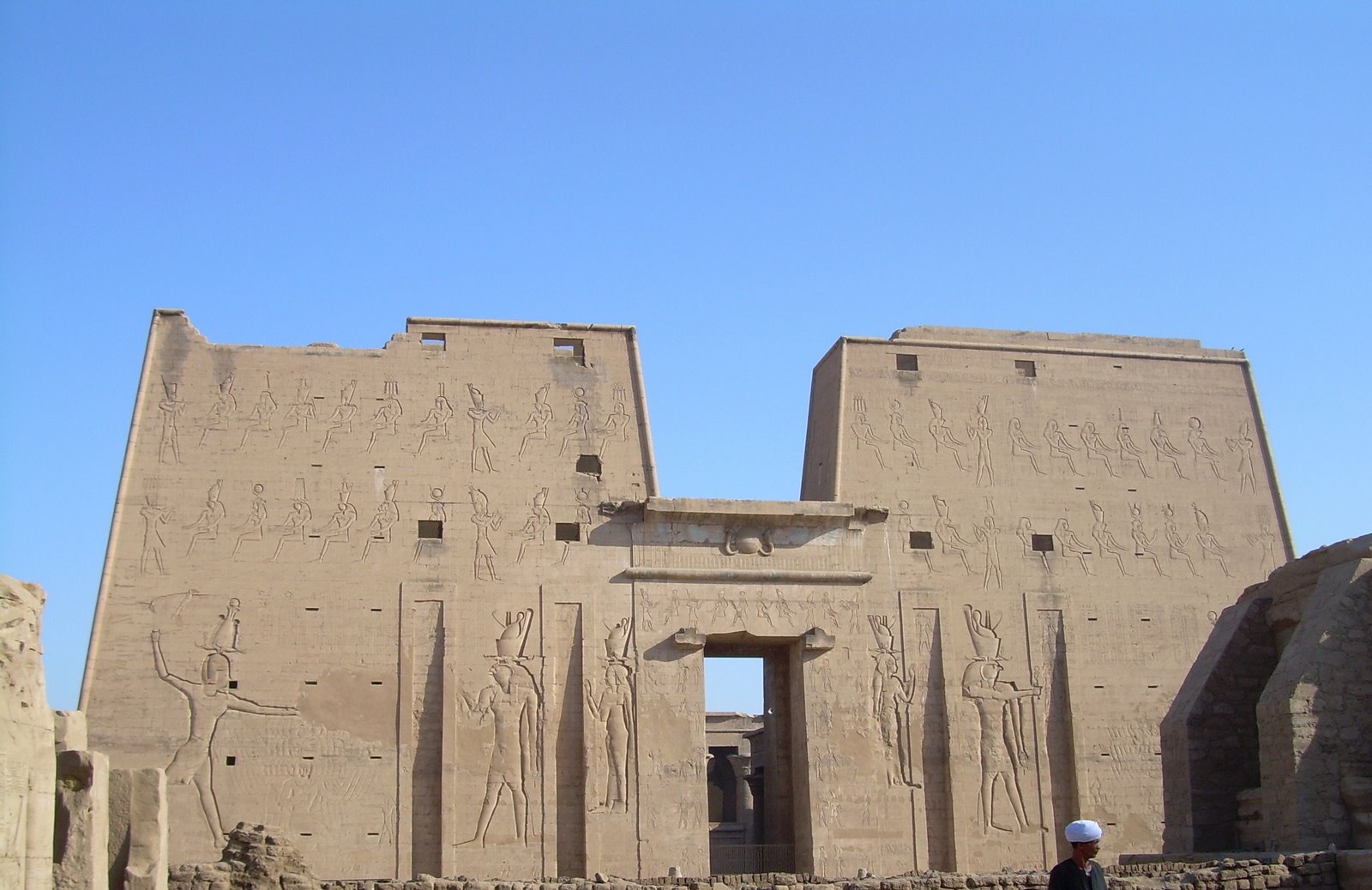
I doubt you have ever heard of this temple before, yet it is one of the best-preserved of the ancient world’s temple. The temple is dedicated to the falcon-headed god Horus, who is the god of protection and healing. According to Egyptian mythology, Horus battled with Set, the evil brother of Osiris, (the name for “Satan” was derived from “Set”). During this epic grudge match, Set gouged out one of Horus’ eyes, and since then (for some reason), the “Eye of Horus” has been a symbol of protection and healing. Displaying the Eye was believed to safegaurd against evil spirits and the like. This temple is also home to one of the best-preserved statues of Horus in falcon form.

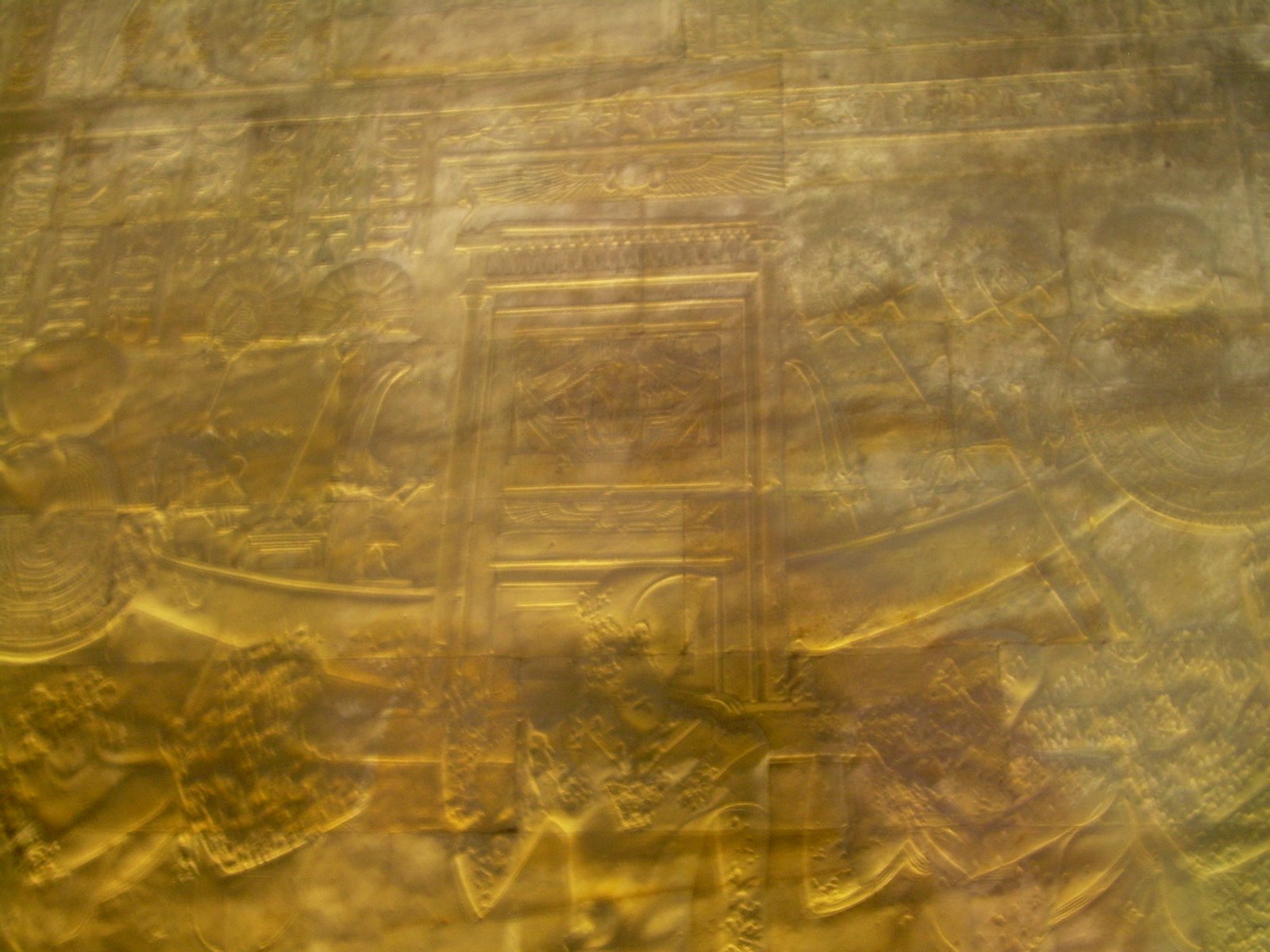
One of the most intriguing things about this temple is that archaeologists discovered the remains of an ancient Egyptian ark. There are also reliefs on the wall depicting the priests of Horus carrying the Ark in the same manner as the Levitical Priests were commanded: poles slid through rings on the sides of the ark, carried over the shoulders. This ark (and presumably all Egyptian gods had an ark) was designed like one of the Egyptian sun-boats, only scaled down. Its long, slender hull carried a shrine in the middle in which would be placed an idol of the god along with a set of the 14 Egyptian commandments (and possibly other “relics” of sorts). It would not be too far-fetched to assume that when God told Moses to build him an Ark of the Covenant for him and the 10 Commandments that Moses would have built something very similar to the Egyptian ark (and not some sort of box or treasure chest).

We also learned at Edfu that the Egytians believed the ground to be holy wherever their gods were. No one was alowed to wear sandals inside the temple, and the priests would transport the ark barefoot. The only exception to this was in times of war, when everyone needed to be prepared for fight or flight. This Egyptian practice manifests itself in the stories in Exodus as well. First, God told Moses to remove his sandals for he was standing on Holy Ground. Second, God commanded the Hebrews to partake of the Passover (a holy feast) with their sandals strapped so they would be ready to flee.

It was about this point in the trip that the entire story of Joseph through Moses started to really click. I began to realize just how much of a connection the Hebrews would have had to the culture and religion of Egypt. Regardless of this, God used what they knew in order to establish his covenant with them. He had no problem taking something from one culture and using it to his glory. This is one reason I know that God is awesome.

Of Boats and Falcons


Edfu Temple:
I doubt you have ever heard of this temple before, yet it is one of the best-preserved of the ancient world’s temple. The temple is dedicated to the falcon-headed god Horus, who is the god of protection and healing. According to Egyptian mythology, Horus battled with Set, the evil brother of Osiris, (the name for “Satan” was derived from “Set”). During this epic grudge match, Set gouged out one of Horus’ eyes, and since then (for some reason), the “Eye of Horus” has been a symbol of protection and healing. Displaying the Eye was believed to safegaurd against evil spirits and the like. This temple is also home to one of the best-preserved statues of Horus in falcon form.

One of the most intriguing things about this temple is that archaeologists discovered the remains of an ancient Egyptian ark. There are also reliefs on the wall depicting the priests of Horus carrying the Ark in the same manner as the Levitical Priests were commanded: poles slid through rings on the sides of the ark, carried over the shoulders. This ark (and presumably all Egyptian gods had an ark) was designed like one of the Egyptian sun-boats, only scaled down. Its long, slender hull carried a shrine in the middle in which would be placed an idol of the god along with a set of the 14 Egyptian commandments (and possibly other “relics” of sorts). It would not be too far-fetched to assume that when God told Moses to build him an Ark of the Covenant for him and the 10 Commandments that Moses would have built something very similar to the Egyptian ark (and not some sort of box or treasure chest).

We also learned at Edfu that the Egytians believed the ground to be holy wherever their gods were. No one was alowed to wear sandals inside the temple, and the priests would transport the ark barefoot. The only exception to this was in times of war, when everyone needed to be prepared for fight or flight. This Egyptian practice manifests itself in the stories in Exodus as well. First, God told Moses to remove his sandals for he was standing on Holy Ground. Second, God commanded the Hebrews to partake of the Passover (a holy feast) with their sandals strapped so they would be ready to flee.

It was about this point in the trip that the entire story of Joseph through Moses started to really click. I began to realize just how much of a connection the Hebrews would have had to the culture and religion of Egypt. Regardless of this, God used what they knew in order to establish his covenant with them. He had no problem taking something from one culture and using it to his glory. This is one reason I know that God is awesome.

Tic-toc, Tic-toc, Hook’s afraid of a Big Bad Croc


Mummified Crocodile

Ancient Egyptian Calendar

Kom-Ombo Temple:

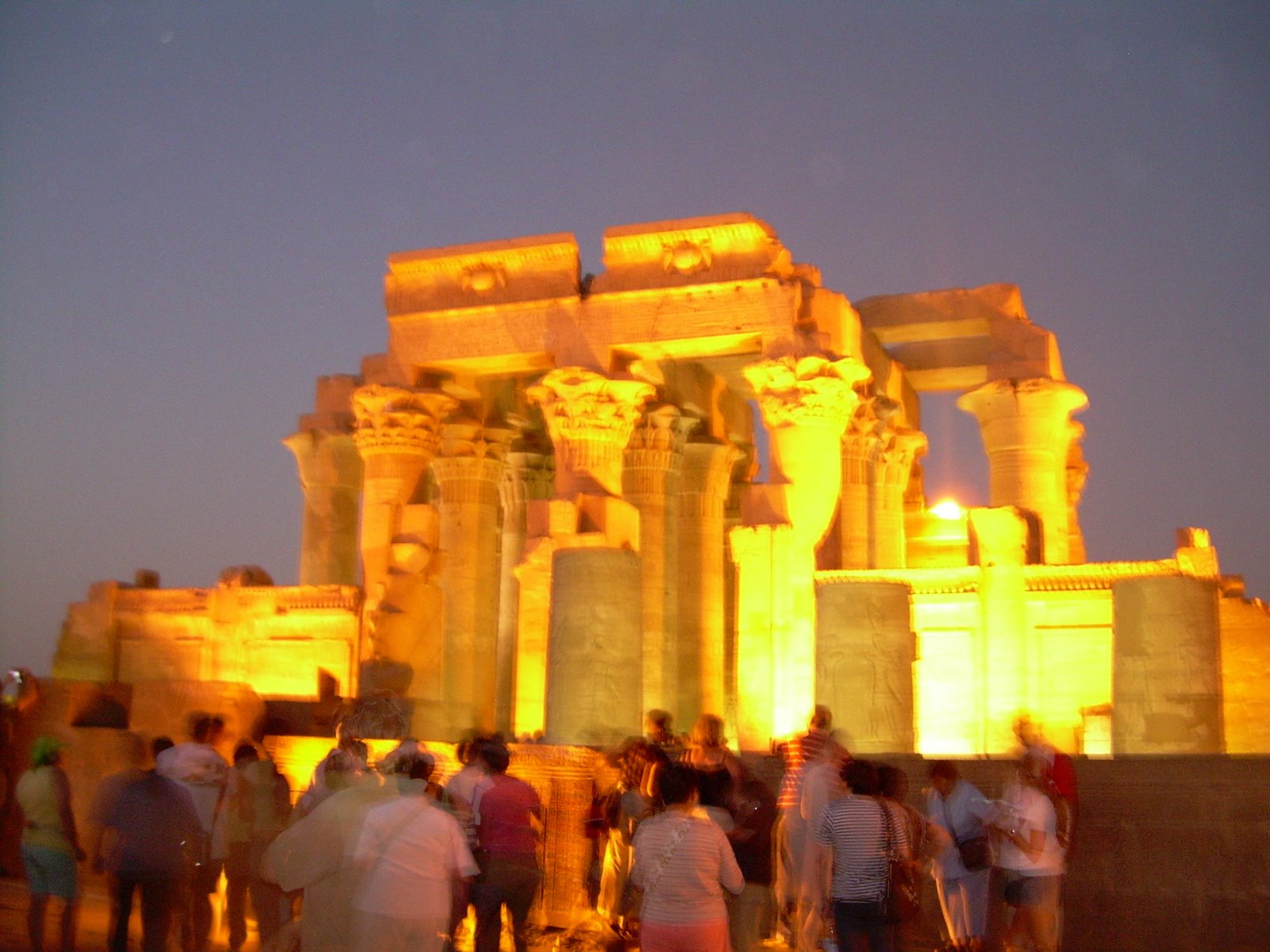
Our next stop was up the Nile a way. We arrived at the Kom-Ombo Temple complex as the sun was going down (about 5pm or so). Egyptian temples are beautiful at night when they are all lit up.

Kom-Ombo Temple is a temple dedicated to the god Sobek (crocodile-headed god) who is one of the gods of the Nile. The Egyptias believed that by worshiping Sobek he would grant them protection from crocodiles in the River. Interestingly enough, over 300 mumified crocodiles were found next to this temple. A few of them were on display, and they didn’t look too happy about it.

A couple other interesting things about this temple – it was also used as a hospital in ancient Egypt. Archaeologists have discovered numerous medical utensils in the temple, as well as reliefs and inscriptions depicting medicinal processes. In several reliefs, there are depictions of the gods pouring out “life” onto the Pharaoh.

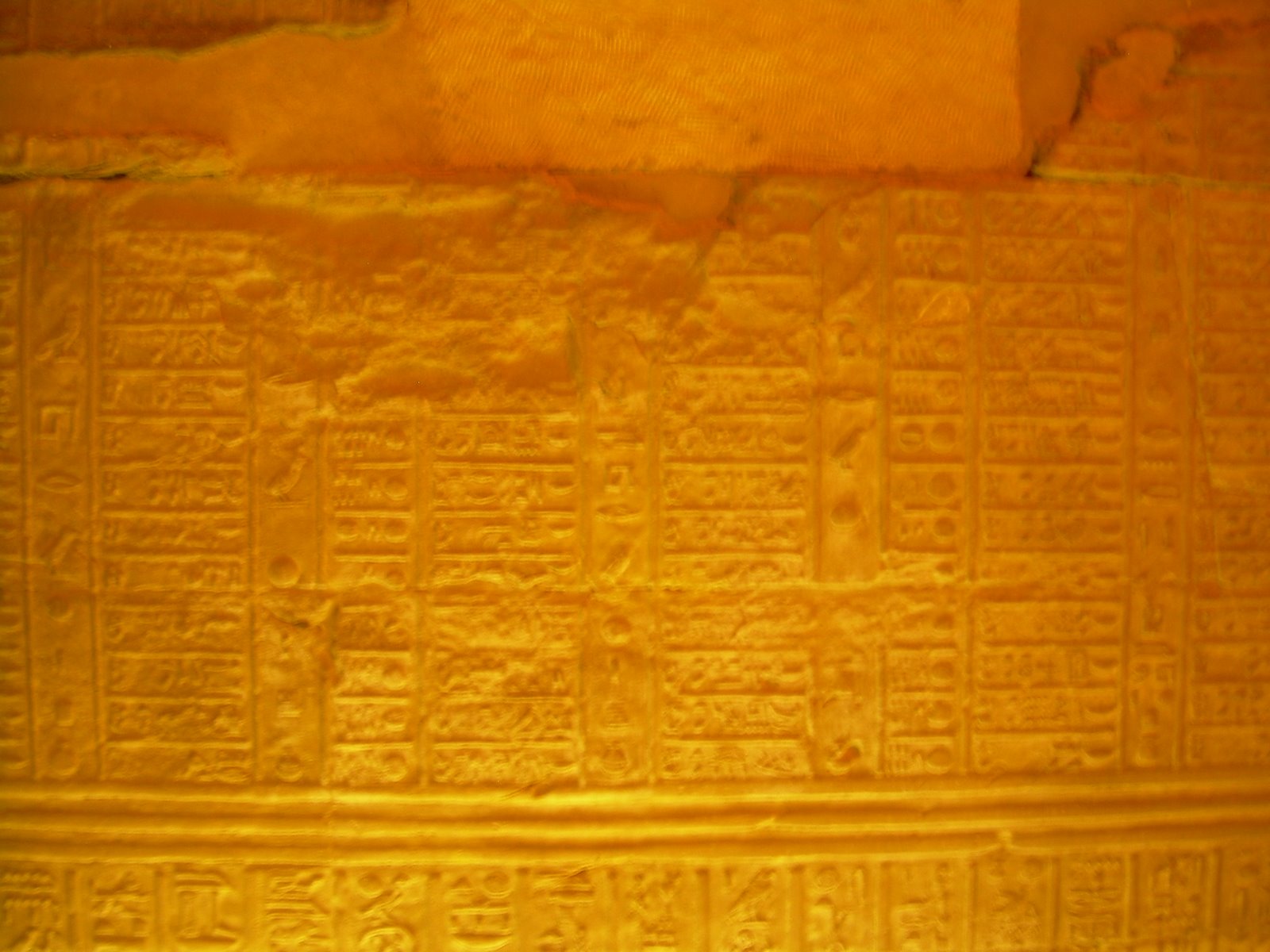
Also, this temple is the location of one of the earliest calendars in the world. From it we learned that the ancient Egyptians once observed a 10 day week – 9 days of work, one day of rest. It wasn’t until the Semetic peoples from Palestine came to Egypt that they began observing a 7 day week. It also helps us to understand that when the Bible says Joseph lived 110 years, it means a literal 110 years by our reasoning.

Tic-toc, Tic-toc, Hook’s afraid of a Big Bad Croc


Mummified Crocodile

Ancient Egyptian Calendar

Kom-Ombo Temple:

Our next stop was up the Nile a way. We arrived at the Kom-Ombo Temple complex as the sun was going down (about 5pm or so). Egyptian temples are beautiful at night when they are all lit up.

Kom-Ombo Temple is a temple dedicated to the god Sobek (crocodile-headed god) who is one of the gods of the Nile. The Egyptias believed that by worshiping Sobek he would grant them protection from crocodiles in the River. Interestingly enough, over 300 mumified crocodiles were found next to this temple. A few of them were on display, and they didn’t look too happy about it.

A couple other interesting things about this temple – it was also used as a hospital in ancient Egypt. Archaeologists have discovered numerous medical utensils in the temple, as well as reliefs and inscriptions depicting medicinal processes. In several reliefs, there are depictions of the gods pouring out “life” onto the Pharaoh.

Also, this temple is the location of one of the earliest calendars in the world. From it we learned that the ancient Egyptians once observed a 10 day week – 9 days of work, one day of rest. It wasn’t until the Semetic peoples from Palestine came to Egypt that they began observing a 7 day week. It also helps us to understand that when the Bible says Joseph lived 110 years, it means a literal 110 years by our reasoning.