Page 2 of 2

Messiah Is Coming, pt. 1
In the beginning God created the heavens and the earth. We know that story. We know its power, its beauty, its wonder. God simply spoke into being all the we see, hear, feel, taste, and smell. At God’s word, galaxies were formed and our planet burst to life with vegetation and wildlife. The crowning jewel of God creation in this opening song of Scripture is man and woman who were created in God’s own image and likeness.

And God saw all that he had made, and it was very good.
God planted a garden in Eden in which the man and woman could live out their calling to “be fruitful and multiply, fill the earth and subdue it.” God placed man in the garden to tend it and protect it. God gave the man a woman as a helper equal to and suitable for him.
And all was right and good and pure and innocent. For a while at least.
Because somehow, God’s good creation was yet susceptible to the influence of evil. The deceiver slithered into the scene, hissing lies and injecting doubts like venom in the bloodstream. The serpent fooled the humans into breaking God’s one rule by making them believe that God was holding out on them.

The woman ate the fruit and then gave it to her husband, and he ate, too. Their eyes were open to the realities of their sin, their nakedness, their shame. They hid from God. For the first time ever they felt unsafe in God’s presence.

Maybe you remember what that was like? The first time you felt like you hadn’t just done something bad but that you were bad? That’s shame.
Every sin has a consequence. From that point on we would be subject to broken relationships – with each other, with the earth, and with God. But God would not leave his children in this helpless state. He would not let that evil serpent win. He would set it all right one day through the woman’s own offspring.

God (to the serpent):
What you have done carries great consequences.
Now you are cursed more than cattle or wild beasts.
You will writhe on your belly forever,
consuming the dust out of which man was made.
I will make you and your brood enemies
of the woman and all her children;
The woman’s child will stomp your head,
and you will strike his heel. 
(Genesis 3:14-15 | The Voice)
God had a plan from the beginning. That last sentence is commonly known as the protoevangelion, “the first gospel.” God would not leave his children in the grasp of the serpent.
The Deliverer is coming.

Fast forward in the story, past the flood, past the tower of Babel, and we’re introduced to a man named Abram (later known as Abraham) who lived in the Mesopotamian city of Ur. Abram was married, childless, and very wealthy. God chose Abram to be an integral part of his great plan to rescue his children from the schemes of the serpent.

Abram, get up and go! Leave your country. Leave your relatives and your father’s home, and travel to the land I will show you. Don’t worry—I will guide you there. I have plans to make a great people from your descendants. And I am going to put a special blessing on you and cause your reputation to grow so that you will become a blessing and example to others. I will also bless those who bless you and further you in your journey, and I’ll trip up those who try to trip you along the way. Through your descendants, all of the families of the earth will find their blessing in you. (Genesis 12:1-3 | The Voice)

Abram would become the father of Isaac. Isaac would become the father of Jacob, who would later be named Israel. Jacob would become the father of Judah, from whose line would come the kings and the Messiah. From one family, all nations would be blessed, all peoples would be rescued from the power of evil. From one family God would work to create one new family, one new humanity.
The Messiah is coming.

Oh Little Town of Bethlehem…

A Merry Christmas to all and a Happy New Year. Or as they say in Greece, “Kala Christougianna!”

As millions of people across the globe pause this day to reflect on the birth of Jesus the Anointed One by Mary, the elect, chosen one of God, I felt it appropriate to skip ahead in the Israel recap and tell of our experience in the Little Town of Bet Lekhem.

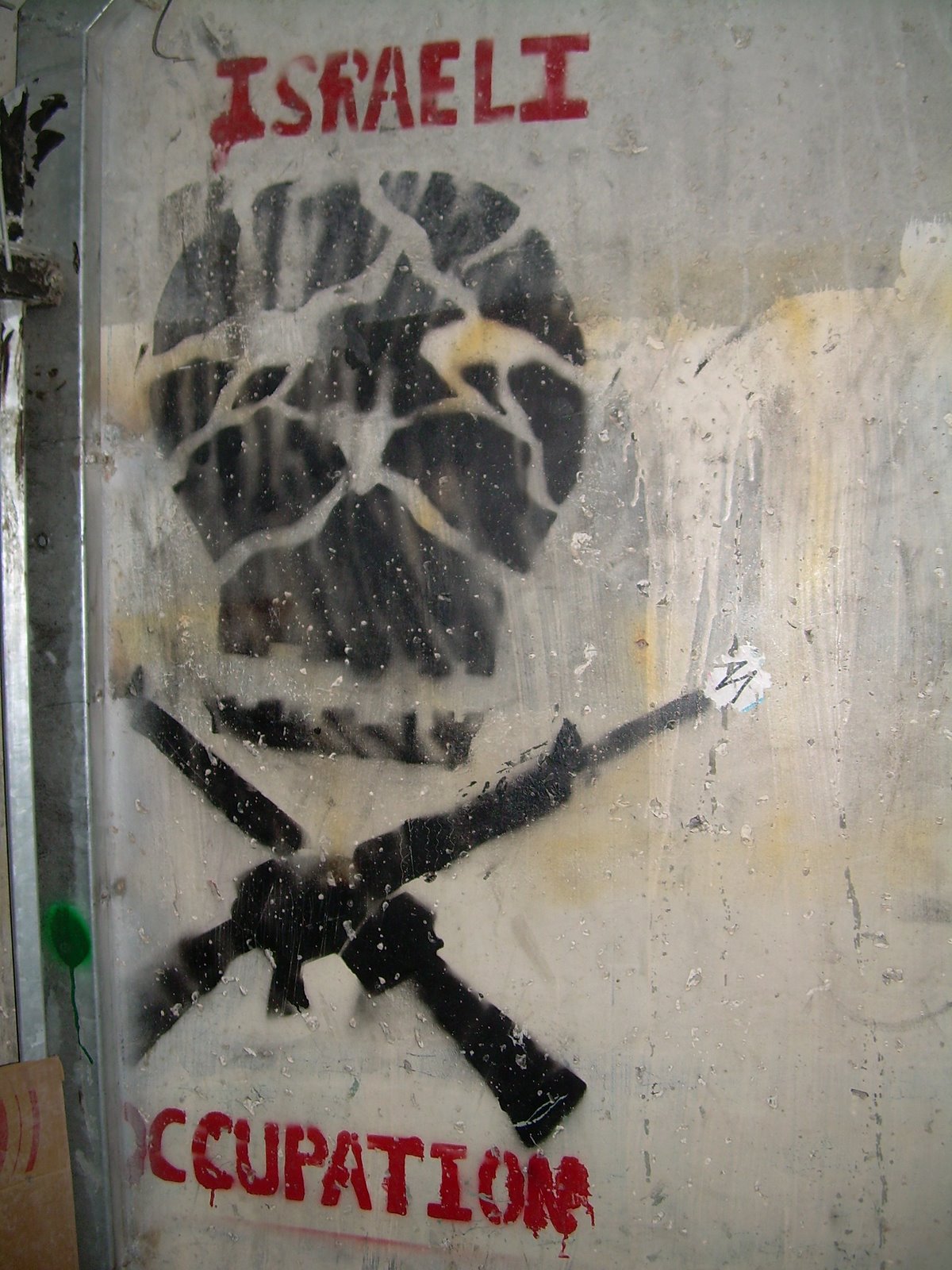
Bet Lekhem, or as we say “Bethlehem”, is one of the most hotly disputed cities on the face of the planet. It’s only 10km south of Jerusalem and is located within the West Bank. No Israeli citizen, whether Jew, Christian, Muslim, or atheist, is allowed to enter the city limits. We had to unload the bus and get on another one with a Palestinian driver and a Palestinian Christian tour-guide. The entire city is surrounded by cement walls about 15ft high with barbed wire across the top. After passing through the checkpoints it was as if we had entered another world, and in a way we did. Bethlehem is a Muslim city. It’s poorer, dirtier, and more third-world than the rest of Israel.

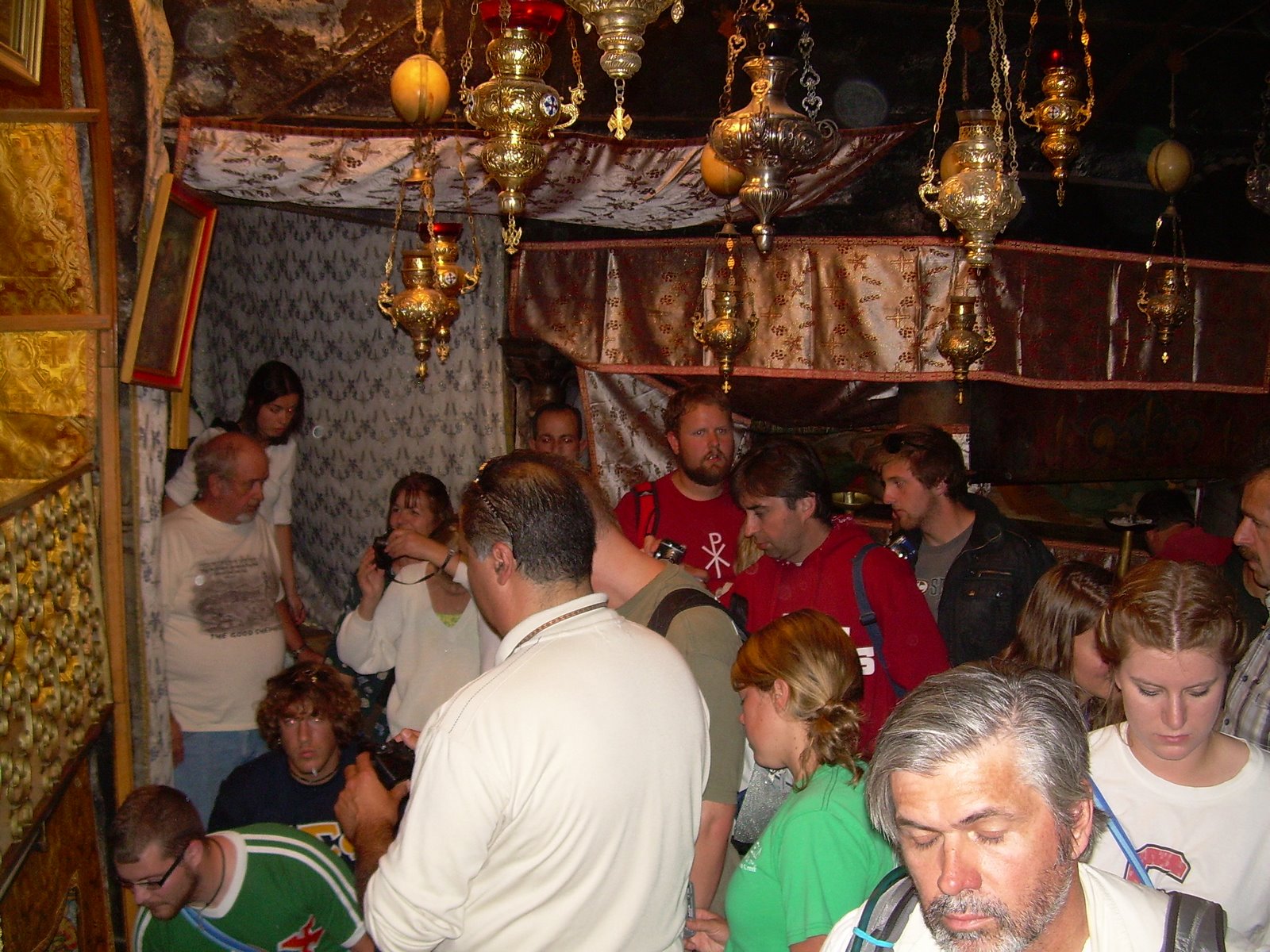
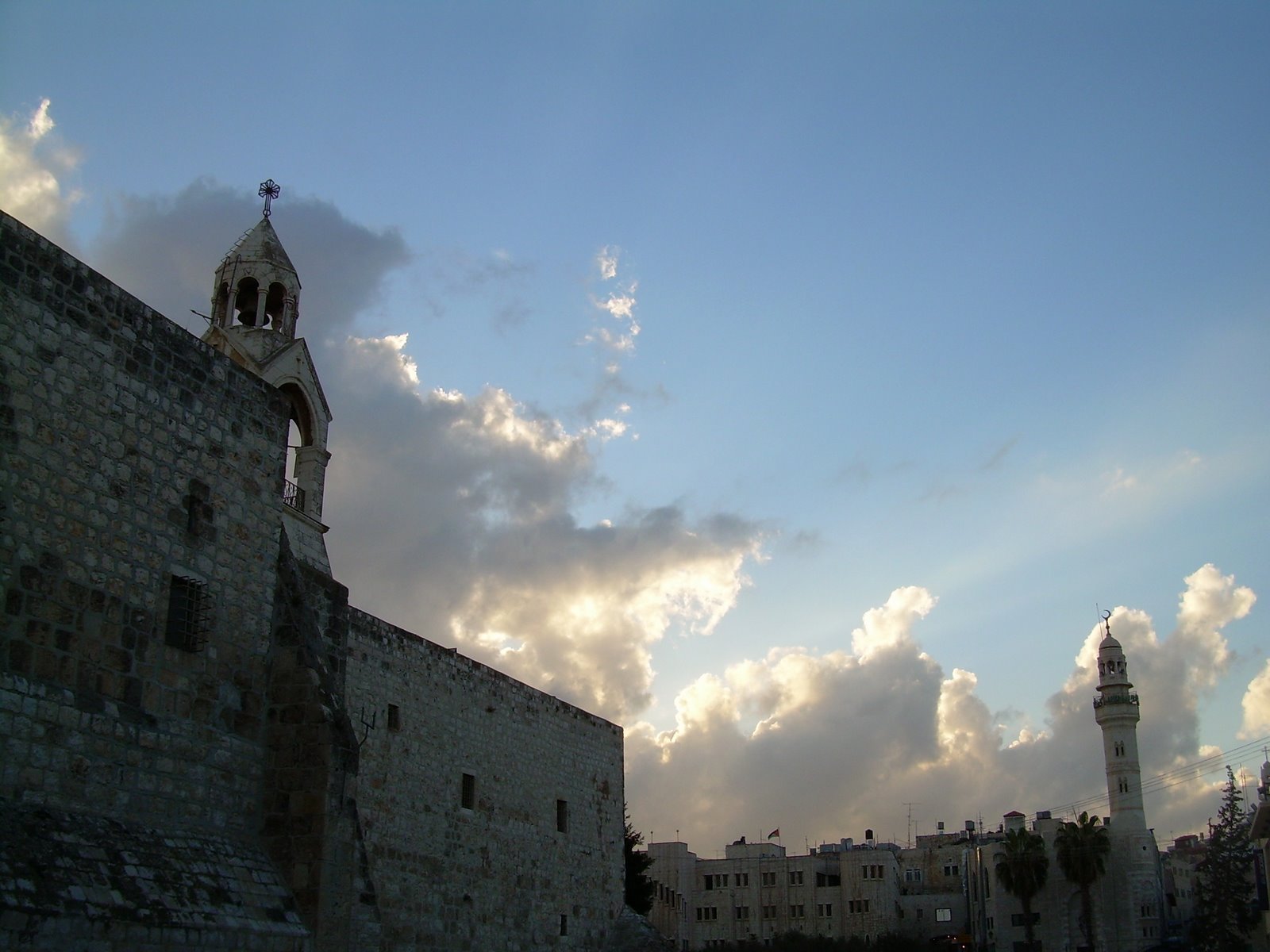
The main place we went in Bethlehem was the church of the Nativity, which is actually shared by 4 or 5 different Christian denominations. It’s a large cathedral built over the supposed birth place of Jesus, which was really the back of a small cave system. When Joseph took Mary to Bethlehem for the census there was no room in the inn, but really the inn wasn’t where they would have stayed anyway, at least not an inn like we think of. They really would have stayed in a deeper cave system which was set up for temporary housing of all the travelers. The “stable” was in the very back of the cave where the livestock and pack animals were kept. There was no room in the rest of the cave, so Mary and Joseph were forced to go all the way to the back of the cave to the stable. It is here that the Virgin Mary gave birth the the Messiah, the King of the Jews.

The church itself was built shortly after the conversion of the Roman Empire to Christianity and stood longer than any of its contemporaries. When the Muslims were marching through the holy land to take it back from the crusaders, they were destroying all the cathedrals along the way. But when they came to the Church of the Nativity, they saw a portrait of the Magi from the East and left the building standing because their people had already been there.

Below the building, beneath the altar area is the traditional location of the birth of Jesus and where he was laid in the manger. We were able to go down there and were hurried through the line, not giving us much time to take it all in. It was neat to say that we have been there, but it’s not the location itself that affects me, it’s the event and the people. I don’t worship the place; I, like the magi, worship the King who was born in that place on that day 2ooo years ago.

From the city of David, the great king of Israel, came Jesus, the Great King over all the earth. From the “House of Bread” (lit. translation of Bet Lekhem), came the Bread of Life. From one of the most disputed cities in modern history came one of the most disputed historical figures.

As we celebrate this day as a remembrance of the birth of our Savior, let us not fall into the trap of celebrating the day itself, or traditions, or materialism for that matter. Let us continually celebrate the coming of God to His creation in the form of a helpless, vulnerable baby. He grew up, matured, and lived a perfect life during a time of hostility, political upheaval, and concern about the future. I would say that life hasn’t changed much since those days, just a different context. It’s amazing that the story of Jesus, from his miraculous birth to his sacrificial death, continues to have the same impact on the world as it did 2000 years ago.

Merry Christmas to all, and let us all be thankful for the birth of our Lord and Savior Jesus Christ.