Biblical Enneagram Types: SIXES

According to some Enneagram teachers, there are probably more Sixes than any other Type. The world needs Sixes, also called Loyalists, to ensure that the community is preserved and that we’re prepared when disaster strikes.

Trust is a big issue for Sixes. If you have earned their trust – as a leader, friend, or spouse – then they will be with you through thick and thin. They won’t jump ship. But Sixes can also be some of the more skeptical people in your life. Often Sixes find themselves playing “Devil’s Advocate” – asking probing or even accusatory questions. They aren’t purposefully trying to be obnoxious or derail the whole system. They just want to know that those in charge have everything under control and have planned for anything that can and will go wrong.

Perfect gift for the Sixes in your life!

Sixes are worst-case-scenario thinkers. They live in the world of “mights”, “coulds”, and hypotheticals. If there ever is a real disaster or problem, you want a Six around because they’ve already gone through the scenario multiple times in their head.

Sixes are more likely to actually count the number of rows to the exit on the airplane and pay attention to the safety briefing before takeoff “just in case.”

There is safety in numbers. Always be prepared. These are the mantras that get a Six through the day.

Every number on the Enneagram lives in some sort of inner tension. For Sixes, that tension comes in their relation to authority. As children Sixes picked up on the fact that the adults in charge can’t always be trusted. So as adults they are inherently skeptical of those in power. At the same time, through, their greatest need is a sense of safety and security. Some Sixes end up trusting too strongly in human authority figures and are inevitably let down at some point. Other Sixes end up distrusting nearly all authority figures in order to protect themselves from that same disappointment. This is the difference between “Phobic” and “Counterphobic” Sixes. All Sixes must deal with their fear. Phobic Sixes tend to have more of a “flight” response, whereas Counterphobic Sixes have a more aggressive “fight” response.

ON THIS ROCK I WILL BUILD MY CHURCH

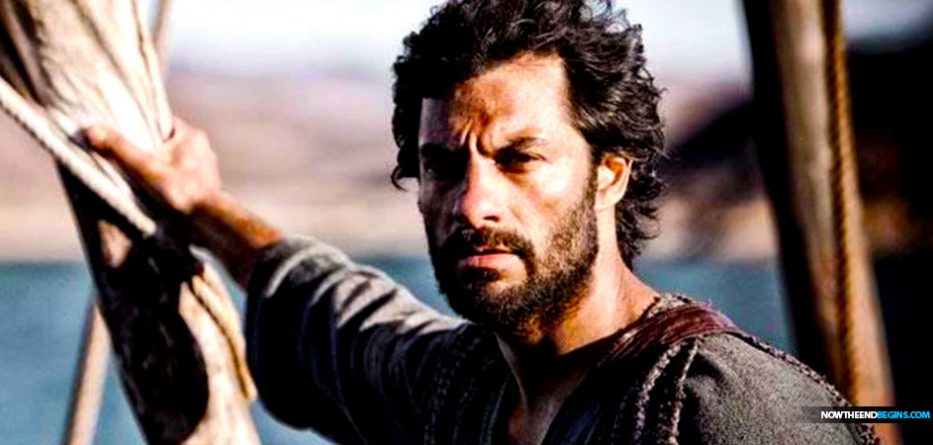
An excellent example of a Six in the Bible is Simon Peter.

Peter was the foremost among the disciples, not because he was the most loving or most knowledgable, but because he was the most committed to Jesus and the group. Peter latched onto Jesus as an authority figure like none other. Peter definitely had his share of screwups – recorded for us to laugh at 2,000 years later! – but he is also the one primarily entrusted with carrying on Jesus’ mission after the resurrection and ascension.
Who was the first to confess true belief in who Jesus was? Peter.

Who played “Devil’s Advocate” when Jesus told the disciples he was going to be killed? Peter.

Who jumped out of the relative safety of the boat during the storm into the certain terror of the raging sea in order to be near Jesus? Peter.

Who was the closest friend and confidant of Jesus? Peter.

Who was the leader of the disciples? Peter.

Who was willing to fight and die for Jesus? Peter.

When push came to shove, who gave into fear time and time again? Peter.

Who did Jesus want the women to specifically tell about his resurrection? Peter.

Who was able to overcome his fear and deliver one of the most powerful sermons in recorded history? Peter.

Peter attached himself to Jesus, but he also had his own fears and anxieties to overcome. Peter had a hard time coming to grips with the fact that Jesus was going to leave them. When Jesus said “let not your hearts be troubled – you believe in God, believe also in me,” I’m sure he was speaking directly to Peter. As a Six, Peter needed as much reassurance as he could get that everything was going to be ok. Jesus is basically telling Peter, “You’ve trusted me this far. Trust me a little more.”

All those times that Jesus had to say, “Do not be afraid,” I’m sure he was speaking directly to Peter.

That conversation that Jesus and Peter had on the beach after his resurrection always gets to me. Three times Jesus asked Peter, “Do you love me?” And three times Peter replied, “Yes, Lord. You know I love you.” Jesus’ response to Peter’s affirmation of love is an instruction to take care of the others. Jesus made it clear that he wasn’t planning on sticking around for a long time. He had to leave. But he promised that he would not leave them as orphans.

Side note: I think one of the worst things that can happen to a teenager in the church is to go through multiple youth ministers over the course of a few short years. Teens need someone who is going to be there for them through it all. It takes a few years for them to trust their youth minister, and by then he’s already moving on to the next church. That can be absolutely devastating, especially for Sixes who already have trust issues.

Back to the point. Jesus is redirecting Peter away from a single point of loyalty to a more group-oriented commitment. Jesus is encouraging Peter to step up and commit not just to Jesus but to the group. Jesus knew that Peter, the Loyalist, was going to be the glue that held the group together.

Peter was stronger than he knew. Jesus saw that from the beginning. That’s why he changed his name from Simon to Peter in the first place. Peter was going to be that solid bedrock, that foundational member of the group. It took some time for Peter to see in himself what Jesus had seen all along.

Sixes, you must know that you are stronger than you think. You are more capable than you think. We value your leadership, your loyalty, your commitment, and even your questions. You are the bedrock of our churches and families and organizations. Without you we would all tend to simply drift apart from each other. You keep us grounded and secure. You help provide us with the security you so desire for yourselves.

Sixes, hear again the words of the Master, “Do not let your hearts be troubled. You believe in God – believe also in me.”
______________________________

Check out the song “Six” by Sleeping At Last

Holy Land Saga, pt. 2

Day 2: Mon 11/17/08


Bethsaida:

This was the home town of Peter, Andrew, James, and John. It was a small fishing town off the coast of the Sea of Galilee with a population less than 800. I say “was” because Bethsaida is one of the three cities in which Jesus preached that is no longer a city. Bethsaida, Capernaum, and Korazin are the three towns that Jesus actually prophecies against because of their unbelief, and none of those three towns are functioning cities today.


One of the coolest parts about the site is the location. From the hill upon which the town was located you can see the Mount of the Beatitudes, the Mt. of Tiberius, Capernaum, and most of the rest of the Sea. I would like to have seen it in the days of Jesus.


Sea of Galilee:

After seeing Bethsaida, we went down to the Sea of Galilee and were able to take a boat out onto the water. The feeling of being out on the very Sea that played such an important role in the ministry of Jesus was incredible. Words cannot accurately describe how awesome it was. All the Sunday school stories were flying through my head: Jesus calming the storm, walking on the water, preaching offshore in a boat, crossing the Sea to the mountains on the opposite side to find some privacy, telling the disciples to cast their nets on the other side of the boat, visiting the Sea and cooking breakfast after his resurrection. The Sea of Galilee and the surrounding cities played such a major role in his ministry that it’s difficult to even list all the events that took place in and around the Sea.


The boat ride itself was really fun. When we first set off from shore, the crew raised an American flag alongside the Israeli flag and played the national anthem, which was kind of cool. The crew also let us sing some songs and have a devotional time out on the water. After that one of the crew members gave us a fishing demonstration with the same type of net that would have been used in the first century. We didn’t catch anything (and we tried both sides), but it was still cool to see how these nets worked.


Back on shore, we went inside a small museum dedicated to the so-called “Jesus Boat.” It is the remains of a 2000 year old boat which was miraculously well preserved. It dates back to ca. 50BC, and was most likely still in use up until the Romans marched through Israel in the late AD 60s. It is speculated that this boat may have belonged to one or more of the disciples, like Peter or James. We know that very few fishermen could actually afford their own boats, much less one as large and as top-quality as this one. We do know, however, that Peter was living in the more up-scale town of Capernaum. We also know that James and John were the sons of Zebedee, who was a wealthy enough fisherman to have hired hands working for him. It’s possible that this 2000 year old boat could have either belonged to one of those families, or it could have at least been a boat in which Jesus road or from which he preached.


The Sea of Galilee may not be that large, but what it lacks in size it more than makes up for in beauty. The way the water and the surrounding mountains come together is an inspiring sight to behold. I can see why Jesus liked this area so much.


Capernaum:

There are really two main features among the ruins of Capernaum: Peter’s house and the Synagogue. Capernaum is one of those three towns which is no longer functioning as a town and stands in ruins as Jesus prophesied. We do know that it was in use for a few hundred years after the time of Jesus because of the synagogue which was built in the early 4th Century AD. This synagogue was actually built directly on top of the synagogue in which Jesus would have preached in the town on several occasions.


The most famous feature of Capernaum by far is the house of Peter, in which Jesus healed Peter’s mother-in-law. This is one of the few exact spots in Galilee of which we are completely sure that Jesus was there. We know this because after only a couple generations a shrine was set up in that exact location. Peter’s house, right off the Sea of Galilee, was well known to all the disciples and many of the early Christians, so not enough time had passed for the exact location to be forgotten.


Today, there is a Catholic church constructed virtually hovering above the foundations of the house. Thankfully, we can look below the church building and see the whole foundation of the house. Ironically, the Catholic church holds Peter to be the first “Pope,” yet the very fact that he had a mother-in-law disqualified him from actually being a priest, much less the Pope.


Mt. Tiberias:

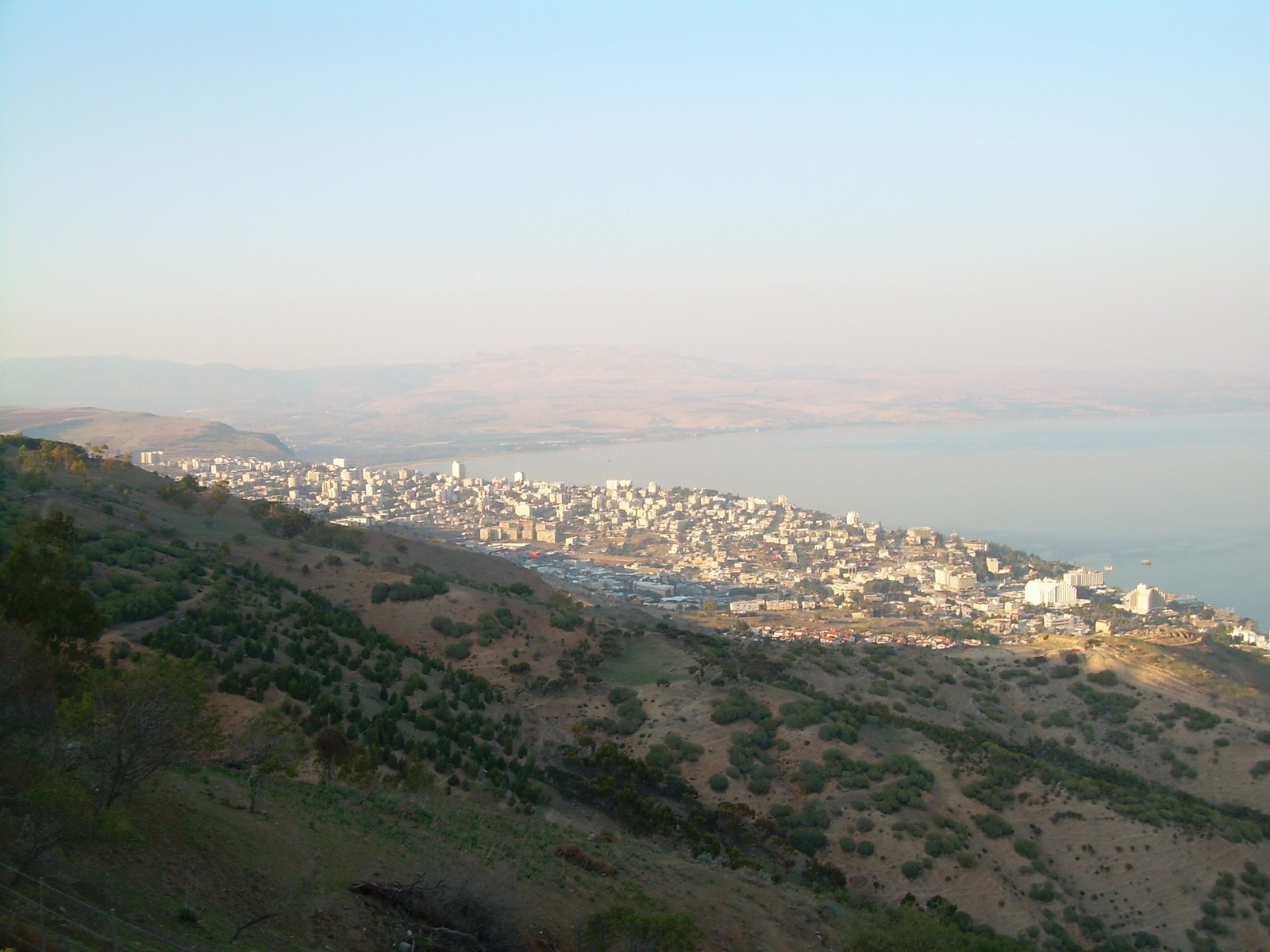
This mountain is the only lookout point (at least the only one accessible in the Israeli side) from which the entirety of the Sea of Galilee can be seen. Interestingly, the forest on the top of the mountain through which we hiked is called the “Switzerland Forest” because the majority of the funds to put in the trail and the lookout were provided by Jews who emigrated from Switzerland.


The view from the top is spectacular to say the least. By the time we got to the lookout point, the water was beginning to turn all shades of deep blues and purples. The sky around us was mellowing softly, and the breeze was blowing through the trees. It was fitting that our guide, Yosi, played a song for us on his flute that was inspired by the beauty of this region.


Mt. Tiberias overshadows the city of Tiberias, which is the largest city on the Sea of Galilee. If you remember, the Sea is called the Sea of Tiberias at many points in the gospels. The city, the mountain, and the Sea at one point were all named in honor of Emperor Tiberias who took over after Augustus. Bernice, sister of Felix (governor of the region in Paul’s day), had a palace in Tiberias. She, like many tourists today, made the city on the Sea her winter home because the climate is more tropical along the coast of the Sea. According to our guide (and Josephus) she was the most evil woman to ever step foot in Israel. I won’t go into great detail as to why he said that, but I just found it interesting.


“Mount of the Beatitudes”:

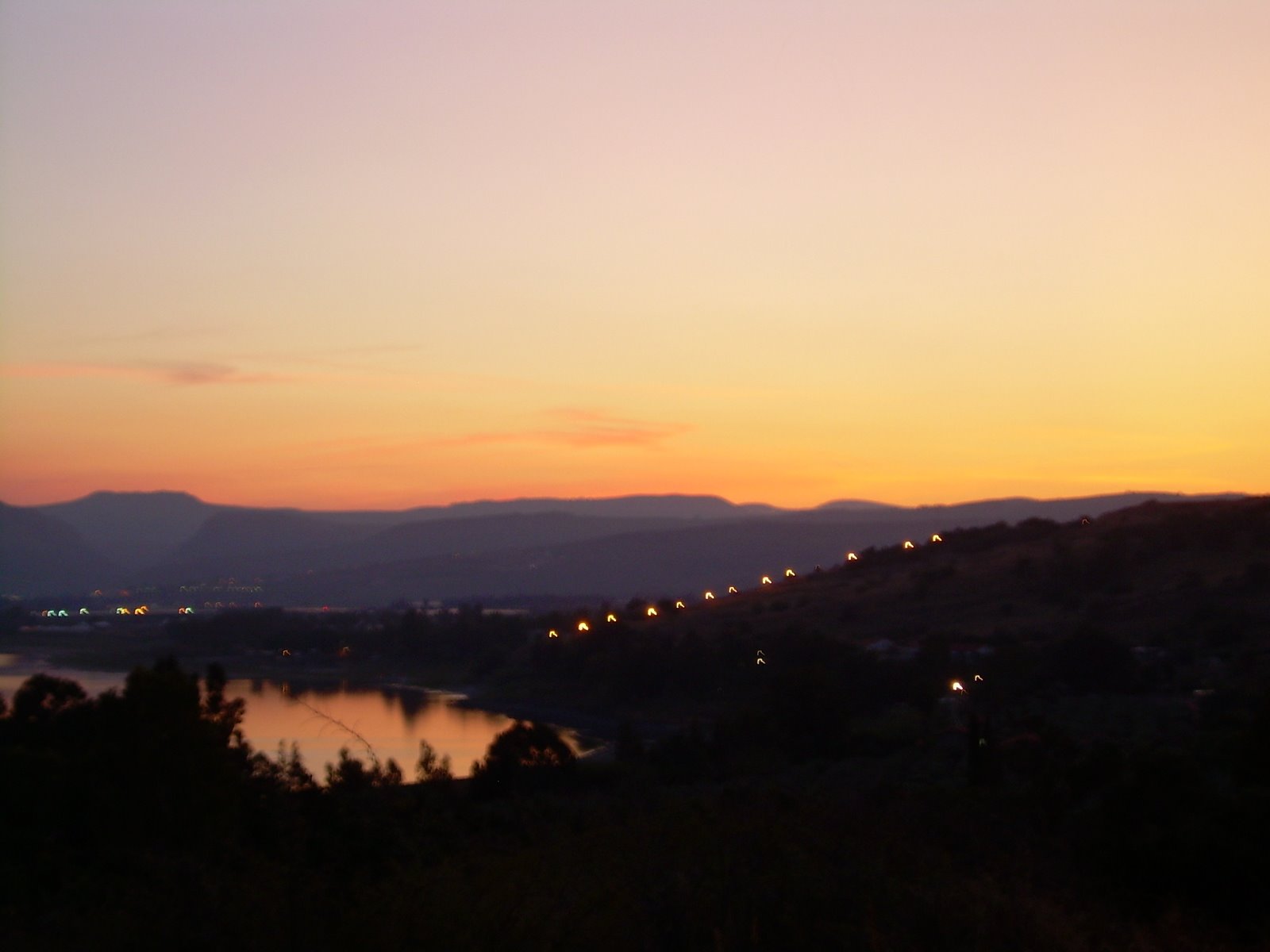
Our last stop of the day was on the Mount (hill, really) where Jesus delivered his famous Sermon on the Mount. We arrived at sunset, which was absolutely phenomenal. As the sun was dipping below the hills, we read from Matthew 5-7 in the possible location where Jesus would have given the sermon. A more perfect scene could not be set.


The way the hill is set up, it makes sense why Jesus chose this spot. The shoreline at the base of the hill is flat for about 100 yards or so. From there it rises sharply upward for about 30 feet and then levels off again for a couple hundred yards. This explains why Matthew records the sermon as taking place on a hill and Luke records the sermon as being given on a level place. It’s both, really.


Anyway, there were some key parts of the sermon that resounded more resiliently in the actual context of even modern day Israel; sayings like, “Blessed are the peacemakers…” or “Seek first the kingdom of God and His righteousness…” There is still much fighting going on between Israel and her neighboring States over land and borders. The Jewish people are still caught up in an unhealthy sense of nationalism, which I believe could parallel that of the 1st Century. Jesus was basically telling them to stop fighting, stop worrying so much about the politics of everything, and pursue those things which are more important. Be peacemakers, not rebels and rioters. Seek God’s kingdom, not the kingdoms of man. It’s a lesson the Jews needed 2000 years ago, it’s a lesson they need today, and it’s a lesson that American Christians also need to take to heart.