
 by
by Starting a new series on Kingdom Economics—and yes, we’re talking about money. But this isn’t about guilt trips or fundraising schemes. This is about discovering a theology of wealth that flies in the face of the American dream and get-rich-quick schemes.
From Street Rat to Saint: The George Mueller Story

Picture this: Europe in the 1800s. Mugshots of children—boys in suits, girls barely teenagers—arrested for stealing food, money, anything to survive on the mean streets. One such child was born in Germany around this time. His mother died when he was 14, and he turned to a life of crime, even stealing from his own father.
But this young man, George Mueller, encountered something that changed everything: the Word of God. Through a Bible study group at university, Scripture got hold of him and transformed him from the inside out.
Mueller became a pastor in Bristol, England, where he revolutionized the financial system in his church. He refused salary and eliminated pew rentals, replacing them with free-will offerings. The result? The church exploded in both numbers and generosity.
But here’s where it gets incredible: Mueller felt called to care for orphans. With no money. No fundraising campaigns. No galas or pledge drives. Just prayer.
The Tax Question That Changes Everything
Rewind to Jesus in the temple during his final week. The religious leaders try to trap him with a loaded question: “Should we pay taxes to Caesar or not?”
Jesus asks for a coin. “Whose image is on this?” Caesar’s, they reply.
“Give to Caesar what belongs to Caesar,” Jesus says, “and give to God what belongs to God.”
Here’s the mic-drop moment: Caesar’s image is on the coin, but whose image is stamped on you? Genesis tells us we’re made in God’s image. Caesar can have his pieces of metal; God wants all of you. This one simple statement revolutionizes the way Christ-followers view money and resources.

Four Key Principles of Kingdom Economics
1. Divine Dibs
Simple concept: If you make something, it belongs to you. God made everything, so it all belongs to Him. Psalm 24 declares, “The earth and everything in it… belong to the Lord.” We don’t truly own our stuff—we just get to enjoy it for a while. Even our very selves belong to God. He has called “dibs.”
2. Limited Loan
Every good thing in your life—your clothes, car, family, friends—comes from God. James reminds us not to be deceived into thinking we made it all happen ourselves. “Every good and perfect gift is from above.” It’s all on loan because you can’t take it with you. Everything is temporary.
3. Sacred Stewardship
We’re blessed to bless others. When God called Abraham, He said, “I will bless you… and you will be a blessing.” If you’re well off and secure, God expects you to turn around and bless others. “From whomever has been given much, much will be required.” The greatest joy is not in receiving but in giving it away. Let’s become givers instead of takers.
4. Gracious Gratitude
Giving is worship. King David prayed, “Who am I… that we should be able to give as generously as this? For everything comes from you, and we have only given you what comes from your hand.” When we give, we honor God and break the cycle of hoarding that makes much of ourselves and less of God. Giving is an act of faith and worship that makes much of God and less of ourselves.
Why This Matters
The Bible contains over 2,300 references to money, wealth, and possessions. Roughly half of Jesus’s parables involve money, and about 15% of his recorded words relate to finances. Jesus famously said, “You cannot serve both God and mammon.” Money might be neutral, but wealth can become a rival god that steals our allegiance from the Creator. God knows how tempting it is to put our trust in material wealth. But he wants us to trust him instead.
Which brings us back to George Mueller.
The George Mueller Legacy
By the end of his life, Mueller had cared for over 10,000 orphans, established 117 schools educating 120,000 students, and dispersed the equivalent of $150 million—all without ever asking for a dime. He simply prayed, and God provided.
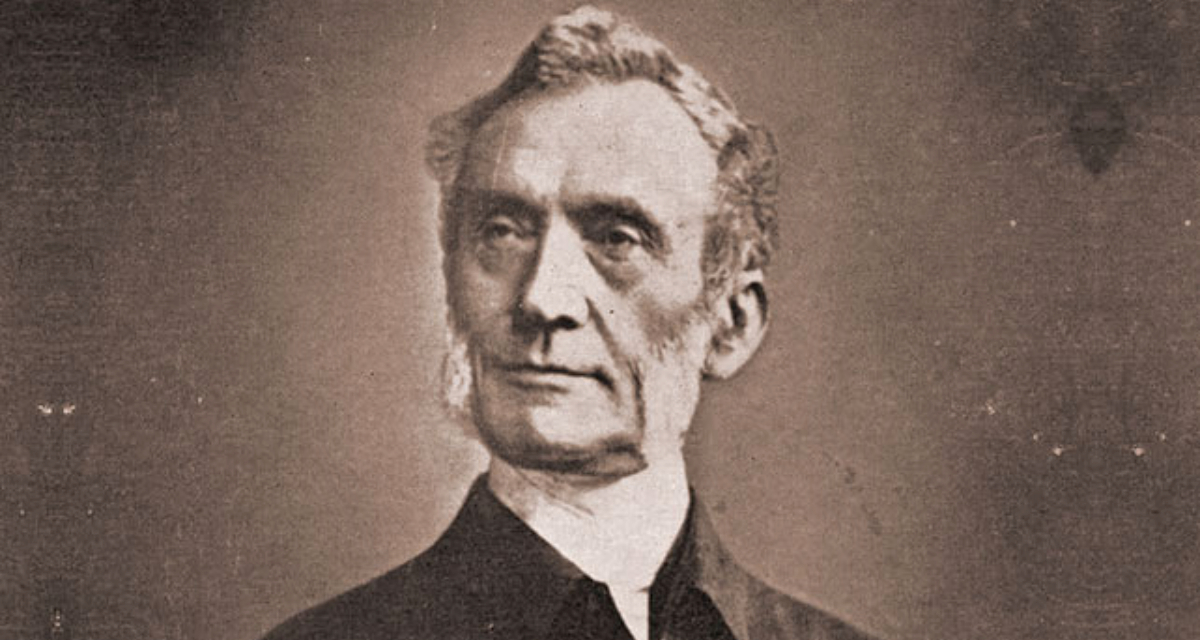
At 71—when most people are retiring—Mueller felt called to become a traveling missionary. He spent 17 years traveling over 200,000 miles (without modern transportation), reaching dozens of countries with the Gospel. When he died, over 10,000 people lined the streets for his funeral procession.
His philosophy was simple: “Money is really worth no more than as it can be used to accomplish the Lord’s work, and life is worth as much as it is spent in the Lord’s service.”
Your Mission This Week
Before you stress about your finances, try this: Pray about your finances every day this week.
- If you’re doing well, pray for opportunities to give and bless others
- If you’re struggling, pray for God to open heaven’s gates to bless you and provide for your needs
- If you’re somewhere in between, just pray about the next right step
Instead of stressing, pray. Show God you trust Him, just like George Mueller did every single day.
The Bottom Line
We give because God first gave to us. We love because God first loved us. Romans reminds us that God “didn’t spare his own Son, but gave him up for us all.”
The question isn’t whether you can afford to give—it’s whether you can afford not to trust the God who owns everything and promises to provide for those who seek His kingdom first.
God says, “Test me in this.” You can’t outgive God.
This is the first post in our Kingdom Economics series, exploring what Scripture teaches about money, wealth, and generosity. Stay tuned as we dive deeper into God’s upside-down economy that transforms takers into givers.
LISTEN TO OR WATCH THE FULL SERMON HERE:
 Daniel N. Lee