
 by
by Ever find yourself wondering if your daily grind actually matters? You’re not alone.
We’ve all been there—caught in the routine, wondering if we’re just spinning our wheels in an endless rat race. The midlife crisis hits, and suddenly we’re questioning everything: Is this all there is? Does any of this even matter?
I’m here to tell you: Yes, it absolutely does matter.
A Story from the Depths
Let me share a powerful story about a Vietnamese interpreter named Hien Pham. During the Vietnam War, he worked alongside American forces and became a devoted Christian. But when the war ended and American troops withdrew, he was left behind—eventually captured and imprisoned by the communist regime.
For years, they tortured him, trying to break his faith through brainwashing and indoctrination. Alone in his cell, beaten and isolated, he began to wonder: Maybe I’ve been lied to. Maybe there is no God. Maybe this whole faith thing is a farce.
He was on the verge of giving up when they assigned him the worst job in the prison camp: latrine duty. While cleaning the filthy stalls—at his lowest point—he found a piece of paper covered in waste. It was written in English, which prisoners were forbidden to read.
Later that night, he cleaned it off and discovered it contained Romans 8:28 and the surrounding verses: “All things work together for the good of those who love God… If God is for us, who can be against us?… Neither death nor life… shall be able to separate us from the love of God.”

This message of hope changed everything. Instead of despair, Hien Pham requested latrine duty every day, collecting scripture passages left by other English-speaking prisoners. God met him in the most unlikely place—a prison latrine—and sustained his faith until his eventual release and journey to America as a refugee.
God can meet us in the unlikeliest places and reassure us that our lives matter and what we do has significance.
What Lasts into Eternity
The book of Revelation gives us fascinating glimpses into what carries over into eternity. Consider these truths:
Our Identity Matters: Revelation 7:9 describes people from “every nation, tribe, people, and language” worshipping together. We don’t lose our cultural identity in heaven—it’s celebrated and preserved.
Our Work Follows Us: Revelation 14:13 tells us that our works follow us into eternity. Whether you’re landscaping or working in a law office, do your best because it matters beyond this life.
Our Creativity Endures: Revelation 15:3 mentions singing “the song of Moses”—an earthly composition being sung in heaven. Our art, music, and poetry can have eternal significance.
As N.T. Wright beautifully puts it: “Every act of love, gratitude, and kindness; every work of art or music inspired by the love of God… will find its way through the resurrecting power of God into the new creation.”
The Resurrection Changes Everything
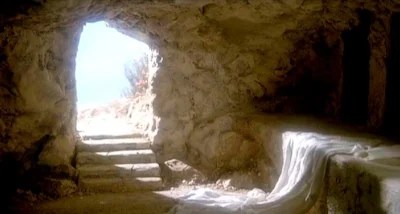
Without the resurrection, Paul says in 1 Corinthians 15, our faith would be worthless. But because Christ rose from the dead, we have:
- Hope: Death doesn’t have the final word
- Meaning: Our lives matter beyond this moment
- Victory: We can overcome life’s defeats
- Purpose: Our “labor in the Lord is not in vain” (1 Corinthians 15:58)
Keep an Eternal Perspective
Jesus repeatedly warned us about getting caught up in temporary treasures. Remember Jesus’ parable about the rich farmer who built bigger barns to store his wealth? God called him a fool and took his life that very night. Or the parable about the rich man who ignored poor Lazarus at his gate? He found himself in torment while Lazarus was comforted.
The most dangerous word in our consumer culture is “enough.” If you’re content with enough, advertising can’t manipulate you. You won’t feel compelled to constantly accumulate more stuff that will eventually end up in a landfill anyway.
Instead, Jesus tells us to “store up treasures in heaven”—things that rust and moths can’t destroy, that thieves can’t steal.
Whatever You Do
Here’s the practical application: Whatever you do today—changing diapers, building houses, teaching children, working spreadsheets—do it all “in the name of the Lord” (Colossians 3:17).
You’re not ultimately working for your boss, your CEO, or your clients. You’re working for the Lord. You serve Him through your ordinary, everyday activities.

Brother Lawrence, a 17th-century monk, understood this perfectly. He found God just as powerfully while washing dishes in the monastery kitchen as during formal prayer times. He believed “our sanctification does not depend as much on changing our activities as it does on doing them for God rather than ourselves.”
The Kingdom Economy
This is how we change the world—not through grand gestures, but through ordinary faithfulness with an eternal perspective. When you serve others, love your neighbor, work with integrity, and beautify creation, you’re participating in God’s kingdom economy where nothing good is ever wasted.
Your life isn’t just about funding your retirement so you can finally do something meaningful. It’s meaningful right now. Every act of service, every moment of integrity, every expression of love has eternal weight.
So in the morning, when you leave for work, remember: you’re not just clocking in for another day. You’re stepping into a worship service where your ordinary activities become extraordinary offerings to God.
That’s not just “it”—that’s everything.
LISTEN TO OR WATCH THE FULL SERMON HERE:
 Daniel N. Lee