
 by
by Exploring the Second Step in Recovery: “We came to believe that a power greater than ourselves could restore us to sanity.”
Walking on Water, Then Sinking
Remember Peter’s famous moment on the Sea of Galilee? A storm raged, waves battered the disciples’ boat, and then Jesus appeared, walking on the water. Peter, bold as ever, called out, “Lord, if it’s you, command me to come to you on the water.”
And Jesus said, “Come.”
Peter climbed out of the boat and actually walked on water. But then he noticed the wind and waves, got distracted, and began to sink. In desperation, he cried out three simple words: “Lord, save me.”
Jesus immediately reached out and pulled him up.
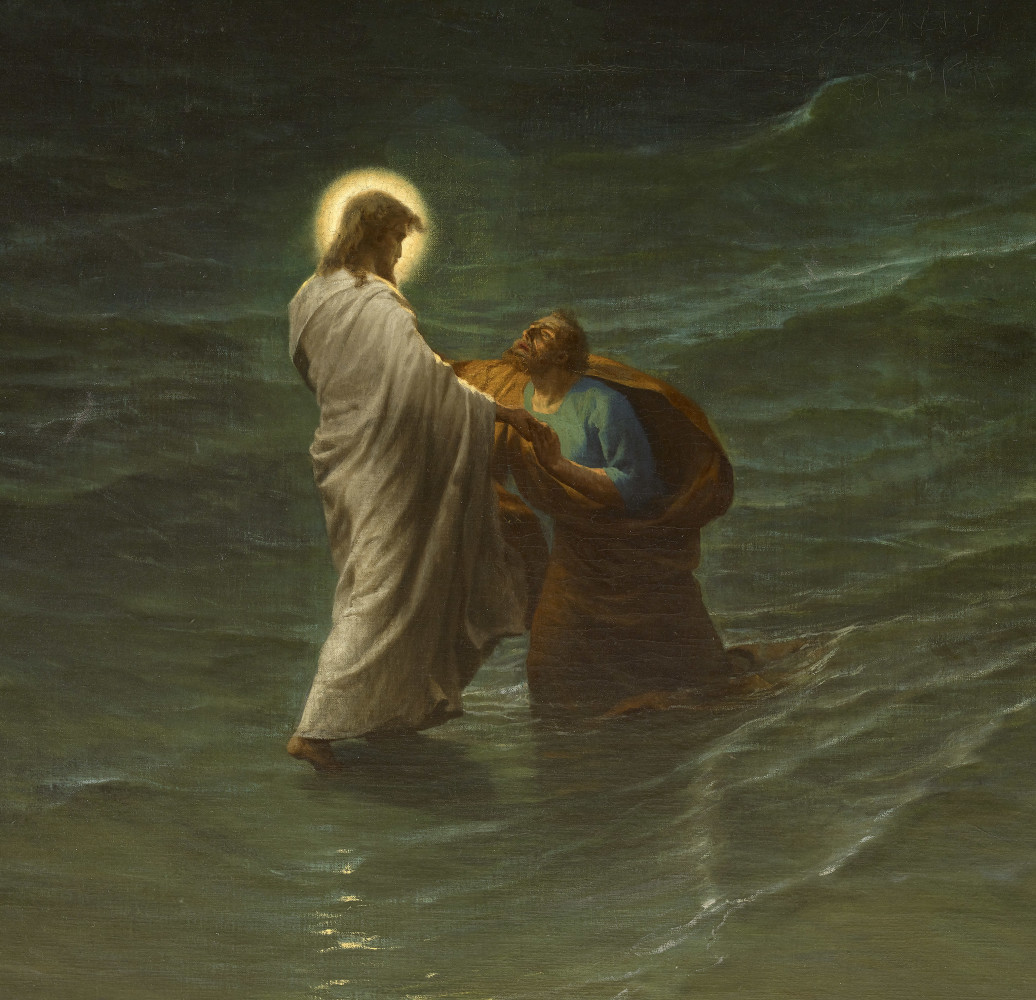
Here’s what strikes me about this story: Jesus didn’t stand there judging Peter or saying, “Get your act together first, then I’ll help you.” He reached out and saved him, then had the conversation about faith afterward. That’s the pattern when it comes to faith in Christ. He doesn’t wait for us to fix ourselves, to have enough faith, or to be good enough. He reaches out and pulls us up. All we have to do is cry out for help.
The Sheep in the Ditch
There’s a video I love that shows a sheep being pulled out of a ditch by a farmer, only to immediately run ahead and fall right back into another ditch. That’s us. We cry out, we get lifted out of whatever pit we’re in, and then we think, “Yeah, this is awesome!” and promptly end up right back in it.
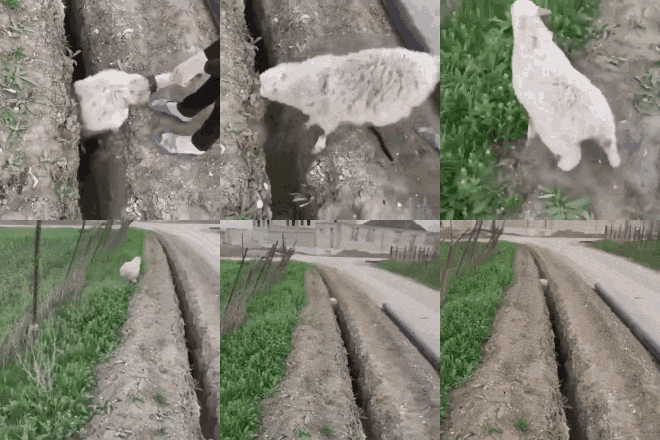
How do we keep finding ourselves in these situations time and time again? That’s exactly what the 12 Steps help us understand, helping us learn about ourselves, why we keep getting derailed, and why we keep ending up back in that ditch.
Step Two: Restored to Sanity
Last week we talked about Step One, which is all about surrender. This week is Step Two, which is all about hope:
“We came to believe that a power greater than ourselves could restore us to sanity.”
Let’s start at the end: “restored to sanity.” Within recovery circles, insanity is defined as doing the same thing and expecting different results. It’s the delusion of self-sufficiency, believing we have the power within ourselves to make the change happen through sheer willpower.
Have you ever caught yourself saying “but I…” followed by an excuse?
- “I know I should go to the gym, but I didn’t sleep well last night.”
- “I know I should eat healthier, but I just don’t have time to cook.”
- “I know I should cut back on alcohol, but I’ve had a hard day and I deserve it.”
This “but I” mentality derails any progress we want to make. It’s that inward-focused insanity that keeps us stuck in patterns of behavior that harm us.
Paul’s Struggle Sounds Familiar
In Romans 7, Paul captures this perfectly: “I realize I don’t have what it takes. I can will it, but I can’t do it. I decide to do good, but I don’t really do it. I decide not to do bad, but then I do it anyway. Something has gone wrong deep within me and gets the better of me every time. It happens so regularly that it’s predictable. The moment I decide to do good, sin is there to trip me up.” (The Message)
Here’s a thought experiment: Three frogs are sitting on a log. One frog decides to jump in the lake. How many frogs are still on the log?

Three. Making a decision is not the same as taking action.
Paul asks the real question: “Is there no one who can do anything for me?” And he answers it himself: “Thank God, Jesus Christ can and does.”
I can’t, but He can. That’s Step Two in a nutshell.
From “But I” to “But God”
This changes everything. Instead of “but I,” we discover “but God” passages throughout Scripture:
- “No temptation has come upon you except what is common to humanity, but God is faithful” (1 Corinthians 10:13).
- “We were dead in our trespasses, but God, who is rich in mercy… made us alive with Christ” (Ephesians 2:4-5).
- “With man this is impossible, but with God all things are possible” (Matthew 19:26).
We all need to be restored to sanity, to realize what we’re doing isn’t working. If you always do what you’ve always done, you’ll always get what you’ve always got.
The Process of Coming to Believe
The phrase “we came to believe” reveals a beautiful three-step process:
- We came – You show up. You walk through the church doors, call a friend to pray for you, or reach out for help.
- We came to – Like waking up from a coma, we start realizing what life could really be like. We wake up out of our slumber, our stupor, our addiction.
- We came to believe – It’s a journey. Sometimes belonging comes before believing. You don’t have to have all the answers figured out before you can come to God for help.
The Prodigal Son Comes to His Senses

In Jesus’s famous parable (Luke 15), the younger son hits rock bottom in a pigsty, wishing he could eat the food he’s feeding to the pigs. And “he came to his senses.” He realized he’d be better off back home.
What was the father’s response? Running to him with open arms, wrapping him up in the biggest bear hug, restoring him fully back into the family.
That’s what God is asking of each one of us: Just come back home.
As they say in some recovery circles, “The worse the story, the warmer the welcome.”
Your Next Step
Step Two is all about hope. Hope for deliverance from whatever is holding you back. Hope for repentance and restoration. Hope for a gentle reception, a place where you can feel welcomed and loved before you’ve got your act together.
There is a God, and you’re not Him. Faith doesn’t mean certainty. You don’t need all the answers. You just need to cry out, like Peter did: “Lord, save me.”
And He will reach out His hand and pull you up.
LISTEN TO OR WATCH THE FULL SERMON HERE:
 Daniel N. Lee