Page 45 of 81

On Soggy Bread and Risk Taking

I’m not that big of a risk taker.

Sure I like adventure just as much as the next guy, but only when my safety can be pretty well guaranteed. This is especially true now that I have a wife, a kid, and another on the way. Suddenly taking risks becomes a lot harder because there’s more to lose.

We live in a culture obsessed with safety and comfort. Have you ever noticed some of the ridiculous safety labels on your household appliances? Do I really need to be told not to iron my clothes while wearing them? There’s a difference between taking risks and being stupid. A risk promises some chance of reward, some return on investment. Stupidity only promises ending up on failblog.org.

Ship your grain across the sea;
after many days you may receive a return.
Invest in seven ventures, yes, in eight;
you do not know what disaster may come upon the land.
(Ecclesiastes 11:1)

Safety and comfort give us an illusion of control in a world full of uncertainty and chaos. Sometimes that can be a good thing. But other times our desire for control will leave us paralyzed to the point that we no longer act out on faith. How many churches are more concerned about maintaining the status quo to keep certain members happy than they are about taking risks, stepping out in faith, and truly transforming their community?

As you do not know the path of the wind,
or how the body is formed in a mother’s womb,
so you cannot understand the work of God,
the Maker of all things.
(Ecclesiastes 11:5)

The church, especially my tradition, likes to reduce everything down to a pattern. Churches of Christ emerged at the height of the modern era, a time where the scientific method and reasoning shaped the way we viewed the world. There is order, there is a design, there is a pattern to everything – including God and faith. But how much about God and life do we still not understand? How many things is science still unable to explain?

Another translation of the verse above is “As you do not know how the spirit enters the body as it is formed in a mother’s womb…” We still don’t understand that! And yet we have it in our minds that we can understand how God works? That’s just silly.

The point the Teacher is making, I think, is that there is a theological reason for risk taking. No one can know what kind of pay-off they will get for whatever venture they pursue. It is the nature of life that some things/ideas/businesses/people fail and others succeed. But that does not mean we should never take risks. Quite the opposite! If God is moving, I want to be a part of it. But he’s not going to put a flashing neon sign pointing me his direction. That’s why Jesus tells us to ask, to seek, and to knock. It’s not just going to be handed to us. We’ve got to look for it, and that involves risk.

Think about the parable of the servants who were given bags of gold (aka “talents”). Jesus says that a man was going away for a while and he entrusted his wealth to his servants. So what was expected of them? Did the master expect them to bury it in the ground and simply keep it safe until he got back? No! He expected them to act on his behalf – to do what he would do. The first two servants took risks and gain huge rewards. The third servant kept his gold safe and was reprimanded for it.

Through all this study I came to a conclusion. This world is not about comfort and safety. This world is about risk and danger and taking chances. The next world is about comfort.
God has entrusted us with his creation. He has blessed us beyond belief. But it’s not just so that we can sit back and have everything spoon fed to us. God blesses us so that we can be a blessing to others – and much of the time that means taking risks with what he has given us! To be a “good steward” is more than just protecting and keeping safe our material blessings and the people under our care. Being a good steward apparently means that God expects us to take the same kind of chances that he would.

This world is going to be full of risk and danger because this isn’t heaven yet.

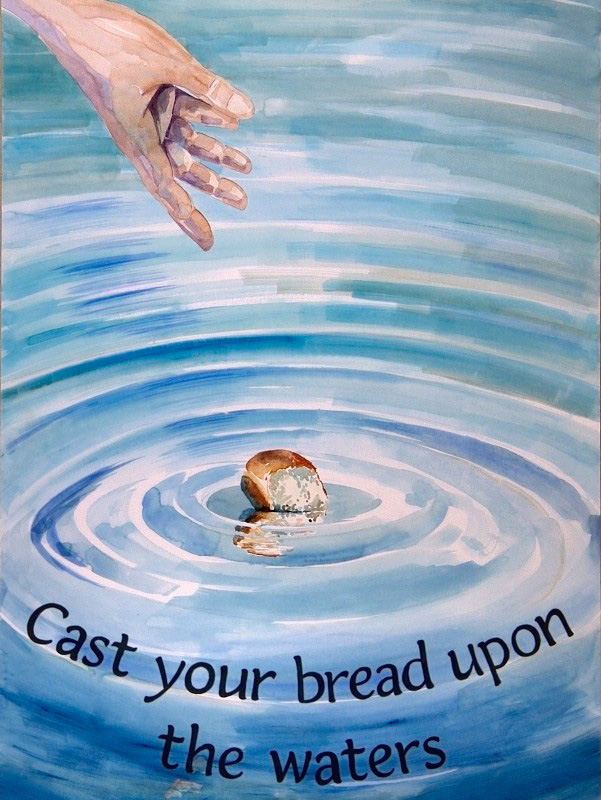
So go ahead and “cast thy bread upon the waters.” What do you have to lose?

"No King! No King! La-la-la-la-la-la"

Remember that classic scene from Disney’s The Lion King? Scar is singing malevolently about killing his brother, Mufasa, and his nephew, Simba. He’s got it all planned out to dethrone the current King and eliminate the successor to the throne. His half-witted posse of hyenas get so excited about the possibility of life without a king. They would prefer total anarchy. The next best thing, of course, is Scar reigning as king. So they go along with his plan.

In Ecclesiastes, the Teacher spends quite a bit of time reflecting on all the ways a government can go wrong. There are times when the people rebel against the current regime. There are other times when the officials are tyrants and oppressors. Sometimes the leaders are young hot shots. Sometimes they are old fools. It seems that there is no such thing as a perfect government.

And three thousand years later, we’re still not there. Shocked? Anybody?

I’m reminded of the scene in The Patriot when Mel Gibson’s character is in the assembly of men discussing whether or not to revolt against England. He stands up and asks the pointed question, “Why should I trade one tyrant three thousand miles away for three thousand tyrants one mile away?”

In the “Arab Spring” which began around this time last year, Egypt, Lybia, and various other nations around the Middle East ousted their current dictatorial regimes and elected new leaders…some of whom turned out to be worse than before! Egypt is still reeling from the switch in governments.

In Ecclesiastes 10 he draws our attention to two more ways a government can go all wrong:

There is an evil I have seen under the sun,
the sort of error that arises from a ruler:
Fools are put in many high positions,
while the rich occupy the low ones.
I have seen slaves on horseback,
while princes go on foot like slaves. (10:5-7)

Woe to the land whose king was a servant
and whose princes feast in the morning.
Blessed is the land whose king is of noble birth
and whose princes eat at a proper time—
for strength and not for drunkenness. (10:16-17)

In vv. 5-7 it seems that the whole structure of society has been upended. Fools are given positions of leadership while the rich (read “wise”) are made to be janitors and sanitation engineers. Slaves go on horseback while princes walk.

To which many in today’s society would think, “That’s a good thing! Equal rights for all! The poor should have the right to ride on horseback just like anyone else. And how dare that prince think he’s entitled to ride on horseback while everyone else has to walk!” (Occupy Wall Street, anyone?)

The evil in it, though, is from the complete disregard for authority and order. Without those clear guidelines the whole system dissolves into anarchy.

On the other hand, when kings and princes/governors are in such a position of authority, they should not use that title to their own advantage (i.e. feasting in the morning). The should eat at a proper time for proper reasons – strength to govern and guide the people.

I think the lesson for us all, even if we’re not in a position of authority, is that God has given us a task. We have a purpose on this earth. And I’m pretty sure that purpose is not to serve ourselves. We need to make sure that we’re doing the proper things at the proper times for the proper reasons. God created this world and humanity with a sense of order. When everyone is functioning in their God-given roles, everyone else benefits.

Ultimately, it doesn’t matter to us Christians what any leader, king, president, or prime minister does. We are answerable to a higher authority – the one true King. So let’s live like it.

"I’m Invincible!" "You’re a Loony."

One of my favorite scenes from Monty Python and the Holy Grail has to be the Black Knight. King Arthur is “riding” through the forest when he and his servant come across a night in black armor. He is guarding the only passage through the area. Arthur tries to carry on, but the Black Knight informs him, “None shall pass!”

One thing leads to another, swords are drawn, and a duel ensues. Arthur bests the Black Knight, severing limb after limb, the knight’s body spouting out fake blood. The whole battle is ridiculous. But the Black Knight exclaims, “I’m invincible!” To which Arthur replies, “You’re a loony,” and continues to hack away at the Black Knight.

Okay, so the scene isn’t as funny when it’s typed out… If you’ve seen the movie before, you’re probably chuckling. If you have no idea what I’m talking about, you’re probably ready to turn me in to a mental health facility.

But that scene reminds me of myself. I think I’m completely invincible – until I meet a formidable opponent. Then I am completely vincible. I can take every precaution to protect myself and my family. But bad things can still happen.

Solomon, in Ecclesiastes 10, reminds us that wisdom itself is not invincible. Wisdom and righteousness go hand in hand, and both can be corrupted more easily than we realize.

As dead flies give perfume a bad smell,
so a little folly outweighs wisdom and honor. (10:1)

Whoever digs a pit may fall into it;
whoever breaks through a wall may be bitten by a snake.
Whoever quarries stones may be injured by them;
whoever splits logs may be endangered by them. (10:8-9)

Through laziness, the rafters sag;
because of idle hands, the house leaks. (10:18)

These are proverbs about the vulnerability of wisdom. Sometimes wisdom is corrupted through no real fault of our own. Flies are drawn to the sweet smell of perfume, but once they’re in it they can’t fly off. The stink of the dead flies begins to overpower the fragrance of the oils. A little folly can end up overpowering much wisdom and honor simply because fools can be drawn to the wise.

Sometimes we overprotect our wisdom and righteousness to the point that we begin to feel arrogant. Think about it. In 10:8-9, ditch diggers, construction workers, quarry-men, and lumber jacks are all professionals. They may have been splitting logs their entire lives. One day they feel over confident, have a momentary lapse in judgment or safety, and BOOM, an accident leaves them crippled and helpless.

Even when we’re alert and keeping watch, Satan is just waiting for that one instance in which we let down our guard. He knows the weak point, and he is just waiting to exploit it.

And then there are times that we just stop caring or trying. There is a house at the end of the street that has been vacant for at least the last two years. It still looks okay from the outside, but who knows what kind of damage is being done inside the walls. Houses tend to deteriorate more quickly when there’s no one living in them.

How many of us have gotten to the point in our faith journey that we just feel like settling down and relaxing a bit? We feel like we’ve done enough for now. We’re pretty good people. We go to church. We sing the songs. We put our money in the plate. We look good on the outside. But is anybody home? Our bodies are supposed to house the Spirit of God, and yet in our laziness we’ve let the house go unattended. And now the roof is leaking, allowing Satan’s lies and schemes to seep in through every crack and crevasse. Eventually a leaking roof leads to a crumbling foundation. And once the foundation goes, the house can’t stand much longer.

Wisdom can be corrupted. Righteousness can be tainted. If there is anything that Solomon wants us to learn in Ecclesiastes it’s that we must protect our lives. Keep watch. Stay alert. Protect the house.

You’re not invincible.

The Art of Losing

Everybody loves a good underdog story. 

Much of the time when I’m watching a football game in which I have no real interest in either team (Yes, guys do that), I’ll root for the team considered the underdog. We love it when the little guy comes through. We love to see Rocky get up time and time again when fighting the behemoth Russian boxer. We love the three-point shot at the buzzer. We love it when the nerd gets the girl instead of the jock. And we love it when the Average Joe’s beats Globo Gym.

But what about when we get beat by the underdog? Shock. Frustration. Anger. Disappointment. We do not love being the Goliath taken down by David.

In life we have an expectation of how things are supposed to work. The bigger, faster, stronger, more experienced team is supposed to win. The Russians we supposed to win gold at the 1980 Olympics, not the Americans. But what is it like to be the bigger, faster, stronger, harder working, more devoted team that gets creamed by the rag-tag group?

What’s it like to put in all the hard work and creativity at your job only to be passed up for a promotion? What’s it like to do all the homework, all the study, all the research, only to have someone else named valedictorian who took all the lower level classes?

It makes us want to throw our hands up and shout, “What’s the point of it all?!”

I have seen something else under the sun:
The race is not to the swift
or the battle to the strong,
nor does food come to the wise
or wealth to the brilliant
or favor to the learned;
but time and chance happen to them all.
(Ecclesiastes 9:11)

Look at that description. Don’t we all want our kids to be athletic, strong, wise, brilliant, and learned? Those are all great goals, I think. But what happens when we pressure our kids in sports so much that they just get burnt out? What happens when our strength defines us only to have it ripped away in a car accident? What happens when our brilliant investments turn out to be a pyramid scheme? What happens when a split-second decision ruins our life-long reputation?

Things don’t always work out the way we expect. Time and chance happen to everyone. Notice, he doesn’t blame God, and neither should we. Fact is we live in a broken world. Everything is susceptible to corruption and decay. The favorite will not always win – sometimes the underdog wins. Sometimes we’re David, sometimes we’re Goliath.

This verse in Ecclesiastes sounds very similar to another familiar passage in Scripture:

Looking at his disciples, he said:

“Blessed are you who are poor,
for yours is the kingdom of God.
Blessed are you who hunger now,
for you will be satisfied.
Blessed are you who weep now,
for you will laugh.
Blessed are you when people hate you,
when they exclude you and insult you
and reject your name as evil,
because of the Son of Man.

“Rejoice in that day and leap for joy, because great is your reward in heaven. For that is how their ancestors treated the prophets.

“But woe to you who are rich,
for you have already received your comfort.
Woe to you who are well fed now,
for you will go hungry.
Woe to you who laugh now,
for you will mourn and weep.
Woe to you when everyone speaks well of you,
for that is how their ancestors treated the false prophets.”
 (Luke 6:20-26)

The kingdom of heaven belongs to the underdogs. The jocks have no advantage when it comes to the kingdom. The wealthy, the well fed, the wise, those with good reputation – the Goliaths need Jesus just as much as everyone else. It doesn’t matter if you seem blessed or successful by the world’s standards. God loves a good underdog story. Don’t believe me? Read the story of Gideon – of David – of Peter.

If you lost everything tomorrow, all the stuff that so easily defines us, would you still have enough? How good are you at losing? Would losing it all just completely decimate you? Or is your identity, your life, your very self in Christ enough?

I think it’s time we practice the art of losing.

Bring Out Your Dead!

Ecclesiastes has a lot to say about death. The consensus? Death sucks.

And life sucks because death is coming for you.

You’ve probably heard the phrase, “Life sucks, and then you die.” Well, Ecclesiastes would give you a much gloomier perspective. “Life sucks, and then you get cancer. You spend months in the hospital getting all sorts of nasty treatments with side effects worthy of making the list of 10 plagues. Suddenly, miraculously, the cancer goes into remission. You throw a party for the day that you are checked out of the hospital. But on the way home you get hit by a bus and die instantly.”

That’s the view of life and death we get in Ecclesiastes. If you need Prozac now, I know a guy…

Think about it. What hard evidence do we have about the afterlife? How do we know what happens when we die? Is this life all we get?

Apparently that’s the kind of outlook the Teacher had when writing Ecclesiastes. He obviously had no established concept of heaven and hell, eternal life and eternal punishment. These realities had not been revealed to Israel yet. We get glimpses as we work through the prophets, especially Daniel. But the theology of heaven and hell were not really developed until much later.

But we have the privilege of living in a post-resurrection world. We have the evidence of the resurrection that can give us faith beyond a doubt that heaven and hell are real. The resurrection means that it does, in fact, matter if you are good or sinful, if you offer sacrifices or not, if you are clean or unclean, to put it in the Teacher’s terms.

All share a common destiny—the righteous and the wicked, the good and the bad, the clean and the unclean, those who offer sacrifices and those who do not.
As it is with the good,
so with the sinful;
as it is with those who take oaths,
so with those who are afraid to take them.
(Ecclesiastes 9:2)

According to him ethics, morality, and worship are of no value when it comes time to shuffle off this mortal coil. It doesn’t matter what is in our bucket when we finally kick it. We all share a common destiny.

The resurrection of Jesus reveals to us that this is not the case. Death has been defeated. It no longer has free reign over every living person. There are those who will escape the final victory of death, and in the end death itself will die.

For the perishable must clothe itself with the imperishable, and the mortal with immortality. When the perishable has been clothed with the imperishable, and the mortal with immortality, then the saying that is written will come true: “Death has been swallowed up in victory.”

“Where, O death, is your victory?
Where, O death, is your sting?”

The sting of death is sin, and the power of sin is the law. But thanks be to God! He gives us the victory through our Lord Jesus Christ.

Therefore, my dear brothers and sisters, stand firm. Let nothing move you. Always give yourselves fully to the work of the Lord, because you know that your labor in the Lord is not in vain. (1 Corinthians 15:53-58)

Don’t get me wrong, death is still the great equalizer. But not in the way it used to be. Someone once said, “For a Christian, baptism is the only death that matters.” See, we’ve already died. And in a way, it doesn’t matter what kind of person we were before that death – whether good or bad, clean or unclean, worshipers or not. We all died. And now we do, in fact, share a common destiny!

Or don’t you know that all of us who were baptized into Christ Jesus were baptized into his death? We were therefore buried with him through baptism into death in order that, just as Christ was raised from the dead through the glory of the Father, we too may live a new life.

For if we have been united with him in a death like his, we will certainly also be united with him in a resurrection like his. For we know that our old self was crucified with him so that the body ruled by sin might be done away with, that we should no longer be slaves to sin— because anyone who has died has been set free from sin. (Romans 6:3-7)

So in a way the Teacher in Ecclesiastes is exactly right, and in a way he couldn’t be more wrong. Baptism is the only death that matters. If we’ve already died, then we’ve been set free from the cycle of sin and death and the anxiety of what happens once our hearts stop beating.

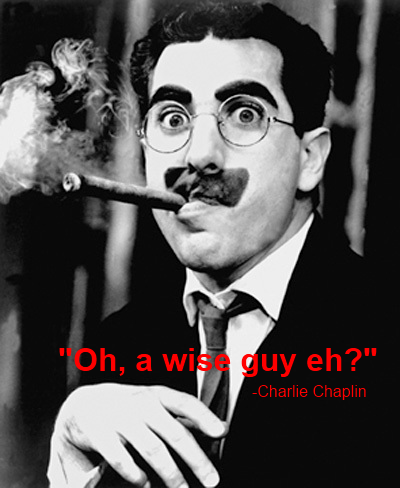
Wise Guy or a Wise Man?

The English language never ceases to bewilder me. With all of our idioms and colloquialisms it’s amazing that anyone can “talk good American” at all! I know this point has been made time and time again, but the importance of how we use language cannot be stressed enough.

Here’s one example of how ridiculous we are with out use of language:

  • Bears and worms – nothing alike until you add the word “gummy”
  • Man and guy – synonyms until you add the prefix “wise”
I want to be considered a wise man, but I’m probably more like a wise guy. I’d rather give wise sayings, but more often I give wise cracks. I’d rather my wisdom be legitimate, not ironic.
In Ecclesiastes it seems that the Teacher is using “wisdom” ironically at times. In 7:23 he says, “All this I tested by wisdom and I said, ‘I am determined to be wise’ – but this was beyond me. Whatever exists is far off and most profound – who can discover it?”
Throughout the book he claims to be pursuing the meaning of life with the help of wisdom. How does that work out for him? Sex, drugs, alcohol, girls, food, money, power, work – “wisdom” supposedly guides him through these avenues to discover meaning and purpose.
It’s all to no avail, surprise, surprise.
So my question is this: What kind of wisdom was he listening to?
But wisdom is wisdom, right? Maybe not. In his letter James makes it very clear that there is an obvious distinction between the wisdom from the world and the wisdom from God. First of all, true wisdom is given when asked for, not discovered when pursued. “If any of you lacks wisdom, you should ask God, who gives generously to all without finding fault, and it will be given to you” (James 1:5).
Remember, Solomon had to ask God for wisdom to rule the people well. God was so impressed by this request that he gave Solomon true wisdom along with wealth and longevity. The Teacher in Ecclesiastes is trying to find wisdom apart from God. He is exploring the world and all that it offers. He strives for it, adding one thing to another.
Again, to no avail.
Second, the wisdom from the world is not even true wisdom. If you get wisdom from your experience in a sinful, fallen, corrupted world, then it’s guaranteed that the wisdom you find will be sinful and corrupted. Just check out the contrast James offers:

Who is wise and understanding among you? Let them show it by their good life, by deeds done in the humility that comes from wisdom. But if you harbor bitter envy and selfish ambition in your hearts, do not boast about it or deny the truth. Such “wisdom” does not come down from heaven but is earthly, unspiritual, demonic. For where you have envy and selfish ambition, there you find disorder and every evil practice.
But the wisdom that comes from heaven is first of all pure; then peace-loving, considerate, submissive, full of mercy and good fruit, impartial and sincere. Peacemakers who sow in peace reap a harvest of righteousness. (James 3:13-18)

How much of the “wise” advice in this world is based out of envy or selfish ambition. The whole “American Dream” is based on envy and selfish ambition! Do well in school so you can go to a good college. Pick a good major so that you can get a high paying job so that you can get a big house and a nice car. Get a beautiful wife and have 2 children and a dog. You’ve got to keep up appearances. You wouldn’t want anyone thinking you are weak or incompetent. Take the best vacations. Throw the best parties. Get ahead any way you can.

It’s all about envy, competition, and selfish ambition. That’s the corrupt, sinful wisdom you’re left with if you try to get it from this world.

Wisdom from above, given by God, is all about God and others. It’s pure, first and foremost. It’s not going to be tainted by the corrosive vices of culture. It’s peace-loving, considerate, submissive, full of mercy and good fruits, impartial and sincere. Real wisdom looks out for others. Real wisdom tries to make the world a better place for everyone, not just number one. It’s more concerned with making others look good and helping others prosper and get ahead.

The results? Worldly wisdom perpetuates sin and corruption. The end product is more disorder and evil practices. Heavenly wisdom, however, combats the effects of sin. The wisdom from God, which leads to peacemaking, results in a harvest, an abundance, a cornucopia of righteousness!

So be a wise man, not a wise guy. Seek wisdom from God and nowhere else. The world needs more wise men.

Rest? Ain’t Nobody God Time for That!

One thing that is glaringly obvious to anyone who studies history or reads the Bible is that humans haven’t changed just a whole lot.

Sure, cultures change, values shift, technology improves, but humans really haven’t “improved” so to speak. Individually and collectively, we still face the very same challenges for thousands of years.

A little food/money is good. A lot is better.

Some power and authority is fine. But I need more.

If I work enough, I can get what I want. I want more, so I must work more.

He has something that I don’t. That’s a problem.

One of the most fascinating commands that God gave the Israelites, in my opinion, is the Sabbath. They had a mandatory day off every week. They could work six days, but they had to refrain from all work on the Sabbath. Compulsory rest time? Sign me up!

One thing to keep in mind when it comes to God’s commands is that God never commands something that he has not done or is not willing to do. In other words, God commands the people of Israel to rest on the seventh day because he rested on that day.

The Israelites are to observe the Sabbath, celebrating it for the generations to come as a lasting covenant. It will be a sign between me and the Israelites forever, for in six days the Lord made the heavens and the earth, and on the seventh day he rested and was refreshed.’” {Exodus 31:16-17

This passage adds something I never noticed before. It says, “he rested and was refreshed.God was refreshed. I didn’t know God needed refreshing.

Mankind is created in God’s image. His personality is the basis for our very being. If God needed a little R&R after a full work week, don’t you think we do to?

And did you notice that the Sabbath was to be a time of celebration? Creation – Celebration – Rest – Refreshment. This is a command!

Fast forward to the New Testament and what has the Sabbath been turn into by the religious establishment? A burden. A legal mandate loaded with regulations, stipulation, traditions, and loopholes. Hardly restful. Hardly celebratory. And definitely not refreshing. The Sabbath caused more arguments between Jesus and the Pharisees than just about anything else. Jesus wanted to restore the intent of the Sabbath, so the Pharisees decided to kill him because of it.

Then he said to them, “The Sabbath was made for man, not man for the Sabbath. So the Son of Man is Lord even of the Sabbath.” {Mark 2:27-28

Read through Ecclesiastes and it becomes clear that mankind has always been susceptible to workaholism. We work so that we can buy things, then we have to work more to pay off the debt we went into in order to get these things. All the while we’re working so much that we can’t even enjoy the things for which we’ve worked! Sound familiar?

Three thousand years later this is still a familiar reality. Americans, in particular, are overworked and under-rested. Check out the startling research here. Americans put in more work hours than any other developed nation. We have less paid time off, fewer vacation days, and no built-in paternity leave for new parents. And yet the standard of living is no better for the work we do.

Then we come to church on Sundays (if we have the time) and say that the Sabbath doesn’t apply to Christians anymore. Oh, good. Because I just can’t take any of that mandatory rest. I don’t need to be refreshed, and I definitely have no intention of celebrating God’s creation. Don’t burden me with that!


Sure, the Sabbath might not be an expectation for Gentile believers under the new covenant. But look again at Exodus 31. God says the Sabbath would be a sign between him and his people “forever.” Has forever ended yet?

Maybe, just maybe, God knows the heart of man enough to know that we need rest. Surely if God himself needed it, then we do too!

Now stop reading this and get some rest. You look tired.

Stupid Questions DO Exist!

If you’ve ever sat in on a high school history class, you will know for a fact that there are, indeed, stupid questions.

For instance, in my junior year American History class the teacher told us to read a section of the first chapter in our text books. We would read and then discuss the material more in depth. About three minutes into it one of my female classmates raised her hand. The teacher called on her.
“Um, I thought this was American history. What do the British have to do with American history?”
Stunned silence. Did she really just ask that? She can’t be serious, can she?
There are no stupid questions, but there are a LOT of inquisitive idiots. Can I get an “Amen?”
The questions we ask matter. In fact, I firmly believe that a person’s understanding of a subject can be determined no by the answers they give but by the questions they ask. Jesus, for instance, was in the Temple as a twelve-year-old boy conversing with the Rabbis. Those gathered around we amazed at his understanding because of the questions he was asking (Luke 2:46-47).
Which brings me to Ecclesiastes chapter 7. If we simply read straight through this part of Ecclesiastes it can seem very troubling. The Teacher makes some pretty outrageous statements that don’t seem to fit with the rest of Scripture. We can come away thinking Why is this in the Bible? Is that a typo? Nah, that can’t be right…

But if we understand that he is simply providing answers to unvoiced questions, then it makes a lot more sense. Then we can pick up on his irony, his sarcasm, and his tongue-in-cheek statements.
One of the most troubling sections in this chapter for me is 7:16-18,

Do not be overrighteous,
  neither be overwise—
  why destroy yourself?
Do not be overwicked,
  and do not be a fool—
  why die before your time?
It is good to grasp the one
  and not let go of the other.
Whoever fears God will avoid all extremes.

Is he really making a blanket statement that we should not be too righteous or too wise? Is he allowing for a little wickedness and foolishness?

Now, I can’t speak directly for the Teacher (or Solomon), but here’s what I think is going on:

If these verses could be written in sarcasm font, I think they would have been. I think the Teacher is giving bad answers to bad questions. Think about it: Where in Scripture do we see degrees of righteousness? We’re either righteous or we’re not. When Jesus challenged his disciples that their righteousness must surpass that of the Pharisees (Matthew 5:20), he would later reveal that the Pharisees were not really righteous in the first place.

The same goes for wisdom. Sure, someone might be more wise than someone else, but how can a person be too wise? That’s like saying, don’t be too good looking. Don’t be too healthy. Don’t be too good at your job.

How about wickedness? Where in Scripture does is say it’s okay to be a little wicked, just don’t overdo it. That’s like saying it’s okay to put a little bit of dog poop in the brownies, just not so much that it overpowers the chocolate flavor.

These are bad answers to bad questions. The sad part is we continue to ask these same questions expecting a different answer!

How righteous do I need to be for God to accept me?

How wise must I be in order to find my purpose in life?

How much can I sin and still be in God’s good graces?

How close can I get to that line without going over?

These are the wrong questions! Yet we continue to ask them on a daily basis.

As we read in Romans, Paul was dealing with many of the same issues. He says that our own righteousness will never be enough because NO ONE is righteous, not even ONE. Everyone has sinned and continually falls short of God’s glory. No one is wise enough, no one is good enough, no one is righteousness enough, but thanks be to God through Jesus Christ! God gives us grace enough.

So…since we have grace, how much can we sin? Stop it! That’s the wrong question. We’ve been set free from the cycle of sin and death. Why would you want to jump back on that hamster wheel of doom?

The right questions can completely shift our understanding of the problem. The key question in Ecclesiastes chapter 7 is this: “Consider what God has done: Who can straighten what He has made crooked?” (7:13)

Solomon didn’t know the answer, but we do. The one who can straighten out what has been made crooked is Jesus.

The right question gets the right answer.

I Swear to God!

We don’t talk a lot about vows and oaths in our society. The closest we come to “oath-taking” is when a witness is sworn in before taking the stand. They swear to tell the truth, the whole truth, and nothing but the truth – “so help you God.” Then they are considered “under oath.”

But then you hear people caught in a lie say things like, “I swear to God!” So if you swear on the Bible, you are bound by that oath, but if you swear to God then it doesn’t really mean anything… Hmm…

I don’t know about you, but if someone has to add I swear, I promise, or I’m not gonna lie, then that really makes me wonder how honest of a person they are. If they don’t add in those phrases am I to assume they are “gonna lie.”

The other time we think of vows and such is in the context of a wedding ceremony. The bride and the groom exchange their vows to each other in the sight of witnesses and then seal those vows with a ring. Yet how soon after the honeymoon are those vows forgotten? How long does it take for the husband to start looking at other women again? How long does it take for the wife to nag about money issues?

You can see just how seriously we take our “vows” by simply checking out the divorce rate. Last time I checked our vows don’t address allow “irreconcilable differences,” whatever that means, as an escape clause.

What about the vow we make before God. When we confess that Jesus is the Christ, the Son of God; when we repent of our sins and pursue righteousness; and when we are submerged in the water and are pulled back up we are publicly stating our vows to God.

Jesus, I will follow you no matter what the cost.

Spirit, I will go wherever you lead me.

God, everything I have is yours.

For better or worse, in wealth and in poverty, in sickness and health, in safety and in persecution, in foreign countries, in homeless shelters, in church, on sports teams, at work – God, I am yours and yours only. I will keep myself only to You for as long as I live.

What about THAT vow? How many of us delay in fulfilling our vows to God? How many of us make deals with God – I’ll follow you when (x) happens. When I’m through college. When I’ve got a job. When I get married. When I have kids. When I’ve got the car and the house paid off. When the kids are gone. When I retire.

Time and time again people came up to Jesus wanting to follow him, but more often than not there was something holding them back – I just got married. I just bought some land. I just got some new farm equipment. I want to wait until my father is dead.

“When you make a vow to God, do not delay to fulfill it. He has no pleasure in fools; fulfill your vow. It is better not to make a vow than to make one and not fulfill it.” {Ecclesiastes 5:4-5

Maybe it’s time that you renewed you vows to God. Make 2013 the year that you fulfill your vow.

Noise

My mouth gets me into trouble. Guys, can you relate? I have a knack for saying exactly the wrong thing at exactly the wrong time, especially when talking to my wife. The saying rings all too true for me: “It is better to close your mouth and be thought a fool than to open it and remove all doubt.”

Many times I find myself thinking What I should have said was…nothing.


Have you ever noticed that a lot of people are uncomfortable with silence? There always has to be music going or television playing. They fill every sound gap with more and more words until it just sounds like static. Some people just don’t like silence so they prevent it at all costs.

Other people talk a lot when they know they’ve done something wrong. They get caught up in a lie so they add more and more details to the story to make it sound believable. But they end up over-describing to the point that the story sounds obviously contrived.

Some people are nervous talkers. Whenever they’re anxious about something, their mouth takes the reins and churns into a full gallop.

Then their are those oddballs who are content not to say anything. They just sit back and let everyone else do the talking. They rarely add to the noise, and when they do speak up people listen. They’re not really oddballs – the rest of us are.

Noise.

Many of us think that they only way we can get people to listen to us is by making noise. The loudest voice is answered. The squeaky wheel gets the grease. And we use this same approach with God far too often. We’re like the prophets of Ba’al. They were getting to response from Ba’al on top of Mount Carmel so Elijah suggested they yell louder, make more noise, act more ridiculous.

They still got no answer. Elijah, on the other hand, simply knelt and prayed. No shouting, no dancing, not theatrics. Just a simple prayer.

How do you approach God? Do you come to God with singing, dancing, loud music, shouts, theatrics, and lengthy prayers? Do you try your best to get God’s attention so that he’ll listen to you?

Maybe if we stripped away all the noise then God would be able to get our attention so that we’ll listen to Him.

Guard your steps when you go to the house of God. Go near to listen rather than to offer the sacrifice of fools, who do not know that they do wrong. Do not be quick with your mouth,    do not be hasty in your heart    to utter anything before God. God is in heaven    and you are on earth,    so let your words be few.  {Ecclesiastes 5:1-2

Is listening considered an act of worship? I think it should be. It’s definitely a sign of respect.

If you were to have lunch with the President, you would probably be interested in what he had to say. You would be more focused on listening than on talking. You wouldn’t engage him in conversation like you do your buddy or your spouse. He talks, you listen.

How much more so should we be quick to listen to God? Yes, God wants you to communicate with Him, and even commands us to do so. But He also commands us to listen to Him. It’s like the old adage: You have two ears and one mouth, so do twice as much listening as talking.


This week in worship, as you approach the house of God, draw near to listen. Hear what God has to say to you. Don’t just let your mouth run wild. Listen first, then offer the sacrifice of praise.