Page 46 of 81

1 Resolution, Many Goals

Here’s how I finally did on my goal for 2012. I set off to read at least 24 books, or 2 a month. I got to 25 1/2 books.

  1. King’s Cross, by Timothy Keller
  2. Forgotten God, by Francis Chan
  3. Erasing Hell, by Francis Chan
  4. Catch-22, by Joseph Heller
  5. Of Mice and Men, by John Steinbeck
  6. Miracles, by C.S. Lewis
  7. The Princess Bride, by William Goldman
  8. Amusing Ourselves to Death, by Neil Postman
  9. The Hunger Games, by Susanne Collins
  10. Catching Fire   ”   “
  11. Mockingjay    ”    “
  12. Technopoly, by Neil Postman
  13. Dirk Gently’s Holistic Detective Agency, by Douglas Adams
  14. Long, Dark Tea Time of the Soul    ”   “
  15. Shattered, by Dean Koontz
  16. Beautiful Outlaw, by John Eldredge
  17. The Practice of the Presence of God, by brother Lawrence
  18. Timeline, by Michael Crichton
  19. Kingdom Come, by John Mark Hicks and Bobby Valentine
  20. Ender’s Game, by Orson Scott Card
  21. Speaker for the Dead  ”   “
  22. Xenocide, ”  “
  23. Children of the Mind,   ”   “
  24. Fear Nothing, by Dean Koontz
  25. Surprised by Hope, by NT Wright
  26. Not a Fan., by Kyle Idleman (almost through…)
Not too shabby. I think this is the first time I’ve ever completed a year-long goal.
Here’s what I have on deck for 2013:
1. Continue reading 2(+) books per month
2. Donate blood at least 4 times
3. Run a total of 500 miles
4. Read each of the four gospels at least 3 times
I like to use the word goal instead of resolution. To resolve means “to come to a definite or earnest decision about.” The only thing I have ever resolved to do is to follow Christ. That is a definite and earnest decision. I can change or adapt my goals. I can make new goals. I can reach goals and move on to new ones. My ultimate resolution to follow Christ guides what kind of goals I set for myself.
So go ahead and set lots of goals for yourself. But only one resolution ever needs to be made. If you haven’t made that resolution yet, then make 2013 the year you make a definite and earnest decision to follow Christ.

No Vacancy – Oh, Joy…

One of my favorite “Christmas” hymns is Joy to the World. It’s a simple but powerful song. It’s few short verses are packed with high Christology, the redemption of creation itself, and the sovereignty of Christ over all the universe.

But the most convicting line in the song, in my opinion, comes in the first verse: Let every heart prepare Him room.

The arrival of Emmanuel is ripe with bittersweet irony. The King of kings, the Prince of Peace, was not born in a palace, but in a stable. He was not birthed in a sterile birthing room in the maternity ward of the local hospital. His first sensations included the scent of day-old animal dung, the sound of domesticated livestock, and the scratching of dried out hay, which was likely infested with small biting insects similar to bed bugs.

God made room within this infantile body, enough room for His fullness to dwell. Yet there was no room in the town for this newborn baby. It’s even more heartbreaking to understand that it wasn’t an “inn” like a Motel 6. They were most likely trying to bunk with relatives overnight. The word often translated “inn” is more like a guest room on the upper floor of the house.

The NIV 2011 get’s it right: “There was no guest room available for them.” (Lk 2:7)

Joseph’s own family members relegate him and his full-term fiance to the basement with the animals gathered for the night. There was no room for him.

But zoom out a bit and the picture becomes even more disappointing.

“The true light that gives light to everyone was coming into the world. He was in the world, and though the world was made through Him, the world did not recognize Him. He came to that which was His own, but his own did not receive Him.” John 1:9-11

Jesus was the catalyst for creation. Without Jesus nothing would exist. The entire world was made through Him. But when He came into the world, that which was His own, His own (people) did not make room for Him. He pitched His tent alongside us, but no one welcomed Him to the neighborhood.

And yet…His current mission is to prepare room for us in the kingdom of heaven (John 14:1-4).

I also love how Isaac Watts phrased the opening line of the song: Joy to the world, the Lord is come!

Not has come, not did come, not came…the Lord is come. It’s not enough to focus on the one time birth of Christ. Rather, He is in a constant state of “coming.” His coming to earth is an ongoing process, and we must always be in the process of preparing room for Jesus.

Here I am! I stand at the door and knock. If anyone hears my voice and opens the door, I will come in and eat with that person and they with me.” Revelation 3:20

Are the No’s still lit up on our Vacancy signs? Is there room for Christ in your heart? your home? your workplace? your ball team? Is there room for Jesus in your church?

Or is Jesus relegated to the basement…again…

Christmas Songs vs. Christ Songs

I like Christmas music. The music is one of my favorite parts of this time of year. Just like all good movies have killer sound tracks, it isn’t really Christmas without those heart-warming songs. But there are a few things that make me sad about Christmas music:

  1. Folks who work retail are sick of it by mid-December.
  2. The growing emphasis seems to be on the more secular songs that have nothing to do with the holiday (by which I mean the “holy-day”).
  3. It’s awkward to sing Christmas hymns any other time of the year in our worship services.
I want to focus on number 3 for a few blog posts leading up to Christmas. I don’t know about you, but in my religious tribe and upbringing, Christmas was met with a certain level of taboo. Most families celebrated it, but as a church we never really did. Some families didn’t celebrate ANY holidays, which is fine… But the church didn’t emphasize Christmas in order to avoid offending those families, or in order to appear as non-Catholic as possible.
So we didn’t really sing Christmas hymns a whole lot during the holiday season, and we didn’t sing them the rest of the year. They became sort of the black sheep of the song book.
This is a shame. Really, it is. Because some of these Christmas hymns contain the highest Christology in our song books. They don’t focus just on the birth of Christ, the little Lord Jesus asleep on the hay, like Ricky Bobby imagines. These songs emphasize the preexistent Christ, the Word who became flesh, the sovereign reign of God through Christ over all creation.
Let’s take a look at one: Hark! The Herald Angels Sing
“Peace on earth and mercy mild; God and sinners reconciled!”
  • Through Jesus, God was ushering in his shalom, his peace, his wholeness to creation once again. Through Jesus we have been reconciled to God, brought back into a state of pure relationship with the Father.
“Joyful, all ye nations rise; join the triumph of the skies”
  • Jesus is the fulfillment of the Abrahamic covenant. Through Abraham’s seed, Jesus, all nations of the earth will be blessed. Jesus is the messiah not just for Israel but for all humanity.
“Veiled in flesh the God-head see; hail the incarnate Deity
Pleased as man with men to dwell, Jesus our Emmanuel”
  • God had tried everything – communing with man in the garden, calling out one family to save humanity, choosing one man through whom all nations would be blessed. He tried calling out one nation, giving them his law, dwelling with them in his Temple, removing sins through animal sacrifices. Nothing worked. Finally, he pulled out all the stops. God himself became a man and pitched his tent along with us. This was the only way to bring true reconciliation to humanity. God with us.
“Born to raise the sons of earth, born to give them second birth.”
  • Jesus was born once so that we might be born twice. Just as he was born as the incarnate Son of God, so we are re-born as adopted sons of God with his Spirit dwelling in us.
Sure, Hark! The Herald Angels Sing is a “Christmas” song, but it’s more than that. It’s a Christ song, proclaiming a higher view of Christ than most songs we sing.
Maybe we don’t need more Christmas songs; maybe we need more Christ songs.
Like this one:

“The Son is the image of the invisible God, the firstborn over all creation. For in him all things were created: things in heaven and on earth, visible and invisible, whether thrones or powers or rulers or authorities; all things have been created through him and for him. He is before all things, and in him all things hold together. And he is the head of the body, the church; he is the beginning and the firstborn from among the dead, so that in everything he might have the supremacy. For God was pleased to have all his fullness dwell in him, and through him to reconcile to himself all things, whether things on earth or things in heaven, by making peace through his blood, shed on the cross.” – Colossians 1:15-20

Time-Out!

There is a time for everything,
and a season for every activity under the heavens:

a time to be born and a time to die,
a time to plant and a time to uproot,
a time to kill and a time to heal,
a time to tear down and a time to build,
a time to weep and a time to laugh,
a time to mourn and a time to dance,
a time to scatter stones and a time to gather them,
a time to embrace and a time to refrain from embracing,
a time to search and a time to give up,
a time to keep and a time to throw away,
a time to tear and a time to mend,
a time to be silent and a time to speak,
a time to love and a time to hate,
a time for war and a time for peace. – Ecclesiastes 1:1-8

Time is such a weird thing. It’s constantly moving forward, yet there is no end in mind. The more things change, the more they stay the same. There is nothing new under the sun.
Yet this thing called “time,” enigmatic as it may be, is of utmost importance to us. Animals don’t really have a sense of time. The eat whenever they’re fed. They sleep whenever they’re tired. They don’t care that it’s one o’clock in the morning; they want to go outside, now! We humans, however, are swimming in the awareness of time. It’s on our wrists, our cell phones, our computers, our microwaves, our dashboards, our building signs, and in nearly ever room we walk into. There is a constant tick from the analog clocks sounding off the seconds. There is a constant blink from the digital clocks reminding us that we haven’t properly reset it since the last power outage.
Time is everywhere.
In the above poem Solomon observes that everything has it’s time. Of the 28 events, 14 couplets, only 2 events are beyond our ability to control (mostly). There is a time to be born and a time to die. Did you have any say about your birthday? If I had, I would not have chosen December. That’s a horrible month for a birthday.
Do most people get any say about when they will die? Only in such saddening cases of suicide that are heard far too frequently. Nobody wakes up in the morning knowing they are going to be hit by a drunk driver. None of the parents, children, or teachers knew that a crazed gunman was going to terrorize their school last Friday.
Everything else in life is up to us. It’s our choice when to hug and when not to. It’s our choice when to build and when to demolish. It’s our choice when to speak and when to shut up – a choice more people should choose…just sayin’. Every activity has it’s time and place, and it takes a wise man to know when and where all things are appropriate.
So what’s to glean from all of his discussion on time in Ecclesiastes chapter 3? It’s summed up in two words: Carpe Diem.
Carpe diem is NOT the same as “YOLO!” “You only live once” is used as an excuse to act like a moron. It’s something to yell as you try to play human Frogger with interstate traffic. Carpe diem, seize the day, is a reminder that each day is a gift not to be wasted. Make the most of your life. Spend your time doing what you love, with whom you love, for the One who loves you.

I know that there is nothing better for people than to be happy and to do good while they live. That each of them may eat and drink, and find satisfaction in all their toil—this is the gift of God. I know that everything God does will endure forever; nothing can be added to it and nothing taken from it. God does it so that people will fear him. -Ecclesiastes 3:12-15

Every time a tragedy hits, no matter what it is – hurricane, mass murder, drunk driver, cancer, etc – it brings us to our knees. We were a nations brought to our knees this weekend. Life and time, I think, are seen a bit more clearly on your knees, close to the ground, beneath the smog and smoke that keeps us in a haze all day long. When we have nothing left to stand on we realize who is holding us up. Our life is but a mist – here for a moment and then gone. But everything God does endures forever.

Use your time to do what you love – with whom you love – for the One who loves you. Carpe that diem.

When the Ball Drops

Ecclesiastes is a journey. Like I said last week, the book of Ecclesiastes mimics life itself – full of twists and turns and loops.

The premise of the book is that everything is Hebel, lit. vapor, breath, wind, mist. Hebel is that which is here for but a moment and then vanishes away. Even the conclusions reached in Ecclesiastes seem to be hebel. One moment, the Teacher tells us that pleasure is meaningless, a chasing after the wind. He says toil is pointless because you don’t get to keep that for which you have labored. Everything is hebel, meaningless, futile, a chasing after the wind.

So what’s the big conclusion? Enjoy the pleasures of life and find satisfaction in your work.

Wait…what?

Teacher, I’m confused! So are we supposed to enjoy the pleasures of this life or aren’t we? Is life meaningless or isn’t it? Is hebel a good thing or a bad thing? I don’t get it.


The Teacher realized what all lottery winners learn the hard way – more money, more problems.

He understood the frustration of the academics in the world – more wisdom, more sorrow.

Death is the great equalizer. Wise man and fool, rich man and poor, go-getter and lazy bum all face the same fate. So what is there to gain?

Jesus said some similar things in his sermon on the mount.

Do not store up for yourselves treasures on earth, where moths and vermin destroy, and where thieves break in and steal. But store up for yourselves treasures in heaven, where moths and vermin do not destroy, and where thieves do not break in and steal. For where your treasure is, there your heart will be also.

So do not worry, saying, ‘What shall we eat?’ or ‘What shall we drink?’ or ‘What shall we wear?’ For the pagans run after all these things, and your heavenly Father knows that you need them. But seek first his kingdom and his righteousness, and all these things will be given to you as well. Therefore do not worry about tomorrow, for tomorrow will worry about itself. Each day has enough trouble of its own. (Matthew 6:19-21, 31-34)

 I think the Teacher reaches the same conclusion as Jesus. At the end of this journey, a pursuit of pleasure, wisdom, and success on the world’s terms apart from God, the Teacher concludes:

A person can do nothing better than to eat and drink and find satisfaction in their own toil. This too, I see, is from the hand of God, for without him, who can eat or find enjoyment? To the person who pleases him, God gives wisdom, knowledge and happiness, but to the sinner he gives the task of gathering and storing up wealth to hand it over to the one who pleases God. This too is meaningless, a chasing after the wind. (Ecclesiastes 2:24-26)

Find fulfillment on God’s terms. Enjoy the blessings from God, not the ones you strive after. To the one who pleases God, he will give wisdom knowledge and happiness. This sounds very similar to Jesus’ conclusion, to seek first the kingdom of God and his righteousness. If you are seeking God above all, then all these things will take care of themselves. You will store up for yourself treasures in heaven, there for you to enjoy after you leave this earth.

So often our lives end up looking like the Teacher’s life. It’s like we’re stuck in a pinball game, bouncing around from one thing to another with no real goal other than to rack up as many points as possible before the ball falls through the gap. It’s chaotic, it’s stressful, and it’s not how we were intended to live.

Rather, our lives should look more like golf. Our focus should be on the one goal, trying to get there in as few strokes as possible. If we keep our focus and aim for the hole, then it is a relief when the ball drops – not a disappointment as in pinball. For by keeping our focus on God, his kingdom and his righteousness, then we know that something better awaits us when this life is over, after the ball drops.

What’s Missing?

Ecclesiastes can be a very depressing book. At times it feels more like Nietzsche than Jesus. It feels more like nihilism than Christianity; more like existentialism than living for God. It’s confusing; very difficult to understand at times. Other times, the point is very clear.

The whole book can make your head spin. It’s enigmatic, living comfortably in the paradox of meaninglessness and purpose. Ecclesiastes is not just a book about life, it’s a book that mimics life. It’s a book that makes me think of a quote from Douglas Adams, author of The Hitchhiker’s Guide to the Galaxy, “I may not have gone where I intended to go, but I think I have ended up where I needed to be.” That’s true of life, and it’s true of Ecclesiastes.

The book opens up with a poem that sounds like it has no business being in the Bible:

What do people gain from all their labors
at which they toil under the sun?
Generations come and generations go,
but the earth remains forever.
The sun rises and the sun sets,
and hurries back to where it rises.
The wind blows to the south
and turns to the north;
round and round it goes,
ever returning on its course.
All streams flow into the sea,
yet the sea is never full.
To the place the streams come from,
there they return again.
All things are wearisome,
more than one can say.
The eye never has enough of seeing,
nor the ear its fill of hearing.
What has been will be again,
what has been done will be done again;
there is nothing new under the sun.
Is there anything of which one can say,
“Look! This is something new”?
It was here already, long ago;
it was here before our time.
No one remembers the former generations,
and even those yet to come
will not be remembered
by those who follow them. (1:4-11)
Have you ever had one of those days? A day when everything seems wearisome? A day when Murphy can’t leave well enough alone? A day when you just can’t see the point in it all?
If you answered “Yes” to any of the above, then you are a lousy Christian and need to repent, immediately…
Actually, it means that you are not immune to the disease called “life.” It means you are not above your own humanity. It means…you’re normal. We all get stuck in ruts. We all have our valleys and deserts to cross. Life is one big roller coaster that never comes to that jerking halt – which is just what you need when your head is spinning from having blacked out on the double loop…
The question is: Is this poem an observation of the way things are? or a description of how things are supposed to be?
Notice what is missing from the poem. It talks about the creation but not the Creator. It talks about mankind but not the One whose image we bear. It talks about history but not the One who created time itself.
Fortunately, we know what the end of the journey will bring. We know the end to which the author is working. God will not remain hidden behind the curtains forever. It may take 12 chapters full of twists and turns, ups and downs, but when all is said and done, one thing remains:

Remember your Creator
in the days of your youth,
before the days of trouble come
and the years approach when you will say,
“I find no pleasure in them” (12:1)
Now all has been heard;
here is the conclusion of the matter:
Fear God and keep his commandments,
for this is the duty of all mankind.
For God will bring every deed into judgment,
including every hidden thing,
whether it is good or evil. (12:13-14)
Trying to find meaning in life apart from God is like being thirsty in the middle of the ocean. All that saltwater will never satisfy your thirst. But Ecclesiastes reminds us that we’re not that far from shore. Just past the shoreline is a freshwater spring. Come, drink, and really live.

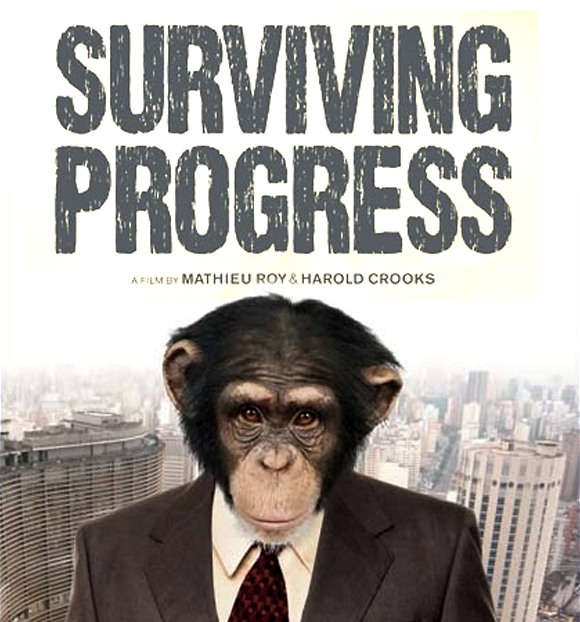
Surviving Progress

I recently watched a documentary on Netflix called Surviving Progress. It gives an interesting perspective to what we have been promised to be a better, brighter, more advanced future. Medical breakthroughs allow people to live longer, healthier lives. Technological advancements allow for instant communication and speedy travel between nations. More cars, more computers, more televisions, more – more – more. Bigger! Faster! Better!

This is “progress.”

But what are we to do with it?

An interesting observation from an evolutionary psychologist is that the human brain hasn’t changed much at all over the last fifty thousand years. I’m not going to get into the evolutionary debate at this point, but I think the point is very valid. The parts of our brains that still tend to dominate are the more rudimentary regions. The deepest parts of the brain, also considered the oldest, are those that control the “fight or flight” survival system, the sex and pleasure system. The concern of these regions is the immediate and the tangible. They are always concerned with what is happening right this moment all around us.

Very helpful if one is living in a world overrun with wild beasts and tribal warfare. Not so helpful when standing in the checkout line at Walmart.

These regions are incapable of considering the long term impact of immediate decisions. Do I eat the cupcake in front of me or do I wait and receive an additional cupcake in an hour? You get the point.

We humans would like to think that we are more sophisticated than our nomadic ancestors of millennia past. But we aren’t.

We Christians would like to think that we are better prepared to handle Satan’s temptations today than were, say, Adam and Eve. But we aren’t.

We would like to think that Satan is always scheming, always going back to the drawing board, always drawing up more intricate traps and snares in order to catch us. But he doesn’t.

Satan has one playbook. It hasn’t changed since the time of Eden because there is no need for change. The road runner kept out thinking and outsmarting the coyote, so the coyote had to keep trying new and increasingly dangerous stunts to catch the darn bird. Not so with Satan. Humanity falls for the same traps so consistently that there is no need for him to update his game plan.

The real kicker is…we KNOW the playbook! We know every single go-to that Satan has. Just read Genesis 3:1-7; Matthew 4:1-11; and James 1:13-15. We know how he works, we know what play he’s going to run, and we’ve had thousands of years to study and develop a defense.

When it comes to progress – be it technological, medical, social, or economical – the single greatest hindrance of progress is…humans. As long as Satan is able to trap humanity with his schemes, nothing will really change. That’s why the writer of Ecclesiastes could say, “There is nothing new under the sun.”

What we really need is not new “stuff;” we need a new system. If there is nothing new under the sun, we need a different sun – a new world, restored to God’s original intent. We need a world redeemed and set free from sin, where Satan has no dominion, where our own fallen humanity won’t get in the way of true progress.

If we’re going to “survive progress,” then we need a little bit of heaven.

Hips Don’t Lie: The Heart of Worship

I love music.

I come from a very musical family full of people who have been in band and/or choir. My family likes to sing – all of us. When we get together it’s like a live-action musical.

Seriously. A few years ago we were all together at my sister’s house for Christmas. Her in-laws were also there for a while. One night we were gathered around the table playing a game. At one point in the game, after something funny had happened, my sister’s mother-in-law asked, “Oh no, are they going to sing again?”

I love to sing. Dancing, on the other hand…let’s just say we weren’t blessed with that gene. I played trumpet in high school, and it’s no exaggeration to say that the only rhythm in my entire body lies in the index, middle, and ring fingers on my right hand. It’s straight up embarrassing when I attempt to move my body to the music.

I’m talking Elaine from “Seinfeld” kind of awful.

That’s probably why I love the story in 2 Samuel 6. It’s one of the most amazing worship services in the Bible.

When David became king of Israel, he moved the capital city to Jerusalem. The Tabernacle and the Ark of the Covenant had, up to this point, been in Shiloh and a couple other places. But now David wanted to give the Ark a permanent dwelling place. Although the Lord prevented David from building the Temple, all the prep work was made. The Temple, the Ark, and subsequently God’s presence, would reside on the prime piece of real estate in the new capital.

David and his men began transporting the Ark to it’s new home, but they hit an initial snag. The Ark was set on a cart – not carried with poles by the priests. The oxen stumbled (I think Israel learned it’s road paving techniques from Illinois…), the Ark rocked, Uzzah tried to stabilize it but was struck dead. They’re not off to a very good start. So David unloads the Ark at someone else’s house for three months – back to the drawing boards.

Three months later David tries again. This time, taking every precaution. He has the Ark carried like it was supposed to be. Along the way, David – not a priest – sacrificed a bull and a calf every six steps. Six steps! Every 20 feet leading into Jerusalem there was the carcass of a dead animal. Imagine the barbecue they had later…

So not only is he sacrificing the whole way, but as they enter Jerusalem the crowds are shouting, the trumpets are playing, and David is dancing with all his might. David would have been kicked out of most of our churches.

When the Ark was brought to the Tabernacle, David blessed all the people. But not only that, he gave everyone there a gift of bread and pastries.

This was a parade, a festival, a celebration – this was worship. Singing, dancing, cheering, excitement, blessings, fellowship, and food.

But there will always be someone upset at the freedom of others when it comes to worship. Michal, David’s wife, was downright embarrassed by his display. She scolds him for making himself look so foolish in front of other people.

I love David’s reply: “It was before the Lord, who chose me rather than your father or anyone from his house when He appointed me ruler over the Lord’s people Israel – I will celebrate before the Lord. I will become even more undignified than this, and I will be humiliated in my own eyes. But by these slave girls you spoke of, I will be held in honor.”

At the heart of worship was the relationship between David and God. It didn’t matter what anybody else said or thought about him. David determined that he will celebrate with all his might.

Did God ever prescribe dancing and trumpets and free bread as acceptable worship? No. But was He pleased with David and Israel on that day? Did He delight in seeing His children celebrate with all their might? Absolutely.

Don’t worry, I’m not going to get up on stage next Sunday go all Gangam Style. But why should anybody stop me from worshiping with all my might? Who’s to say that you can’t pour your heart out in celebration of God’s presence?

Celebration is at the heart of worship.

Ghost Stories…from the Bible!

A long time ago in a far away land there was a king. He ruled absolutely. His word trumped that of God Himself. He was tall, strong, and charismatic. But as his life neared it’s end, he began to go through a very dark time. His spirits fell. Suspicion and fear compelled him to act irrationally and recklessly.

Some even say he had an evil spirit possess his soul.

Then one day all his enemies gathered their forces, determined to exact vengeance on this king for all the pain and suffering he had caused them. It was an army bent on destruction with one objective – kill this king.

On the eve of battle, the king and his entourage saw the enemy hordes marching to war. In former years this king would have been confident. He would have craved the opportunity to drive his opponents back once and for all. But these were darker times. His own soul had turned against him and against his God. His most trusted adviser, a wise old prophet, had recently died. The king had no one else he trusted enough to consult in this matter. His own madness would be the demise of his entire kingdom.

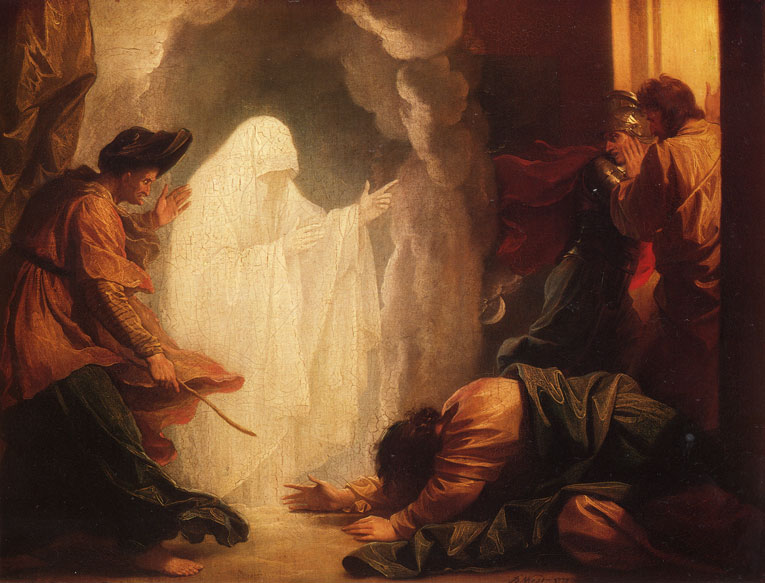
But then the evil spirit inside of him planted an idea in his mind. The prophet may be dead in body but not in spirit. There was a witch, a medium, a sorceress – call her what you will. She had the power to communicate with the dead.

The king and his men hurried to the old witch’s house. Smoke billowed from the chimney. The stink of death and putrescence filled the air.

To conceal his identity, the king had put on a disguise. Looking like just an ordinary commoner, the king stepped up to the eerie abode. Knock Knock Knock

The door creaked open just slightly. “Who’s there? What do you want?” inquired a raspy, aged voice from just inside the door.

“I wish to summon the spirit of a departed loved one, if you please,” replied the king, in a deeper, unfamiliar voice.

“Ha! Don’t you know the king himself banned me and all my sisters from the kingdom?! Why should I help you?” the witch responded suspiciously. “You’re probably just trying to trap me so you can through me in the king’s dungeon.”

“You will face no such punishment. I swear to God Almighty,” ensured the king.

The door slammed shut. The king was taken aback, but he could hear the sounds of chains and latches being unfastened. Again, the door opened inward against the complaint of tired hinges. Stooping down, the king entered after the witch. The one room house was small and untidy to the eye of a guest. Jars and containers strewn about on the shelves, cobwebs building in the corners, scrolls stuffed onto their racks, and a thin layer of dust lying throughout like fresh laid snow.

The witch sat down at the head of the large table in the center of the room – the largest piece of furniture in the place. She pulled the fine cloth away from a large, rounded glass object. The door shut behind the king and his men without the help of human or crosswind. The king pulled out a chair and sat down to the left of the witch. The other men remained standing.

“Whom shall I summon for you?” asked the witch when all was ready.

Hesitating, the king answered, “Samuel, the prophet.”

The witch began her incantation and her hand motions, when suddenly the whole house shook. The witch screamed the cry of death and shot backwards from her chair. She had seen the ghost of Samuel coming to her from the great beyond. Out of the darkness he came with the fury of God in his eyes. It was then the witch knew who really joined her at the table.

“Why have you deceived me?” she cried. “I know who you are! You’re the King.”

“Do not fear,” said the king in his stern, commanding voice. “Tell me what you see.”

The woman, trembling, slowly regained her place at the table. Looking again, she answered, “I see a ghostly figure coming up out of the earth.”

“What does he look like?” questioned the king.

“He’s an old man,” said the witch, looking ever more deeply. “And he’s wearing a robe.”

Fear, excitement, and shame collided within the king. He fell to the ground, shoving his chair against the wall with a bang. Shaking violently, the king dropped his head all the way to the dusty floor.
Just then the voice of the prophet began to speak in his ghostly, otherworldly voice. “Why have you disturbed me by bringing me up?” demanded the ghost with a violent anger in his words.

Weak and frightened, the king replied, “I’m greatly distressed. These are dark times. My enemies have marched their armies against me for war, and God has abandoned me. He no longer answers me, either by prophets or dreams. So I summoned you to tell me what to do.”

The ghostly voice boomed in reply, “Why do you consult me now that the Lord has left you and turned against you? The Lord has done just as he foretold through me while I was with you! He has torn the kingdom from your grip and had given it to your neighbors – to the shepherd boy. The Lord has done this because you refused to obey him, and you failed to carry out his wrath on your enemies. You are weak. You are frail. You are no KING!

“The armies of your enemies will be victorious. Your armies will fail. Your men will turn and flee. Your cities will be captured. And hear me – tomorrow, you and your sons will die.”

At this the king lost all control. Fear gripped him.

The witch rushed over to him, bringing him some concoction she had been boiling. “Your majesty, I’ve only done what you asked. I put my life in your hands. Now please, take this and regain your strength.”

But the king refused to eat or drink anything at first. Finally able to stand, the king rose and reclined on the couch. After some urging from the witch and his own men, the king agreed to dine before departing.

The witch at once went out and butchered a calf. Coming back in with blood stained robes, she baked some bread. That night the king and his men dined with the witch – the last meal the king would ever enjoy.

The next day, in the throes of battle, all happened as the ghost had foretold. The enemy hordes broke the king’s lines. The battle broke into chaos. In the heat of it all, the king looked down in time to see his son slain by the arrows of the enemy archers. Gripped with fear and uncontrollable anxiety, the king turned his own sword around and fell onto the blade.

Witchcraft, ghosts, death, and suicide. This is what became of the first king of Israel.

Who Wants to Live Forever?

That’s an easy question. I do! As long as that forever is spent in the presence of God.

I devoted a couple posts to breaking down some “favorite Bible verses” – giving a fresh, much needed look at what they might mean in context. Well, now it’s time for me to share some about my personal favorites.

Beginning with this one:

ROMANS 8:11
“And if the Spirit of Him who raised Jesus from the dead is living in you, He who raised Christ from the dead will also give life to your mortal bodies because of His Spirit who lives in you.”

Really, the entirety of Romans 8 is as epic as they come. Read the whole chapter in one setting and try not to get chills.

But this verse in particular stands out to me and has stuck with me over the last few years. There’s so much to this one sentence that it needs to be dissected a bit.

First of all, it was God’s Spirit that raised Jesus from the dead. Think about that – Jesus didn’t raise himself, as I used to think. He didn’t just will himself alive after three days. If fact, it wasn’t even of his own power that he raised Lazarus or the daughter of Jairus. Philippians 2 tells us that Jesus emptied himself of all his divine privileges. He had no inherent advantage over us in his own humanity. Hebrews 2 makes it clear that had to be made like us in every way. And after showing us how to do humanity like God intended, he was vindicated by God, defeating death – the final enemy. It was God’s Spirit that stayed with Jesus throughout his life, and it was the Spirit that breathed the resurrection breath back into Jesus’ body.

Then Paul says that it is this same miracle-working, death-slaying, life-bringing Spirit that is living…in us! Not in the rocks and trees, not in the heavens, not just in the corporate body – but in me, in you. We can talk about being a Spirit-filled people, but I don’t think we grasp the implications of what that means. The fruit of the Spirit is easy and safe to talk about – love, joy, peace, patience, kindness, goodness, faithfulness, gentleness, and self-control. These virtues are supposed to be evidence of the Spirit living in us. That’s all well and good, but what about the fierce passion with which Jesus lived his life? What about the righteous anger that drove him to clear the temple? What about the condemning words shouted to the religious establishment? That was all done by the Spirit, too. Life in the Spirit is not supposed to be one of placid serenity or non-confrontation. The Spirit is not a spirit of fear but of power (2 Tim 1:7)!

Finally, if this is the Spirit that lives in you, then this death killer will also give life to our mortal bodies. In other words, we will get to experience the exact same resurrection as Jesus. Here’s why I think this is significant: bodily resurrection means that this life matters. It means that life will ultimately become what it was intended to be – heaven and earth intersecting. If the Spirit is in us, then that process has already begun. We are a part of the revolution that proclaims “On earth as it is in heaven!” This flies in the face of the traditional escapism portrayed in many well-intentioned sentiments and death-bed hymns. Our final hope is not to “fly away” to some “celestial shore,” but to be raised again to life, never again to die. Our goal is not to “get to heaven,” but to bring heaven here, to experience eternal life now, and to ultimately participate in the same physical, bodily resurrection as that of Christ Jesus.