Page 26 of 70

WE ARE YOUNG, part 2

Don’t let anyone look down on you because you are young, but set an example for the believers in speech, in conduct, in love, in faith and in purity. (1 Timothy 4:12)

____________________________

I have a confession to make.

I am part of a nation-wide group whose sole purpose in life is to dismantle the beloved American way. We are called out on news networks across the country as cold-blooded killers. Our thirst for violence knows no end. No company is safe. No store is in the clear. We will gladly watch them all die a slow and painful death.

No, I’m not talking about any terrorist organization.

I’m talking about….Millennials.

Come on, surely you’ve seen the headlines!

Drat! Our dastardly plan has been foiled. Our whole plot undone. And we would have gotten away with it, too, if it weren’t for those meddling….adults.

I’m not going to go into just. how. ridiculous. this all is. Just Google “Millennials are killing,” and you’ll find countless articles and listicles about all the industries that are failing to meet certain profit margins and are blaming their failing businesses on an entire generation of young adults. Everyone from BuzzFeed and HuffPo to Business Insider, Forbes, and BBC News is tracking this grotesque display of gratuitous violence against our most beloved half-rate restaurant chains.

Way to go, Millennials! We are slowly achieving our goal of world domination through cooking at home! Who knew it would be so easy?

There is a time for everything,
and a season for every activity under the heavens:
a time to be born and a time to die,
a time to plant and a time to uproot,
a time to kill and a time to heal,
a time to tear down and a time to build (Ecclesiastes 3:1-3)

But seriously though…please stop blaming all of our economic problems on the younger generations. Like most things, the truth is more complex than that.

One thing this does tell me, though, is that the older generations seem afraid of change. Again, nothing new. I would venture to say that most revolutionary movements in history have been headed up by young adults.

Many of the men and women fighting for civil rights and equality in the 1960s were young adults in their 20s and 30s. Even teenagers and school children played active roles in changing American society.

**BREAKING NEWS: Millennials Are Killing the Water Fountain Industry**

And then there are the “Founding Fathers.” I have recently read the books 1776, by David McCullough, and Alexander Hamilton, by Ron Chernow. Whenever I see paintings from around the time of the American Revolution, featuring white-haired men in old fashioned clothing, I tend to assume everyone in the painting is older, at least in their 50s and 60s. But surprisingly (or unsurprisingly) the majority of the signers of the Declaration of Independence were UNDER 40 as of July, 1776.

Just check out this list:
Marquis de Lafayette, 18
James Monroe, 18
John Trumbull, 20
Aaron Burr, 20
Nathan Hale, 21
Alexander Hamilton, 21
Betsy Ross, 24
James Madison, 25
Henry Knox, 25
John Jay, 30
Nathanael Greene, 33
Thomas Jefferson, 33
click here for the full list

Even George Washington was only 44 at the start of the Revolution. The United States of America exists today because of the efforts of those who are the same age as current Millennials!

**BREAKING NEWS: Millennials Are Killing the Tea Industry**

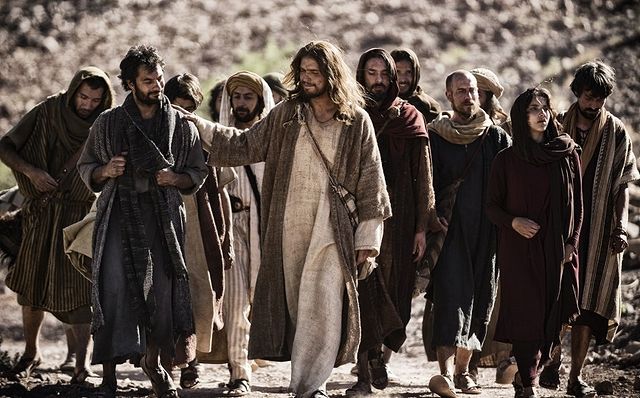
But what about the greatest revolution in world history – the revolution on which our entire calendar system is based on, the revolution resulting in the largest religion in the world, the revolution of heaven breaking into earth? What about Jesus and his disciples?

How old was Jesus when his ministry began?

Now Jesus himself was about thirty years old when he began his ministry. (Luke 3:23)

And his ministry only lasted between 3.5 to 5 years (we’re not entirely sure). And while we have no record of the ages of his disciples, we can make some certain assumptions based on the culture of the day.

We know that a Rabbi (teacher) would not have Disciples (students) who were older than he. It’s logical to assume that all of the Twelve were under 30 years of age. At least one of them was married (Peter). Several of them already had full-time jobs, or at least apprenticeships (Peter, Andrew, James, John, Matthew). I think it would be safe to assume that Peter, James, and Matthew were somewhere in their early-to-mid 20s. But we also know that some of them were younger than that. There was another James who was called “the lesser.” That could either mean shorter or younger (or both) than the other James. We also know that John was the only original disciple to die of old age near the end of the first century. This means he was likely in his mid-to-late teens.

Jesus was in his early thirties. His closest followers were in their teens and twenties….THE SAME AGE AS CURRENT MILLENNIALS.

**BREAKING NEWS: Millennials Are Killing the Medical Industry, the Fishing Industry, the Exorcism Industry, and the Temple**


The only constant in the universe (besides the speed of light) is change itself. To live is to change. The world is changing. The climate is changing. The economy is changing. Politics is changing. Gender roles are changing. Religion is changing.

Some ways of life that we’ve taken for granted over the last few decades are slowly becoming just another footnote in the history books. But that’s life.

Somebody had to be responsible for killing the Pet Rock Industry or the Cassette Tape Industry. Or did they just die out on their own?

Instead of mourning the loss of a certain way of life, let’s join together to look to the future. We can challenge the status quo, try new things, and change the world for the better.

After all, isn’t that what we are all looking forward to, anyway?

“…the old order of things has passed away.”
He who was seated on the throne said, “I am making everything new!” (Revelation 21:4-5)

Please, Please, Please watch this video, especially if you are not yet convinced.

BETTER TOGETHER | Mythbusters: Relationship Edition

When it comes to dating, marriage, and relationship advice, a lot of it is….terrible. There are things people say simply because they’ve heard other people say it. This is because of a certain cognitive bias. The more people hear a thing repeated, the more likely they are to assume it’s true – even if it’s false.

Let me give you some examples of bad relationship advice I’ve heard and continue to hear for some reason.


Love means never having to say you’re sorry.
This bit of relational garbage was introduced to the masses in the 1970 movie Love Story. I don’t know who thought up this line, but they know nothing about love. I love my wife deeply. I also find myself saying “I’m sorry” multiple times every day. We all say and do things, intentionally or not, that hurt or upset the people we love. It happens. Say you’re sorry and mean it. The key is to try to do better. If you say you’re sorry for missing your son’s ballgame due to working late, then try not to let it happen again. Eventually sorry may not be good enough. But true love is about admitting when you are wrong and attempting to make a change for the sake of the other person’s well-being.

Never go to bed angry.
This is loosely based on the passage in Ephesians 4 that instructs us to “not let the sun go down on your anger.” There are times when a conflict needs to be resolved, not ignored. There will be times when you need to have those long, hard conversations late into the night. But those times are fewer and father between than you may think. There have been many times when I’ve gone to bed angry and woke up feeling remorseful and foolish. Sometimes “sleeping on it” can help both parties realize how ridiculous the fight really was. So use wisdom to know what fights are worth staying up for and which ones can be more or less resolved with some shut-eye. But I typically avoid words like “never” when it comes to relationships.

If it’s meant to be, it will happen.
I think we’ve all been tainted by the fairytales and RomComs. Those relationships always work out. You know from the start that the two main characters are going to end up together and live “happily ever after.” But guess what: life doesn’t work that way. Relationships take work, time, effort, and resources. Relationships take sacrifice. If it’s meant to be, then go work at it! Don’t just expect the other person to magically come around to the idea of dating you – go ask them. Don’t just expect that once the wedding is done that the work is over – it’s just beginning. Don’t ever expect a great relationship to just happen because it’s “meant to be.”

Find someone who “completes” you.
Another infamous movie line is the source of this terrible advice. “You complete me” is a nice sentiment, but it leads to dysfunctional relationships. You should be a fully complete person before entering a relationship with someone. Otherwise you are relying too heavily on that person’s presence and investment in the relationship. You are giving them too much power. What happens when they’re not around? What happens should they leave you? or die? We should be more concerned with being complete in Christ and in who God made us to be than we are about feeling complete in a relationship with another person.

Communication is the key to a healthy marriage.
We all communicate to everyone around us all the time. Not talking to your spouse is a form of communication. The majority of our communication is nonverbal, anyway. We may say one thing, but our face and posture are saying the opposite. Communication is not the key to a healthy marriage – healthy communication is one of the keys to a healthy marriage. You should learn to argue well. You should learn to communicate a clear message with both your words and your body language. But even if those things aren’t so great, you can still have a really good marriage. Because marriage is a journey, not a destination. You and your spouse should be growing in many areas, including communication.

Are there any other myths to bust? Of course! Much of the above was just my opinion or what I’ve heard experts talk about over the years. But there are still plenty of myths out there that we need to put to the test.

_______________________

Myth #1: A GUY AND A GIRL CAN JUST BE FRIENDS.
What do you think? Is it possible?

According to the experts:

“The belief that men and women can’t be friends comes from another era in which women were at home and men were in the workplace, and the only way they could get together was for romance.” – Linda Sapadin, a psychologist in Valley Stream, New York

>> Psychology Today: Can Men and Women Be Friends? <<

Not only is it possible, it’s really healthy to have friends of the opposite gender. This is all dependent on context, of course. There is a very real possibility that a friendship can blossom into something more, which can be problematic if one or both of the friends also has a significant other.

On the other hand, if a guy and a girl are both single and their friendship evolves into a romantic relationship, then that can be really great! The best relationships often begin as close friendships. That’s a good starting point.

But can they remain just friends, or are they doomed to end up hurting each other and losing the friendship? Again, it kind of depends. Mostly it depends on expectations and how certain signals are interpreted (or rather misinterpreted). Guys are worse at this than girls are. If a girl has a guy friend that she treats mostly the same as her other girl friends – chatting all the time, hugging, confiding in, seeking advice or reassurance – then the guy is very likely to misread those things as cues that she is into him.

So girls – if you want to have and keep a guy as a close friend, don’t be afraid to have that awkward conversation. Make it clear that you value his friendship and that you aren’t trying to lead him on in any way. It might upset him, but your relationship will be better off in the long run if romance is completely off the table. If he’s a good friend, he will understand and respect that.

And guys – STOP MISINTERPRETING KINDNESS AND FRIENDLINESS FOR FLIRTING! A lot of girls are afraid to even be nice to guys because they don’t want to lead them on. That’s on you. Stop it. Just because a girl is friendly with you doesn’t mean she fantasizes about making out with you. It means she’s nice. Value that. Don’t take it for granted. Don’t ruin it.

Paul tells his young protege Timothy, “Do not rebuke an older man harshly, but exhort him as if he were your father. Treat younger men as brothers, older women as mothers, and younger women as sisters, with absolute purity” (1 Timothy 5:1-2).

It is possible for guys and girls to be friends. If you are Christians, then treat each other as bother and sisters in Christ – with all purity. But be aware of the tendencies of the human heart (or the male brain) in desiring more than just friendship.

_______________________

Myth #2: THERE’S ONLY ONE PERSON IN THE WORLD FOR YOU – YOUR “SOULMATE.”
We all fantasize about that certain…special…someone. That one person who will sweep us off our feet. That one person with whom we have instant chemistry. That one person with whom we are “meant to be.”

But that’s all fairytale. The fact of the matter is that there is no *one* person for any of us. We have our choice. We can choose to love or not to love. And this idea of “the one” puts a TON of unneeded pressure on young people who want to get married.

What do the experts say?

“Nothing in our DNA, immune systems, religious beliefs, or personal ideologies acts as a linking mechanism to connect us, perfectly, with one other person. But this concept is sold to us, day in and day out, and buying into this myth makes all of our lives much more difficult (and discouraging).” – Agustín Fuentes Ph.D.

>> Psychology Today: Desperately Seeking Soulmate? Please Stop Already <<

Instead of a checklist of all the “must haves” in a potential spouse, how about you focus on being the best you that you can be? Stop “desperately seeking a soulmate.” Stop worrying about finding “the one.” Start being somebody else’s one. In other words, be the kind of person you want for your future spouse.

He who finds a wife finds what is good
    and receives favor from the Lord. (Proverbs 18:22)

Listen, finding a good spouse is a blessing from God. So maybe put more of your trust in God to take care of you. He may just bring a potential spouse your way.

_______________________

Myth #3: OPPOSITES ATTRACT.
We probably all know those couples that don’t make any sense. He’s an accountant, she’s an art teacher and yoga instructor. He’s a surfer, she’s a doctor. He’s a sports-fanatic, she’s a book worm.

I’m always amazed when I see opposites attracting like that. They make it work somehow. But that is not always the case. Those types of relationships rarely work out in the long term.

According to the experts:

“Despite the common belief that opposites attract, the data prove otherwise and show that married couples tend to be similar to each other on a variety of traits.” – Jennifer Verdolin Ph.D.

>> Psychology Today: Do Opposites Really Attract? <<

Now, the research does concede that correlation does not equal causation. We don’t know if couples get married because they are similar to each other or if couples become more alike over the course of their relationship. It’s likely some of both.

And while opposites don’t always last in a relationship, that doesn’t mean you should try to find someone just like you. Therapist and author Hal Runkel suggests, “It’s not what you have in common, it’s what you have inside that matters.” He further points out that, “oneness does not mean sameness.”

In most relationships, one of you will be the spender and one will be the saver. One likely be more concerned about housework than the other. It’s okay not to have the same hobbies and interests as each other. That is what makes relationships so interesting – there is always something new to learn about your partner. You can be different, but you can still be one.

The Lord God said, “It is not good for the man to be alone. I will make a helper suitable for him.”
The man said,
“This is now bone of my bones
    and flesh of my flesh…” (Genesis 2:18, 23)

_______________________
Myth #4: 50% OF MARRIAGES END IN DIVORCE.
This is one statistic that just won’t die. It’s been proven false time and time again. Yet I still hear it sited as reasons for people NOT to get married.
“Well, if half of all marriages end in divorce, then what’s the point in getting married.”
Are you kidding? Even the experts think this is a ridiculous line of reasoning:

“…overall divorce rates have been falling for a few decades. The truth is, the average couple getting married today has more like a 75 percent chance of staying married. That means that only about 1 in 4 recent marriages are likely to end in divorce.” – Renée Peltz Dennison Ph.D.

>> Psychology Today: Do Half of All Marriages Really End in Divorce? <<

The way the divorce rate is measured is misleading from the start. Divorce rates are calculated by comparing the number of overall marriages in a year to the overall number of divorces in a year. That’s it. And it turns out that at one point in time, there were about half as many divorces as marriages in the US. But that number has been dropping significantly over the last few decades.

Also, further studies show that the vast majority of first time marriages will not end in divorce. But the divorce rate among divorcees rises dramatically with each subsequent new marriage. Second and third marriages have a divorce rate close to 75%.

It’s absolutely heartbreaking to see friends and family go through divorces. The ones who suffer the most are definitely the children of those broken homes. And if you have experienced that, I am so sorry.

But the fact is, first time marriages today have a higher chance of fulfilling the “til death” vow than we’ve seen in decades.

“But at the beginning of creation God ‘made them male and female.’‘For this reason a man will leave his father and mother and be united to his wife, and the two will become one flesh.’ So they are no longer two, but one flesh. Therefore what God has joined together, let no one separate.” (Mark 10:6-9)

_______________________
Myth #5: GOD WANTS ME TO BE HAPPY.

I have heard this in a lot of different contexts. But this can be particularly dangerous when it is in the context of relationships. Because what the person usually means is: “God wants me to be happy. I’m not happy with my wife. This other woman will make me happy. Therefore, God is okay with my leaving my wife to be with this other woman.”
Another way this is dangerous in relationships is getting married in the first place. “God wants me to be happy. Marrying him will make me happy. Therefore, we should get married no matter what anyone else says.”
Ok, a couple of things. First, Marriage won’t make you happy. One more time for those in the back – MARRIAGE WON’T MAKE YOU HAPPY!

“Except for that initial short-lived honeymoon effect for life satisfaction, getting married did not result in getting happier or more satisfied. In fact, for life satisfaction and relationship satisfaction, the trajectories over time headed in the less satisfied direction.” – Bella DePaulo Ph.D.

>> Psychology Today: Marriage and Happiness: 18 Long-Term Studies<<

If your life sucks, marriage won’t make it not suck. If you’re life is great, marriage won’t make it greater. Because you bring to the marriage all your extra baggage! Marriage won’t magically fix all your problems. If anything, marriage is going to shine a big spotlight on them. Do you have family problems? Financial problems? Mental health issues? Trust issues? Control issues? Do you squeeze the toothpaste wrong? Do you mount the toilet paper the wrong way round? All of these issues will only become more exacerbated in marriage.

But it’s not all bad news. The studies showed that married couples as no more satisfied over time than never-married singles. The researchers rated the happiness level of couples just before the wedding and at some time after the wedding. Happiness rates are typically highest right up to the wedding and during the honeymoon phase. Satisfaction levels drop down to more realistic levels over time, though.

But overall, marriage will not make you happier.

And secondly: God never said anything about wanting you to be happy. God doesn’t want you to be happy. He wants you to be faithful. Happiness, by its nature, is dependent on circumstances. The word “happiness” is closely tied to the word “happenstance.” There are times when relationships get rocky. You may go through seasons of unhappiness. You may be tempted to pursue happiness outside of your marriage. But don’t ever let your love and commitment become conditional on the outward circumstances.

“When times are good, be happy; but when times are bad, consider this: God has made the one as well as the other. Therefore, no one can discover anything about their future.” (Ecclesiastes 7:14)

_______________________

Myth #6: MARRIAGE SHOULD NOT BE THE ULTIMATE GOAL.
I get the feeling that we idolize marriage and families in the church a little too much. We have children’s ministry and youth ministry to draw in young families. We often have classes or small groups for “young couples.” We host marriage and parenting seminars. We may occasionally have a singles group, but that’s often viewed as a way to get our singles together into couples so they can get married and have babies for our children’s ministry.

What about those who are single for life? What about those who never felt called to marriage? Do they have a place in our society and our churches?

Singleness is nothing to be ashamed of!

“In their self-esteem and satisfaction with their lives, people who have always been single (and have never been in a civil partnership, either) are essentially identical to people who are currently married.” – Bella DePaulo Ph.D.

>> Psychology Today: Stereotypes of Singles? Robust. Actual Differences Between Singles and Couples? Not So Much <<

Singles have more freedom, more opportunities, more friends. I admit that I sometimes find myself a little jealous of my single friends. They can travel across the country and don’t have to worry about finding rest stops with play grounds. They can go out to eat at restaurants that don’t have coloring pages and kids menus. They can go to the movies almost any time and don’t have to pay a babysitter on top of it.

And when it comes to ministry, I have seen singles get a raw deal from churches even though they have a kind of freedom that married people with families just don’t have.

If you are under the illusion that marriage will somehow make you more fulfilled as a human…read the above myth. Also, remember someone else we know who was single?

Jesus!

Jesus had the most fulfilling human life ever. He had intimate friendships. He had a deep connection to God. He travelled from place to place healing, teaching, and restoring. He partied. He got to go fishing a lot. And yet…most churches wouldn’t hire Jesus as a minister because of his marital status.

Fulfillment can be found in many different ways. Marriage may be one of them. But it should not be the ultimate goal in your life. Serving God and seeking his will should be your ultimate goal. Marriage should not be elevated to the place of idolatry in our churches. Marriage should be seen as one of many ways in which to honor and glorify God. Along with singleness.

“I would like you to be free from concern. An unmarried man is concerned about the Lord’s affairs—how he can please the Lord. But a married man is concerned about the affairs of this world—how he can please his wife—and his interests are divided.” (1 Corinthians 7:32-34)

_______________________

RELATIONSHIP GOALS

Pay closer attention to the relationship messages you are receiving. Whether it’s from music, movies, books, or a well-meaning aunt, don’t just blindly accept the “insights” from others. Weigh that advice against what Scripture says and against what the experts say.

And remember, not everyone can be a love expert. Not all advice is created equal. There are no “magic keys” to great relationships. And above all, seek God’s will.

WE ARE YOUNG, part 1

Don’t let anyone look down on you because you are young, but set an example for the believers in speech, in conduct, in love, in faith and in purity. (1 Timothy 4:12)

______________________________

I have a confession to make.

I’m not quite sure how to say it, so I’ll just come right out with it. I am…. a Millennial.

No, no, no. I’m not THAT skinny-jeans-wearing, avocado-toast-eating, living-at-home, working-at-a-start-up kind of Millennial. But those are all grossly overemphasized stereotypes, anyway. In fact, anytime you see a headline or a study claiming anything about “Millennials,” realize that we are the largest generation numerically since the Baby Boomers.

How do I know this wasn’t set up and taken by a Millennial? Because we all know it only takes one person to look something up on IMDB.

You shouldn’t make broad, sweeping statements about Millennials and then turn around and complain about how we are all unique, special snowflakes. It doesn’t work that way.

And BTW, we never ASKED for participation trophies.

And also BTW, studies show that older generations are on their smartphones and social media at rates nearing that of Millennials and Gen-Z.


But the clothing styles, the use of technology, and the fact that Millennials are waiting longer to “settle down” than previous generations are all easy, visible targets to scapegoat.

The fact is I’m getting pretty tired of seeing the older generations trash the younger generations and place all the blame for their problems on Millennials and teenagers. I keep seeing things like this:

“The young people of today think of nothing but themselves. They have no respect for their parents or old age. They are impatient of all restraint. They talk as if they alone know everything and what passes for wisdom in us foolishness in them. As for the girls, they are foolish and immodest and unwomanly in speech, behavior, and dress.”

But then I realized that this was actually written by a guy named Peter the Hermit who lived in the 11th Century.

I read this the other day, and it really set me off:

“Our youth have an insatiable desire for wealth; they have bad manners and atrocious customs regarding dressing and their hair and what garments or shoes they wear.”

Oh wait, that was said by Plato in the 5th Century BC.

You want more rantings from older people about the younger generations?

“The children now love luxury. They have bad manners, contempt for authority; they show disrespect for elders and love to chatter in place of exercise.” – Socrates, 5th Century BC

“I see no hope for the future of our people if they are dependent on frivolous youth of today, for certainly all youth are reckless beyond words. When I was young, we were taught to be discreet and respectful of elders, but the present youth are exceedingly disrespectful and impatient of restraint.” – Hesiod, 8th Century BC

And how about one more for good measure:

“Our Earth is degenerate in these later days; there are signs that the world is speedily coming to an end; bribery and corruption are common; children no longer obey their parents; every man wants to write a book and the end of the world is evidently approaching.” – Assyrian Clay Tablet from ~2800 BC

I found these quotes on Ambitious.com from an article titled: The Younger Generation Has Been Ruining The World Since Forever. 

What has been will be again,
    what has been done will be done again;
    there is nothing new under the sun. (Ecclesiastes 1:9)

Generational studies fascinate me.

On the one hand, generations are arbitrary markers that we as a society have set in place in order to stereotype entire groups of people based on their dates of birth. The best you can do is speak in generalities. We must remind ourselves that an individual must not be judged on the basis of her/his generational label.

On the other hand, there are very real differences between the generations largely due to major events that happened as each particular generation was coming of age.

With that in mind, it may be helpful to look back over the lifespan of the average Millennial and notice events that have occurred as we were coming of age.

  • Millennials were born into one of the healthiest economies in US history.
  • Most of us were just kids when McVeigh and Nickols attacked the Federal Building in Oklahoma City. I was just 7 years old.
  • We were mostly school age (except for the very youngest Millennials) when 12 students and one teacher were shot and killed at Columbine High School. I was in 5th grade.
  • Just a couple years after that, terrorists highjacked passenger airline planes and crashed them into the World Trade Center and the Pentagon – forever ending our illusion of security. I was entering my 8th grade English class when I heard the news.
  • Throughout my high school years, the US was heavily involved in the “War on Terror” in Iraq and Afghanistan.
  • In the middle of all this, we got the internet, mp3 players, laptops, cell phones, smartphones, tablets, MySpace, Facebook, Twitter, YouTube, 4G-LTE, FaceTime, and more. When we were kids, we had cassettes and VHS. Now we are streaming everything. Tech has advanced stupidly fast!
  • As we entered college and young adulthood, college tuition costs were soaring as the economy was collapsing, leaving millions of us with massive amounts of student loan debts and no good jobs to look forward to after college.
The Millennial generation came of age during the worst mass shootings in history, the largest attack on American soil in history, the longest war in US history, and the worst economic recession since the Great Depression.
And we are mocked for our hairstyles and clothing choices.
But we get it. Other generations had it rough, too. There was WWI, the Great Depression, WWII, the Korean War, the Vietnam War, the Civil Rights Movement, the Cold War, the Gulf War, etc. Yet somehow the older generations still look back and seem to mourn the loss of “simpler times.” I see a longing to get things back to the way they used to be. There is a nostalgia for the past when America was that “shining city on a hill.”
Do not say, “Why were the old days better than these?”
    For it is not wise to ask such questions. (Ecclesiastes 7:10)

Millennials don’t have the luxury of nostalgia. All we’ve ever known is war and financial insecurity.
Maybe that’s why so many of us are focused on trying to make the world a better place for the future, not just reminiscing about the past. Our past was pretty terrible. And our future looks pretty terrible, too. We are also the first generation in American history who aren’t expected to be as well off financially as our parents’ generation. We want to make the world a better place not for us, but for our kids and grand kids. It’s kinda too late for us. And we’ve accepted that.

BETTER TOGETHER | Learning Languages

This is the third installment in our BETTER TOGETHER series. On Wednesday nights I am walking the teenagers through the process of seeing their relationships through a biblical lens. Once we start seeing all our interactions through God’s will, then we are better prepared to make those relationships AWESOME.

So far we’ve looked at the fact that we were all created for community and togetherness. But a little thing called sin entered the world and brought separation where there was once intimacy. The remedy for the disease of sin and separation is LOVE. And we introduced the four levels of love: 1) I love me for my own benefit. 2) I love you for my benefit. 3) I love you for your benefit. 4) I love me for your benefit. When Jesus tells us to “Love your neighbor as yourself,” there is an implied love for self. We must practice some form of self-love and self-care in order to benefit others.


Second, we learned the difference between reacting and responding. So often we end up being controlled by our emotions and reacting out of fear or self-preservation. Something happens in a relationship that triggers our “Fight or Flight” reaction – which often leads to the very outcome we were hoping to avoid. But with training and practice we can become better at keeping our emotions under our control, slowing down our anger-reaction, and responding appropriately.

________________________________

This week we are going to take a closer look at what it means to “Love your neighbor.”


LEARNING THE RULES

We are probably all familiar with a teaching of Jesus commonly known as “The Golden Rule.” You’ve probably heard some version of it. You may have even been taught it by your parents and/or school teachers.

Toward the end of the Sermon on the Mount (Matthew 5-7), Jesus tells his followers, “Do to others whatever you would like them to do to you. This is the essence of all that is taught in the law and the prophets” (Mt 7:12 | NLT).

It’s otherwise paraphrased like this: Treat others the way you want to be treated.

And that’s a good standard for children (and adults!) to latch onto. Don’t steal because you wouldn’t want someone to steal from you. Don’t hit, because you wouldn’t want to be hit. Talk to someone who is lonely, because you would want someone to come be your friend if you were alone. Be kind and generous toward others, because you want them to treat you the same way.

This is a good standard for ethical behavior.

But have you ever heard of “The Platinum Rule?” (At least that’s what I call it.) It’s a step above The Golden Rule.

Jesus is with his disciples on the last night before his crucifixion. He is about to be betrayed, arrested, beaten, and nailed to a cross. As he is speaking to them at dinner, he gives them this instruction: “This is my commandment: Love each other in the same way I have loved you. There is no greater love than to lay down one’s life for one’s friends” (John 15:12-13 | NLT).

So what’s the difference between these two commands? We’ll get to that below, but first I think we need to explore this word LOVE a bit more.

It’s really hard to define the word Love. Google says it’s “an intense feeling of deep affection.” But we all know that it’s more “you know it when you see/feel/experience it” kind of words. Often the best way to talk about love is through images and metaphors.

**Much of what comes next is based on the work of Gary Chapman and his book The Five Love Languages**


GAS TANKS AND INTERNATIONAL CRUISES


Love is like a gas tank. You have to fill your car’s gas tank if you want to be able to go places. The car works best when the gas tank is full. Some people wait until the low fuel light is on before they fill up. Others panic and hit the nearest station as soon as the gauge hits the 1/4 mark. But no matter what, if your gas tank is empty, your car is not going anywhere.

Picture a tank inside yourself. We’ll call it the “love tank.” Sometimes your love tank is FULL, and life is going great. Your relationships are firing on all cylinders. You feel comfortable and confident. But then you notice those feelings beginning to diminish. Sometimes you feel like you are the one putting all the effort into the relationship without getting anything in return. Your tank is running low without being refilled. This can lead to all sorts of problems down the road if something doesn’t change. You cannot give love if your love tank runs dry.

So how do we refill our love tank? Stick with me. We’re getting there.

Love can also be like a trip on an international cruise ship. I was on a cruise once (and only once so far). We were taking a cruise of the Greek Isles – Crete, Mykonos, Santorini, and others. There were people on that ship from the USA, Germany, Greece, Italy, China, and half a dozen other places. Our cruise director was fluent in just about every major language spoken on that boat. She was incredible! None of us could communicate with the Chinese or German passengers, except maybe through charades and bad sign language. There could be no real connection because we were not speaking the same language.

LEARNING YOUR LANGUAGE

According to Chapman, each of us is most “fluent” in one of five “love languages.” Our primary language is how we feel most loved by others, AND it’s how we are most comfortable giving love. When someone loves us well in our primary love language, our love tanks are filled, and we can pour love back into that relationship. But if love is withheld according to our primary love language, we can feel hurt, unloved, or even betrayed.

The five love languages, according to Chapman, are

  • Words of Affirmation
  • Quality Time
  • Receiving Gifts
  • Acts of Service
  • Physical Touch

This video explains it really well:

Here’s the official rundown of each love language. What do you think resonates most with you? Do you think you know what your primary language is?

WORDS OF AFFIRMATION
Actions don’t always speak louder than words. If this is your love language, unsolicited compliments mean the world to you. Hearing the words, “I love you,” are important – hearing the reasons behind that love sends your spirits skyward. Insults can leave you shattered and are not easily forgotten. Kind, encouraging, and positive words are truly life-giving.

QUALITY TIME
In the vernacular of Quality Time, nothing says, “I love you,” like full, undivided attention. Being there for this type of person is critical, but really being there – with the TV off, fork and knife down, and all chores and tasks on standby – makes your significant other feel truly special and loved. Distractions, postponed dates, or the failure to listen can be especially hurtful. Quality Time also means sharing quality conversation and quality activities.

ACTS OF SERVICE
Can vacuuming the floors really be an expression of love? Absolutely! Anything you do to ease the burden of responsibilities weighing on an “Acts of Service” person will speak volumes. The words he or she most want to hear: “Let me do that for you.” Laziness, broken commitments, and making more work for them tell speakers of this language their feelings don’t matter. Finding ways to serve speaks volumes to the recipient of these acts.

RECEIVING GIFTS
Don’t mistake this love language for materialism; the receiver of gifts thrives on the love, thought, and effort behind the gift. If you speak this language, the perfect gift or gesture shows that you are known, you are cared for, and you are prized above whatever was sacrificed to bring the gift to you. A missed birthday, anniversary, or a hasty, thoughtless gift would be disastrous – so would the absence of everyday gestures. Gifts are visual representations of love and are treasured greatly.

PHYSICAL TOUCH
This language isn’t all about the bedroom. A person whose primary language is Physical Touch is, not surprisingly, very touchy. Hugs, pats on the back, holding hands, and thoughtful touches on the arm, shoulder, or face – they can all be ways to show excitement, concern, care, and love. Physical presence and accessibility are crucial, while neglect or abuse can be unforgivable and destructive. Physical touch fosters a sense of security and belonging in any relationship.

So how do you find your love language? There are a few different ways.

  1. What hurts you the most? What makes you feel most unloved? words of insult or degradation? being around someone who is always checking their phone? when someone doesn’t bother to help you or even makes more work for you to do? when someone forgets your birthday or other important dates? when someone cuts themselves off from you physically, not hugging or holding hands?
  2. What do you ask for (or want) the most? do you wish people could compliment you more? do you want more hang-out time? do you wish you had more help around the house? do you want to be surprised with little random gifts? do you want to cuddle close on the couch?
  3. What do you do to express love most often? are you always encouraging others and building them up? do you go out of your way to have lunch or coffee with your friends? do you jump right in and help people with their tasks? do you pick up a little something for your loved one while you’re out at the store? are you always giving hugs, pats on the back, or high fives?
  4. Take the assessment!
Go ahead and take the quiz. It won’t take long, and the results may surprise you. Once you find out for yourself, invite your parents, siblings, friends, and significant other to take the quiz too!

Well, what did you think? What were your results? Any surprises?
Here is how my profile turned out:
12 – Physical Touch
7 – Words of Affirmation
6 – Quality Time
4 – Acts of Service
1 – Receiving Gifts
This makes a lot of sense to me. I feel closest to my boys when they are either cuddled up with me on the couch or wrestling with me. I am always wanting to hold hands or hug my wife. Touch is my primary love language and has been as long as I can remember. Gifts, on the other hand, are not that important to me. I’d rather go out an buy things myself.
Your love languages are fluid, though. Don’t be surprised if you change over the years. That just means you need to be in tune with your own needs and desires. And also make sure you express that to your loved ones. There is no shame in letting your parents know what speaks most loudly to you. Let them know if you need more time together or if you wish they complimented you more.
I think it’s important for families to do this together so you can all become more fluent in other love languages.
Which brings me back to the two “rules” we began with.
LEARNING NEW LANGUAGES
Can you see a problem with basing all your relationships on the Golden Rule? If you are only ever treating others the way you want to be treated, that means you may be trying to love them in a language that doesn’t speak to them. You may be trying to love them by doing all sorts of service for them when what they really want is time to spend with you. When you only show love in your primary love language (which comes most easily and naturally), then you are not really loving the other 80% of people in your life who speak a different love language!
But then Jesus tells us to love each other as he loved us. That raises the question: How did Jesus show love? I think it is pretty obvious as you read through the Gospels that Jesus was fluent in every love language.
  • He encouraged and affirmed Peter, the Roman Centurian, the Woman at the Well, and others.
  • He took time to share meals with tax collectors and sinners. He made time for everyone.
  • He blessed people with gifts of healing and even food.
  • He washed the disciples feet. “The Son of man did not come to be served, but to serve.”
  • He touched and embraced a leper, a dead girl, children, and disciples.
If we are loving as Jesus loved, we will be making an effort to love people in their primary love language, even if it doesn’t come naturally to us. The more fluent you become in the other languages the better off all your relationships will be.
RELATIONSHIP GOALS

Become more fluent in the love languages!
Get more in tune with your own primary love language.
Find out the love language of your parents, siblings, and friends. And then practice loving in that way.
__________________________________
I highly recommend reading through Chapman’s book for a more in depth understanding of the love languages.
You can purchase or download his books by clicking the links below.


LISTEN UP: My Top Albums

I don’t think there is any doubt that the music industry is changing – and has been for a while. In my lifetime we have gone from cassette tapes to CDs to mp3 players to smart phones to online streaming services. The way we listen to our music has all but killed the “ALBUM” as an art form. Everything seems to be driven by singles, playlists, and YouTube views.

And that’s a shame.
Artists/Bands put effort into crafting entire albums full of music. Take some time to listen to an full album this week. It will definitely give you more insight into who they are as an artist/band.
Here is a list of 10ish albums that have stuck with me over the years. They aren’t necessarily the BEST music albums (no Grammy winners). But these are the albums I find myself able to listen to over and over again. They have, in one way or another, shaped who I am today and helped form my musical taste over the course of three decades.

In no particular order:
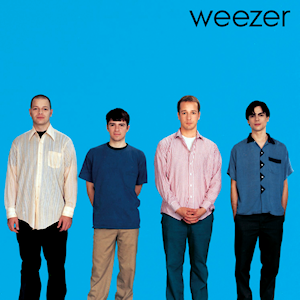
WEEZER // THE BLUE ALBUM
1994
I have a hard time believing this album is almost 25 years old. It’s still SOOOOO good. Weezer’s debut album ushered in an era of angry nerd rock and paved the way for punk rock and demo bands to hit the main stream. I still find myself singing along to every word of “Say It Ain’t So,” “Surf Wax America,” “Undone – The Sweater Song,” and of course “Buddy Holly.” I’ve been a huge fan of Weezer ever since, but nothing has quite captured the magic of their Blue Album.
If you haven’t seen the music video for Buddy Holly, stop what you’re doing and fix that now!
_______________________________
THE KILLERS // HOT FUSS
2004
This is another album that has stood the test of time. Fourteen years later and I still hear people rocking out to “Mr. Brightside.” In my opinion, there is not a weak song on this album. It feels like The Killers really put everything they had into every single song. The overall feel of the album is like a retro-future vibe – a little jazzy, a little new wave, a little 80s synth, and a whole lotta weird. Many of the songs on Hot Fuss will still get stuck in my head for weeks.
“Somebody told me that you had a boyfriend who looks like a girlfriend that I had in February of last year…”
“I got soul but I’m not a soldier…”
“Smile like you mean it…”
_______________________________
BRAND NEW // THE DEVIL AND GOD ARE RAGING INSIDE ME
2006
My favorite rock band’s third album is widely regarded as their best one (out of five). This album came out during one of my darkest times. In a way it felt like it was released just for me. Some of these songs spoke so deeply to me at the time that they can still bring chills and take me to the edge of tears. Jesse Lacey has struggled with his own demons and mental health issues throughout the years. His song writing is cathartic for him and has helped many of us emo kids cope with our own demons.
Lines that resonated with me and still hit me hard:
“I was the glue that kept my friends together, now they don’t talk and we don’t go out.” (Sowing Season, Yeah)
“Jesus Christ, I’m alone again. So what did you do those three days you were dead? Cause this problem’s gonna last more than the weekend.” (Jesus Christ)
“In the choir I saw a sad Messiah. He was bored and tired of my laments. Said ‘I died for you one time, but never again.'” (Limousine)

_______________________________
RELIENT K // MMHMM
2004

Relient K has been doing their thing since 1998. They blur the lines between Christian and secular, preferring to focus on making amazing, high energy pop-punk music than targeting a specific faith-based demographic. In other words, their Christians in a band, not so much a Christian band. That being said, their fourth album, Mmhmm, explores the expanse of human experiences – from the silly to the serious to the romantic and everything in between. They can do it all.
On these gloomy, cold, early-Spring days I’ll still crank “High of 75” to lift my mood. When I’m feeling like I can’t do anything right, “More Than Useless” gets me right back in the game. When I’m doubting myself and God, “Be My Escape” reminds me of the profound truth that “the beauty of grace is that it makes life not fair.” And what millennial out there can’t relate to “This Week the Trend?”
_______________________________
THE AVETT BROTHERS // THE CARPENTER
2012

I became a fan of The Avett Brothers back in 2008 with their album Emotionalism, which is also a fantastic album. But when they released The Carpenter in 2012, I fell in love. They’re part folk, part indie rock, part Southern rock. Musically they are unbelievably talented. But their bright spot for me is their poetic songwriting. They have a way of expressing emotions and experiences in ways no other band I’ve heard has even come close to. Just try listening to “Through My Prayers” without your eyes getting sweaty.
_______________________________
JIMMY EAT WORLD // BLEED AMERICAN
2001

Two words: “The Middle.” This has to be one of my all-time favorite songs. Every time it comes on, I’m singing along. “Don’t you worry what the bitter hearts are gonna say!” But this album is packed full of amazing rock anthems and ballads. “The Sweetness” and “A Praise Chorus” get me pumped every time. “Hear You Me” and “My Sundown” get me emotional. Let me put it this way – most of the time I skip over “Hear You Me” because I don’t feel like fighting back tears right at the moment.
_______________________________
YELLOWCARD // OCEAN AVENUE
2003

I consider this album the height of the early-2000s pop-punk era. When Yellowcard hit the scene, they blew us all away with their unique blend of punk, pop, and…is that a violin? Yes. Yes it is. And it was awesome. Ocean Avenue was my anthem album for more than one summer growing up. It’s the perfect summer rock album. It’s light, high energy, full of angst and romance and longing. I still find myself singing at the top of my lungs: “Here I Gooooo! Scream my lungs out and try to get to you. You are my only one!”
But on a more serious note, this album has one of the most emotional songs for me: “View from Heaven.” During my junior year of high school, our headmaster died in a car wreck on his way home after a basketball game. My friends and I spent a lot of time listening to, singing along with, and reflecting on this song.
_______________________________
MUMFORD & SONS // SIGH NO MORE
2010
The acoustic, folksy music; old-fashioned, thoughtful lyrics; a gruff lead singer’s voice – I feel like I’m in a pub back in the old world during simpler times. The album starts off strong with title track “Sigh No More,” the lyrics of which are actually taken from the Shakespeare play Much Ado About Nothing. My other favorite songs on the album are “The Cave,” “Roll Away Your Stone,” and “Awake My Soul.” While the band members are not necessarily religious, their songs point toward something deeper to live for. They wrestle with God and religion and purpose in an interesting, deep, relatable way. I actually prefer this debut album to their second release, Babel, which won the Grammy for Album of the Year. I look forward to their rumored album release coming later this year.

_______________________________
MXPX // BEFORE EVERYTHING AND AFTER
2003

Mike, Tom, and Yuri of MXPX have been doing their thing almost as long as I’ve been alive. They started out in 1992. When it comes to punk rock, they are about as straight forward as it gets. They have grown as a band and as an influence in the rock community while staying true to their power chord roots. If you want a fun punk album to sing, jump, and mosh to, just pick out any MXPX album and crank the volume to 11.
This particular album (Before Everything and After) holds a place in my heart because it came out the year my wife an I started dating. Many of the songs on this album are ones I associate with those early months of friendship and dating – songs like “Everything Sucks (When You’re Gone),” “Quit Your Life,” and “You Make Me Me.”

_______________________________

BLINK-182 // BLINK-182
2003

Blink-182’s fifth album was the one that sealed the deal for me. I liked some of their earlier stuff (“All the Small Things” is one of my all-time favorite songs), but never considered myself a real fan. Their self-titled album hit all the right notes for me. It has the soaring punk anthems that make for a great Summer road trip. It has more contemplative, romantic power ballads. There’s just something about this entire album that feels different than most mainstream punk rock albums. It’s more experimental, more personal, a bit darker than what we were used to out of the band. They took a risk by going in a new direction, and it paid off big time.
I also really love their newest album, California, but it hasn’t sat with me quite the way this self-titled album has. But give it some more time and we’ll see.
_______________________________
HONORABLE MENTION

Dashboard Confessions // A Mark, A Mission, A Brand, A Scar
Coldplay // Viva La Vida
Taking Back Sunday // Where You Want to Be
Linkin Park // Meteora
NF // Mansion
Five Iron Frenzy // The End Is Near
Sum 41 // All Killer, No Filler
Jack Johnson // In Between Dreams
Florence + the Machine // Ceremonials
Jack’s Mannequin // The Glass Passenger

As you can see, 2003-2006 was a formative time for me. I’ve heard it said that the music you listen to around your junior year of high school is the music that will stick with you. I believe it. Most of these bands have put out some good music since those days. But these are the ones that I would consider my Favorite.
What about you? What would you say are your top 10-ish albums? I’d love to know.

BETTER TOGETHER | First Responder

Do you ever wonder what you would do if you were placed in certain situations? Like, what would you do if you were stranded on a deserted island? Or what if you were in a plane crash? Or what if an older, quirky, English chap invited you to come with him into his small, blue police call box?

It’s interesting to imagine and day dream about those scenarios. But what about some real life situations?
What would you do if….
During announcements, the person sitting behind you punches you in the back. You try to tell the teacher, but he only says to be quiet during announcements.

You’re excited about a friend’s upcoming birthday party, but then she says you aren’t invited. Her parents said she can only invite four people, and you aren’t one of them.

You’re playing a video game when your mom gets home from work. She turns off the console and tells you to get going on homework—even though you don’t have any. All your progress in the game is lost.

A teacher accuses you of cheating after you ace a test. When you try to defend yourself, the teacher says there is no way you could have gotten all of the right answers on your own.

Lately your parents have been fighting a lot. Your older brother says it’s your fault and the whole family would be a lot better off if you had never been born.
How are you feeling right now? Do you notice what emotions you may be experiencing just by reading and imagining these interactions? What kind of emotional reaction comes to the surface?
More importantly, how do these emotions determine what you would do?
Would you turn around and hit back at the classmate behind you out of anger?
Would you passive-aggressively refuse to invite your “friend” to an upcoming get-together with your other friends?
Would you yell at your own mother for turning off your video game out of frustration?
These are all common reactions to emotional situations. And emotions are FINE. They reflect the very image of our Creator. Jesus himself got angry. He felt sad. He was frustrated. He felt indignant. Emotions are not sinful or wrong or evil. You should never feel guilty for experiencing emotions.
Where we get into trouble is when we are always REACTING but rarely RESPONDING.

__________________________
I’M LITERALLY GOING TO KILL YOU

Have you ever gotten into an argument with a sibling? More specifically, have you ever gotten into a fight with a sibling simply because deep down you were jealous of them?
Maybe they got better grades on their report card. Maybe mom and dad let them have extra dessert. Or maybe they always get to control what Netflix shows your family watches. Or maybe they’re better looking or more athletic than you.
Again, jealousy and anger are perfectly normal human emotions. They are meant to tell us about ourselves so that we can course-correct if needed. But what happens when we don’t keep our emotions in check?
Last week we looked at Genesis 1, 2, and 3 as the beginning of human relationships and community. But now, look at Genesis chapter 4. Things escalate quickly.

Now Adam had sexual relations with his wife, Eve, and she became pregnant. When she gave birth to Cain, she said, “With the Lord’s help, I have produced a man!” Later she gave birth to his brother and named him Abel. 

When they grew up, Abel became a shepherd, while Cain cultivated the ground. When it was time for the harvest, Cain presented some of his crops as a gift to the Lord. Abel also brought a gift—the best portions of the firstborn lambs from his flock. The Lord accepted Abel and his gift, but he did not accept Cain and his gift. This made Cain very angry, and he looked dejected. 

“Why are you so angry?” the Lord asked Cain. “Why do you look so dejected? You will be accepted if you do what is right. But if you refuse to do what is right, then watch out! Sin is crouching at the door, eager to control you. But you must subdue it and be its master.” 

One day Cain suggested to his brother, “Let’s go out into the fields.” And while they were in the field, Cain attacked his brother, Abel, and killed him. (Genesis 4:1-8 | NLT)

You may have wanted to hurt or punish your sibling in some way. But I highly doubt you have ever been so angry that you wanted to literally kill them. Cain just could not get control over his emotional reaction.

It’s easy to sit back and point out what he should have done – gone back and sacrificed a better offering to God. But how many of us really take the time to think about what we should do?

God even warns him! This warning is for each and every one of us, too: Sin is crouching at the door, eager to control you. But you must subdue it and be its master.


Emotions themselves are not sinful. But if we are not careful, then we can allow our emotions to gain too much control, leading to sinful reactions. Our emotions make great thermometers, letting us gauge ourselves internally so that we can respond appropriately. But too many of us let our emotions act more as thermostats, actually controlling what we do and how we react.

We must be in control of our emotions, not the other way around.

Hal Runkel, licensed Marriage and Family Therapist and author of Scream-Free Parenting, says this: Emotional reactivity is our worst enemy when it comes to having great relationships.

__________________________
REACTING VS. RESPONDING


On the surface, react and respond seem like synonyms. But they are very different in practice. Check out this article by Scream-Free or this one by Psychology Today to find out the difference between reacting and responding. Here is the summary:

Reaction: automatic reflex; careless; shallow; driven by anxieties and fears; concerned about what’s best for me; short-sighted

Response: thoughtful; careful; measured; deep; concerned about what’s best for everyone; long-term impact

It all has to do with timing. Reactions happen within a split second. Before our brains can even process what’s happening, words or fists (or both) start flying. We literally don’t even know what we’re saying or doing when we react.

But if we take just a second or two (that’s seriously all it takes) for the decision making processes in our brain to catch up, then we can issue a controlled response.

Reactions escalate the situation. Responses typically de-escalte. Put another way, reactions often lead to the very outcome we were hoping to avoid!

A gentle answer deflects anger,
    but harsh words make tempers flare.
(Proverbs 15:1 | NLT)

I really appreciate how YouTuber Preston Smiles explains it in this short video:

__________________________
EMOTIONAL FIRST RESPONDER

So how do we do this? How can we react less and respond more?

Bad news: It’s going to take a lot of work and discipline.
Good news: You CAN do it. It is POSSIBLE.
Bad news: You’re still going to mess up…a lot.
Good news: We can all have grace and forgiveness for each other.

A good way of thinking about reacting vs. responding is in the context of a car crash. If I were to be the first on the scene of a really bad wreck, I don’t know exactly what I would do. Hopefully I would have my wits about me enough to call 9-1-1. But I might panic and freak out (or even faint) if there was blood and carnage. I would be reacting to the scene – not really helping anybody.

But then the ambulance, paramedics, police, and fire fighters show up. They are the first responders.  They have gone through countless hours of training and preparation for situations like this. They have the skills, the tools, and the demeanor to respond quickly, appropriately, and efficiently to whatever comes their way.

It takes training and effort to become better at responding instead of reacting. But I think there are a few scriptures that are helpful.

And “don’t sin by letting anger control you.” Don’t let the sun go down while you are still angry, for anger gives a foothold to the devil. (Ephesians 4:26-27 | NLT)

It’s not a sin to be angry. Let me repeat: Anger is not sinful. Reacting in anger can lead to sinful behavior – insults, abuse, etc. And the longer we let our anger fester, the worse it grows. A little interaction that leads to anger can morph into something much worse. You can begin assigning motives and reading into every little thing the person does. Suddenly, all your interactions are tinged with negativity. So don’t react in anger, but don’t keep your anger bottled up inside, either. Take some time to calm down, but then deal with it.

Understand this, my dear brothers and sisters: You must all be quick to listen, slow to speak, and slow to get angry. Human anger does not produce the righteousness God desires. (James 1:19-20 | NLT)

Listen first. Always. And listen to understand. So many times we simply listen to reply. We listen in order to trap the other person in what they say. Or we simply stay quiet until they’re done so that we can get out what we wanted to say all along. SOOOOO many arguments could be avoided if we simply took time to listen – really listen – to each other. And often, if we do that then we can actually slow down our anger.

Finally, check out the words of Jesus:

“You have heard the law that says the punishment must match the injury: ‘An eye for an eye, and a tooth for a tooth.’ But I say, do not resist an evil person! If someone slaps you on the right cheek, offer the other cheek also. If you are sued in court and your shirt is taken from you, give your coat, too. If a soldier demands that you carry his gear for a mile, carry it two miles. Give to those who ask, and don’t turn away from those who want to borrow. 

“You have heard the law that says, ‘Love your neighbor’ and hate your enemy. But I say, love your enemies! Pray for those who persecute you! In that way, you will be acting as true children of your Father in heaven. For he gives his sunlight to both the evil and the good, and he sends rain on the just and the unjust alike. If you love only those who love you, what reward is there for that? Even corrupt tax collectors do that much. If you are kind only to your friends, how are you different from anyone else? Even pagans do that. But you are to be perfect, even as your Father in heaven is perfect.”  (Matthew 5:38-48 | NLT)

Turn the other cheek?! Pray for your enemies?! In responding like this, instead of reacting, you will actually begin to achieve the results you were hoping for in the first place. Violence breeds more violence. We have a world that tells us to hit back harder. We have a world that tells us it’s us versus them. We have a world that is built upon reactions, perpetuating the cycle of violence and revenge.

But wouldn’t it be great if we could break the cycle of violence? We can begin by refusing to react in violence. Wouldn’t it be great if there were no bullies or aggressors or rivalries? We can begin by praying for our enemies and loving them by serving them.

See how much can begin to change if we simply took a moment to think through our response rather than simply reacting – or overreacting – to emotional situations?

__________________________
RELATIONSHIP GOALS

Try it this week. React less; Respond more.

Try it with your boyfriend/girlfriend; with your spouse; with your brother or sister (no matter how annoying they are!); with your friends (especially that one who likes to start all the drama); with your teachers; with your coaches and teammates; with the bullies and jerks.

See if you notice a difference. See if THEY notice a difference!

Say these things to yourself:

“I’m not sure what anyone else is going to do, but this is what I’m going to do.”

“I will not let anyone have control over my emotions. And I will not let my emotions have control over me.”

BETTER TOGETHER | Created for Community

I want to ask you some questions. Really process through these. What do you think?

Why do you have friends?

Why do people want to have a boyfriend/girlfriend?

Why do people get married?

Why do people start families?

Why do we hate being lonely?

At our core level, human beings crave connection. From the beginning of time we have been forming bonds, building family groups, combining family groups into small communities, and growing those communities into villages, towns, cities, nations, and empires.

We all desire contact and relationships with other humans. In fact this is more than a desire. This is a NEED. According to this Psychology Today article, “babies who are not held and nuzzled and hugged enough will literally stop growing and-if the situation lasts long enough, even if they are receiving proper nutrition-die.” Lack of touch can be detrimental to the health and development of children. This impact can be seen in overcrowded orphanages around this world.

The answer to the questions I began with can be summed up like this: We were created for community. What’s more, we were created FROM community.

WE MAKE A GOOD US

The Bible opens with the creation account in Genesis 1 and 2. God creates the stars, planets, vegetation, animals, and everything during the first six days. After all of this creating, God then created beings to be placed in charge of taking care of it all.

Then God said, “Let us make human beings in our image, to be like us. They will reign over the fish in the sea, the birds in the sky, the livestock, all the wild animals on the earth, and the small animals that scurry along the ground.”

So God created human beings in his own image.

In the image of God he created them;

male and female he created them.

Then God blessed them and said, “Be fruitful and multiply. Fill the earth and govern it. Reign over the fish in the sea, the birds in the sky, and all the animals that scurry along the ground.” (Genesis 1:26-28 | NLT)

I love what author, pastor, and YouTuber Jefferson Bethke has to say about this passage:

Created FROM community and FOR community. In the beginning there was perfect oneness. Man and woman were created as two halves of one whole. Eve was created from Adam’s rib, or side (Genesis 2), that they should be side-by-side partners, neither above or below the other. (For further explanation, check out this article.)

Both man and woman were created from God’s Image (Gen. 1:27). Both man and woman embody the divine image. We are God’s representation on earth. As such, we are at our best when we are in a loving, committed community.

Connection. Unity. Love. Respect. Intimacy. This is what we are made for.

So how are your relationships going for you?

How well do you get along with your parents?
Are you and your siblings close?
Do you have a tight-knit group of friends you can count on no matter what?
Do you know that your significant other is committed to you and only you?

Most likely one or more of these relationships has some degree of dysfunction. Why? Because we are terrible at archery.

Let me explain.

SNAKES AND ARROWS


The story of the first humans continues in Genesis 3. All is well until the serpent tricks the woman into eating the fruit from the Tree of the Knowledge of Good and Evil. They had ONE rule – and they broke it.

I don’t have time to get into the full significance of that story right now. What matters is that the humans disobeyed God by taking matters into their own hands. They didn’t trust God. They didn’t believe that God wanted the best for them. They thought they knew better than God. Sound like any of your relationships?

When the serpent talked Eve into eating that fruit, a little thing called “sin” entered the world. As soon as that happened, “their eyes were opened, and they suddenly felt shame at their nakedness. So they sewed fig leaves together to cover themselves” (Genesis 3:7 | NLT). Worse, God shows up soon after – you’ve seen that trope in countless sitcoms. He’s right behind me, isn’t he?


So Adam and Eve hide. They hide from God. They felt shame. They felt alone. They are now separated from God and from each other in a way they’ve never experienced.

“Then the Lord God called to the man, ‘Where are you?'” (3:9 | NLT)

We don’t talk about the word “sin” much outside of a church context. The word just sounds so….churchy. But the word for sin is actually from the world of archery. In ancient archery contests, if an archer missed the mark, the judge would call it a “hamartia,” the Greek word meaning “to miss the mark.” The shot was off target. This video explains the concept really well:

When Adam and Eve sinned, they “missed the mark” of being God’s image bearers. They failed in what they were meant to do. And the consequence of sin was and is separation. There was a newfound separation between humans and animals (3:14-15), between mother and child (3:16), between husband and wife (3:16), between humans and nature (3:17-19), and between humans and God (3:22-24). The ultimate separation would be death (2:16-17).

DISEASE: SIN // SYMPTOMS: SEPARATION
CURE: LOVE // SIDE EFFECTS: CONNECTION


Fast forward to the book of Exodus. This tells the story of how God, through Moses, delivers his people from slavery in Egypt and forms them into a new nation. They escape Egypt after a series of unfortunate events and make camp in the wilderness at the base of Mount Sinai. God summons Moses to the summit. There God gives Moses the Law which was to be the foundation for this new community.

The first ten of these commandments, we’ll call them “The 10 Commandments,” set the course for the rest of the story of Israel (Exodus 20:1-17).

  1. You shall have no other gods before Me
  2. You shall not make for yourselves an idol
  3. You shall not misuse the name of the Lord your God
  4. Remember the Sabbath Day and keep it holy
  5. Honor your father and mother
  6. You shall not murder
  7. You shall not commit adultery
  8. You shall not steal
  9. You shall not bear false testimony
  10. You shall not covet
On the surface these just look like a bunch of “You shalls” and “You shall nots.” But if God wanted to let the people of Israel know what is most important, how would he do it?
Look at these again. Notice that the first four set the course for a relationship with God. What does it mean to love God? Well, for starters you don’t have other gods competing for your devotion. Then you respect God as Creator so that you don’t make an image of any created thing to represent him. You shouldn’t use God’s covenantal name (YHWH) to promote your own self-serving agenda. You shouldn’t call upon him willy-nilly. You should respect, revere, and cherish God’s name. Finally, you should take time every week to spend with God in worship, in prayer, in study, in meditation, in communion.
But it doesn’t stop there. A right relationship with God also depends on a right relationship with other people. God cares about your family dynamics, so treat your parents with honor and respect. Don’t go around killing people. Jesus would even say don’t go around angry at people and wishing them dead. Honor your marriage covenant. Love your spouse. Be devoted to him/her to the exclusion of all others. Don’t take what doesn’t belong to you so that you can all trust each other. Don’t spread lies and rumors about people – speak truthfully or not at all. And don’t live in a state of perpetual jealousy at other people’s relationships or lifestyle or possessions.
If everybody lived this way, there would be no separation whatsoever between God and us or between each other. In other words, there would be no sin. In other other words, this would be heaven.
Jesus summed it all up this way: “‘You must love the Lord your God with all your heart, all your soul, and all your mind.’ This is the first and greatest commandment. A second is equally important: ‘Love your neighbor as yourself.‘ The entire law and all the demands of the prophets are based on these two commandments” (Matthew 22:37-40 | NLT).
LOVE IS LIKE ONIONS

So if you’re still tracking with me, sin is the problem that leads to all sorts of dysfunction and separation in your relationships. Love is the antidote to sin, and the result is true connection, community, and intimacy.
But love is like onions in that it has layers. Actually, let’s say it’s more like cake. Cake has layers, too. Let’s look at four layers of love. The first three will sound familiar. The fourth may surprise you. (If you want to see how these layers apply to your relationship with God, click here. This explains it much better than I could.)
Layer 1: “I love me for my benefit.”
This is where we all start out. Infants are the most selfish beings on the planet. They don’t care that it’s 2:30AM. They need to eat NOW! Speaking from current experience, the selfishness factor doesn’t diminish all the much through the preschool or early elementary stage.
One of the most important lessons to learn, and the earlier the better, is that the world does not revolve around you. You are not the most important person. Your needs and desires do not take priority over everyone else’s.
Sadly, there are many adults who never learn this lesson. Luckily there is a place for them in our society – reality TV.
Layer 2: “I love you for my benefit.”
This is slightly better, I guess. Children can be taught to behave and act less selfishly. But often they must be bribed or rewarded. They can figure out that if they say or do the right things, then they will get extra dessert or candy or video game time.
This is also the layer I see a lot of high school and college relationships at. You want to date the hottest girl in school just so you can brag about it. You want to hook up with that one guy just to make all your friends jealous. You view relationships as a way to gain popularity or social status. You want a boyfriend/girlfriend just because everyone else is doing it. But the moment it gets hard and you have to sacrifice for that other person, the moment it actually costs you something, you dump him like a sack of bricks.
Or maybe you have friendships that feel this way. Maybe you have that one “friend” that only wants to hang out when there’s a big test or project due and they need your help. Or maybe you have a car and they don’t, so they’re always bumming rides off you. It makes you feel used. That’s not a healthy friendship.
These kind of relationships are toxic and should be avoided if possible.
Layer 3: “I love you for your benefit.”
This is where many people end up. It seems like a noble sort of love. It’s selfless and compassionate. It looks past faults to find the good. This kind of love “brings out the best in him.” This kind of love “makes me want to be a better person.”
But here’s the reality. This kind of love leads to score-keeping. You begin to keep track of who’s doing what in the relationship. Resentment can easily take root if this is the case. When you realize that you are putting a lot more effort into the relationship than your friend is, you can become bitter and closed off. You can become passive aggressive towards them, hoping they will pick up the slack. But they are just enjoying themselves. Why should they pick up that anything is wrong?
Another reason this is dangerous is that it gives you too much *perceived* control over the other person. You begin to think that it’s your job to “make them happy.” Or if they are in a bad mood, it’s your fault somehow. But really, how much control should you have over someone else’s emotional state? If it’s up to me to control another person’s mood all the time, that’s a super power I do not want.
We should want to do the sort of things that lead to joy and good times. We should always want the best for the other person – be it our spouse, our parents, or our BFF. But we must realize that we are not in control of their reactions and emotions. The only one who has control over your emotions and reactions is….YOU.
Which leads to the fourth and deepest level.
Layer 4: “I love me for your benefit.”
This sounds counterintuitive, which I think is why so few people get to this point in their relationships. But if you think about it for a moment, it makes perfect sense.
This level of love requires you to be more mature in your emotional development. It requires work on your part, relying very little on others. And that’s the goal. There must be a certain amount of freedom and autonomy in a relationship or it’s not truly love.
This is the kind of love that says, “I’m going to take care of myself so you don’t have to.”
This is the kind of love that says, “I don’t want you to feel like you have to walk on egg shells around me all the time. I don’t want you to have that much control over my emotional state. So I’m going to get more in touch with my feelings, because it’s not fair to you otherwise.”
This is the kind of love that says, “I’m really stressed out right now, and I need a while to relax and reenergize. I want to be fully present with you, so I need to disconnect for a little while.”
This is the kind of love that realizes, “I cannot pour from an empty vessel.”
This is the kind of love that understands, “To be the best friend/boyfriend/son/spouse/brother, I need to be the best me possible.”
This is the kind of love that pays attention to the last part of this command, “You shall love your neighbor as yourself.
This is the kind of love Christ shows the church and that husbands should show their wives:

For husbands, this means love your wives, just as Christ loved the church. He gave up his life for her to make her holy and clean, washed by the cleansing of God’s word. He did this to present her to himself as a glorious church without a spot or wrinkle or any other blemish. Instead, she will be holy and without fault. In the same way, husbands ought to love their wives as they love their own bodies. For a man who loves his wife actually shows love for himself. No one hates his own body but feeds and cares for it, just as Christ cares for the church. And we are members of his body. (Ephesians 5:25-30 | NLT)

RELATIONSHIP GOALS

Practice some self-care this week.

Take some time for yourself.

Determine which relationships are toxic or dysfunctional. Take a break from those relationships and reevaluate their purpose.

Do whatever helps you be the best you. Maybe stay away from social media for a while. Maybe instead of getting sucked into a group chat until 2AM, read a book. Spend some time in Scripture or prayer. Find a really good Bible study – the YouVersion Bible App has tons of great studies for free right in the app. Work on your own emotional and mental health.

You can’t pour from an empty vessel. You cannot love others unconditionally unless you start with yourself. You only get one you. You are God’s masterpiece (Ephesians 2:10). Treat yourself that way. Your body is the Temple of God’s Spirit (1 Corinthians 6:19). Honor it, cherish it, respect it. You bear in your body the very Image of God. Recapture that image and let it shine through.