Page 63 of 70

Thermopylae – yes, like in the movie 300.
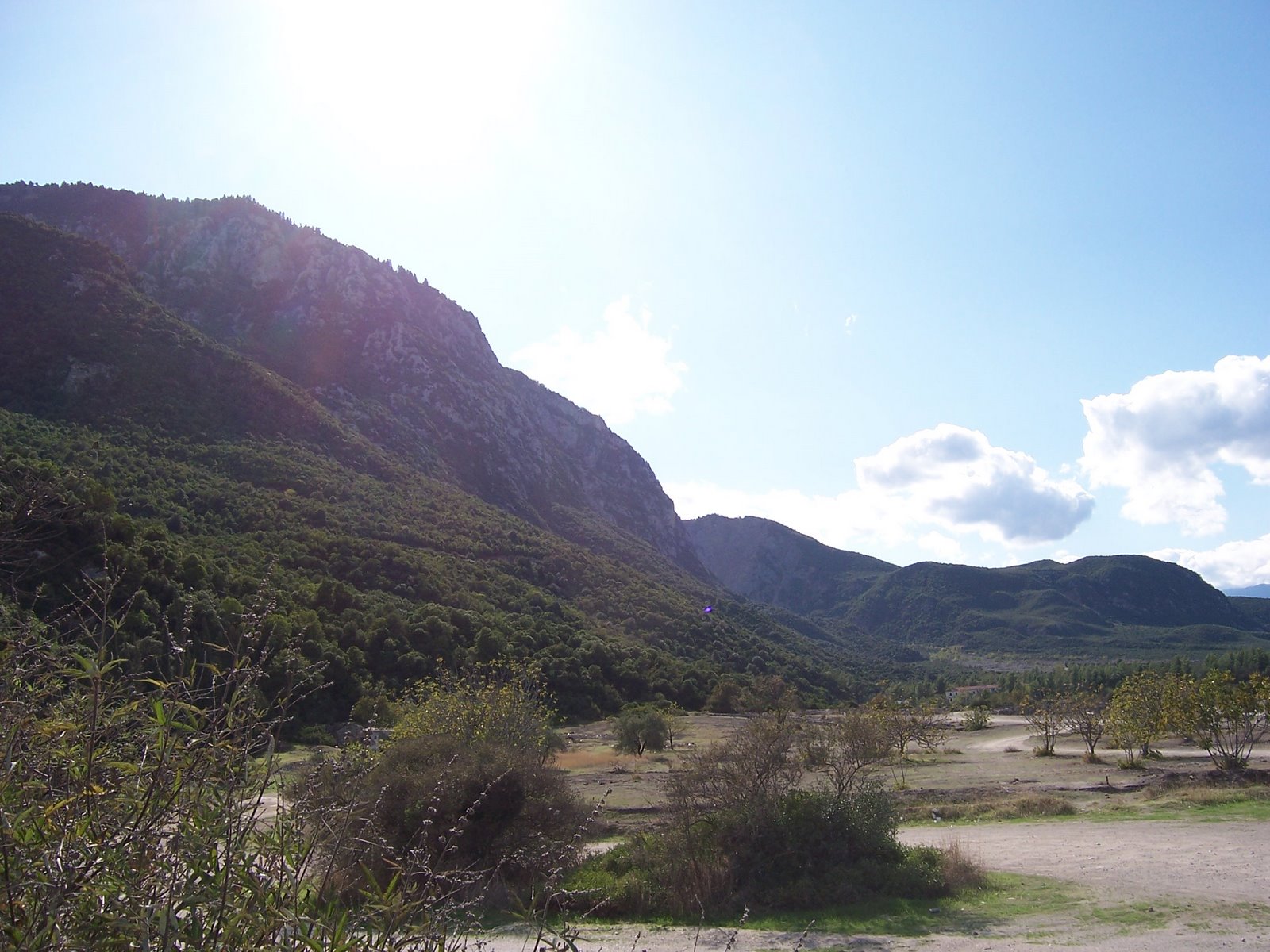
Just imagine, 250,000 Persians gathered on those hills raining arrows down on the 300 Spartans and 700 Thespians.

This is the monument built in honor of King Leonidas of Sparta.

Thermopylae:
Ok, so everyone probably knows the story of this battle site, but I still find it amazing that 300 Spartans and 700 Thespians defended the pass from 250,000 Persians for 3 days while the rest of Greece was able to gather their forces together and eventually send the invaders back home with their tales tucked between their legs.

This is the site of arguably the most important battle in the history of Western civilization. It is theorized that if the Persians had broken through any sooner, the rest of Greece would not have been able to regroup and drive them out. If the Persians had simply swept through Greece as they were intending, the rest of Europe would have been in danger of falling under Persian control as well, and Western Civilization as we know it would have been completely destroyed.
_________

So that wraps up our tour of Northern Greece. We did make quick stops in Kavala (ancient Neapolis where Paul entered Europe for the first time) and Berea, but we didn’t really spend enough time in either of those places to write much about.

Next up is our trip to Egypt. We leave this Tuesday, so keep us in your prayers. I may not be able to update until we get back because I’m not sure if we’re taking our laptop with us. So it may be a little over a week before I get back to this.

Thessaloniki – in the shadow of Olympus

The remains of the Roman forum in downtown Thessaloniki

Monument in honor of Alexander the Great, the founder of the city.

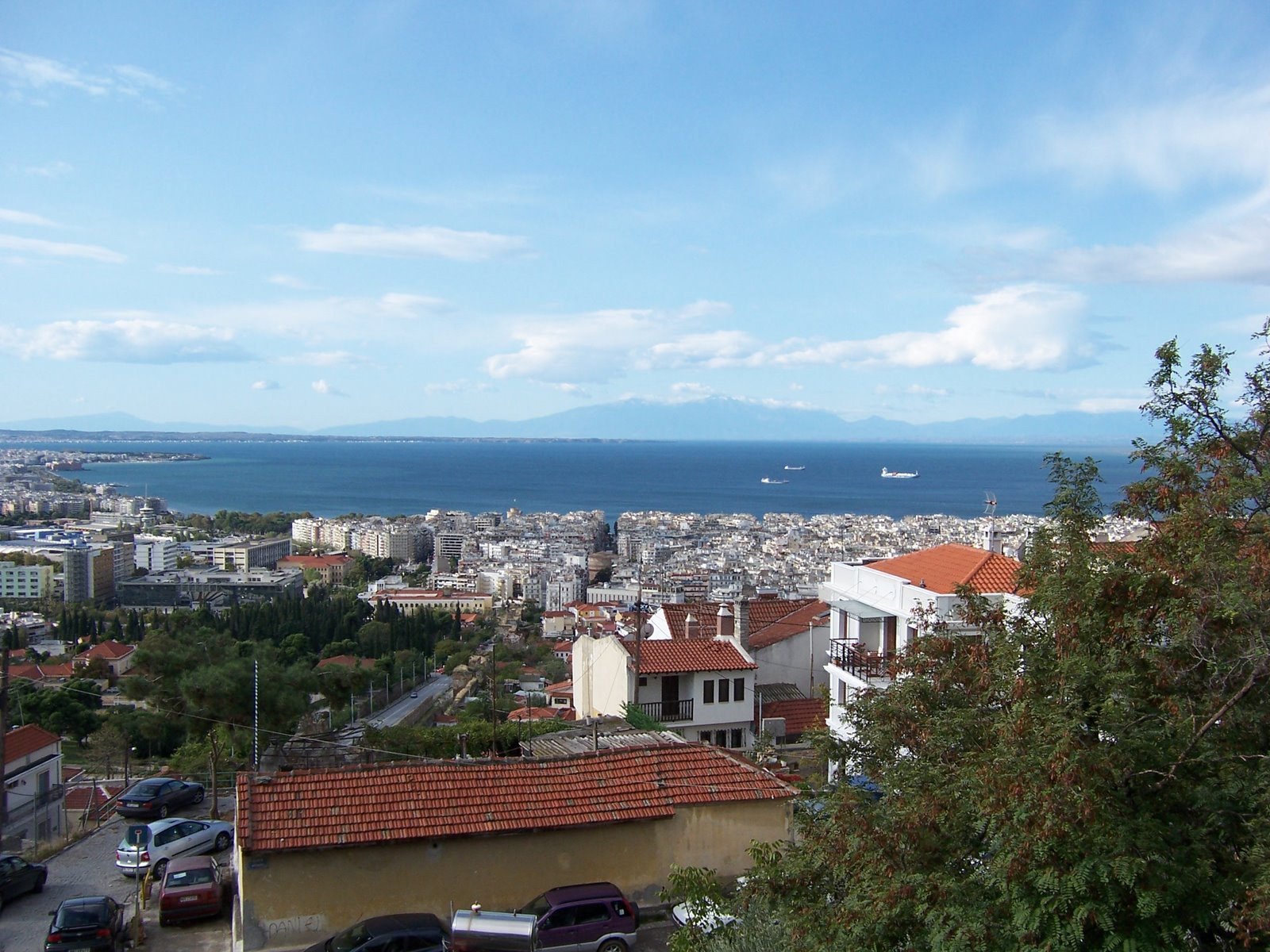
Looking down on the city from the Acropolis. You can see Mount Olympus in the background.

Thessaloniki:
You may not realize it, but Thessaloniki is the second largest city in Greece and had pretty much always been about as important as Athens. At many times throughout its history, Thessaloniki has acted as a sort of second capital. It was established by Alexander the Great in honor of his sister.

There aren’t as many historical excavations taking place in Thessaloniki simply because it is difficult to excavate a city which has 2million people living on top of it. They are working hard to dig up the places they can, like the Roman forum in the top picture.

It was amazing to see how close Mount Olympus is to the city. I never realized where exactly the mountain of the gods was. It is a beautiful range of mountains directly across the bay from the city, and on a clear day it can be seen towering majestically over its surroundings.

We really didn’t get to spend as much time in Thessaloniki as I had hoped, but it was still cool to see how much the city has continued to flourish throughout its history of over 2000 years.

Philippi – I think the Macedonians are calling.

This is the possible location of the River in which Lydia and the Jailer were baptized.

To the right of those steps is the traditional site of the jail in which Paul and Silas were held overnight.

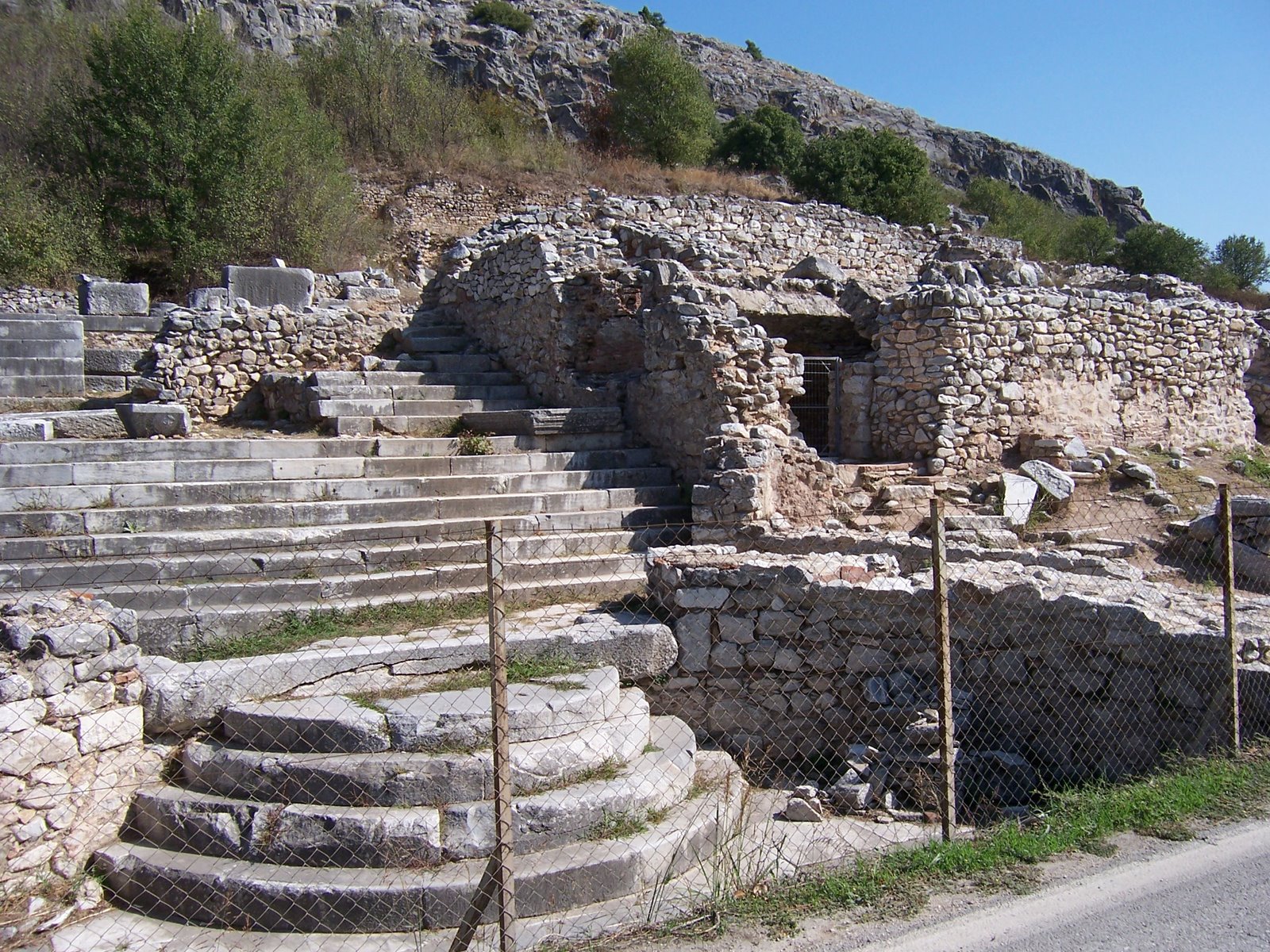
This is really the main part of the city. This is all that remains of the Roman forum and the Agora. In the background you can see the remains of a gigantic basilica that was built ca. 400 AD.

Philippi:
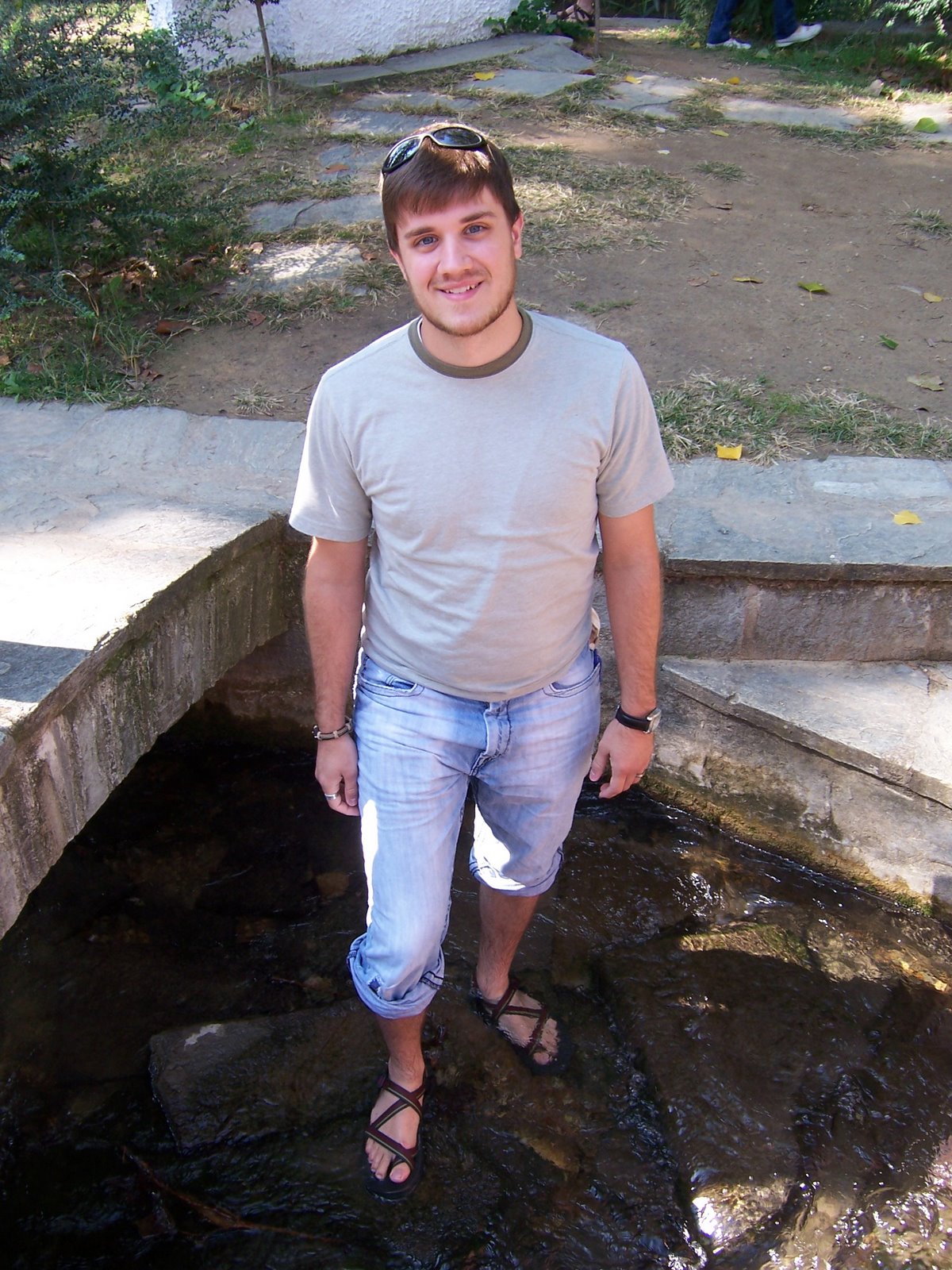
When we first got to Philippi, we started at the river which would have been located outside the western wall of the city. This is the traditional cite where Lydia and other Jews were meeting for worship regularly. It could possibly be the river in which the first European converts were baptized, but it is certainly the river in which thousands of Christians have been baptized over the last several centuries. This is a place of pilgrimage for thousands of Christians of every denomination. A formal baptistery has been built into part of the river with a small theater on one side for people to witness the baptism. It was incredible being able to wade around the river and sing songs like “As the Deer”.

The main city, as you can see, is still in ruins. Very few parts of buildings are standing. It is mainly just foundations and rubble. The coolest structure still partly standing was one of the basilicas, which still had its four corners standing at least 50 feet high. But this was only one of three or four gigantic church buildings in the ancient city.

As you may know, the famous Via Egnatia runs straight through the city. It was a road built by the Romans that stretched about 350 miles or so, from the port city Neapolis, through Philippi, and on through Berea and Thessaloniki. We got to walk along the road which we know for a fact that Paul walked along as he traveled through this part of Europe.

The city also has a pretty good size theater which is undergoing a massive restoration effort. In this theater people would watch everything from plays and choral performances to gladiatorial battles and executions. I guess that’s all part of being a free Roman colony.

Vergina – I don’t think that hill belongs there.


The next historical hot spot we visited was Vergina, the home and burial place of King Philip II of Macedon. If you remember your Western Civ., King Philip II was the guy that conquered all of Greece and united the Hellenes under one rule for the first time in their long history. After Philip was assassinated (in a theater no less), his young son, Alexander, took control and conquered the rest of the world, or at least the rest of the Persian Empire.

What’s cool about this site is that everything is underground. There are parts of the city, mainy burial chambers, that have been excavated and preserved by keeping them hidden under a huge mound of earth, just as they were discovered by the original archaeologists. Apparently they just came across a hill that looked like it wasn’t supposed to be there, and they started digging. Among the excavations, though, is a full fledged museum displaying beautiful artifacts – golden wreaths, decorative armor and weaponry, intricate ivory carvings, and so on. We weren’t aloud to take any pictures, though, so all I have are pictures of the outside.

Vergina – I don’t think that hill belongs there.


The next historical hot spot we visited was Vergina, the home and burial place of King Philip II of Macedon. If you remember your Western Civ., King Philip II was the guy that conquered all of Greece and united the Hellenes under one rule for the first time in their long history. After Philip was assassinated (in a theater no less), his young son, Alexander, took control and conquered the rest of the world, or at least the rest of the Persian Empire.

What’s cool about this site is that everything is underground. There are parts of the city, mainy burial chambers, that have been excavated and preserved by keeping them hidden under a huge mound of earth, just as they were discovered by the original archaeologists. Apparently they just came across a hill that looked like it wasn’t supposed to be there, and they started digging. Among the excavations, though, is a full fledged museum displaying beautiful artifacts – golden wreaths, decorative armor and weaponry, intricate ivory carvings, and so on. We weren’t aloud to take any pictures, though, so all I have are pictures of the outside.

Meteora – no, not like the Linkin Park album.


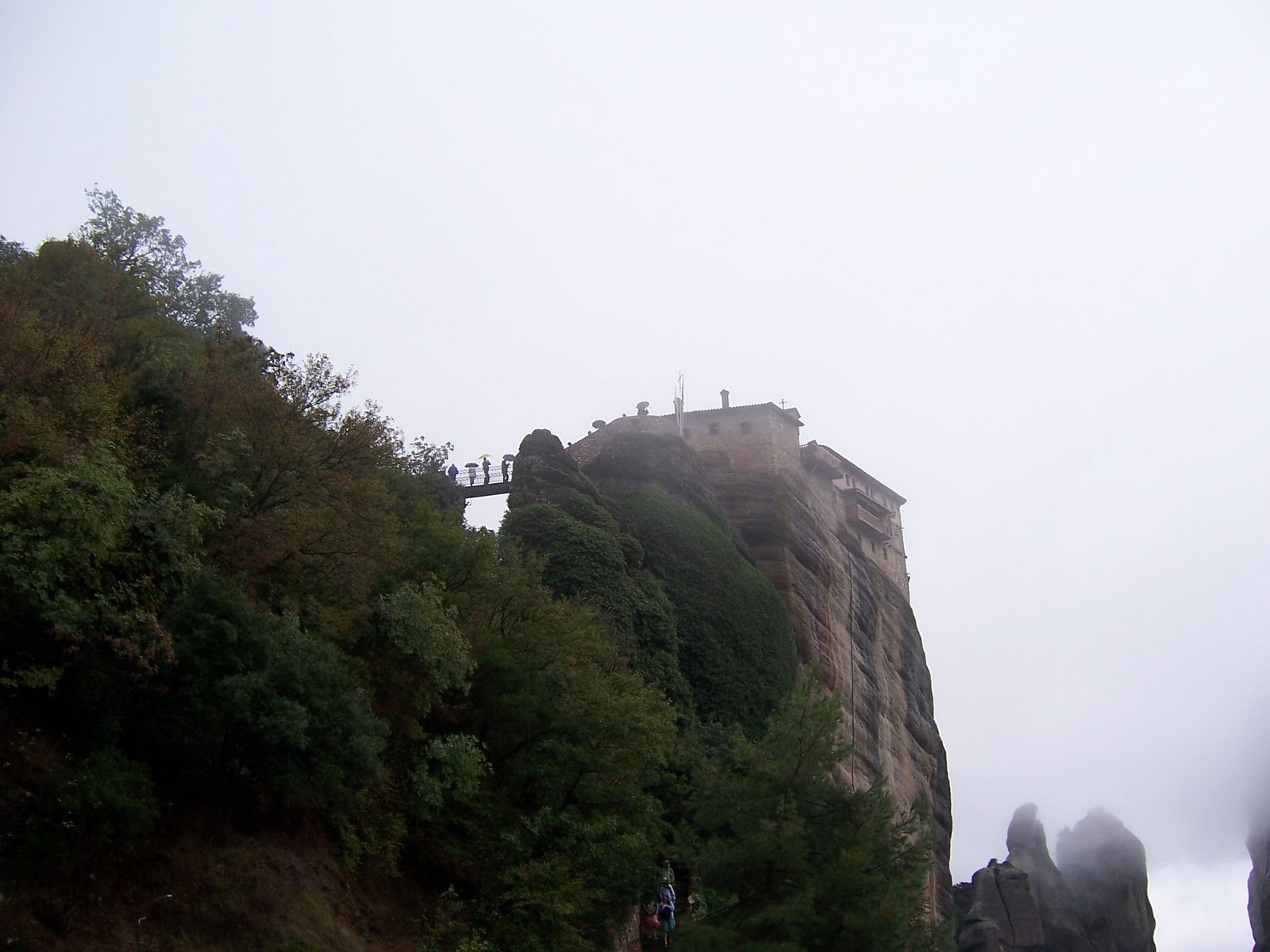
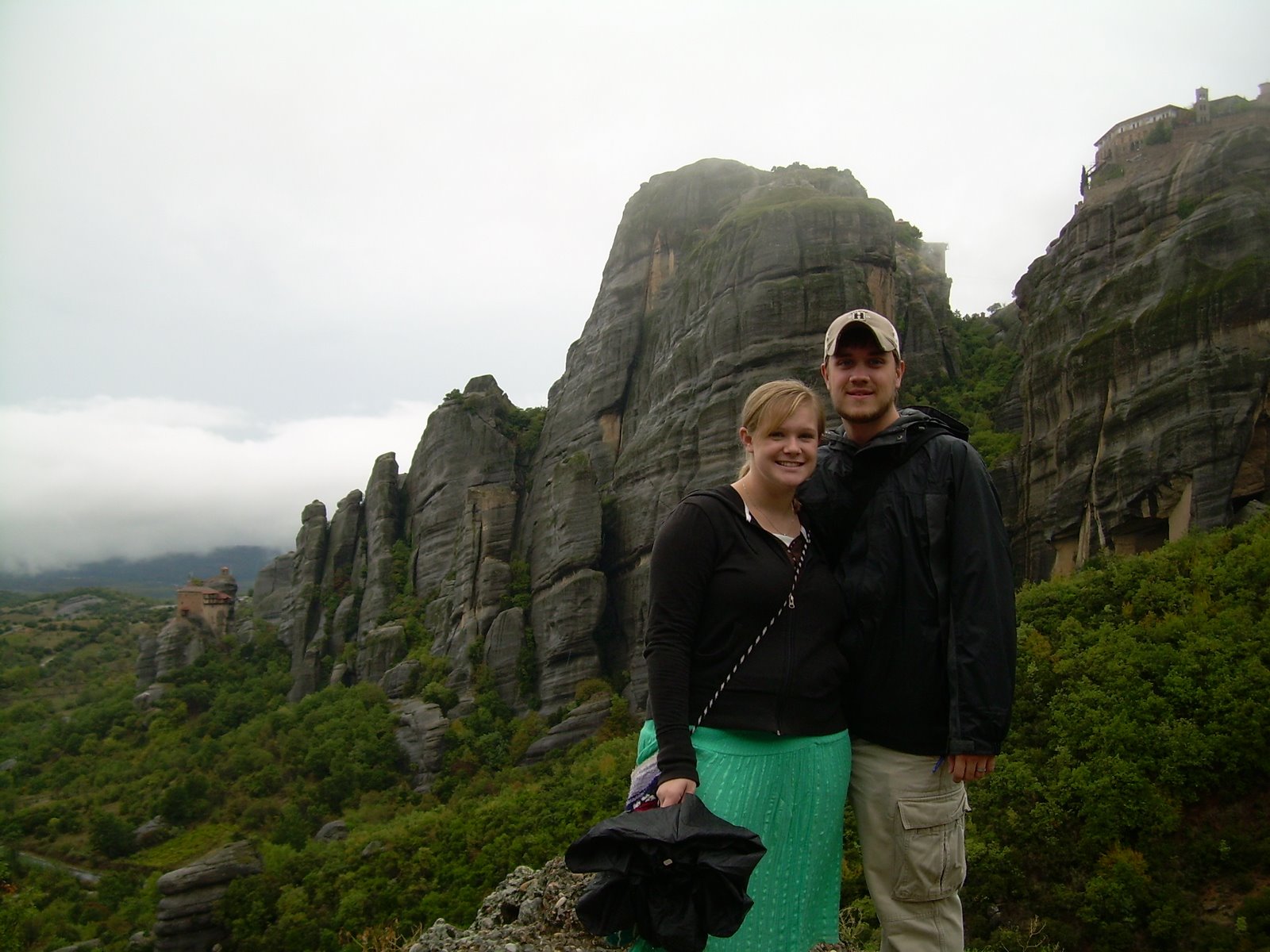
The next morning on our tour of Norther Greece, we visited a beautiful area called Meteora. These are the famous rock formations in mid-Greece. Upon these rocks that just out of the earth for hundreds of feet are 26 separate monasteries – very few of which are actually still operating. We only had time to visit one of them, which was actually what we would call a convent. It was really cool to see these gigantic structures built in the most obscure places. Until the mid 1900s, the only way to access most of the monasteries was by a basket that could be lowered down on a rope and pulled back up by a winch.

I can see why they built them this way. It makes sense to build a structure meant to separate someone from the rest of the world in a location which the world can’t access.

It was a very overcast day when we visited, as you can tell from the pictures. It was so bad that we would be completely engulfed in clouds while at higher elevation to the point that we could hardly see 20 ft in to any side of us. The clouds were cool, though. It added a sense of mysticism to the whole visit.

Inside the monastery we visited was a chapel, like several we’ve seen so far. The walls were entirely covered in frescos, which are hundreds of years old. But in this particular chapel, the nave (the open area before entering the sanctuary) was covered completely in depictions of famous martyrs. There were some disturbing images of men and women being tortured and executed in various ways. The scenes were gruesome yet touching at the same time. Somewhere in my twisted little head always find it fascinating to hear and read about people being tortured and put to death because of their faith in Jesus the Christ. It may be part morbid curiosity, part admiration, and part determination to work harder at having that kind of faith.

Meteora is definitely one of my favorite places we have visited since we’ve been in Greece.

Meteora – no, not like the Linkin Park album.


The next morning on our tour of Norther Greece, we visited a beautiful area called Meteora. These are the famous rock formations in mid-Greece. Upon these rocks that just out of the earth for hundreds of feet are 26 separate monasteries – very few of which are actually still operating. We only had time to visit one of them, which was actually what we would call a convent. It was really cool to see these gigantic structures built in the most obscure places. Until the mid 1900s, the only way to access most of the monasteries was by a basket that could be lowered down on a rope and pulled back up by a winch.

I can see why they built them this way. It makes sense to build a structure meant to separate someone from the rest of the world in a location which the world can’t access.

It was a very overcast day when we visited, as you can tell from the pictures. It was so bad that we would be completely engulfed in clouds while at higher elevation to the point that we could hardly see 20 ft in to any side of us. The clouds were cool, though. It added a sense of mysticism to the whole visit.

Inside the monastery we visited was a chapel, like several we’ve seen so far. The walls were entirely covered in frescos, which are hundreds of years old. But in this particular chapel, the nave (the open area before entering the sanctuary) was covered completely in depictions of famous martyrs. There were some disturbing images of men and women being tortured and executed in various ways. The scenes were gruesome yet touching at the same time. Somewhere in my twisted little head always find it fascinating to hear and read about people being tortured and put to death because of their faith in Jesus the Christ. It may be part morbid curiosity, part admiration, and part determination to work harder at having that kind of faith.

Meteora is definitely one of my favorite places we have visited since we’ve been in Greece.

We’re Off To See The Oracle, the Wonderful Oracle of Delphi


We got back a couple days ago from our tour of Northern Greece, during which we visited Delphi, Meteora, Vergina, Berea, Philippi, Kavala (ancient Neapolis), and Thessaloniki. It was a great trip with lots of stuff to see and write about. Hopefully I can stay up with it and fill everyone in before we head to Egypt next Tuesday.

Delphi:
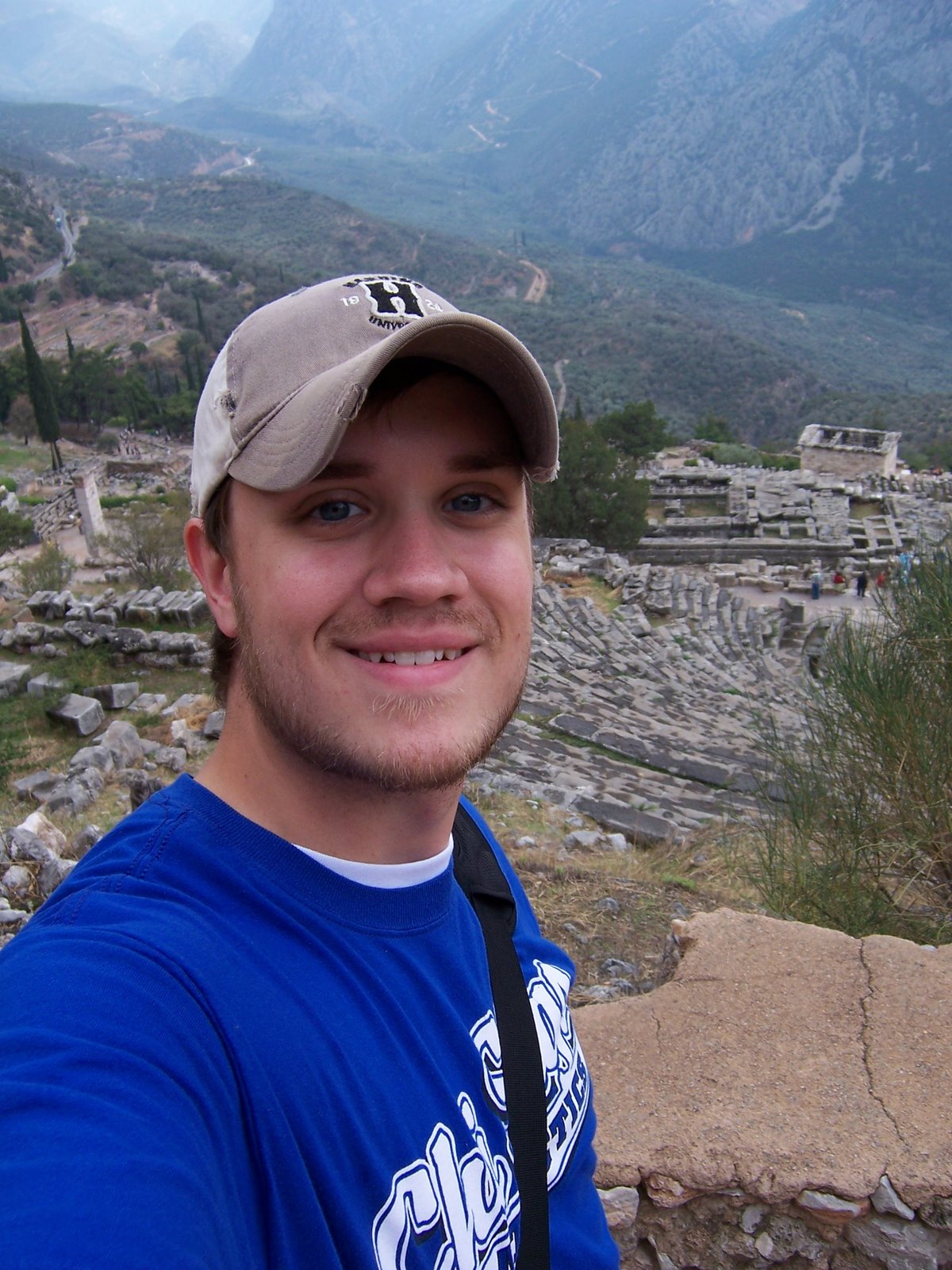
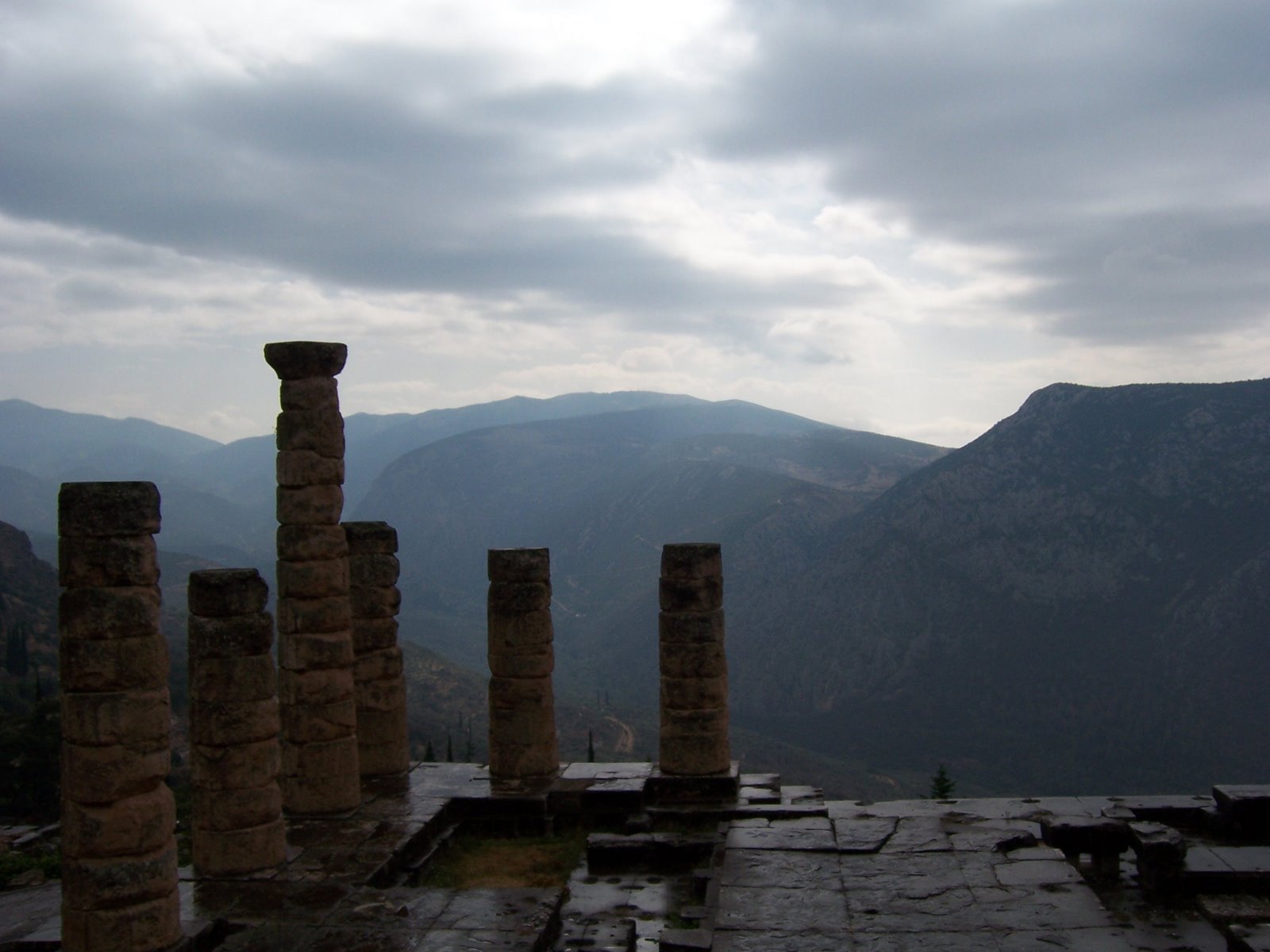
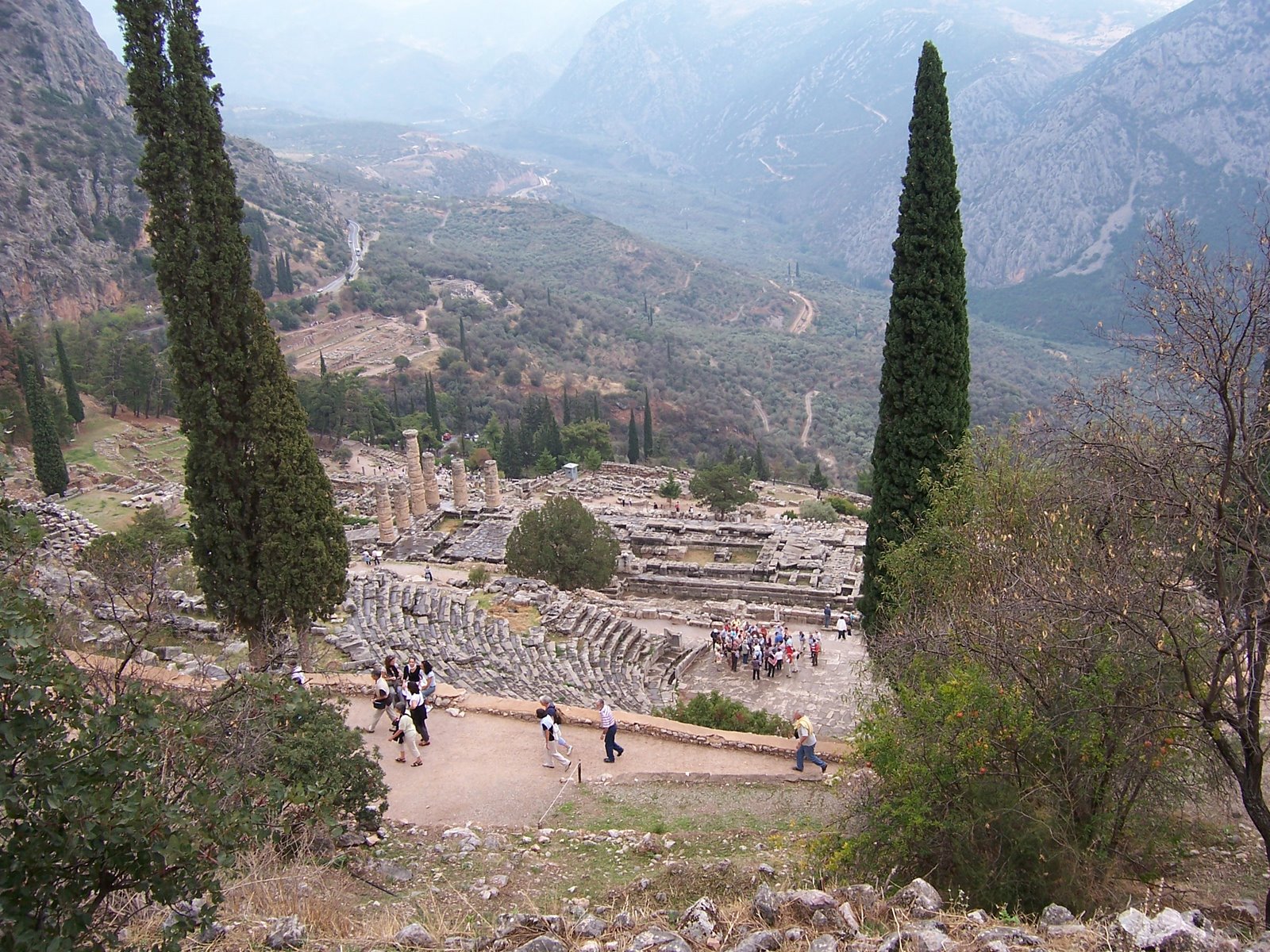
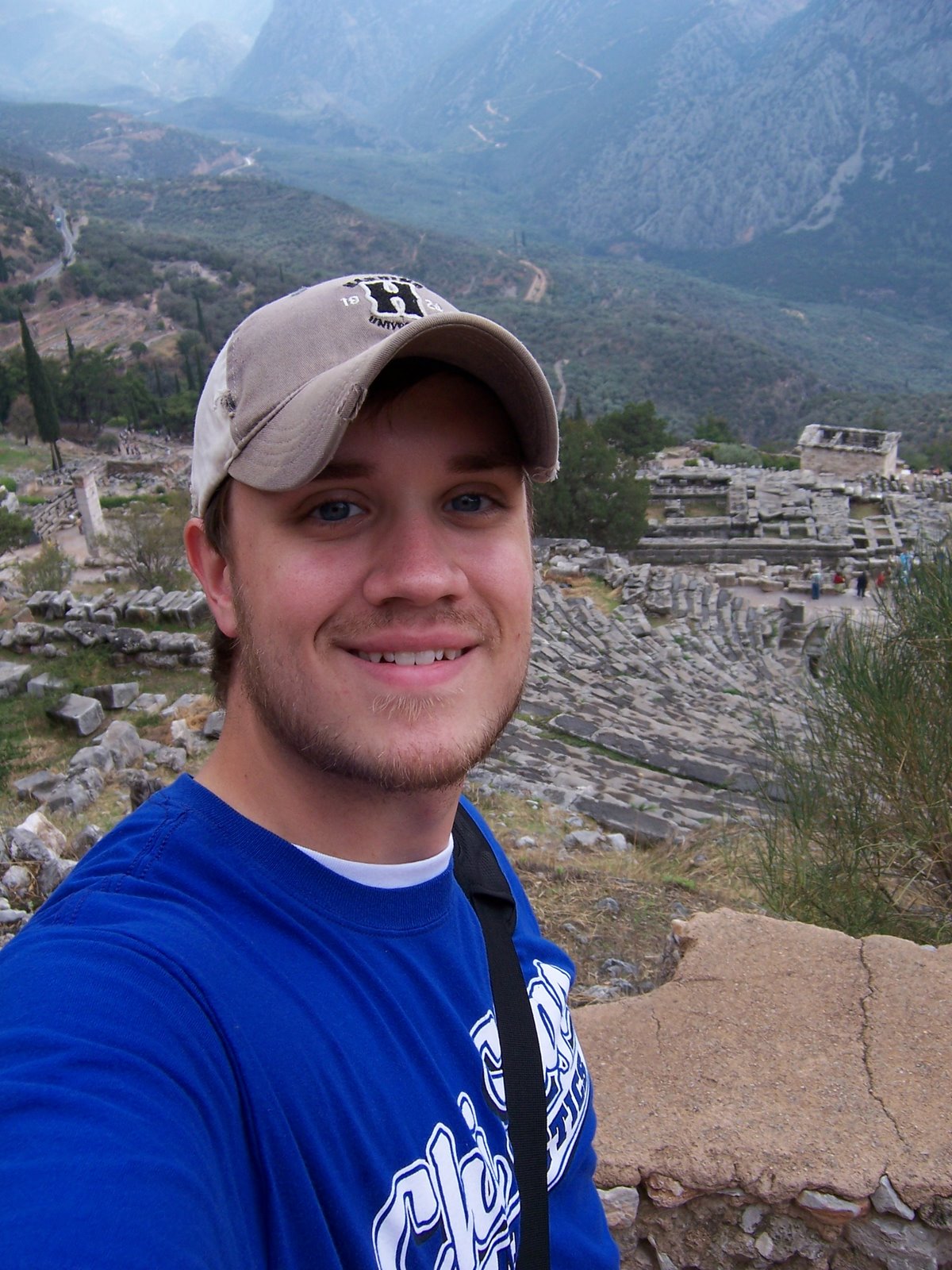
This was our first stop, which you may recognize from the movie 300. Delphi is the home of the legendary oracle who would be consulted by leaders and businessmen alike. She was a high priestess of Apollo who would go into a subterranean chamber below the Temple of Apollo where there was a crack in the ground along a faultline from which a strange mixture of gases would be released. She would breathe in these gases and go into some sort of trance during which she would mutter incoherently. The priests would then “interpret” these “prophesies” and bring them to the one inquiring. The catch was that the priests would frame the prophesies to have a double meaning so that they would be right no matter what the actual outcome of the event in question was.

I was very impressed with the actual ruins at Delphi. The city was never a significant location as far as government or military power goes. It was a sort of neutral ground for various Greek city-states. The city itself is located on the side of sheer mountainside. The landscape is gorgeous, and Delphi would have been a very picturesque location in ancient times. Much of the city is well preserved and much is undergoing reconstruction. Surprisingly enough, Delphi is home to the best-preserved stadium in all of ancient Greece.

Whenever we were told about the kind of prophecies the famous oracle would give, I couldn’t help but think of all the prophecies in the Old Testament that were fulfilled in Jesus of Nazareth. The prophecies from the priestess and priests were vague, often self-fulfilling prophecies. But the Old Testament prophets told all about the coming Messiah – where he would be born, where he would grow up, how he would be born, how he would die, and the list goes on. God’s promises are never vague or misleading. He has told us exactly what we needed to know, and his word never fails us.

We’re Off To See The Oracle, the Wonderful Oracle of Delphi


We got back a couple days ago from our tour of Northern Greece, during which we visited Delphi, Meteora, Vergina, Berea, Philippi, Kavala (ancient Neapolis), and Thessaloniki. It was a great trip with lots of stuff to see and write about. Hopefully I can stay up with it and fill everyone in before we head to Egypt next Tuesday.

Delphi:
This was our first stop, which you may recognize from the movie 300. Delphi is the home of the legendary oracle who would be consulted by leaders and businessmen alike. She was a high priestess of Apollo who would go into a subterranean chamber below the Temple of Apollo where there was a crack in the ground along a faultline from which a strange mixture of gases would be released. She would breathe in these gases and go into some sort of trance during which she would mutter incoherently. The priests would then “interpret” these “prophesies” and bring them to the one inquiring. The catch was that the priests would frame the prophesies to have a double meaning so that they would be right no matter what the actual outcome of the event in question was.

I was very impressed with the actual ruins at Delphi. The city was never a significant location as far as government or military power goes. It was a sort of neutral ground for various Greek city-states. The city itself is located on the side of sheer mountainside. The landscape is gorgeous, and Delphi would have been a very picturesque location in ancient times. Much of the city is well preserved and much is undergoing reconstruction. Surprisingly enough, Delphi is home to the best-preserved stadium in all of ancient Greece.

Whenever we were told about the kind of prophecies the famous oracle would give, I couldn’t help but think of all the prophecies in the Old Testament that were fulfilled in Jesus of Nazareth. The prophecies from the priestess and priests were vague, often self-fulfilling prophecies. But the Old Testament prophets told all about the coming Messiah – where he would be born, where he would grow up, how he would be born, how he would die, and the list goes on. God’s promises are never vague or misleading. He has told us exactly what we needed to know, and his word never fails us.

Finishing Up the Greek Cruise


Wow, it’s crazy how things happen so quickly. I’ve completely neglected this blog, but yes, I am still alive. While I’m here, we do still have classes with quizzes, exams, and papers. I guess that’s part of the deal.

Anyway, let me just finish off the rest of the Greek Isle Cruise.

Patmos:
After Ephesus, we shipped off to the island of Patmos, where John was exiled for about 18 months toward the end of his life. Patmos is a beautiful island, bigger than I had expected with lots of trees and scenic hillside towns. A ways up the hill is a cave where tradition says John would sleep, meditate, and write (with the help of a personal scribe whom John took with him into exile I guess). In that cave is a rounded spot in the ground where he would lay his head to sleep and a handhold a couple feet up that he would use to pull himself up.

The most touching feature about the cave is a crack across the top where, legend says, the holy trinity came down, because the crack splits off into three separate lines in equal angles. Even if that is only legend, it still gave me chills to think that I was standing in the place where God came to earth one last time. The rest of the cave is littered with Greek Orthodox icons and embelishments. They are pretty, just not all that necessary in my opinion.

On the top of the hill there is a monestery built by a guy named Christodoulos in the 6th Century I think. The coolest thing about the monestery is the fact that it was built like a fortress on the hill. It has stone wall and other fortifications in case anyone decided to lay siege to this island in the middle of nowhere.

Knossos, Crete:
Knossos is the home of the ancient Minoan civilization. The palace at Knossos would have been incredible to see in its glory days, 1600 BC, but now it is just a large pile of rocks that archaeologists have done their best to reconstruct. It was cool to see the advancements of such an old civilization, but there’s not all that much to talk about.

Thera, Santorini:
Our last stop on the cruise was the famous island of Santorini. Wanna know what it looks like? Do a Google image search of Greece, and Santorini will be 7 out of the first 10 or so. Santorini is the island famous for the beautiful white-washed houses and blue-domed chapels. We also got a chance to ride mules up to the top of the mountain side, which is pretty sheer since part of the island broke off in a volcanic eruption a couple thousand years ago. I thought it ironic that a man who grew up in Columbia, TN – the mule capital of the world, rode his first mule ever in Santorini.

It was nice just being able to walk around the city of Thera for a while. It’s not the largest town on Santorini, but it was a good size. We got some great pictures, some amazing gelato, and the most incredible sunset view I’ve seen in a good long while.

So there we go, we are caught up through the Aegean cruise. Up next, Northern Greece.