Page 19 of 82

JESUS ASKED: Why Do You Involve Me?

There’s an interesting little exchange between Jesus and his mother which led up to his first recorded miracle in the Gospel of John:

     On the third day a wedding took place at Cana in Galilee. Jesus’ mother was there, and Jesus and his disciples had also been invited to the wedding. When the wine was gone, Jesus’ mother said to him, “They have no more wine.”
     “Woman, why do you involve me?” Jesus replied. “My hour has not yet come.”
     His mother said to the servants, “Do whatever he tells you.”
     Nearby stood six stone water jars, the kind used by the Jews for ceremonial washing, each holding from twenty to thirty gallons.
     Jesus said to the servants, “Fill the jars with water”; so they filled them to the brim.
     Then he told them, “Now draw some out and take it to the master of the banquet.”
     They did so, and the master of the banquet tasted the water that had been turned into wine. He did not realize where it had come from, though the servants who had drawn the water knew. Then he called the bridegroom aside and said, “Everyone brings out the choice wine first and then the cheaper wine after the guests have had too much to drink; but you have saved the best till now.”
     What Jesus did here in Cana of Galilee was the first of the signs through which he revealed his glory; and his disciples believed in him.
(John 2:1-11)


My wife does this thing where she makes a statement, but I’m supposed to know that she’s actually making a request or telling me to do something. That’s kind of what Mary does with Jesus here. She notices that this newlywed couple have run out of wine for their guests. **May we all be more like Mary, noticing when others are in need.**

She points out the fact to Jesus, and he asks her, “Why do you involve me?”

Whoa. What’s Jesus doing here? Is he refusing? Is he arguing, or “talking back?” He tells his mom that it wasn’t his time yet. But does she listen? Nope. She tells the servants to do whatever Jesus tells them.

Why do you involve me?

I think that’s a legitimate question for all of us. So many times our prayers are full of requests – for healing, strength, comfort, forgiveness, for a good day, for our needs being met, for our presentation to be successful, for our car to get fixed on time, for our sports team to win, etc.

Why do you involve me?

Let’s be honest. Jesus didn’t have to do anything at the wedding. I’m sure they could have found more wine somewhere else. Or they could have just owned up to the embarrassment and done without. This wasn’t exactly a life-saving or life-giving miracle.

But do we really need the divine power of the Messiah in order to have a good day? Or to do well on our test? Or to recover from a head cold?

Why do you involve me?

Jesus didn’t need to step in and save that party, but I think he wanted to. Mary knew what he was capable of and gave him the nudge to act. Jesus’ involvement at the wedding changed everything. And I think that’s a point to remember.

The fact is that atheists and non-Christians can live a fulfilling life without Jesus. I want to name that. And just because we are followers of Jesus does not guarantee any level of comfort or enjoyment in life. God causes the sun to shine and the rain to fall on both the just and the unjust. Yet in the US everyone wants to have Jesus on their side. They want to involve Jesus in their political and religious and social agendas. What would Jesus do? Who would Jesus vote for? What would Jesus drive?

Why do you involve me?

I don’t want to make sure Jesus is on my side. I want to be on the side of Jesus. I want Jesus involved in every aspect of my life, guiding my way and calling the shots. And Jesus wants to be involved. That’s why he tells his disciples toward the end of John’s Gospel that it’s better if he leaves them. After his resurrection he would send the Comforter to them. The Spirit living in them would allow them to do even greater things than they had seen Jesus do.

There is nothing too big or too small for Jesus. The one who controlled the weather and raised the dead also gave partygoers more wine and washed feet.

     Do not be anxious about anything, but in every situation, by prayer and petition, with thanksgiving, present your requests to God. And the peace of God, which transcends all understanding, will guard your hearts and your minds in Christ Jesus.
(Philippians 4:6-7)


     Now to him who is able to do immeasurably more than all we ask or imagine, according to his power that is at work within us, to him be glory in the church and in Christ Jesus throughout all generations, for ever and ever! Amen.
(Ephesians 3:20-21)


“Why do you involve me?” Jesus asked.

Because life is better with Jesus involved. You may never know what will happen.

JESUS ASKED: What Do You Want?

Who were your favorite teachers? Odds are they weren’t the ones who simply lectured and acted like they knew all the answers. The best teachers are those who ask the best questions.

As I read through the gospels I’m amazed by the questions that Jesus asked. In fact, if you keep reading in Luke 2 after the birth story, the next time we see Jesus is as a 12 year old boy. He ditches his family in Jerusalem after a festival and spends three days alone in the city. Surprisingly, his parents find him in the Temple carrying an in depth conversation/debate with the religious leaders. They were amazed by his understanding that was revealed in the questions he asked.

People asked Jesus questions all the time. But let’s take a look at some of the questions Jesus asked of others. They are the same questions, I believe, that we are asked today.

Let’s begin in John 1. Check out this story:

The next day John was there again with two of his disciples. When he saw Jesus passing by, he said, “Look, the Lamb of God!”
When the two disciples heard him say this, they followed Jesus. Turning around, Jesus saw them following and asked, “What do you want?”
They said, “Rabbi” (which means “Teacher”), “where are you staying?”
“Come,” he replied, “and you will see.”
So they went and saw where he was staying, and they spent that day with him. It was about four in the afternoon.
(John 1:35-39)

First of all, John the Baptist amazes me. He knew when it was time to hand off the ministry. He didn’t hang on to his own authority or influence. Once Jesus came on the scene, John gave him his full endorsement.

Second, did you catch the question Jesus asked these two potential disciples? It’s hard to tell from the text what kind of nonverbal communication accompanied that question.
Did he ask, “What do you want?” with a hint of cynicism?
Did he ask it like a grumpy old man opening the door to some kids participating in a school fundraiser?
Did he ask it with the gentleness of a grandparent when a grandchild comes bounding up into their lap?
Did he ask it with the charming sincerity of a store owner to a new patron?
Did he ask it with a squint in his eye and a pensive furrow on his brow?

Was he pushing them away or was he welcoming them in?

I think Jesus asks each of us the same question whenever we decide to become his followers. It may put us on the defensive. It may take us by surprise. Maybe we’ve never thought about it before. Maybe we don’t have a good answer, so we stumble over our words as we try to form a coherent reply.

What do you want?

What do you hope to gain by following Jesus? Some of us may have been baptized because all our friends were doing it. Maybe we wanted to be able to have the cracker and juice that always get passed around during worship. Maybe we wanted to win the approval of our parents. Maybe we just REALLY didn’t want to go to hell, so we made the decision before it was too late – better safe than sorry! Maybe…

Maybe we have forgotten.

What do you want?

If you were able to approach Jesus today, here, now, and he asked you that question – what would you say? You see him sitting alone at the coffee shop. You walk up to his table just wanting to say Hi. Before you can get a word out, he looks up and asks you that same question: What do you want?

Would you ask for a miracle? Would you ask for forgiveness or a second chance at something? Would you ask him a question that’s been burning in your mind for years? Would you want him to give you reassurance of a loved one’s final destination? Would you ask him to repeat that whole water-to-wine trick?

What do you want?

Some people want power. This is like when James and John asked if they could have the places of honor at Jesus’ right and left hand when he came into his kingdom. Some people see Jesus as a means to their own end – authority, influence, power, persuasion. People have wielded an extraordinary amount of power over others in the name of Jesus. Is that what you want? To feel important? To be respected? To control others?

Some people want possessions, more material wealth and luxuries. They read all the promises and blessings in the Bible that suggest a high standard of living in exchange for faithfulness. Maybe if they follow all the rules then God will owe them something. If they “name it and claim it,” then all their financial woes will be over, and they will be living their best life. Is that what you want? More stuff? A bigger home? A nicer car? More toys?

Some people want healing. Or forgiveness. Or therapy. Or a sense of belonging. Or the ability to be a part of something bigger than themselves.

Some people want to serve others. Or become civil activists. Or combat poverty and disease.

Some people want a Get-Out-of-Hell-Free card.

What do you want?

That’s the first question Jesus asks, and in many ways it is the most important question to ask ourselves when we consider following Jesus.

What do I want? What do I expect?

These two disciples didn’t ask for any of that. I am amazed at their answer – which is itself another question: “Where are you staying?”

They don’t ask for any thing. They just want to be with Jesus. They want to hang out. He invites them over, and they just chill together for the rest of the day. Wouldn’t that be awesome?

You see Jesus in a coffee shop. As you approach, he asks, “What do you want?” You reply, “Can we just hang out for a while?” And the two of you shut the coffee shop down, just talking and lounging over countless cups of dark roast.

Would that be enough for you?

What do I want? I want the heart of these disciples who are content to simply be with Jesus. They didn’t want anything from him. They wanted him. They wanted his presence. Spending time with Jesus was enough for them.

Is it enough for me? Is it enough for you?

“What do you want?” asked Jesus.

My UPDATED Definitively Subjective Star Wars Movie Rankings

It’s an amazing time to be a nerd.

I’ve found myself thinking and saying that a lot over the last several years. I’ve always been a nerd – Star Wars, Lord of the Rings, Harry Potter, Monty Python, DC, Marvel, and everything in between.

I remember sitting in elementary school having Star Wars trivia contests with my friends. Who was Luke’s childhood best friend? What was the name of the droid Uncle Owen almost bought instead of R2-D2? That sort of thing.

When I was home sick as a kid, I wore out our Star Wars trilogy VHS tapes.

And yes, Han shot first.

Is every Star Wars movie a masterpiece? No, not by a long shot. But each movie has something I can really appreciate for what it’s worth. I’ve also been getting into the new canon books (especially the audiobooks – those things have incredible production value) and the TV series on Disney+ (The Mandalorian, Clone Wars, Rebels, and Resistance). I appreciate how they are trying to flesh out the fuller story within the galaxy.

So without further ado, here is my Definitively Subjective Star Wars Movie Rankings.

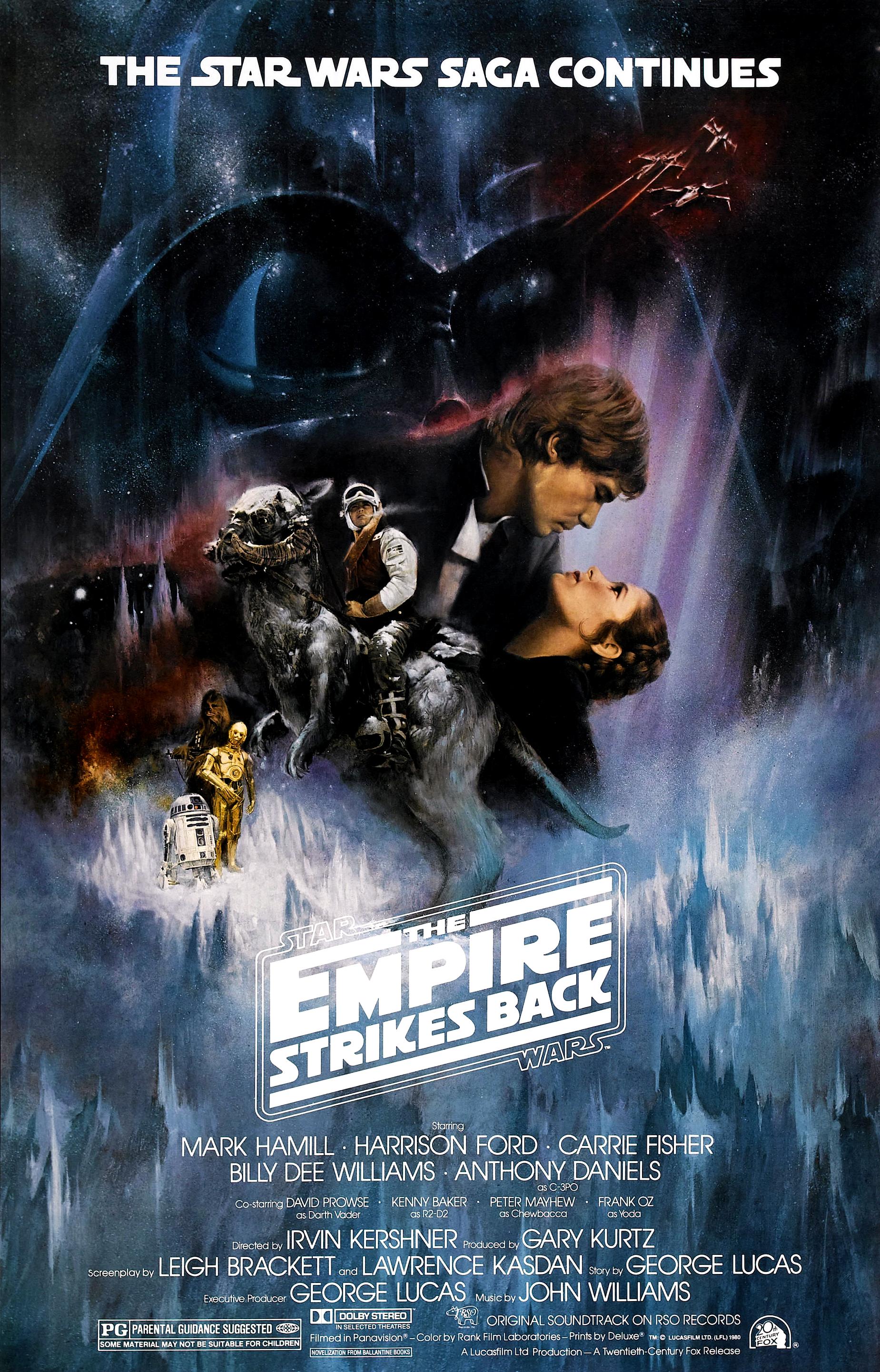
1. Star Wars: Episode V – The Empire Strikes Back
Rarely in the world of cinema is a sequel better than the first. Empire is a near-perfect follow-up to the surprise worldwide phenomenon. We thought that after the destruction of the Death Star, the rebels would have the Empire up against the ropes. But the opposite ends up being the case. The scrappy rebellion is still fighting for survival against the galactic war machine helmed by Darth Vader.

In a masterful piece of story telling, the good guys don’t win the day. The plot is full of betrayals, backstabbing, double crossing, love, jealousy, and “defeat snatched from the jaws of victory.” I mean, it doesn’t get any more Star Wars than this installment. It has the most-quoted lines (“No! I am your father.”) and the most iconic imagery (AT-ATs, carbonite, light saber duels, and Yoda). The Empire Strikes Back is what every movie sequel strives to be.

2. Star Wars: Episode IV – A New Hope
The indie movie that became a global cultural phenomenon was ahead of its time in many ways. It’s a traditional “hero’s journey” movie that has been copied time and time again – because it works. I will forever be loyal to this movie that introduced us to Luke, Han, Chewbacca, Leia, Obi-Wan, C-3PO, R2-D2, and Darth Vader. For a 1970s sci-fi movie made on a shoe-string budget with practical effects and first-time actors, this movie still holds up surprisingly well 40 years later.


This is where it gets a bit more controversial and subjective…..

3. Star Wars: Episode VII – The Force Awakens
The characters, plot, action, and humor of The Force Awakens make this one of the most rewatchable installments in the saga. Yes, it has a lot of similarities to the original. Yes, Kylo Ren is an angsty emo kid. Yes, ****SPOILERS**** Han Solo dies. But The Force Awakens recaptures the feel and magic of the original trilogy. I absolutely love Rey and Poe and BB-8 and Finn.

4. Rogue One: A Star Wars Story
The first non-saga movie was a pleasant surprise. I appreciate everything it was trying to do. Yeah, you could say it was a whole movie just to fill a plot hole in the original. But it was more than that. It made the Empire worth fearing. It established the original trilogy within the galaxy ruled under the tyrannical fist of the Empire. Rogue One also shows the moral ambiguity of the rebellion at times.

And come on – that last 90 seconds with Darth Vader was one of the best scenes in the entirety of Star Wars.

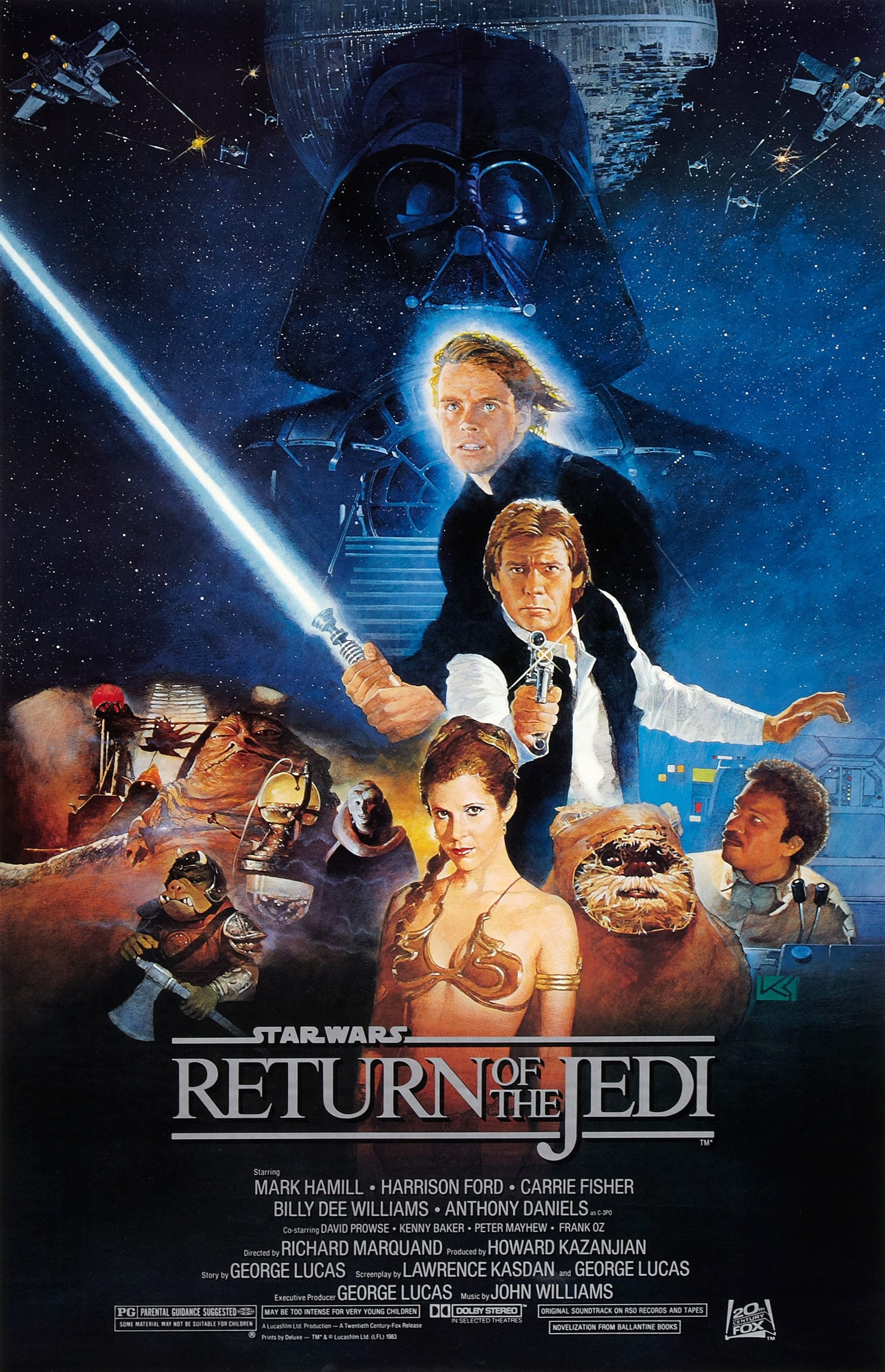
5. Star Wars: Episode VI – Return of the Jedi
I’ve gotta say that when I was a kid, this was my favorite. I loved the scenes in Jabba’s palace. I loved the Ewoks. I loved the speeder bikes and the space battle. I loved the duel between Luke and Vader at the end with the redemption of Vader. But when I watch it as an adult I realize how much this movie was targeted to kids. It could have been a lot darker and grittier following ESB. But they played it safe in order to sell more toys – which totally worked.

6. Star Wars: Episode IX – The Rise of Skywalker
The Rise of Skywalker brings the “Skywalker Saga” to an alleged end. (We’ll see about that.) I think it did so brilliantly. Was it perfect? No. Was it everything I wanted? Yes! …minus a cameo of baby Yoda. My biggest complaint was that it could have been longer. It could have been two movies. There was a lot that had to happen to make up for The Last Jedi. Some questions had to be retconned (like Rey’s parentage and Leia’s force abilities, etc.). It’s almost like The Last Jedi could have been Episode 7.5. I appreciated Kylo Ren’s story arch to become fully Ben Solo again. I thought his and Rey’s on screen chemistry was absolutely on point without being a weird love story. Rey’s journey, coming to grips with who she really is and could be, was an emotional ride. I loved seeing all the old faces from Lando Calrissian and Nien Nunb to the return of Wedge Antilles. It was sad seeing Leia die, but her send off was well done. It was also hard seeing Snap Wexley die in the battle over Exigol. (Snap got his introduction in The Aftermath book trilogy.) It was also great seeing Ian McDiarmid reprise his role as Darth Sidius/Emperor Palpatine – because OF COURSE it’s been Palpatine pulling the strings as the ultimate puppet master the the galaxy. I’ve been rambling because it’s so fresh on my mind. Do pay attention to the critics. This movie is an epic end to an epic story.

7. Star Wars: Episode VIII – The Last Jedi
This movie took a lot of risks. The “fans” complained that The Force Awakens was too much like the originals, so The Last Jedi tried to break away from the common tropes and expectations of the originals – and the “fans” complained again. I thought it worked really well on many levels. It was a very meta movie, telling you the whole time what it was doing – “Let the past die…” “This is not going to go the way you think…” Kylo Ren and Rey both came into their own. They can no longer rely on the past to lead them into the future. I think that says something about Star Wars over all.

The Last Jedi has one of the coolest light saber battles, one of the most visually stunning space battle scenes, and Yoda! It would be higher on my list, but it’s not quite as rewatchable as others.

8. Star Wars: Episode III – Revenge of the Sith
Revenge of the Sith had the darkness and the grittiness that I wish Return of the Jedi would have had. RotS, however, almost goes too dark. But it captures the transformation of Anakin to Vader in a visceral way. Obi Wan is the hero of the prequels. As unbelievable as Anakin and Obi Wan’s friendship seems at some points because of bad acting/writing, when things fall apart, you feel it. That final duel between them is haunting.

Full disclosure, I’ve seen Revenge of the Sith fewer times than any other movie on this list.

9. Solo: A Star Wars Story
I really enjoyed Solo. It was a fun, campy, action-packed heist movie. Think Italian Job in space. Was it entirely necessary? No. But I’m glad it’s here. Like Rogue One, Solo establishes the Empire as a force to be feared and the rebellion as a fledgling grassroots resistance movement. The actor playing Han offered a surprisingly convincing portrayal of the character. Lando was spot-on. I loved seeing the fresh, new Millennium Falcon pull of the Kessel Run. And when Maul appeared on screen, there was an audible gasp throughout the theater. There’s SO MUCH they could do with the Maul storyline…if they ever do another “Star Wars Story.”

10. Star Wars: Episode I – The Phantom Menace
THE BAD: the writing, the politics (Trade Federation? Are you kidding?), goofy battle droids, naked C-3PO, midichlorians, and Jar. Jar. Binks.

THE GOOD: the worlds, Qui Gon Jinn and Obi Wan Kinobi, Darth Maul with the double-bladed lightsaber, the BEST light saber duel in all of Star Wars, the pod race, expanding the Jedi/Force lore

11. Star Wars: Episode II – Attack of the Clones
I’ve tried rewatching this a few time recently and get the same feeling each time: Bored. I forgot how much of this movie involves slowly walking and talking. There’s action at the beginning and in the last 30 minutes. The rest is just slow and/or annoying. There is absolutely no chemistry between Anakin and Padme. Obi Wan’s skills are wasted. The main villain, Count Dooku, is completely dull and forgettable. If anything, this movie feels like an introduction to the Clone Wars animated series – which I think is better than Attack of the Clones.

—————————————-

How does your list compare? I know this is a pretty controversial subject among nerds, but I’d love to hear from you.

For comparison’s sake, here are the Star Wars movies ranked by Tomatometer Score:
1. The Empire Strikes Back (95%)
2. The Force Awakens (93%)
3. A New Hope (93%)
4. The Last Jedi (91%)
5. Rogue One (84%)
6. Return of the Jedi (80%)
7. Revenge of the Sith (79%)
8. Solo (70%)
9. Attack of the Clones (66%)
10. The Phantom Menace (55%)
11. The Rise of Skywalker (54%) …..what?! Audience score was 86%

BEHIND THE MUSIC: Silent Night, Holy Night

Silent Night, Holy Night
Lyrics by Joseph Mohr (1816)
Music by Franz Gruber (1818)
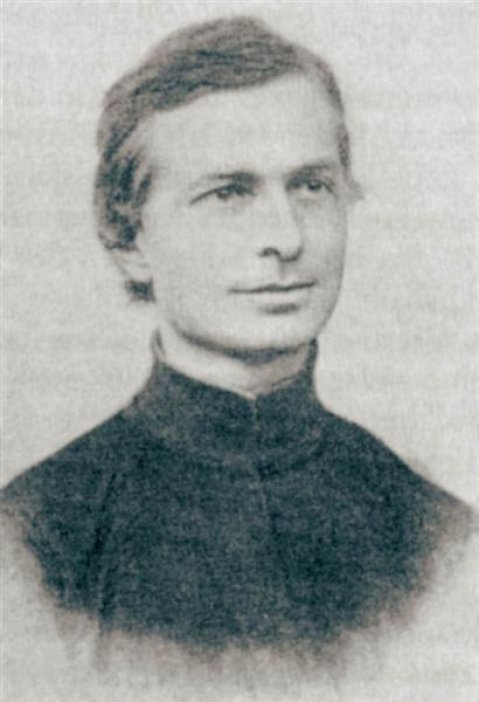
In the cold, snowy December of 1818, a young Austrian priest was frantically making preparations for his village’s Christmas Eve mass. This being one of the most important worship services of the year, Joseph Mohr, only 26 years old at the time, did not want to disappoint his parishioners. He wanted to make sure the night was full of wonderful and inspiring music. There was only one problem. The church organ was out of operation and would not be fixed until well after Christmas.

As Christmas Eve approached and Mohr still had no solution to the problem, he took a long walk home one night to clear his mind. Looking over the serene, snow-covered village of Oberndorf below, he suddenly remembered a poem he had composed two years earlier. He was not much of a musician himself, but he knew just who to ask.

The day of Christmas Eve, mere hours before their midnight mass, Mohr knocked on the door of his friend Franz Gruber, a school teacher and choir director. The 31-year-old Gruber looked over Mohr’s poem, and in a bout of inspiration composed the music to what would become the most beloved Christmas hymn of all time.

With just a few hours to spare, Mohr and Gruber rounded up the choir members from around the village. They all learned the words, melody, and chords with surprising ease. That night, December 24, 1818, the church members of Oberndorf, Austria, were the first to hear the song, “Stille Nacht, Heillige Nacht,” or as we know it today, “Silent Night.”

A short time later, the organ repair man not only repaired the malfunctioning instrument, he also took copies of the music and lyrics to this new Christmas hymn. Soon, the song was making its rounds throughout Europe with various musical troupes and choirs. About twenty years later the song debuted in the U.S. by a choir in New York City, singing in the original German. The lyrics were quickly translated into English, and the song continued its rapid spread and rise in popularity.

Silent Night is one of those songs that is so popular and so ubiquitous around the holidays, that its meaning can become lost. It tells, simply and poetically, the story of Jesus’ birth to his young virgin mother. It tells of the shepherds falling in fear at the host of angels announcing the birth of the Messiah, the Savior. Not only that, the third stanza emphasizes the high-Christology of the New Testament. Jesus is the Son of God, bringing love, light, and holiness into the world. It echoes the opening lines of Hebrews: “The Son is the radiance of God’s glory.” With the birth of Christ a new era had dawned, an era defined not by religious ritual or political might, but the era of the Kingdom of Heaven defined by “redeeming grace.” This song reveals the heart of the Gospel for all to hear.


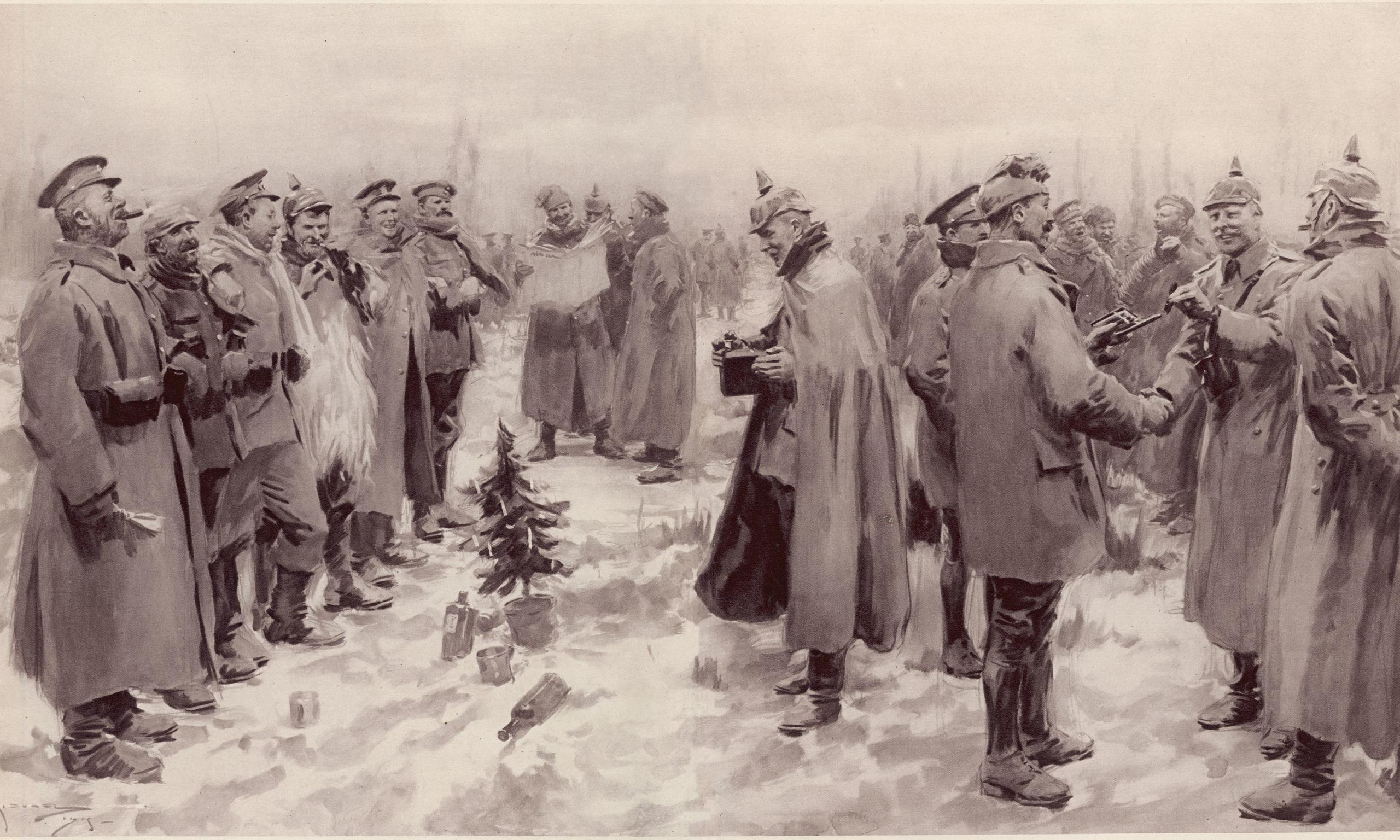
While Silent Night continues to get significant air time over the radio, in movies, and through our various streaming services, perhaps the most impressive legacy of the song is the event known as the Christmas Truce. On Christmas Eve, 1914, British and German troops were entrenched against each other in a virtual stalemate. Both armies had dug in on either side of the battlefield with “no man’s land” in between them. On that cold, clear night, a German officer began to sing “Stille Nacht.” His voice rang out across the battlefield. The British soldiers heard the well-known tune and began singing in English. The back and forth carols lasted most of the night. The next morning, German troops lifted a sign written in English: “You no shoot. We no shoot.” Slowly, soldiers from both sides rose out of the trenches and began offering each other hearty greetings of “Happy Christmas!” Impromptu gifts were exchanged, a soccer match broke out, and enemies became brothers, at least for a little while.
Just like one small candle flame can spread to light a whole room, so this song, Silent Night, started out as one small attempt to provide new music for a simple Christmas Eve Mass in a sleepy little Austrian village and has grown to become one of the most well-known Christmas hymns of all time, filling the world with the Light of God’s Love.


Silent night, holy night,
All is calm, all is bright
Round yon virgin mother and child.
Holy infant, so tender and mild,
Sleep in heavenly peace,
Sleep in heavenly peace.

Silent night, holy night,
Shepherds quake at the sight;
Glories stream from heaven afar,
Heavenly hosts sing Alleluia!
Christ the Savior is born,
Christ the Savior is born!

Silent night, holy night,
Son of God, love’s pure light;
Radiant beams from thy holy face
With the dawn of redeeming grace,
Jesus, Lord, at thy birth,
Jesus, Lord, at thy birth.

BEHIND THE MUSIC: O Holy Night


O Holy Night
Lyrics by Placide Cappeau (1847) and John S. Dwight (1855)
Music by Adolphe Adam (1847)

Largely regarded as one an essential Christmas hymn with a breathtakingly beautiful melody and inspiring lyrics, O Holy Night is the song that almost wasn’t. This beloved carol faced so many hardships and improbabilities along the way that it’s almost a miracle that we are singing it in 2019.

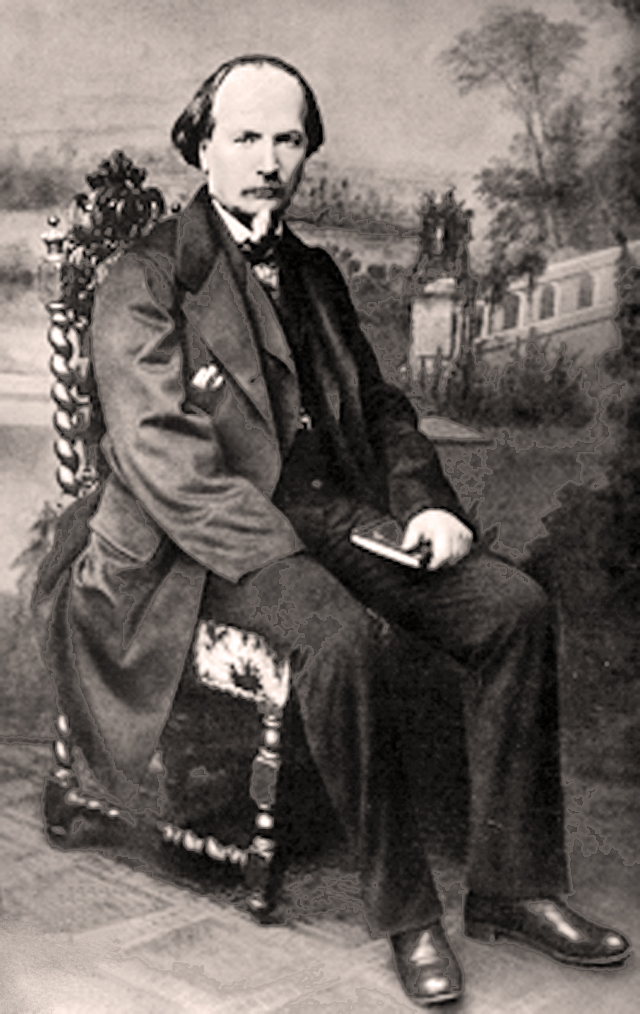
It all began with a gun left out and found by two little eight year old boys. That’s how Placide Cappeau tragically lost his right hand and avoided following in his father’s footsteps as a barrel maker. Instead, because of the accident he was able to pursue his schooling where he developed a love for art, literature, and law. Later in life Cappeau became mayor of his hometown, a wine merchant, and a part-time local poet.

In 1847 Cappeau was asked by his church priest to compose a poem to be read as part of their Christmas Eve service. Along the bumpy road to Paris, the one-handed poet put pen to paper. By the time he arrived in Paris, he had mostly completed his work entitled “Song for Christmas.” It was soon to become known by its opening French words “Midnight, Christians.”

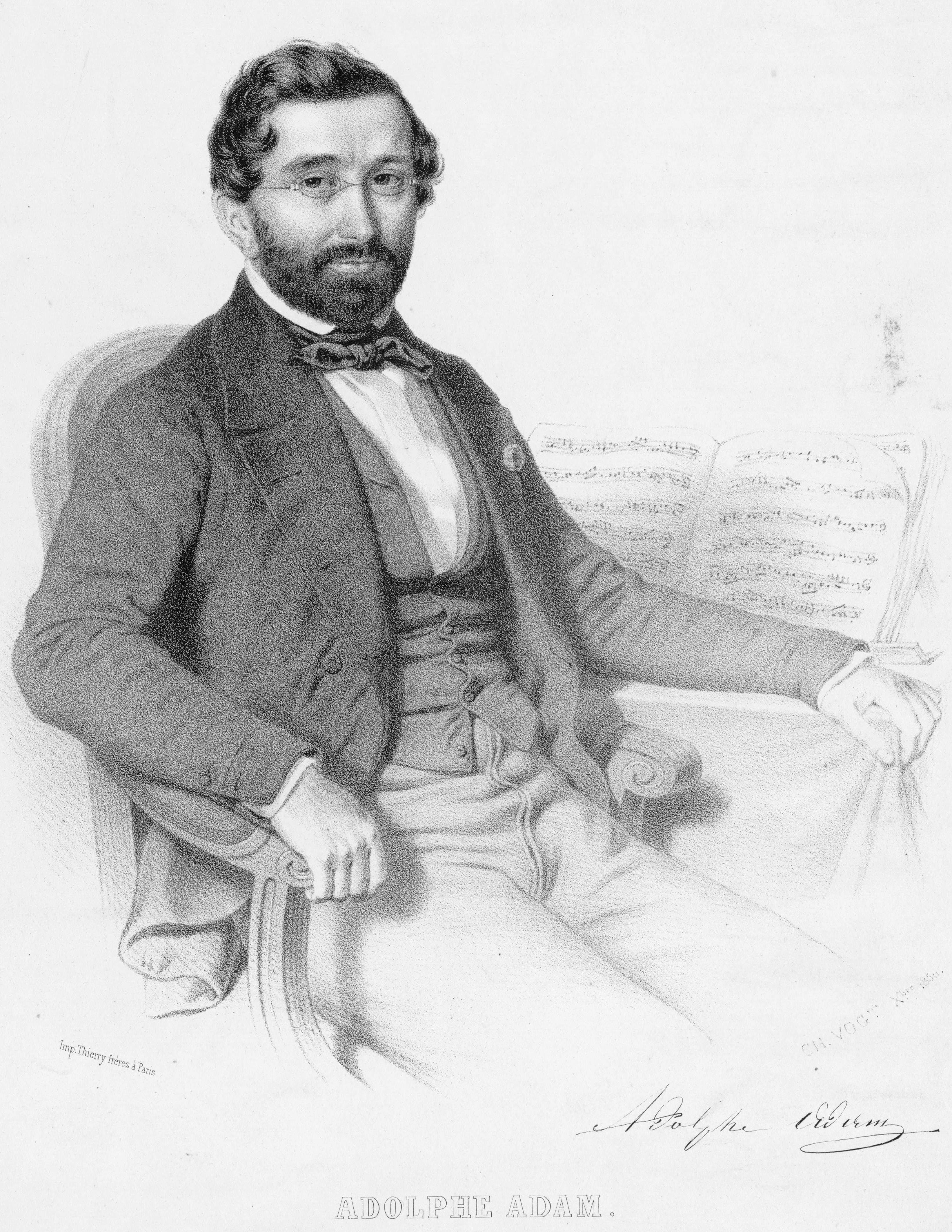
Cappeau met up with the famed French composer, Adolphe Adam, in Paris three weeks before Christmas. Adam was moved by the inspiring lyrics to Cappeau’s work and began straightaway composing the equally inspiring music to accompany the lyrics. On Christmas Eve, 1847, the joint piece by Cappeau and Adam was performed by French opera singer, Emily Laurey, in the small town of Roquemaure.

The song “Midnight, Christians” was an instant success. It was an ear worm of sorts and quickly spread throughout France.

But that’s not the end of the story. Some of the more powerful political and religious leaders in France were troubled by the somewhat socialist lyrics of the song. Cappeau himself was an “on-the-fence” church member with growing socialist political leanings. Cappeau eventually left, or was forced out of, the church altogether. Furthermore, Adolphe Adam was found to be of Jewish ancestry. There’s little evidence that this is actually true, but in that day the simple accusation was enough. These combined facts led to an attempt by the church to ban the song. But we all know this song about God descending to us as a man to release us from our bondage could not be chained up.
In 1855 the song made its way to the US where it was translated into the English version that we still sing to this day. The translator was John S. Dwight, a Unitarian pastor, music critic, and collector of hymns. The impact of this song in mid-1800s America cannot be understated. Just think how this line would have sounded in a pre-Civil War context: “Chains shall He break, for the slave is our brother, and in His name all oppression shall cease.”
That’s still not the end of the story.

Fast forward about fifty years to 1906. A brand new technological wonder has been unveiled to the world – the radio. On Christmas Eve, 1906, Reginald Fassenden played a song on his violin over the radio for the first time in human history. The song he chose to play that night, the first song ever to be broadcast over radio waves, was the song composed by a one-handed, French socialist wine merchant and his Jewish friend composer – the improbable song that almost wasn’t – O Holy Night.


English Translation by John Sullivan Dwight:
O holy night! The stars are brightly shining,
It is the night of our dear Saviour’s birth.
Long lay the world in sin and error pining,
Till He appear’d and the soul felt its worth.
A thrill of hope, the weary world rejoices,
For yonder breaks a new and glorious morn.
   Fall on your knees! O hear the angel voices!
   O night divine, O night when Christ was born;
   O night divine, O night, O night Divine.
Led by the light of Faith serenely beaming,
With glowing hearts by His cradle we stand.
So led by light of a star sweetly gleaming,
Here come the wise men from the Orient land.
The King of Kings lay thus in lowly manger;
In all our trials born to be our friend.
   He knows our need, to our weaknesses no stranger,
   Behold your King! Before Him lowly bend!
   Behold your King, Before Him lowly bend!
Truly He taught us to love one another;
His law is love and His gospel is peace.
Chains shall He break for the slave is our brother;
And in His name all oppression shall cease.
Sweet hymns of joy in grateful chorus raise we,
Let all within us praise His holy name.
   Christ is the Lord! O praise His Name forever,
   His power and glory evermore proclaim.
   His power and glory evermore proclaim.
Original French Lyrics Translated into English:
Midnight, Christians, is the solemn hour,
When God as man descended unto us
To erase the stain of original sin
And to end the wrath of His Father.
The entire world thrills with hope
On this night that gives it a Saviour.
   People, kneel down, await your deliverance.
   Christmas, Christmas, here is the Redeemer,
   Christmas, Christmas, here is the Redeemer!
May the ardent light of our Faith
Guide us all to the cradle of the infant,
As in ancient times a brilliant star
Guided the Oriental kings there.
The King of Kings was born in a humble manger;
O mighty ones of today, proud of your greatness,
   It is to your pride that God preaches.
   Bow your heads before the Redeemer!
   Bow your heads before the Redeemer!
The Redeemer has broken every bond
The Earth is free, and Heaven is open.
He sees a brother where there was only a slave,
Love unites those whom iron had chained.
Who will tell Him of our gratitude,
For all of us He is born, He suffers and dies.
   People, stand up! Sing of your deliverance,
   Christmas, Christmas, sing of the Redeemer,
   Christmas, Christmas, sing of the Redeemer!


BEHIND THE MUSIC: It Came Upon the Midnight Clear


It Came Upon the Midnight Clear
Lyrics by Edmund Sears (1849)
Music by Richard Willis (1850)
“Peace on Earth” spelled out in colored strands of lights displayed on the rooftops of homes and businesses. We’ve all seen it. We have all longed for peace. We want the wars to end. We want the violence to stop. But is it all just a false hope? The world seems to be anything but peaceful.
Let’s be honest. Sometimes the world seems just as dark and cold as a night in late December. It can seem downright impossible for peace to win out. This was exactly the kind of melancholy that lead to the composition of the Christmas hymn It Came Upon the Midnight Clear.

The lyrics were written in 1849 by Edmund Sears, a Unitarian pastor near Boston, Massachusetts, at the request of one of his friends and fellow church leaders. The Mexican-American War had just ended the year before. Bloody social revolutions were happening across Europe. The American slave trade was operating in full force with no feasible end in sight. Everywhere he looked there was only violence, bloodshed, oppression, war, and strife.

As Sears read through Luke chapter two, he began to wonder how we could have ignored the song of the angels for all these centuries? They announced peace on earth and goodwill to man, and the world just shrugged its shoulders.

Glory to God in the highest,
and on earth peace,
good will toward men.
Luke 2:14, KJV

Sears was both anti-war and an outspoken abolitionist. His Christmas hymn is almost unique in that its focus is not primarily on the manger in Bethlehem. Instead, Sears focuses on the dark realities of a world that has long ignored the angelic call to peace.

Sears compares the chaotic world full of power struggles and delusions of grandeur to the infamous Tower of Babel. He bemoans the fact that the noise of battle has deafened us to the angels’ song. Ignoring the call to peace has resigned us to “two thousand years of wrong.” He pleads with us to “hush the noise” so we can hear the song of peace, echoing the call of Psalm 46:10, “Be still and know that I am God.” Finally, Sears looks ahead to the day when everything ends, when every knee will bow and every tongue confess that Jesus is Lord, the Prince of Peace.

Will the world ever know the peace that Edmund Sears longed for? If the 150 years since this song’s composure are any indication, then the outlook is just as bleak as it was then. Just 15 years after this song, the US would be fully engaged in the Civil War. Seventy years after the song, the world would be caught up in “The War to End All Wars.” A century after the song, more than six million Jews would meet their gruesome demise at the hands of the Nazis, and two Japanese cities would be leveled by American atomic bombs.

Here we are, 150 years later. If Edmund Sears were here today, his message would be the same: “O hush the noise, you men of strife, and hear the angels sing.”
Jesus came to bring us peace. But he didn’t bring it as the world brings peace. The governments of the world offer peace at the edge of a sword. The Prince of Peace brings his peace not by taking lives but by offering up his own life. The world may never know true peace, but those of us who follow Christ are citizens of another kingdom. May we all know the peace of Christ. May we all be peacemakers. May we all hear the angels sing.

It came upon the midnight clear,
That glorious song of old,
From angels bending near the earth,
To touch their harps of gold:
“Peace on the earth, goodwill to men,
From heaven’s all-gracious King.”
The world in solemn stillness lay,
To hear the angels sing.

Still through the cloven skies they come,
With peaceful wings unfurled,
And still their heavenly music floats
O’er all the weary world;
Above its sad and lowly plains,
They bend on hovering wing,
And ever o’er its babel sounds
The blessed angels sing.

Yet with the woes of sin and strife
The world has suffered long;
Beneath the angel-strain have rolled
Two thousand years of wrong;
And man, at war with man, hears not
The love-song which they bring;
O hush the noise, ye men of strife,
And hear the angels sing.

And ye, beneath life’s crushing load,
Whose forms are bending low,
Who toil along the climbing way
With painful steps and slow,
Look now! for glad and golden hours
come swiftly on the wing.
O rest beside the weary road,
And hear the angels sing!

For lo!, the days are hastening on,
By prophet bards foretold,
When with the ever-circling years
Comes round the age of gold
When peace shall over all the earth
Its ancient splendors fling,
And the whole world give back the song
Which now the angels sing.

NF & the Enneagram

Unless you’ve been living under the proverbial rock, you’ve probably heard of the rapper Nate Feuerstein, more commonly known as NF. He’s been on the scene since 2014, but has recently made it big with his 2017 hits Let You Down and Green Lights. NF is a Christian who is a rapper, but not necessarily a “Christian rapper.” His lyrics are not explicit, but they hit just as hard as others like Eminem or Kendrick. His whole business is about “real music.” He writes deeply and passionately about his own struggles with mental health, abuse, and loss.

Since his songs are so personal and packed with emotion, I thought it would be interesting to pair some of his songs with the different Enneagram types. If you’ve never heard NF before, give these a listen. They also happen to be some of my favorite tracks.


**TL;DR**
Type 1: Let You Down
Type 2: I’ll Keep On
Type 3: Motivated
Type 4: Outcast
Type 5: The Search
Type 6: Intro III
Type 7: Turn the Music Up
Type 8: Why
Type 9: Oh Lord

_____________________
TYPE 1 (THE PERFECTIONIST)
Let You Down


Again, Let You Down is probably one of NF’s most popular releases. He even mocks his own success in a later song (“Let You Down‘s the only song you’ve heard of, well then you’re behind”). As I listen to the song, it’s about the struggle we face to live up to others’ expectations. Sometimes it feels like we can never be good enough, we will never measure up. Unspoken expectation and unreasonably high standards only lead to feelings of disappointment and resentment. Left unaddressed, these feelings can shatter relationships beyond repair. In the song he feels helpless, realizing the endless cycle of hope and disillusionment.

But what if the person you’re letting down the most is yourself? Type ONES have a tendency to be their own worst critic. That inner voice won’t shut up. It’s always there pointing out what they’ve done wrong or could have done better. It’s relentless. ONES need to learn to listen to that inner voice but not be governed by it. ONES need to come to terms with their inner critic, learning when to heed to criticism and when to smile, nod, and move on with life. Easier said than done.

All these voices in my head get loud
I wish that I could shut them out
I’m sorry that I let you down

_____________________
TYPE 2 (THE HELPER)
I’ll Keep On


The opening line of another song, Two by Sleeping At Last, begins with the line, “Sweetheart you look a little tired. When did you last rest?” That speaks directly to the heart of many TWOS that I know. TWOS are the Helpers, they need to be needed. They will give you everything just to feel like they are loved and valued. Their serving can come from a place of pride. It feels good to know that people rely on them and. But that pride can also lead to resentment and bitterness if they are feel unappreciated for all the things they do. A classic tale to illustrate the life of a TWO is “The Giving Tree.” That proverbial tree gives and gives until there is virtually noting left of itself. That’s the caution for TWOS.

But TWOS can also be stubborn in accepting help. They want others to depend on them, but they don’t like having to depend on others in return. Accepting gifts or service from others (or even from God) can be a big step of maturity for a TWO. That’s why this song, I’ll Keep On, speaks so strongly to TWOS. Just check out some of these lines.

Oh these hands are tired / Oh this heart is tired / Oh this soul is tired / But I’ll keep on

It’s like I’m standing in the rain and you offer me a raincoat / But I would rather stand there being wet than take the handout / What’s wrong with me? / You said, you’ve always got your hands out / And I can’t continue on my own so take my hands now / I give you everything, God, not just a little bit / Take it from me, I am nothing but a hypocrite

______________________
TYPE 3 (THE PERFORMER / ACHIEVER)
Motivated


THREES are…. motivated. They are known as the performer or achiever because they do and do and do. THREES desire to be, or at least appear to be, successful in whatever they do. They dress to impress. They can work a room and win people over. They have vision and goals and dreams. THREES can often accomplish more before lunch than others do for the whole day. No one has to tell a THREE what to do. They already have a to-do list a mile long in their heads. If there’s a task to do, they’ll get it done. They may come off as competitive, but their biggest competition is themselves. THRES don’t necessarily need to be the best. They just need to be the best version of themselves they can be.

This song choice is pretty obvious for THREES. The chorus of the song is very repetitive, as you will hear. But most THREES love routines and efficiency. The verses are almost a freestyle rap, which also connects with THREES who are really good at thinking on their feet and coming up with solutions to problems on the fly. This song can be a little off-putting to some, it might be a little much, a little over the top. But again…THREES. Think Leslie Knope from Parks and Rec.

I put work in this music, you think I’m making this up?
If the songs ain’t sharp, trust me they ain’t making the cut
You don’t like it? 
I’m no teacher, but you’ll learn to adjust
I’m my own worst critic, so critics step your hate game up

_____________________
TYPE 4 (THE INDIVIDUALIST)
Outcast

FOURS are the most unique type on the Enneagram. I’m not just saying that. Most experts believe there are fewer FOURS than any other type. FOURS are commonly known as the Individualists or sometimes the Romantics. It’s often said that FOURS don’t have feelings, they are feelings. FOURS are comfortable with sorrow and melancholy. They love to feel deeply, and they often wear their emotions on their sleeves. The driving force behind a FOUR is the desire to be different and distinct. They dread being “normal.” However, there is an inner conflict for them because they want to be loved and accepted. They want to be different but to be treated normal. They want you, but they don’t want you too close. They want to be fully themselves, but they envy the lives of others.
A mature FOUR is one who can embrace their uniqueness without feeling like something is missing. It’s ok to be the outcast if that’s who you are made to be. It’s ok if not everyone understands you. It’s ok to be yourself in all your eccentricities. The song Outcast speaks to FOURS, I think, because Nate is wrestling with the fact that his life and career is so different than those of other rappers. He accepts and embraces his outcast status.

I’m high off the music, my head’s in the clouds
I kinda like it up here, I am not comin’ down
I’d rather be alone, I am not good in crowds
Which is kinda confusin’, I’ve not been that way since I was a child
They laughin’, they tell me I’ll never get out
I’m just tryna be me, I am nobody else
I don’t care what you think, I’m just bein’ myself
So I guess for now
I’ll just be the outcast

_____________________

Type 5 (The Observer / Investigator)
The Search

You know those people who know something about everything and everything about something? You know those people who tend to overanalyze everything? Those people who tend to take a scientific approach to life, even relationships? Those people who seem to be experts in everything except their own emotions? Those people who have a “fortress of solitude” into which very few people are ever invited? These are most likely to be Type FIVES. They are commonly known as the Observers or Investigators. They value the pursuit of knowledge and competency, but they can really struggle to be open and vulnerable with their own emotions in relationships.

In NF’s song The Search he raps about the journey he has been on. It’s about learning to cope with mental health struggles (like OCD, which is probably common among FIVES) and broken relationships. He has to learn how to be real with his emotions and open up to people even though he would much rather just pretend like everything is ok. FIVES need to learn to embrace the search. It’s part of life. Emotions can be intimidating for FIVES because they seem unknowable, but they are really infinitely knowable. The more you learn, the more you become aware of what you don’t know.

It’s that time again
Better grab your balloons and invite your friends
Seatbelts back on yeah strap ’em in
Look at me everybody I’m smilin’ big
On a road right now that I can’t predict
Tell me tone that down, but I can’t resist
Y’all know that sound better raise your fist
The search begins
I’m back so enjoy the trip


_____________________
TYPE 6 (THE LOYALIST)
Intro III

Don’t sleep on the intro tracks to NF’s records. They hit just as hard as any other. This is my favorite intro. It’s framed as a conversation between Nate and Fear. NF raps a lot about letting fear control his actions and derail his relationships. Fear can be a helpful advisor but a lousy boss. That’s a lesson all SIXES need to learn.

SIXES are known as Loyalists. They can be ride-or-die loyal to any family, relationship, company, or organization. However, they are inherently distrusting of those in authority. SIXES can be either your greatest champion or your strongest critic. They naturally play “Devil’s advocate,” pointing out all the what-ifs. Since they are primarily driven by fear, they fixate on worst-case-scenarios. They can be prepared for anything and everything, but they can also let that fear hold them back from stepping out in faith.

What I’m sayin’ is me without you doesn’t make any sense
I know I’m intense in controlling, but you need to learn how to cope with it
That’s just the way that it is
If you didn’t want me to live in your house, you shouldn’t have let me move in
It’s comfortable here and I like it, I got my own room and everything
It don’t get better than this!
You say you wanna own your life, then wake up and take your own advice
You just mad ’cause you know I’m right


_____________________
TYPE 7 (THE ENTHUSIAST)
Turn the Music Up

SEVENS tend to be the fun loving, spontaneous, larger than life adventurers. They can be the life of the party, or they can bail to go find something else to do. SEVENS can be visionaries and dreamers. They are amazing at spreading excitement and laughter. But underneath the outgoing exterior there is a fear of pain. Often that joie de vive is driven by a need to avoid the pains of life, negative emotions, boredom, etc. SEVENS are really susceptible to addictions and numbing activities – be it food, alcohol, drugs, shopping, partying, travel, etc. They will do just about anything they can to avoid dealing with the real life negative emotions.
Turn the Music Up is one of NF’s few straight up dance hits. It’s full of hyped up beats and driving anthemic choruses. It’s a party anthem. There’s nothing wrong with enjoying life and partying. But the danger for SEVENS is using that as an escape or an attempt to numb. Regardless, this is a really tight beat that will get your blood pumping and your head banging.
Red Bull in my hands, feels like I got wings
Lotta people in my face, but I can’t hear a thing
It’s like my heads up in the clouds, heads up in the clouds
And I ain’t coming down, no

_____________________
TYPE 8 (THE CHALLENGER)
Why

My wife is an EIGHT. When NF released this single it instantly became one of her favorites. She simply said, “Here, listen to this,” and handed me the headphones. We don’t know for sure, but if we had to guess, NF is probably an EIGHT. Commonly known as the Challenger, EIGHTS view conflict as a form of intimacy. They want to know that you can hold your own against them. They want everyone to think they are an open book, but there are parts of themselves they reserve for only those closest to them – and even then it’s not a sure thing. EIGHTS try to avoid vulnerability because they often have some sort of abuse or betrayal in their past. It’s hard for them to really let their guard down and trust someone else.
Inside the tough exterior of an EIGHT is a child who never really got to have a childhood. They feel like they have to put on a thick skin to protect that inner child. That’s also why EIGHTS can be some of the biggest advocates for justice for the underdogs. They are very protective of the ones they love, and they will not hesitate to stand up for the oppressed and weak. But EIGHTS also need to realize that vulnerability can be their greatest strength, not a weakness. Letting people in takes real courage.
Smile for a moment then these questions startin’ to fill my head, not again!
I push away the people that I love the most; why?
I don’t want no one to know I’m vulnerable; why?
That makes me feel weak and so uncomfortable; why?
Stop askin’ me questions, I just wanna feel alive
Until I die—this isn’t Nate’s flow (woo)
Just let me rhyme; I’m in disguise
I’m a busy person, got no time for lies; one of a kind

_____________________
TYPE 9 (THE PEACEMAKER)
Oh Lord

NINES are known as Peacemakers, but if you know any NINES they can come across as peace-keepers.  If NINES aren’t self-aware, they can be “asleep” to the world around them. But when NINES wake up, oh my goodness, they can bring people together and get stuff done. Experts think that a lot of politicians  and prophets are NINES. For the most part NINES can be very laid back without many strong opinions or convictions. That’s why you should pay attention when a NINE becomes passionate about something. A NINE who is awake to their world can see the way things are and call people to task, drawing on both their EIGHT and ONE wings.
In his song, Oh Lord, NF is writing to God but it’s a challenge for us who are listening. He urges us to wake up and pay attention. He calls us out of our hypocritical religious ritual and actually live in relationship with God. That relationship should have a positive impact on the world around us. It’s better to wake up now and get serious about our faith than to sleep through life and be ripped awake by some kind of tragedy. You can’t be a Peacemaker if you’re asleep to the world.
Listen, yeah everybody wants change
Don’t nobody wanna change though
Don’t nobody wanna pray
Till they got something to pray for
Now everybody’s gon’ die
But don’t everybody live though
Sometimes I look up to the sky
And wonder do you see us down here?
Oh Lord

What If Hallmark Christmas Movies Were Actually Good?

The Christmas movie craze is in full swing. You probably have your go-to favorites. My family loves Elf, Home Alone, the 2018 Grinch, and most recently Netflix’s animated Klaus. But there is always a contingent of die hard Hallmark fans who would rather spend their holiday season rehearsing the same storyline multiple times over.

Are there good Hallmark Christmas movies? Sure. But they aren’t my favorite. I mean, every Christmas movie is predictable to a point, but there’s just something about Hallmark movies that take predictability to a whole new level.

Here’s an example. Stop me if you’ve heard this one before.

A man and his wife are estranged. They aren’t divorced yet, but it’s obviously heading that way. The wife moved across the country to a big city to pursue her career. She has worked her way up the corporate ladder, and she and her husband find themselves taking different paths. The husband is not willing to give up, however. It’s Christmas, and he wants nothing more than to make things right between them again.

He flies to the city, planning to surprise her at work in an attempt to win her back. However, there is a suave, wealthy, European businessman standing in his way. This mysterious, handsome foreigner is the life of the business holiday party, stealing the show and overshadowing this desperate husband. In order to win his wife back, he knows that he will have his work cut out for him.

With the help of friendly locals, this husband must face a series of humiliating and sometimes painful challenges, putting his dignity and even his body on the line to win her back. Against all odds, this husband overcomes all the obstacles and wins out against his suave European competitor. There’s a dramatic reunion with his wife who finally realizes just how much he loves her, and she finds a renewed love and appreciation for him.

They hug. They kiss. There’s “snow.” And everyone lives happily ever after. Merry Christmas!

Of course, I’m not talking about a Hallmark movie. I’m talking about Die Hard.

Die Hard is essentially a Hallmark Christmas movie with more blood and explosions.

Yippy-ki-yay…

Male and Female: Full Series Download

Over the course of the last month I have written about 20,000 words on the topic and men and women in the church, specifically focusing on what role women have played and can play in the Kingdom. I have been overwhelmed by the positive feedback. I realize that there are a lot of individual posts to go back and read through. So if you would like you are welcome to view and download the entire series by clicking this link:

I also have several additional resources listed at the end of the document. Here are links to most of them:
BOOKS:


PODCASTS:

An Open Letter to the Churches of Christ

…….

I’m bringing my part of this study to a close, but that by no means implies that the work is done. There is far more to this conversation than I have been able to cover in a simple blog series. But as this is the twelfth post on the matter, I believe this is a fitting point to end.

I’ve never written an open letter before. I don’t expect that this will get much wide circulation. This issue, though, is simply too important to let fizzle and die. Please feel free to share this with anyone you think needs to hear it. So…here it goes.

TO MY FELLOW BROTHERS AND SISTERS IN THE CHURCHES OF CHRIST,

Grace and peace to you from one of your own. I, too, am a lifelong member of the Churches of Christ. While no two churches are the same, we share a common history and mostly a common approach to Scripture in regards to matters of faith, salvation, and church.

We rally behind our mottos and mantras. “No Creed but Christ. No Book but the Bible. No law but love. No name but the divine.” Or “Where the Bible speaks, we speak; where the Bible is silent, we are silent.” Or my personal favorite, “In essential matters, unity; in matter of opinion, liberty; in all things love.” But in practice, none of these things could be further from reality.

Our Creeds are written in the bi-laws of our educational institutions. To paraphrase, “One says, ‘I am of Harding.’ Another says, ‘I am of Freed-Hardeman,’ or ‘I am of Pepperdine.’ Still others say, ‘I am of Christ.’” I have seen churches who are more concerned about their affiliation with CoC universities than they are about being faithful to the call and witness of Scripture. And I’ve seen CoC universities care more about the opinions of wealthy donors than the critical understanding and application of the gospel.

We claim not to speak where the Bible is silent, but again – that could not be further from the truth. We have church buildings and song leaders and youth ministers and camps and schools and bulletins. And everyone has very strong opinions on these matters. I mean, have you ever been a member of a church during the transition from hymnals to PowerPoint? Yikes! We probably have more exceptions to this rule of silence than actual instances of remaining silent.

But the kicker is “in essential matters, unity; in matters of opinion, liberty…” Who gets to say what’s essential and what’s an opinion? One man’s strong essential could be another man’s loosely held opinion. When a member is raised thinking certain things are essential and another member is raised to consider those same issues simple matters of opinion or preference (a cappella worship, for BIG example), then that will simply lead to conflict. Who cares about “love in all things” when playing a video clip with instruments during the sermon will condemn us all to hell?!

Do you see the problem? The problem is us. The problem is nothing new. The problem is with bringing a diversity of people together. Some hold firmly to the traditions with which they were raised. Others look to the future and want to adapt to fit the ever changing culture. Each group has its own proof-texts, and we get into a never ending game of “my verse beats your verse.”

As Paul would say, “Men and brethren, this ought not be!” (See, I’m reverting to the translation in which I first learned that line.)

Is there a better way? Is there a possibility of course-correction? I certainly hope so. As a thirty-something, passionate minister with a wife and kids – the key demographic that every church seems to want on staff – I’m tired of feeling like I’m piloting a sinking ship. I see the trajectory ahead of us, and it’s not good. Has the grand unifying experiment of the restoration movement failed? I’m not willing to say that it has…yet.

But as one recent article (that I also linked to in an earlier post) shows, there is a strong correlation, if not a direct causal link, between the decline of Churches of Christ across the nation and the continuing prohibition of female leadership in worship and ministries. This seems to be the easiest change to make a biblical case for!

Well, but what about 1 Corinthians 14 and 1 Timothy 2? Go back and read my (and countless others’) explanation of those texts and how they fit into the broader context of the day and the larger narrative of the Bible. Churches often read the rest of Scripture through the lens of “women must remain silent.” When what we should be doing is looking at Scripture as a whole and seeing how we might reconcile Paul’s seemingly outrageous, unwarranted comments about women in these few verses.

SOME THOUGHTS ON PAUL
Let me remind you of a few things.

1) We follow Christ, not Paul. As critical as Paul’s mission was in the first century, Paul is not our Savior. Paul has not been raised from the dead for our sins. Paul was not the Word made flesh.

What, after all, is Apollos? And what is Paul? Only servants, through whom you came to believe—as the Lord has assigned to each his task. (1 Corinthians 3:5)

Do you remember that story in Acts when Paul and Barnabas were thought to be Greek gods in the flesh? It seems like that’s exactly what we still do with Paul. Karl Barth once said he thinks Paul would roll over in his grave if he knew we had turned his letters into Torah. Does that mean we disregard Paul’s letters? Certainly not! It simply means we need to weigh Paul’s words against The Word. Christ is the head of the church, not Paul.

2) We have a biblical precedent for doing just that. We SHOULD be weighing what Paul says against the rest of Scripture. We should be reading his letters with a critical eye. Just like the Bereans of Acts 17.

Now the Berean Jews were of more noble character than those in Thessalonica, for they received the message with great eagerness and examined the Scriptures every day to see if what Paul said was true. As a result, many of them believed, as did also a number of prominent Greek women and many Greek men. (Acts 17:11-12)

If these Jewish believers can fact-check Paul against the rest of the Bible, then so can and should we. The Bible is not the be-all-end-all revelation of God. Jesus is. We have every right to be in conversation and even arguments with Paul – just as he would expect us to be. That’s the exact method of training Paul would have received as a rabbi. Rabbis didn’t learn simply from lecture. They learned (and still do to this day) through debates and well reasoned arguments. The name Israel means One who Wrestles with God. If we can’t question, disagree, and argue with the Bible, then we are trying to out-Christian Paul.

3) Which leads me to my final point – Paul is confusing. He just is. Paul is really difficult to understand sometimes. I mean, Ephesians 1:3-14 is ONE SENTENCE in the Greek. And it’s been 2,000 years, and we still miss the whole point of the book of Romans. I know I’m not the only one who feels this way.

Bear in mind that our Lord’s patience means salvation, just as our dear brother Paul also wrote you with the wisdom that God gave him. He writes the same way in all his letters, speaking in them of these matters. His letters contain some things that are hard to understand, which ignorant and unstable people distort, as they do the other Scriptures, to their own destruction. (2 Peter 3:15-16)

Even Peter concedes that Paul’s writings can be hard to understand. And surprise!- ignorant and unstable people distort the writings of Paul to make them say what they want. For example, a sexist man with a low view of women could read a couple verses from Paul’s letters and come away thinking that Paul was also sexist and that women should be silent and in full submission to men, period. If Peter, Jesus’ closest disciple, thought Paul was confusing, why do we think it would be so easy to simply “read the Bible and do what it says”?

Don’t hear me saying that we can disregard Paul and his writings. His letters have stood the test of time and were added to the New Testament canon for a reason. We can and should learn from them. Let’s just keep these things in mind as we do so.

CONSISTENTLY INCONSISTENT
Like I said, I was born and raised Church of Christ. Even as a kid I picked up on some of the oddities (or inconsistencies, or…hypocrisies) concerning our application of 1 Corinthians 14 and 1 Timothy 2. Let me list a few examples.

During Bible class (not biblically sanctioned), girls and women were free to ask and answer questions, even read Scripture, and contribute to the discussion and overall learning for everyone involved. But then a bell rings, and suddenly the rules changed. Now, in the same building just fifteen minutes later, the women had to turn everything over to the men and learn in complete silence and submission.

But then I noticed that women could pass the communion trays to other men while they were seated, they just weren’t allowed to stand in the aisles and pass the trays (also, none of which is biblically sanctioned).

And women couldn’t lead the singing, but we would whole-heartedly sing the songs of Fanny Crosby, like Blessed Assurance and To God Be the Glory. Not to mention the fact that many songs had split or echo parts where the men and women sang different lines. If we are to “teach one another” through songs and hymns and spiritual songs, but women aren’t supposed to teach or have authority over a man, then wouldn’t songs with a soprano/alto lead and a tenor/bass echo be unbiblical?

And why could we have special female speakers and presentations in the assembly only if it’s before the “opening prayer” or after the “closing prayer”? Like that makes any sense at all.

Probably the most heartbreaking example I can think of concerns young girls and their fathers. As a kid I participated in a program called Lads to Leaders. We were trained in using our gifts and talents in areas like song leading, public speaking, debate, Bible Bowl, and also puppets. Yep. But it wasn’t just for boys. Girls could participate, too! But get this, they didn’t call it “Lads and Lasses to Leaders.” They called it “Lads to Leaders and Leaderettes.” Leaderettes! Anyway, girls could also participate in the speech competition; however, because of those few verses in 1 Corinthians 14 and 1 Timothy 2, they had separate competitions from the boys. What’s worse, the fathers of these girls, many of whom probably helped their daughters write and rehearse that speech, were not allowed in the room during the competition. These dads could not share in the proud moment their girls had been working for all year. That’s not gospel.

LITTLE RULES VS. BIG PICTURE
I simply can’t get over all the little rules we put in place to make sure that we kinda sorta included girls and women without actually including them. We placed all these barriers around ourselves to make sure we didn’t violate Paul’s everlasting, universal command prohibiting all women everywhere from ever teaching a man. At the same time, we were complete hypocrites about it.

Didn’t Jesus have something to say about this kind of behavior?

“And why do you break the command of God for the sake of your tradition? … You hypocrites! Isaiah was right when he prophesied about you:
“‘These people honor me with their lips,
but their hearts are far from me.
They worship me in vain;
their teachings are merely human rules.’”
(Matthew 15:3-9)

The Pharisees were so caught up on making sure all the little rules were kept that they ended up missing the bigger picture. Jesus’ harshest conversations were with people who set up all sorts of man-made rules and boundaries just to keep people from getting close to breaking the actual command. But in doing so, they lost the point of the command.

Woe to you, teachers of the law and Pharisees, you hypocrites! You give a tenth of your spices—mint, dill and cumin. But you have neglected the more important matters of the law—justice, mercy and faithfulness. You should have practiced the latter, without neglecting the former. You blind guides! You strain out a gnat but swallow a camel.
(Matthew 23:23-24)

We have not only been misguided in our prohibition against female leadership, we have been completely hypocritical about it. Our churches would not function if it weren’t for the hard working women in our communities, yet we refuse to let them have a voice. They can tend the flowerbeds and make casseroles, but God forbid they should ever pass out a communion tray or help make bigger decisions for the church.

We’re hypocrites!

We say we have no book but the Bible. The Bible is FULL of women serving in amazing leadership roles. They were prophets and worship leaders and commanders-in-chief and teachers and church planters and deacons and apostles. Jesus commended Mary for joining the all-male disciples. Joel foresaw a day when men and women would be filled with the Spirit and prophesy in his name. Paul had female coworkers and gave instructions for how women should pray and prophesy in the assembly. And yet women are allowed to do none of these things in our churches. The Bible is not silent on what women can and did do. We shouldn’t be either.

In essential matters, unity? It should be essential that our churches be bastions of New Creation. Paul speaks to unity most clearly in Galatians 3:28. He makes it clear that there is neither Jew nor Greek, slave nor free, nor is there “male and female.” We are all one in Christ. That is essential. We should not discriminate based on ethnicity, nationality, language, socioeconomic status, or gender. Full inclusion of all God’s people is an essential matter that will lead to unity. Full inclusion cannot be a matter of opinion.

Our local church is on the brink of becoming more inclusive. We’ve done and are doing the exegetical work. I am convinced now more than ever that the church has gotten this wrong, and Churches of Christ are among the worst offenders. I for one will never work in another church that is not gender-inclusive. This is not a battle I want to fight anymore. But I will keep on fighting for the sake of my amazingly talented wife and for the sake of the teenage girls in my youth group and for the women in church who have a much greater gift and passion than most men. I will fight for the women currently crushing it in seminaries across the country whose only hope for getting a foot in the door is “children’s ministry.” I will fight for my sons to see women and men as equals before God, so they will know that women are to be respected and empowered and admired and entrusted.

I love the Churches of Christ. I believe we are uniquely positioned to make these kinds of changes. We have no governing body. Each church is autonomous and can make its own decisions. (In theory, at least.)

I urge you, bothers and sisters, to take the calling toward unity in the bond of peace seriously. I urge you to study the Scriptures with an open heart and mind. Weigh those few verses of Paul against the cultural backdrop of his day. Weigh them against the teachings and example of Christ. Weigh them against the entirety of Scripture and the hope of New Creation.

At the end of my study -and I could be wrong – I can find no reason to exclude women from the same roles as men (save eldership – I’m still on the fence about that one, honestly). What is holding us back? Is it fear that we will be disfellowshipped by other churches? Is it fear that we will lose our board positions at our Church of Christ summer camps? Is it fear that we will somehow be leading others astray and condemning our entire church to hell?

Remember the words of John: There is no fear in love, but perfect love casts out fear.

What does love require of us? I believe love requires us to give women a voice and to empower ALL believers to use their Spirit-given gifts for the sake of the kingdom. In doing so, I believe we will find ourselves living less in the old, fallen creation and living more and more into the hope of New Creation.

May it be so now, and forevermore. Amen.