Page 59 of 82

On Creation

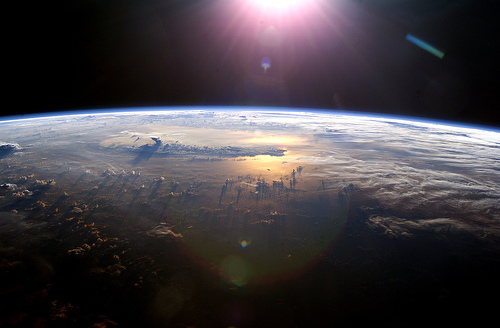
Right from the start of Genesis, we see that God is a creator, a craftsman. He made the earth with purpose and intentionality. Therefore, everything He creates has meaning and value.

Next, we see that God does not rule from afar. He enters the darkness and faces the chaos head on. Redemption is embedded in the very fabric of creation.
___________________

Now it’s time for a bit of a side note. If you were like me, you probably sang as a child some little song about the days of creation. “Day one, day one, God made light when there was none…”


But then something happened. As I grew older, I started learning more about the “science” behind “creation.” Apparently, sometime in the last hundred years or so, believing in a young earth and the literal 24 hour days of creation became a major tenant of the Christian faith. For some, at least.

I was taught that the 6 days of creation were exactly 144 hours. No more. No less. To suggest otherwise was borderline heresy. I was also taught that the earth was not any more than 6,000 years old, and science could prove it. Carbon dating and the fossil record just had to be wrong because they didn’t support what the Bible obviously claims to be fact.

Before you go grabbing your torches and pitchforks, let me just say that I truly believe the God absolutely has the power to create an entire universe in 144 hours. He very well could have created the earth to look older than it actually is, just as he created Adam and Eve as adults and not babies.

Here’s my word of caution: Genesis 1 is a poem.

Let me say it again so it sinks in. The opening chapter of the Bible is POETRY. It’s not historical narrative like the rest of Genesis. It’s not a section of the Law, like Leviticus. It’s poetry, like the Psalms.

I think it’s really cool how Rob Bell breaks down this poem in his video Everything is Spiritual.

Is my faith threatened by the theory of evolution? Nope. Do I feel the need to take up arms against proponents of the big bang? Not at all.

Here’s why: I look around and I see how much science has changed over the last thousand years. We went from thinking the earth was flat and the center of the universe to putting men on the moon. Every year, scientists and researchers are discovering new and better information than we previously had. Scientific “facts” are always changing and evolving. Things we took for granted 100 years ago have shifted and taken on new forms. How much more so in the next 100, 500, or 1000 years?

And yet Genesis 1 will always say, “Let there be light.”

God has given human beings the capacity to explore our world and the universe around us. If he made it all, then why would he be threatened by anything we discover or by any new theories we might develop along the way?

Genesis 1 is a poem, the true depth of which is far greater than 144 hours of creation or the young earth theory. It is a poem about power, community, empowerment, and love.

High Five Thursday!

My Top 5 Inspirational Songs

Don’t Stop Believing, by Journey
A classic power ballad made popular again by the hit show Glee, this song was my anthem a couple summers ago.

Favorite Line: “Working hard to get my fill, but everybody wants a thrill.”

_____________

Man in the Mirror, by Michael Jackson
Say what you want to about his life, but this song is powerful. It echoes the saying “Be the change you want to see in the world.”

My favorite memory of this song was from our trip to Greece. We were on a cruise ship touring some Greek isles when this song came on over the speakers. I turned around to see that the Greek man at the photo booth and I were both singing along to it. We made eye contact, smiled, and kept on.

Favorite Line: “Who am I to be blind, pretending not to see their needs?”

_______________

Beautiful Day, by U2
This song reminds me that every day is a gift. Don’t take tomorrow for granted. Find the beauty in today because it’s all around you.

Favorite Line: “After the flood all the colors came out.”

_______________

Wonderful, by Gary Go
If you’re a normal human being, you have often questioned your purpose. Most likely there have been moments in your life when you step back and wonder why you’re here, at this place, at this time. You have regrets. You feel like you don’t measure up. But in reality, you are made in the image of God. You are wonderful.

Favorite Line: “We are all miracles wrapped up in chemicals.”

_______________

Wavin’ Flag, by K’naan
I can’t help but get pumped up by the chorus of this song. It’s so full of hope and energy and excitement about the future. This has been my absolute favorite song since the first time I heard it.

Favorite Line: “When I get older, I will be stronger. They’ll call me freedom, just like a wavin’ flag.”

There are at least four different versions of this song, but this one is my favorite. It was the official song of the 2010 FIFA World Cup.

He also has a version featuring Will.I.Am which is really cool and more like the original.
And then there is a version for Haiti performed by a variety of pop artists, reminiscent of We Are the World.

_________________________________

So those are my top five, but I would be remiss if I didn’t throw out some honorable mentions.

Fix You, by Coldplay
One Day, by Matisyahu
Swim, by Jack’s Mannequin
Live Like We’re Dying, by Kris Allen
Hold On, by Wyclef Jean

Ok, so I guess it’s more like a top ten, but it’s my blog. I can do what I want.

Enjoy!

Beginning, pt. 2

In the beginning, God created the heavens and the earth.

So begins the creation story. From there, God goes on to create light and land and stars and everything else. As a child, and on into adulthood, when thinking about creation, I always pictured God sitting in his throne room which resembled something like the bridge on the Enterprise from Star Trek. I imagined God sitting atop his captain’s chair, handing out marching orders to the angles around him, and watching it all take place before him on a 72″ LCD screen.

But look what it says:

“Now the earth was formless and empty, darkness was over the surface of the deep, and the Spirit of God was hovering over the waters.”


Formless. Empty. Dark. Deep. This sounds like a place I would never want to be. This sounds downright hellish. This sounds like the opposite of where God would be found, thus the made-up image in my mind of God creating from afar.

But God was right there. His Spirit was hanging out right in the middle of the darkness, the emptiness. Before there was light, or stars, or sky, or even love, God was there. When there was nothing but chaos and mayhem, God was there.

YHWH has never been one to rule from afar. He is and has always been an on-the-ground type of leader, one who would command from the trenches, one who would lead His army from the front lines. Creation was no different. He faced the void head on and watched the universe take form all around Him.

He created structure out of formlessness. He fill the void with the fullness of the universe. He vanquished the darkness with His light. And He raised up mountains from the abyss.

How’s that for a powerful God?

And the best thing of all is that He is ready and willing to do the very same in our own lives!

“And if the Spirit of him who raised Jesus from the dead is living in you, he who raised Christ from the dead will also give life to your mortal bodies because of his Spirit who lives in you” (Romans 8:11).

(For more on this topic, you can listen to the sermon I preached a while back under the “Sermons, etc.” page.)

Easy Green Tip for the Week

I just want to start off by saying that we are not perfect. I will not judge you if you have not converted to the CFL bulbs or if you don’t compost your dinner scraps.


I want to do these segments just as one family to another. We have been slowly taking steps to become more eco-friendly, which in turn is often bank-account-friendly, too! These are just some easy, simple, inexpensive steps that my family is taking to become more green.
_______________


Easy Green Tip for the Week:


RECYCLE


I know it’s a bit cliche, but this is one of the easiest things to do! If you can throw garbage in the trash can, you can recycle. If you know the difference between plastic, paper, and metal, you can recycle. If you remove garbage bags from your home on a regular basis, you can recycle.


It’s a good feeling to know that we haven’t thrown a milk jug in the dumpster in over two years. You will be amazed at just the shear volume of garbage you used to throw away. We never realized how much paper and plastic we would go through on a weekly basis.


Recycling is part of the 3 R’s: Reduce, Reuse, Recycle. Reduce the amount you consume in the first place. Reuse packaging when you can (we love reusing glass jars and cardboard boxes). Then recycle the rest.


It does take some commitment, dedication, and intentionality, but it is one of the easiest ways to make a huge impact on the world around you.


(Here’s a cool website if you have more questions. You can recycle things you never thought possible!)

Beginning

It is my general understanding that almost everything we need to know about God can be discovered within the opening chapters of the Bible. Genesis 1-11 are some of the most controversial, most hotly debated chapters in Scripture. Are they literal 24 hour days during creation? Was there really a Garden in Eden? Did Adam and Eve have belly buttons? How could Noah fit all the animals on the ark? Could there really have been a global flood?

Many of these narratives have been passed off as Sunday school flannel board stories. Rarely do we revisit these chapters as adults to try and figure out why are they in the Bible? Why did God choose to open the most important book in all of human history with such outrageous sounding stories? Or maybe they’re not so outrageous if we just tweak our own modern/postmodern worldview a bit.

So let’s begin in the beginning.

Genesis 1:1 — “In the beginning God created the heavens and the earth.”

Thus begins the greatest story ever told.

Now for a little English lesson. The verb in this sentence is “created.” The subject of the sentence is “God.” The Bible begins by letting us know that God’s first act in history was creating. Now, I can go outside, nail some wood together, and build a birdhouse. Then I can come inside, mix up some flour, sugar, etc. and bake a cake. I can then proceed to pick up and clean up around the house to get things in order. But at the end of the day I have not “created” anything.

When God creates, He is intentional, He is purposeful, and His creation is perfect. God’s act of creating brings to mind an artist who slaves over mixing just the right color and using just the right brush stroke until his masterpiece is completed. Hours upon hours may be spent in the tedious labor, but the end result is a priceless work of art that can never be replicated.

If you look back into other creation stories at the time this was written, you’ll see a themes of chaos (roaring oceans and terrible storms) or battles between other gods or some other way in which the earth was simply an accidental by-product of some disaster.

But in this story, a singular God took his own time to create, purposefully and intentionally, the heavens and the earth and everything between and within.

Just reflect on this verse for a moment.

In the beginning God created the heavens and the earth.

In the beginning God created the heavens and the earth.

In the beginning

God created

the heavens and the earth.

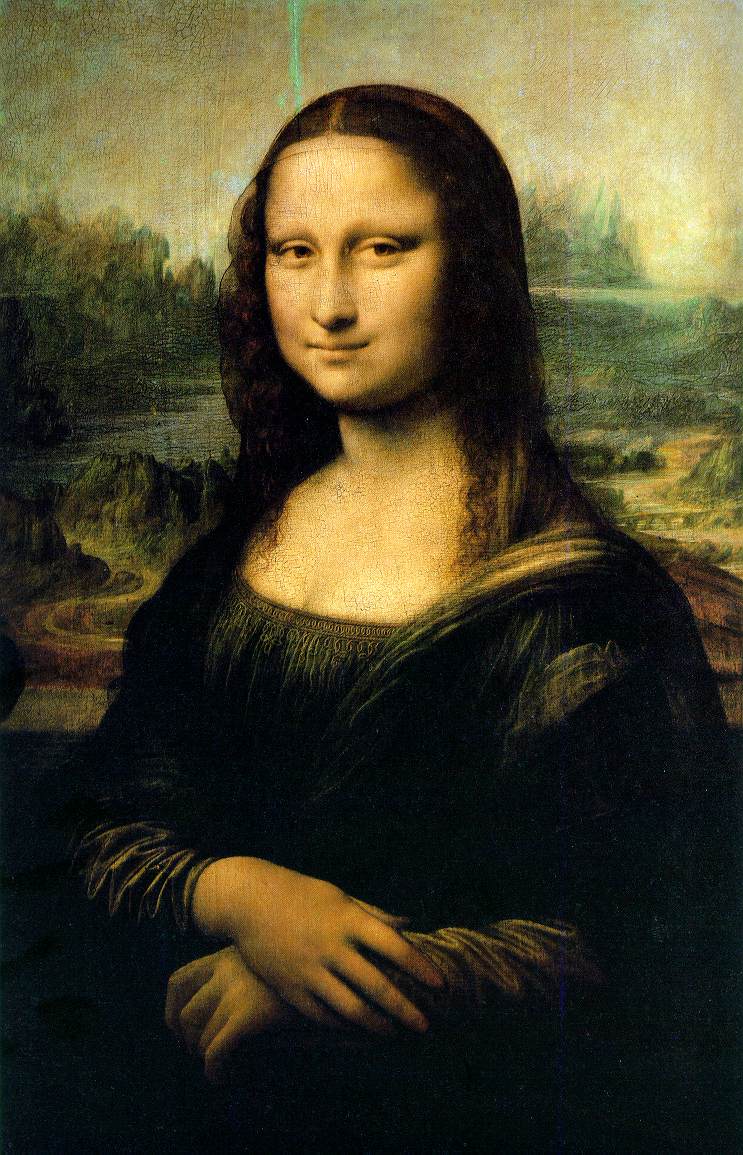
Our God is not a god to be feared and appeased but one to be worshiped and embraced. He is not up there somewhere looking for an excuse to strike us down or destroy the world. That would be as absurd as Leonardo da Vinci throwing darts at the Mona Lisa or Michaelangelo taking a jackhammer to David.

In Ephesians 2:10, Paul tells us that we are God’s poiema, from which we get our word poem. We are his workmanship, his creation, his masterpiece. Every single person is God’s creation. That means that you and I and everyone of the 6 billion people on this earth has value, has meaning, has a purpose.

If that’s not good news, I don’t know what is. All I know is that in the beginning, God created the heavens and the earth and you and me.

Salt, part 4

The hodgepodge crowds from around Galilee gathered together along the shoreline of the Sea. They anxiously waited to hear what this teacher would say. The rabbi stood atop the hill, looking down towards the crowds below, full of fishermen, bakers, farmers, and businessmen. A hush fell over the people, and the rabbi said, “Blessed are the poor in spirit.”

And so begins the Sermon on the Mount. Jesus begins his most famous sermon with blessings. When Jesus blesses the poor in spirit, the meek, those in mourning, those hungering and thirsting for righteousness, people in the crowd new, “Hey, he’s talking about me.” These are the peasants, the outcasts, the beat-down, the lonely, the poor, the broken, and the have-nots. They were not among the spiritually elite. They were ordinary, helpless people who longed to hear some good news from God, because according to their preachers and rabbis, God blesses those who have it all together.

Not according to this rabbi. This rabbi says that God blesses those who are on the down and out. He comes down, meets them where they are, and blesses them.

After finishing the blessings, his next words are, “You are the salt of the earth.”

Who is the salt of the earth? My whole life I heard this verse in the context of Christianity. Those who have been saved by God, those set apart from this world, and those who are perfect example of following Christ — those people are the salt of the earth. Right?

But in context, Jesus is talking directly to these people who are spiritually starved. They are tired, run down, and tossed aside. They don’t have it all together, they don’t have all the answers, and they certainly don’t feel set apart for anything. Yet these people are the salt of the earth.

What are some of the qualities of salt? Most people know that salt is used to season food that is bland, and it can be used as a preservative, like for meats and such. But as we’ve seen over the last few posts, salt can be used to purify and cleanse. It has healing aspects to it. And salt was extremely valuable in ancient times.

So when Jesus says that these people are the salt of the earth, that term is loaded. They bring flavor to the complacent world around them. They are preserving the world from certain ruin. They purify and cleanse the sin that so easily infects mankind. And most of all, they are valuable. They have worth beyond imagine.

That’s good news! This is a blessing within itself.

So be salt for someone — offer healing and cleansing to those in need, and add some flavor to the complacency of life.

And know that you are salt — you have value and worth beyond compare, so let God use you.

Salt, part 3

They stood at a crossroads. Abraham and Lot decided to part ways in order to prevent more violence and bloodshed between their respective families and hired hands. As they looked out over the land of Canaan, Lot chose the lush, wealthier region to the south near the cities of Sodom and Gomorrah. Lot goes south, Abraham goes north.

Flash forward several years and Lot had really made a home for himself. He and his family had moved into town, made a living, and remained faithful to God. Then one day, God sends some messengers to do some undercover investigation. Lot invites, or urges rather, the travelers to stay at his place for the night. You know the rest of the story. The men of the city threaten to gang rape the newcomers, and God decides at that point to destroy the cities completely.

God gave Lot enough warning to get his family out, telling them to never look back. As fire rains down from the sky, Lot, his wife, and two daughters make a run for it, never looking back.

Well, except for Lot’s wife.

For centuries, salt has been mined, gathered, and traded as currency. There is evidence that ancient civilizations actually used molded salt as coins. Entire cities and highways were built along salt mining and trading routes. Slaves were often bought with salt, hence the term “worth his salt.” Roman soldiers were largely payed in salt – which is where we get the English word for salary. There was even a time when salt was traded ounce for ounce with gold.

Salt was a sign of wealth and prosperity. It was something special to be brought out for guests at a meal. It was something precious, something of worth.

Salt was valuable.

So Lot’s wife looked back at the ruin and destruction. She wasn’t rubber-necking like we do on the highway as we pass by the overturned trailer. She looked back with longing, with sorrow, with a desire to have it all back. She looked back like a college student leaving home for the first time, or like a lover who has just been dumped. She would have rather gone down with the ship.

“Lot’s Wife” on Mt. Sodom

Why couldn’t she let go? Well, we know they were a wealthy, well-respected family. They had herds, land, a large house, friends, family…and they had to leave it all behind. They had called this place home for many years, and she couldn’t help but look back with longing as her whole life went up in flames.

So God turned into a pillar of salt. Her longing for wealth consumed her entire being at that moment, and she literally became that which she longed for the most.

What in your life is worth turning back for?

Salt, part 2

Salt is a curious substance. Just about every living creature needs small amounts of sodium chloride to keep it alive and healthy. However, too much salt can start to cause major health problems, like high blood pressure, stroke, and heart disease in humans just to name a few. Salt is a naturally occurring substance in nature, especially in rock deposits and ocean water. It’s needed for life. However, if there is too high of a salt concentration in the soil, plants cannot grow. And if there is too high a concentration in the water, fish cannot live.

This is why we have a place called the Dead Sea. Located at the lowest point on land, the Dead Sea is literally a drainage pool collecting all the minerals and salts from the land around it. The Dead Sea is completely incapable of supporting life within its waters. What’s more, none of the land surrounding the Dead Sea is capable of supporting life. There is no naturally occurring plant growth for miles around. Just off the shore is an entire mountain made completely our of salt and a few other minerals.

Yet in one of the most lifeless spots on planet earth we find healing. King Herod built one of the first health resorts on its banks. Even today, there are a number of hotels, resorts, and spas surrounding the Dead Sea. What we have found over the years is that the same minerals which prevent the formation and sustenance of life also bring healing and restoration to our bodies. It cleanses the skin by removing the dead skin cells and toxins. After a dip in its waters, one’s skin feels smooth and refreshed.

Life, healing, and restoration are found in a place characterized by death and barrenness.