Page 75 of 82

Meteora – no, not like the Linkin Park album.
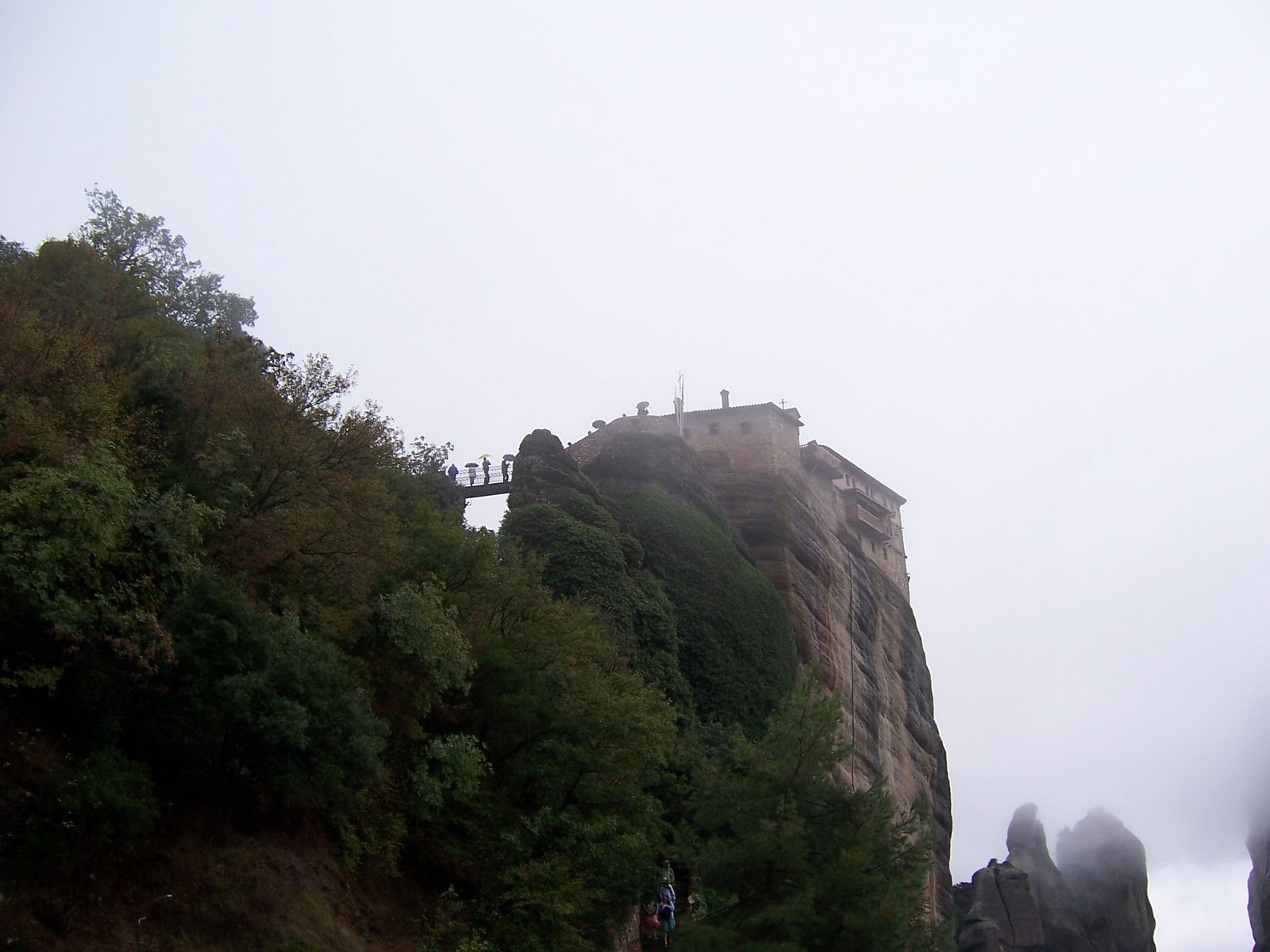


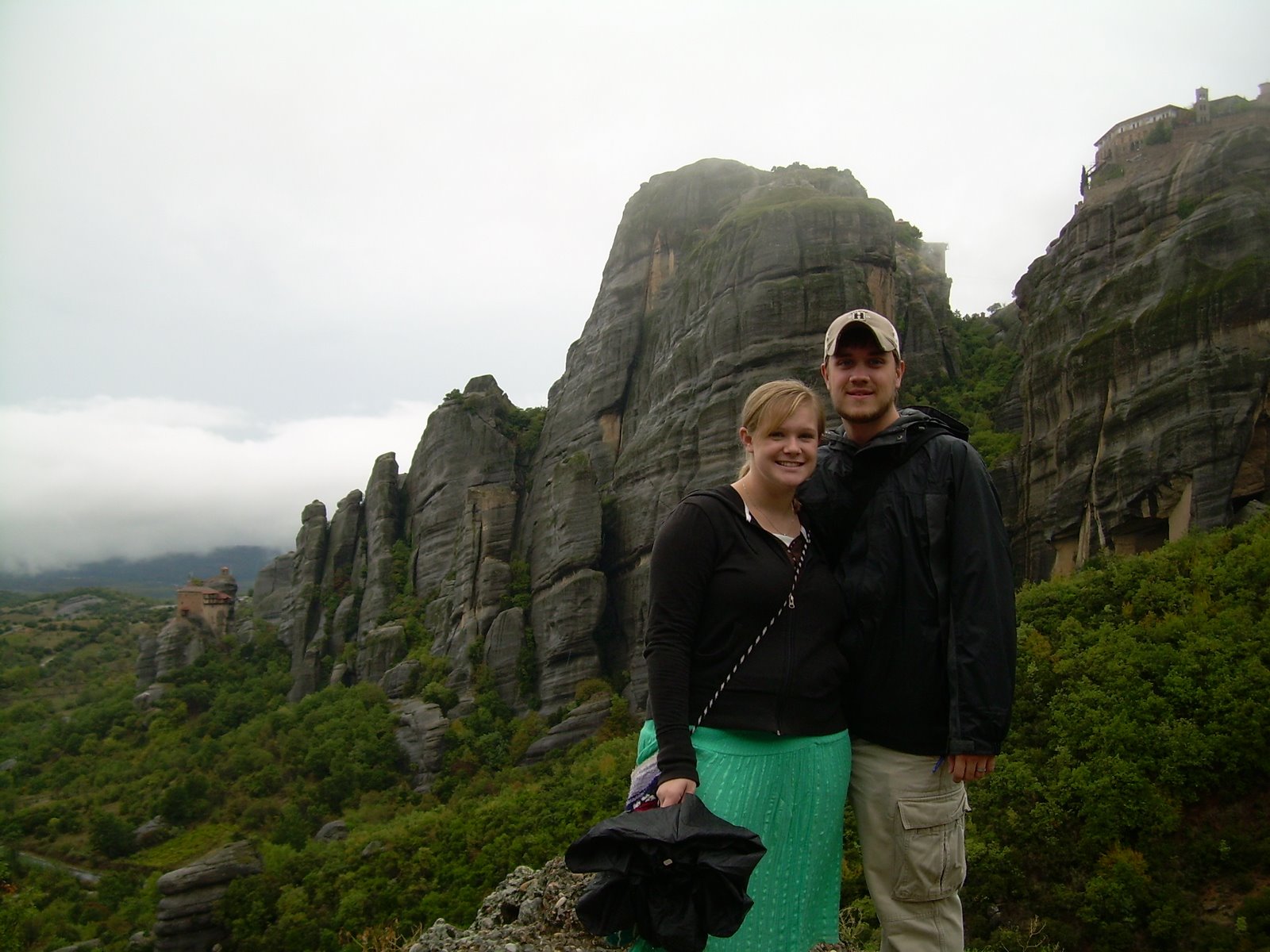
The next morning on our tour of Norther Greece, we visited a beautiful area called Meteora. These are the famous rock formations in mid-Greece. Upon these rocks that just out of the earth for hundreds of feet are 26 separate monasteries – very few of which are actually still operating. We only had time to visit one of them, which was actually what we would call a convent. It was really cool to see these gigantic structures built in the most obscure places. Until the mid 1900s, the only way to access most of the monasteries was by a basket that could be lowered down on a rope and pulled back up by a winch.

I can see why they built them this way. It makes sense to build a structure meant to separate someone from the rest of the world in a location which the world can’t access.

It was a very overcast day when we visited, as you can tell from the pictures. It was so bad that we would be completely engulfed in clouds while at higher elevation to the point that we could hardly see 20 ft in to any side of us. The clouds were cool, though. It added a sense of mysticism to the whole visit.

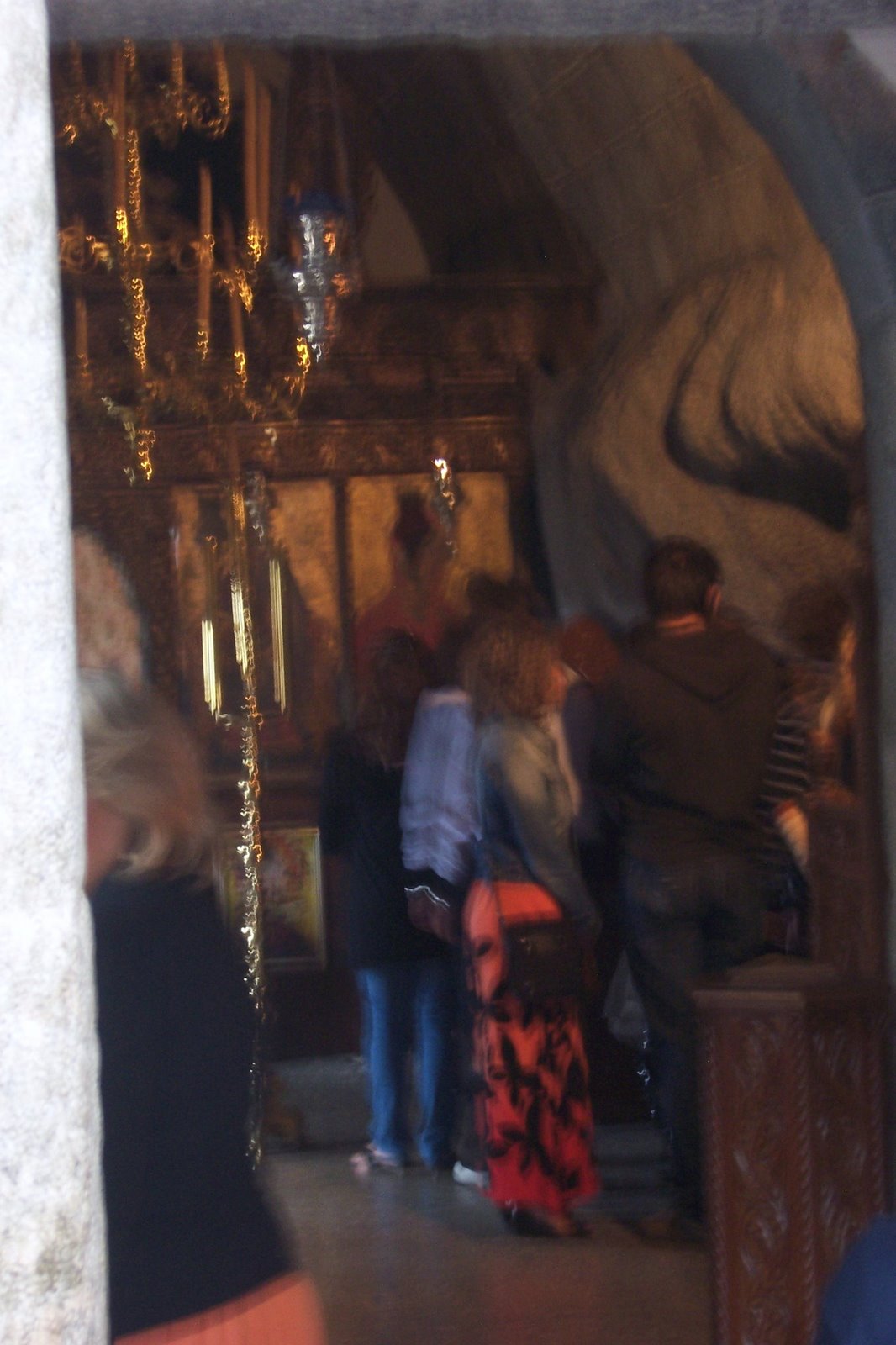
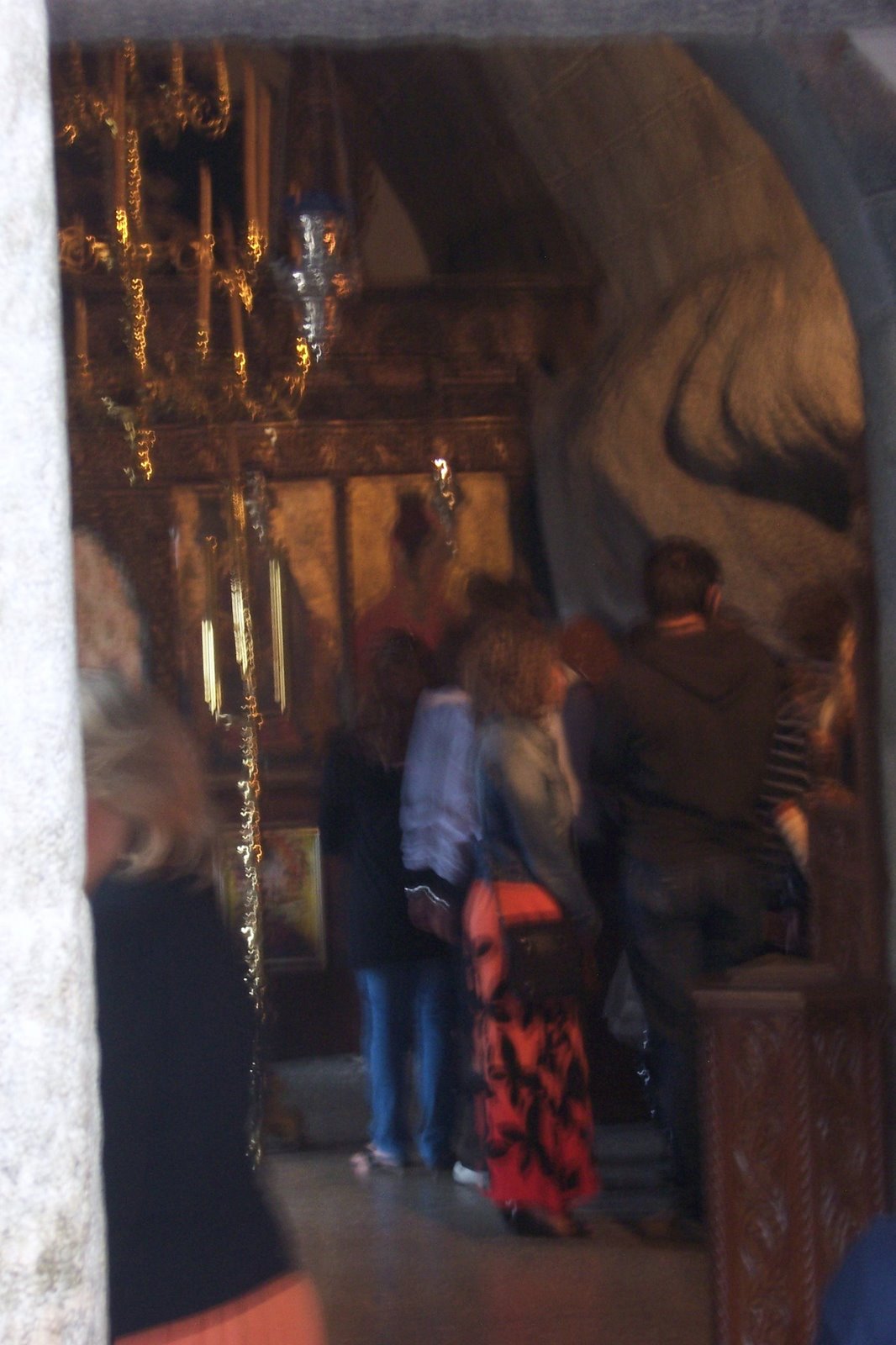
Inside the monastery we visited was a chapel, like several we’ve seen so far. The walls were entirely covered in frescos, which are hundreds of years old. But in this particular chapel, the nave (the open area before entering the sanctuary) was covered completely in depictions of famous martyrs. There were some disturbing images of men and women being tortured and executed in various ways. The scenes were gruesome yet touching at the same time. Somewhere in my twisted little head always find it fascinating to hear and read about people being tortured and put to death because of their faith in Jesus the Christ. It may be part morbid curiosity, part admiration, and part determination to work harder at having that kind of faith.

Meteora is definitely one of my favorite places we have visited since we’ve been in Greece.

Meteora – no, not like the Linkin Park album.


The next morning on our tour of Norther Greece, we visited a beautiful area called Meteora. These are the famous rock formations in mid-Greece. Upon these rocks that just out of the earth for hundreds of feet are 26 separate monasteries – very few of which are actually still operating. We only had time to visit one of them, which was actually what we would call a convent. It was really cool to see these gigantic structures built in the most obscure places. Until the mid 1900s, the only way to access most of the monasteries was by a basket that could be lowered down on a rope and pulled back up by a winch.

I can see why they built them this way. It makes sense to build a structure meant to separate someone from the rest of the world in a location which the world can’t access.

It was a very overcast day when we visited, as you can tell from the pictures. It was so bad that we would be completely engulfed in clouds while at higher elevation to the point that we could hardly see 20 ft in to any side of us. The clouds were cool, though. It added a sense of mysticism to the whole visit.

Inside the monastery we visited was a chapel, like several we’ve seen so far. The walls were entirely covered in frescos, which are hundreds of years old. But in this particular chapel, the nave (the open area before entering the sanctuary) was covered completely in depictions of famous martyrs. There were some disturbing images of men and women being tortured and executed in various ways. The scenes were gruesome yet touching at the same time. Somewhere in my twisted little head always find it fascinating to hear and read about people being tortured and put to death because of their faith in Jesus the Christ. It may be part morbid curiosity, part admiration, and part determination to work harder at having that kind of faith.

Meteora is definitely one of my favorite places we have visited since we’ve been in Greece.

We’re Off To See The Oracle, the Wonderful Oracle of Delphi


We got back a couple days ago from our tour of Northern Greece, during which we visited Delphi, Meteora, Vergina, Berea, Philippi, Kavala (ancient Neapolis), and Thessaloniki. It was a great trip with lots of stuff to see and write about. Hopefully I can stay up with it and fill everyone in before we head to Egypt next Tuesday.

Delphi:
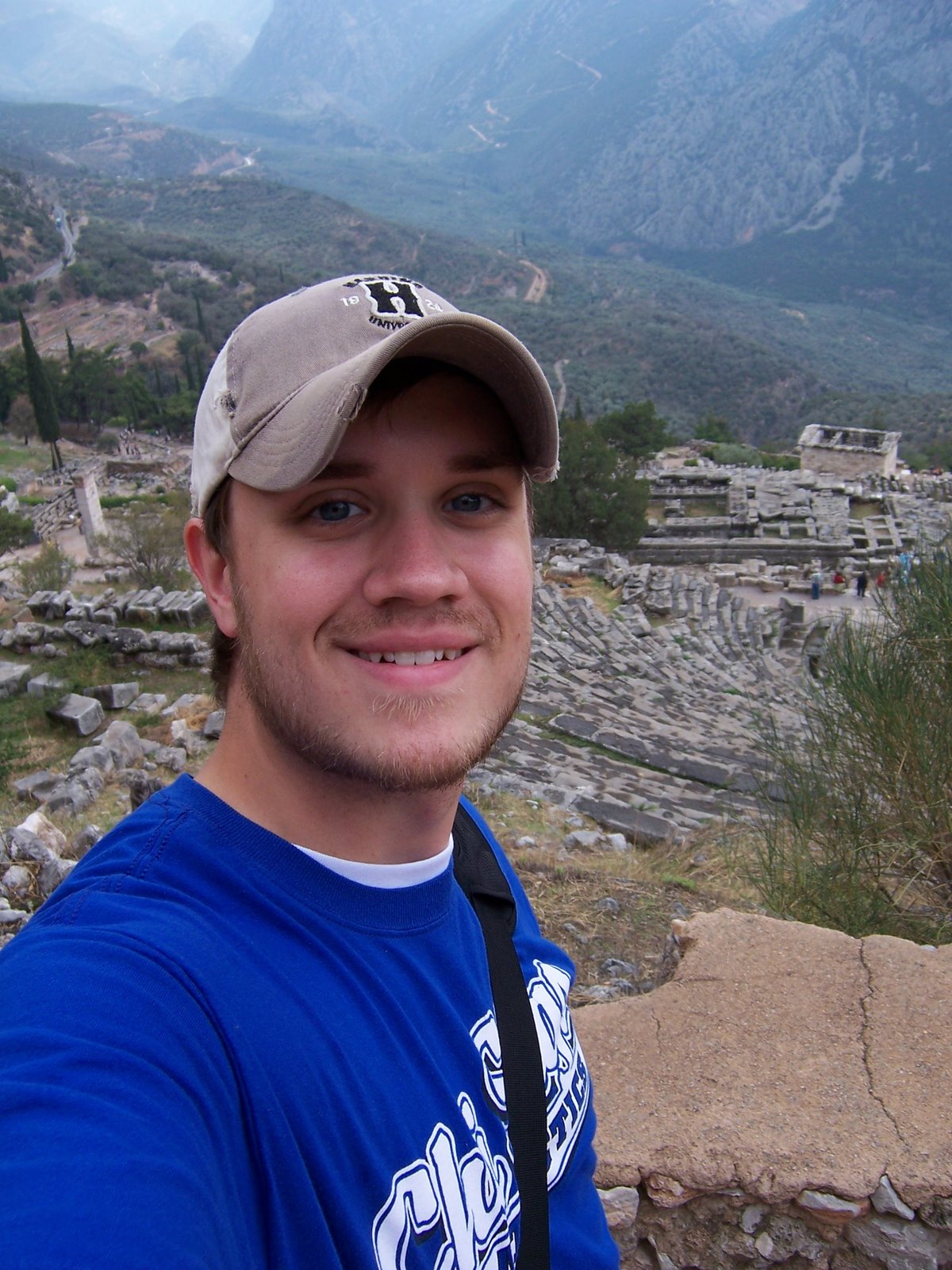
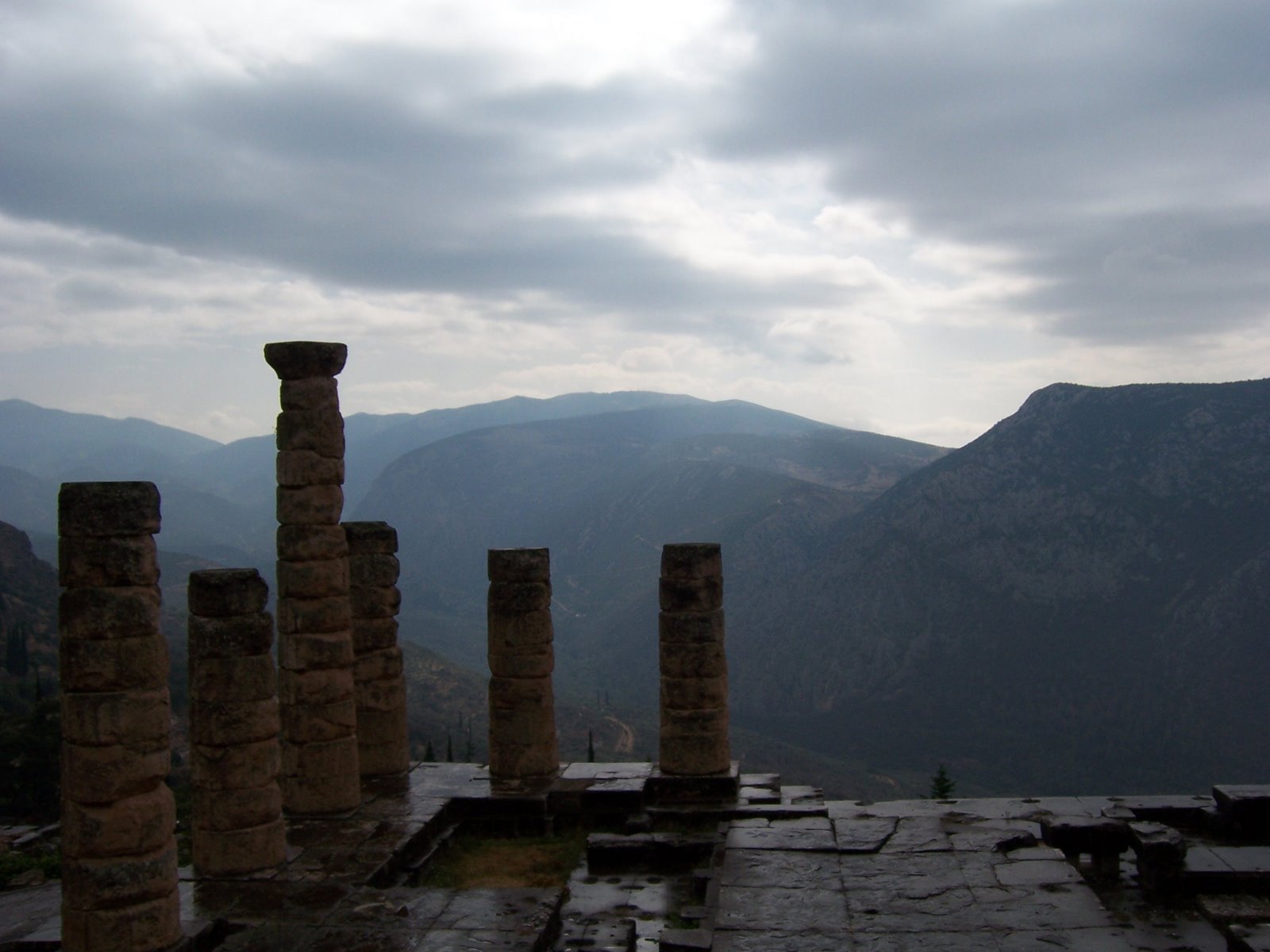
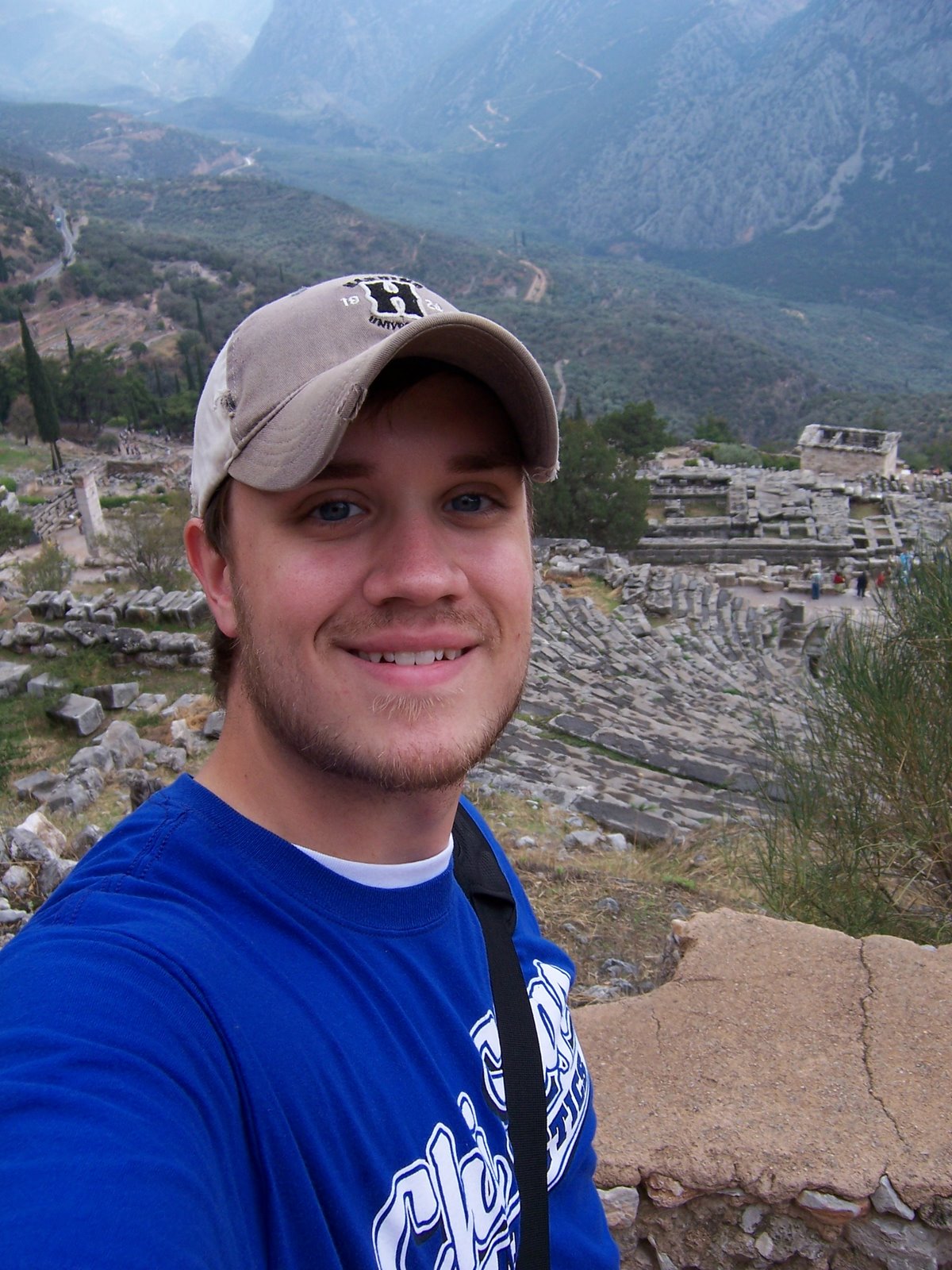
This was our first stop, which you may recognize from the movie 300. Delphi is the home of the legendary oracle who would be consulted by leaders and businessmen alike. She was a high priestess of Apollo who would go into a subterranean chamber below the Temple of Apollo where there was a crack in the ground along a faultline from which a strange mixture of gases would be released. She would breathe in these gases and go into some sort of trance during which she would mutter incoherently. The priests would then “interpret” these “prophesies” and bring them to the one inquiring. The catch was that the priests would frame the prophesies to have a double meaning so that they would be right no matter what the actual outcome of the event in question was.

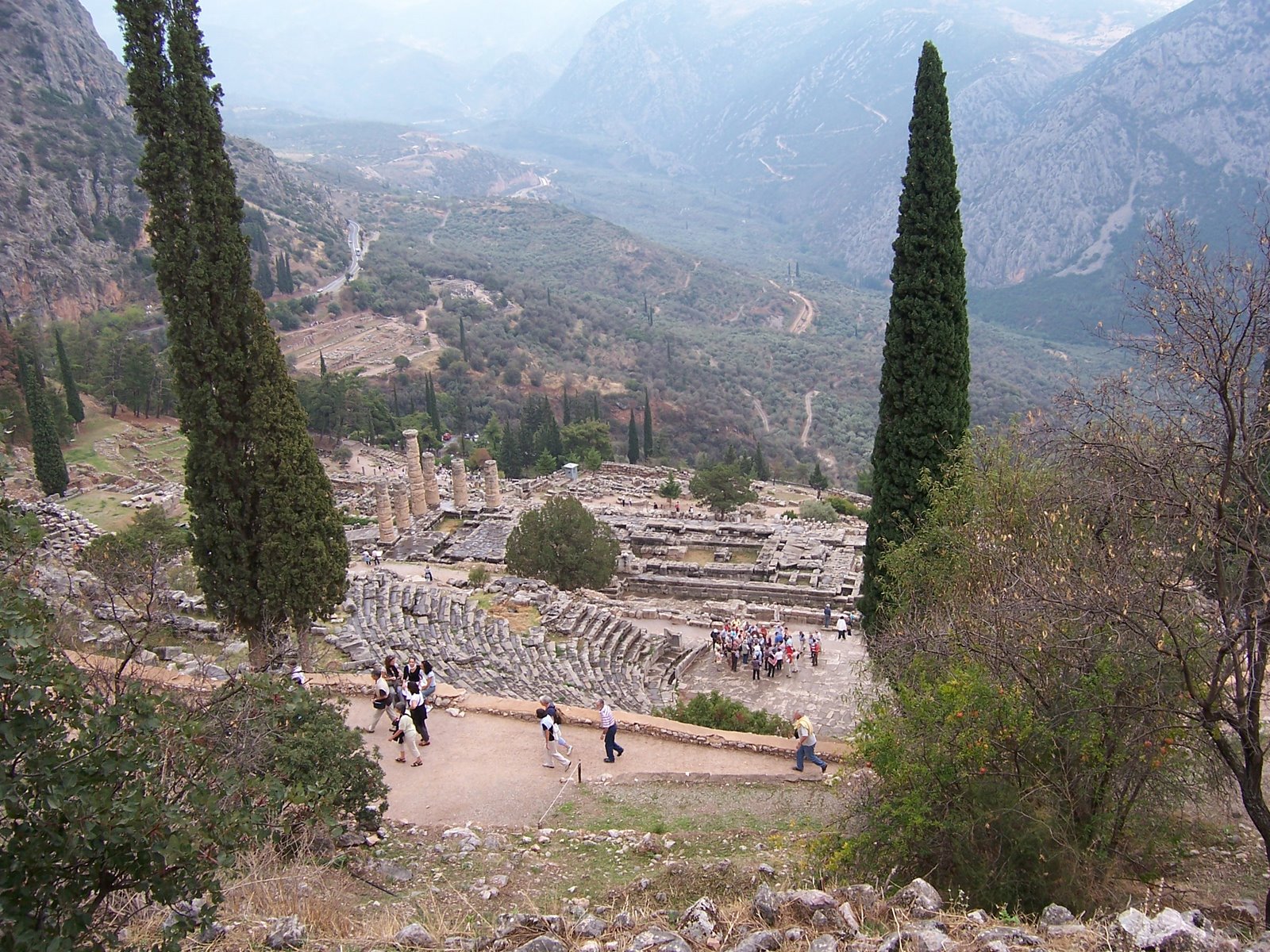
I was very impressed with the actual ruins at Delphi. The city was never a significant location as far as government or military power goes. It was a sort of neutral ground for various Greek city-states. The city itself is located on the side of sheer mountainside. The landscape is gorgeous, and Delphi would have been a very picturesque location in ancient times. Much of the city is well preserved and much is undergoing reconstruction. Surprisingly enough, Delphi is home to the best-preserved stadium in all of ancient Greece.

Whenever we were told about the kind of prophecies the famous oracle would give, I couldn’t help but think of all the prophecies in the Old Testament that were fulfilled in Jesus of Nazareth. The prophecies from the priestess and priests were vague, often self-fulfilling prophecies. But the Old Testament prophets told all about the coming Messiah – where he would be born, where he would grow up, how he would be born, how he would die, and the list goes on. God’s promises are never vague or misleading. He has told us exactly what we needed to know, and his word never fails us.

We’re Off To See The Oracle, the Wonderful Oracle of Delphi


We got back a couple days ago from our tour of Northern Greece, during which we visited Delphi, Meteora, Vergina, Berea, Philippi, Kavala (ancient Neapolis), and Thessaloniki. It was a great trip with lots of stuff to see and write about. Hopefully I can stay up with it and fill everyone in before we head to Egypt next Tuesday.

Delphi:
This was our first stop, which you may recognize from the movie 300. Delphi is the home of the legendary oracle who would be consulted by leaders and businessmen alike. She was a high priestess of Apollo who would go into a subterranean chamber below the Temple of Apollo where there was a crack in the ground along a faultline from which a strange mixture of gases would be released. She would breathe in these gases and go into some sort of trance during which she would mutter incoherently. The priests would then “interpret” these “prophesies” and bring them to the one inquiring. The catch was that the priests would frame the prophesies to have a double meaning so that they would be right no matter what the actual outcome of the event in question was.

I was very impressed with the actual ruins at Delphi. The city was never a significant location as far as government or military power goes. It was a sort of neutral ground for various Greek city-states. The city itself is located on the side of sheer mountainside. The landscape is gorgeous, and Delphi would have been a very picturesque location in ancient times. Much of the city is well preserved and much is undergoing reconstruction. Surprisingly enough, Delphi is home to the best-preserved stadium in all of ancient Greece.

Whenever we were told about the kind of prophecies the famous oracle would give, I couldn’t help but think of all the prophecies in the Old Testament that were fulfilled in Jesus of Nazareth. The prophecies from the priestess and priests were vague, often self-fulfilling prophecies. But the Old Testament prophets told all about the coming Messiah – where he would be born, where he would grow up, how he would be born, how he would die, and the list goes on. God’s promises are never vague or misleading. He has told us exactly what we needed to know, and his word never fails us.

Finishing Up the Greek Cruise


Wow, it’s crazy how things happen so quickly. I’ve completely neglected this blog, but yes, I am still alive. While I’m here, we do still have classes with quizzes, exams, and papers. I guess that’s part of the deal.

Anyway, let me just finish off the rest of the Greek Isle Cruise.

Patmos:
After Ephesus, we shipped off to the island of Patmos, where John was exiled for about 18 months toward the end of his life. Patmos is a beautiful island, bigger than I had expected with lots of trees and scenic hillside towns. A ways up the hill is a cave where tradition says John would sleep, meditate, and write (with the help of a personal scribe whom John took with him into exile I guess). In that cave is a rounded spot in the ground where he would lay his head to sleep and a handhold a couple feet up that he would use to pull himself up.

The most touching feature about the cave is a crack across the top where, legend says, the holy trinity came down, because the crack splits off into three separate lines in equal angles. Even if that is only legend, it still gave me chills to think that I was standing in the place where God came to earth one last time. The rest of the cave is littered with Greek Orthodox icons and embelishments. They are pretty, just not all that necessary in my opinion.

On the top of the hill there is a monestery built by a guy named Christodoulos in the 6th Century I think. The coolest thing about the monestery is the fact that it was built like a fortress on the hill. It has stone wall and other fortifications in case anyone decided to lay siege to this island in the middle of nowhere.

Knossos, Crete:
Knossos is the home of the ancient Minoan civilization. The palace at Knossos would have been incredible to see in its glory days, 1600 BC, but now it is just a large pile of rocks that archaeologists have done their best to reconstruct. It was cool to see the advancements of such an old civilization, but there’s not all that much to talk about.

Thera, Santorini:
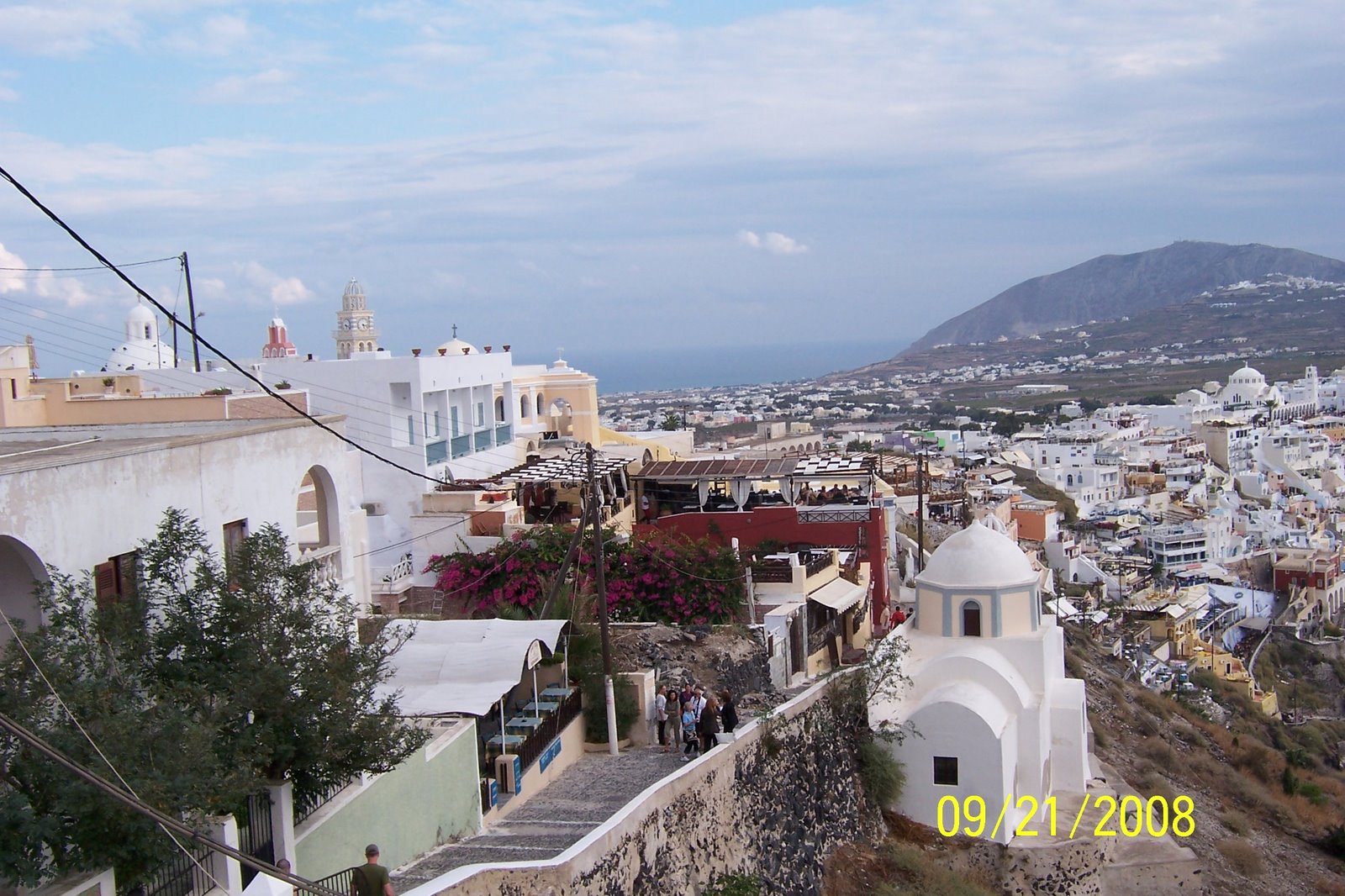
Our last stop on the cruise was the famous island of Santorini. Wanna know what it looks like? Do a Google image search of Greece, and Santorini will be 7 out of the first 10 or so. Santorini is the island famous for the beautiful white-washed houses and blue-domed chapels. We also got a chance to ride mules up to the top of the mountain side, which is pretty sheer since part of the island broke off in a volcanic eruption a couple thousand years ago. I thought it ironic that a man who grew up in Columbia, TN – the mule capital of the world, rode his first mule ever in Santorini.

It was nice just being able to walk around the city of Thera for a while. It’s not the largest town on Santorini, but it was a good size. We got some great pictures, some amazing gelato, and the most incredible sunset view I’ve seen in a good long while.

So there we go, we are caught up through the Aegean cruise. Up next, Northern Greece.

Finishing Up the Greek Cruise


Wow, it’s crazy how things happen so quickly. I’ve completely neglected this blog, but yes, I am still alive. While I’m here, we do still have classes with quizzes, exams, and papers. I guess that’s part of the deal.

Anyway, let me just finish off the rest of the Greek Isle Cruise.

Patmos:
After Ephesus, we shipped off to the island of Patmos, where John was exiled for about 18 months toward the end of his life. Patmos is a beautiful island, bigger than I had expected with lots of trees and scenic hillside towns. A ways up the hill is a cave where tradition says John would sleep, meditate, and write (with the help of a personal scribe whom John took with him into exile I guess). In that cave is a rounded spot in the ground where he would lay his head to sleep and a handhold a couple feet up that he would use to pull himself up.

The most touching feature about the cave is a crack across the top where, legend says, the holy trinity came down, because the crack splits off into three separate lines in equal angles. Even if that is only legend, it still gave me chills to think that I was standing in the place where God came to earth one last time. The rest of the cave is littered with Greek Orthodox icons and embelishments. They are pretty, just not all that necessary in my opinion.

On the top of the hill there is a monestery built by a guy named Christodoulos in the 6th Century I think. The coolest thing about the monestery is the fact that it was built like a fortress on the hill. It has stone wall and other fortifications in case anyone decided to lay siege to this island in the middle of nowhere.

Knossos, Crete:
Knossos is the home of the ancient Minoan civilization. The palace at Knossos would have been incredible to see in its glory days, 1600 BC, but now it is just a large pile of rocks that archaeologists have done their best to reconstruct. It was cool to see the advancements of such an old civilization, but there’s not all that much to talk about.

Thera, Santorini:
Our last stop on the cruise was the famous island of Santorini. Wanna know what it looks like? Do a Google image search of Greece, and Santorini will be 7 out of the first 10 or so. Santorini is the island famous for the beautiful white-washed houses and blue-domed chapels. We also got a chance to ride mules up to the top of the mountain side, which is pretty sheer since part of the island broke off in a volcanic eruption a couple thousand years ago. I thought it ironic that a man who grew up in Columbia, TN – the mule capital of the world, rode his first mule ever in Santorini.

It was nice just being able to walk around the city of Thera for a while. It’s not the largest town on Santorini, but it was a good size. We got some great pictures, some amazing gelato, and the most incredible sunset view I’ve seen in a good long while.

So there we go, we are caught up through the Aegean cruise. Up next, Northern Greece.

Ephesus, the Greatest City of Asia Minor

The next stop on our cruise was the ancient city of Ephesus. There used to be a port right next to it, but over the centuries the Aegean Sea has receded about 9 kilometers, so we pulled into the near port/tourist city of Kusadasi, Turkey.

Ephesus is still a beautiful city even though it has been reduced down to little more than facades and piles of rock. It was the “New York City” of ancient Asia Minor, with a large government, about 250,000 citizens, and thriving business/trade. I can definitely see why Paul spent 3 years of his ministry in that city. It would have been a beautiful sight to see during the time of the Roman Empire.

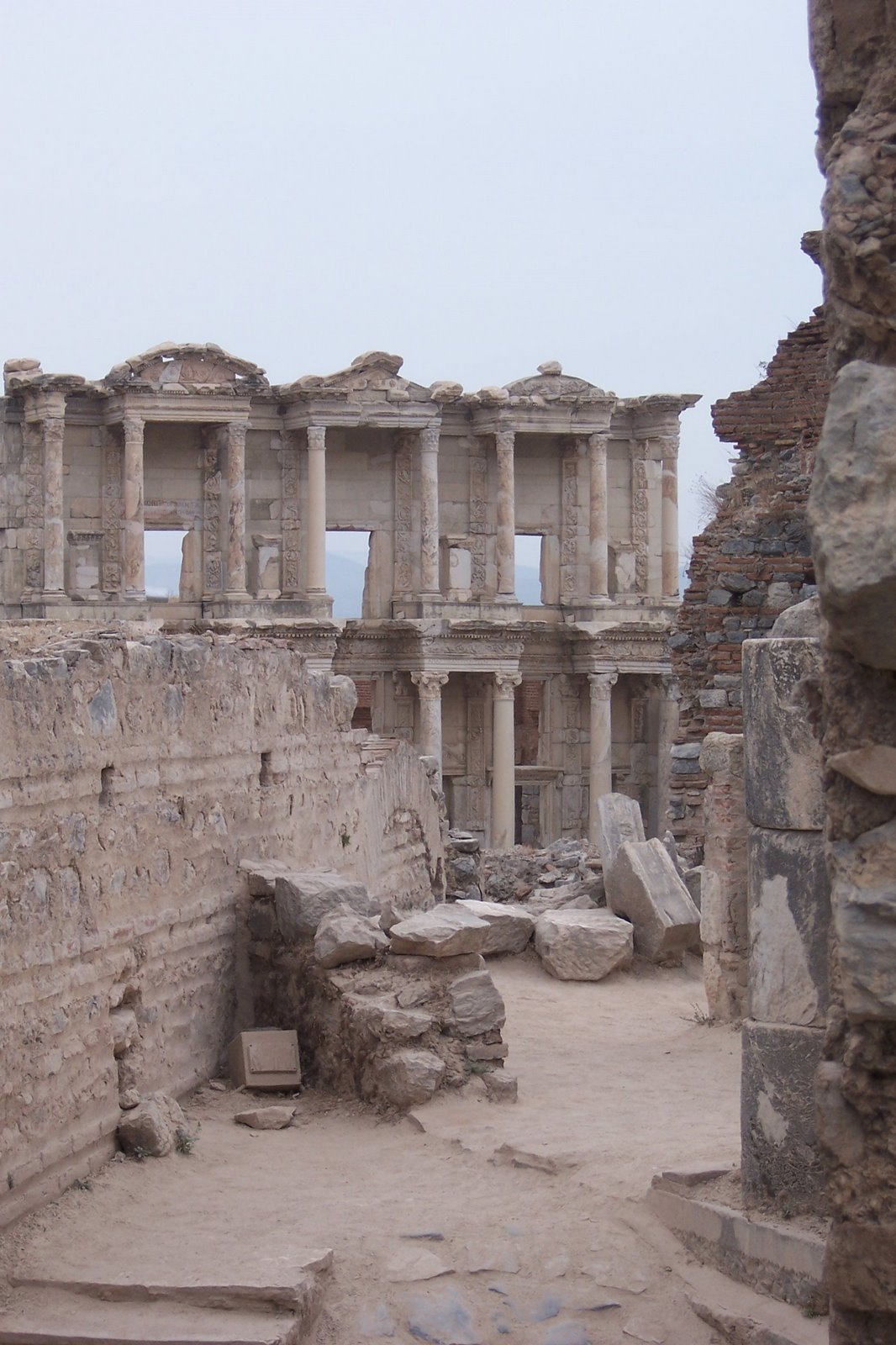
The top picture is the Library of Celsus, the third largest library of antiquity. It would have housed around 12,000 scrolls and documents. It’s beautiful 2-story facade is still standing majestically over the main street of the city. I can only imagine that Paul spent some time in this library studying history, philosophy, and theology – he just seems like that kind of guy.

The second picture is of the famous theater, which could seat around 50,000 people, easily. The acoustics are perfect. The engineers of old who designed it were masters. Pictures do absolutely no justice whatsoever as to the overall size of the structure. I can’t imagine what it would have been like for Paul to be brought before a packed theater of over 50,000 people yelling, “Great is Artemis of the Ephesians!”

Our group got an opportunity to sing The Greatest Commands standing at the bottom of the theater, where the speakers or performers would have been. It sounded incredible. It was an experience I will never forget.

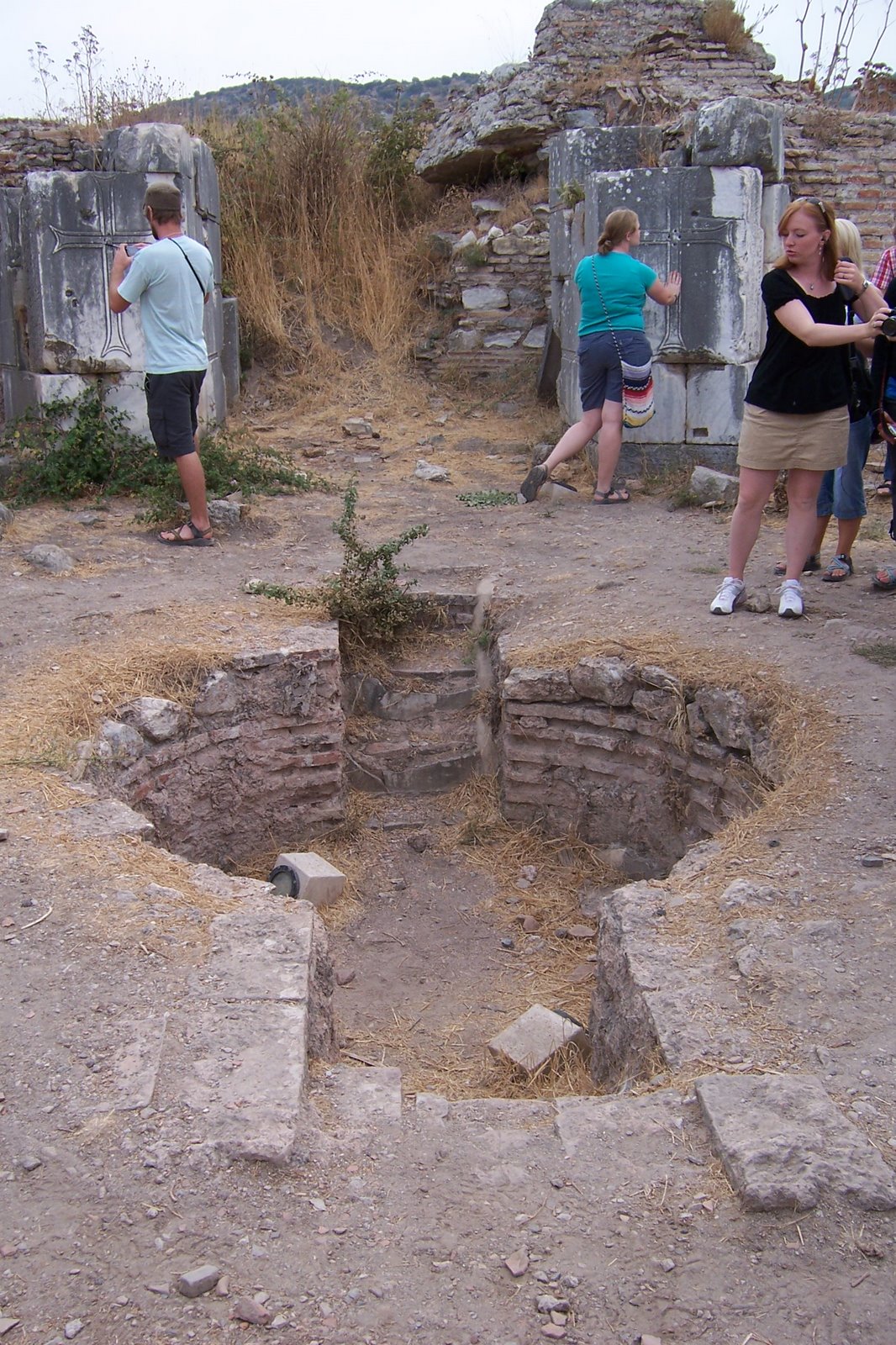
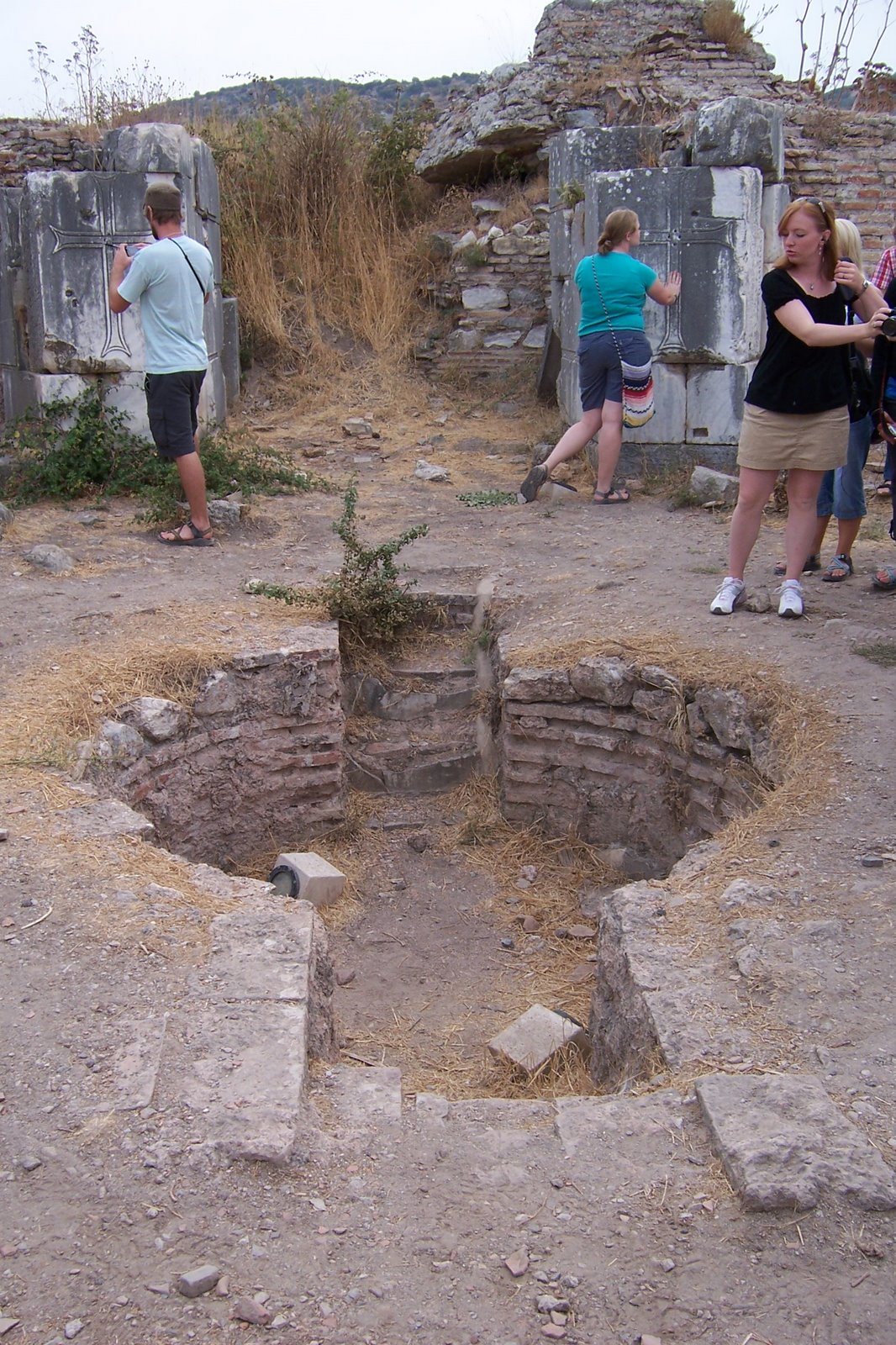
The bottom picture is of a baptistery located in the Church of St. Mary. It was a touching sight to see. The church building dates back to the 6th Century AD, and the church was still practicing adult baptism at that time, and obviously it was by immersion. The building itself still has several walls standing with a pulpit area and alcoves on the sides where people would pray. The area around the baptistery was surrounded by walls decorated with crosses carved in stone. It was beautiful.

Ephesus, the Greatest City of Asia Minor

The next stop on our cruise was the ancient city of Ephesus. There used to be a port right next to it, but over the centuries the Aegean Sea has receded about 9 kilometers, so we pulled into the near port/tourist city of Kusadasi, Turkey.

Ephesus is still a beautiful city even though it has been reduced down to little more than facades and piles of rock. It was the “New York City” of ancient Asia Minor, with a large government, about 250,000 citizens, and thriving business/trade. I can definitely see why Paul spent 3 years of his ministry in that city. It would have been a beautiful sight to see during the time of the Roman Empire.

The top picture is the Library of Celsus, the third largest library of antiquity. It would have housed around 12,000 scrolls and documents. It’s beautiful 2-story facade is still standing majestically over the main street of the city. I can only imagine that Paul spent some time in this library studying history, philosophy, and theology – he just seems like that kind of guy.

The second picture is of the famous theater, which could seat around 50,000 people, easily. The acoustics are perfect. The engineers of old who designed it were masters. Pictures do absolutely no justice whatsoever as to the overall size of the structure. I can’t imagine what it would have been like for Paul to be brought before a packed theater of over 50,000 people yelling, “Great is Artemis of the Ephesians!”

Our group got an opportunity to sing The Greatest Commands standing at the bottom of the theater, where the speakers or performers would have been. It sounded incredible. It was an experience I will never forget.

The bottom picture is of a baptistery located in the Church of St. Mary. It was a touching sight to see. The church building dates back to the 6th Century AD, and the church was still practicing adult baptism at that time, and obviously it was by immersion. The building itself still has several walls standing with a pulpit area and alcoves on the sides where people would pray. The area around the baptistery was surrounded by walls decorated with crosses carved in stone. It was beautiful.

I’m a proud uncle – Twice again!

I almost forgot to add, last week before we set out for our cruise, my oldest sister gave birth to 2 beautiful fraternal twins, Ryan and Alyna. Everything went well, and both she and her children are doing very well at home. Thanks for all the prayers.

Greek Isle Cruise – 1st Stop: Mykonos

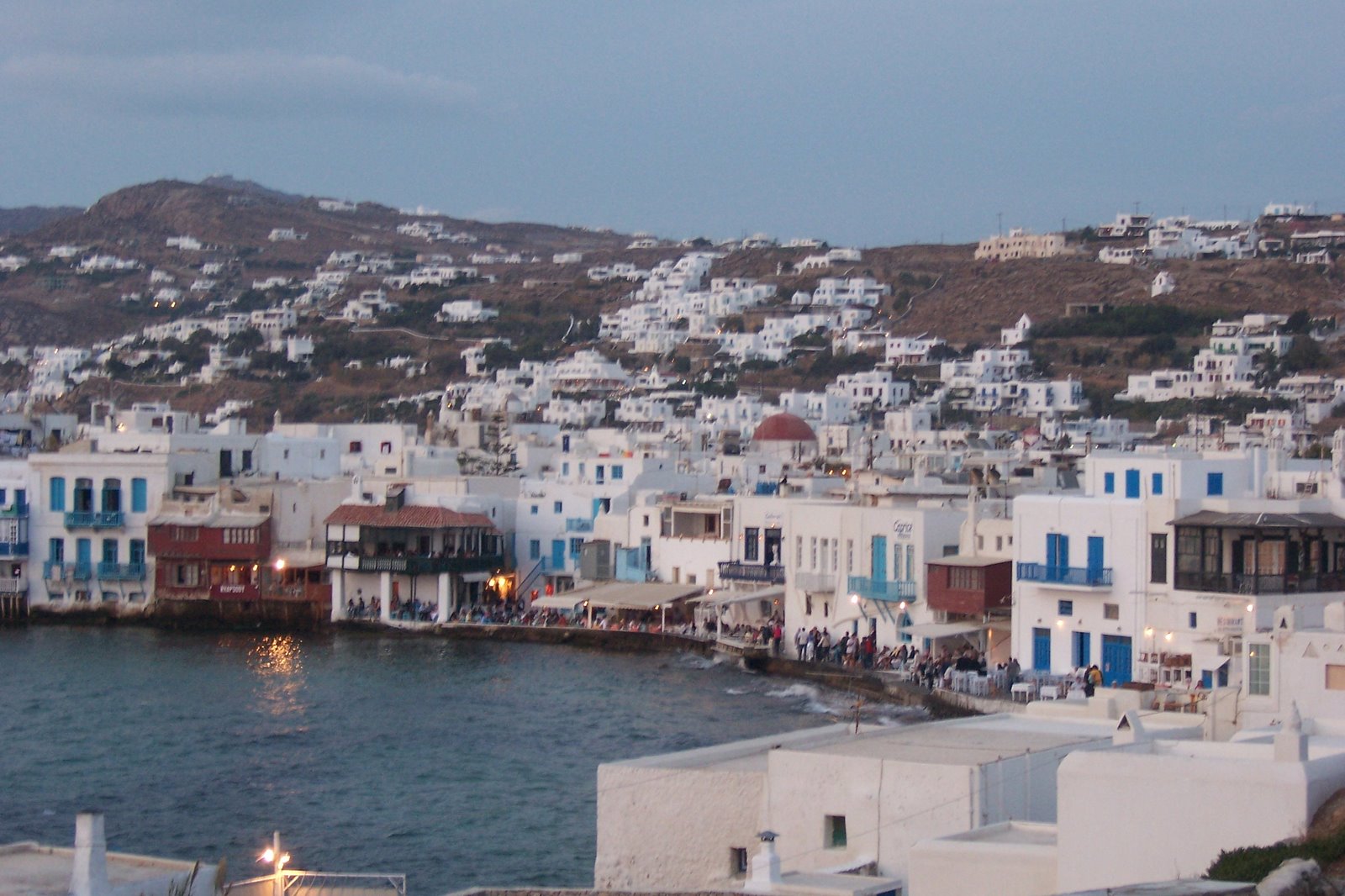
Mykonos Island: famous for its windmills, picturesque sunsets, whitewashed buildings, domed chapels, tourist shops, and store owners who give bad directions.

Mykonos may not be as well known as Santorini, but it is definitely as pretty and fun to walk around. This was our first stop on the cruise, Friday afternoon, and we were able to just get off the boat and explore the town for about 4 hours. Everyone was so relaxed and happy to be there.

We were sent on a wild goose chase trying to find the actual windmills due to bad directions given by a local shop owner. I think his exact instructions for us were, “Go straight, left, right, left.” We ended up walking up this huge hill for about a quarter mile further than we needed to go, but we finally got it figured out with the help of a French guy who was running past us.

But as you can see, the Island of Mykonos is absolutely beautiful. Just another testamony of the power of God and the artistic nature of mankind.