Page 4 of 5

Priscilla: The Mother of Teachers

Exploring the powerful influence of an extraordinary woman in the early church

Throughout the Book of Acts, we encounter remarkable individuals who shaped the early church through their dedication and service. Among these influential figures stands Priscilla, sometimes called Prisca—a woman whose impact resonates through generations of Christian teaching.

Who Was Priscilla?

Priscilla was Roman by birth and heritage—a Gentile, not Jewish. Historical evidence suggests she may have converted to Judaism later in life. She was highly educated, well-respected, and possibly of noble birth, potentially related to a Roman senator. Beyond her status, she became a dedicated leader in the early church, serving alongside her husband Aquila and the apostle Paul.

By trade, Priscilla was a tentmaker who worked with leather and fabric. This wasn’t just a job—it was how she and Aquila funded their ministry and supported the growing church movement. She exemplified hard work, hospitality, and commitment to spreading the gospel.

Continue reading → Priscilla: The Mother of Teachers

Stephen: The Winsome Radical

Lessons from the First Christian Martyr

For the next few weeks we will be examining influential characters throughout the Book of Acts – people who impacted those around them, shaped the early church, and influenced the Apostle Paul. In Acts 17, city officials make a remarkable accusation against these early Christians: “These men who have turned the world upside down have come here too.” Today, we focus on Stephen, whom one commentator aptly called “The Winsome Radical.”

Who Was Stephen?

Stephen holds the distinction of being the first Christian martyr – the first to be executed for his faith in Christ. The term “martyr” comes from the Greek word for “witness,” and Stephen truly witnessed to Christ’s power through his life and death.

Continue reading → Stephen: The Winsome Radical

A Christ-Centered Life (Philippians 2)

Palm Sunday marks the day Jesus rode triumphantly into Jerusalem—not on a war horse with military fanfare as a Roman governor might, but on a donkey, accompanied by ordinary followers waving palm branches and shouting “Hosanna!” This humble entry reveals something profound about Christ’s character and kingship.

What Makes Life Worth Living?

In our journey through Philippians, we’ve been exploring deep questions: What makes life worth living? What is God really like? Is Jesus still relevant today? Why can’t people just get along?

The book of Philippians points us toward answers, and it’s all centered on Christ. In fact, there are over 100 references to Jesus in just four chapters! Paul opens with the incredible declaration, “For me to live is Christ and to die is gain.” For Paul, everything revolves around Jesus.

Continue reading → A Christ-Centered Life (Philippians 2)

A Worthy Life (Philippians 1)

Throughout April, we’re diving into the book of Philippians – a four-chapter journey that begins with some profound questions: What makes life worth living? And related: What does it mean to live a worthy life?

The Philippian Context

Paul wrote this letter from prison, likely in Rome around 62 AD, about 30 years after Jesus’s ministry. The Philippian church was special to Paul – these were the first Christian converts in Europe that we know of from scripture. The city of Philippi was a Roman colony, essentially a retirement community for Roman veterans who enjoyed the privileges of Roman citizenship.

When Paul first visited Philippi (Acts 16), he met remarkable individuals like Lydia, a successful businesswoman who sold luxury purple cloth. He encountered a demon-possessed girl being exploited by her masters, and eventually found himself imprisoned with Silas. That imprisonment led to an earthquake, followed by the conversion of their jailer. These were the very people Paul was now writing to – people whose lives had been radically transformed.

Continue reading → A Worthy Life (Philippians 1)

DAVID the SAGE

by Lucas Johnson

We all know the story of David and Goliath—the young shepherd who defeated a giant and went on to become Israel’s greatest king. But what happens when a warrior king can no longer fight? What’s the next chapter when our primary identity no longer fits who we’ve become?

When the Warrior Can’t Fight

Even the greatest among us face this reality. Consider Mike Tyson, once “the baddest man on the planet,” stepping into the ring at 58 years old against Jake Paul. Despite his legendary status, time had caught up with him—he looked stiff and had clearly lost his step.

David faced a similar situation. In 2 Samuel 21:15-17, we find him in battle against the Philistines where “David became weak and exhausted.” A giant named Ishbi-benob nearly killed him before his nephew Abishai came to the rescue. His men declared, “You are not going out to battle again, for why risk snuffing out the light of Israel?”

Continue reading → DAVID the SAGE

DAVID the KING

From Shepherd to King: Lessons from David’s Reign

The story of David fascinates me because scripture presents him as both aspirational and deeply flawed. He’s someone to look up to, yet the Bible doesn’t hold back on showing the messiness of his life. This gives me hope—if David could be called “a man after God’s own heart” despite his failings, perhaps there’s hope for all of us.

The Shepherd King

David’s journey to the throne wasn’t smooth. After being anointed as a boy, he had to wait decades before becoming king. When Saul died, a civil war erupted—David’s tribe of Judah backed him while Saul’s loyalists supported Ishbosheth, Saul’s son. As 2 Samuel 3:1 tells us: “During the long war between the house of Saul and the house of David, David was growing stronger and the house of Saul was becoming weaker.”

Continue reading → DAVID the KING

DAVID the SHEPHERD

In the story of David, we find a powerful example of how God develops leadership through unexpected beginnings. While many of us focus on David’s victories as king, his formative years as a shepherd boy laid the foundation for everything that followed.

The Problem with King Saul

Before we meet David, we need to understand why God was looking for a new king in the first place. Israel’s first king, Saul, looked the part perfectly – tall, strong, and commanding. He stood “head and shoulders above everyone else.” But despite his impressive appearance, Saul had weak character. He repeatedly took matters into his own hands, disobeying God’s commands and relying on his own strength rather than trusting God.

Continue reading → DAVID the SHEPHERD

HOPE AND ASSURANCE: Dinner at Cleopas’ House

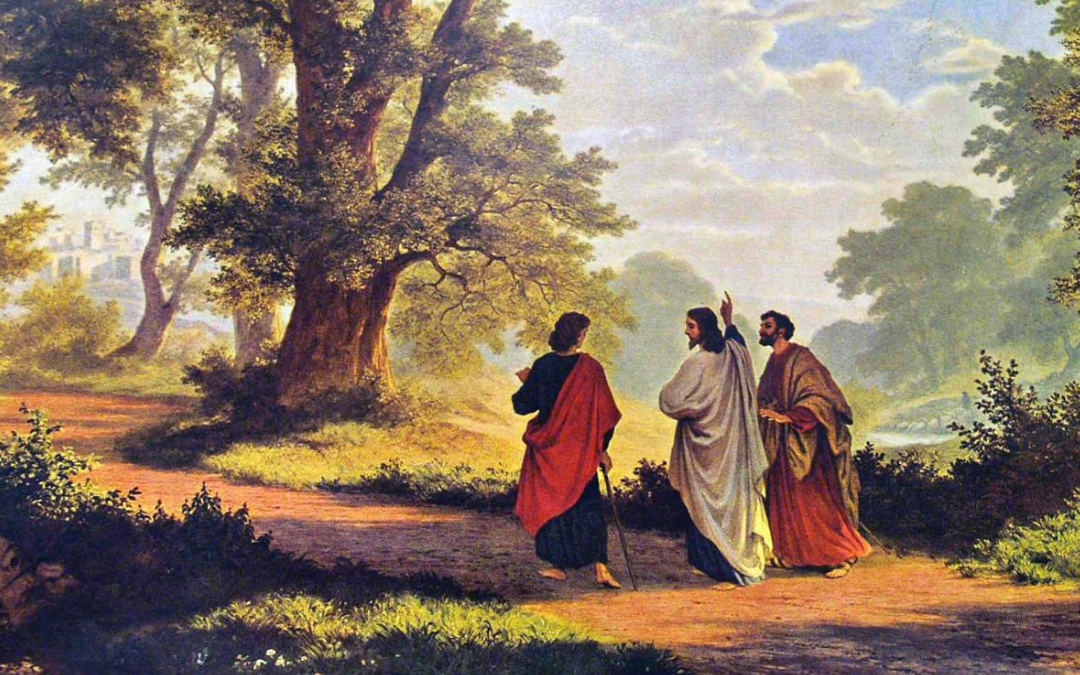
In the aftermath of Jesus’ crucifixion, two discouraged disciples left Jerusalem for the village of Emmaus. Their hopes had been crushed. The man they believed would redeem Israel had been executed by Roman authorities, and now they were making the seven-mile journey home, processing their grief and confusion.

As they walked and discussed recent events, a stranger joined them – Jesus himself, though they were prevented from recognizing him. When he asked what they were discussing, they stopped in their tracks, astonished that anyone in Jerusalem could be unaware of what had transpired.

Continue reading → HOPE AND ASSURANCE: Dinner at Cleopas’ House

SALVATION AND BELONGING: Dinner at Zacchaeus’ House

Throughout the Gospels, Jesus was known for sharing meals with people – so much so that his critics labeled him a “drunkard and a glutton” and “a friend of all the wrong people.” Luke’s Gospel, in particular, records numerous instances of Jesus eating with others, showing how breaking bread together was central to his ministry.

In Luke 19:1-10, we encounter one of the most memorable meal-sharing stories: Jesus’ encounter with Zacchaeus. As Jesus was passing through Jericho (yes, that Jericho from Joshua’s famous battle), he met a man who would forever be remembered for two things: being short and climbing a tree. Poor guy – immortalized in a children’s song as “a wee little man,” Zacchaeus’s physical stature has overshadowed his bigger story of transformation.

Continue reading → SALVATION AND BELONGING: Dinner at Zacchaeus’ House

More than Words

Psalm 19:14

May these words of my mouth and this meditation of my heart

be pleasing in your sight,

Lord, my Rock and my Redeemer.

Hey, remember that thing you said when you were angry, scared, or hungry? Remember how it caused someone to recoil in hurt? Honestly, you probably don’t, but I can guarantee they remember it.

Continue reading → More than Words