Page 4 of 6

A Joy-Filled Life

In a world obsessed with pursuing happiness, we often find ourselves on what psychologists call the “hedonic treadmill” – constantly chasing the next high, only to return to our baseline after that momentary surge of pleasure fades. We buy something new, get a promotion, start a relationship, and experience a brief spike of happiness before inevitably settling back to where we started.

But what if there’s a better way to live?

The book of Philippians offers us a profound alternative. Written by the Apostle Paul while in chains, this letter mentions joy or rejoicing sixteen times – more than any other New Testament epistle. How could a man in prison write about joy with such conviction? Because Paul understood something vital: happiness and joy are not the same thing.

Continue reading → A Joy-Filled Life

A Christ-Centered Life (Philippians 2)

Palm Sunday marks the day Jesus rode triumphantly into Jerusalem—not on a war horse with military fanfare as a Roman governor might, but on a donkey, accompanied by ordinary followers waving palm branches and shouting “Hosanna!” This humble entry reveals something profound about Christ’s character and kingship.

What Makes Life Worth Living?

In our journey through Philippians, we’ve been exploring deep questions: What makes life worth living? What is God really like? Is Jesus still relevant today? Why can’t people just get along?

The book of Philippians points us toward answers, and it’s all centered on Christ. In fact, there are over 100 references to Jesus in just four chapters! Paul opens with the incredible declaration, “For me to live is Christ and to die is gain.” For Paul, everything revolves around Jesus.

Continue reading → A Christ-Centered Life (Philippians 2)

A Worthy Life (Philippians 1)

Throughout April, we’re diving into the book of Philippians – a four-chapter journey that begins with some profound questions: What makes life worth living? And related: What does it mean to live a worthy life?

The Philippian Context

Paul wrote this letter from prison, likely in Rome around 62 AD, about 30 years after Jesus’s ministry. The Philippian church was special to Paul – these were the first Christian converts in Europe that we know of from scripture. The city of Philippi was a Roman colony, essentially a retirement community for Roman veterans who enjoyed the privileges of Roman citizenship.

When Paul first visited Philippi (Acts 16), he met remarkable individuals like Lydia, a successful businesswoman who sold luxury purple cloth. He encountered a demon-possessed girl being exploited by her masters, and eventually found himself imprisoned with Silas. That imprisonment led to an earthquake, followed by the conversion of their jailer. These were the very people Paul was now writing to – people whose lives had been radically transformed.

Continue reading → A Worthy Life (Philippians 1)

DAVID the KING

From Shepherd to King: Lessons from David’s Reign

The story of David fascinates me because scripture presents him as both aspirational and deeply flawed. He’s someone to look up to, yet the Bible doesn’t hold back on showing the messiness of his life. This gives me hope—if David could be called “a man after God’s own heart” despite his failings, perhaps there’s hope for all of us.

The Shepherd King

David’s journey to the throne wasn’t smooth. After being anointed as a boy, he had to wait decades before becoming king. When Saul died, a civil war erupted—David’s tribe of Judah backed him while Saul’s loyalists supported Ishbosheth, Saul’s son. As 2 Samuel 3:1 tells us: “During the long war between the house of Saul and the house of David, David was growing stronger and the house of Saul was becoming weaker.”

Continue reading → DAVID the KING

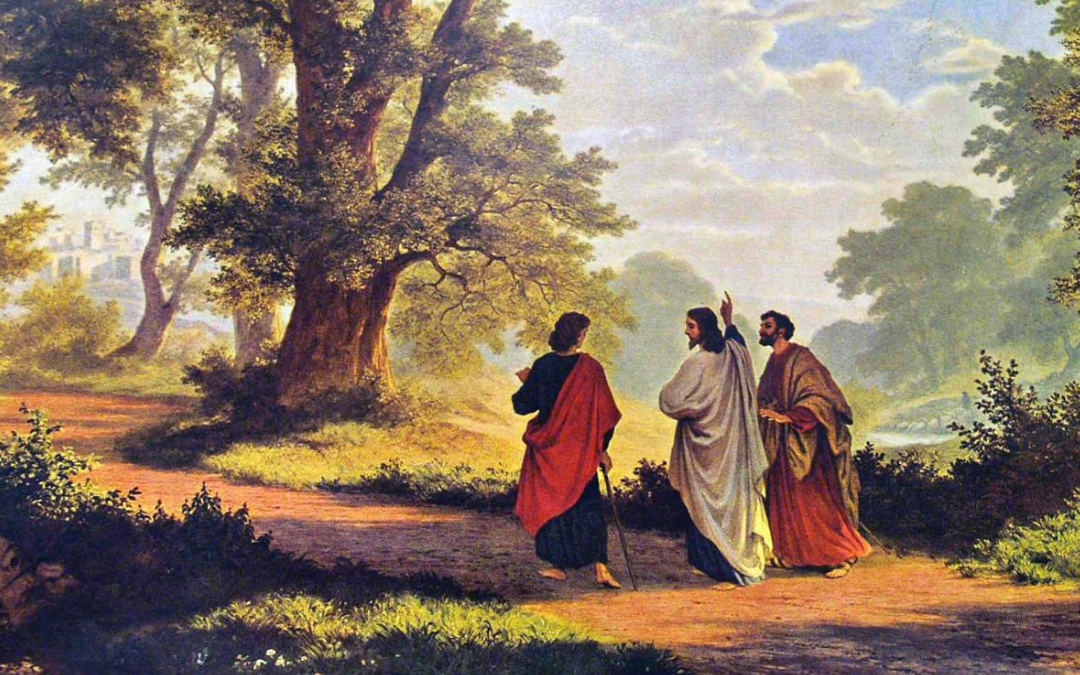
HOPE AND ASSURANCE: Dinner at Cleopas’ House

In the aftermath of Jesus’ crucifixion, two discouraged disciples left Jerusalem for the village of Emmaus. Their hopes had been crushed. The man they believed would redeem Israel had been executed by Roman authorities, and now they were making the seven-mile journey home, processing their grief and confusion.

As they walked and discussed recent events, a stranger joined them – Jesus himself, though they were prevented from recognizing him. When he asked what they were discussing, they stopped in their tracks, astonished that anyone in Jerusalem could be unaware of what had transpired.

Continue reading → HOPE AND ASSURANCE: Dinner at Cleopas’ House

rCQ: Questions from an atheist

/r/Christianity Questions

Recently, I came across this series of of questions asked by a Reddit user:

1) Do you agree with everything in the bible, sometimes it can be really messed up (like those quotes atheists like to bring up when they are debating with christians for example “Now therefore, kill every male among the little ones, and kill every woman who has known man intimately. But all the girls who have not known man intimately, spare for yourselves. Numbers 31:17-18”

2) Is the Bible like your law or advice for better life?

3) How often do you question your beliefs?

4) Are creationists the majority of christians?

Here are my answers:

1) It is my belief that if it can’t be said about Christ, it can’t be said about God (seeing as they are one and the same). I read about the violence of the nations in the Hebrew Scriptures in light of the cross of Christ. Jesus’ violent death at the hands of the state reveals the evil of state-sanctioned killing. So no, I don’t particularly “agree” that God truly commanded the killing of innocents. It was a shocking reality of war. I think this actually gives credence to the reliability of Scriptures. The writers certainly don’t try to sanitize or sugar coat anything. God is for sure a God of justice, but God is more so a God of grace and mercy, willing and desiring to save all who would turn to God.

2) The Bible is an argument about God. It’s a compilation of history, law, poetry, prophetic writings, letters, and biographical accounts. The Bible is a collection of 66 (or more) individual documents by at least 40 different authors/editors, written and compiled over the course of about 1500 years. It’s so much MORE than a law or book of good advice. It’s a window into how the people of God have interacted with, debated about, and sometimes literally wrestled with God. It’s the story of God and his people. The closest thing we Christians have to a “law” is maybe Matthew 5-7, the Sermon on the Mount. But it really boils down to “Love God with all your heart, soul, mind, and straight, and love your neighbor as yourself.” That is our law. That is our advice for a better life.

3) I question my beliefs all the time. Doubt is not the opposite of faith. Certainty is. Faith isn’t faith if there isn’t a degree of doubt, the idea that I could be wrong about all this. Certainty is the destroyer of faith, because as soon as your faith becomes too rigid it stops growing and evolving.

4) Young Earth Creationism stems from a demand for a 100% literal reading of Genesis 1-11. That view is dying off, and certainly isn’t as much of a stronghold as it used to be.

rCQ: Did Judas believe Jesus was the Son of God?

I’ve been browsing the r/Christianity subreddit. Some of it is weird and a bit out there. But there are also some people asking great questions. I am a sucker for good questions, so I decided to begin a series on my blog called r/Christianity Questions (or rCQ for short).


Recently I came across this question:

Did Judas believe Jesus was the Son of God?

Here’s my answer.

[TL;DR version – No, Judas didn’t know Jesus was the Son of God like we know him to be. No, I don’t think Judas really knew what he was doing because he didn’t understand Jesus’ mission. Yes, I think Judas could have been forgiven had he not hanged himself.]

It depends on what you mean “Son of God.” The phrase is a Messianic title taken from Psalm 2, which God actually quotes at Jesus’ baptism. The Messiah would be hailed as “God’s Son” in a kingly sense, not necessarily in a divine incarnation sense. In that regard, I’m not sure that any of the apostles truly believed to the fullest extent. Even when Peter confesses that Jesus was the Christ, the son of the living God (Matthew 16:16), he has Psalm 2 and maybe Daniel 7 in mind.

He said to me, “You are my son;
today I have become your father. (Psalm 2:7)

What happened with Judas, in my understanding, is that he was trying to force Jesus’ hand at overthrowing the Romans. He saw an opportunity to make a little money, get Jesus arrested, and maybe beaten. I don’t think he realized the lengths to which the Jewish leaders would take the whole thing. And I think Judas believed Jesus would defend himself in some way. It makes some sort of sense. If Judas had devoted the past few years of his life to following someone who was going to be the Messiah, Israel’s deliverer who would overthrow Roman rule and establish an independent Jewish state as the heir to David’s throne (see John 6:14-15), then maybe Judas was simply trying to start the ball rolling. It’s clear from James’ and John’s question about sitting at Jesus right and left when he came into his kingdom (Mark 10:35-40) that this was the vision the other apostles had for the kingdom.

It’s not until Jesus’ trial that we hear “my kingdom is not of this world. If it were, my followers would fight for me” (John 18:36). Judas wanted a fight. Peter wanted a fight – hence the sword in the garden (John 18:10). James and John wanted a fight. But that was not the way of Jesus.

What really gives away that Judas didn’t actually think Jesus was going to be killed because of his betrayal is this:

When Judas, who had betrayed him, saw that Jesus was condemned, he was seized with remorse and returned the thirty pieces of silver to the chief priests and the elders. “I have sinned,” he said, “for I have betrayed innocent blood.”
“What is that to us?” they replied. “That’s your responsibility.”
So Judas threw the money into the temple and left. Then he went away and hanged himself. (Matthew 27:3-5)

Judas assumed (rightly) that the leaders wouldn’t have enough evidence to charge Jesus, much less convict him of anything. Judas also assumed (wrongly) that Jesus could and would defend himself against any accusations. Sometimes, it’s even the wrongful arrest of a movement leader that gives said movement legitimacy. Maybe Judas wanted to thrust Jesus into the spotlight for all to see. Little did he know just how well his plan would succeed in doing that.

There’s also the question: Could Judas have been forgiven? And I think the answer is yes. All the other disciples were forgiven. Saul (aka Paul) was forgiven. Jesus cried out for God to forgive the very people who nailed him to that cross because they (like Judas) didn’t know what they were doing.

Don’t get me wrong. I’m not defending Judas’ actions. What he did was greedy at best (John 12:4-6) and pure evil at worst (John 13:2). But Judas also wasn’t the only one who betrayed Jesus that night. All the apostles ran. Everyone deserted. Peter denied even knowing Jesus at all.

It wasn’t until after the resurrection that Peter and the other apostles began to really know what it meant for Jesus to be the “Son of God” in the fullest meaning of the phrase.

6 Reasons Christians Should Care About Climate Change

Recently the Intergovernmental Panel on Climate Change (IPCC) released its latest report on the state of global climate change. Things are not looking good to say the least. You can easily look up the report and read it for yourself. At the rate we’re going, we have about 12 years to come together as a global community and turn things around.

It’s almost time to hit the panic button.

Mike McHargue released an episode of his podcast “Ask Science Mike” this week discussing the report and what we can/should do about it. I highly recommend giving it a listen (begin at about the 5:38 mark). It’s upsetting to me that we could be experiencing the catastrophic effects of global warming within our lifetime. We’re not just talking about the distant future of our grandchildren’s grandchildren. We are talking about a couple of decades from now.

When I was younger I remember hearing people in the church shrug off the warnings of global warming. I would hear things like, “The climate has changed before. It’s a completely natural part of Earth’s cycles.” Or “who are we to think that humans could cause such a thing as this?” Or worse, “God said he would never destroy the Earth again, so there’s nothing we can do to destroy it.”

There are still climate change deniers, but I think it’s time we all got more serious about this. Caring for the environment should not be a partisan issue. Reducing our energy consumption and carbon footprint should not be viewed as a bad thing. Even if you don’t believe that human activity (eg. burning fossil fuels and stripping rainforests to make pasture land for livestock) is driving climate change, I still think there are plenty of reasons to start taking better care of our planet.

I’m no Captain Planet, but here are six key reasons I believe Christians should care about the environment.

1) We are created in the Image of God.

Our Scriptures begin with the story of creation (Genesis 1, 2). Genesis 1 is a beautiful song depicting God’s work in breathtaking poetic language. God creates light, then oceans and atmosphere, then dry land and vegetation, then birds and fish, then land animals. Last of all God created humans:

Then God said, “Let us make mankind in our image, in our likeness, so that they may rule over the fish in the sea and the birds in the sky, over the livestock and all the wild animals, and over all the creatures that move along the ground.”
So God created mankind in his own image,
in the image of God he created them;
male and female he created them. (Genesis 1:26-27)

Men and women – ALL homo sapiens – are created in the Image of God. This is one of the foundational truths of the Bible. If we don’t have that as our starting point, then nothing else really matters. The Image of God is a loaded term. We could write entire volumes of books on what the term means and its implications. But suffice it to say that human beings are God’s representatives to the rest of creation.

Humans were endowed with certain cognitive, physical, and social capabilities that (as far as we know) are unprecedented in the known universe. Humans have survived not because we are the most well evolved species on the planet, but because we have a language, fine motor skills, and social cooperation. A lone human will not survive for long. But get 20 or 30 of us together and we can create our own society.

As God’s image bearers, we have some of the divine spirit in us, too. We have the ability to show love and compassion, forgiveness and mercy. We share in God’s creative work, too. We see the world not just as it is but as it could be. Humans can help tame the chaos. Humans can help bring order and flourishing for all the codependent ecosystems.

Since humans are created in God’s image and likeness, then our first inclination should be to do the things God would do. That includes, but is certainly not limited to, caring for the rest of non-human creation on this planet.

2) God placed humans in charge of tending and caring for the Earth.

Closely connected with the first point is this: we bear the divine image and are given a divine vocation.

God blessed them and said to them, “Be fruitful and increase in number; fill the earth and subdue it. Rule over the fish in the sea and the birds in the sky and over every living creature that moves on the ground.” (Genesis 1:28)

This is where a lot of people have gotten tripped up over the centuries. What does it meant to “subdue” and “rule over”? I believe many men have taken that to mean the Earth is ours to do with as we please. Some think this means that the Earth and everything in it was made for humanity to use, to exploit, to take advantage of for our own personal gains.

But this is kingly language. Humanity is “ruling over” the Earth is God’s vassal governors. Yes, there are parts of this world that I am glad to have brought under our control. But what do we do once we have brought about order and submission? I don’t believe the answer is to run roughshod over creation. We should instead do everything within our power to make creation come alive and flourish to the glory of God. After all, creation itself is supposed to reveal something of God to us – namely God’s divine nature and eternal power (Romans 1:20).

Would nonhuman creation call us benevolent rulers or maniacal tyrants?

3) Our actions impact more than just ourselves.

What comes to mind when you think of the word “sin”? The Bible is littered with lists of sins – those actions and attitudes that are contrary to God’s way of life for his people. But take a look at one of those lists – any list. Think about anything we would consider to be a sin.

Is there a sin that affects only you and no one/nothing else in any way?

Any sin you can think of has an impact greater than the one committing the sin. That’s why it’s such a big deal to God. God is community and love within Godself. God creates out of communal love for the purpose of communal love. That’s why God said, “It is not good for the man to be alone. I will make a helper suitable for him” (Genesis 2:18).

When the first humans sinned by eating the fruit from the “Tree of the Knowledge of Good and Evil” (Genesis 3), God plainly laid out the consequences to their action. They did not die immediately, but they were separated 1) from God, 2) from each other, and 3) from the rest of creation. Sin drove a wedge between all these relationships.

Hear this: our sin of greed has caused potentially irreparable harm to the rest of creation.

For the creation waits in eager expectation for the children of God to be revealed. For the creation was subjected to frustration, not by its own choice, but by the will of the one who subjected it, in hope that the creation itself will be liberated from its bondage to decay and brought into the freedom and glory of the children of God. (Romans 8:19-21)

Our sin of greed has made matters exponentially worse since the industrial revolution. Our desire for more – more money, more power, more things, more comfort, more convenience – has had devastating effects on the rest of creation. I can only imagine that creation is crying out more than ever, is more frustrated than ever at being subject to bondage.

We must be willing to take responsibility for our own actions and begin living in such a way as to reduce the harmful impacts of our own greed and evil desires.

4) It’s more economical.

Ok, so maybe you’re not convinced by the science or the theology. But everyone should be able to get behind the economics of sustainability. And no, I’m not talking about going out and buying a Prius. In fact, the more economical thing to do is to keep your vehicles as long as possible, keep them well maintained, and drive more efficiently.

Come on. Who wouldn’t want to pay less for gas? Who wouldn’t want to see a smaller electricity or water bill? Who wouldn’t want to support local farmers and merchants rather than gigantic, unsustainable mega-corporations?

We live in a consumeristic society. The real challenge is to consume less and create/contribute more. This is called stewardship. There’s a whole case for stewardship to be made in Scripture. Basically, everything belongs to God. The blessings we have come from God and are meant to be used to bless others.

Every good and perfect gift is from above, coming down from the Father of the heavenly lights, who does not change like shifting shadows. (James 1:17)

Honor the Lord with your wealth,
    with the firstfruits of all your crops (Proverbs 3:9)

We have a say as consumers. We vote with our dollars. Companies pay attention to market trends. If we are spending more of our money on locally-sourced, sustainable, and/or fair trade products, then producers and manufacturers will take note. If we invest more into green companies who are working to develop more efficient forms of energy at lower costs, then we will all benefit in the long run.

Renewable energy and sustainable products just make more economic sense. We must be better stewards of the blessings God has given us.

5) It’s a justice thing.

This should be a really big wake-up call for Christians globally. According to all predictions that I’ve seen, those who are less well off are going to be the most impacted by climate change. Not everyone can afford to move. Not everyone can keep up with the predicted rise in food and energy costs. In extreme weather events, those with poorer housing and shelter are going to be the least able to survive. We must be preparing for a humanitarian crisis unlike anything we’ve ever seen. Climate change has the potential to produce more refugees globally than we could possibly support.

When economies collapse, it will be “the least of these” who suffer the most. When hurricanes gain unprecedented strength, it will be “the least of these” who are swallowed in the storm surge. When wild fires rage and crops fail and sea levels rise, it will be “the least of these” who will experience the greatest impact.

“Then he will say to those on his left, ‘Depart from me, you who are cursed, into the eternal fire prepared for the devil and his angels. For I was hungry and you gave me nothing to eat, I was thirsty and you gave me nothing to drink, I was a stranger and you did not invite me in, I needed clothes and you did not clothe me, I was sick and in prison and you did not look after me.’
“They also will answer, ‘Lord, when did we see you hungry or thirsty or a stranger or needing clothes or sick or in prison, and did not help you?’
“He will reply, ‘Truly I tell you, whatever you did not do for one of the least of these, you did not do for me.’” (Matthew 25:41-45)

Instead of preparing to help the countless numbers of refugees men and women God’s Image Bearers who will be negatively affected by climate change, we are severely cutting down on the number of refugees we will allow into this country. We are building a wall along our souther border with Mexico to prevent people from entering the US. We are scaling back the amount of global aide and support given to developing nations. We have pulled out of the Paris Climate Agreement. We have alienated our closest allies and buddied up with tyrannical dictators. We have beefed up our military spending while making cuts to social security and healthcare.

Remember – we will be judged by how we treated “the least of these.”

6) The Kingdom of God promotes flourishing of all people and all creation.

This isn’t heaven yet. Not by a long shot. But that shouldn’t stop us from trying to make this world a little more like heaven.

One of the key differentiators between the Kingdom of Heaven and the Kingdoms of the World is abundance versus scarcity. God’s kingdom is one of abundance. In God’s kingdom everyone has enough, everyone has clothes, food, shelter. Everyone’s needs are taken care of. Everyone is given the chance to flourish and thrive and reach their fullest potential.

The Kingdoms of this World live on a scarcity mindset. The fear is that there is not enough for everyone. There won’t be enough food or water or luxuries, so we have to forcibly take and/or protect what’s ours.

This will only get worse with climate change. Resources will become more scarce. Water sources will dry up. Fossil fuel reserves will become depleted. Useable farmland could all but vanish. Extinctions could occur on widespread scales along the entire food chain. Scarcity will be the new norm.

Jesus said, “The thief comes only to steal and kill and destroy; I have come that they may have life, and have it to the full” (John 10:10). Scarcity defines the kingdoms, empires, and nations of this world. Abundance defines the kingdom of heaven.

Think about everything Jesus did in order to prove this very point. He healed the sick, blind, lame, and deaf. He preached to the poor and outcasts. He caused a miraculous catch of fish – so much that it nearly sank the boats. He took a few loaves of bread and some fish and multiplied them into enough food to feed thousands.

Jesus came to preach a kingdom of abundance, not so that we could greedily hoard it all, but so that we could all share what we have and provide for each other out of that abundance.

This is exactly what the early Christians did:

All the believers were one in heart and mind. No one claimed that any of their possessions was their own, but they shared everything they had. With great power the apostles continued to testify to the resurrection of the Lord Jesus. And God’s grace was so powerfully at work in them all that there were no needy persons among them. For from time to time those who owned land or houses sold them, brought the money from the sales and put it at the apostles’ feet, and it was distributed to anyone who had need. (Acts 4:32-35)

In the coming decades it will be increasingly important that God’s people live out of a place of abundance – sharing what we have, giving to those in need, not taking more than we need. The fear of scarcity has no place in the kingdom of heaven. But if we want to prevent widespread scarcity of resources (necessities, not just luxuries), then we need to take this as seriously as the early church did. We must redefine “enough.” We must reprioritize our wants and our needs. We must celebrate and become good stewards of the blessings we have from God in Christ. And we must be willing to share with those in need.

I’m not perfect at any of this. In fact, I’ve gotten lazier about these things in the last few years. But it’s up to each one of us to make little changes that will make a big impact.

MARANATHA

That’s an ancient word/phrase meaning “Lord, come quickly.” It could mean we want Christ to return and for the kingdom of heaven to be fully realized as promised at the end of Revelation. Or it could mean that we need God to act in a big way, to show up and put everything to right.

As we proceed into a potentially ominous future, I believe this prayer is critical for God’s people. It reminds us who is ultimately in charge. It reminds us that this isn’t heaven yet. It reminds us of the hope we have in Christ Jesus that one day all will be made new.

Maranatha.

Saints and Sinners

In my teen class last night we were discussing holiness. What is holiness? What things/people are holy? What’s the opposite of holy? Questions like that.

And then I asked, “Do you feel holy?”

As I looked around the room at all the shaking heads, it hit me. If we don’t buy it for ourselves, how can we possibly convince others of it??

If we don’t believe that we are holy and that we share in a holy experience through Jesus, how can we possibly take that message to others?

Peter reassures us that we are “a chosen people, a royal priesthood, a holy nation, a people belonging to God, that you may declare the praises of him who called you out of darkness into his wonderful light.” (1 Peter 2:9)

When Paul addressed his letters, he often addresses them to the “saints” in a certain place (Romans 1:7; 1 Corinthians 1:2; 2 Corinthians 1:1; Ephesians 1:1; Philippians 1:1; Colossians 1:2). This word “saint” literally means holy one. These letters were written to the holy ones gathered in Ephesus, Collosae, Rome, etc.

The opposite of holy is common. The good news of the gospel is that Jesus came to pull us out of our common life, this common human experience plagued by sin, pain, rebellion, etc., and to catapult us into an existence unlike any other human experience. We have been taken out of the common and placed into the holy. We have been called “out of the darkness and into his wonderful light.”

But this doesn’t mean that we are free and clear when it comes to sin. I can testify that I have sinned WAY more after becoming and Christian than I did before. But that doesn’t mean we are sinners. That doesn’t mean we aren’t holy. That doesn’t mean we should give up, throw in the towel, and quit trying.

You are HOLY. I am HOLY. Even though we don’t always feel like it. That’s why Paul kept reminding them over and over that those Christians to whom he was writing were saints. They were holy. They were sanctified, set apart, called by God.

God has made us holy though the blood of Jesus. This is the truth to which we are trying to win people. So let’s start believing it. Let’s start living it.

You are holy.

Greater Things

Who was your favorite teacher?

Think back to your high school and college years. I’m sure there are 2 or 3 teachers/professors who had a profound impact on you. They didn’t just tell you what to think, they taught you how to think. They shared their stories, their insights, their knowledge, even their lives with you. You view the world differently because of them.

You wouldn’t be the person you are today without them.

Their influence doesn’t stop in the classroom. Their influence reaches the farthest reaches of the world because of you. You take their teachings with you wherever you go. Their influence is in fact greater now than could ever be while you were still in the classroom. I’m sure there are things they taught you that didn’t even make sense until later in life. Now that you have more experience and understanding, you really get what they were trying to do.

A good teacher’s influence is only constrained to the white board, the worksheets, the tests, or the four cinder block walls while the students are in the classroom.

In John 14:12, Jesus tells his disciples, “Whoever believes in me will also do the works that I do; and greater works than these will he do, because I am going to the Father.”

Jesus is not saying that they will do more impressive, more astonishing works than he did. How could anything be more amazing than raising Lazarus from the dead? What Jesus means is that a new era is dawning. At his resurrection everything he has said and done will make sense. While Jesus was performing his earthly ministry, people were unable to understand why he said and did certain things. But with the resurrection, all was made clear.

The disciples, Jesus says, will now be able to do what Jesus did and even greater things precisely because he is leaving them. He will be with the Father. But he is sending his Spirit to dwell in the believers. And whatever they ask in his name, according to his will, he will do.

Look through the book of Acts. Countless more people accepted God’s salvation after Jesus left than did during Jesus’ ministry. The gospel had much greater reach and influence in the post-resurrection era than it did before.

These “greater works” could not be accomplished while Jesus was still with the disciples just as a teacher’s influence cannot spread while the students are sitting in their desks.