Page 8 of 8

On Creation

Right from the start of Genesis, we see that God is a creator, a craftsman. He made the earth with purpose and intentionality. Therefore, everything He creates has meaning and value.

Next, we see that God does not rule from afar. He enters the darkness and faces the chaos head on. Redemption is embedded in the very fabric of creation.
___________________

Now it’s time for a bit of a side note. If you were like me, you probably sang as a child some little song about the days of creation. “Day one, day one, God made light when there was none…”


But then something happened. As I grew older, I started learning more about the “science” behind “creation.” Apparently, sometime in the last hundred years or so, believing in a young earth and the literal 24 hour days of creation became a major tenant of the Christian faith. For some, at least.

I was taught that the 6 days of creation were exactly 144 hours. No more. No less. To suggest otherwise was borderline heresy. I was also taught that the earth was not any more than 6,000 years old, and science could prove it. Carbon dating and the fossil record just had to be wrong because they didn’t support what the Bible obviously claims to be fact.

Before you go grabbing your torches and pitchforks, let me just say that I truly believe the God absolutely has the power to create an entire universe in 144 hours. He very well could have created the earth to look older than it actually is, just as he created Adam and Eve as adults and not babies.

Here’s my word of caution: Genesis 1 is a poem.

Let me say it again so it sinks in. The opening chapter of the Bible is POETRY. It’s not historical narrative like the rest of Genesis. It’s not a section of the Law, like Leviticus. It’s poetry, like the Psalms.

I think it’s really cool how Rob Bell breaks down this poem in his video Everything is Spiritual.

Is my faith threatened by the theory of evolution? Nope. Do I feel the need to take up arms against proponents of the big bang? Not at all.

Here’s why: I look around and I see how much science has changed over the last thousand years. We went from thinking the earth was flat and the center of the universe to putting men on the moon. Every year, scientists and researchers are discovering new and better information than we previously had. Scientific “facts” are always changing and evolving. Things we took for granted 100 years ago have shifted and taken on new forms. How much more so in the next 100, 500, or 1000 years?

And yet Genesis 1 will always say, “Let there be light.”

God has given human beings the capacity to explore our world and the universe around us. If he made it all, then why would he be threatened by anything we discover or by any new theories we might develop along the way?

Genesis 1 is a poem, the true depth of which is far greater than 144 hours of creation or the young earth theory. It is a poem about power, community, empowerment, and love.
Beginning

It is my general understanding that almost everything we need to know about God can be discovered within the opening chapters of the Bible. Genesis 1-11 are some of the most controversial, most hotly debated chapters in Scripture. Are they literal 24 hour days during creation? Was there really a Garden in Eden? Did Adam and Eve have belly buttons? How could Noah fit all the animals on the ark? Could there really have been a global flood?

Many of these narratives have been passed off as Sunday school flannel board stories. Rarely do we revisit these chapters as adults to try and figure out why are they in the Bible? Why did God choose to open the most important book in all of human history with such outrageous sounding stories? Or maybe they’re not so outrageous if we just tweak our own modern/postmodern worldview a bit.

So let’s begin in the beginning.

Genesis 1:1 — “In the beginning God created the heavens and the earth.”

Thus begins the greatest story ever told.

Now for a little English lesson. The verb in this sentence is “created.” The subject of the sentence is “God.” The Bible begins by letting us know that God’s first act in history was creating. Now, I can go outside, nail some wood together, and build a birdhouse. Then I can come inside, mix up some flour, sugar, etc. and bake a cake. I can then proceed to pick up and clean up around the house to get things in order. But at the end of the day I have not “created” anything.

When God creates, He is intentional, He is purposeful, and His creation is perfect. God’s act of creating brings to mind an artist who slaves over mixing just the right color and using just the right brush stroke until his masterpiece is completed. Hours upon hours may be spent in the tedious labor, but the end result is a priceless work of art that can never be replicated.

If you look back into other creation stories at the time this was written, you’ll see a themes of chaos (roaring oceans and terrible storms) or battles between other gods or some other way in which the earth was simply an accidental by-product of some disaster.

But in this story, a singular God took his own time to create, purposefully and intentionally, the heavens and the earth and everything between and within.

Just reflect on this verse for a moment.

In the beginning God created the heavens and the earth.

In the beginning God created the heavens and the earth.

In the beginning

God created

the heavens and the earth.

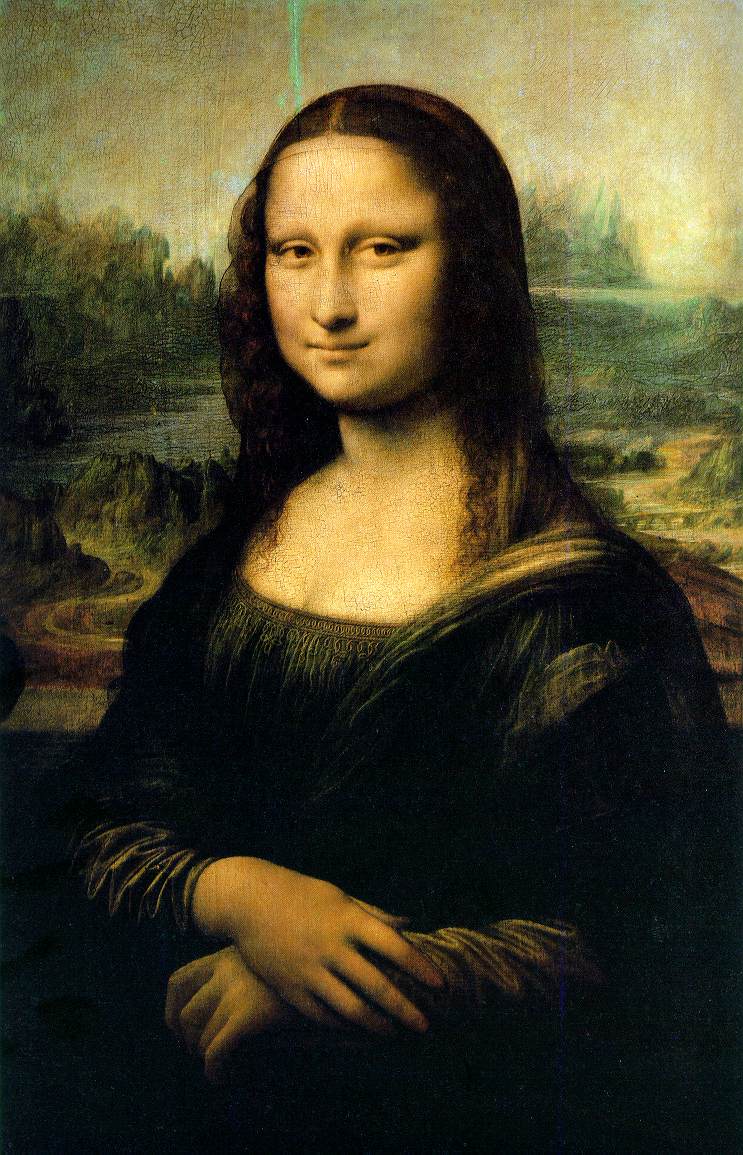
Our God is not a god to be feared and appeased but one to be worshiped and embraced. He is not up there somewhere looking for an excuse to strike us down or destroy the world. That would be as absurd as Leonardo da Vinci throwing darts at the Mona Lisa or Michaelangelo taking a jackhammer to David.

In Ephesians 2:10, Paul tells us that we are God’s poiema, from which we get our word poem. We are his workmanship, his creation, his masterpiece. Every single person is God’s creation. That means that you and I and everyone of the 6 billion people on this earth has value, has meaning, has a purpose.

If that’s not good news, I don’t know what is. All I know is that in the beginning, God created the heavens and the earth and you and me.

The heavens and the earth

“In the beginning God created the heavens and the earth.” Genesis 1:1

The phrase “the heavens and the earth” is a prime example of a Hebrew literary device in which two opposites are mentioned but the implication is that everything in between is included. Another way of understanding that verse is to say, “In the beginning God created the heavens and the earth…[and everything contained therein] or [and everything in between] or [and everything else we see]”

A common question is raised, however: Why did God bother going to such great lengths to create a seemingly infinite universe when the small pebble called earth is all that really matters? It seems like God went a little overboard with the whole creation thing.

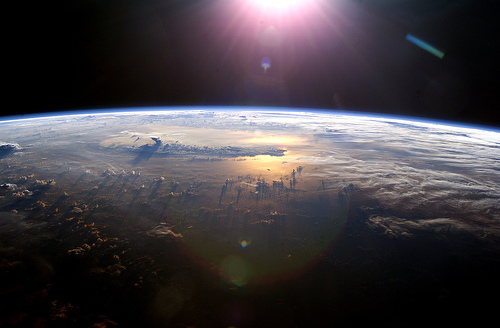
But when you think about the purpose of the universe and all of creation, what seems like wasted space actually testifies to the awesomeness of God. The purpose of creation is to reflect the character and the glory of the Creator. Think about it. A Creator whose glory is infinite would naturally create an infinite universe to reflect that glory. Why hold back? Why not create an awesome universe for humans to study and explore? From the smallest atomic particle to the largest galaxies and nebulae, God’s glory, holiness and awesomeness are readily revealed. All creation testifies to the majesty of the Creator.