
Response: "The Problem with Those 9 Personality Types"
I love the Complexly production company and the work they do producing free, informative, entertaining content with the purpose of educating the general public on a broad range of issues. They produce the YouTube channels “SciShow” and the spin offs “SciShow Space” and “SciShow Psych.” I’m a subscriber and regular viewer of these channels. I really dig what they’re trying to do.
On February 21, though, they released a video challenging the claims of the Enneagram. You know I can’t just let that one slide. Haha
I watched it yesterday, and I actually agree with most of what’s said. However, I don’t think they quite understand what the Enneagram system does and what it’s really about. Here’s the video. Watch it, and then I’ll give some comments on it below.
First of all, the scenario she opened with is not what the Enneagram is about. You should NEVER use someone’s Type to shame them or call them out on something. I’ve failed in this before, and it’s never a good idea. Don’t ever say “you’re such an Eight” or “you’re being so Four right now” as an insult or jibe at someone. Just don’t.
Brit Garner, the host, then goes on to point out that the Enneagram doesn’t have much scientific support or validation behind it. And she’s completely right. No Enneagram expert or teacher or book would ever make that sort of claim. The Enneagram is not science. I lead with that almost every time I talk about it. Some may view that as a weakness and a reason to be skeptical. I understand that 100%. The Enneagram is more of an art than a science. It comes out of a longstanding wisdom tradition and has been used among various religions and cultures throughout the centuries.
Just because something isn’t scientific doesn’t mean it’s not True. Science does not have the corner market on truth. Wisdom and science shouldn’t compete with each other but should inform each other. I think that’s what the Enneagram does well. I think that’s one of its strengths.
Garner claims that the purpose of the Enneagram is to “encourage [people] to become the best version of their personality type.” Not exactly. Our personality type consists of all the walls and defenses that we have built up over a lifetime. We have different ways of surviving in the world that comprise what we call a “false self.” Most Enneagram teachers will emphasize the truth that you are not your type. Your type is a false self. The Enneagram helps expose that false self so we can actually shed those masks and defense mechanisms, tear down the walls, and become our True Self, a more whole, integrated person. The purpose of the Enneagram is NOT to become the best version of your type.
The “fundamental flaw” in the system, she says, is that each type can be relatable for almost everyone. Again, most experts will tell you that we have a little bit of each type within us. I’m dominant in Type Three, but I also relate well to types One and Five. I see a lot of myself in those other types. I’m also influenced by my Two wing and my lines to Six and Nine. The Enneagram recognizes and affirms the complexity within each individual person. Every one of us contains elements of all Nine, but we are only Dominant in one type.
She also points out the very real problem that we can get different results based on the tests we take. I agree 100% that this is a problem. That’s why YOU DON’T RELY ON A TEST TO FIND YOUR ENNEAGRAM TYPE. Did I say that strongly enough? Haha
Tests are one of the least effective ways to discover your type. Every Enneagram expert will tell you that. It’s a journey of self-discovery. A test can help, but it should not be your go-to.
Then Garner points to the “Barnum Effect” in relation to the fact that people can relate to each of the types. On a mere surface level explanation of the Types, I can see how that might be the case. Sometimes the basic introductions do come across as vague generalities that can apply to almost everyone. That’s why you must go deeper. The real strength of the Enneagram lies in its ability to reveal your dark, hidden areas, or your “shadow side.” You know you’ve hit your Enneagram type, not when you feel good and agree with it, but when it punches you in the gut and you feel like hiding. I can remember the moment reading through the types when I got to Type Three. My jaw dropped. I got a sinking feeling in my stomach. I felt nervous and vulnerable. These people were openly describing parts of me that I wanted to keep hidden at all costs. I didn’t get that feeling from any other number.
The Enneagram does NOT rely on the Barnum effect. You just have to go deeper.
Finally, she expressed the fact that the Enneagram relies on “self-validation” as a weakness to the system. Again, the Enneagram never claims to be a scientific system or a grand unifying theory of personality. It is a tool for personal self-discovery and transformation. I cannot name anyone else’s type, because your type is determined by inward motivation, not outward behavior. Only YOU can know why you do what you do. Only YOU can validate your Type and know it to be true. No one can do it for you. No therapist or standardized test can do it for you. If you cannot be brutally honest with yourself, then you are not ready to learn the Enneagram.
If you want a scientific blueprint of personality, by all means explore “The Big Five.” That’s a lot more scientifically accurate than the Enneagram or the Myers-Briggs. But my question is…so what? The Big Five Personality Inventory can map your personality across five scientifically validated traits. But then what? What’s the point in learning your personality traits just for the sake of knowing?
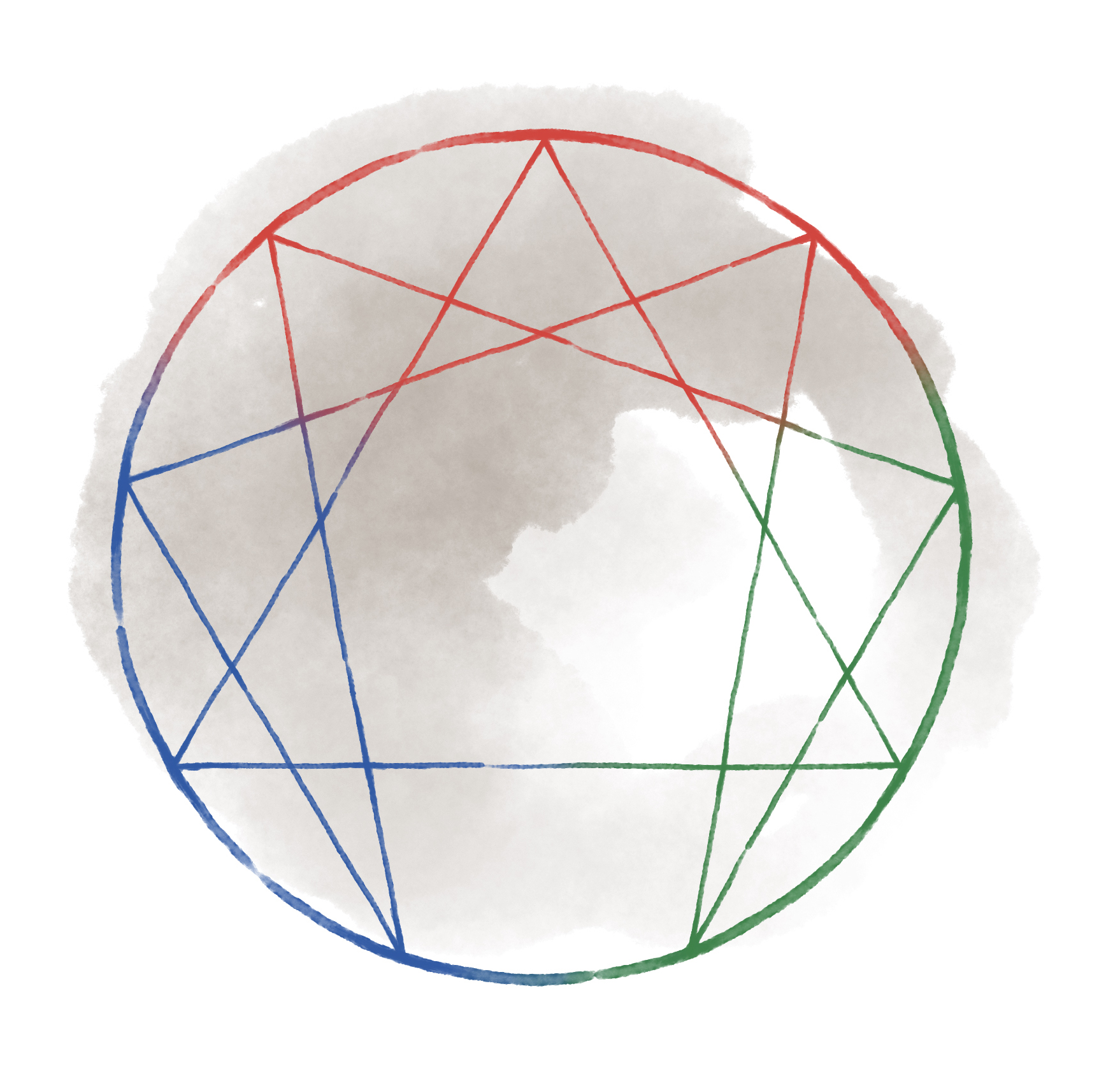
The wisdom of the Enneagram sets you on a journey, a trajectory of transformation. I love what Suzanne Stabile says: “The Enneagram does not put you in a box. It shows you what box you’re already in, and it shows you how to get out.”
 Daniel N. Lee