
 by
by From a sermon by Daniel Lee and Lucas Johnson
The Foundation of Forgiveness
We’re all walking around wounded and hurt. Pain alerts us that something’s wrong—whether it’s the “good pain” of growth or the sharp ache of genuine injury. We all know we’ve done things that are wrong, and we’ve all been wronged by others. So how do we find wholeness? How do we break the vicious cycle of guilt, shame, and woundedness?
The answer comes down to one word: forgive.
Forgiveness is rooted in God’s very nature. In Exodus 34:6-7, God declares: “The Lord, the Lord, is a compassionate and gracious God, slow to anger and abounding in faithful love and truth, maintaining faithful love to a thousand generations and forgiving iniquity, rebellion, and sin. But he will not leave the guilty unpunished, bringing the consequences of the fathers’ iniquity on the children and grandchildren to the third and fourth generation.”
Notice the beautiful tension—while consequences may extend three or four generations, God’s love and forgiveness extend to a thousand generations. His mercy far exceeds any threat of punishment.
As the psalmist reminds us, “As far as the east is from the west, so far has he removed our transgressions from us” (Psalm 103:12). Only God can truly forgive and forget. When we bring up past sins to God, He responds as if He doesn’t know what we’re talking about—they’ve been completely removed.
For us humans, forgiveness isn’t about forgetting (we can’t do that), but about letting go, releasing, exhaling. Some say forgiveness is a gift you give yourself. Others observe that holding a grudge is like holding your breath and hoping the other person suffocates.
C.S. Lewis captured it perfectly: “Everyone thinks forgiveness is a lovely idea until they have something to forgive.”
A Story of Grace in Action
One of the most powerful examples of forgiveness is found in John 8, where Jesus encounters a woman caught in adultery. The religious leaders brought her forward, ready to stone her according to the law. It was a trap – they wanted to see if Jesus would uphold the Law or disregard it.
Jesus saw right through them. “The one without sin should be the first to throw a stone at her,” He said. One by one, they dropped their stones and walked away, starting with the oldest.

Jesus was the only one qualified to cast that first stone, and He chose forgiveness instead. “Neither do I condemn you,” He told her. “Go, and sin no more.”
Unfortunately, there are still Christians today who wouldn’t have dropped their stones – those who take more joy in dishing out judgment than offering mercy and grace.
When the Church Hurts: Lucas’s Story
Church hurt is real. It’s exactly what it sounds like – being hurt by the church. This has driven many people away from faith communities, even when they still believe in God.
Let me clarify: I’m not talking about disagreements or political divides. I’m talking about genuine hurt caused by unbiblical behavior and attitudes.
I spent most of my first 21 years saying I’d never be a minister. I grew up in a minister’s family and saw the ugly side of church politics. Elders’ meetings were knockdown, drag-out fights. When I was 10, a disgruntled group sent letters to the community making false claims about my family. At 19, I watched my grandfather – who had faithfully served a church for nearly 40 years – get a phone call on Saturday night telling him Sunday would be his last day.
When I was 22, my 20-year-old sister was bullied out of her children’s ministry position by grown adults who sent untrue emails and had people spy on her during kids’ church. After building a thriving program, she was driven away by power struggles and politics.
Despite this, I eventually became a minister myself. I chose a church specifically because the leadership was the opposite of what I’d experienced – they strove for unity and put the church ahead of personal agendas. Under that leadership, the church doubled in size and flourished.
But then new elders were elected. Some were wonderful, but others brought church politics with them. Deacons were bullied and gossiped about. Important decisions were made behind my back. Power moves were made with the bylaws. People who had spent years building ministries began leaving.
When I questioned these behaviors, I was told to sit down and stop asking questions because I was “only 28.” I’ll never forget having someone I’d invited to my home use their communion meditation to compare me to David’s rebellious son Absalom and tell me they’d show me the door if I didn’t know how to find it.
That cuts deep.
The Path Forward
So what do we do with church hurt? It may be appropriate to leave a church if they’re acting unbiblically and are unrepentant about it. But just because you leave a church doesn’t give you permission to leave the church entirely. The church is the bride of Christ, and you cannot claim to love Jesus while rejecting His bride.
As Psalm 18:30 reminds us: “God’s way is perfect. All the Lord’s promises prove true.” Just because imperfect people haven’t lived up to God’s standards doesn’t change the fact that God is good and His way is true.
In Matthew 18, when Peter asked Jesus how many times he should forgive someone – like seven times? – Jesus responded “No, not seven times, but seventy times seven!” He then told a parable about forgiveness. A servant owed his king millions of dollars – an impossible debt. When he couldn’t pay, the king had mercy and forgave the entire amount. But then that same servant found someone who owed him a few thousand dollars, grabbed him by the throat, and had him thrown in prison.
The king was furious: “Shouldn’t you have mercy on your fellow servant just as I had mercy on you?”
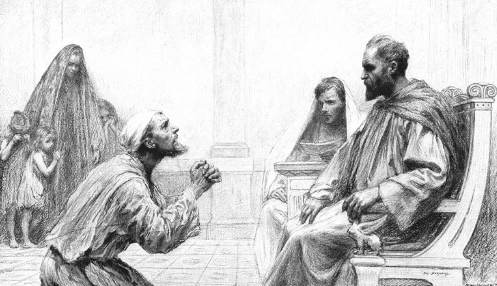
We don’t forgive because we’re better than everyone else. We forgive because we had a greater debt that was forgiven for us.
Forgiveness isn’t forgetting – deep hurts can change relationships forever. It also doesn’t mean the pain never returns. It simply means “they don’t owe you anymore. That debt is paid.”
When Grace Meets Shame: Daniel’s Story
Many of you know my story with Katelyn, but some don’t. We’ve been together over 20 years, high school sweethearts who met at church camp. I was considered the poster child for young men in the church – the up-and-coming leader.
But as time went on, we fell into temptation and became far more intimate than we should have. We knew it was wrong and felt immense guilt, but we never opened up about it for fear of shame and judgment.
During our senior year, I went on a mission trip to Mexico. While I was gone, Katelyn was feeling sick and went to the doctor. When I got back and had cell service again, she called with news that changed everything: “Daniel, I’m pregnant.”
Like that woman in John 8, we were caught. There was no denying it. And people were ready to start throwing stones.
I lost friends, leadership positions, and scholarship opportunities. I was essentially kicked out of the youth group. Our youth minister dropped us. My dad told me to give up on ministry and do something else. Our lives were placed under a microscope of judgment, shame, and derision.
Ironically, Katelyn’s non-Christian public school friends stuck by us more than most of our youth group friends. Adults came to us privately, admitting they too had been intimate before marriage, but they were unwilling to stand up for us publicly.
Don’t get me wrong – we knew we had sinned and broken people’s trust. We confessed, repented, and asked for forgiveness. But it didn’t seem like enough for some people.
Katelyn and I made one of the hardest decisions two 18-year-olds could make: we placed our baby girl with an adoptive family. Through God’s grace, we chose an amazing couple and maintained an open adoption. We’ve have gotten to watch her grow up and have been a present part of her life. God can bring beauty even out of our mess.
The Ongoing Journey
I wish I could tell you it’s 100% better, but I can’t. I wish I could say “just forgive and move on,” but it’s not that simple. The pain can last a lifetime, but forgiveness is the only way to move forward.
C.S. Lewis captured my experience perfectly: “There’s no use talking as if forgiveness were easy… We find that the work of forgiveness has to be done over and over again. We forgive, we mortify our resentment. A week later, some chain of thought carries us back to the original offense, and we discover the old resentment blazing away as if nothing had been done about it at all. We need to forgive our brother seventy times seven not only for 490 offenses but for one offense.”
Sometimes we have to forgive one sin, one event, one hurtful thing 490 times. We may never heal from certain pains on this side of heaven. But the path toward wholeness is the path of forgiveness.

One last challenging quote from Lewis: “To be a Christian means to forgive the inexcusable because God has forgiven the inexcusable in you.”
The Choice Before Us
As we close, consider what debts you’re still holding onto. Grudges eat up individuals’ lives, tear up families, and divide churches. It’s no way to live.
If you feel like God can’t forgive you for what you’ve done, remember this: Jesus lived the perfect life we cannot live and died the death we deserve to die. When you say “God, my sins are too big,” you’re really saying “Jesus, your sacrifice wasn’t good enough.”
That’s not up to us to decide. God has already decided that Christ’s sacrifice was more than sufficient for whatever you have done. You only get to decide whether you will accept that forgiveness or reject it.
The path toward becoming who God created you to be is the path of forgiveness. It’s not easy, it’s not quick, and it’s not a one-time event. But it’s the only way forward.
Every day we wake up and try to find forgiveness and move forward. Will you join us on that journey?
LISTEN TO OR WATCH THE FULL SERMON HERE:
Video Coming Soon
 Daniel N. Lee