Page 18 of 81
JESUS ASKED: Where Shall We Buy Bread for All These People?
Did you know that there are only a few stories shared in all four Gospels? Mark, Matthew, and Luke have a ton of similarities, but very few stories make it into all four. The “Feeding of the 5,000” is one of them. If this story was important enough for all four gospel writers to include, then it’s important enough for us to pay attention to.
Today I want to focus on John’s account. (So far, all these questions occur in John’s Gospel.) Let’s just read it and then we’ll look closely at the question Jesus asked.
When Jesus looked up and saw a great crowd coming toward him, he said to Philip, “Where shall we buy bread for these people to eat?” He asked this only to test him, for he already had in mind what he was going to do.
Philip answered him, “It would take more than half a year’s wages to buy enough bread for each one to have a bite!”
Another of his disciples, Andrew, Simon Peter’s brother, spoke up, “Here is a boy with five small barley loaves and two small fish, but how far will they go among so many?”
Jesus said, “Have the people sit down.” There was plenty of grass in that place, and they sat down (about five thousand men were there). Jesus then took the loaves, gave thanks, and distributed to those who were seated as much as they wanted. He did the same with the fish.
(John 6:5-11)
There is actually a lot happening in this story. I don’t have time to get into all the nuance and allusions within it. This is a callback to Moses and the Israelites in the wilderness, it’s a nod to the Passover, there are Messianic prophecies at play, and the people want to make him King afterward. But let’s focus on that question.
Where shall we buy bread for these people to eat?
Let’s think about it in today’s terms. There are 5,000 men. To feed everyone, even at a measly $5 per meal, would take $25,000! Philip isn’t that far off even by today’s standards. It would take about half a year’s salary to buy enough food for everyone to have even a snack.
In other words, it’s impossible.
There are some indications that these men were militia men who were willing to follow Jesus as he marched on Jerusalem to oust the Roman occupation. But no one brought food. One of the logistical nightmares of war, especially in ancient times, was feeding a literal army. They would loot and pillage and hunt and forage and plunder whatever they could find from the local villages along the way.
Jesus doesn’t ask where they could get food for all these guys. He asks where they could buy food. I’m trying to imagine what would happen at lunch time in our small town if suddenly 5,000 extra people showed up wanting to eat. All the restaurants would be over capacity. There wouldn’t be enough in stock at the one grocery store in town.
The disciples look at the need of all these people and see a logistical nightmare. Jesus looks at the need and sees an opportunity for God’s glory to be revealed.
Where shall we buy bread for these people to eat?
I’ve said it before, but I believe the primary ethic of the Kingdom of God can be summed up as “little things with great love.” Imagine being this young boy in the crowd of thousands. You have a lunch because your mom was looking out for you. Everyone else is getting hungry. You can hear the rumbling stomachs. People are getting hangry. You pull out your bread and fish to sneak a bite when the disciples begin asking if anyone has food. Do you volunteer your lunch? Or do you tuck it away really quick and hope no one noticed.
Did Jesus need this boy’s lunch in order to perform this kind of miracle? Probably not. He had the power of God the Father. He could have literally rained down manna from heaven. But this one kid’s sacrifice was at the heart of this great miracle.
When we pray “Give us this day our daily bread” God hears and answers. But we have turned that into “Give me this day all the things I want to have for a comfortable life at the standard of living I desire.” We end up sounding like the rich/lucky guy in Jesus’ parable:
“The ground of a certain rich man yielded an abundant harvest. He thought to himself, ‘What shall I do? I have no place to store my crops.’
“Then he said, ‘This is what I’ll do. I will tear down my barns and build bigger ones, and there I will store my surplus grain. And I’ll say to myself, “You have plenty of grain laid up for many years. Take life easy; eat, drink and be merry.”’
“But God said to him, ‘You fool! This very night your life will be demanded from you. Then who will get what you have prepared for yourself?’
“This is how it will be with whoever stores up things for themselves but is not rich toward God.”
(Luke 12:16-21)
The man in this parable was concerned about three people: Me, Myself, and I. He suffered from what I’ve heard called “I-Me-My Syndrome.” I can almost guarantee that this young boy in the crowd of 5,000 was not the only one with any food on him. But he was the only one willing to give up what he had so that others could eat, too.
And I wouldn’t be surprised to find out if this young boy served as the inspiration for what took place in the book of Acts.
They devoted themselves to the apostles’ teaching and to fellowship, to the breaking of bread and to prayer. Everyone was filled with awe at the many wonders and signs performed by the apostles. All the believers were together and had everything in common. They sold property and possessions to give to anyone who had need.
(Acts 2:42-45)
All the believers were one in heart and mind. No one claimed that any of their possessions was their own, but they shared everything they had. With great power the apostles continued to testify to the resurrection of the Lord Jesus. And God’s grace was so powerfully at work in them all that there were no needy persons among them. For from time to time those who owned land or houses sold them, brought the money from the sales and put it at the apostles’ feet, and it was distributed to anyone who had need.
(Acts 4:31-35)
It can be overwhelming to look around at the shear amount of need in our communities. There doesn’t ever seem to be enough to go around. When we take a look at the drug problem, homelessness, unemployment, food scarcity, alcoholism, poverty, incarceration, crime, and more, we can be left wondering “Where can we buy bread for all these people?” It may seem impossible. But we are a part of the church that literally invented the concept of hospitals and food banks and places of open education.
I think Jesus would agree with what Ghandi said: “The world has enough for everyone’s need, but not for everyone’s greed.” Our churches could be doing more if we were serious about pooling our resources. So often we hoard so much stuff that we need to build extra storage spaces.
What will it take to get back to the spirit of the first Christians? What will it take to say “there were no needy persons among them”?
Jesus asked, “Where shall we buy bread for all these people?”
JESUS ASKED: Do You Want To Get Well?
Humans are funny creatures. One of our greatest traits is our ability to adapt to almost any set of circumstances. Humans have lived in some of the most extreme climates on the planet – deserts, frozen tundras, dense jungles, and southern Indiana. We can adapt and thrive in just about any kind of environment.
Just don’t ask us to change.
It’s really weird. We’re super adaptive, but we resist change. We fight to the bitter end to make sure things stay exactly the same. Because we get comfortable. Adapting is doable but difficult. Staying the same takes very little mental or physical effort. We are strong and we adapt…but we would really rather not. We’d much prefer to take the path of least resistance, even if it’s to our detriment.
Jesus was known for his miracles. Once word got around that he could heal people, the broken and diseased masses began making their way to him. He could heal virtually any disease or disability. That was even part of his own divinely foretold mission statement from way back in Isaiah:
The Spirit of the Sovereign Lord is on me,
because the Lord has anointed me
to proclaim good news to the poor.
He has sent me to bind up the brokenhearted,
to proclaim freedom for the captives
and release from darkness for the prisoners,
to proclaim the year of the Lord’s favor
and the day of vengeance of our God,
to comfort all who mourn,
and provide for those who grieve in Zion…
(Isaiah 61:1-2)
When his cousin, John the Baptist, wanted reassurance that Jesus really was the Messiah, Jesus sent this word back to John:
“Go back and report to John what you have seen and heard: The blind receive sight, the lame walk, those who have leprosy are cleansed, the deaf hear, the dead are raised, and the good news is proclaimed to the poor.”
(Luke 7:22)
Healing was a vital part of Jesus’ ministry. That’s why this interaction in John 5 is so strange. Notice the question Jesus asks and the man’s response.
Some time later, Jesus went up to Jerusalem for one of the Jewish festivals. Now there is in Jerusalem near the Sheep Gate a pool, which in Aramaic is called Bethesda and which is surrounded by five covered colonnades. Here a great number of disabled people used to lie—the blind, the lame, the paralyzed. One who was there had been an invalid for thirty-eight years. When Jesus saw him lying there and learned that he had been in this condition for a long time, he asked him, “Do you want to get well?”
“Sir,” the invalid replied, “I have no one to help me into the pool when the water is stirred. While I am trying to get in, someone else goes down ahead of me.”
Then Jesus said to him, “Get up! Pick up your mat and walk.” At once the man was cured; he picked up his mat and walked.
(John 5:1-9)
Some manuscripts add an explanation about why all these sick and disabled people would gather around this particular pool: “they waited for the moving of the waters. From time to time an angel of the Lord would come down and stir up the waters. The first one into the pool after each such disturbance would be cured of whatever disease they had.”
Did this really happen? We don’t know. Apparently there was enough of a belief in the healing power of the water that numerous people gathered there daily, sometimes for years.
This guy had been paralyzed for 38 years. Day after day he had a friend or family member drop him off by the pool just for a small chance that he would be made well. Or had he given up hope by this point? It seems to me that this man was actually good with his lot in life. He had come to accept it. He wasn’t ever going to get well, so he may as well spend his days with people who understood his predicament.
Then along came Jesus. Out of all the people in need around that pool, Jesus saw this man. Why did he single him out? I don’t know. Maybe Jesus somehow knew that this guy had been there longer than anyone else. We’re not sure. But I find it fascinating that Jesus asked the man, “Do you want to get well?”
Most of us would think, Of course he wants to get well! Don’t ask, just heal him.Obviously. But Jesus asked. And the man didn’t say Yes, of course! Instead, he did what we all do. He started making excuses for why he wasn’t better already.
I have no one to help me.
Someone else always beats me to it.
The system is rigged.
They want me to fail.
It’s not fair.
I can almost guarantee you he had those lines rehearsed in his head. He probably talked about it to his other paralyzed buddies. He probably complained loudly and often to everyone else around the pool, getting them all worked up and outraged, too. Misery loves company, after all.
Do you want to get well?
What if Jesus asked us that question, too? Imagine if Jesus saw what you were “venting” about on Facebook or Twitter and he commented, “Do you want to make this better?” Ugh…isn’t that the worst? There are times you just want to complain and vent your frustrations. The last thing you want or need is someone going into fix-it mode for you. (I’m super guilty of doing that, by the way. If you have a problem, I want to help you fix it or find solutions. Sorry!)
Do you want things to get better with your spouse, or do you just want to complain?
Do you want your kids to become more mature and better behaved, or do you just want to vent?
Do you want to mend relationships with your co-worker, or do you just want to bad mouth them behind their backs?
Do you want to get through this depression, or do you just want to stay in bed and hope you can sleep it away?
Do you want to get over your porn addiction, or do you just want to go to bed feeling guilty every night?
Do you want to lose weight, or do you just want to fat-shame yourself?
Do you want to get over your anger problem, or do you just want to continuously apologize to your family for losing your cool?
Do you want to get well?
There’s a very real phenomenon in the world of counseling and mental health. Therapists cannot help a client unless they are willing to do the work. A counselor can give a client all the tools necessary to improve their mental health and mend relationships, but unless that client is willing to utilize those tools, no healing can occur. We are excellent at coming up with excuses and procrastinating. We all say we want to change and get better, but we get comfortable with our pain and brokenness.
Often we find ourselves doing exactly what this paralyzed man did.
1) We blame others. (I have no one to help me into the water…)
Our problems would all go away if so-and-so would just do whatever. Or maybe we become too dependent on others, so when they don’t show up for us we just give up. We’ve never done it on our own, so we don’t think we can do it on our own. It’s always someone else’s fault. Our happiness and wellbeing are reliant on what others do and say.
2) We over estimate what we are actually doing. (When I try to get in…)
We have a tendency to overestimate our activity level and underestimate the amount of fat and sugar in our diets – then we wonder why we aren’t losing weight. We download a meditation app and think we’re well on our way to solving our anger problem. We go to church once or twice a month and think we’re solid Christians. We try to get away with doing the absolute bare minimum, and when that doesn’t work, we throw our hands up in surrender, because what else could we be doing?
3) We compare ourselves to others. (someone else goes down ahead of me)
I’m just not as outgoing as they are. I’m just not as naturally pretty as she is. They make it look so easy. They didn’t really work for it, they just got lucky. Any of this sounding familiar? Sometimes seeing those before and after pics on Instagram can be harmful. When we compare our worst days to other peoples’ best days, it can lead us to give up. We think we’ll never be as strong or thin or pretty or smart or wealthy or emotionally stable as those other people, so why even bother?
Do you want to get well?
Jesus didn’t buy his excuses. He didn’t say, “Oh you poor thing. Tell me more, and let me throw a pity party for you.” He just told him, “Get up! Pick up your mat and walk.” The guy was instantly cured. But if you read the rest of the story, he’s not really happy about it. This healing took place on the Sabbath, and the religious leaders were upset that Jesus would command someone to “do work” by carrying his mat on the Sabbath.
And the guy totally ratted Jesus out for it!
Later Jesus found him at the temple and said to him, “See, you are well again. Stop sinning or something worse may happen to you.” The man went away and told the Jewish leaders that it was Jesus who had made him well.
I really don’t think this man wanted to be healed. He didn’t actually want to get well. He had a community at that pool. This paralyzed life was all he had known for 38 years. He had grown used to it and comfortable with it. Now he was forced to change, to leave the group by the pool and to live an actual life for himself. He could no longer have all the excuses.
What would happen if Jesus took away your excuses? What if there was no more blaming others, no more overestimating yourself, no more comparisons? For some of us that wouldn’t be liberating, that would be terrifying. But it doesn’t have to be. Because the cool thing is that Jesus promises us that he will be with us every step of the way. He will never leave us or forsake us. He is with us always, even to the end of the age. Examine your excuses. Rip off that bandaid in one swift, decisive motion. Pick up your mat, whatever the “mat” might be for you, and walk.
“Do you want to get well?” Jesus asked.
JESUS ASKED: Will You Give Me a Drink?
I find it fascinating that Jesus can take just about any kind of interaction and turn it into an in depth theological conversation that changes peoples’ lives.
Jesus and his disciples were traveling from Judea in the south to Galilee in the north. The region of Samaria lay in between. Most “good Jews” would completely bypass Samaria, going many miles out of their way to avoid stepping foot in the region. But not Jesus. He takes his disciples straight through.
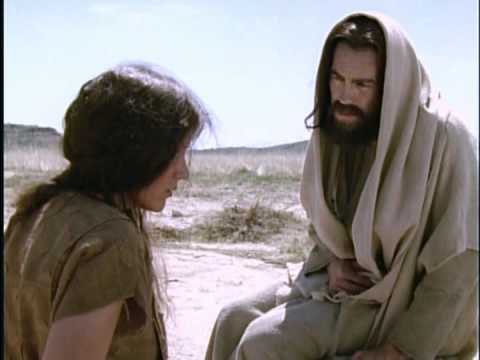
When they got near the town of Sychar, Jesus hung out by the well outside town while he sent his disciples to go find some food. (It’s nice to see these disciples doing the tasks of lowly interns!) While Jesus is chilling by himself around noon, a woman came up to the well to draw water. Instantly, this sends all kinds of messages about what kind of woman she is. Most women in the town would have gone out together early in the day when it was cooler, and they would help each other out and socialize for a while. Not this woman. She waited and came by herself.
Jesus knew all he needed to know about this woman. She has been passed around from man to man. She had cycled through five husbands and then had seemingly given up on marriage. Now she was shacking up with a guy she wasn’t married to. Not exactly the kind of woman your average “good guy” would want to bring home to meet his mother.
Jesus knew all this about her and more. He knew what kind of woman she was. He knew how it would look if he struck up a conversation with her. He should have ignored her. He should have pretended she was invisible – just like everyone else did. He had absolutely no business interacting with her.
But come on, that’s not Jesus.
When a Samaritan woman came to draw water, Jesus said to her, “Will you give me a drink?” (His disciples had gone into the town to buy food.)
The Samaritan woman said to him, “You are a Jew and I am a Samaritan woman. How can you ask me for a drink?” (For Jews do not associate with Samaritans.)
Jesus answered her, “If you knew the gift of God and who it is that asks you for a drink, you would have asked him and he would have given you living water.”
“Sir,” the woman said, “you have nothing to draw with and the well is deep. Where can you get this living water? Are you greater than our father Jacob, who gave us the well and drank from it himself, as did also his sons and his livestock?”
Jesus answered, “Everyone who drinks this water will be thirsty again, but whoever drinks the water I give them will never thirst. Indeed, the water I give them will become in them a spring of water welling up to eternal life.”
The woman said to him, “Sir, give me this water so that I won’t get thirsty and have to keep coming here to draw water.”
(John 4:7-15)
Will you give me a drink?
I really appreciate the glimpses of Jesus’ humanity in the gospels. Sometimes we get too hung up on the fact that he is the Son of God that we forget he is also the Son of Man. He is fully divine AND fully human. He got hungry, tired, angry, sad, and thirsty. He had been traveling all day. He’s thirsty. Here comes a woman with a rope and a bucket.
Will you give me a drink?
It’s such a simple request, yet in these circumstances this was absolutely shocking. Even she was taken aback. She was probably bracing herself to be scorned and ridiculed – at least non-verbally.
My wife went in to talk to one of the after-school program directors about our youngest son’s behavior. He had not been all that pleasant for them. Our older son had told us some things – from his perspective, at least – but we needed to really hear what was happening. When she told me about the interaction, she told me that the director was super tense and bracing to be yelled at. She was timid and defensive and apologetic. But the more my wife reassured her that she did nothing wrong and that we weren’t upset with her at all, her whole body language and demeanor changed. She was relieved. This poor woman was so used to being yelled at by other parents, that was her go-to reaction when my wife just had some questions about our son’s behavior. We felt so bad for her!
I can imagine this Samaritan woman responding in much the same way. Guarded… defensive… skeptical… confused?… relieved… curious…
All these reactions taking place in the seconds after being asked a simple question:
Will you give me a drink?
He is putting himself at her mercy. It’s up to her to say yes or no. He probably could have told her, but he asked. He put the ball in her court, so to speak. His question required her to stop and think through the situation.
Jesus never demands anything from us. He never forces us into a situation. There’s always the option to say no to him. In fact, that’s what plays out in the scariest scene in the Bible. In Matthew 25 Jesus foretells of a time when everyone will be sorted as “sheep” and “goats” to his right and to his left. The “sheep” are those who clothed him, fed him, tended to his needs, visited him. They didn’t know it was him, but whenever they did those things to “the least of these,” they were showing hospitality to Jesus himself. Conversely, those on his left were those who couldn’t be bothered to show hospitality or kindness to “the least of these.” Whenever they turned their backs on someone in need, they turned their backs on the Son of God.
Jesus would also tell his disciples this in Matthew 10:40-42 –
“Anyone who welcomes you welcomes me, and anyone who welcomes me welcomes the one who sent me. Whoever welcomes a prophet as a prophet will receive a prophet’s reward, and whoever welcomes a righteous person as a righteous person will receive a righteous person’s reward. And if anyone gives even a cup of cold water to one of these little ones who is my disciple, truly I tell you, that person will certainly not lose their reward.”
Will you give me a drink?
John would tell us in his first epistle,
If anyone has material possessions and sees a brother or sister in need but has no pity on them, how can the love of God be in that person? Dear children, let us not love with words or speech but with actions and in truth.
(1 John 3:17-18)
Or the preacher in Hebrews reminds us,
Do not forget to show hospitality to strangers, for by so doing some people have shown hospitality to angels without knowing it.
(Hebrews 13:2)
This woman had no idea who was asking her for a drink of water. Jesus, stunningly, reveals to her that he is in fact The Messiah! This was the first and one of the only people to whom he openly unveils his true identity. Would she deny The Messiah a drink of water? More importantly, would she accept the Living Water which The Messiah is now offering to her?
Will you give me a drink?
So often we fall into the trap of thinking God requires big things from us. We think that we’re not really good Christians unless we go on mission trips or lead Bible studies, or convert our entire sports team, or pastor a church, or preach to thousands on TV or in stadiums across the country. But God rarely calls people to great things. More often than not, God calls us to do “little things with great love” (as is the legacy of St. Therese of Lisieux).
Jesus is not asking this woman for anything spectacular, just something to quench his thirst. And in return, he offers her something that will quench the thirst within her, the unsatisfied desires she has within her that keep her hostage in this lifestyle of chasing love from men. This little action of giving a drink didn’t change Jesus’ life, but it most definitely changed hers.
“Will you give me a drink?” Jesus asked.
If you want to learn more about the importance of Christian hospitality, I highly recommend the book Stranger God, by Richard Beck. It’s a phenomenal read.
JESUS ASKED: Why Do You Involve Me?
There’s an interesting little exchange between Jesus and his mother which led up to his first recorded miracle in the Gospel of John:
On the third day a wedding took place at Cana in Galilee. Jesus’ mother was there, and Jesus and his disciples had also been invited to the wedding. When the wine was gone, Jesus’ mother said to him, “They have no more wine.”
“Woman, why do you involve me?” Jesus replied. “My hour has not yet come.”
His mother said to the servants, “Do whatever he tells you.”
Nearby stood six stone water jars, the kind used by the Jews for ceremonial washing, each holding from twenty to thirty gallons.
Jesus said to the servants, “Fill the jars with water”; so they filled them to the brim.
Then he told them, “Now draw some out and take it to the master of the banquet.”
They did so, and the master of the banquet tasted the water that had been turned into wine. He did not realize where it had come from, though the servants who had drawn the water knew. Then he called the bridegroom aside and said, “Everyone brings out the choice wine first and then the cheaper wine after the guests have had too much to drink; but you have saved the best till now.”
What Jesus did here in Cana of Galilee was the first of the signs through which he revealed his glory; and his disciples believed in him.
(John 2:1-11)
My wife does this thing where she makes a statement, but I’m supposed to know that she’s actually making a request or telling me to do something. That’s kind of what Mary does with Jesus here. She notices that this newlywed couple have run out of wine for their guests. **May we all be more like Mary, noticing when others are in need.**
She points out the fact to Jesus, and he asks her, “Why do you involve me?”
Whoa. What’s Jesus doing here? Is he refusing? Is he arguing, or “talking back?” He tells his mom that it wasn’t his time yet. But does she listen? Nope. She tells the servants to do whatever Jesus tells them.
Why do you involve me?
I think that’s a legitimate question for all of us. So many times our prayers are full of requests – for healing, strength, comfort, forgiveness, for a good day, for our needs being met, for our presentation to be successful, for our car to get fixed on time, for our sports team to win, etc.
Why do you involve me?
Let’s be honest. Jesus didn’t have to do anything at the wedding. I’m sure they could have found more wine somewhere else. Or they could have just owned up to the embarrassment and done without. This wasn’t exactly a life-saving or life-giving miracle.
But do we really need the divine power of the Messiah in order to have a good day? Or to do well on our test? Or to recover from a head cold?
Why do you involve me?
Jesus didn’t need to step in and save that party, but I think he wanted to. Mary knew what he was capable of and gave him the nudge to act. Jesus’ involvement at the wedding changed everything. And I think that’s a point to remember.
The fact is that atheists and non-Christians can live a fulfilling life without Jesus. I want to name that. And just because we are followers of Jesus does not guarantee any level of comfort or enjoyment in life. God causes the sun to shine and the rain to fall on both the just and the unjust. Yet in the US everyone wants to have Jesus on their side. They want to involve Jesus in their political and religious and social agendas. What would Jesus do? Who would Jesus vote for? What would Jesus drive?
Why do you involve me?
I don’t want to make sure Jesus is on my side. I want to be on the side of Jesus. I want Jesus involved in every aspect of my life, guiding my way and calling the shots. And Jesus wants to be involved. That’s why he tells his disciples toward the end of John’s Gospel that it’s better if he leaves them. After his resurrection he would send the Comforter to them. The Spirit living in them would allow them to do even greater things than they had seen Jesus do.
There is nothing too big or too small for Jesus. The one who controlled the weather and raised the dead also gave partygoers more wine and washed feet.
Do not be anxious about anything, but in every situation, by prayer and petition, with thanksgiving, present your requests to God. And the peace of God, which transcends all understanding, will guard your hearts and your minds in Christ Jesus.
(Philippians 4:6-7)
Now to him who is able to do immeasurably more than all we ask or imagine, according to his power that is at work within us, to him be glory in the church and in Christ Jesus throughout all generations, for ever and ever! Amen.
(Ephesians 3:20-21)
“Why do you involve me?” Jesus asked.
Because life is better with Jesus involved. You may never know what will happen.
JESUS ASKED: What Do You Want?
Who were your favorite teachers? Odds are they weren’t the ones who simply lectured and acted like they knew all the answers. The best teachers are those who ask the best questions.
As I read through the gospels I’m amazed by the questions that Jesus asked. In fact, if you keep reading in Luke 2 after the birth story, the next time we see Jesus is as a 12 year old boy. He ditches his family in Jerusalem after a festival and spends three days alone in the city. Surprisingly, his parents find him in the Temple carrying an in depth conversation/debate with the religious leaders. They were amazed by his understanding that was revealed in the questions he asked.
People asked Jesus questions all the time. But let’s take a look at some of the questions Jesus asked of others. They are the same questions, I believe, that we are asked today.
Let’s begin in John 1. Check out this story:
The next day John was there again with two of his disciples. When he saw Jesus passing by, he said, “Look, the Lamb of God!”
When the two disciples heard him say this, they followed Jesus. Turning around, Jesus saw them following and asked, “What do you want?”
They said, “Rabbi” (which means “Teacher”), “where are you staying?”
“Come,” he replied, “and you will see.”
So they went and saw where he was staying, and they spent that day with him. It was about four in the afternoon.
(John 1:35-39)
First of all, John the Baptist amazes me. He knew when it was time to hand off the ministry. He didn’t hang on to his own authority or influence. Once Jesus came on the scene, John gave him his full endorsement.
Second, did you catch the question Jesus asked these two potential disciples? It’s hard to tell from the text what kind of nonverbal communication accompanied that question.
Did he ask, “What do you want?” with a hint of cynicism?
Did he ask it like a grumpy old man opening the door to some kids participating in a school fundraiser?
Did he ask it with the gentleness of a grandparent when a grandchild comes bounding up into their lap?
Did he ask it with the charming sincerity of a store owner to a new patron?
Did he ask it with a squint in his eye and a pensive furrow on his brow?
Was he pushing them away or was he welcoming them in?
I think Jesus asks each of us the same question whenever we decide to become his followers. It may put us on the defensive. It may take us by surprise. Maybe we’ve never thought about it before. Maybe we don’t have a good answer, so we stumble over our words as we try to form a coherent reply.
What do you want?
What do you hope to gain by following Jesus? Some of us may have been baptized because all our friends were doing it. Maybe we wanted to be able to have the cracker and juice that always get passed around during worship. Maybe we wanted to win the approval of our parents. Maybe we just REALLY didn’t want to go to hell, so we made the decision before it was too late – better safe than sorry! Maybe…
Maybe we have forgotten.
What do you want?
If you were able to approach Jesus today, here, now, and he asked you that question – what would you say? You see him sitting alone at the coffee shop. You walk up to his table just wanting to say Hi. Before you can get a word out, he looks up and asks you that same question: What do you want?
Would you ask for a miracle? Would you ask for forgiveness or a second chance at something? Would you ask him a question that’s been burning in your mind for years? Would you want him to give you reassurance of a loved one’s final destination? Would you ask him to repeat that whole water-to-wine trick?
What do you want?
Some people want power. This is like when James and John asked if they could have the places of honor at Jesus’ right and left hand when he came into his kingdom. Some people see Jesus as a means to their own end – authority, influence, power, persuasion. People have wielded an extraordinary amount of power over others in the name of Jesus. Is that what you want? To feel important? To be respected? To control others?
Some people want possessions, more material wealth and luxuries. They read all the promises and blessings in the Bible that suggest a high standard of living in exchange for faithfulness. Maybe if they follow all the rules then God will owe them something. If they “name it and claim it,” then all their financial woes will be over, and they will be living their best life. Is that what you want? More stuff? A bigger home? A nicer car? More toys?
Some people want healing. Or forgiveness. Or therapy. Or a sense of belonging. Or the ability to be a part of something bigger than themselves.
Some people want to serve others. Or become civil activists. Or combat poverty and disease.
Some people want a Get-Out-of-Hell-Free card.
What do you want?
That’s the first question Jesus asks, and in many ways it is the most important question to ask ourselves when we consider following Jesus.
What do I want? What do I expect?
These two disciples didn’t ask for any of that. I am amazed at their answer – which is itself another question: “Where are you staying?”
They don’t ask for any thing. They just want to be with Jesus. They want to hang out. He invites them over, and they just chill together for the rest of the day. Wouldn’t that be awesome?
You see Jesus in a coffee shop. As you approach, he asks, “What do you want?” You reply, “Can we just hang out for a while?” And the two of you shut the coffee shop down, just talking and lounging over countless cups of dark roast.
Would that be enough for you?
What do I want? I want the heart of these disciples who are content to simply be with Jesus. They didn’t want anything from him. They wanted him. They wanted his presence. Spending time with Jesus was enough for them.
Is it enough for me? Is it enough for you?
“What do you want?” asked Jesus.
My UPDATED Definitively Subjective Star Wars Movie Rankings
It’s an amazing time to be a nerd.
I’ve found myself thinking and saying that a lot over the last several years. I’ve always been a nerd – Star Wars, Lord of the Rings, Harry Potter, Monty Python, DC, Marvel, and everything in between.
I remember sitting in elementary school having Star Wars trivia contests with my friends. Who was Luke’s childhood best friend? What was the name of the droid Uncle Owen almost bought instead of R2-D2? That sort of thing.
When I was home sick as a kid, I wore out our Star Wars trilogy VHS tapes.
And yes, Han shot first.
Is every Star Wars movie a masterpiece? No, not by a long shot. But each movie has something I can really appreciate for what it’s worth. I’ve also been getting into the new canon books (especially the audiobooks – those things have incredible production value) and the TV series on Disney+ (The Mandalorian, Clone Wars, Rebels, and Resistance). I appreciate how they are trying to flesh out the fuller story within the galaxy.
So without further ado, here is my Definitively Subjective Star Wars Movie Rankings.
1. Star Wars: Episode V – The Empire Strikes Back
Rarely in the world of cinema is a sequel better than the first. Empire is a near-perfect follow-up to the surprise worldwide phenomenon. We thought that after the destruction of the Death Star, the rebels would have the Empire up against the ropes. But the opposite ends up being the case. The scrappy rebellion is still fighting for survival against the galactic war machine helmed by Darth Vader.
In a masterful piece of story telling, the good guys don’t win the day. The plot is full of betrayals, backstabbing, double crossing, love, jealousy, and “defeat snatched from the jaws of victory.” I mean, it doesn’t get any more Star Wars than this installment. It has the most-quoted lines (“No! I am your father.”) and the most iconic imagery (AT-ATs, carbonite, light saber duels, and Yoda). The Empire Strikes Back is what every movie sequel strives to be.
2. Star Wars: Episode IV – A New Hope
The indie movie that became a global cultural phenomenon was ahead of its time in many ways. It’s a traditional “hero’s journey” movie that has been copied time and time again – because it works. I will forever be loyal to this movie that introduced us to Luke, Han, Chewbacca, Leia, Obi-Wan, C-3PO, R2-D2, and Darth Vader. For a 1970s sci-fi movie made on a shoe-string budget with practical effects and first-time actors, this movie still holds up surprisingly well 40 years later.
This is where it gets a bit more controversial and subjective…..
3. Star Wars: Episode VII – The Force Awakens
The characters, plot, action, and humor of The Force Awakens make this one of the most rewatchable installments in the saga. Yes, it has a lot of similarities to the original. Yes, Kylo Ren is an angsty emo kid. Yes, ****SPOILERS**** Han Solo dies. But The Force Awakens recaptures the feel and magic of the original trilogy. I absolutely love Rey and Poe and BB-8 and Finn.
4. Rogue One: A Star Wars Story
The first non-saga movie was a pleasant surprise. I appreciate everything it was trying to do. Yeah, you could say it was a whole movie just to fill a plot hole in the original. But it was more than that. It made the Empire worth fearing. It established the original trilogy within the galaxy ruled under the tyrannical fist of the Empire. Rogue One also shows the moral ambiguity of the rebellion at times.
And come on – that last 90 seconds with Darth Vader was one of the best scenes in the entirety of Star Wars.
5. Star Wars: Episode VI – Return of the Jedi
I’ve gotta say that when I was a kid, this was my favorite. I loved the scenes in Jabba’s palace. I loved the Ewoks. I loved the speeder bikes and the space battle. I loved the duel between Luke and Vader at the end with the redemption of Vader. But when I watch it as an adult I realize how much this movie was targeted to kids. It could have been a lot darker and grittier following ESB. But they played it safe in order to sell more toys – which totally worked.
6. Star Wars: Episode IX – The Rise of Skywalker
The Rise of Skywalker brings the “Skywalker Saga” to an alleged end. (We’ll see about that.) I think it did so brilliantly. Was it perfect? No. Was it everything I wanted? Yes! …minus a cameo of baby Yoda. My biggest complaint was that it could have been longer. It could have been two movies. There was a lot that had to happen to make up for The Last Jedi. Some questions had to be retconned (like Rey’s parentage and Leia’s force abilities, etc.). It’s almost like The Last Jedi could have been Episode 7.5. I appreciated Kylo Ren’s story arch to become fully Ben Solo again. I thought his and Rey’s on screen chemistry was absolutely on point without being a weird love story. Rey’s journey, coming to grips with who she really is and could be, was an emotional ride. I loved seeing all the old faces from Lando Calrissian and Nien Nunb to the return of Wedge Antilles. It was sad seeing Leia die, but her send off was well done. It was also hard seeing Snap Wexley die in the battle over Exigol. (Snap got his introduction in The Aftermath book trilogy.) It was also great seeing Ian McDiarmid reprise his role as Darth Sidius/Emperor Palpatine – because OF COURSE it’s been Palpatine pulling the strings as the ultimate puppet master the the galaxy. I’ve been rambling because it’s so fresh on my mind. Do pay attention to the critics. This movie is an epic end to an epic story.
7. Star Wars: Episode VIII – The Last Jedi
This movie took a lot of risks. The “fans” complained that The Force Awakens was too much like the originals, so The Last Jedi tried to break away from the common tropes and expectations of the originals – and the “fans” complained again. I thought it worked really well on many levels. It was a very meta movie, telling you the whole time what it was doing – “Let the past die…” “This is not going to go the way you think…” Kylo Ren and Rey both came into their own. They can no longer rely on the past to lead them into the future. I think that says something about Star Wars over all.
The Last Jedi has one of the coolest light saber battles, one of the most visually stunning space battle scenes, and Yoda! It would be higher on my list, but it’s not quite as rewatchable as others.
8. Star Wars: Episode III – Revenge of the Sith
Revenge of the Sith had the darkness and the grittiness that I wish Return of the Jedi would have had. RotS, however, almost goes too dark. But it captures the transformation of Anakin to Vader in a visceral way. Obi Wan is the hero of the prequels. As unbelievable as Anakin and Obi Wan’s friendship seems at some points because of bad acting/writing, when things fall apart, you feel it. That final duel between them is haunting.
Full disclosure, I’ve seen Revenge of the Sith fewer times than any other movie on this list.
9. Solo: A Star Wars Story
I really enjoyed Solo. It was a fun, campy, action-packed heist movie. Think Italian Job in space. Was it entirely necessary? No. But I’m glad it’s here. Like Rogue One, Solo establishes the Empire as a force to be feared and the rebellion as a fledgling grassroots resistance movement. The actor playing Han offered a surprisingly convincing portrayal of the character. Lando was spot-on. I loved seeing the fresh, new Millennium Falcon pull of the Kessel Run. And when Maul appeared on screen, there was an audible gasp throughout the theater. There’s SO MUCH they could do with the Maul storyline…if they ever do another “Star Wars Story.”
10. Star Wars: Episode I – The Phantom Menace
THE BAD: the writing, the politics (Trade Federation? Are you kidding?), goofy battle droids, naked C-3PO, midichlorians, and Jar. Jar. Binks.
THE GOOD: the worlds, Qui Gon Jinn and Obi Wan Kinobi, Darth Maul with the double-bladed lightsaber, the BEST light saber duel in all of Star Wars, the pod race, expanding the Jedi/Force lore
11. Star Wars: Episode II – Attack of the Clones
I’ve tried rewatching this a few time recently and get the same feeling each time: Bored. I forgot how much of this movie involves slowly walking and talking. There’s action at the beginning and in the last 30 minutes. The rest is just slow and/or annoying. There is absolutely no chemistry between Anakin and Padme. Obi Wan’s skills are wasted. The main villain, Count Dooku, is completely dull and forgettable. If anything, this movie feels like an introduction to the Clone Wars animated series – which I think is better than Attack of the Clones.
How does your list compare? I know this is a pretty controversial subject among nerds, but I’d love to hear from you.
For comparison’s sake, here are the Star Wars movies ranked by Tomatometer Score:
1. The Empire Strikes Back (95%)
2. The Force Awakens (93%)
3. A New Hope (93%)
4. The Last Jedi (91%)
5. Rogue One (84%)
6. Return of the Jedi (80%)
7. Revenge of the Sith (79%)
8. Solo (70%)
9. Attack of the Clones (66%)
10. The Phantom Menace (55%)
11. The Rise of Skywalker (54%) …..what?! Audience score was 86%
BEHIND THE MUSIC: Silent Night, Holy Night
In the cold, snowy December of 1818, a young Austrian priest was frantically making preparations for his village’s Christmas Eve mass. This being one of the most important worship services of the year, Joseph Mohr, only 26 years old at the time, did not want to disappoint his parishioners. He wanted to make sure the night was full of wonderful and inspiring music. There was only one problem. The church organ was out of operation and would not be fixed until well after Christmas.
The day of Christmas Eve, mere hours before their midnight mass, Mohr knocked on the door of his friend Franz Gruber, a school teacher and choir director. The 31-year-old Gruber looked over Mohr’s poem, and in a bout of inspiration composed the music to what would become the most beloved Christmas hymn of all time.
Silent night, holy night,
All is calm, all is bright
Round yon virgin mother and child.
Holy infant, so tender and mild,
Sleep in heavenly peace,
Sleep in heavenly peace.
Silent night, holy night,
Shepherds quake at the sight;
Glories stream from heaven afar,
Heavenly hosts sing Alleluia!
Christ the Savior is born,
Christ the Savior is born!
Silent night, holy night,
Son of God, love’s pure light;
Radiant beams from thy holy face
With the dawn of redeeming grace,
Jesus, Lord, at thy birth,
Jesus, Lord, at thy birth.
BEHIND THE MUSIC: O Holy Night
It all began with a gun left out and found by two little eight year old boys. That’s how Placide Cappeau tragically lost his right hand and avoided following in his father’s footsteps as a barrel maker. Instead, because of the accident he was able to pursue his schooling where he developed a love for art, literature, and law. Later in life Cappeau became mayor of his hometown, a wine merchant, and a part-time local poet.
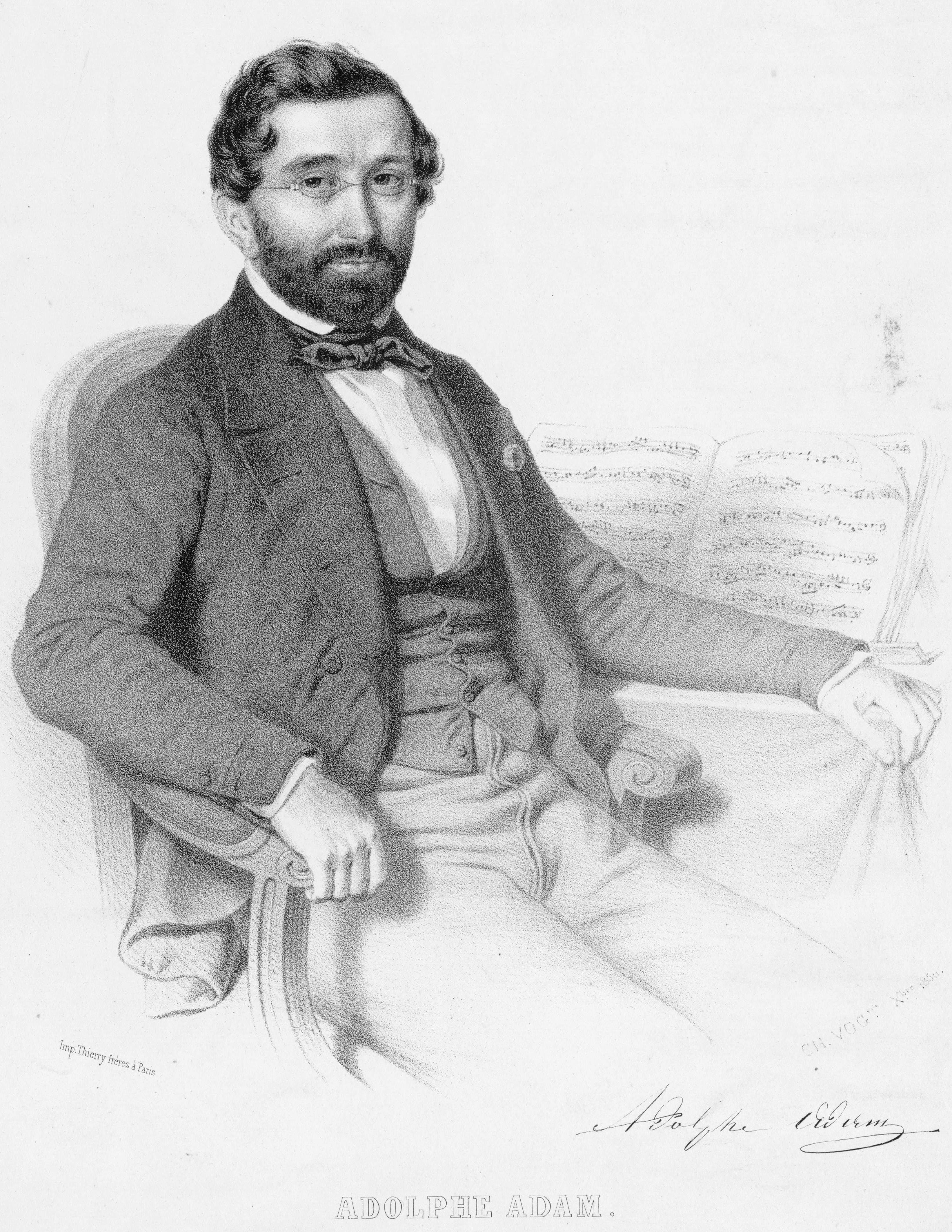
Cappeau met up with the famed French composer, Adolphe Adam, in Paris three weeks before Christmas. Adam was moved by the inspiring lyrics to Cappeau’s work and began straightaway composing the equally inspiring music to accompany the lyrics. On Christmas Eve, 1847, the joint piece by Cappeau and Adam was performed by French opera singer, Emily Laurey, in the small town of Roquemaure.
Fast forward about fifty years to 1906. A brand new technological wonder has been unveiled to the world – the radio. On Christmas Eve, 1906, Reginald Fassenden played a song on his violin over the radio for the first time in human history. The song he chose to play that night, the first song ever to be broadcast over radio waves, was the song composed by a one-handed, French socialist wine merchant and his Jewish friend composer – the improbable song that almost wasn’t – O Holy Night.
BEHIND THE MUSIC: It Came Upon the Midnight Clear
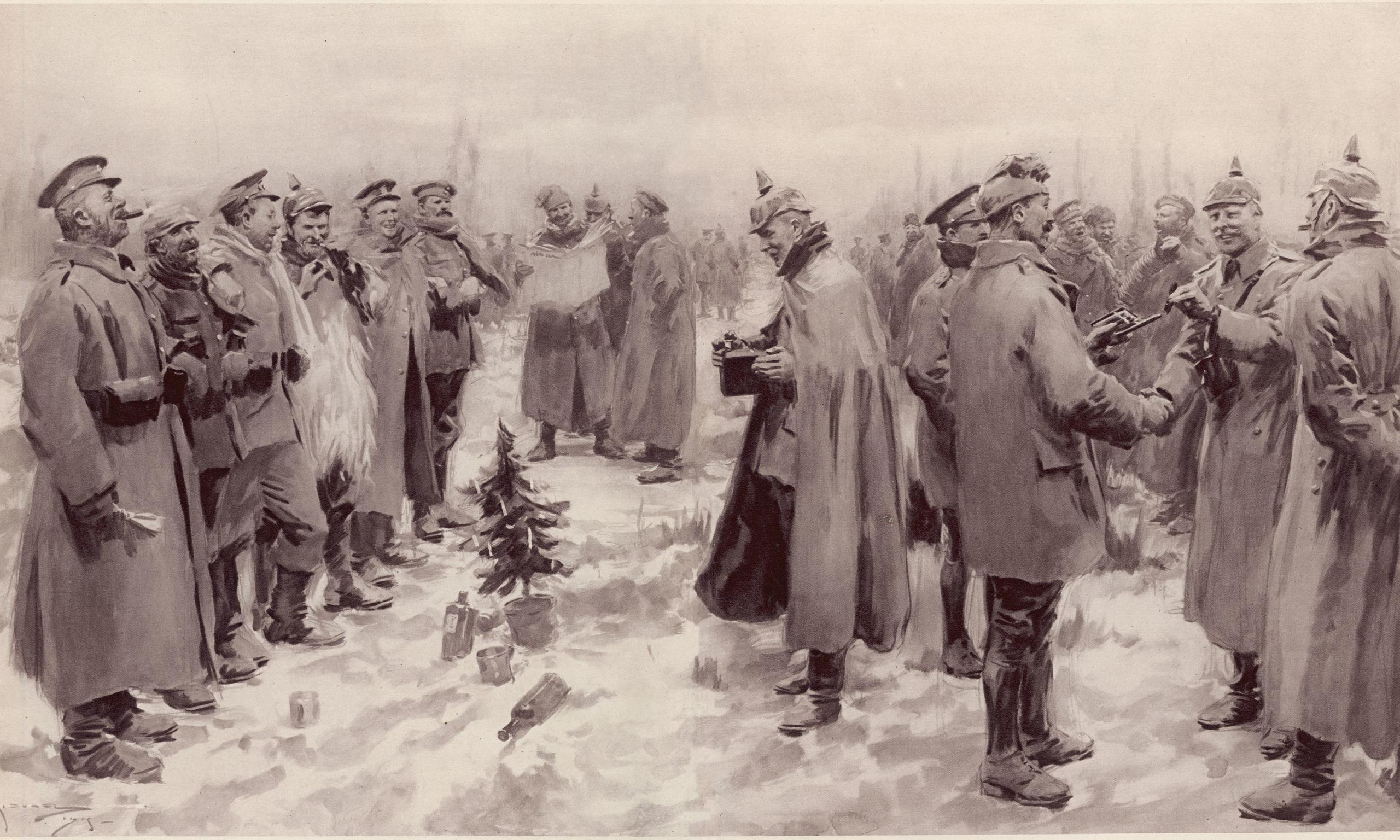
The lyrics were written in 1849 by Edmund Sears, a Unitarian pastor near Boston, Massachusetts, at the request of one of his friends and fellow church leaders. The Mexican-American War had just ended the year before. Bloody social revolutions were happening across Europe. The American slave trade was operating in full force with no feasible end in sight. Everywhere he looked there was only violence, bloodshed, oppression, war, and strife.Glory to God in the highest,
and on earth peace,
good will toward men.
Luke 2:14, KJV
It came upon the midnight clear,
That glorious song of old,
From angels bending near the earth,
To touch their harps of gold:
“Peace on the earth, goodwill to men,
From heaven’s all-gracious King.”
The world in solemn stillness lay,
To hear the angels sing.
Still through the cloven skies they come,
With peaceful wings unfurled,
And still their heavenly music floats
O’er all the weary world;
Above its sad and lowly plains,
They bend on hovering wing,
And ever o’er its babel sounds
The blessed angels sing.
Yet with the woes of sin and strife
The world has suffered long;
Beneath the angel-strain have rolled
Two thousand years of wrong;
And man, at war with man, hears not
The love-song which they bring;
O hush the noise, ye men of strife,
And hear the angels sing.
And ye, beneath life’s crushing load,
Whose forms are bending low,
Who toil along the climbing way
With painful steps and slow,
Look now! for glad and golden hours
come swiftly on the wing.
O rest beside the weary road,
And hear the angels sing!
For lo!, the days are hastening on,
By prophet bards foretold,
When with the ever-circling years
Comes round the age of gold
When peace shall over all the earth
Its ancient splendors fling,
And the whole world give back the song
Which now the angels sing.