Page 18 of 70

WATER | 40 Days of Focus, Day 2
 

And God said, “Let there be a vault between the waters to separate water from water.” So God made the vault and separated the water under the vault from the water above it. And it was so. God called the vault “sky.” And there was evening, and there was morning—the second day.
(Genesis 1:6-8)

Liquid water is such an interesting substance. Without the presence of Dihydrogen Monoxide in liquid state, there can be no life as we know it. But too much at any given moment can be fatal.

Humanity has a strange relationship to water. We need it to live, but we can’t control it. We can’t make it rain or stop raining. We can barely do anything to hold back raging rivers or flood waters. Drowning is still among the leading causes of accidental deaths. Tsunamis, hurricanes, and flash floods continue to wreak havoc across the globe, wiping out entire villages and devastating national economies.

Is it any wonder why the ancients equated water with chaos?

If you back up to Genesis 1:2 we see this in action:

Now the earth was formless and empty, darkness was over the surface of the deep, and the Spirit of God was hovering over the waters.

That’s the language of chaos. Many creation myths from the ancient world featured chaos in some form. They often claim the world as we know it is simply a byproduct of the chaos with no real meaning or purpose. Come to think of it, those ancient creation myths are not too far off from modern physicists.

But in our Bibles God controls the waters and brings order out of chaos. Think about all the times water plays a role in the stories of Scripture. The flood. Baby Moses on the Nile River. The parting of the Red Sea. Water flowing from the rock in the wilderness. The parting of the Jordan River. The storm on the Mediterranean Sea in the story of Jonah. The 3-year drought in the time of Elijah. The times when Jesus calmed the storm and walked across the water.

To many ancient peoples, the waters were associated with chaos and the abyss, or the realm of demonic spirits. But every step of the way throughout the Bible we see that God is in control of the uncontrollable. I love what God says in the book of Job:

“Who shut up the sea behind doors
when it burst forth from the womb,
when I made the clouds its garment
and wrapped it in thick darkness,
when I fixed limits for it
and set its doors and bars in place,
when I said, ‘This far you may come and no farther;
here is where your proud waves halt’?”
(Job 38:8-11)

He goes on to speak about snow and hail and rain, reminding us humans that we are completely helpless in the face of weather phenomena.

Water is a source of both life and death.

I can’t help but connect this to another event involving water: baptism. Baptism as a holy sacrament has been practiced for centuries. It predates Christianity. Baptism was actually practiced by the Jews in the Second Temple period. If you go to Jerusalem today you can still see the remains of ancient baptistries around the Temple complex. They would go down into the water, immerse themselves, and come out of the water ceremonially cleansed.

Jesus and his followers brought a different understanding of baptism. In Christian baptism we do not immerse ourselves. We allow another to lower us down into the water. We submit our lives into their hands. It takes a certain degree of trust. This immersion represents a death and burial beneath the flood waters. We are then raised up out of the water into a new life, a new creation, a new humanity, a new kingdom.

Or don’t you know that all of us who were baptized into Christ Jesus were baptized into his death? We were therefore buried with him through baptism into death in order that, just as Christ was raised from the dead through the glory of the Father, we too may live a new life.
(Romans 6:3-4)

Water is the source of both life and death. Water is both good and necessary and dangerous and beyond our control – just like God. Submitting ourselves to the waters of baptism connects us with this ancient story of destruction and creation, of fear and wonder, of death and new life.

Jesus answered, “Everyone who drinks this water will be thirsty again, but whoever drinks the water I give them will never thirst. Indeed, the water I give them will become in them a spring of water welling up to eternal life.”
(John 4:13-14)

 __________________________________
Have you ever stopped in awe and wonder at the sight of the ocean, a river, or a waterfall? What is so awesome and inspiring about those locations?

In the Chronicles of Narnia, CS Lewis says about Aslan (representing God) that he is “not safe, but he’s good.” How does this challenge the way we understand God?

Have you been baptized? What led you to that decision? Do you remember going under the water? What was that like? How did you feel when you were lifted back up?

LIGHT | 40 Days of Focus, Day 1


And God said, “Let there be light,” and there was light. God saw that the light was good, and he separated the light from the darkness. God called the light “day,” and the darkness he called “night.” And there was evening, and there was morning—the first day.
(Genesis 1:3-5)

Light is one of the most common themes in all of Scripture. If you think about it, Light vs. Dark is one of the most common themes in all of literature and entertainment. Countless stories have been told throughout the generation of Light triumphing over Darkness – from Beowulf to Star Wars, from The Lord of the Rings to Mean Girls, from Harry Potter to The Princess Bride. Light represents good, and dark represents evil.

But I want you to notice something in the passage above. On the opening day of Creation, God created Light and separated it from the Darkness. Here’s an interesting thing to keep in mind – God still put the darkness to use. We need darkness in our lives. Our bodies survive on a natural rhythm of light and darkness. It’s how we are able to produce melatonin which helps us fall asleep. Many animals are nocturnal and would not survive in complete light. I love what David says about light and darkness in Psalm 139.

If I say, “Surely the darkness will hide me
and the light become night around me,”
even the darkness will not be dark to you;
the night will shine like the day,
for darkness is as light to you.

The natural state of the universe is darkness. Without nearby light sources, like our sun, space is completely black and devoid of light. But that’s not the case if you look back far enough in time. When scientists pointed their radio satellites into the darkest part of the visible sky, they accidentally found light. In the earliest days of our universe’s existence, everything was full of energy and light. The whole universe glowed brightly with what astronomers now call the “Cosmic Microwave Background Radiation.”

Let there be light, indeed.

When we look at the night sky, what looks like complete darkness can actually be filled with light if we look hard enough – just like the human heart. Even in the most corrupt, most evil of people, I believe there is still a spark of light waiting to be ignited. Otherwise, Jesus could not have said this to a huge crowd of complete strangers:

“You are the light of the world. A town built on a hill cannot be hidden. Neither do people light a lamp and put it under a bowl. Instead they put it on its stand, and it gives light to everyone in the house. In the same way, let your light shine before others, that they may see your good deeds and glorify your Father in heaven.”
(Matthew 5:14-16)

But how can we be the “light of the world” when we know how much darkness resides within us? Simply put, we can’t. On our own we try to hide our light out of shame for our darkness. Thank God he doesn’t leave us on our own.

This is the message we have heard from him and declare to you: God is light; in him there is no darkness at all. If we claim to have fellowship with him and yet walk in the darkness, we lie and do not live out the truth. But if we walk in the light, as he is in the light, we have fellowship with one another, and the blood of Jesus, his Son, purifies us from all sin.
(1 John 1:5-7)

On day one God created light, but he also left the darkness. There may still be darkness within us, but the closer we walk with God the brighter the light shines forth. As we embark on this journey over these forty days, I pray that you will learn to walk in the light and overcome the darkness. As the saying goes, it’s always darkest before the dawn. That’s just how it was on that Good Friday so long ago when Christ was crucified and sealed in a tomb. The world seemed darker than ever before, but a new day would dawn with the resurrection.

_________________________________

Do you remember being afraid of the dark? Why do you think that happens?

In what ways do you see darkness in the world and in your life?

Are there specific areas of your life in which you may be afraid to shine a light? Is there anything you are worried that the light might reveal?

How can you be the “light of the world” in your family? in your workplace? in your school? in your community? online?

REVIEW | Inspired: Slaying Giants, Walking on Water, and Loving the Bible Again

Inspired: Slaying Giants, Walking on Water, and Loving the Bible Again
Inspired: Slaying Giants, Walking on Water, and Loving the Bible Again by Rachel Held Evans
My rating: 4 of 5 stars

Overall I enjoyed this book. As a person in full-time ministry and a Bible nerd, it’s rare for a book written on a popular level to keep my attention and interest. Many popular level books are great for the lay person, the average church goer, or the new Christian. With Rachel Held Evans’ latest, she hits all the right notes for me.

Her style is imaginative and informative. She takes liberties while also trying to stay true to the text. I found her creative retellings of the stories compelling. Evans will definitely go against the grain of traditional, fundamental, and literalist readings of Scripture – but in my opinion, that’s a good thing. We often try to make the Bible do and say things it was never meant to do or say.

I’ve been following RHE on Twitter for a while now, and while she was in the process of writing this book she talked about the importance of diversity in her research. She quotes and cites an array of scholars, pastors, theologians, authors, activists, and rabbis – men and women, caucasian and people of color. It’s fascinating to hear how different Jewish rabbis interpret a text compared to Evangelical pastors. The Bible truly is like a diamond that you must turn in order to see all the beauty of the colors hidden inside.

Each chapter handles a different section of Scripture – from creation and the Law to the conquest narratives, the Psalms, the Prophets, the Gospels, and the Letters. She paints a beautiful overview of what the Bible is and what it does. She also shares heartbreaking stories of how the Scriptures have been mishandled, misapplied, and misunderstood. At best, this can lead to illformed theology. At worst this can lead to a complete derailment of people’s faith and even atrocities like slavery and genocide.

In short, what we think about the Bible matters.

When I was growing up we did something called “Sword Drills.” The Bible teacher would call out a verse and all the kids would try to be the first to find it in their Bibles. The first one would read the verse out loud and get a piece of candy. That’s fine, except for the notion of using our Bibles as swords. The Bible was never intended to cut other people down. It was never intended to be weaponized against people. Yes, the Bible (namely, the Word of God) is compared to a sword twice. Once in Ephesians 6 and once in Hebrews 4. In Ephesians the sword is wielded against the spiritual forces of darkness in the world – not against other people. And in Hebrews the Word of God is a sword that cuts deep, dividing joint and marrow, soul and spirit – of you, not other people.

RHE knows almost as well as anyone what it feels like to have the Bible weaponized against her. And her book, Inspired, will hopefully put an end to that kind of mentality for her readers. Although chances are…if you’re reading Rachel Held Evans, you probably aren’t the kind of person who would do that anyway.

When I’m reading a work of nonfiction, I always try to ask, “Who is this for?” I believe Inspired is for those who have fallen out of love with the Bible. It’s for long-time Christians who are bored with it or who are beginning to question everything they’ve been taught. It’s for skeptics who are intrigued by Jesus but don’t know what to do with the Bible. It’s for pastors and teachers of Scripture who want a fresh look at an ancient story. It’s for Bible nerds and Bible critics and the Biblically apathetic. But it’s not for anyone who is content with the status quo of their faith, who are fine with being spoon-fed a portion of Scripture once a week at church without questioning what they’re being taught.

If you’re ready to fall back in love with the Bible and see it in a whole new ancient way, then give this book a chance. Rachel Held Evans has really upped her game with this one.

View all my reviews

Biblical Enneagram Types: NINES

The Peacemaker


Enneagram Type Nines are typically known as the Peacemakers. Nines have the uncanny ability to see everyone’s point of view at once and can join in either side of a debate. However, they usually choose to withdraw from the debate altogether because they want to avoid conflict and anything that might upset their calm.

Nines sit atop the Enneagram for a reason. It’s not unusual for a Nine to have difficulty finding their type since they can relate to so many other numbers. They can understand the drive of the Three, the desire to be helpful of a Two, the skepticism of a Six, and the protectiveness of an Eight all at once.

This can be a good thing or a very bad thing. Healthy Nines make excellent mediators, able to bring two conflicting sides to the table and find common ground between them. Unhealthy Nines, however, can be crippled by the conflicting viewpoints and simply shut down, withdrawing into themselves and their own little world. If a Nine doesn’t want to be moved, then they can become the most stubborn Type on the Enneagram. But if a Nine truly doesn’t have strong opinions, then they are usually happy to go with the flow.

They can be peacemakers or conflict-avoiders. They can be laid back and easy-going, or they can be an immovable stick in the mud. They can be assertive and fight for a just cause, or they can be masters of sarcasm and passive aggressiveness. They can be aloof or welcoming.

Nines often defer decisions to the group or to the one in authority. As kids, Nines picked up on the message that their presence doesn’t matter very much, so they learned to fade into the background and keep their anger in check lest they rock the boat. Nines come into their own when they learn to pair their ability to see all points of view with an assertiveness to act on what they know to be right.

Healthy Nines can be a blessing to everyone around them.

FATHER ABRAHAM HAD MANY SONS…

Funny how we never talk about Zimran, Jokshan, Medan, Midian, Ishbak, and Shuah (Genesis 26:1). But whatever.

I believe that the “Father of the Faith” was a Nine: Abraham.

God called Abraham (then known as Abram) to leave the place of his fathers and travel to a distant land. God promised that he would bless Abram with offspring too numerable to count. It’s a beautiful promise, really.

The Lord had said to Abram, “Go from your country, your people and your father’s household to the land I will show you.
“I will make you into a great nation,
and I will bless you;
I will make your name great,
and you will be a blessing.
I will bless those who bless you,
and whoever curses you I will curse;
and all peoples on earth
will be blessed through you.”
(Genesis 12:1-3)

I don’t know how well any other Enneagram type would handle a promise like this. A Three would let that go directly to his head as his ego inflated to the size of a hot air balloon. A Four would probably try to hide from the responsibility – You’ve got the wrong guy, God. A Seven would be almost TOO eager for the task. A One would likely get caught up in all the details of exactly how and when God’s plan would come about. But Abram simply trusted and went.

The very next story in Genesis 12 is about Abram traveling to Egypt. While there, he fears that Pharaoh would have him killed in order to take his wife, Sarai. So in order to avoid that conflict Abram told the Egyptians that Sarai was his sister. They still took her, but they let him live. God had to step in and punish Pharaoh and his court because of Abram’s lie. A very similar thing happened in Genesis 20. Nines often think they are doing what’s best if they avoid conflict, but that often only makes the situation worse.

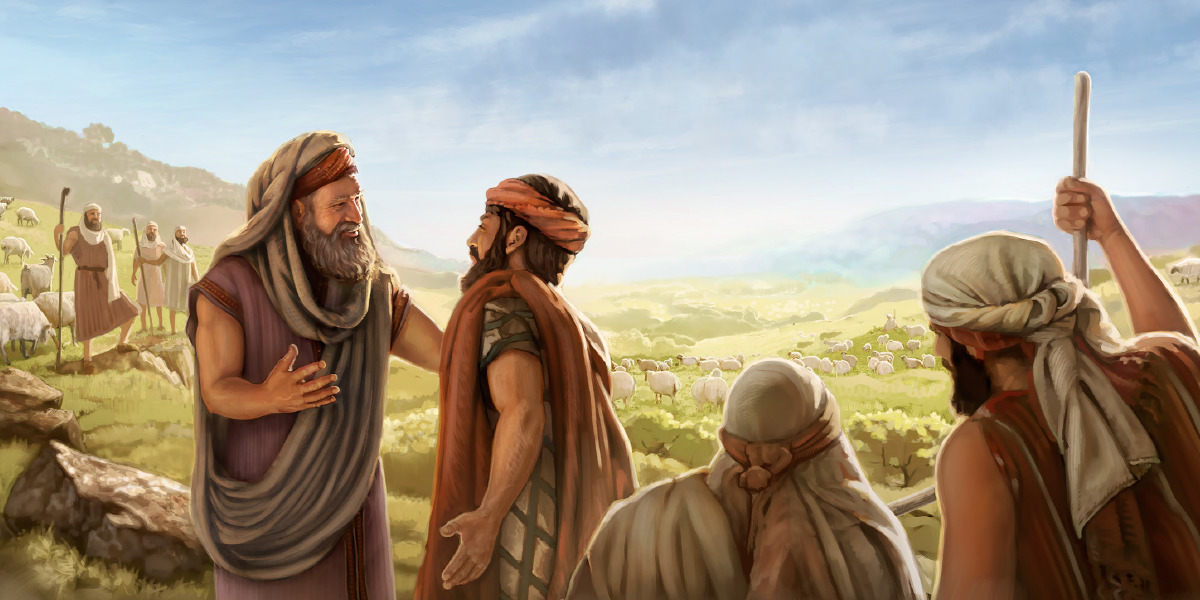
Then there’s the time when Abram’s and Lot’s (his nephew) herds and flocks were getting too big. They knew they couldn’t stay together, so they decided to part ways. Abram would go one direction, Lot the other. Abram let Lot have the first pick. Nines share some commonalities with Twos, for instance putting other people’s needs and desires above their own.

When Sarai grew tired of waiting for God to act on his promise of a son, she urged Abram to take her handmaid, Hagar, and use her as a surrogate. This is yet another instance when Abram avoided a potential conflict and everyone was worse off because of it. Hagar bore a son named Ishmael, and Sarai grew jealous and eventually sent them both away to make it on their own in the wilderness. Abram just let it happen.

God changed Abram and Sarai’s names to Abraham and Sarah. Soon after that God sent his angels to investigate the cities of Sodom and Gomorrah – where Lot and his family settled down. The report was NOT good, to say the least. God sent word to Abraham that he planned to destroy the cities and the inhabitants. But Abraham took on the role of mediator and began to bargain and negotiate with God on behalf of the cities. The cities were full of evil, but Abraham still saw something worth saving in them.

Finally, Abraham and Sarah were blessed with a son of their own – Isaac. God fulfilled the promise he made to them so long ago. I think only a Nine could have been as patient as Abraham. But then…God called Abraham to sacrifice Isaac upon an altar. Some theologians and rabbis over the years have insisted that Abraham should have argued with God on behalf of Isaac like he did on behalf of Sodom and Gomorrah. I’m not sure. Maybe this is another instance of Abraham simply going along in order to avoid one more conflict. Or maybe Abraham had learned by this point to fully trust that God was in control of the situation. He sounds confident when he tells his men, “We will go up and worship, and then we will come back down.”

Abraham ended up outliving Sarah. One of the most amazing little lines jumps out to me every time I read about Abraham’s death.

Then Abraham breathed his last and died at a good old age, an old man and full of years; and he was gathered to his people. His sons Isaac and Ishmael buried him in the cave of Machpelah near Mamre, in the field of Ephron son of Zohar the Hittite, the field Abraham had bought from the Hittites. There Abraham was buried with his wife Sarah.
(Genesis 26:8-10)

Nines have a way of bringing people together. Even in his death Abraham was able to bring Isaac and Ishmael together again. I don’t know that they ever settled their differences, but they were together for a time because of their father. I think that’s a very touching detail that we often overlook.

Abraham was compliant and stubborn. Abraham was a pushover and he stood up for his beliefs. Abraham shied away from conflicts and he got into arguments with God Almighty. Abraham acted in his own self-interest and he became the one through whom all nations would be blessed. Abraham was self-absorbed and concerned about making everyone else happy.

Nines often live in the tension between action and inaction. When pressed with a choice, they choose not to choose – which is still a choice! Nines must learn to move, to act, to decide, to fight. Deciding not to choose is almost never the right decision.

Nines, we see you, we love you, we need you. God created you with a gift to see everyone’s perspective. But don’t lose your own perspective while looking at everyone else’s. God created you to live your life. God has blessed you so that you can be a blessing to all people.

Response: "The Problem with Those 9 Personality Types"

I love the Complexly production company and the work they do producing free, informative, entertaining content with the purpose of educating the general public on a broad range of issues. They produce the YouTube channels “SciShow” and the spin offs “SciShow Space” and “SciShow Psych.” I’m a subscriber and regular viewer of these channels. I really dig what they’re trying to do.

On February 21, though, they released a video challenging the claims of the Enneagram. You know I can’t just let that one slide. Haha

I watched it yesterday, and I actually agree with most of what’s said. However, I don’t think they quite understand what the Enneagram system does and what it’s really about. Here’s the video. Watch it, and then I’ll give some comments on it below.

First of all, the scenario she opened with is not what the Enneagram is about. You should NEVER use someone’s Type to shame them or call them out on something. I’ve failed in this before, and it’s never a good idea. Don’t ever say “you’re such an Eight” or “you’re being so Four right now” as an insult or jibe at someone. Just don’t.

Brit Garner, the host, then goes on to point out that the Enneagram doesn’t have much scientific support or validation behind it. And she’s completely right. No Enneagram expert or teacher or book would ever make that sort of claim. The Enneagram is not science. I lead with that almost every time I talk about it. Some may view that as a weakness and a reason to be skeptical. I understand that 100%. The Enneagram is more of an art than a science. It comes out of a longstanding wisdom tradition and has been used among various religions and cultures throughout the centuries.

Just because something isn’t scientific doesn’t mean it’s not True. Science does not have the corner market on truth. Wisdom and science shouldn’t compete with each other but should inform each other. I think that’s what the Enneagram does well. I think that’s one of its strengths.

Garner claims that the purpose of the Enneagram is to “encourage [people] to become the best version of their personality type.” Not exactly. Our personality type consists of all the walls and defenses that we have built up over a lifetime. We have different ways of surviving in the world that comprise what we call a “false self.” Most Enneagram teachers will emphasize the truth that you are not your type. Your type is a false self. The Enneagram helps expose that false self so we can actually shed those masks and defense mechanisms, tear down the walls, and become our True Self, a more whole, integrated person. The purpose of the Enneagram is NOT to become the best version of your type.

The “fundamental flaw” in the system, she says, is that each type can be relatable for almost everyone. Again, most experts will tell you that we have a little bit of each type within us. I’m dominant in Type Three, but I also relate well to types One and Five. I see a lot of myself in those other types. I’m also influenced by my Two wing and my lines to Six and Nine. The Enneagram recognizes and affirms the complexity within each individual person. Every one of us contains elements of all Nine, but we are only Dominant in one type.

She also points out the very real problem that we can get different results based on the tests we take. I agree 100% that this is a problem. That’s why YOU DON’T RELY ON A TEST TO FIND YOUR ENNEAGRAM TYPE. Did I say that strongly enough? Haha

Tests are one of the least effective ways to discover your type. Every Enneagram expert will tell you that. It’s a journey of self-discovery. A test can help, but it should not be your go-to.

Then Garner points to the “Barnum Effect” in relation to the fact that people can relate to each of the types. On a mere surface level explanation of the Types, I can see how that might be the case. Sometimes the basic introductions do come across as vague generalities that can apply to almost everyone. That’s why you must go deeper. The real strength of the Enneagram lies in its ability to reveal your dark, hidden areas, or your “shadow side.” You know you’ve hit your Enneagram type, not when you feel good and agree with it, but when it punches you in the gut and you feel like hiding. I can remember the moment reading through the types when I got to Type Three. My jaw dropped. I got a sinking feeling in my stomach. I felt nervous and vulnerable. These people were openly describing parts of me that I wanted to keep hidden at all costs. I didn’t get that feeling from any other number.

The Enneagram does NOT rely on the Barnum effect. You just have to go deeper.

Finally, she expressed the fact that the Enneagram relies on “self-validation” as a weakness to the system. Again, the Enneagram never claims to be a scientific system or a grand unifying theory of personality. It is a tool for personal self-discovery and transformation. I cannot name anyone else’s type, because your type is determined by inward motivation, not outward behavior. Only YOU can know why you do what you do. Only YOU can validate your Type and know it to be true. No one can do it for you. No therapist or standardized test can do it for you. If you cannot be brutally honest with yourself, then you are not ready to learn the Enneagram.

If you want a scientific blueprint of personality, by all means explore “The Big Five.” That’s a lot more scientifically accurate than the Enneagram or the Myers-Briggs. But my question is…so what? The Big Five Personality Inventory can map your personality across five scientifically validated traits. But then what? What’s the point in learning your personality traits just for the sake of knowing?

The wisdom of the Enneagram sets you on a journey, a trajectory of transformation. I love what Suzanne Stabile says: “The Enneagram does not put you in a box. It shows you what box you’re already in, and it shows you how to get out.”

That Time Jesus Called a Woman a Dog

No, that’s not a click-bait title. That’s what actually happened in one of the stranger stories in Mark. Check it out:

Jesus left that place and went to the vicinity of Tyre. He entered a house and did not want anyone to know it; yet he could not keep his presence secret. In fact, as soon as she heard about him, a woman whose little daughter was possessed by an impure spirit came and fell at his feet. The woman was a Greek, born in Syrian Phoenicia. She begged Jesus to drive the demon out of her daughter.
“First let the children eat all they want,” he told her, “for it is not right to take the children’s bread and toss it to the dogs.”
(Mark 7:24-27)

Some things to note about this woman: 1) She was not a Jew – strike one. Jews intentionally separated themselves from the rest of the nations, being unwilling to even speak or dine with them. 2) She was a woman – strike two. Women simply did not have the same rights as men in that culture. They ate separately, worshiped separately, worked separately. It was frowned upon for a woman to even speak to a man who was not a direct relative. 3) She was the mother of a demon-possessed daughter – strike three. You know some people would have blamed her for her daughter’s predicament. We do it all the time. In another story, the disciples asked Jesus if the parents of a blind man had sinned.

But she has one thing going for her – she has nothing left to lose. The worst that Jesus could do is say no, right?

Wrong. In a strange turn of events, Jesus unexpectedly adds insult to injury. Read his response again, but read it with disgust, disdain, and pretentiousness in the voice of Jesus.

“First let the children eat all they want, for it is not right to take the children’s bread and toss it to the dogs.”

What is Jesus doing? This bothers me. It has for a long time. Jesus looks at the desperate woman who’s only concern is that her daughter be made well. This reminds me of many others in the gospels. Many desperate parents came to Jesus and asked the exact same thing. Why would he help them, but then turn around and degrade this woman, shrugging off her request?

Like I mentioned, this was a Gentile woman whose daughter was possessed. Jesus is surrounded by his followers. His disciples and those traveling with him were from a culture that looked down on people like her. The Jews were God’s chosen people, his special possession – and nobody else was. They lived in a very divided, segregated world. It was all Us vs. Them. If you’re not for us, then you’re against us. You’re either one of us, or you’re dead to us. Samaritans, tax collectors, prostitutes, Roman soldiers, Gentiles in general – they’re all dogs.

So what was Jesus doing? I think he was simply saying what everyone around him was thinking. No one else would give this woman the time of day. She would be written off and ignored. If Jesus hadn’t been around, we would never know this woman’s story. He engaged her by first revealing the racist, uncaring, calloused hearts of those around him. It’s shocking that he would say something like that. But it’s a little less shocking that we would think something like that.

And that’s the problem.

So many of us have racism and hatred in our hearts, but we would never dare speak it out loud. We think things that we would never say directly to someone’s face. I think Jesus, in this story, calls that out. Jesus is showing us that having those thoughts in our hearts is just as bad as saying it out loud. In some ways it could even be worse. At least if we say it out loud we give the other person an opportunity to respond. Whereas if we keep those hateful thoughts to ourselves it just sits and stews. We may not be outwardly aggressive, but we are more likely to ignore the needs of those we secretly hate.

To Jesus, anger and hatred are just another way of committing murder. We are purposefully denying the Image of God within the other person. We cannot love others and Christ loved us if we harbor hatred, racism, and prejudice in our hearts.

If this encounter took place today, I could imagine the woman storming off and finding the nearest news station. Suddenly her offense at Jesus’ words would be fed into the outrage amplification machine, known as social media, to be disseminated across the country in a matter of hours. I can see the click-bait headline now: Racist Rabbi refuses request of desperate mother in possible hate crime.


But look at her response. I’m still blown away by it.

“Lord,” she replied, “even the dogs under the table eat the children’s crumbs.”
(Mark 7:28)

First of all, make note that she is the one and only person in the entire gospel of Mark to address Jesus as “Lord.” Secondly, she is the first person in Mark’s gospel to actually understand on of Jesus’ parables on her own. The story Jesus tells about throwing the children’s bread to the dogs is the way most people around Jesus would have viewed the situation. But this woman refuses to live in that story. She is choosing a different story.

She accepts her place as a dog within the story. That word, however, can have two different connotations. When Jesus uses it, he’s implying the dogs around the house that clean up the scraps. They’re basically living garbage disposals. They aren’t pets, they’re scavengers that happen to hang out around your house. The way the woman uses that word, though, is more like a lap dog, a beloved pet, that hangs out under the table hoping to clean up the crumbs that fall.

I can attest to this. My dogs learned quickly that the place to be during meals is right next to our sons’ chairs. They’re almost guaranteed to get something if they hang out by the kids.

This woman reframes the story. She accepts that she is not one of the children of Israel. She may be a dog, but she’s not an unwanted stray. She’s a beloved pet, one of the family. She’s not asking to take what the children have. All she wants is a crumb from the table.

Wow.

Then he told her, “For such a reply, you may go; the demon has left your daughter.”
She went home and found her child lying on the bed, and the demon gone.
(Mark 7:29-30)

What a powerful story. I picture Jesus’ whole demeanor changing from harsh and bitter to loving and compassionate. I imagine the disciples were all sitting their thinking, “What just happened?” You know they don’t get it. They probably don’t have a clue what Jesus and this woman just did or how powerful that moment was.

It’s fitting that the very next story is about Jesus healing a deaf man. He cried out to heaven “Be opened!” I think he wanted to cry out the same thing for his disciples’ hearts. We may hear, but never really understand. This woman heard and understood.

May we be opened to the message of her story.

Biblical Enneagram Types: EIGHTS

THE CHALLENGER

Enneagram type Eights get a bad rap. I think they are treated more unfairly than any other type when teachers are explaining the types for the first time. People seem to be more judgmental and harsher toward Eights than they are empathetic and caring. Maybe it’s because they think Eights can handle it. Maybe it’s because they just don’t understand them fully. Maybe it’s because they meet perceived aggression with aggression.

I try my best not to do this. I happen to be married to an Eight, and I love her dearly. It’s unfair to paint an overblown caricature of her or any other Eight as overly hostile and aggressive and mean. Any Enneagram type can be hostile or aggressive or mean or angry or bitter – not just Eights. And often, the anger and aggression of an Eight comes from a holier place than from other types.

Let me explain.

Eights are commonly known as “The Challenger.” They have a deep seated need to be against. They do tend to be more outwardly aggressive, but more often than not their anger and hostility is directed toward those whom they perceive to be oppressors or bullies or rule breakers. Eights are in the corner of the underdog. When they see injustices of any sort, their anger boils over and the “momma bear” comes out.

When Eights are unhealthy, that’s when they revert to self-preservation and survival mode, looking out for their own needs and protection. They fear betrayal and vulnerability. They try at all costs to avoid appearing weak. But when they are healthy, they realize that vulnerability is a strength, not a weakness. They become more concerned with the safety and protection of others and will fight to the death to save them.

Many people think Martin Luther King, Jr., and Mother Teresa were healthy Eights.

Most Eights, when they were children, picked up on the message that only the tough and strong survive. If you show any physical or emotional weakness, you’ll get eaten alive. And so they developed a rock hard exterior wall, making themselves look and act tougher than they really are. They had to grow up fast, and most of them can remember the moment when their “innocence” was lost, when they could no longer be the care-free, naive little kid anymore. They had to toughen up or face the consequences.

That’s why Eights make such good social workers, civil rights activists, therapists, lawyers, and humanitarians. Beneath that hardened exterior is a soft heart that feels deeply for the needs of the weak, helpless, vulnerable, and oppressed. But that protective wall can be a real barrier to intimate relationships. Eights have a hard time letting people into their inner circle of trust. They will often do everything within their power to test you and push you. If you stick around through all of it, then you’re in. But the moment they suspect betrayal or abandonment is coming, then you’re out.

TELL ME THE SECRET OF YOUR GREAT STRENGTH

One obvious biblical example of a Challenger would definitely be Samson. His story is told in Judges 13-16.

Samson’s birth was prophesied by an angel. It was a miraculous birth to a barren couple. But from the start they were told that Samson would be different. He would be a Nazarite for his entire life. The Nazarite Vow was usually only taken for a few weeks or a couple months. For Samson, it was a lifetime commitment. No hair cuts, no alcohol or wine, no contact with dead bodies – you know, normal kid stuff.

As long as Samson observed the regulations of the Nazarite, then God would bless him with power from God’s own Spirit. Samson is the literal embodiment of strength. No one could do what he did. He killed a lion with his bare hands. He slew 1,000 Philistine warriors with a donkey’s jawbone. When he was tied with ropes, he broke his bonds like they were string.

But he was also too strong for his own good. Did you hear that, Eights? He threw his weight around and strong-armed his way through relationships and his public life, leaving a trail of destruction in his wake. There was a lot of collateral damage from his unhealthy anger and aggression.

Eights feel a strong need to seek vengeance. If someone hits them, they want to hit back harder. Grudges. Revenge. Payback. This is the form of “justice” that unhealthy Eights carry out. But as we see time and time again, violence begets more violence. Read through Judges 14-15 and you will see what started out as a simple wager over the answer to a riddle devolved into mass slaughter and chaos.

If Samson had one weakness, it was women. The vice of Eights is lust. That doesn’t necessarily mean strong sexual desire, but in Samson’s case it definitely does. Samson is a complete idiot when it comes to women. The story of Samson and Delilah could have been entirely avoided if he had just kept his lust in check. She’s actively trying to betray him and he’s so blinded by his desire for her that he can’t see it.

Four different times Delilah asked him what the secret to his strength was and how he could be defeated. Eights HATE that question. Three times he flat out lies to her. I’m not saying he should have told her the truth right away due to the fact that she was trying to help get him killed. But this is how Eights often treat even their healthier relationships. I think this line is telling and speaks volumes about what it means to be an Eight in relationship:

So the secret of his strength was not discovered.
(Judges 16:9)

His blinding lust was ultimately his downfall. He finally revealed his secret (which, again, would be a good move in a healthy relationship, but not when your S.O. is trying to literally kill you). His head was shaved, he was overthrown and captured, his eyes were gouged out, and he was put into prison. While imprisoned, his hair began to regrow.

The Philistines held a huge banquet in celebration of defeating Samson, and they all wanted to bring him out for their entertainment. (Side note: our society loves to be entertained by Eights even today. Think about the reality TV shows that litter our stations. Most of them would be incredibly boring without a “Challenger” to stir up conflict. Eights – don’t let your anger become other people’s entertainment. That’s not healthy.)

With one last prayer Samson cries out to God to return his strength. He pushes with all his might against the support pillars, and the whole facility comes crashing down – killing thousands of Philistines and taking Samson along with them.

Remember, while Samson had his personal beef with the Philistines, they were also the enemy and oppressor of the Israelites. Samson made the transition from fighting for himself to sacrificing himself in order to protect and deliver his people.

We may give Eights a hard time. We may not understand their attraction to conflict and arguments. We may be turned off by what we perceive to be aggression and intimidation. But the fact is – Eights are world changers. If we live in a world with a pressing problem, then we don’t want a bunch of Nines and Sevens and Fours working on it. We need our Eights to come in, throw some bombs, shake things up, hash out the arguments, and GET. STUFF. DONE. Sometimes the boat needs to be rocked. Sometimes the status quo needs to be thrown out. Eights embody the strength of God which says:

“The LORD will fight for you; you need only to be still.”
(Exodus 14:14)
___________________________________

That Time the Disciples Thought They Saw a Ghost

I don’t know if you’ve noticed, but the gospel writers seem to be very intentional with how they frame and order their stories about Jesus. I’m not saying they embellished or made any of them up. But the stories often seem to be grouped together for a purpose. They are definitely trying to make a point.

In Mark 6 we read two stories back to back that I had never connected until recently. Mark 6:30-44 tells the “Feeding of the 5,000” and 6:45-56 tells about Jesus’ walking on the water. The miraculous feeding is one of the few stories told in all four gospels, and Jesus walking on water is one of the few stories recorded by Mark, Matthew, and John but not Luke.

So what I’m saying is that these stories are a big deal. They are important, and we should pay attention.

Jesus and his disciples were out in the middle of nowhere with a huge crowd. Thousands had gathered to hear Jesus teach and maybe witness a miracle. (Side note: putting all the accounts together reveals some interesting details – there were 5,000 men specifically; they were organized somewhat in groups of 100s and 50s; and after the miraculous feeding, they wanted to make Jesus their KING by force. Sounds like Jesus literally fed a makeshift army/militia.)


They can’t send thousands of men into the surrounding villages for dinner – they would literally eat them out of business. And they don’t have enough money to buy food for them all – it would take “half a year’s wages.” Even in today’s economy that estimate holds up. Half the average yearly salary would be roughly $20,000 – enough to spend $4/person for a meal. Not gonna happen.

So Jesus asked them what they had – only 5 loaves of bread and two fish in some boy’s sack lunch. They brought it to him, he thanked God and broke the bread, then they handed out fish sandwiches for everyone to eat their fill and then some. They ended up with 12 basketfuls of leftovers. Very impressive.

Right after that, Jesus sends his disciples on ahead of him across the lake while he dismissed the crowd and found a quiet place to pray for a while. If I were one of the disciples I would wonder how Jesus planned to join back up with us since we were taking all the boats… But they did as he told them to and set sail.

Later that night they’re still out in the middle of the lake struggling to make any headway. I absolutely LOVE how Mark tells the story:

He saw the disciples straining at the oars, because the wind was against them. Shortly before dawn he went out to them, walking on the lake. He was about to pass by them…

They had been at it all night, they were tired and struggling. He saw them, and he walked out to them on the lake. But did you catch what Mark said? Jesus didn’t intend to stop for them. He was going to PASS THEM BY! (insert laughing emoji here)

I think that’s hilarious. Jesus had an awesome sense of humor.

The disciples didn’t think it was so funny, though… They screamed out and thought it was a ghost. What other explanation could there be for a figure moving across the top of the water in the middle of the lake in the darkest part of the night??

…but when they saw him walking on the lake, they thought he was a ghost. They cried out, because they all saw him and were terrified.
Immediately he spoke to them and said, “Take courage! It is I. Don’t be afraid.” Then he climbed into the boat with them, and the wind died down. They were completely amazed…

Hey guys, it’s just me. Chill out. How much longer are the disciples going to be afraid of Jesus?

Mark doesn’t include the bit about Peter walking on the water toward Jesus. According to tradition, Mark is actually writing down the memoirs of Peter, so a lot of the stories are from his perspective. If I were Peter, I don’t know that I would want the world knowing that I almost drowned while getting my one chance to walk on water. He may have just edited that out for his own sake…but regardless it remains an amazing story.

But why are these two stories connected? Jesus feeds 5,000 and then walks across the water. Why would these things happen back to back?

I think there’s a big clue in the next lines:

They were completely amazed, for they had not understood about the loaves; their hearts were hardened.

What had they not understood about the loaves?
Can you think of another time in Scripture when a large group of people were fed miraculously with bread and meat in the wilderness? Think back to Exodus 16. The children of Israel had just been set free from slavery by the powerful hand of God working through Moses. They’re out of Egypt and making their way through the desert – but how is an entire nation of people supposed to eat in the wilderness? Every day God sent manna and quail from heaven to feed and sustain the Israelites. They were not supposed to take any extra or have any leftover, except on Fridays in preparation for the Sabbath. Jesus miraculously fed 5,000 Israelite men in the wilderness with bread and meat, and there were 12 baskets worth of leftovers.

We don’t have to strain so hard to make the connection. Jesus makes the connection himself in John’s gospel. Right after the miracle, Jesus says this:

“Very truly I tell you, it is not Moses who has given you the bread from heaven, but it is my Father who gives you the true bread from heaven. For the bread of God is the bread that comes down from heaven and gives life to the world.”
(John 6:32-33)

What is it about the loaves that should have helped them understand the “walking on water” miracle?
Can you think of another time in Scripture when water acted strangely and allowed people to walk across a large body of water? Again – look back at the Exodus story. When the Israelites left Egypt they came right against the Red Sea. They couldn’t go around, and they didn’t have the boats to sail everyone across. So God, through Moses, parted the sea so that the Israelites could get to the other side on dry ground. But now instead of parting the water, Jesus just walks across the top of the water as if on solid ground.

The disciples were afraid, and they hadn’t understood about the loaves “because their hearts were hardened.” That’s the same exact language used to describe Pharaoh in Exodus. For instance:

But when Pharaoh saw that there was relief, he hardened his heart and would not listen to Moses and Aaron, just as the Lord had said.
(Exodus 8:15)

So what does this mean?
If the main question in the gospel of Mark is “Who is Jesus?” then every story points to an answer. Here in Mark 6, these two stories tell us that Jesus is the new Moses. Jesus is initiating a new Exodus, but it’s not an escape from slavery from under the hand of Rome like many were expecting. This Exodus would be a deliverance from the bondage of sin and death.

Jesus is the new Moses, and he is initiating the new Exodus. The disciples’ hearts were hardened like Pharaoh’s. The only question remaining is, will we harden our hearts, too?

You Can’t Go Home

Do you remember this Bon Jovi song?

Who says you can’t go home?
There’s only one place they call me one of their own
Just a hometown boy born a rolling stone
Who says you can’t go home?
Who says you can’t go back?
I been all around the world and as a matter of fact
There’s only one place left I wanna go
Who says you can’t go home?
It’s alright, it’s alright, it’s alright, it’s alright, it’s alright

I don’t know that I agree with Jon. I think there comes a point when “home” doesn’t feel like home anymore. I moved to Columbia, TN, in 1998, when I was entering 5th grade. I went away to college at Harding University in 2007. It was my home for about 9 years. It hasn’t been my home for just as long now.
It’s weird going “home.” My parents still live there. A lot of my classmates are still there. My best friends from high school are still around there. But it’s not home.
I’ve always been able to relate to the story of Jesus in Mark 6:1-6 when he goes back to Nazareth, his hometown.

Jesus left there and went to his hometown, accompanied by his disciples. When the Sabbath came, he began to teach in the synagogue, and many who heard him were amazed.
“Where did this man get these things?” they asked. “What’s this wisdom that has been given him? What are these remarkable miracles he is performing? Isn’t this the carpenter? Isn’t this Mary’s son and the brother of James, Joseph, Judas and Simon? Aren’t his sisters here with us?” And they took offense at him.
Jesus said to them, “A prophet is not without honor except in his own town, among his relatives and in his own home.” He could not do any miracles there, except lay his hands on a few sick people and heal them. He was amazed at their lack of faith.

Jesus grew up in a small working-class town. He was the son of lower-middle-class, blue collar parents. He was trained as a carpenter / construction worker. He was the older brother to all these other siblings. This is how he was known by those people back home.

I can imagine that a lot of them still remember the scandal surrounding his conception and birth. These people back home remember seeing him grow up and learn the family trade. This was a time when there wasn’t a lot of “upward mobility” or changing occupations. You did what your father/family did. But at some point Jesus left home. He left his family, his business, and his town behind. I don’t know how long he was gone, where he went, or what he did. I wish we knew, but we aren’t told. But when Jesus came back to Nazareth, everything was different – and nothing had changed.

Most young adults experience this same feeling. You go off to college, meet new people and have new experiences. You begin to see the world in a whole new way and realize that it’s a LOT bigger than you ever could have imagined from your small town bubble. You’ve grown and changed, but the people back home haven’t.

You can still drive all the backroads without thinking about it. You still have all the memories and all the feels. But it’s not home anymore. Maybe you come home and want to hang out with all of your old friends and share your college experiences with them. They sound interested at first but then move on to the same old gossip about people you don’t really know anymore.

Notice again how the people of Nazareth reacted to Jesus. They started out amazed and impressed. But that soon evolved into belittling and patronizing. Isn’t this just the carpenter? Just Mary’s son? Just the brother of James, Joses, Simon, and Judas? Where did he learn all these things? Who does he think he is?


They still see him as he was in the past. Hometowns can be that way – always looking to the past and hardly ever looking toward the future, focusing on how things were, not on how things are or could be. To them, Jesus is still just a carpenter and the illegitimate child of a scandalous relationship.

But Jesus doesn’t get sucked into that sort of thinking. He refers to himself as a prophet. And Jesus realizes a great truth – prophets tend to be least effective among their own families and towns.

Because the people of Nazareth didn’t believe in him or take him seriously, Jesus couldn’t do the same type of miracles as he had been doing elsewhere in the region. Some of the teens in our Wednesday night class made a great point – maybe faith is not the product of miracles, but miracles are the product of faith. We often think that if we could just see a miracle for ourselves, then we would believe in God. But that’s not the way it works. Some people even saw the miracles and still didn’t believe. Faith is not the result of seeing miracles. Witnessing miracles is a result of faith in Christ. Not that you’re guaranteed to see miraculous healings at the hospital if you simply believe hard enough, but rather you begin to see the everyday miracles of life and love and beauty. You will begin to realize that every healing is miraculous, every person is a walking miracle of existence.

I think this story of Jesus’ hometown tells me something about spreading the gospel. I believe it’s important to begin with your friends and family, your neighbors and your hometown. But I also believe it’s really difficult to be a minister (evangelist, prophet, pastor, etc.) among your hometown crowd. Jesus and his disciples are constantly on the move. Very rarely will the gospel call you back to your comfort zone. The man with the legion of demons in Mark 5 is the only person I can think of who was tasked with taking the gospel message back to his friends and family. Everyone else is told to go – go out into the world, go outside your comfort zone, leave the nest, venture out into the unknown. Where your family is, there is your home. And we’ve got family all across the globe.

Follow God’s call wherever he takes you.

Biblical Enneagram Types: SEVENS

Everyone needs a Seven in their life. Sevens bring a joie de vivre that is hard for some other types to come by. Sevens are commonly known as Enthusiasts, and they can be the most joyful, energetic, and optimistic people you know. I think one of the best portrayals of a Seven in recent pop culture is the character “Joy” from Inside Out. Take everything you know about a Seven, and it applies to her exactly. If you’ve never seen that movie, I HIGHLY recommend it. Just bring the tissues.

Enthusiasts live for the next adventure. The keyword is next. Sevens have difficulty living in the present. They are very future-oriented by nature. They live off that dopamine rush of expectation and anticipation. Sevens love planning events but can have trouble enjoying the event. They love ordering products online, but are always a little let down when it arrives. The problem with living this way is that Sevens develop a “more is better” mentality that can lead to serious commitment issues and even addiction.

The vice of Sevens is gluttony. If a little is good, more is better. Sevens can struggle with anything from overeating to gambling, alcohol and drug abuse, obsessive collecting, pornography or sexual addictions. Sevens are more prone to addictions than other types. Their primary need is to avoid pain, so they fall back into numbing behaviors when they can’t physically escape the painful or traumatic situation.

Another way they avoid dealing with the pain is through reframing. They are experts at finding the silver lining in any situation. They can spin a failure to find the positive outcome. They are often known for cracking jokes to lighten the mood when a conversation gets too serious.

On the surface Sevens can appear to be spontaneous and carefree. But below the surface, healthy Sevens can be some of the most grounded individuals who know what it means to experience true Joy even in the midst of sorrow.

AFTER GOD’S OWN HEART

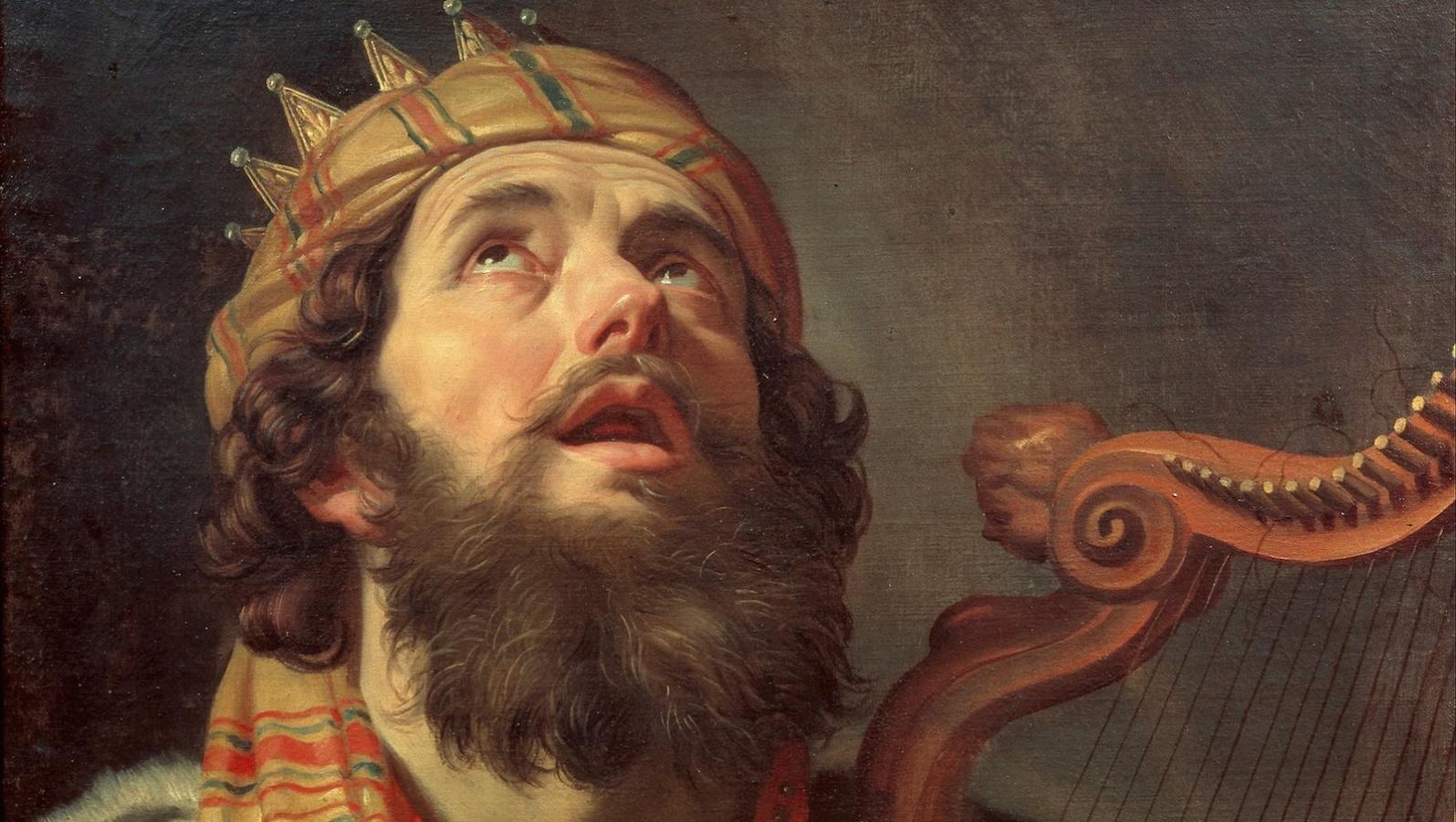
One person in the Bible that I think was a Seven might come as a surprise – King David.

I automatically thought of David as a Four because of the Psalms. Sevens tend to be disconnected from their emotions, especially the negative ones like sadness and anger. The Psalms of David are packed with emotions. Many of them are even lament psalms – heavily sorrowful and downcast. The Psalms can be major Four territory.

But if you compare the Psalms of David with the Life of David, I think it becomes clear that he was a Seven who was highly in tune with his own emotions.

Let’s start at the beginning. The wounding message that Sevens latch onto during childhood is You are on your own. No one else is here to take care of you. A lot of Sevens had to fend for themselves somewhat during childhood. They learned early on to ensure their own survival. Think about David. He was the youngest in his family with seven older brothers. David was out tending sheep by himself (1 Samuel 16) with no one else to come to his rescue. He had to come up with his own ways of fending off the predators who would endanger the flock, so he became incredibly skilled with a sling. He had to find ways to keep his mind occupied during the endless hours in the field, so he became an expert musician and song writer.

Many Sevens that I know are very talented and skilled in a lot of different areas. They make me jealous.

Then think about the most famous story of his life – “David and Goliath.” Here comes David, a young teenager, into the battle lines. Everyone else is terrified of Goliath, but David steps up and says, “I’ll fight him!” He doesn’t have any armor. He doesn’t have a battle plan. All he has is a sling, some stones, and a boatload of confidence in God and in his abilities. What stands out to me, though, is David’s reasoning for taking on the giant. He’s already killed a lion…and a bear…and now a giant warrior! Remember – more is better. Sevens are always trying to one-up themselves.

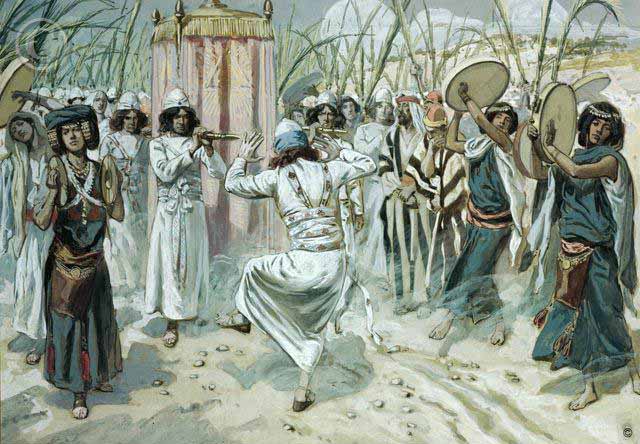
One other instance in his life really stands out as a Seven-moment. David led the processional of priests bringing the Ark of the Covenant into the newly established capital city of Jerusalem. Remember how he entered the city? He was dancing nearly naked in the streets in front of God and everyone! His wife even confronted him about it later. But his response to her criticism is amazing: “I will celebrate before the Lord. I will become even more undignified than this, and I will be humiliated in my own eyes.” (2 Samuel 6:21-22)

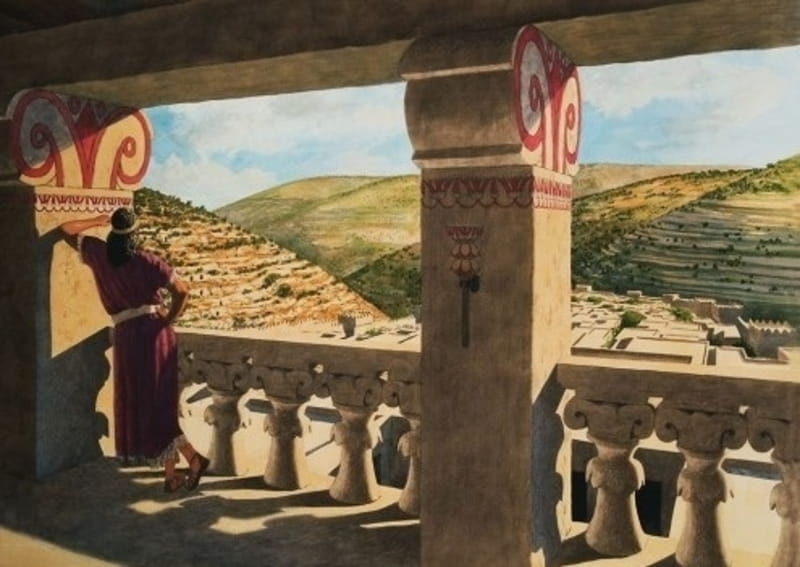
There would come a time, though, when his “gluttony” nearly ruined him. While his armies when out to war, David stayed home at the palace (avoiding pain and conflict). He looked out from his palace and saw a woman bathing on her roof. He asked about her and sent for her and used her. Remember what I said earlier about a tendency toward addiction and abuse? He already had a few different wives by that point – but he wanted her. When she became pregnant he arranged for her husband to be killed in battle rather than own up to what he had done. He nearly lost it all, but God was merciful.

Whenever I read through the story of David’s life – his adventures, his battles, his close calls, his antics – I’m absolutely intrigued. David lived life to the full and didn’t hold anything back. He was fearless and powerful, but he was also kind and gentle. He made his fair share of mistakes and blunders. But through it all, David remained a man after God’s own heart.

Sevens, if you’re still reading this and haven’t moved on to the next thing, then bravo! Here’s what you need to know. You must learn that more isn’t always better. Sometimes more is just more. Sevens need to learn to be content (Philippians 4:12-13). You also need to cultivate the disciplines of solitude and fasting, learning to say no to pleasures and to social engagements. Practice living in the moment and being fully present here and now instead of jumping to the next big thing in your mind.

Sevens inspire us, encourage us, and bring so much joy into our lives. Without them around, life would be much more boring and routine. But it’s ok for them to take a breather sometimes.
________________________________