Page 64 of 70

Finishing Up the Greek Cruise


Wow, it’s crazy how things happen so quickly. I’ve completely neglected this blog, but yes, I am still alive. While I’m here, we do still have classes with quizzes, exams, and papers. I guess that’s part of the deal.

Anyway, let me just finish off the rest of the Greek Isle Cruise.

Patmos:
After Ephesus, we shipped off to the island of Patmos, where John was exiled for about 18 months toward the end of his life. Patmos is a beautiful island, bigger than I had expected with lots of trees and scenic hillside towns. A ways up the hill is a cave where tradition says John would sleep, meditate, and write (with the help of a personal scribe whom John took with him into exile I guess). In that cave is a rounded spot in the ground where he would lay his head to sleep and a handhold a couple feet up that he would use to pull himself up.

The most touching feature about the cave is a crack across the top where, legend says, the holy trinity came down, because the crack splits off into three separate lines in equal angles. Even if that is only legend, it still gave me chills to think that I was standing in the place where God came to earth one last time. The rest of the cave is littered with Greek Orthodox icons and embelishments. They are pretty, just not all that necessary in my opinion.

On the top of the hill there is a monestery built by a guy named Christodoulos in the 6th Century I think. The coolest thing about the monestery is the fact that it was built like a fortress on the hill. It has stone wall and other fortifications in case anyone decided to lay siege to this island in the middle of nowhere.

Knossos, Crete:
Knossos is the home of the ancient Minoan civilization. The palace at Knossos would have been incredible to see in its glory days, 1600 BC, but now it is just a large pile of rocks that archaeologists have done their best to reconstruct. It was cool to see the advancements of such an old civilization, but there’s not all that much to talk about.

Thera, Santorini:
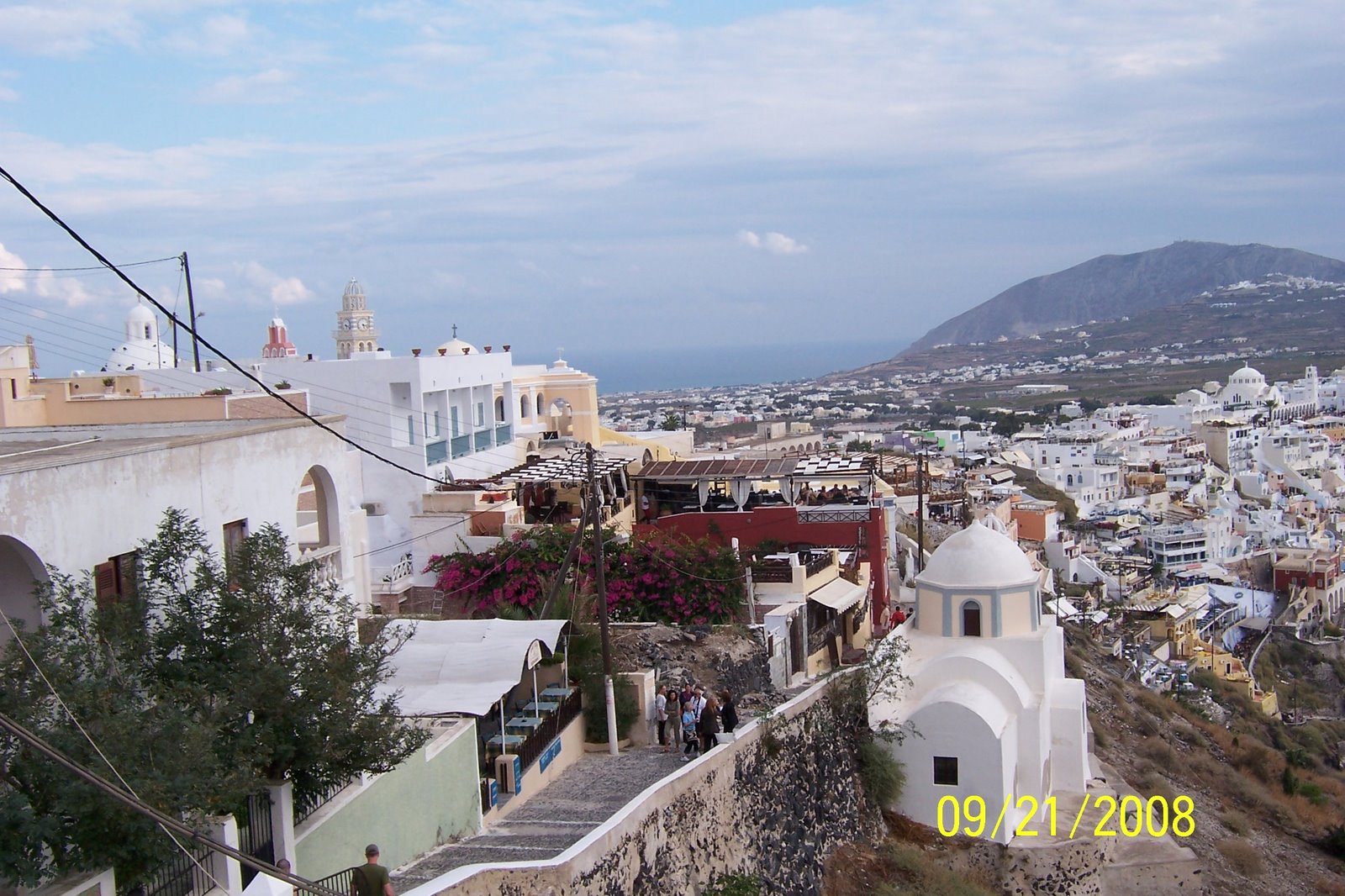
Our last stop on the cruise was the famous island of Santorini. Wanna know what it looks like? Do a Google image search of Greece, and Santorini will be 7 out of the first 10 or so. Santorini is the island famous for the beautiful white-washed houses and blue-domed chapels. We also got a chance to ride mules up to the top of the mountain side, which is pretty sheer since part of the island broke off in a volcanic eruption a couple thousand years ago. I thought it ironic that a man who grew up in Columbia, TN – the mule capital of the world, rode his first mule ever in Santorini.

It was nice just being able to walk around the city of Thera for a while. It’s not the largest town on Santorini, but it was a good size. We got some great pictures, some amazing gelato, and the most incredible sunset view I’ve seen in a good long while.

So there we go, we are caught up through the Aegean cruise. Up next, Northern Greece.
Ephesus, the Greatest City of Asia Minor

The next stop on our cruise was the ancient city of Ephesus. There used to be a port right next to it, but over the centuries the Aegean Sea has receded about 9 kilometers, so we pulled into the near port/tourist city of Kusadasi, Turkey.

Ephesus is still a beautiful city even though it has been reduced down to little more than facades and piles of rock. It was the “New York City” of ancient Asia Minor, with a large government, about 250,000 citizens, and thriving business/trade. I can definitely see why Paul spent 3 years of his ministry in that city. It would have been a beautiful sight to see during the time of the Roman Empire.

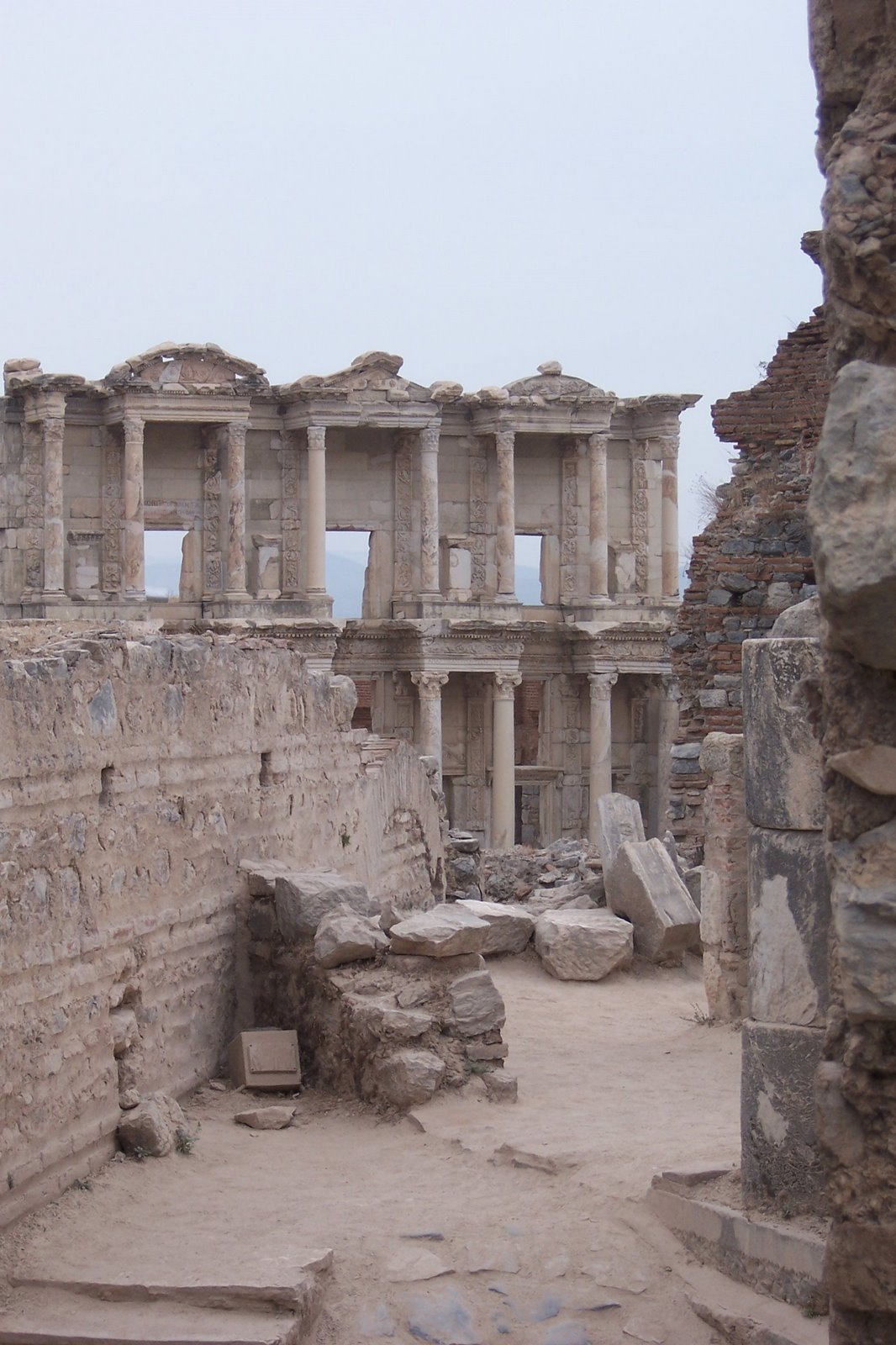
The top picture is the Library of Celsus, the third largest library of antiquity. It would have housed around 12,000 scrolls and documents. It’s beautiful 2-story facade is still standing majestically over the main street of the city. I can only imagine that Paul spent some time in this library studying history, philosophy, and theology – he just seems like that kind of guy.

The second picture is of the famous theater, which could seat around 50,000 people, easily. The acoustics are perfect. The engineers of old who designed it were masters. Pictures do absolutely no justice whatsoever as to the overall size of the structure. I can’t imagine what it would have been like for Paul to be brought before a packed theater of over 50,000 people yelling, “Great is Artemis of the Ephesians!”

Our group got an opportunity to sing The Greatest Commands standing at the bottom of the theater, where the speakers or performers would have been. It sounded incredible. It was an experience I will never forget.

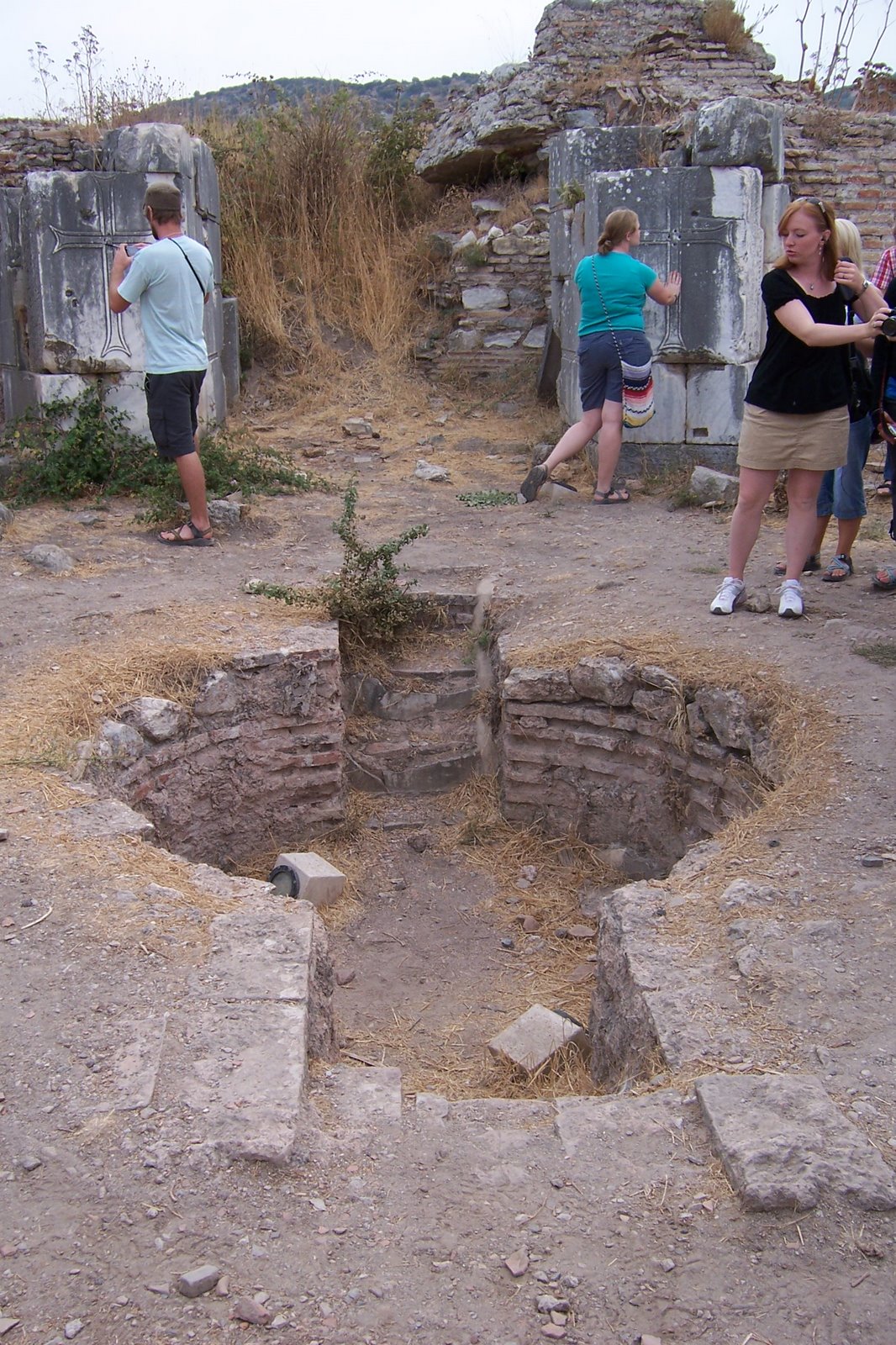
The bottom picture is of a baptistery located in the Church of St. Mary. It was a touching sight to see. The church building dates back to the 6th Century AD, and the church was still practicing adult baptism at that time, and obviously it was by immersion. The building itself still has several walls standing with a pulpit area and alcoves on the sides where people would pray. The area around the baptistery was surrounded by walls decorated with crosses carved in stone. It was beautiful.

Ephesus, the Greatest City of Asia Minor

The next stop on our cruise was the ancient city of Ephesus. There used to be a port right next to it, but over the centuries the Aegean Sea has receded about 9 kilometers, so we pulled into the near port/tourist city of Kusadasi, Turkey.

Ephesus is still a beautiful city even though it has been reduced down to little more than facades and piles of rock. It was the “New York City” of ancient Asia Minor, with a large government, about 250,000 citizens, and thriving business/trade. I can definitely see why Paul spent 3 years of his ministry in that city. It would have been a beautiful sight to see during the time of the Roman Empire.

The top picture is the Library of Celsus, the third largest library of antiquity. It would have housed around 12,000 scrolls and documents. It’s beautiful 2-story facade is still standing majestically over the main street of the city. I can only imagine that Paul spent some time in this library studying history, philosophy, and theology – he just seems like that kind of guy.

The second picture is of the famous theater, which could seat around 50,000 people, easily. The acoustics are perfect. The engineers of old who designed it were masters. Pictures do absolutely no justice whatsoever as to the overall size of the structure. I can’t imagine what it would have been like for Paul to be brought before a packed theater of over 50,000 people yelling, “Great is Artemis of the Ephesians!”

Our group got an opportunity to sing The Greatest Commands standing at the bottom of the theater, where the speakers or performers would have been. It sounded incredible. It was an experience I will never forget.

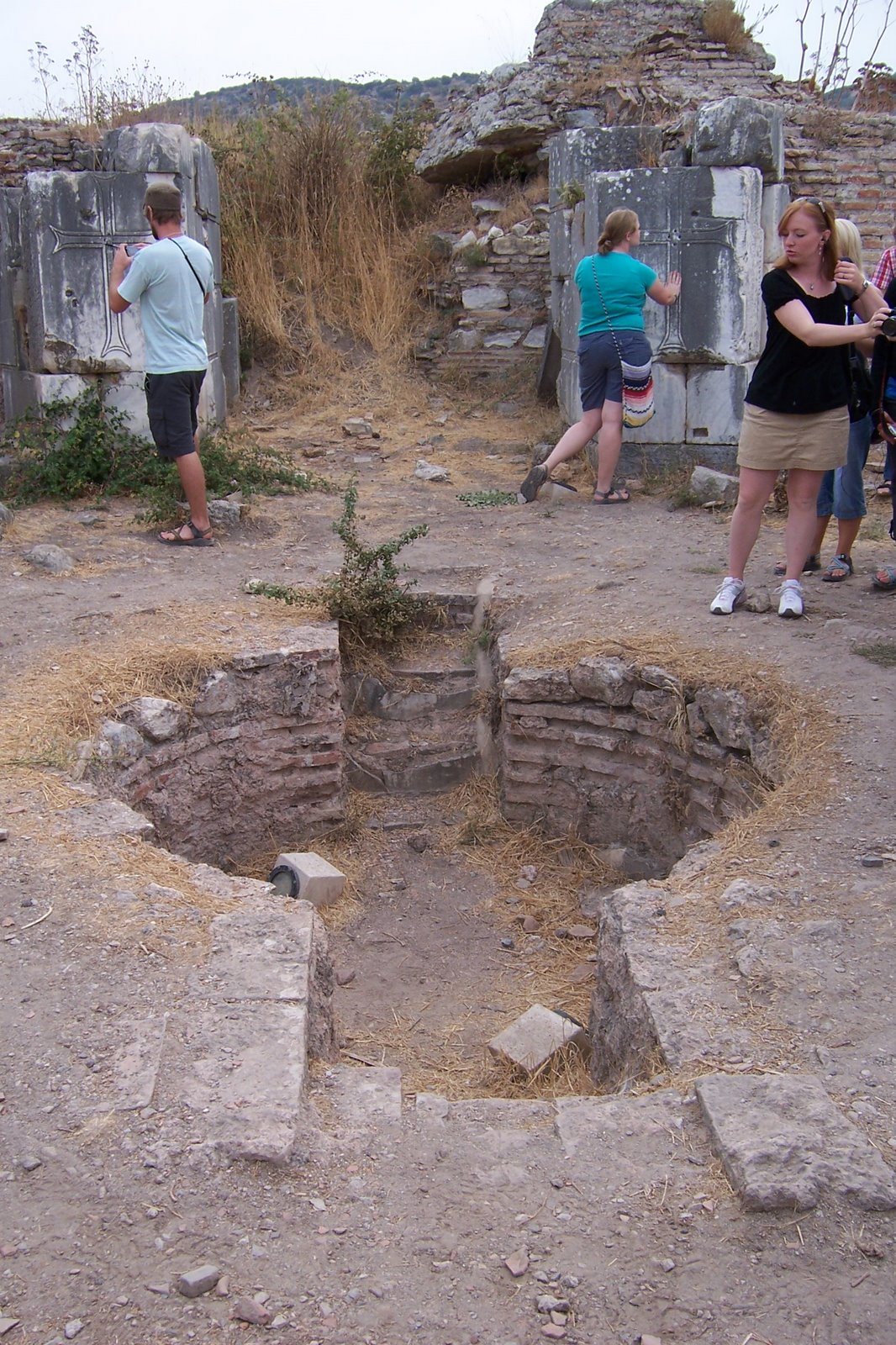
The bottom picture is of a baptistery located in the Church of St. Mary. It was a touching sight to see. The church building dates back to the 6th Century AD, and the church was still practicing adult baptism at that time, and obviously it was by immersion. The building itself still has several walls standing with a pulpit area and alcoves on the sides where people would pray. The area around the baptistery was surrounded by walls decorated with crosses carved in stone. It was beautiful.

I’m a proud uncle – Twice again!

I almost forgot to add, last week before we set out for our cruise, my oldest sister gave birth to 2 beautiful fraternal twins, Ryan and Alyna. Everything went well, and both she and her children are doing very well at home. Thanks for all the prayers.

Greek Isle Cruise – 1st Stop: Mykonos

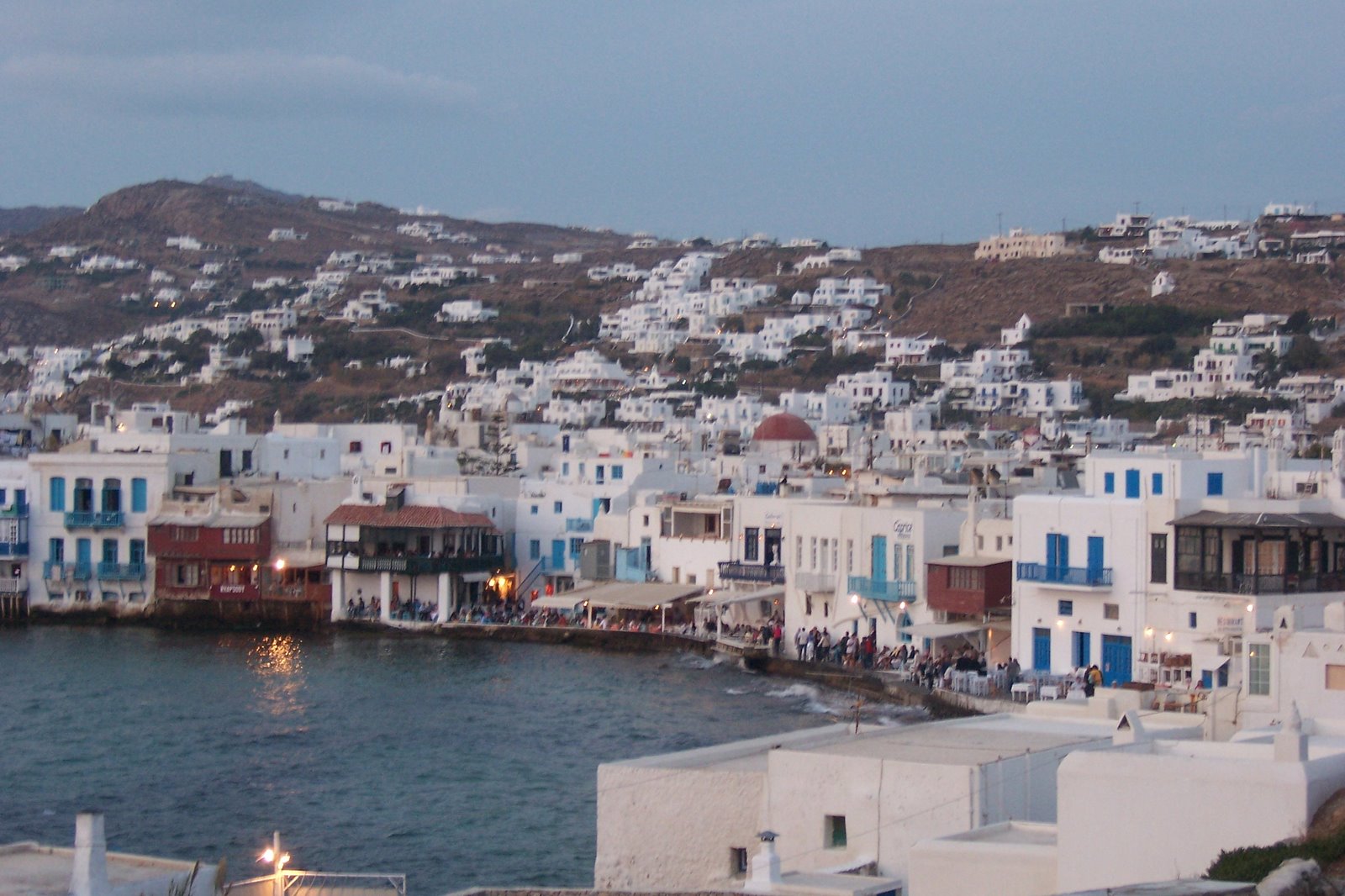
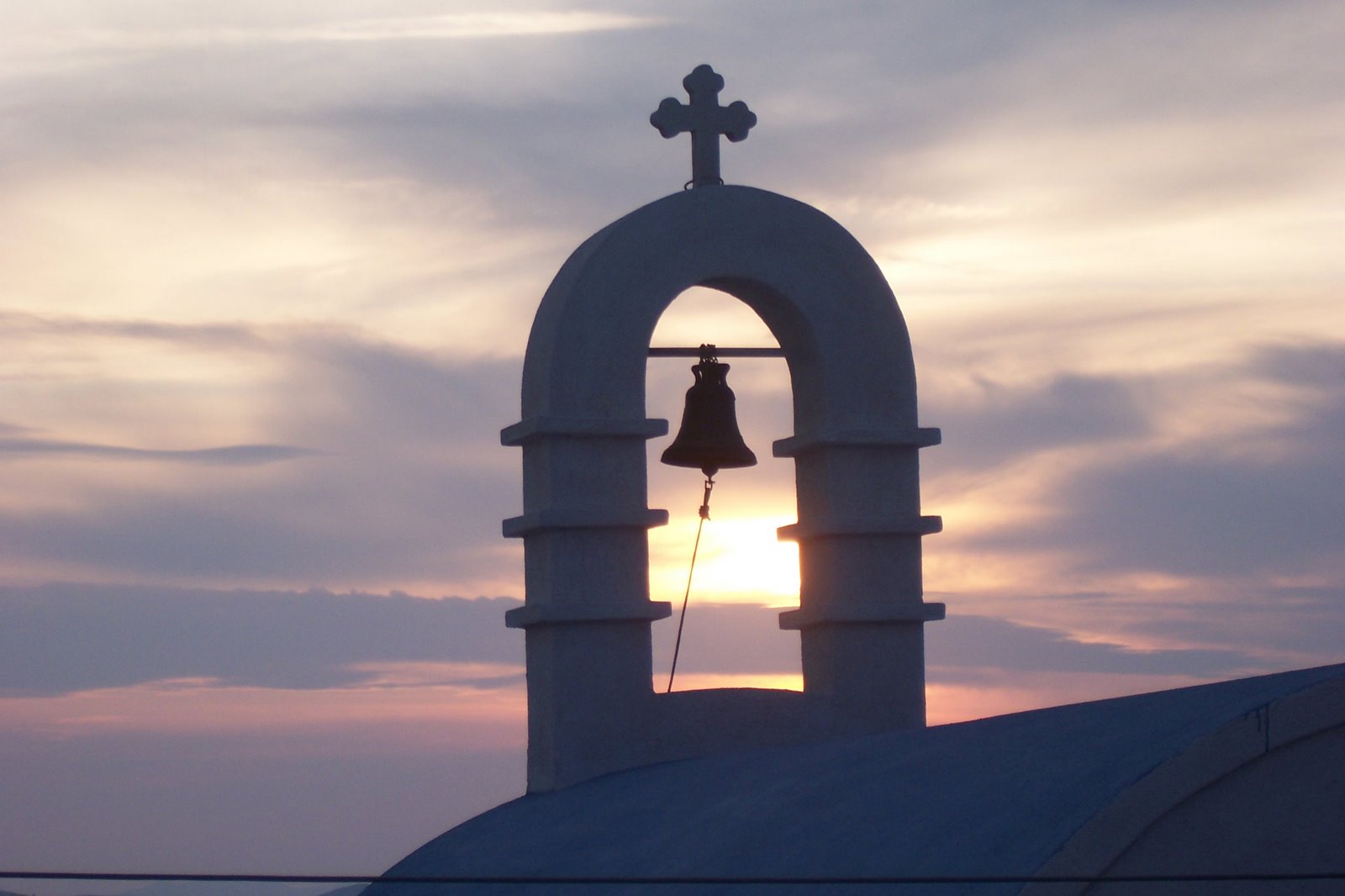
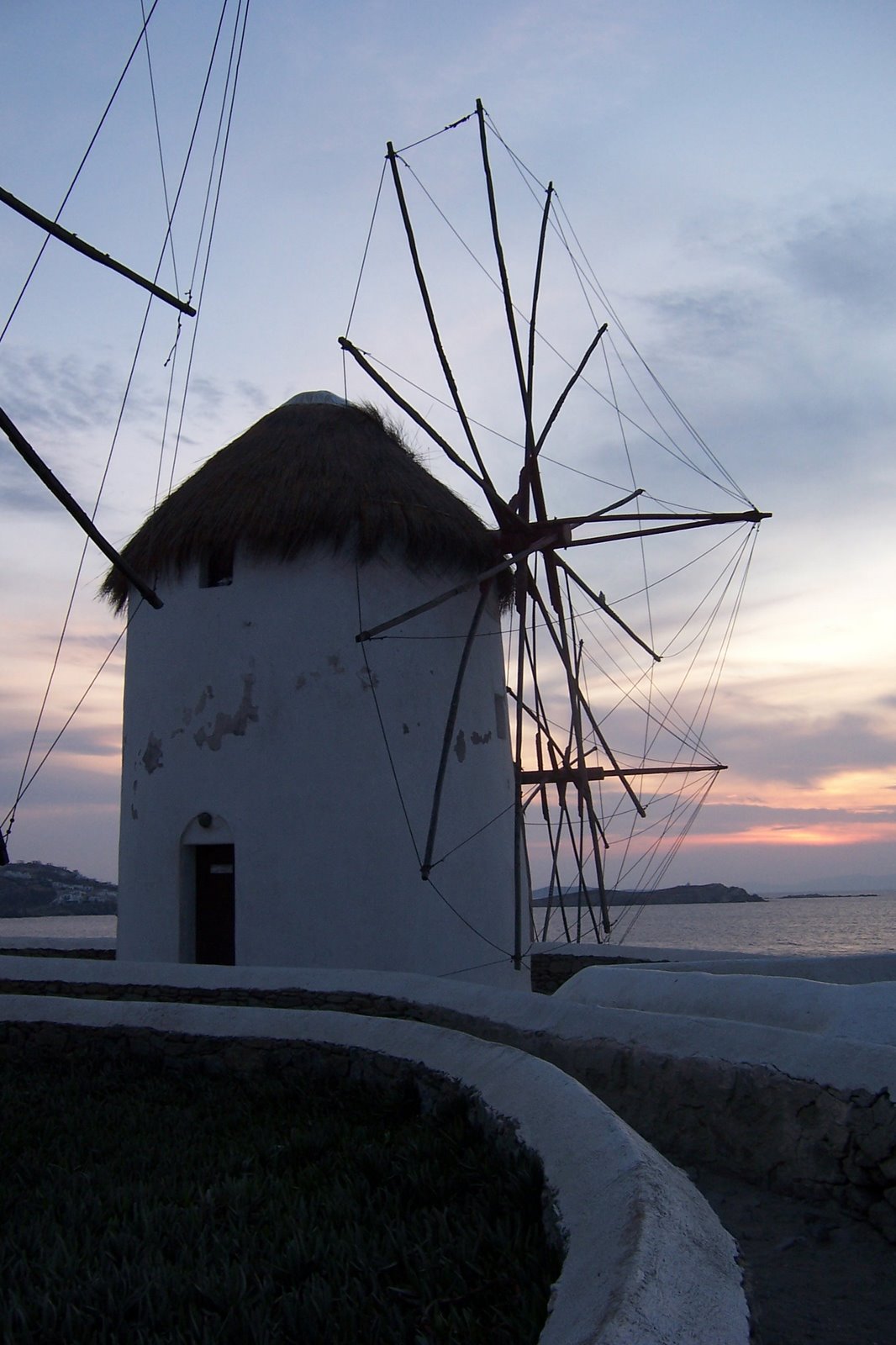
Mykonos Island: famous for its windmills, picturesque sunsets, whitewashed buildings, domed chapels, tourist shops, and store owners who give bad directions.

Mykonos may not be as well known as Santorini, but it is definitely as pretty and fun to walk around. This was our first stop on the cruise, Friday afternoon, and we were able to just get off the boat and explore the town for about 4 hours. Everyone was so relaxed and happy to be there.

We were sent on a wild goose chase trying to find the actual windmills due to bad directions given by a local shop owner. I think his exact instructions for us were, “Go straight, left, right, left.” We ended up walking up this huge hill for about a quarter mile further than we needed to go, but we finally got it figured out with the help of a French guy who was running past us.

But as you can see, the Island of Mykonos is absolutely beautiful. Just another testamony of the power of God and the artistic nature of mankind.

I’m a proud uncle – Twice again!

I almost forgot to add, last week before we set out for our cruise, my oldest sister gave birth to 2 beautiful fraternal twins, Ryan and Alyna. Everything went well, and both she and her children are doing very well at home. Thanks for all the prayers.

Greek Isle Cruise – 1st Stop: Mykonos

Mykonos Island: famous for its windmills, picturesque sunsets, whitewashed buildings, domed chapels, tourist shops, and store owners who give bad directions.

Mykonos may not be as well known as Santorini, but it is definitely as pretty and fun to walk around. This was our first stop on the cruise, Friday afternoon, and we were able to just get off the boat and explore the town for about 4 hours. Everyone was so relaxed and happy to be there.

We were sent on a wild goose chase trying to find the actual windmills due to bad directions given by a local shop owner. I think his exact instructions for us were, “Go straight, left, right, left.” We ended up walking up this huge hill for about a quarter mile further than we needed to go, but we finally got it figured out with the help of a French guy who was running past us.

But as you can see, the Island of Mykonos is absolutely beautiful. Just another testamony of the power of God and the artistic nature of mankind.

The Acropolis; Athens, Greece

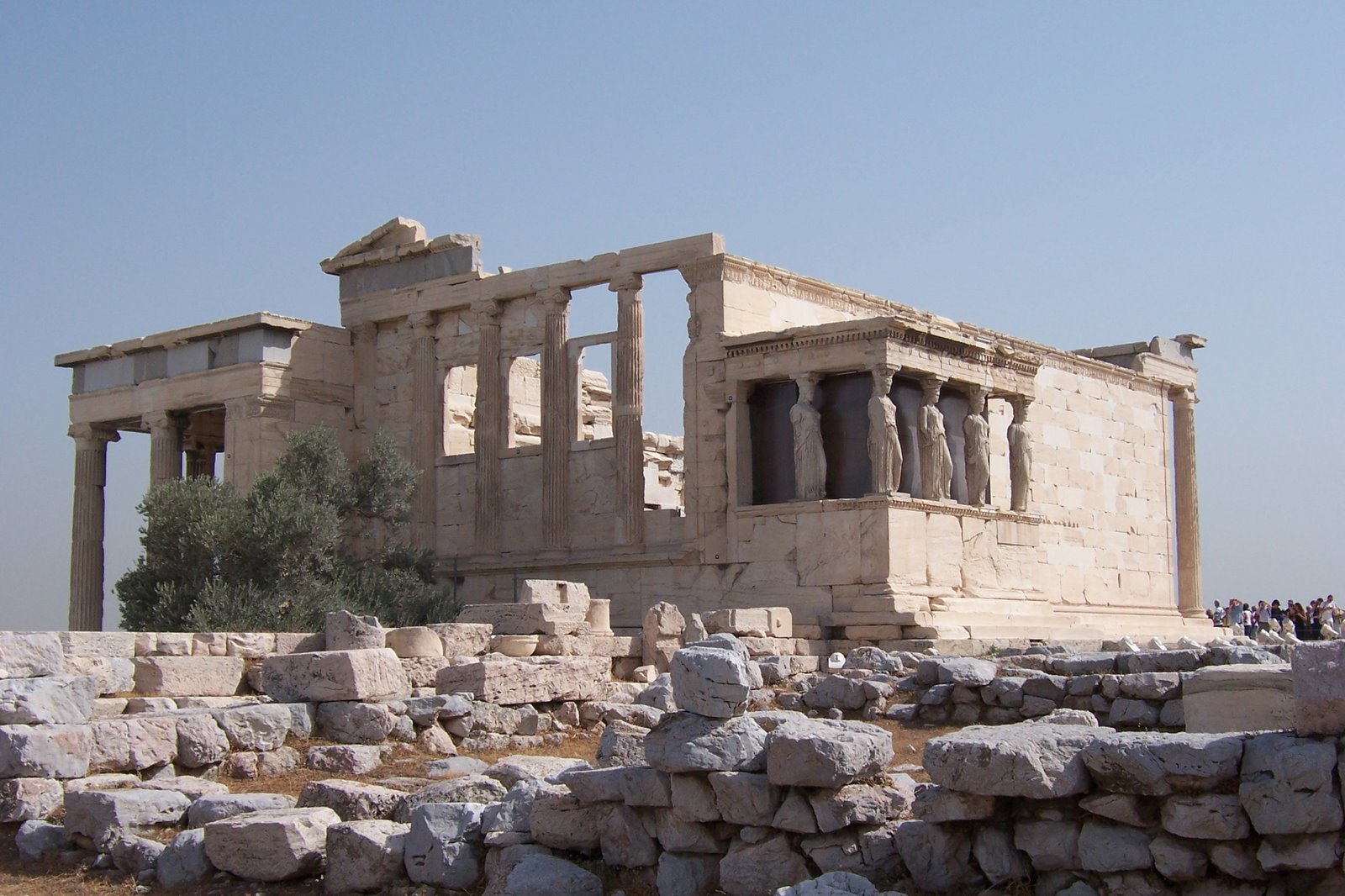
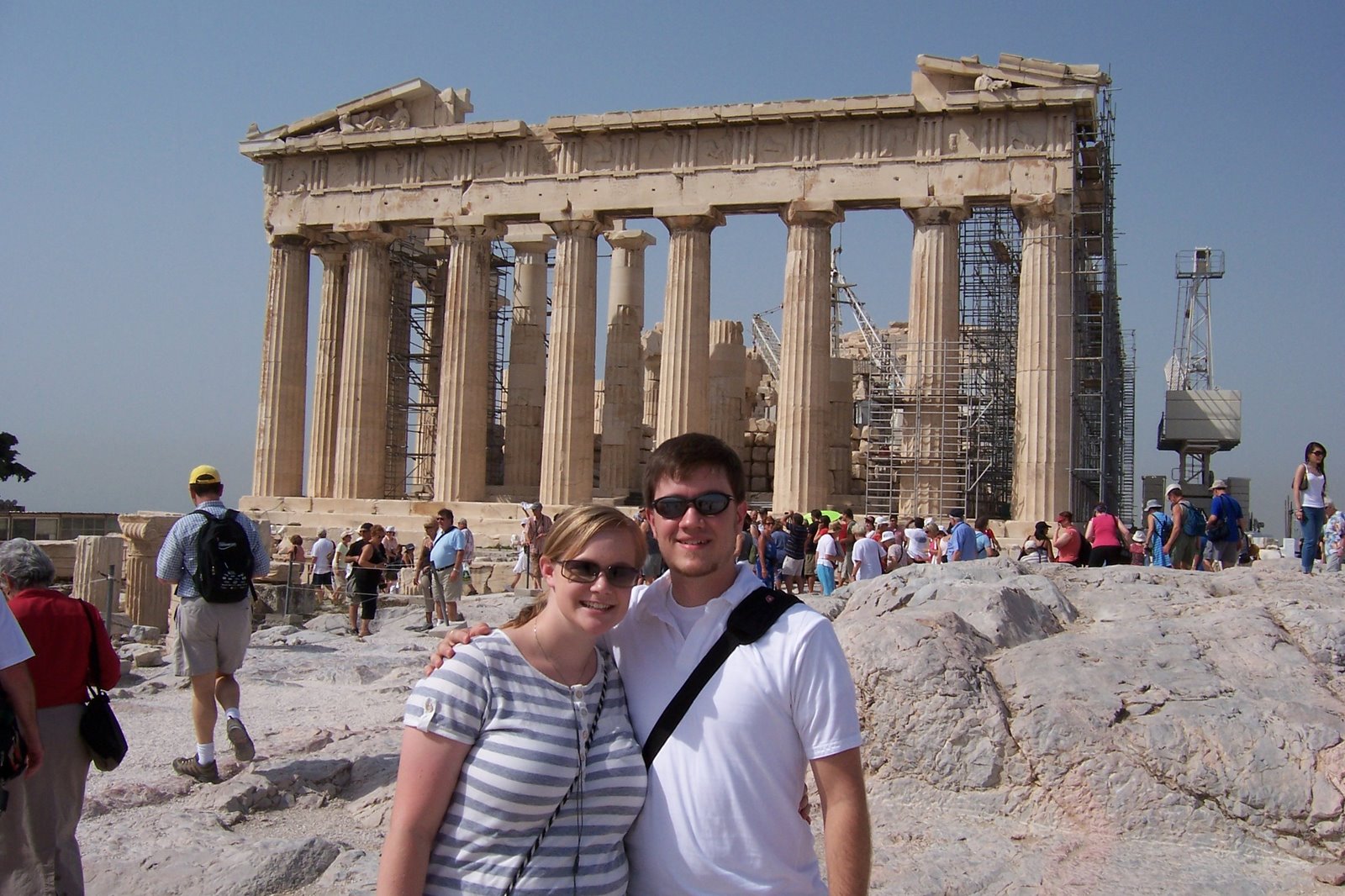
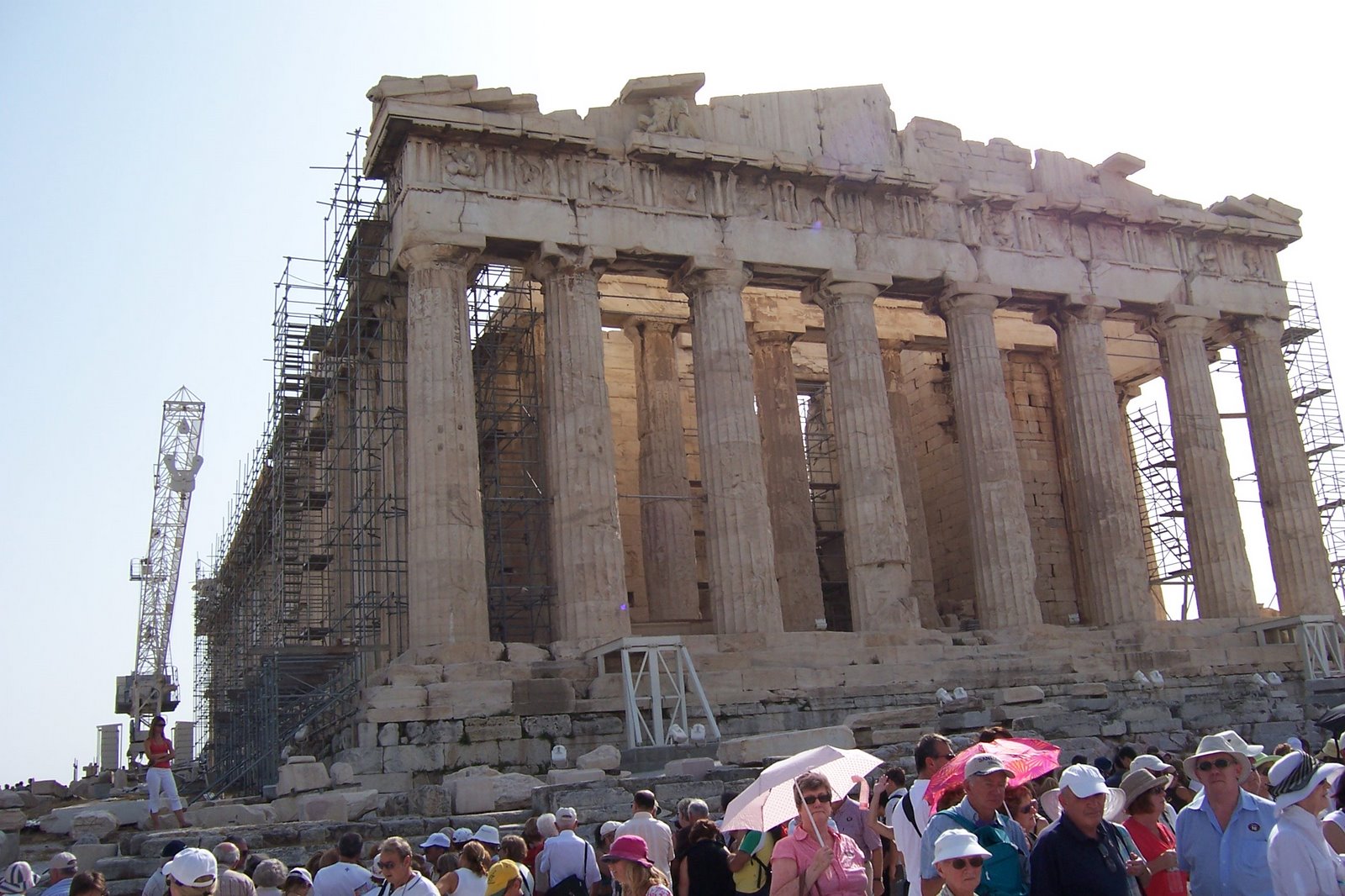
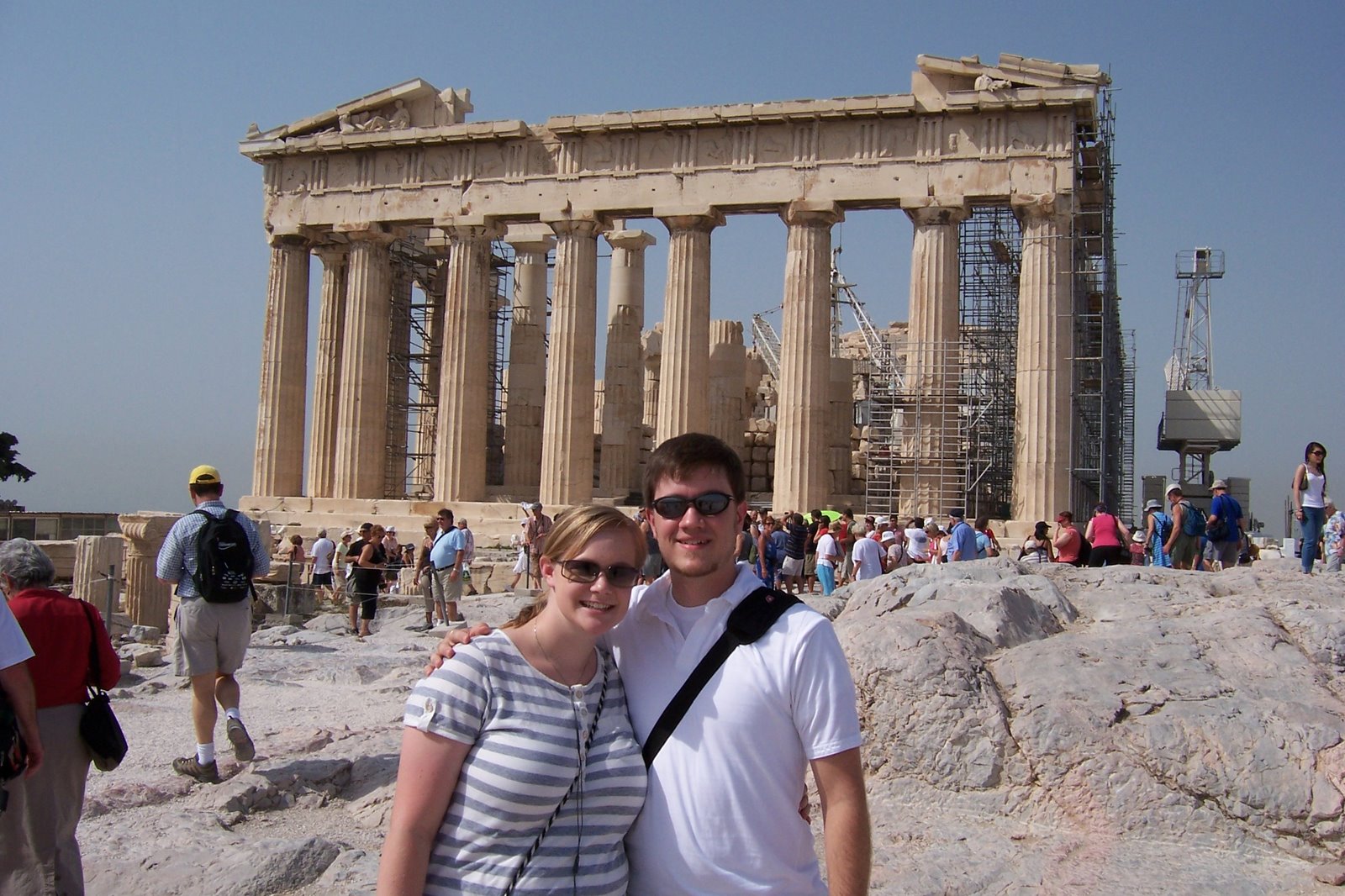
Yesterday, Sunday, we visited the Acropolis, which was the religious center of Athens. It is set on top of a hill right in the middle of the city. It is home to the Parthenon (the Temple of Athena), and the Erectheum (the Temple of Poseidon and Athena). There is also a smaller Temple of Athena Nike near the entrance.

This place was huge. It’s obvious why the ancient Athenians chose this sight – from the hill you can see the entire city, and from almost anywhere in the city, you can see the Acropolis. It was awesome seeing the real Parthenon, especially since I’ve seen the Parthenon replica in Nashville several times. The real Parthenon is incredible simply because of the sheer size of it and everything around it. The Athenians held spared no expense in creating this beautiful place of worship and wonder.

We also got to see the Areopagus, or Mars Hill, and the Agora. This is where the day to day life of the Athenians took place. This is where Plato, Socrates, and Aristotle would teach their schools of students. This is where Paul came and started spreading the idea of a God becoming flesh and being murdered at the hands of mortal men and then being resurrected from the dead. This is where he gave his famous and powerful sermon recorded in Acts 17.

We had the opportunity to walk where the great thinkers, philosophers, politicians, poets, generals, and evangelists walked. It would have given me chills had it not been so blazing hot.

Temple of Poseidon; Sounion, Greece

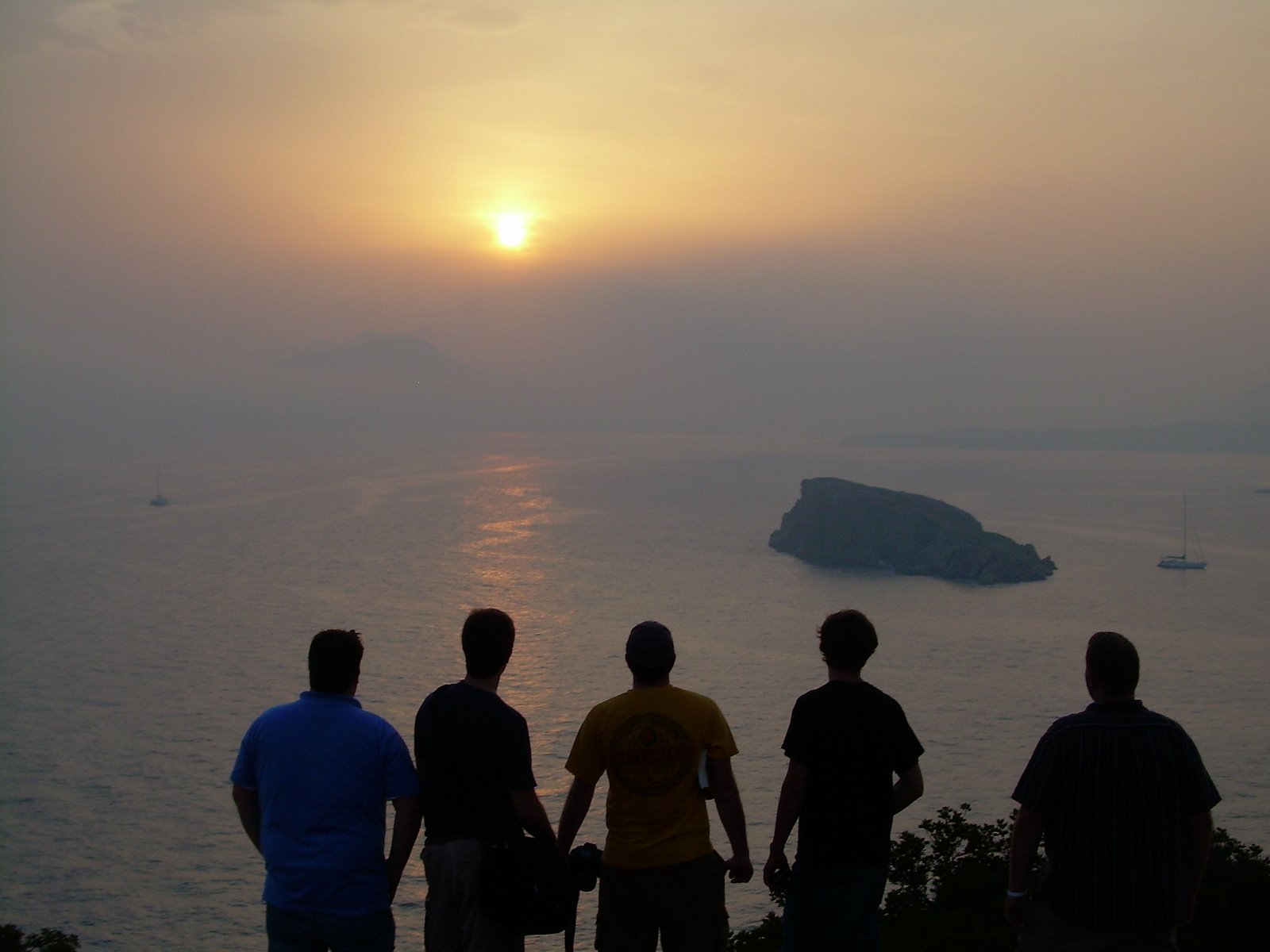
Saturday evening was our first group trip We went down to Sounion, Greece, which is the southernmost tip of the peninsula of the Attica region, and there we toured our first of many temples of the semester. The Temple of Poseidon was built on a hill which drops of to the Aegean Sea. It is supposed to be one of the most beautiful spots in all of Greece to watch the sunset. Unfortunately, there was a thick haze rolling in right as the sun was setting. It was still beautiful, just not to its full potential.

Poseidon was the mythological god of the sea. From this point, the ancient Greeks would look out to the sea and watch for approaching enemies. They would come to this temple and offer sacrifices to Poseidon for safe voyage by sea. They tried very hard to appease Poseidon, since he was the second in command of all the Olympic gods because he was the brother o Zeus.

I just can’t help but think back to the many times in which Yahweh showed His power over the waters: parting the Red Sea and closing it back again, bringing fresh drinking water from the rocks, parting the Jordan River, calming the Sea of Galilee, defying the very laws of nature and walking on the water. He created the stuff, after all, and He has complete control over it. Yahweh is the God of gods and Lord of lords.

The Acropolis; Athens, Greece

Yesterday, Sunday, we visited the Acropolis, which was the religious center of Athens. It is set on top of a hill right in the middle of the city. It is home to the Parthenon (the Temple of Athena), and the Erectheum (the Temple of Poseidon and Athena). There is also a smaller Temple of Athena Nike near the entrance.

This place was huge. It’s obvious why the ancient Athenians chose this sight – from the hill you can see the entire city, and from almost anywhere in the city, you can see the Acropolis. It was awesome seeing the real Parthenon, especially since I’ve seen the Parthenon replica in Nashville several times. The real Parthenon is incredible simply because of the sheer size of it and everything around it. The Athenians held spared no expense in creating this beautiful place of worship and wonder.

We also got to see the Areopagus, or Mars Hill, and the Agora. This is where the day to day life of the Athenians took place. This is where Plato, Socrates, and Aristotle would teach their schools of students. This is where Paul came and started spreading the idea of a God becoming flesh and being murdered at the hands of mortal men and then being resurrected from the dead. This is where he gave his famous and powerful sermon recorded in Acts 17.

We had the opportunity to walk where the great thinkers, philosophers, politicians, poets, generals, and evangelists walked. It would have given me chills had it not been so blazing hot.