Page 38 of 82

CHARACTER DEVELOPMENT | Hagar (from Jan. 11)

Each week at the end of our Wednesday night class, I am challenging students to reflect on and even journal through some deeper questions that arise from the stories of these characters. I call this exercise “Character Development.” Not only do we look at how each particular character grows, changes, and develops through the narrative, we also ask ourselves how WE are growing, changing, and developing. But this isn’t just an exercise for the students. I am participating, too. In a show of solidarity (and some vulnerability), I am going to post my answers to these Character Development questions for all to read. Though I am a minister, I am far from perfect. I wrestle with many of the same issues that our teens and their families are wrestling with.


You can read Hagar’s story in Genesis 16 & 21. (Our class on Hagar was from January 11.)


1. What problems are you running from?


I feel like I am constantly running away from my past. Like if I can somehow put enough distance between me and the past/memories of the past, then I can really be the person I want to be – which is SO much different than who I was. I want to believe that given enough time and distance, then the old wounds will heal and the holes will be filled in. And that’s sort of true. But it makes it that much harder to go home and face my past all over again.

2. What problem(s) do you have that just won’t go away?


My own self-esteem issues and insecurities. Just when I feel like I’m in a good place, something happens and makes me second-guess myself and my ministry. I take things so personally. A lack of commitment or participation from others feels like a judgment on me as a minister and a person. I wish I could remain more confident in the fact that I am loved by God and my worth is not tied to any outward performance.

3. Does the thought of being seen by God in your weakest moment frighten you or comfort you? Why?


The thought of being weak frightens me. I feel the need to constantly be strong, to be productive, to be successful, to be my best. The thought of weakness and failure terrifies me. But to know that God sees me, looks after me, and loves me at my weakest? That’s a relief. It’s so hard for me not to equate success with love. Love, respect, admiration are all things to be earned (in my mind). But not with God. God looks beyond the outward appearance and into the heart. I don’t often reveal my heart to people, even those closest to me. But God knows. And to be known is to be loved.

4. Give God a name.


El Mibtahi – God is My Confidence / The God who Instills Confidence
I believe in the God who believes in me

But you, Lord, are a shield around me,
my glory, the One who lifts my head high.
(Psalm 3:3)

My 2016 Reading List

I love the quote from George R.R. Martin in his book A Dance with Dragons. One of the characters says, “A reader lives a thousand lives before he dies. The man who never reads lives only one.” Someone else once told me that reading is an act of love. While reading we are listening to one man or woman’s story, thoughts, perspectives, hopes, dreams, fears, ideas, and anecdotes for hours on end. We let them have the floor. Theirs is the only voice we hear. And we don’t talk back. (Well, some of us do talk back to our books…just be careful doing that in public.) We surrender our right to be heard in order to truly listen to the other. We give them our full mental capacity and concentration. Many of us even experience the real world grow more distant as we follow the author into the world inside their head.

It breaks my heart to hear about people who never read. We’ve probably all seen the statistics. A very large percentage of the adult population never reads a book again after college. I would gather that a large percentage never even read a full book throughout their high school or college careers. What a shame.

Anyway, I refuse to be one of those people. Several years ago I set a goal for myself to read at least 2 books a month. I have kept that goal going every year since. Some years I have read way more than that. Other years, I’m barely at my quota. 2016 was not a big reading year for me. But I did manage to read more than 2 books per month. My wife puts me to shame on this, but she is a much faster reader than I am, so….yeah.

Here is a list of the books I read last year in order of completion. Some were great. Others not so much. A few were life-changing. Others were rather forgettable. Regardless, we become the sum total of the stories we experience.

  1. The Day I Met Jesusby Frank Viola and Mary Demuth
  2. Man of Godby Charles Stanley
  3. How to Start a Riot, by Jonathan Storment
  4. More or Less, by Jeff Shinabarger
  5. God’s Pursuit of Man, by A.W. Tozer
  6. Magnus Chase: The Sword of Summer, by Rick Riordan
  7. Taking Theology to Youth Ministry, by Andrew Root
  8. Jesus > Religion, by Jefferson Bethke
  9. An Abundance of Katherines, by John Green
  10. King of Thorns, by Mark Lawrence
  11. Emperor of Thorns, by Mark Lawrence
  12. Searching for Sunday, by Rachel Held Evans
  13. All Is Grace: A Ragamuffin Memoir, by Brennan Manning
  14. Love Does, by Bob Goff
  15. Jesus Creed, by Scot McKnight
  16. Accidental Saints, by Nadia Bolz-Weber
  17. Paper Towns, by John Green
  18. A Farewell to Mars, by Brian Zahnd
  19. Deeply Odd, by Dean Koontz
  20. The Ranger’s Apprentice: The Ruins of Golan, by John Flanagan
  21. The Ranger’s Apprentice: The Burning Bridge, by John Flanagan
  22. Finding God in the Waves, by Mike McHargue
  23. Saint Odd, by Dean Koontz
  24. The Road Back to You, by Ian Cron and Suzanne Stabile
  25. Magnus Chase: Thor’s Hammer, by Rick Riodan
  26. The Trials of Apollo, by Rick Riordan
  27. Steal Like an Artist, by Austin Kleon
  28. The Deborah Club, by D.W. Pierce
  29. The Bible Tells Me So, by Peter Enns
So that’s my list. Looking back, I can remember where I was in life while reading these books – trips I was on, emotions I was wrestling with, how I was growing and changing as a person. When reading a book, a little bit of that author remains with you, becomes part of you – just like eating a meal.

FAVORITE BOOKS I READ IN 2016
–Fiction–
–Non-Fiction–

Some books I look forward to reading (or am currently working on) this year: 

  • Water to Wine, by Brian Zahnd
  • God’s Favorite Place on Earth, by Frank Viola
  • How to Survive a Shipwreck, by Jonathan Martin
  • The Day the Revolution Began, by N.T. Wright
  • Present Over Perfect, by Shauna Niequist
  • In addition to reading the whole Bible in somewhat chronological order
What would you add to that list? What good books have you read that you would recommend?

NCYM | For Status or From Significance

The National Conference on Youth Ministries got underway today in Daytona Beach, FL. The theme this year is “CREATE.” Youth ministry should be inherently creative. More than some other ministries, we have creative freedom to reach as many teenagers as possible. I’m looking forward to what the week has to offer.

As we got started, Luke Norsworthy of the Westover Church of Christ presented the opening keynote. To be honest, his message was a punch to the gut. I’m one of those people who feels the need to achieve my goals, to appear successful, to impress others with my skills and knowledge. When things go wrong or when people don’t respond how I think they should, I take it very personally.

Luke challenged us to minister out of our own God-given significance. It’s not a pursuit of status. We already have status. We are children of God. God loves us and is pleased with us before we ever do anything to deserve it.

He pointed us to the baptism of Jesus. During that sacred moment, God’s voice boomed from heaven, “This is my son whom I love. With him I am well pleased.”

But do we realize that God said this before Jesus ever preached a sermon, performed a miracle, or began his ministry?

Jesus didn’t have to do anything to earn God’s love or favor. Jesus had God’s love and favor already because he was God’s son. Period.

My own boys don’t need to do anything to earn my love or my favor or my pride in them. They already have it. They’re my sons, whom I love. With them I am well pleased.

And we are God’s sons and daughters, whom God loves and is well pleased.

Yet here we are, constantly thinking we have to perform in order to earn God’s love and grace. And ministers are by no means immune to this tendency. In fact, I would argue that ministers are probably more susceptible to this than others. We may begin our ministry careers with the right motives. But then the compliments roll in, the pats on the back keep coming, the number of those in our care increases, and our ego gets fed. We begin to connect our own self-worth to our success, and it feels good.

Really good.

Until it doesn’t.

This can’t last. It’s not a sustainable source of self-worth for ministers or anyone else. Because the success will eventually turn to failure. Attendance will drop. Compliments will be replaced by criticisms. And if our self-worth is tied to success, we can take these failures as personal attacks.

Speaking from experience, this is not a fun or fulfilling way to live.

Luke challenged us, “When you learn to live out of your God-given significance, everything changes. The voice that says, ‘You are my beloved,’ will be enough.”

Then we will be free to create, innovate, and grow in ways we never through possible.

These Are The Days | JUBILEE

So lift your voice *WOOO* it’s the Year of Jubilee
And out of Zion’s Hill salvation comes


I don’t like to get too political. I tend to lean away from either party and toward the middle. The Libertarian Party appeals to me more than either the donkey or the elephant. I watched bits and pieces of the RNC this week – mostly second hand through late night comedians who help us laugh to keep from crying. I did manage to catch at least some of Trump’s speech last night, and it became very clear to me just how strong the shackles of fear have us in their grips.

According to the speakers at the RNC, we have nothing to fear except everything. And “the only one who can fix it” is Donald Trump.

So what Trump is going to do is cancel all debts. All credit cards and student loans will automatically have a zero-balance. Everyone’s mortgage is going to be paid for. Those living on food stamps will automatically earn a living wage. Healthcare will be offered free of charge to everyone, including corrective eye surgeries. Schools will become fully funded, especially those in lower class areas. Higher education will become available to all who desire to learn. All prisoners (except for those convicted of violent crimes) will receive a presidential pardon and will be released at the earliest opportunity. Those will mental illnesses will be given the absolute best care available in the world.

Doesn’t that sound amazing? A little too good to be true?

Obviously no president (especially NOT Trump) would ever make those sorts of promises. No president would run on the idea of completely reversing all social orders, canceling all debts, and equalling the playing field for every single person. Because those with all the money and power would never go for it.

In Leviticus 25 we read about God’s plan for Israel’s economy. Every 50 years there would be the “Year of Jubilee.” During that year, families could return to their homeland. Property could be redeemed (bought back) by the original owners. And those who had sold themselves as slaves would be released. All debts would be cancelled. All property would return to its original owner. The whole system would get a hard reboot. This would ensure that no one ever got too poor or too rich.

But guess what? There is no historical or biblical record of the Year of Jubilee. As far as we can tell, Israel never honored this 50th year celebration. It’s kind of sad, but also kind of understandable.

Who would the Jubilee benefit the most? Those who are poor, displaced, and oppressed. Who would the Jubilee hurt the most? Those with the money, the land, and the power. Who gets the say in what happens in a nation’s economy? Those with the money, the land, and the power. So it’s not hard to understand why the people of Israel never celebrated Jubilee.

But that doesn’t mean God forgot about it and scrapped the whole thing. Quite the opposite in fact. Through the prophet Isaiah God remind the people about “The Year of the Lord’s Favor.” It’s like the Jubilee, only bigger and better than ever.

The Spirit of the Sovereign Lord is on me,
because the Lord has anointed me
to proclaim good news to the poor.
He has sent me to bind up the brokenhearted,
to proclaim freedom for the captives
and release from darkness for the prisoners,
to proclaim the year of the Lord’s favor
and the day of vengeance of our God,
to comfort all who mourn,
and provide for those who grieve in Zion—
to bestow on them a crown of beauty instead of ashes,
the oil of joy instead of mourning,
and a garment of praise instead of a spirit of despair.
They will be called oaks of righteousness,
a planting of the Lord
for the display of his splendor. (Isaiah 61:1-3
| NIV)

The people of Israel may have forgotten about the Jubilee, but God steps in and tell them that it’s going to happen whether they like it or not.

Fast forward a few hundred years to the time of Jesus. For his first sermon of his ministry in his own hometown he opens up the scroll and reads from Isaiah 61. Jesus reads this passage, sits down, and tells them that this ancient prophecy is being fulfilled right here and now (Luke 4:16-30). The Jubilee is happening whether they like it or not. But Jesus takes it even further than Isaiah did. Jesus asserts that not only is the “Year of the Lord’s Favor” for the Jews, but it’s also for the gentiles. Jubilee is happening, and it’s happening for everyone!

And everyone celebrated with cake and streamers and a disco ball, making Jesus the hometown hero. Right?

Not exactly. Instead they tried to throw him off a cliff!

We haven’t changed much socially as a species in the two thousand years since Jesus. If any political candidate tried running for office on the platform of Jubilee, they’d be booed off stage in seconds.

We can’t just cancel debts!
We can’t just give everyone free healthcare!
We can’t release prisoners from jail!
We can’t provide quality education to those in extreme poverty!
We can’t offer free treatment for the mentally ill or victims of abuse!

But what have we seen from the Lord’s church throughout the centuries? We’ve seen God’s people fight to end poverty and slavery and human trafficking. We’ve seen God’s people start hospitals and colleges and mentoring programs. We’ve seen God’s people advocate for justice and work to free those wrongly incarcerated. We’ve seen God’s people build orphanages and dig wells and teach marketable skills and trades for people in developing nations. We’ve seen God’s people work to free people from drug addictions and alcoholism.

Everything our politicians say can’t be done, God’s people HAVE done and ARE doing.

The Jubilee is happening whether you like it or not, whether you see it or not. Jubilee is not, as it turns out, a once-every-fifty-years tradition. It’s not just a one time event, or a year-long celebration. Jubilee is a reality in which we, God’s people, choose to live. It’s a reality we work to bring about a little bit each day.

SO LIFT YOUR VOICE! IT’S THE YEAR OF JUBILEE!

These Are The Days | DAVID

These are the days of your servant David rebuilding a temple of praise.


“But David didn’t build the Temple!” That was the argument of several people I’ve known throughout the years who refused to sing the song Days of Elijah. Some would straight up refuse to sing it. Others would attempt to change the wording of the song – These are the days of your servant Solomon rebuilding a temple of praise. OR These are the days of your servant David preparing a temple of praise.


But all of these arguments miss the point. Here’s my attempt to explain why.

In 2 Samuel 6 we see an amazing celebration and worship parade led by King David as the Ark of the Covenant is brought into the newly established capital city, Jerusalem. They’re sacrificing bulls. They’re shouting and singing and blowing horns. David is dancing around wearing a linen ephod (a priestly garment that wraps around the waist), admittedly humiliating himself in worship to God. Then when the party is over, everyone gets dessert and heads home.

BBQ, music, dancing, desserts – that’s my kind of worship service!

In the very next chapter, David cannot get over the fact that he is living in his luxurious palace while the Ark of God is living in a tent pitched out back. David gets it in his head that he should begin construction on a beautiful Temple, a house for God the likes of which had never been seen.

But God says no. God tells David through the prophet Nathan that God does not want David to build a temple for him. God doesn’t really care that he is “living” in a tent. The account from 1 Chronicles informs us that, the way God sees it, David has too much blood on his hands to build the Temple. So that task would be left to his son Solomon who would reign as king after David. But for the time being (the next 35 years or so), people would come to the Tabernacle to worship, to offer sacrifices, to receive prayers and blessings, and to experience God.

So David didn’t build the Temple.

But it’s not Solomon’s Temple we are trying to get back to.

Check this out. Many years later through the prophet Amos, God gave a promise that inspired this line from the song Days of Elijah:

“On that day I will raise up
The tabernacle of David, which has fallen down,
And repair its damages;
I will raise up its ruins,
And rebuild it as in the days of old;
That they may possess the remnant of Edom,
And all the Gentiles who are called by My name,”
Says the Lord who does this thing.
(Amos 9:11-12 | NKJV)

It’s David’s tent, not Solomon’s Temple, that God promises to restore. But why?

Think of it this way. You probably have between 4 and 7 friends that you are super close with – your gang, your clique, your posse, your squad. You probably love hanging out with these people, and your time together feels natural, fluid, organic. It’s never forced or contrived. You share everything with each other. There’s no real leader. Everybody is an equal member but through no official channels.

Imagine one day, however, you decided to get organized. You hold elections and appoint a president, a vice president, a secretary, and a treasurer of your clique. You begin to schedule formal meetings where you discuss important squad issues, and someone takes minutes, and those minutes are then voted on for approval. You pay dues. You have an elaborate induction process for new members.

Doesn’t that sound just awful?

That’s exactly what happened when Solomon’s Temple was constructed. David’s Tent was a place of open worship. It was free flowing and organic. Sure there were priests, but other people could enter the Tent, too. David himself did on a few different occasions. It was a place where all people of all nations could come and experience God.

But then the Temple went up. And with the Temple came structure and organization and walls signaling where people could and could not go. Gentiles could only get so close. Women could get a little closer. Men could approach closer still. But only the Priests were allowed to enter the actual Temple structure. There was a separation between God and his people that wasn’t there before.

The kind of Temple we’re trying to get back to looks a lot like this:

This is what the early church father’s had in mind, too. In fact, they quoted that passage from Amos in Acts 15 when they were debating what to do with the gentiles. Did the gentiles have to become Jewish? No, because we are getting back to David’s Tabernacle, not Solomon’s Temple.

Paul would go on to say, “There is no longer Jew or Gentile, slave or free, male and female. For you are all one in Christ Jesus.” (Galatians 3:28 | NLT) All the dividing walls have been broken down, and everyone is allowed to come to the Temple to worship and experience God.

But where is this Temple we are rebuilding? Peter tells us: “You also, like living stones, are being built into a spiritual house to be a holy priesthood, offering spiritual sacrifices acceptable to God through Jesus Christ.” (2 Peter 2:5 | NIV)

We are the Temple. We are the Priests. We are the spiritual house to which the nations may come and worship freely and approach God without hindrance or obstruction.

These are the days of your servant David rebuilding a Temple of Praise.

These Are the Days | EZEKIEL

I think so far 2016 goes down as one of the weirdest years on record.

I heard it said that the internet right now is either Pokemon or Racism. There is no in between. I think what gets me most is all the heated “debates” rampaging through social media outlets concerning race and gender and fundamental human rights.

I don’t think we are living in the darkest days of human history. VERY far from it, in fact. I think this is a pretty good time to be alive. We have amazing medical advancements that can postpone life and increase the quality of life like never before. We see social progress bringing more freedoms to more people than ever before. We’ve got supercomputers that we carry around in our pockets that we use to catch fictional monsters and share pictures of our food.

A lot of good stuff is happening.

But….it’s still not where it could be. I still see astronomical rates of homicides, suicides, abortions, poverty, police brutality, racism, drug abuse, child abuse, abuses of power and authority.

Life in the States isn’t terrible, but it’s a far cry from “Your kingdom come, Your will be done on earth as it is in heaven.”

Enter Ezekiel.

Ezekiel is a Jewish priest/prophet living in exile. Jerusalem has been overthrown, the nation of Judah is no more, and the Temple has been demolished. Ezekiel and thousand of other Jews have been carted off into a foreign land where the worship different gods and speak different languages and enforce different laws and follow different customs. Ezekiel could probably relate quite a bit to the Syrian refugees.

The situation is dire at best. The Jews are all but hopeless. Morale is waining, and people are beginning to give up on God. But God, through the prophets like Micah and Jeremiah and Ezekiel, reassures his people that he has not abandoned them, he has not forgotten them, he will deliver them.

So we have the book of the prophet Ezekiel preserved for us in Scripture. But Oh. My. Goodness. is it a weird book. Some things are just plain bizarre, like his visions of angelic beings that would be right at home in a Guillermo Del Toro film. Or when he saw “wheels in the sky” that sound just like that crazy UFO conspiracy theorist on the History Channel. And that’s just chapter 1!

I’ve heard it said that Ezekiel is so strange that many rabbis wouldn’t teach their disciples about the book until they were older because they didn’t want their faith to be shaken too much.

But then we have this story that is mentioned in the song “Days of Elijah.”

These are the days of Ezekiel, the dry bones becoming as flesh.

God takes Ezekiel out to a desert valley full of the bones of a long-dead army. Obviously, these are the bones of the losing side. And then something weird happens. You can read about it in Ezekiel 37:1-14. But here’s a video reenactment that I think is really cool:

What’s the one thing separating you from a dead person right now?

The human body is an incredible organism, a masterful piece of creation. Our bodies can survive for about 40-45 days without food (not that we want to test that out…). We can survive for about 3 days without water. But we can only survive a matter of minutes without air.

If you don’t breathe, you die.

So in the story, God tells Ezekiel to prophesy to the bones. And amazingly the bones come together, and muscles, tendons, organs, and skin begin to cover the skeletons. But they still aren’t alive. They can appear alive, but are still very much so dead.

Then God tells Ezekiel to prophesy to the wind. As the air enters their lungs, the formerly deceased soldiers come to life.

This is the power of God on display. Creation our of nothing. Order out of chaos. Light out of darkness. Life out of death. This is what God has been doing from the beginning and continues to do even today.

It’s interesting that the Hebrew and Greek languages both have one word that means 1) Wind, 2) Breath, and 3) Spirit. One word, three meanings, used interchangeably throughout Scripture. Where the Spirit/Wind/Breath of God is, there is life.

Ezekiel gets the message. And then he gives the message to the people of Israel. But it’s a message we still need to hear today. Those of us who have been baptized have also received the gift of the Holy Spirit – new life, the very breath of God bringing life eternal to our bodies.

And yet I look around and I see a lot of ancient battle fields full of the bones of the innocent. Battles are raging all around us, leaving casualties right and left. Do you see them, too?

I asked out Young Disciples class what they see as our “Valley of Dry Bones” in our communities. Here is what they said:

  • Drug Addiction
  • Alcoholism
  • Low Education
  • Racism
  • Teen Pregnancy
  • Bad Home Life
  • Bad Attitudes/Pessimism
  • Poverty
  • Lack of Respect
  • Don’t Know Jesus
What are we going to do about it? We need men and women, young and old, of every color, gender, background, nationality, and social class to prophesy to the bones, prophesy to the wind, and bring life out of the death that’s all around us. It starts with us. I see this list and I know that God wants to bring healing and life and hope. But it’s not God’s modus operandi to work alone.
So let me hear from you. How do you think we could bring life to our “Valley of Dry Bones?” What can we do to help people out of the cycle of poverty, drug abuse, and alcoholism? How can we work with young girls and guys to reduce the number of teen pregnancies and increase the level of education for these at-risk teens? How can we combat racism? What can we do to increase morale, and respect, and optimism? How can we help people to see and to know Jesus?

What I Know: reflections on the past few weeks

Who am I to speak up about such weighty topics as violence, racism, gun control, and systemic injustices that disproportionately affect certain minority groups?

No one. I am just some twenty-something youth minister and would-be blogger. My circle of influence does not extend nearly as far as others. I don’t know how many people this post will reach or how many will take the time to read and ponder my own simple thoughts.

I am no one. And that’s kind of the point. Maybe we need more nobodies speaking up. If we leave all the speaking to those with built in audiences, then very few opinions are going to be genuine and heartfelt. We need more nobodies who are willing to speak their own minds, to voice their own thought-out opinions, and to slowly make a positive impact on the world.

I don’t know much. I don’t know how to fix the problems, but I know there are problems. I don’t know anything about guns, but I know that we can do better at training and equipping and screening. I don’t know how we can ensure that racism never enters into a police officer’s decision to fire his weapon or not. I don’t know how we as a society can band together to end the crippling cycle of poverty that leads to increased drug abuse and crime and high school dropouts. I don’t know how we can prevent mass shootings or hate crimes.

There is a lot that I don’t know.

But there are some things that I do know. And what I do know is pretty valuable toward finding solutions and raising our society out of this dangerous cycle of violence.

I KNOW THAT ALL MEN AND WOMEN ARE CREATED IN THE IMAGE OF GOD.


The story of scripture is clear from the beginning that all humans bear the mark of their Maker. Within each one of us resides the spark of the divine. Our skin, ethnicity, eye color, hair color, socioeconomic status, and pizza preference may be completely different. But there is nothing inherent within anyone that allows me to feel inferior or superior to anyone else. At our core, we are all God’s children.

I KNOW THAT DIVERSITY IS PART OF GOD’S PLAN.


We get a glimpse of heaven in the book of Revelation. And guess who’s there? Men and women from EVERY tribe, tongue, people, and nation are all gathered together praising God. Never once did Jesus turn his back on someone because of their race, ethnicity, background, or occupation. Jesus welcomed all. In fact, the apostle Paul made one of the most amazing statements I’ve ever read – “There is neither slave nor free, male nor female, Jew nor Gentile, for you are all one in Christ Jesus.” (Galatians 3:28) God wants ALL men EVERYWHERE to know him and to be reconciled to each other.

I KNOW THAT THE SHEDDING OF INNOCENT BLOOD IS PURE EVIL IN THE SIGHT OF GOD.


Some of the harshest words of condemnation are reserved for those who take the life of the innocent. God is in the business of preserving life no matter what.

I KNOW THAT THE FATHERLESS ARE OF PARTICULAR CONCERN TO GOD.


One of the hardest realities young black boys face is growing up without a father. Whether they are in prison or dead or off with some other woman, young minority boys are having to grow up without any fatherly presence in their lives. So they turn to older boys who get them caught up into gangs and drug abuse and violence. As a society we have downplayed the importance of fathers in developing healthy, functioning family systems. Remember, in biblical times an orphan was defined as those who had no living father, even if their mother was still living. All throughout the Old Testament God commands his people to take care of the widows and orphans. James, the brother of Jesus, says that true religion can be found where widows and orphans are cared for.

I KNOW THAT GOD HEARS THE CRIES OF THE OPPRESSED.


I cannot begin to imagine what it must be like to be a black man in the US right now. From my point of view everything seemed fine, but events over the last few years have revealed that things are far from fine. There continues to be some systemic racism infecting nearly every aspect of life for minorities. We have come a long way in the last 60 years, but we still have a long way to go. And if you ever wonder whose side God is on, you can bet that he’s on the side of the underdog, of the oppressed, of the disenfranchised.

I KNOW THAT GOD LOVES THE OPPRESSED AND THE OPPRESSOR.


One of the great paradoxes of grace is that God loves the victim AND the perpetrator equally. God loves the people who are oppressed and the people who are oppressing others. No where is this demonstrated more resolutely than on the cross as Jesus cried out, “Father forgive them!” Or when Stephen, the first martyr, petitioned forgiveness for those lobbing stones at his head. Or when God pursued Saul, the persecutor, and poured out his love and mercy on the very man responsible for the deaths of many Christ followers.

I KNOW THAT GOD ENVISIONS A DAY WHEN ALL VIOLENCE WILL END.


One of my favorite images from the prophets is when Isaiah shares a scene from the future God has in store for us: “They will beat their swords into plowshares.” Tools of death are melted down and refashioned into tools of life and produce. Jesus never promotes violence. In fact, he promotes an amazingly nonviolent response to violence by command us to “turn the other cheek.” Only in refusing to participate can we ever hope to end the cycle of violence that began so long ago.

I KNOW THAT THE CHURCH IS SUPPOSED TO BE A BASTION OF JUSTICE AND RECONCILIATION.


Emphasis on the “supposed to be.” We have failed hard at this over the centuries. But we have also had our own victories. When the church is fulfilling her purpose, it is a beautiful sight. The New Testament is clear that we the church have been specifically given a ministry of reconciliation. Bridge building is at the top of our To-Do list. When we get this right, when we welcome everyone with open arms, the world cannot help but take notice and act in kind.

OUR FATHER WHO ART IN HEAVEN,
HALLOWED BE YOUR NAME.
YOUR KINGDOM COME,
YOUR WILL BE DONE
ON EARTH AS IT IS IN HEAVEN.
GIVE US THIS DAY OUR DAILY BREAD.
FORGIVE US OUR SINS
AS WE FORGIVE THOSE WHO SIN AGAINST US.
AND LEAD US NOT INTO TEMPTATION,
BUT DELIVER US FROM EVIL.
FOR YOURS IS THE KINGDOM
AND THE POWER
AND THE GLORY
FOREVER AND EVER.
AMEN


COME, LORD JESUS.

These Are the Days | MOSES

How do you feel about rules?

I know for my own two boys (5 and 2 years old), rules are more like…weak suggestions. And the rules I have had to make for them are, well, weird. Seriously. This was a sentence that came out of my mouth directed sternly at my son. “No. We do not hit the cat with the spatula!”

It’s crazy what kind of rules we have to have in our household simply to function like normal human beings. Don’t climb the entertainment center. Don’t poop on the floor. Don’t hit people with your yo-yo. Really? It’s crazy to think that we only have these rules because these things happen.

I hope you have a healthier respect for rules and guidelines than my toddler and preschooler do. When I was a teenager, I didn’t quite understand why we had such stupid rules sometimes. I went to a private high school with a fairly strict dress code. We had to wear collared shirts, tucked in, with a belt, and long pants that were free from frays or holes. Guys had to have their hair cut short, and we couldn’t have facial hair. It seemed outrageous at the time, but now that I’m older I find myself automatically dressing that way much of the time anyway.

Society has to have rules. A society without rules or a way to enforce the rules quickly dissolves into chaos.

If you were establishing a new society, a new nation, completely from the ground up, what rules would you want to have in place right from the start?

Thousands of years ago we see God, through Moses, attempting to do just that. The Hebrew people were finally freed from the tyrannical grips of the Egyptian Pharaohs. God led his people out of Egypt and into the wilderness in order to establish a holy nation out of these former slaves. For four hundred years these Hebrews had lived in Egypt. It’s the only home they had ever known. And for all we know, they only knew the Egyptian gods. If they were to stand any chance of banding together to maintain a sense of national identity and commitment to their one true God, they had to have some rules in place.

But these weren’t just any rules. They were the defining practices of the people of God.

1. I AM YHWH, your God. You shall have no other gods before me.
Like I said, they had lived for over four hundred years in a nation that had gods for everything – a sun god, a river god, an agriculture god, a fertility goddess, a protector god, a creator god, a god of the underworld, and many more. So for the Hebrews to be taken out of that culture and commit to serving only one God was a huge deal. His name is YHWH, I AM. And he is the one and only God of Israel.

2. You shall not make for yourselves an idol or graven image to worship.
Again, from their context this was revolutionary. Not only did the Egyptians have hundreds of different gods, each god or goddess had their own representation, their own idol and temple. These idols could be carved and crafted, bought and sold, transported and destroyed. God was trying to break these Hebrews completely away from any semblance of Egyptian religion and identity. They were to be an altogether different nation, and it began with their worship.

3. You shall not misuse the name of YHWH your God.
It wasn’t uncommon to invoke the name of a certain god or deity in order to get what you wanted according to these ancient religions. This is actually the basis for magic. Spells, incantations, and potions were believed to have some power over the gods, manipulating them to bow to your own will. God made it clear to his people that this is not how he works. He does not deal in magic. He does not bend his will to ours. His name is to be kept holy and revered, not tossed around haphazardly.

4. Remember the Sabbath Day and keep it holy.
What kind of vacation time do slaves get? How many days off per week can slaves expect to take? None. Zero. Slavery is a seven-day-a-week gig. There are no off days. No down time. No rest. No relaxation. How awesome is it that this nation of former slaves have a mandatory day of rest built into their rule book? Good thing this one doesn’t apply to us today! I’m so glad we don’t have mandatory rest and time off. We have too much work to do. We are simply too busy to take an entire day off from any kind of work… Or maybe God still wants his people to take time out of their busyness in order to reconnect with him and with each other.

5. Honor your father and mother.
Since this one comes easily and naturally to all of us, we’ll just move on to the next one…

6. Respect and preserve life – all life. (Do not murder)
Worded a little differently, but it gets at the meaning behind the command not to murder. See, Jesus came along and made it very clear that even though we don’t kill that one obnoxious neighbor of ours, when we harbor hatred and resentment we are still guilty of breaking this command. This has less to do with taking lives (which is WRONG – don’t go killing people!) and more to do with recognizing the image of God in all people and acknowledging their intrinsic value as a human being. When we belittle, ridicule, cut down, or write off the person next to us, we have not fulfilled this command.

7. Be loyal and faithful to your spouse and your family. (Do not commit adultery)
Again, Jesus told us that even if we lust after someone it’s like we are committing the act in our hearts. Loyalty to your wife/husband is incredibly important on many different levels. Strong family units are at the core of God’s society, and nothing tears those families apart like adultery and divorce. And unlike many ancient societies, this command applies equally to both men and women.

8. Respect the property rights of others. (Do not steal)
It’s one of the earliest social rules we try to teach our children – don’t take things that don’t belong to you. It seems so simple, and yet we still have to lock our houses and cars. We still need passwords for everything. We have alarm systems and armored money transport trucks. If it doesn’t belong to you, don’t take it. Plain and simple.

9. Speak the truth about and to others. (Do not bear false witness)
God’s people are to be people of truth and integrity, not those who spread rumors and gossip and slander. Satan is called the father of lies. So we speak the truth in love to a world drowning in lies and “misinformation.”

10. Be content with the blessings God has given you. (Do not covet)
Speaking of lies, one of the oldest lies in the book is that God is holding out on us. The truth is that God has given all of us much more than we could ever have dreamed. We are blessed beyond belief. And yet companies continue to pour billions of dollars into advertising each year with one goal – to make us discontent. And it works! We are the most materially blessed society in the history of the world, but we are probably the most discontent. We always want more and more and more. God’s people should learn contentment. That is one of the greatest things we could ever gain.

With these ten rules, God began the process of establishing his own holy nation. They were to be a people fully devoted to God, governed by God, serving God, worshiping God, and telling the world about God. They were to be righteous and holy, just like God is righteous and holy.

The problem was…they couldn’t do it! They never got it right. They were breaking the commandments even before the last letter was chiseled in the stone. They couldn’t ever figure out this whole righteous living thing. And then Jesus came along and told us that unless our righteousness surpasses that of the Pharisees and teachers of the law, we will by no means enter the kingdom of God.

What?! If they couldn’t do it, how can we?

You see, the problem is that we get it all backwards. We don’t become righteous by following God’s laws. The good news is that we can be made righteous before God first. And then we are enabled to better obey his commands.

“God made him who had no sin to be sin for us, so that we might become his righteousness.” 2 Corinthians 5:21.

We aren’t made righteous before God by obeying his commands. We are made righteous before God by believing in his son. And once we believe, then we can begin to obey.

What’s even better is that the commands are not impossible. There were 613 different commands given in the law of Moses (Genesis, Exodus, Leviticus, Numbers, Deuteronomy). Those can be condensed down to the 10 Commandments. But even those can be condensed down to two commands, the greatest commands:
Love the Lord your God with all your heart, soul, mind, and strength.
Love your neighbor as yourself.

That’s it! That’s all there is. Granted, fulfilling those two commands can be enough to keep you busy for a lifetime. But that’s what God asks from us. That’s what Jesus commanded us to do. We don’t love in order to become righteous. We are made righteous so that we can truly know what it is to love God and to love others.

It’s time to get busy, church.

These are the days of your servant Moses, righteousness being restored.

UPLIFT 2016

Here’s the full length highlight reel from our trip to UPLIFT at Harding University. I can’t even begin to tell you was a great time we all had during the week. You’ll just have to come along with us next year and see for yourself!

“His divine power has given us everything we need for life and godliness through our knowledge of him who called us by his own glory and goodness.” (2 Peter 1:3)

GOD IS ENOUGH

These Are the Days | ELIJAH


Imagine a world in which everyone used to follow the same religion as you. You can remember a time when people served God, went to worship, and were generally good people. You knew what you could expect from people because nearly everyone held the same worldview. Your national identity was closely tied to your religious practices and stories.

Can you imagine that? Well, then imagine that one day things begin to change. You hear people talking less and less about God and more and more about foreign religions. Rather suddenly there is an influx of new ideas, worldviews, and religious teachings. People still claim to be faithful to your God, but they also start to include other gods and rituals in their faith – besides, all religions are the same, right?

As time goes on, you hardly recognize your own nation anymore. Things changed so badly in such a short amount of time that it leaves you feeling alone, isolated, holding on the whatever remnants of faith that you have left. But by and large it feels like nobody cares about the faith that everyone used to hold dear. Now you question if there is anyone else left. Are you it? What can you do? Has God abandoned us? Has God lost? Does God even care about us? Is God going to just let this happen? Should I follow the crowd and call it quits?

Does this sound familiar? Because I’m not necessarily talking about 21st Century United States. I’m talking about 9th Century BC Israel.

Things hadn’t ever been perfect in the northern kingdom of Israel. All their kings had been corrupt and did evil in the sight of the Lord. But then came King Ahab who did more evil than all the kings before him. What did he do that was so bad? He married a girl from Tyre who worshiped Ba’al. Her name will live in infamy – Jezebel.

Now Ahab didn’t go so far as to dismantle completely the worship of YHWH. But he did let Jezebel talk him into ALSO worshiping Ba’al, the Canaanite god of rain, agriculture, and fertility. They still worshiped God, but they also began to worship Ba’al and to rely on him to send the rains needed for a successful harvest.

And see, that’s a problem. It is clear to us that those idols are really no gods at all. There is no God but YHWH. When Israel began relying on Ba’al for the rains, they were essentially falling into a sense of self-reliance. We cannot serve both God and ____(fill in the blank)___. We cannot serve God and Ba’al, or God and money, or God and Buddha, or God and “progress,” or God and sports. You get the point.

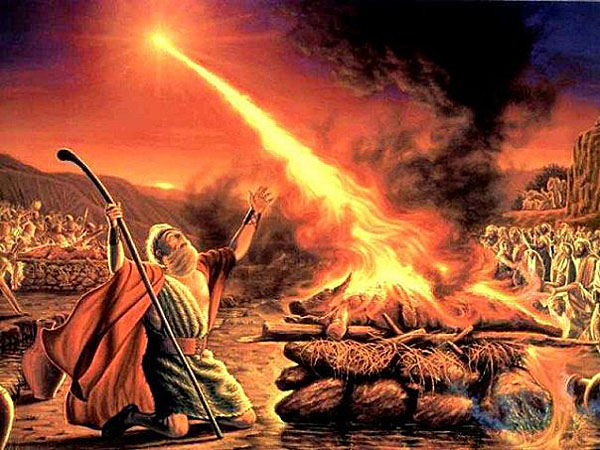
So God raised up Elijah to be his voice to the people. Elijah’s own name was itself an indictment agains the people of Israel. Elijah means “YHWH is God.” And in epic fashion atop Mount Carmel, his name was proven true. God showed up in a BIG way and proved that Ba’al was no god at all (1 Kings 18).

Boom. Drop the mic, exit stage left. Game over. Ba’al got pwned.

Elijah went on to be the hometown hero, the amazing super-prophet that everyone loved and cheered for with his own talk show and energy drink. Right? Not exactly. In the very next chapter we see Elijah running for his life on the opposite end of Israel because Queen Jezebel Lannister put a bounty on his head.

Elijah went into a deep depression and even felt suicidal at one point. Not because he was defeated, but because he felt alone in his victory. It wasn’t enough for God to show up in an epic way. Elijah felt like he was the only one left actually worshiping YHWH. Yeah, he may have won the battle, but for Elijah the war was far from over. His war was internal. We see that even for Elijah, God’s presence wasn’t enough. He wanted more. He needed to know that he was not alone, that his life still had purpose, that he wouldn’t be some one-and-done kind of prophet.

I know I can relate to Elijah. Some of the hardest days in my life have followed on the tail winds of an epic spiritual experience – a mission trip or a summer camp or some other spiritual high. God shows up in a big way, and hundreds or even thousands of people are worshiping him and experiencing his power. And then I go back home and collapse inward, believing the lie that I’m alone.

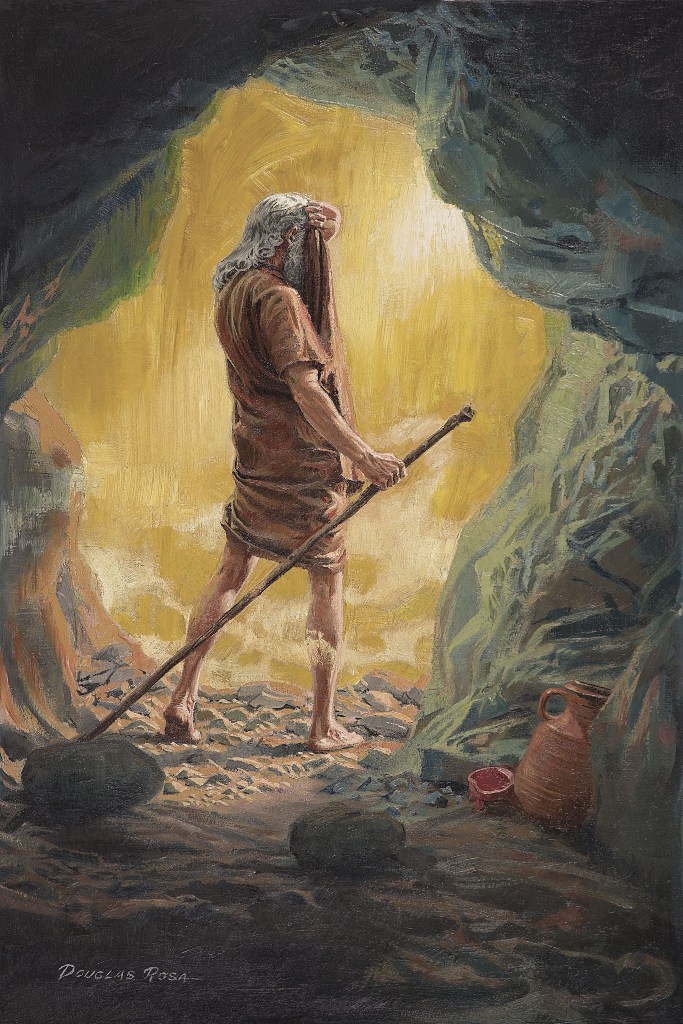
God gives Elijah a wake-up call that I know I have needed and many occasions. God sent hurricane force winds, and an earthquake, and a raging fire – but God was not “in” any of those. So often we look for God in the big production, the stage lighting, the sound systems, the charismatic speakers, the emotional drama skits, the mountain-top experiences. And it leaves us feeling empty.

We all, like Elijah, need to know that God can be found not in the show but in the silence. We need to learn to rest in him and to find him in the boring, the mundane, the common everyday experiences.

God then reveals to Elijah that he is not alone. There were still 7,000 people back home who had not bought into Ba’al worship. There were 7,000 people who were still devoted to YHWH alone. Elijah did not have to fly solo. No mission from God is ever a solo mission.

But then God turns right around and sends Elijah back into the fray. His pity-party is officially over, and it’s time to get back to work. I think God’s mission in Israel was so important that if Elijah didn’t go, God would have found someone else. God’s will is going to be accomplished, and he is looking for people to partner with him, not to do it on their own.

As I look at the story of Elijah, I am convinced more and more that these truly are the days of Elijah. We need more men and women who are willing to declare the word of the Lord to a world that is increasingly hostile toward that word. We need men and women who are willing to stand up for what is right no matter what it may cost them. We need men and women who will be there for each other and reassure each other that we are not alone. We are all in this together. And it is only by working together and partnering with God through the ordinary, mundane, common life experiences that we can truly begin to change the world for the better.