Page 6 of 9

Characteristics of Christ | GIVING

A 40 Day Journey to Becoming Like the One We Follow

Day 23: Giving (Matthew 6:3-4)

What’s the point in having all this stuff? What good is money anyway? Everything you own will ultimately end up in a landfill one day. So focus on what really matters.

That’s pretty much a summary of Ecclesiastes.

Our God is a giving and gracious God. The Father loves to bless his children with good gifts. BUT (and this is a huge but!) there is a caveat. It all comes back to his initial covenant with Abram in Genesis 12. God tells Abram, “I will bless you and make you famous, and you will be a blessing to others…All the families on earth will be blessed through you.”

Did you catch that? God would bless Abram so that he could then be a blessing to others. Why would he expect any less from us? God never blesses us with anything – wealth, possessions, talents, abilities, etc. – without expecting us to use those blessings to bless others. God doesn’t give us “every good and perfect gift” just for us to hoard it all.

Jesus was as straightforward as he could be with the parable of “The Rich Fool.” This guy had an amazing harvest, so much that his barns couldn’t hold it all. So he decided to tear down his current barns and build bigger ones to hold all his stuff that he himself had earned. God called him a fool and demanded his life from him.

It’s a terrifying story.

Jesus talked a lot about money and possessions. We can’t serve God and wealth. Giving should become second nature (“don’t let your left hand know what your right hand is doing” implies habitual patterns of behavior that don’t take conscious thought or effort anymore). He commended the poor widow for giving out of her poverty rather than those who gave out of their surplus. He said it’s better to give than to receive (which science has proven true!).

Jesus would ultimately model this kind of giving by laying down his own life for our sake. He never held onto possessions, never hoarded wealth, never turned away anyone in need. His giving was second nature.

May it be so with us. God has blessed us so that we can be a blessing to others.

Characteristics of Christ | PRAYERFUL

A 40 Day Journey to Becoming Like the One We Follow

Day 22: Prayerful (Mark 1:35)

The Gospel of Mark is fast-paced and action-packed. It’s just the sort of story telling to keep readers and listeners hooked. Jesus was busy, and one of Mark’s favorite words is “immediately.” There is a sense of urgency. Not that Jesus was rushed or hurried or stressed. But there was much to do and not much time to do it in.

The key, I think, to the balance Jesus maintains in his ministry comes down to prayer. In the first chapter of Mark and elsewhere throughout the gospels, we read about Jesus taking time to go off by himself to pray.

Prayer isn’t one important thing to do in a list of other important things to do. Prayer is the thing by which all other tasks get done. Without that personal connection with the Father, the Son could do nothing. Simply stated, Jesus couldn’t not pray.

Some people have understood this about themselves, too. Martin Luther is quoted as saying, “I’m so busy now that if I did not spend three hours each day in prayer, I could not get through the day.”

Prayer permeated Jesus’ ministry. Not only did he find times to pray, but he taught about prayer and taught us how to pray. He modeled a prayerful life for his disciples, and he encouraged us to develop the same kind of relationship with the Father as he himself enjoyed.

Again, prayer isn’t just something we do. It’s the very thing through which everything else gets done. That’s why Paul could tell us to “pray without ceasing.”

Maybe some of us need to take a cue from the disciples and ask, “Lord, teach us to pray.” And then follow Jesus’ lead.

“Our Father, who art in heaven…”

Characteristics of Christ | OBEDIENCE

A 40 Day Journey to Becoming Like the One We Follow

Day 1: Obedience (John 5:19)

Growing up, we were all taught to obey our parents. What a drag, am I right? Why should I listen to them? Why do I have to clean my room? Why do I need to do all these chores? Why do I have to wear these uncomfortable shoes to my cousin’s wedding? Why do I have to be home by eleven when all my friends get to stay out until midnight?

But at some point there comes a turn. The guidelines and boundaries begin to make sense. We find ourselves becoming more like our own parents because we have picked up on their mannerisms, attitudes, and values. Obedience takes time to learn. Eventually we find that if we stop fighting back out of our own stubbornness we can begin to see how the rules do make sense.

Jesus was obedient to his Father. Even when he went missing as a young boy, his parents found him in the Temple because he “must be about [his] Father’s business.” He would obey his heavenly Father above even his earthly parents. His entire mission was predicated on what the Father was already up to. Jesus went where the Father sent him, did what the Father showed him, and spoke what the Father told him.

He became obedient even to the point of death on a cross. Jesus never tried to go rogue or do things on his own accord. Every step was in keeping with the Father’s will. Did he do things he didn’t want to do out of obedience to God? Yes! But Hebrews reminds us that Jesus learned obedience through the things he suffered.

There is a sense in which obedience brings us into oneness with God. “If you love me,” Jesus says, “you will keep my commands.” We show we love Christ not just by doing all the things he tells us to do as some rules-based religion. His command is to love God and love others as he has loved us.

May you walk in obedience to God the Father and Christ the Son and keep in step with the Spirit to experience oneness in relationship with God and others.

The Little Way

Colossians 3:23-24

Whatever you do, work at it with all your heart, as working for the Lord, not for human masters, since you know that you will receive an inheritance from the Lord as a reward. It is the Lord Christ you are serving.

I’ve got to keep it real. This passage is in the context of addressing slaves in the 1st Century Greco-Roman world. The amazing thing was slaves and masters worshiped in the same churches and shared a religion. The sad thing is that American slave owners abused this passage and others like it to keep African slaves in their place. These instructions were meant to revolutionize the slave-master relationship, leading to freedom and brotherhood. But like most things, if it can be used to oppress other people, we’ll find a way to do it.

Continue reading → The Little Way

Light the Way

Psalm 119:105

Your word is a lamp for my feet, a light on my path.

What is the Bible? If we’re honest, the Holy Bible can be a very intimidating book. Have you ever tried reading through it? If you got past Leviticus, congratulations! Keep going, it gets better.

Continue reading → Light the Way

FAITHFUL | 40 Days of Focus, Day 14


“You shall not commit adultery.”
(Exodus 20:14)

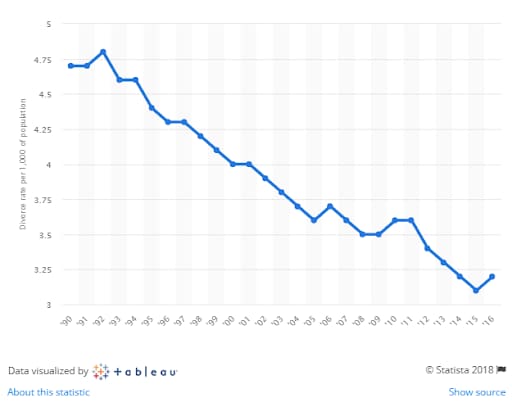
We’ve all heard the statistic that 50% of marriages end in divorce. Actually, that’s a myth. First, in no way does that mean your particular marriage only has a 50% chance of lasting a lifetime. It simply means that at one point in our nation’s history (a couple decades ago now) for every 2 marriages in a given year, there was 1 divorce. The divorce rate was half that of the marriage rate.

This phenomenon occurred on the heels of court rulings that gave women more authority and control in filing for divorce proceedings. When women were given the chance, they were finally able to end a bad marriage. Imagine being stuck in an abusive marriage, or knowing your spouse is sleeping around, and not being able to do anything about it.

In reality, however, the divorce rate has been on the decline – dropping around 18% over the past decade? Why? Because newly married young people are staying together longer. True, fewer young adults are currently married than ever before (functioning under the mindset of ‘if it’s just going to end in divorce, then why bother?’). But those who do choose to get married are remaining more faithful to each other than comparative couples of previous generations.

This may come as no surprise, but infidelity is still listed as the top specific reason for divorce at nearly 30%. Unfortunately those statistics are not much different for couples inside the church.

The positive intention behind the prohibition is to uphold and honor the covenant of marriage. God railed against the apathetic treatment of wedding vows in the prophetic book of Malachi.

Has not the one God made you? You belong to him in body and spirit. And what does the one God seek? Godly offspring. So be on your guard, and do not be unfaithful to the wife of your youth.
“The man who hates and divorces his wife,” says the Lord, the God of Israel, “does violence to the one he should protect,” says the Lord Almighty.
So be on your guard, and do not be unfaithful.
(Malachi 2:15-16)

Did you catch that line? The man who hates and divorces his wife does violence to the one he should protect. This is where we need to speak wisdom into the subject of adultery, unfaithfulness, and divorce. Adultery does not JUST mean sexual immorality. Adultery is not JUST about sex. Adultery is about breaking a covenant. Israel was often called an “adulterous” nation for breaking their covenant with God by worshiping other gods, mistreating the poor, abusing the sacrificial system, taking advantage of people through unbalanced weights and measures, etc.

Israel was in a covenant with God. They broke that covenant and were labeled “adulterers.” Marriage is not just a financial or social institution. It’s a covenantal arrangement between a man, a woman, and God. To break that covenant is to commit adultery – by sleeping around, by abusing your spouse, by neglecting them, and by “doing violence against the one you should protect.” Marriage is so much more than sex. So is adultery.

In the days of Jesus there was a great debate on this issue. Some took the side of Rabbi Hillel who taught that a man could divorce his wife for basically any reason. He emphasized the phrase “who becomes displeasing to him.” Others took the side of Rabbi Shammai who taught that marital unfaithfulness was the only legal grounds for divorce. Whose side did Jesus take?

Some Pharisees came to him to test him. They asked, “Is it lawful for a man to divorce his wife for any and every reason?”
“Haven’t you read,” he replied, “that at the beginning the Creator ‘made them male and female,’ and said, ‘For this reason a man will leave his father and mother and be united to his wife, and the two will become one flesh’? So they are no longer two, but one flesh. Therefore what God has joined together, let no one separate.”
“Why then,” they asked, “did Moses command that a man give his wife a certificate of divorce and send her away?”
Jesus replied, “Moses permitted you to divorce your wives because your hearts were hard. But it was not this way from the beginning. I tell you that anyone who divorces his wife, except for sexual immorality, and marries another woman commits adultery.”
(Matthew 19:3-9)

Even though Jesus wasn’t married, he upheld the importance of marriage. Faithfulness to one’s spouse goes hand in hand with one’s faithfulness to God. That’s why Jesus said such radical things as this:

“You have heard that it was said, ‘You shall not commit adultery.’ But I tell you that anyone who looks at a woman lustfully has already committed adultery with her in his heart. If your right eye causes you to stumble, gouge it out and throw it away. It is better for you to lose one part of your body than for your whole body to be thrown into hell. And if your right hand causes you to stumble, cut it off and throw it away. It is better for you to lose one part of your body than for your whole body to go into hell.”
(Matthew 5:27-30)

In other words, don’t even think about cheating on your wife. Don’t even think about sleeping around with men who aren’t your husband. Because eventually thoughts will become actions. People often leave their partners in the head long before they leave them in the bed.

You can see why these commandments are so important. God wanted to ensure a thriving society for his people. When cultures fail to honor their family commitments, when they treat human life as expendable, and when they cease to uphold their wedding vows, society begins to break down. Life, marriage, family – these things should be honored and kept sacred for our own good and the good of society. This is why I try to live up to Jesus’ standard and put into practice the words of Paul in Ephesians:

Husbands, love your wives, just as Christ loved the church and gave himself up for her to make her holy, cleansing her by the washing with water through the word, and to present her to himself as a radiant church, without stain or wrinkle or any other blemish, but holy and blameless. In this same way, husbands ought to love their wives as their own bodies. He who loves his wife loves himself. After all, no one ever hated their own body, but they feed and care for their body, just as Christ does the church—for we are members of his body. “For this reason a man will leave his father and mother and be united to his wife, and the two will become one flesh.” This is a profound mystery—but I am talking about Christ and the church. However, each one of you also must love his wife as he loves himself, and the wife must respect her husband.
(Ephesians 5:25-33)

_____________________________

Have you heard people toss around the “50%” statistic in relation to marriage and divorce? How does it make you feel about marriage? Is it worth fighting for? Or is it not worth bothering?

Do you think that healthy marriages are a vital part of a healthy society? Why or why not?

In what specific ways can you embody Christ’s sacrificial love in your marriage?

LIFE | 40 Days of Focus, Day 13


“You shall not murder.”
(Exodus 20:13)

I think it’s safe to assume that the majority of us could read this command and think, “Done. Next!”

All in all, it seems pretty easy not to kill people. I personally don’t know any murderers. The overall rate of murder and violent crimes is on the decline throughout most of the country. So…odds are that you will see command number six and think, “I’m good.

But you know it’s not that easy. If it were that easy, Jesus wouldn’t have had to bring it up in the Sermon on the Mount:

“You have heard that it was said to the people long ago, ‘You shall not murder, and anyone who murders will be subject to judgment.’ But I tell you that anyone who is angry with a brother or sister will be subject to judgment. Again, anyone who says to a brother or sister, ‘Raca,’ is answerable to the court. And anyone who says, ‘You fool!’ will be in danger of the fire of hell.”
(Matthew 5:21-22)

I find it helpful to reframe these “you shall not” commands and find the positive intention behind the prohibition. This command, as Jesus points out, is not just about not killing, its intention is the preservation of life. To take another person’s life is to snuff out the most sacred part of creation. We can understand that. But to insult, degrade, and oppress another person is to snuff out the Image of God within them, which, according to Jesus, is just another way of violating the sixth command.

So yes, all Christians should be on the side of life. I don’t want to use the term “pro-life” because that has taken on such a one-dimensional connotation. Abortion is DEFINITELY against the sixth command – but so is racism and prejudice and police brutality and sexual abuse and bombing civilians and torture and hate speech and capital punishment and the military industrial complex.

Think of it this way. Where God is, there is life. Through Jesus’ own death and resurrection, he conquered death. Beyond that, his death revealed the baseless and gratuitous violence of the state for what it was. The Pax Romana offered peace at the edge of a sword – and that’s not true peace. The way of Christ – who is the Way, the Truth, and the Life – is the way of the cross. It’s dying to yourself so you can really know what life means.

Jesus tells what I consider to be the scariest story ever in Matthew 25.

“Then he will say to those on his left, ‘Depart from me, you who are cursed, into the eternal fire prepared for the devil and his angels. For I was hungry and you gave me nothing to eat, I was thirsty and you gave me nothing to drink, I was a stranger and you did not invite me in, I needed clothes and you did not clothe me, I was sick and in prison and you did not look after me.’
“They also will answer, ‘Lord, when did we see you hungry or thirsty or a stranger or needing clothes or sick or in prison, and did not help you?’
“He will reply, ‘Truly I tell you, whatever you did not do for one of the least of these, you did not do for me.’
“Then they will go away to eternal punishment, but the righteous to eternal life.”
(Matthew 25:41-46)

It’s not enough to not murder. Just because I don’t kill you doesn’t mean I love you. When I’m willing to lay down my own life for your sake, though, that’s true love. That’s the true heart of the sixth command. You may not go around murdering people, but do you help feed the hungry? Do you help provide water for those who have nothing to drink? Do you help clothe the naked? Are you a loving presence for those who are sick or in prison?

In other words, are you on the side of life or death?

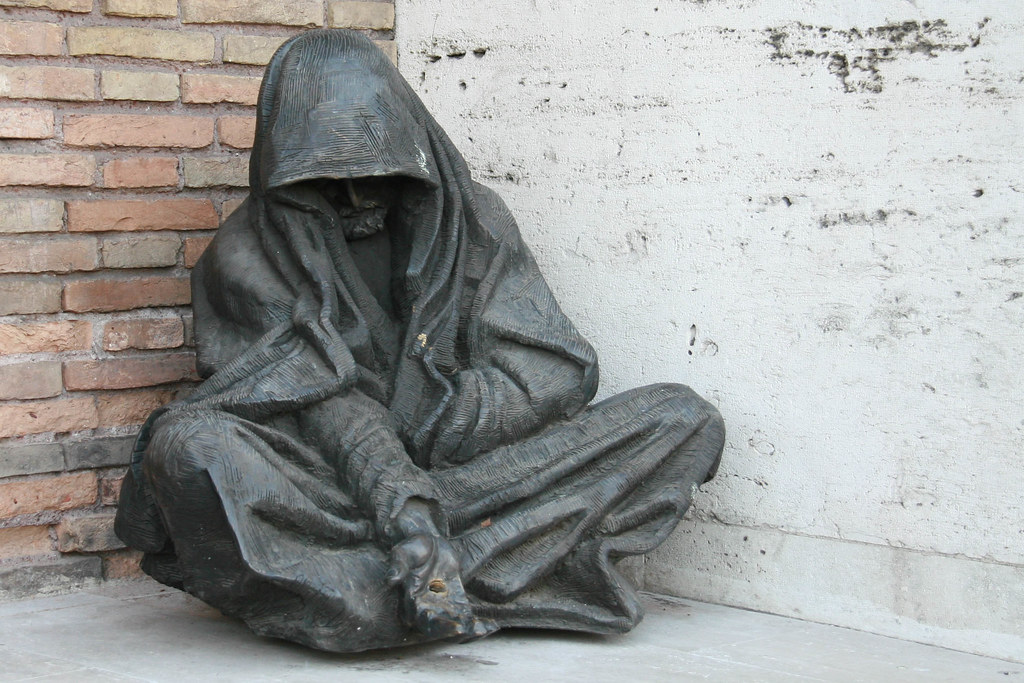
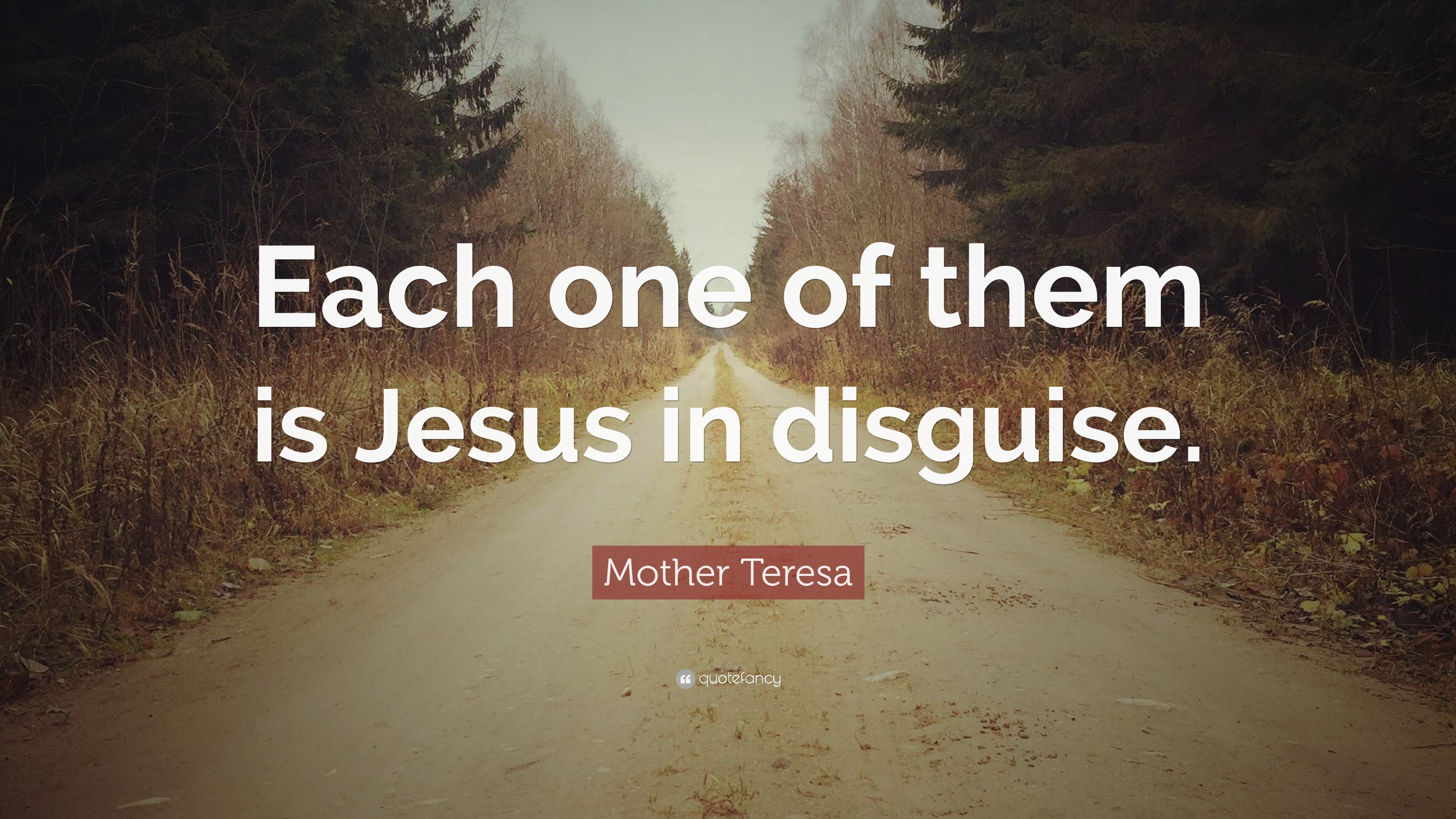
“Jesus in Disguise” statue in Rome
If you search the Bible for the phrase “choose life” you will be directed to a powerful passage in Deuteronomy 30, some of Moses’ last words to the nation of Israel before he died:

See, I set before you today life and prosperity, death and destruction. For I command you today to love the Lord your God, to walk in obedience to him, and to keep his commands, decrees and laws; then you will live and increase, and the Lord your God will bless you in the land you are entering to possess…
This day I call the heavens and the earth as witnesses against you that I have set before you life and death, blessings and curses. Now choose life, so that you and your children may live and that you may love the Lord your God, listen to his voice, and hold fast to him. For the Lord is your life, and he will give you many years in the land he swore to give to your fathers, Abraham, Isaac and Jacob.
(Deuteronomy 30:15-16, 19-20)

Don’t just not kill people. Choose life.

Don’t just be anti-abortion. Choose life.

Don’t just look out for your own interests. Choose life.

Don’t judge the sick, hungry, and homeless. Choose life.

There’s an amazing story of this in action. In the early days of the church, the Christians were living in a culture that did not value the life of infants. The fathers could make a decision to literally discard a baby for various reasons – maybe it was a deformity, maybe it was a little too small for its age, maybe it was a girl. The father would take this unwanted baby and leave it in the town dump to die from the elements. The Christians took Jesus’ call to choose life seriously. They went out and rescued these babies, adopting them and raising them as their own. The Roman government began to notice that these unwanted babies were growing up to become normal, healthy, functioning members of society and eventually outlawed the practice of infanticide.

When God’s people choose life, we can literally change the world.
______________________________

When people talk about being “pro-life” do they only mean in terms of abortion or is it in every aspect of life? What do you think about that?


What do you think of this quote? “If Jesus commanded us to love our enemies, I think he meant we ought not kill them.” Does this mean we all have to be strict pacifists? Why or why not?


If you’re honest with yourself, how often do you find yourself “murdering” someone in the sense that Jesus talks about? What do you think you could do to eliminate those attitudes from your heart?

SABBATH | 40 Days of Focus, Day 11


“Remember the Sabbath day by keeping it holy.Six days you shall labor and do all your work, but the seventh day is a sabbath to the Lord your God. On it you shall not do any work, neither you, nor your son or daughter, nor your male or female servant, nor your animals, nor any foreigner residing in your towns. For in six days the Lord made the heavens and the earth, the sea, and all that is in them, but he rested on the seventh day. Therefore the Lord blessed the Sabbath day and made it holy.”
(Exodus 20:8-11)

Sometimes I think we forget just how revolutionary the Bible is/was. Remember that this was a nation of former slaves. How many holidays do slaves get? Zero. How many days off in a week did they get? Zero. To live was to work.

For God to take this nation of former slaves and then REQUIRE one day of complete rest from work EACH WEEK was truly foundational in granting them a new identity. They aren’t slaves anymore, and to prove it, God says stop working.

The whole notion of Sabbath is closely tied to God’s own rest after his creative work in Genesis.

By the seventh day God had finished the work he had been doing; so on the seventh day he rested from all his work. Then God blessed the seventh day and made it holy, because on it he rested from all the work of creating that he had done.
(Genesis 2:2-3)

Only recently have a significant number of people around the globe been able to enjoy one or two days off during the week. Some countries and companies are even testing out a four-day work-week model, and it seems to be going well. I think, it turns out, that humans weren’t designed to work nonstop, seven days a week. People need rest. People need a break. God knew this from the beginning, and so he prioritized it for his new nation.

Sabbath is a GOOD thing. The benefits of rest and relaxation are attested to time and time again for increasing productivity and creativity. We are more efficient and effective when we are well rested and not overly burdened.

So why was Jesus always fighting against the Sabbath?

Seven different times in the gospels we find Jesus performing miracles (mostly healings) on the Sabbath. This upset the religious leaders to no end. In fact, this is one of the main reasons they wanted to kill him. I think this one verse reveals a lot about their hearts.

Indignant because Jesus had healed on the Sabbath, the synagogue leader said to the people, “There are six days for work. So come and be healed on those days, not on the Sabbath.”
(Luke 13:14)

Jesus wasn’t against Sabbath as a practice and an idea. In fact, he was very much in favor of finding times of rest and disconnecting from the high-speed demands of life. Over and again we see him slipping away from the crowds to be alone with God. His problem with Sabbath was that the religious leaders were making it more of a burden than a release of burdens. Sabbath was made to be enjoyed, but they were sucking all the joy out of it with their rules.

It’s like taking your kids to the playground and threatening them to have fun or else they’re going to be punished. Or like, this is completely true, the sign I saw at one playground listing a bunch of rules, one of which was “No Running.” Srsly???


Simply put, Jesus didn’t play those games.

Then he said to them, “The Sabbath was made for man, not man for the Sabbath. So the Son of Man is Lord even of the Sabbath.”
(Mark 2:27-28)

We weren’t made to follow an extreme no-work regime, either. Man was not created solely to follow the Sabbath laws. Rather, God created the Sabbath to be a relief to us. The problem came from all the rules and restrictions around the Sabbath, making it more of a burden.

When rest is burdensome, we’ve gotten pretty far offtrack.

Our rest is not found in observing a bunch of rules, regulations, and guidelines. Rest is found in following Jesus.

“Come to me, all you who are weary and burdened, and I will give you rest. Take my yoke upon you and learn from me, for I am gentle and humble in heart, and you will find rest for your souls. For my yoke is easy and my burden is light.”
(Matthew 11:28-30)

Sabbath can come whenever, wherever while following Jesus. Or as Augustine said:

“You have made us for yourself, O Lord, and our heart is restless until it rests in you.”

_________________________________

Is the practice of Sabbath important in your life? How do you make rest and time with God a priority in your life?


Why do you think our churches don’t teach and encourage Sabbath that much?


Jesus said the Sabbath was intended to bring life and healing. What steps can you take this week to find times of rest that bring life and healing and joy?

NAME | 40 Days of Focus, Day 10


“You shall not misuse the name of the Lord your God, for the Lord will not hold anyone guiltless who misuses his name.”
(Exodus 20:7)

Your name is the loudest, most important word in your vocabulary. From before you were born, you were probably addressed by name. Your parents chose a name that was important and meaningful to them in some regard. When someone needs you, they call your name. You want people to know your name and call you by name. If they don’t know your name, especially after some time knowing you, or they get your name wrong, it can leave you feeling insulted or demeaned.

It can be frustrating to hear your name too much, however. When someone says your name just to say it, that almost feels like an affront, an abuse of your identity.
“Daniel. Daniel. Daniel. Daniel. Daniel. Daniel…” WHAT?!

Or worse, when someone ascribes some actions or beliefs to you, associating your name with something you would never do or think or condone, it can leave you feeling utterly betrayed.
“Daniel thinks it’s no big deal for people to use the express checkout lane with a cart full of groceries.” I NEVER SAID THAT!

Your name is sacred to you. You don’t want people using your name “in vain” or flippantly. You also don’t want people abusing your name by associating it with something without your consent.

So why do we do that with God’s name?

The Jews took this command so seriously that we don’t even know the true covenantal name of God. They chose not to insert the vowels in the name YHWH, so the literal pronunciation is lost to history. They also would replace the name YHWH with Adonai (or LORD) when reading from the sacred texts so as not to misuse God’s name. Even today, many Jews will write G-d so as not to break this third commandment.

And here we are shouting “Oh my God” at every little thing. When your best friend shows up with a new hair cut, “Oh my God! I love it.” When your plastic Walmart bag breaks, “Oh my God.” When someone is driving too slowly in the left lane, “Oh my God, hurry up!” When your boyfriend proposes, “Oh my God!” When your waitress spills the water, “Oh my God.” When the Property Brothers finish their renovation project on your new, overpriced fixer upper, “Oh my God!” When the ref misses an obvious pass interference call that causes your team to lose the game and miss the Super Bowl, “Oh my God!” When you open a container of spoiled mashed potatoes that has spent three weeks in the back of the fridge…

You get the point. Stop using the name of God as an explicit, a curse, or an exclamation. Find something else to say.

But this command goes deeper than that. If this is where we stop, then we miss the more important prohibition in this command. To misuse God’s name also means to use it incorrectly – slapping God’s name on something in order to gain support or power. When we use God’s name to advance our own career, agenda, ideas, or merchandise, we are breaking the third commandment.

There’s a weird story in 1 Kings 13 where God sent a prophet to King Jeroboam and then told him to leave without staying to eat. The prophet left, but while he was on his way another “old prophet” caught up with him and lied to him. “I too am a prophet, as you are. And an angel said to me by the word of the Lord: ‘Bring him back with you to your house so that he may eat bread and drink water.’” The first prophet went home with the guy and later was killed by a lion. Sometimes people use the name of God to add authority to their ideas. We must be discerning and realize when someone is trying to pull one over on us.

There was another time when the Israelites were at war with the Philistines. They decided to bring the Ark of the Covenant out to the battle to prove that God was on their side. They were misusing the name of God. The Philistines won the battle and captured the Ark.

But probably my favorite cautionary tale against breaking this command is in Acts 19. These Jewish guys were going around driving out demons and using the names of Jesus and Paul in order to add some authority to their business. The story that follows is hilarious.

Some Jews who went around driving out evil spirits tried to invoke the name of the Lord Jesus over those who were demon-possessed. They would say, “In the name of the Jesus whom Paul preaches, I command you to come out.” Seven sons of Sceva, a Jewish chief priest, were doing this. One day the evil spirit answered them, “Jesus I know, and Paul I know about, but who are you?” Then the man who had the evil spirit jumped on them and overpowered them all. He gave them such a beating that they ran out of the house naked and bleeding.
(Acts 19:13-16)

The name of God is to be kept holy (see the Lord’s Prayer). That means we should honor and revere the names of God the Father, Jesus Christ His Son, and the Holy Spirit. We should not use them flippantly as expletives or exclamations. And neither should we use them as a way of promoting our own agendas, beliefs, politics, or businesses.

When a band can’t make it in the main stream so they sign with a Christian label just to sell more albums and show tickets, they’re using God’s name in vain.

When a politician has no previous religious affiliation suddenly begins quoting the Bible in order to appeal to his faith-based voters, he’s using God’s name in vain.

When a country claims to be a Christian nation but repeatedly and systemically abuses minorities, immigrants, and the poor, that country is using God’s name in vain.

When a business capitalizes on a Christian market for their t-shirts, hats, bracelets, bumper stickers, coasters, breath mints, and cheesy paintings, they are using God’s name in vain.

When a political party uses religious rhetoric and Scripture to convince people that “real Christians would never vote for those other guys,” then they are using God’s name in vain.

When we allow ourselves to be convinced that God’s will can only be carried out through government intervention, then we are using God’s name in vain.

There is only one name that can save – and it’s not Washington, DC. It’s not Trump or AOC. It’s not Republican or Democrat. It’s not anything under heaven except one name.

Salvation is found in no one else, for there is no other name under heaven given to mankind by which we must be saved.
(Acts 4:12)

_______________________________

Why do you think it’s so easy for us to exclaim “Oh my God” on a regular basis? Does this bother you? Do you even notice it anymore?


What do you think about the lengths the Jews would go in order not to misuse God’s name? What would people think if we showed that same level of respect?


What specific ways do you see people misusing God’s name in business, politics, etc?

IDOLS | 40 Days of Focus, Day 9


“You shall not make for yourself an image in the form of anything in heaven above or on the earth beneath or in the waters below. You shall not bow down to them or worship them; for I, the Lord your God, am a jealous God, punishing the children for the sin of the parents to the third and fourth generation of those who hate me, but showing love to a thousand generations of those who love me and keep my commandments.”
(Exodus 20:4-6)

The second of the 10 Commandments is a prohibition against crafting an image of a created thing in order to bow down to or worship it. Remember, the Hebrew people have just spent many generations in the land of Egypt which was overrun with idols and images. They were everywhere! If you go to Egypt even today and look at the ancient ruins, there are temples and idols and statues and carvings everywhere you look. They depict the pharaohs and the gods, retelling their collective stories in which they found their identity.

Some pharaohs ramped it up to eleven, like Ramses II who loved him some Ramses II. He built statues and shrines to himself right alongside those of Ra and Osiris and Horus.

“Stop doing that,” God says.

The question is, why?


I think there are many reasons God would give this command, but let’s look at two. First, it’s a little ridiculous to worship the Creator by ascribing to him an image of a created thing. Second, we already have an image of God walking around – human beings. We’ll get to that more in a moment.

I mentioned Isaiah yesterday. I want to draw your attention to what he actually says about the lunacy of idol worship. It’s a longer passage, but well worth it.

The blacksmith takes a tool
and works with it in the coals;
he shapes an idol with hammers,
he forges it with the might of his arm.
He gets hungry and loses his strength;
he drinks no water and grows faint.
The carpenter measures with a line
and makes an outline with a marker;
he roughs it out with chisels
and marks it with compasses.
He shapes it in human form,
human form in all its glory,
that it may dwell in a shrine.
He cut down cedars,
or perhaps took a cypress or oak.
He let it grow among the trees of the forest,
or planted a pine, and the rain made it grow.
It is used as fuel for burning;
some of it he takes and warms himself,
he kindles a fire and bakes bread.
But he also fashions a god and worships it;
he makes an idol and bows down to it.
Half of the wood he burns in the fire;
over it he prepares his meal,
he roasts his meat and eats his fill.
He also warms himself and says,
“Ah! I am warm; I see the fire.”
From the rest he makes a god, his idol;
he bows down to it and worships.
He prays to it and says,
“Save me! You are my god!”
They know nothing, they understand nothing;
their eyes are plastered over so they cannot see,
and their minds closed so they cannot understand.
No one stops to think,
no one has the knowledge or understanding to say,
“Half of it I used for fuel;
I even baked bread over its coals,
I roasted meat and I ate.
Shall I make a detestable thing from what is left?
Shall I bow down to a block of wood?”
Such a person feeds on ashes; a deluded heart misleads him;
he cannot save himself, or say,
“Is not this thing in my right hand a lie?”
(Isaiah 44:12-20)

God, the Creator of everything, cannot be contained within or represented by anything we humans can make. God made cows – how are you going to represent him as a cow? God made the sun – how are you going to represent him as the sun? There certainly are things about God’s nature that we can learn from his creation (Romans 1), but any created image will fall short in fully representing God’s power and glory.

But it’s really difficult for us humans to focus on what we can’t see. We often need something on which to fix our gaze. That’s one of the attractions and also the dangers of idol worship. I heard a quote recently, but I cannot remember who originally wrote/said it: “The soul takes the shape of that which has its attention.” We are an increasingly image-based culture. We communicate through emoji, gifs, and memes. We don’t call or send text messages, we SnapChat and post to Instagram Stories. We don’t read books, we wait for the movie. We don’t read magazine articles, we watch YouTube videos.

Gathering around the TV to stream Netflix does not look much different in practice from gathering around the household shrine and telling the stories of the gods. Going to the movies does not look much different in practice than making a pilgrimage to the temple.

Living in an increasingly post-text, more image-based society leads us to think more strongly that “seeing is believing.” You can’t believe or know or experience that which you can’t see. So we create our own gods and form our new religions around celebrities, sports teams, and superheroes.

God says, “Stop it.”

For we live by faith, not by sight.
(2 Corinthians 5:7)

Second, God already has micro-images of himself walking around. Remember on Day Six God created mankind “in his image and likeness.” That makes me think about the time Jesus was at the Temple and some of the religious leaders wanted to trap him. They asked about paying taxes to Caesar. Jesus’ response is brilliant.

“Show me the coin used for paying the tax.” They brought him a denarius, and he asked them, “Whose image is this? And whose inscription?”
“Caesar’s,” they replied.
Then he said to them, “So give back to Caesar what is Caesar’s, and to God what is God’s.”
(Matthew 22:19-21)

First of all, they weren’t supposed to have that kind of coin in the Temple because of this Command Number Two. But then Jesus asked about the image and inscription. If Caesar wants to put his image and inscription on a coin to mark it as his, then give it back to him. But God has placed his image and inscription upon each person. You are not your own. So give the coin to Caesar, but give your life to God.

We don’t need to create images to bow down to and worship as a representation of God. God has already done that work for us! Not that we worship human beings, but we see each other and know God is present among us. John words it WAY better than I can.

Dear friends, since God so loved us, we also ought to love one another. No one has ever seen God; but if we love one another, God lives in us and his love is made complete in us.
(1 John 4:11-12)

If the soul takes the shape of that which holds its attention, then let us set our attention on love. May the love we have for one another be the image of God among us. And may we together in love fix our eyes on Jesus, the ultimate representation of God with us.

The Son is the radiance of God’s glory and the exact representation of his being, sustaining all things by his powerful word. After he had provided purification for sins, he sat down at the right hand of the Majesty in heaven.
(Hebrews 1:3)

Do I think it’s wrong to have paintings, sculptures, and images adorning our church buildings? No. Art can certainly direct us toward God and connect with us on an emotional level. But we must always remember that the created thing is not to be worshiped or revered as “divine.”

______________________________________

Why do you think the visual arts are so effective at connecting with us emotionally?


Does your church building utilize art to draw people’s attention to God? Or is your worship space more bland and bare? Why? How effective is it?


Why do you think humans are so prone to worship a created thing rather than their unseen Creator?