Page 8 of 9

rCQ: Did Judas believe Jesus was the Son of God?

I’ve been browsing the r/Christianity subreddit. Some of it is weird and a bit out there. But there are also some people asking great questions. I am a sucker for good questions, so I decided to begin a series on my blog called r/Christianity Questions (or rCQ for short).


Recently I came across this question:

Did Judas believe Jesus was the Son of God?

Here’s my answer.

[TL;DR version – No, Judas didn’t know Jesus was the Son of God like we know him to be. No, I don’t think Judas really knew what he was doing because he didn’t understand Jesus’ mission. Yes, I think Judas could have been forgiven had he not hanged himself.]

It depends on what you mean “Son of God.” The phrase is a Messianic title taken from Psalm 2, which God actually quotes at Jesus’ baptism. The Messiah would be hailed as “God’s Son” in a kingly sense, not necessarily in a divine incarnation sense. In that regard, I’m not sure that any of the apostles truly believed to the fullest extent. Even when Peter confesses that Jesus was the Christ, the son of the living God (Matthew 16:16), he has Psalm 2 and maybe Daniel 7 in mind.

He said to me, “You are my son;
today I have become your father. (Psalm 2:7)

What happened with Judas, in my understanding, is that he was trying to force Jesus’ hand at overthrowing the Romans. He saw an opportunity to make a little money, get Jesus arrested, and maybe beaten. I don’t think he realized the lengths to which the Jewish leaders would take the whole thing. And I think Judas believed Jesus would defend himself in some way. It makes some sort of sense. If Judas had devoted the past few years of his life to following someone who was going to be the Messiah, Israel’s deliverer who would overthrow Roman rule and establish an independent Jewish state as the heir to David’s throne (see John 6:14-15), then maybe Judas was simply trying to start the ball rolling. It’s clear from James’ and John’s question about sitting at Jesus right and left when he came into his kingdom (Mark 10:35-40) that this was the vision the other apostles had for the kingdom.

It’s not until Jesus’ trial that we hear “my kingdom is not of this world. If it were, my followers would fight for me” (John 18:36). Judas wanted a fight. Peter wanted a fight – hence the sword in the garden (John 18:10). James and John wanted a fight. But that was not the way of Jesus.

What really gives away that Judas didn’t actually think Jesus was going to be killed because of his betrayal is this:

When Judas, who had betrayed him, saw that Jesus was condemned, he was seized with remorse and returned the thirty pieces of silver to the chief priests and the elders. “I have sinned,” he said, “for I have betrayed innocent blood.”
“What is that to us?” they replied. “That’s your responsibility.”
So Judas threw the money into the temple and left. Then he went away and hanged himself. (Matthew 27:3-5)

Judas assumed (rightly) that the leaders wouldn’t have enough evidence to charge Jesus, much less convict him of anything. Judas also assumed (wrongly) that Jesus could and would defend himself against any accusations. Sometimes, it’s even the wrongful arrest of a movement leader that gives said movement legitimacy. Maybe Judas wanted to thrust Jesus into the spotlight for all to see. Little did he know just how well his plan would succeed in doing that.

There’s also the question: Could Judas have been forgiven? And I think the answer is yes. All the other disciples were forgiven. Saul (aka Paul) was forgiven. Jesus cried out for God to forgive the very people who nailed him to that cross because they (like Judas) didn’t know what they were doing.

Don’t get me wrong. I’m not defending Judas’ actions. What he did was greedy at best (John 12:4-6) and pure evil at worst (John 13:2). But Judas also wasn’t the only one who betrayed Jesus that night. All the apostles ran. Everyone deserted. Peter denied even knowing Jesus at all.

It wasn’t until after the resurrection that Peter and the other apostles began to really know what it meant for Jesus to be the “Son of God” in the fullest meaning of the phrase.

Jesus Is the New Jonah…And So Are You.

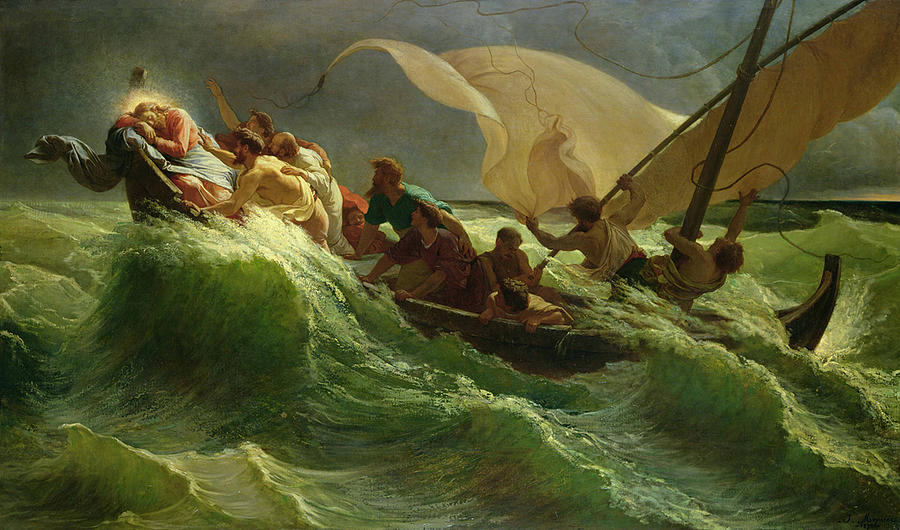
A prophet of God sleeping in a boat at sea during a particularly violent storm which has everyone else on board panicked. The prophet is rudely awakened and miraculously causes the storm to cease.

Stop me if you’ve heard this one before.

The more I study the story of Jonah, the clearer it becomes that Jesus based a lot of his ministry and teachings on the life of Jonah. The connections become obvious to anyone paying attention. In fact, Jesus makes it obvious for us by coming right out and telling us that “something greater than Jonah is here” (Matthew 12).

So how is Jesus the new Jonah?

We’ll look at this throughout the story, but let’s just stay in chapter 1 for now.

THE WORD OF THE LORD

The opening phrase of Jonah’s story should perk the ears of Christians. “The Word of the Lord…” doesn’t that have some significance?

Look at how John’s gospel begins: In the beginning was the Word, and the Word was with God, and the Word was God.

Jesus IS the Word of God. Jesus’ story is inextricably connected to Jonah’s from the opening phrase.

GO TO NINEVEH

God calls Jonah to leave his home (Israel) and go to a foreign, hostile land (Nineveh) to proclaim God’s message. Jonah, somewhat understandably, is hesitant to do this. Instead, he runs away from the call to foreign missions.

Where is Jesus in this? How is Jesus the new Jonah in this regard? The answer is best summarized in Philippians 2:

Who, being in very nature God,
Did not consider equality with God something to be used to his own advantage;
Rather, he made himself nothing
By taking on the very nature of a servant,
Being made in human likeness,
And being found in appearance as a man,
He humbled himself
By becoming obedient to death –
Even death on a cross!

Looking back at John 1, The Message version puts it this way:

The Word became flesh and blood and moved into the neighborhood.

Jesus was sent on a mission from God to leave his home in heaven, to come to a foreign land (the world), to preach to a hostile population, and ultimately to be killed for it.

Jonah didn’t want to leave Israel and go to Nineveh for fear of what might happen. Christ left heaven and came to Earth fully knowing what would happen. Christ is the greater Jonah.
THE STORM AT SEA

Then there’s the storm. I want to draw your attention to all the parallels between Jonah 1:3-16 and Mark 4:35-41.

Sailing in the opposite direction/other side

  • But Jonah ran away from the Lord and headed for Tarshish. (Jonah 1:3)
  • That day when evening came, he said to his disciples, “Let us go over to the other side.” (Mark 4:35)

Violent windstorm on the sea and imminent danger of ship’s sinking

  • Then the Lord sent a great wind on the sea, and such a violent storm arose that the ship threatened to break up. (Jonah 1:4)
  • A furious squall came up, and the waves broke over the boat, so that it was nearly swamped. (Mark 4:37)

Deep sleep during the storm

  • All the sailors were afraid and each cried out to his own god. And they threw the cargo into the sea to lighten the ship. But Jonah had gone below deck, where he lay down and fell into a deep sleep. (Jonah 1:5)
  • Jesus was in the stern, sleeping on a cushion. (Mark 4:38)

Rude awakening by frightened shipmates

  • The captain went to him and said, “How can you sleep? Get up and call on your god! Maybe he will take notice of us so that we will not perish.” (Jonah 1:6)
  • The disciples woke him and said to him, “Teacher, don’t you care if we drown?” (Mark 4:38)

Calming of sea by protagonist’s actions

  • Then they took Jonah and threw him overboard, and the raging sea grew calm. (Jonah 1:15)
  • He got up, rebuked the wind and said to the waves, “Quiet! Be still!” Then the wind died down and it was completely calm. (Mark 4:39)

Shipmates’ awestruck fear at divine power

  • At this the men greatly feared the Lord, and they offered a sacrifice to the Lord and made vows to him. (Jonah 1:16)
  • They were terrified and asked each other, “Who is this? Even the wind and the waves obey him!” (Mark 4:41)

Before you start crying “Coincidence!” I must remind you that it was Jesus himself who drew the parallels between his ministry and Jonah’s. Jesus’ earliest followers purposefully pointed to these connections in the way they told their stories.

God was trying to teach Jonah (and subsequently Israel) the lesson that God cares about the Gentile nations, too. As Peter and Paul would put it, God wants all people everywhere to be saved (Acts 17:30; 2 Peter 3:9). God loved the world to the extent that he sent his one and only Son (John 3:16).

Not long after Jonah, the Assyrian Empire would rise in power once again and overthrow the evil kingdom of Israel, taking their people into exile and erasing them from the annals of history. Even in the face of this unspeakable tragedy, God still had a bigger plan in mind:

“It is too small a thing for you to be my servant
To restore the tribes of Jacob
And bring back those of Israel I have kept.
I will also make you a light for the Gentiles,
That my salvation may reach to the ends of the earth.” (Isaiah 49:6)

Jesus, with this very passage in mind, would tell his earliest followers, “You are the light of the world” (Matthew 5).

Jesus is Jonah. So am I. So are you. Each one of us is called to leave the comfort and security of our own tribe in order to take God’s word to the nations.

MORE POSTS IN MY JONAH SERIES:

3 Life Traps to Avoid

Idolatry is a trap.

An idol, as we saw last time, is something that makes big promises, takes all it can, and gives nothing in return. This video from I Am Second featuring hit singer Tori Kelly does a fantastic job illustrating this point. Check it out:

Tori Kelly was promised the world. She was promised everything she could want – fame, fortune, success as a singer. But her “idol” deemed her not good/pretty/bubbly enough. So long, see you later. Next!

She had to learn not to tie her identity to anything other than Christ. Kelly had to learn to let go and gain her freedom (remember the Monkey Trap?).

THE THREE TRAPS

If idolatry is a trap, it’s helpful to know what kind of traps to specifically be on the lookout for. The Bible identifies three main traps, and life has confirmed this to be true. Here’s exactly what we need to watch for:

Do not love this world nor the things it offers you, for when you love the world, you do not have the love of the Father in you. For the world offers only a craving for physical pleasure, a craving for everything we see, and pride in our achievements and possessions. These are not from the Father, but are from this world. And this world is fading away, along with everything that people crave. But anyone who does what pleases God will live forever. (1 John 2:15-17)

Did you see the traps? 1) Craving for physical pleasure, 2) Craving for everything we see, and 3) Pride in our achievements and possessions. These are the tools Satan uses to draw us away from God and trap us in idolatry. We fall for them all the time. Every single one of us has been trapped by at least one of these tricks. And they are literally as old as human history.

LITERALLY, THE OLDEST TRICK IN THE BOOK

The Bible opens with the story of creation in Genesis 1 and 2. God creates the world and everything in it. God crowns his creation with God’s masterpiece – humanity, God’s own image bearers. God places the first man and woman in a garden called Eden. It’s a paradise – free of sin, pain, death, and I assume mosquitoes. They have one God-given rule, only one! Don’t eat from the Tree of the Knowledge of Good and Evil. That’s it. There’s one tree you can’t eat from. Everything else is fair game. How could they possibly mess that up?

The serpent was the shrewdest of all the wild animals the Lord God had made. One day he asked the woman, “Did God really say you must not eat the fruit from any of the trees in the garden?”
“Of course we may eat fruit from the trees in the garden,” the woman replied. “It’s only the fruit from the tree in the middle of the garden that we are not allowed to eat. God said, ‘You must not eat it or even touch it; if you do, you will die.’”
“You won’t die!” the serpent replied to the woman. “God knows that your eyes will be opened as soon as you eat it, and you will be like God, knowing both good and evil.”
The woman was convinced. She saw that the tree was beautiful and its fruit looked delicious, and she wanted the wisdom it would give her. So she took some of the fruit and ate it. Then she gave some to her husband, who was with her, and he ate it, too. At that moment their eyes were opened, and they suddenly felt shame at their nakedness. So they sewed fig leaves together to cover themselves. (Genesis 3:1-7)

Did you see the traps? Look more closely. She saw that the fruit 1. looked delicious (cravings for physical pleasure), 2. looked beautiful (cravings for everything we see), and 3. would grant her the wisdom that she wanted (pride in our achievements and possessions). The Serpent (aka Satan) pulled out all the stops. He set all three traps in place, and she fell for every single one.

**Notice, by the way, that she gave the fruit to her husband “who was with her.” Adam wasn’t some innocent bystander. It’s not like he was off somewhere else completely unaware of what was happening. Adam was fooled just as much as Eve.**

And with all three traps set and then sprung, sin and idolatry entered the world.

At the end of Genesis 3, however, God makes a promise that some day one of Eve’s offspring would crush the head of the serpent once and for all.

BREAKING FREE

Fast forward to the 1st Century CE in Palestine. A Jewish Rabbi is on the scene named Yeshua (or Jesus to us Westerners). Jesus is baptized by his cousin John in the Jordan River. As he came up out of the water, the heavens part and the voice of God could be heard proclaiming “You are my Son whom I love. With you I am well pleased.” And the Holy Spirit descends upon Jesus in the form of a dove. This is a literal re-creation story.

And just as with the creation story in Genesis, so it is with Jesus. He is immediately led into the Judean wilderness where he fasts for 40 days and faces temptations from Satan. Imagine fasting for 40 days! That’s about the limit for the human body to survive without food. Some of us get hangry after 40 minutes without eating. Picture being on-the-brink-of-literal-starvation-hangry…and then literal Satan shows up. Ugh…. Just read this passage while I go get a snack.

Then Jesus, full of the Holy Spirit, returned from the Jordan River. He was led by the Spirit in the wilderness, where he was tempted by the devil for forty days. Jesus ate nothing all that time and became very hungry.
Then the devil said to him, “If you are the Son of God, tell this stone to become a loaf of bread.”
But Jesus told him, “No! The Scriptures say, ‘People do not live by bread alone.’”
Then the devil took him up and revealed to him all the kingdoms of the world in a moment of time. “I will give you the glory of these kingdoms and authority over them,” the devil said, “because they are mine to give to anyone I please. I will give it all to you if you will worship me.”
Jesus replied, “The Scriptures say,
‘You must worship the Lord your God
    and serve only him.’”
Then the devil took him to Jerusalem, to the highest point of the Temple, and said, “If you are the Son of God, jump off! For the Scriptures say,
‘He will order his angels to protect and guard you.
And they will hold you up with their hands
    so you won’t even hurt your foot on a stone.’”
Jesus responded, “The Scriptures also say, ‘You must not test the Lord your God.’”
When the devil had finished tempting Jesus, he left him until the next opportunity came. (Luke 4:1-13)

Ok, did you see the traps that time? Really, Satan couldn’t make it any more obvious. It’s the same three traps as he used in the Garden all those thousands of years before.

  1. Turn these stones to bread = cravings for physical pleasure
  2. I’ll give you all the kingdoms of the world = cravings for everything we see
  3. Throw yourself down from the Temple in front of all these crowds of people, proving to everyone who you truly are and what you’re capable of = pride in our achievements or possessions

However, where Adam and Eve failed, Jesus successfully avoided the traps and exposed them for what they truly were – empty promises.

UNHOLY TRINITY

These three traps can be thought of like this:

“Cravings for Physical Pleasure” = Self-Centeredness – only caring about my needs, my physical cravings, my appearance, my schedule, my success, me – me – me

“Cravings for Everything We See” = Greed – never being satisfied with what I have, always wanting more things, new, shiny, latest and greatest, trendy, jealous, more – more – more

“Pride in Our Achievements and Possessions” = Pride – success, achievement, and being the best are the only things that matter. Second place is first loser. I have to be the best me, and I need other people to know it. Failure is not an option, win – win – win

Self-Centeredness, Greed, and Pride are the core tricks of the trade for Satan. They are the main ways our idols keep us trapped. Here’s what that looks like in real life.

My relationships become an idol when I make it all about me – what I can get out it, how my needs are being met, how that person make me feel.
Relationships become an idol when I’m greedy – always wanting more time, more devotion, or simply moving on to the next person if you aren’t good enough for me anymore.
And relationships become an idol when I become prideful – I have to have the best relationship, or at the very least we have to appear successful. I keep score of who does more for the other person and become resentful when the other person isn’t pulling their weight.

Work can become an idol when I’m self-centered – looking out for my own interests instead of the good of the company, doing anything to get more money or more promotions, making everything a competition with my coworkers.
Work can become an idol when I fall into greed – working longer hours for more overtime to bring home a bigger pay check to a wife and kids I never see so we can buy more stuff we never use.
Work can become an idol when I let my pride get in the way – making sure everyone knows how good I am, making myself indispensable, getting jealous of anyone else who gets promotions, always self-promoting and emphasizing my own achievements and successes.

FOLLOW THE GUIDE

These are the traps of idolatry. They aren’t always easy to see. Sometimes navigating life feels like that scene in Indiana Jones: The Last Crusade. The only way we know how to avoid the traps is by learning from those who have gone before us. Self-centeredness, Greed, and Pride can suck you in, keep you trapped, and totally derail your life. Maybe now that we know what to look out for, we can follow in the steps of Jesus and avoid these snares of life.

Which of the three traps is most difficult for you to avoid? How might these traps be lying in wait for us even in the church? Let me know in the comments below, and don’t forget to subscribe so you never miss a post!

Saints and Sinners

In my teen class last night we were discussing holiness. What is holiness? What things/people are holy? What’s the opposite of holy? Questions like that.

And then I asked, “Do you feel holy?”

As I looked around the room at all the shaking heads, it hit me. If we don’t buy it for ourselves, how can we possibly convince others of it??

If we don’t believe that we are holy and that we share in a holy experience through Jesus, how can we possibly take that message to others?

Peter reassures us that we are “a chosen people, a royal priesthood, a holy nation, a people belonging to God, that you may declare the praises of him who called you out of darkness into his wonderful light.” (1 Peter 2:9)

When Paul addressed his letters, he often addresses them to the “saints” in a certain place (Romans 1:7; 1 Corinthians 1:2; 2 Corinthians 1:1; Ephesians 1:1; Philippians 1:1; Colossians 1:2). This word “saint” literally means holy one. These letters were written to the holy ones gathered in Ephesus, Collosae, Rome, etc.

The opposite of holy is common. The good news of the gospel is that Jesus came to pull us out of our common life, this common human experience plagued by sin, pain, rebellion, etc., and to catapult us into an existence unlike any other human experience. We have been taken out of the common and placed into the holy. We have been called “out of the darkness and into his wonderful light.”

But this doesn’t mean that we are free and clear when it comes to sin. I can testify that I have sinned WAY more after becoming and Christian than I did before. But that doesn’t mean we are sinners. That doesn’t mean we aren’t holy. That doesn’t mean we should give up, throw in the towel, and quit trying.

You are HOLY. I am HOLY. Even though we don’t always feel like it. That’s why Paul kept reminding them over and over that those Christians to whom he was writing were saints. They were holy. They were sanctified, set apart, called by God.

God has made us holy though the blood of Jesus. This is the truth to which we are trying to win people. So let’s start believing it. Let’s start living it.

You are holy.

Greater Things

Who was your favorite teacher?

Think back to your high school and college years. I’m sure there are 2 or 3 teachers/professors who had a profound impact on you. They didn’t just tell you what to think, they taught you how to think. They shared their stories, their insights, their knowledge, even their lives with you. You view the world differently because of them.

You wouldn’t be the person you are today without them.

Their influence doesn’t stop in the classroom. Their influence reaches the farthest reaches of the world because of you. You take their teachings with you wherever you go. Their influence is in fact greater now than could ever be while you were still in the classroom. I’m sure there are things they taught you that didn’t even make sense until later in life. Now that you have more experience and understanding, you really get what they were trying to do.

A good teacher’s influence is only constrained to the white board, the worksheets, the tests, or the four cinder block walls while the students are in the classroom.

In John 14:12, Jesus tells his disciples, “Whoever believes in me will also do the works that I do; and greater works than these will he do, because I am going to the Father.”

Jesus is not saying that they will do more impressive, more astonishing works than he did. How could anything be more amazing than raising Lazarus from the dead? What Jesus means is that a new era is dawning. At his resurrection everything he has said and done will make sense. While Jesus was performing his earthly ministry, people were unable to understand why he said and did certain things. But with the resurrection, all was made clear.

The disciples, Jesus says, will now be able to do what Jesus did and even greater things precisely because he is leaving them. He will be with the Father. But he is sending his Spirit to dwell in the believers. And whatever they ask in his name, according to his will, he will do.

Look through the book of Acts. Countless more people accepted God’s salvation after Jesus left than did during Jesus’ ministry. The gospel had much greater reach and influence in the post-resurrection era than it did before.

These “greater works” could not be accomplished while Jesus was still with the disciples just as a teacher’s influence cannot spread while the students are sitting in their desks.

You don’t know me?

On Monday I will be celebrating my third wedding anniversary with my wife. It’s crazy how time flies. It’s even crazier how much has happened during those three years.

But even before we were married, we dated for 4 1/2 years. So really, we’ve been together for 7 1/2 years. We’ve been friends for 8 years.

And I would say we know each other pretty well.

We may not be able to read each other’s mind every time. And I still drop the ball on what she really wants sometimes. But she knows me better than anyone else on the planet and vice-versa.

And I definitely know her well enough to know she’s not a killer.

A couple years ago a guy known as the “Craigslist Killer” was arrested for murder, robbery, and some other charges. All the while he was living with his fiance in a small apartment in the city. They had been together for over four years, and she didn’t have a clue. She swore that he was the sweetest man she knew and that he could never hurt a fly.

She was wrong. She didn’t really know him at all.

In John 14, Philip asks Jesus to show him the Father and that would be enough for him to believe what Jesus is saying. Jesus responds, “You’ve been with me all this time and you still don’t know me?”

Philip and the disciples had been with Jesus for at least 3 years. Day in and day out — traveling, eating, witnessing miracles, listening to his teachings, attending feasts and parties. They had left everything behind so that they could follow Jesus wherever he went. They knew Jesus better than anyone else on the planet.

But they didn’t know him at all.

They still didn’t get who he was or what he came to do.

However, the same question could be asked about the reader of John’s gospel. “You have been with me for so long and you still don’t know me?”

The main purpose of John’s gospel is that people may believe that Jesus is the Son of God and that by believing they may have life in his name (John 20:31). Jesus makes 7 bold I AM statements, using his words to reveal who he is and what God is doing through him. Jesus also performs 7 miracles. John calls them “signs.” Each of these sayings and signs were meant to point the audience to the true revelation of God in Jesus.

The disciples were with Jesus for 3 years. The reader (that’s you) has been with Jesus through the length of the gospel.

Have you seen Jesus? Then you’ve seen God. Do you know Jesus? Then you know God.

Way, Truth, Life

It has become less and less P.C. to speak about anything in absolutes. Good thing I follow a man who was absolutely not politically correct. Jesus would be the first to tell you that he’s not here to tell people what they want to hear — only what they need to hear.

What do people want to hear? What’s the latest PC move when it comes to religious and spiritual matters? You know the answer. If you listen to anyone who is not actually a part of any one religion (aka “spiritual but not religious”) speak on religious matters they will tell you. All paths lead to God. Buddhism, Islam, Hindu, Shinto, Judaism, Christianity, etc., are all different paths to the same god-reality.

The problem? I can think of only one religion that would support that claim. It’s called Ba’hai. You’ve probably never heard of it.

Other than that, I’ve never heard a leader or fast follower of any other religion proclaim that all religions are equal. Show me a Muslim Imam who says Christianity and Islam are essentially the same and that either one will lead you to the same God. Show me a Buddhist monk who actually believes in a god. Show me a Hindu priest that believes Christians will go to heaven when they die instead of being reincarnated as (hopefully) a Hindu.

Jesus made the statement, “I am the way, the truth, and the life. No one comes to the Father if not through me.” And people are surprised?

Let’s take a step back real quick.

No one comes to the Father. I would say that is a true statement. If you look through the Torah, you will see that God almost always makes first contact. What’s more, the place where God resided was completely off limits. The Most Holy Place could only be entered once a year by the High Priest and no one else. No one could come to the Father. They always had to go through someone else — a priest, a teacher, a prophet — unless God initiated.

The same is basically true in these other religions. Allah is not a God who can be approached by just anybody, much less by an infidel. In Hindu, sacrifices are made in the presence of idols, but priests still act as mediators between the gods and men. Buddhism isn’t even about approaching God or gods.

How might things be different if Jesus had phrased this statement in the positive rather than the negative? Sometimes I wish he would have said, “Everyone can now come to the Father through me.” It’s the same idea. It’s no less true than Jesus’ original words. In fact, it may be a little more true because of the way the original statement is misunderstood, misconstrued, or misrepresented.

Through Jesus the whole world can now have access to the Father. Ordinary people can approach the throne of God with boldness (Hebrews 4:16).

Do all religions teach basically the same concepts? No. A close study of these religions will reveal some similarities, yet there are some glaring, irreconcilable differences between them.

Jesus is the only man to claim that everybody on the planet can now have free and clear access to God, the Creator of the universe, through himself.

Place Prepared

Once again, human calculations and predictions about the end of the world, the return of Christ, the parousia if you want to sound fancy, have amounted to nothing more than hype and media coverage.

And this Sunday I’m preaching on John 14. How fitting.

Jesus has just dropped a bombshell on the dinner conversation. He’s going to die. He’s going to leave them and they can’t come yet. What’s more, Peter, the confession-giving, water-walking, sword-slinging disciple was just told that he will deny the very Christ he proclaims to defend. If Peter’s faith will fail, what chance do the others have?

But Jesus reassures them. “Don’t let your hearts be troubled; don’t fret; don’t worry; don’t let all this confusion and doubt stand in your way. You believe in God, right? Then believe in me, too. My Father’s house has many room, plenty of dwelling places, and I’m going to prepare a place for you. Yes, you. So if I go and prepare a place for you, I will come again and take you back with me. That way, where I am there you can be there, too. But until then, you know the way to where I’m going.”

We read that, and it seems like a nice sentiment. It’s heartwarming to know that Jesus has promised to come back and get us one day.

But what impact would this have had on the disciples?

The imagery Jesus uses is actually that of a man and woman who are to be married. In Jewish custom, there is an engagement, a betrothal, and marriage. The engagement is the initial “we’re going to be married one day” phase. Following that is the betrothal. During this time, the bride and groom would be separated for as long as a year while the groom made all the preparations for his future family. This would often be done by adding onto the home of the groom’s parents. Jewish families were very patronistic in that multiple generations would be living under the roof of the father.

After this betrothal period–after all the carpets were installed, all the curtains were hung, all the walls painted–the groom would come again, get his bride, and bring her back into the home. This would begin the official marriage.

Do you notice what Jesus is doing here?

There were some dangers involved in such a long separation period. For instance, the woman, left on her own, could end up falling in love with some other man. This would certainly bring a halt to the impending marriage. On the other hand, the man could never return. In the BC era (before cellphones), someone could get sick or injured without family ever knowing about it. There was the potential risk of something tragic happening to the groom as he is making preparations. If he were not to return, the woman would be left as essentially a husbandless married woman.

But Jesus gives us the reassurance that he WILL come again and bring us home. The ball is in our court. Are we going to remain a faithful bride eagerly awaiting the return of her groom? Or will our eyes begin to stray as we look for other people/places/things to fill our desires or loneliness?

Don’t be afraid or anxious. We will not be left as a widow. Our groom will come again one day. They are now saying this will happen in October. If so, great! But if not, I’ll continue on my journey along the way to where Jesus is.

High Five Thursday!

Have you ever been reading a story in the Bible and thought, “Man, if only I could have been there!”

Top 5 Biblical Fly-On-The-Wall Moments

Elemental Escape (Exodus 14:15-31)

How awesome would it be to be standing in the crowd with God on one side in a blazing column of fire while Moses is on the other side blasting an interstate highway through the sea? The chaos, the terror, the power, the elemental forces being tamed and manipulated right before your eyes.

It gives me chills just thinking about it.
_______________

Now You See It… (Joshua 6)

There one minute; gone the next. The impenetrable walls of the mighty Jericho stood before the Israelites in all their pride and glory. After some lovely afternoon strolls around the city, a bit of yelling, and some Louis Armstrong, Jericho was reduced to a pile of rubble and ashes. Well, except for that one brothel.

Americans can’t get enough of destruction films in which the White House, the Capitol Building, and the Empire State building are destroyed by natural (or unnatural) forces, e.g. Independence Day, Deep Impact, 2012, etc.

This would be better than any of them.
_______________

The Original 300 (Judges 7)

Long before Leonidas and his merry band of Spartans held off hordes of Persians, ninjas, and rhinos (???), there was Gideon. He was chosen by God to lead Israel’s armies in a counter strike against the evil Midianites, all 150,000 of them. Israel turns out 32,000 recruits to defend their nation. Even with that they are outnumbered 5-1. Through a series of questions (Are you afraid?), and grueling physical challenges (drink from this stream), basic training narrowed the field to 300 men, armed with nothing more than a pot, a torch, and a trumpet. Sounds like they got their battle strategy from the latest issue of Martha Stewart Living.

Anyway, the part of the story I would love to overhear and see is the conversation between God and Gideon as he explains his whole plan of attack. A saner man would have just walked away, but I guess Gideon was just crazy enough to believe that God knew what he was doing.
_______________

The True Underdog Story (1 Samuel 17)

This is the story to which all other underdog scenarios are compared. The battle of David and Goliath.

We all know the story. The little shepherd boy (who for some reason always looks about 9 on the flannel graph) musters up the courage to fight the giant in a head to head (or head to waist) battle. One little stone goes up, up, up, and the giant comes tumbling down.

The part I wish I were there for is the part we don’t talk about in the children’s songs or Sunday school. After Goliath falls, David runs up, takes Goliath’s ginormous sword and beheads the not-so-friendly giant. Like a boss.
_______________

Seeing is Believing (John 20:24-29)

This scene has always fascinated me. We know that Jesus experienced a physical resurrection, yet his body no longer seems to be bound by the laws of physics. He still eats and drinks, he still walks and sits down, but he can also walk through walls or something. Not quite like Casper, but somehow able to appear and disappear in the blink of an eye.

Well, the apostles are all gathered together behind closed and locked doors (rough neighborhood?), but this time, Thomas is with them. As if on cue, Jesus appears and shows Thomas his battle scars. I’m not so interesting in seeing the resurrected Christ. I don’t need to see to believe. I’m more interested in the physical, spiritual, and emotional response given by Thomas. His is the most sincere and profound confession in all the gospels. “My Lord, and my God.”

Jesus Called Them One By One

My wife and I were talking the other day about how to make the Bible more relatable to teenagers. The go-to Characters seem to be Joseph, David, and Timothy. These three started out their journey with God early in their teen years. But after awhile, these stories tend to lose their novelty and their impact.

Then we got to thinking, what about the apostles? Most of our lives, we have viewed Jesus and his apostles like this:

Not only are they white (??), but they’re all old. Two even have gray beards!

But really, how old would the first disciples have been? Probably between 17-25. Barely old enough to have beards, much less gray ones!

Peter and Matthew were probably the oldest, given that Peter was married and Matthew was an established tax collector. But the others were probably not much older than high school seniors when Jesus called them. Jesus himself was only about 30. Why would he go calling disciples as old or older than he was?

Even Paul was probably not much older than 25 when he was called.

Granted, a 17 year old in 1st century Palestine was not exactly the same as a 17 year old in 21st century suburbia. But the simple realization that many of the disciples and many of Jesus’ friends (Lazarus, Mary, Martha, and others) would have been in their late teens or early twenties makes the story of Jesus that much more accessible.

Yes, Jesus said, “Let the little children come to me.” But he also called teenagers and young adults.