Page 2 of 2

Jonah: Unnecessary Sacrifice

Last time we saw that Jonah spilled the beans about who he was, what God he served, and what he was doing on the boat. Jonah was a Hebrew. He was a worshiper of YHWH, the creator of the sea and dry land. And he was on the boat because he was running from YHWH, the creator of the sea, ON THE SEA.

The rest of the sailors are rightfully panicked.

This terrified them and they asked, “What have you done?” (They knew he was running away from the Lord, because he had already told them so.)
The sea was getting rougher and rougher. So they asked him, “What should we do to you to make the sea calm down for us?”
“Pick me up and throw me into the sea,” he replied, “and it will become calm. I know that it is my fault that this great storm has come upon you.” (Jonah 1:10-12)

Wait, what? This raises so many questions for me. Let’s look at the a bit more closely.

WHAT GOD WANTS VS. WHAT JONAH WANTS

What does God want? God wants Jonah to go to Nineveh and preach against it in order that they might have a chance to repent from their evil ways. God wants to grant mercy to Israel’s enemy. God wants to make a great name for himself among the nations and draw all peoples to him. God wants all people everywhere to come to repentance.

What does Jonah want? Basically…not that. Jonah wants the Assyrians to get what’s coming to them. Jonah wants his enemies to perish and for Israel to thrive. In fact, Jonah would rather die than to offer mercy to the Assyrians.

And that’s the problem. Jonah isn’t heroically and selflessly offering his own life in order to save others. We’ve already seen that Jonah cares nothing about the Gentile sailors he hired. We already know that Jonah would do literally anything to avoid going to Nineveh to preach to the Assyrians. Jonah isn’t taking a bullet for anyone. Jonah isn’t sacrificing himself in exchange for someone else’s life.

Jonah is sacrificing himself as a last ditch effort to escape God’s call. This isn’t martyrdom. It’s assisted suicide.

IT DIDN’T HAVE TO BE THIS WAY


The entire story of Jonah is based on the premise that God relents from sending calamity when people repent of their evil ways and turn to him. We see that with the sailors, and we will see it later with the people of Nineveh. But Jonah doesn’t get it.

Or maybe he does.

You see, Jonah doesn’t ever repent. Jonah skips straight to the sacrifice part of it. He cries “throw me overboard!” but he never cries out, “I’m sorry!” Jonah is willing to offer himself as a sacrifice, but isn’t willing to repent and turn from his own evil ways and attitudes.

I truly believe that God could have stopped the storm without Jonah’s sacrifice. If Jonah had repented and had a genuine change of heart on the deck of that ship, God could have stopped the storm. They could have made for a safe harbor. Jonah could have disembarked in safety to make his way to Nineveh. But that’s not what happened.

Instead, the men did their best to row back to land. But they could not, for the sea grew even wilder than before. Then they cried out to the Lord, “Please, Lord, do not let us die for taking this man’s life. Do not hold us accountable for killing an innocent man, for you, Lord, have done as you pleased.” Then they took Jonah and threw him overboard, and the raging sea grew calm. (Jonah 1:13-15)

Amazingly, the sailors tried everything they could to save Jonah’s life and the lives of all the crew. That’s way more than could be said for Jonah himself. But when they tried to row toward land, the storm grew more violent. Why?

I think God was giving Jonah what he wanted – at least a taste of it. Ok Jonah, you say you’d rather die than go to Nineveh. Let’s see.

So they threw Jonah overboard just as they had done with the cargo earlier. And what do you know? The sea grew completely calm. It worked! Kind of.

WHAT GOD REALLY WANTS

Was Jonah’s self-sacrifice really necessary? I don’t think so.

Why do I think not? Because Bible.
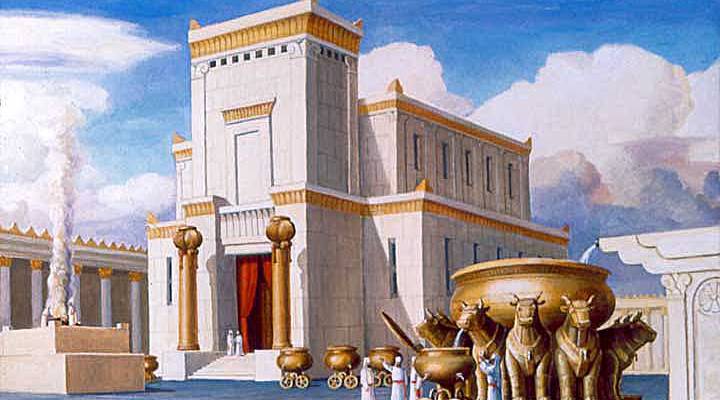
Jonah lived in a religious era that was intimately familiar with animal sacrifice. It was common practice among not just the people of Israel, but also among most ancient cultures. An animal would be killed and burned on some kind of altar in order to get the attention of the gods or to remind the people that they deserve what the animal is getting.

Sacrifices did not remove or forgive sins.

It is impossible for the blood of bulls and goats to take away sins. (Hebrews 10:4)

The scapegoat (Leviticus 16) was the representation of Israel’s sins being forgiven. But even then, it wasn’t the goat – it was God who forgave sins.

“Why does this fellow talk like that? He’s blaspheming! Who can forgive sins but God alone?” (Mark 2:7)

God doesn’t demand a sacrifice. God doesn’t want them because God knew that humans would easily substitute the sacrifice for true repentance. Seriously, I know I’ve sinned before and thought It’s ok, God will forgive me. We have a tendency to believe that we can do whatever we want, say whatever we want, live however we want, and it’s ok. We’ll just go to church, pray, take the Lord’s Supper, and it will all be good.

To quote The Good Place, “That’s bull shirt.”

This is the exact mindset that Jeremiah railed against:

“‘Will you steal and murder, commit adultery and perjury, burn incense to Baal and follow other gods you have not known, and then come and stand before me in this house, which bears my Name, and say, “We are safe”—safe to do all these detestable things? Has this house, which bears my Name, become a den of robbers to you? But I have been watching! declares the Lord.” (Jeremiah 7:9-11)

This was the exact mindset that Micah railed against:

With what shall I come before the Lord
    and bow down before the exalted God?
Shall I come before him with burnt offerings,
    with calves a year old?
Will the Lord be pleased with thousands of rams,
    with ten thousand rivers of olive oil?
Shall I offer my firstborn for my transgression,
    the fruit of my body for the sin of my soul?
He has shown you, O mortal, what is good.
    And what does the Lord require of you?
To act justly and to love mercy
    and to walk humbly with your God. (Micah 6:6-8)

This was the exact mindset that Amos railed against:

“I hate, I despise your religious festivals;
    your assemblies are a stench to me.
Even though you bring me burnt offerings and grain offerings,
    I will not accept them.
Though you bring choice fellowship offerings,
    I will have no regard for them.
Away with the noise of your songs!
    I will not listen to the music of your harps.
But let justice roll on like a river,
    righteousness like a never-failing stream!” (Amos 5:21-24)

Finally, Jesus railed against this mindset by quoting Hosea:

I tell you that something greater than the temple is here. If you had known what these words mean, ‘I desire mercy, not sacrifice,’ you would not have condemned the innocent. (Matthew 12:6-7, quoting Hosea 6:6)

I believe God knew there would come a time when sacrifices could no longer be used as a crutch or an excuse. God knew there would come a time when his people could no longer offer sacrifices and burnt offerings. Through his own sacrifice, Jesus put an end to the sacrificial system and reconciled everyone to God.

SACRIFICES WERE NEVER THE POINT. MERCY WAS THE POINT.

But Jonah completely missed that. He sacrificed his own life to avoid showing mercy to others. Jonah got it all completely backwards.

That’s why I think God let him go through with it. Jonah had more lessons to learn.

So as Jonah sank down into the depths, the sailors went about their way – forever changed.

At this the men greatly feared the Lord, and they offered a sacrifice to the Lord and made vows to him. (Jonah 1:16)

Yes, they offered sacrifices. But their sacrifices were in response to what YHWH had done. Their sacrifice was a form of worship, the kind of sacrifice Paul would encourage us to make with our lives in worship to God as a response for all God has done for us (Romans 12:1).

The sailors were converted to become true worshipers of YHWH (as Jonah had claimed to be), while the prophet of YHWH sank down to the bottom of the sea. It saddens me to think that Jonah never knew what happened with those sailors. But it also reminds me that I have no control over who gets to experience the mercy, forgiveness, and salvation of God. As God says to Moses:

I will have mercy on whom I will have mercy, and I will have compassion on whom I will have compassion. (Exodus 33:19)

GOD’S NOT DONE

That could have easily been the end of Jonah. If I were God, I probably would have just let Jonah drown (that’s what he wanted, after all) and found someone else to go to Nineveh. But that’s not the God of the Bible. Our God is one who pursues us, who leaves the ninety-nine and goes after the one. Even if that one is an unrepentant, racist, nationalistic prophet who cares about no one but himself. God still pursues Jonah to the ends of the earth and to the depths of the sea. God has mercy on the one who deserves it the least.

But sometimes God’s mercy can come in unexpected ways:

Now the Lord provided a huge fish to swallow Jonah… (Jonah 1:17a)

More posts in the Jonah series:
If you like these posts, go ahead and share it on your favorite social media platform, and don’t forget to subscribe so you never miss a post!

Review: The Prodigal Prophet: Jonah and the Mystery of God’s Mercy

The Prodigal Prophet: Jonah and the Mystery of God's Mercy
The Prodigal Prophet: Jonah and the Mystery of God’s Mercy by Timothy J. Keller
My rating: 5 of 5 stars

The book of Jonah is every bit as relevant today as it was 2500 years ago.

I’ve been a fan of Timothy Keller since college. The first book of his I read was “The Reason for God.” I really admire the work Keller has done pastoring in Manhattan and reaching millions with his books. Another of my favorites was “The Prodigal God,” where Keller explores the deeper meanings of the Parable of the Prodigal Son from Luke 15. “The Prodigal Prophet” is a natural follow-up to that book. Keller emphasizes the fact that Jonah represents both brothers in Jesus’ parable, the younger brother in Jonah 1 and 2, the older brother in Jonah 3 and 4.

Kellers latest book and the story of Jonah are extremely timely for our political/religious climate. The story of Jonah, Keller argues, emphasizes topics like nationalism, racism, prejudice, and religious elitism. Jonah reveals the dangers of conjoining religion and patriotism and placing national pride over devotion to God.

Jonah is full of reversals. The prophet of God refuses to pray while the pagan Gentile sailors cry out to their own gods and become worshipers of YHWH. Jonah remains hard-hearted and even violent in his view of the Assyrians while the Assyrians’ hearts are softened and they turn from their violent, evil ways. Jonah’s biggest issue is not with the Gentiles, it’s with God who would offer mercy and forgiveness to his enemies.

I appreciate Keller’s honesty and courage to present the truth about justice, grace, mercy, and forgiveness on more than just an individual scale. Through the story of Jonah, God is showing that he cares for all people everywhere, even the pagan, Gentile sailors; even the brutally violent Assyrian Empire. God cares. God wants to show grace and forgiveness. Are we willing to follow a God who wants to show love to those we consider our enemy?

Overall, Keller’s latest book is a quick, thrilling read diving into the story of Jonah and its implications for the 21st Century. This would make an excellent series to preach through or teach in a Bible class setting. I’d recommend this book for all church leaders, pastors, and teachers, especially if you are concerned with issues of justice.

View all my reviews

My Life as a THREE

So like I said in an earlier post, I’ve been really diving into the Enneagram the last couple of years. I am by no means an expert. But I have seen the truth and beauty in the system. No, it’s not scientific; however, it’s true at some deep level I can’t quite describe.

I’ve taken the Meyers-Briggs and the DISC personality inventories before. They were interesting, but they weren’t really all that helpful in my day-to-day life. So I went for several years not really giving much thought to personality and development. Then I came across the Enneagram through some podcasts I listened to. That’s when everything changed.

I did what you do. I read up on some of the numbers, and I took an online test or two. I originally tested as a ONE, but that didn’t seem quite right. After a while it became clear that I am dominant in Type THREE. As I read and researched more, I found myself being described in ways I never could have voiced before. Someone knew me. Someone knew my desires, my fears, my approach to relationships, and my view of work. Someone knew exactly what I do when I get stressed out. Someone knew. How did they know?

Because I’m no expert, I’m not going to take time right now to lead you through the entire journey. There are many great resources available right now that can help you if you are seeking the wisdom of the Enneagram for your life.

What I want to do is relate my lived experience of being a THREE. I know, that’s a very 3 thing to want to do. But honestly, I don’t want the spotlight to be on me. I want to show any skeptics, critics, or seekers out there how true the Enneagram can be.

The Enneagram Institute has some helpful resources and descriptions of each Type if you want to find out more. But here is the basic overview of Type THREE.

Threes are self-assured, attractive, and charming. Ambitious, competent, and energetic, they can also be status-conscious and highly driven for advancement. They are diplomatic and poised, but can also be overly concerned with their image and what others think of them. They typically have problems with workaholism and competitiveness. At their Best: self-accepting, authentic, everything they seem to be—role models who inspire others.

_____________

LIFE AS A THREE – DEFINING SUCCESS

I didn’t think I was a 3 at first. Like I said, I originally tested as a ONE. Why? Because I’ve known 3s like they are described above. I’ve known the types of guys who work a crowd, who name drop in conversations, who always try to one-up everyone else and flaunt their successes. I can’t stand those people. Then I realized I can see right through their game because I am that person, too.

I’m not an extroverted 3, which is kind of a weird dynamic. I’m more introverted. So the descriptions of 3s often sound like caricatures and stereotypes. I’m not overly competitive in the way most people think. But my driving motivation is the need to be (or appear to be) successful.

Pursuing success doesn’t necessarily mean climbing the corporate ladder, wearing the finest clothes, driving the nicest cars, etc. Success doesn’t have to mean fame and recognition by the countless masses. As a 3 I realize that success is a self-defined term. Success is whatever I think it is. And the appearance of success takes different forms depending on what in-group we’re trying to impress.

What does that look like for me? Well…I’m a youth minister, so I’m not ever going to have the biggest house or the nicest car. I drive a hand-me-down ’99 Civic that does 0 to 60 eventually. But get this – I have a beard; I wear Converse and Vans; I carry a leather messenger bag; I work on a MacBook Pro; I read on an iPad; I post to Instagram using my iPhone. These are all “status symbols” among youth pastors. Even the crappy Civic adds to the whole “dedicated youth worker” vibe.

As a youth minister, success is hard to define and pursue. That’s the nature of church work. When can I say I’ve “succeeded”? There’s really no advancement unless I moved to a bigger church (which is a really terrible way of “moving up the ladder”). I try hard to avoid the numbers trap. So I typically have to find other ways to measure success – often in the form of status symbols of some kind. Church work can be an anxiety-inducing beast for an unhealthy 3. We’re always chasing success that is always out of reach.

The pursuit of success and achievement can lead 3s to become overly competitive. But for me, the competitive drive is with myself. I don’t need to be better than other people. I only need to be better than myself. I’ve always felt a drive to be the best me possible.

When I was in high school, it wasn’t enough to be a straight-A student. I had to be Valedictorian – and I was. It wasn’t enough to play trumpet. I had to be first chair – and I was. It wasn’t enough to be in the youth group. I had to be up front leading – and I was.

I remember one class in high school – I think it was Physical Science – in which I set a goal to have a final total grade above 100%. And I did.

I don’t say all this to brag. I really don’t care about any of that. I’m proud of my academic achievement, but it’s not worth dwelling on – which is another thing 3s do. We set a goal. We achieve said goal. We move on to the next goal. We typically don’t dwell too long on our successes, which seems counter to our type. But as a 3, I’ve got a list of goals a mile long in my head. And celebrating achievements is rarely on the list.

Anyway, as I was saying – I’m not trying to brag. I just want to give you insight into how my mind works. I am my own biggest competition. I set goals and standards for myself, but rarely are they so high that I’m in danger of failing. Failure is not fun no matter what Type you are. But if you’re a 3, failure SUUUUUUCKS. The fear of failure (again, as defined by me) is what keeps me lying awake at night. Fear that I’m not doing enough brings about the existential dread at 3AM for no apparent reason.

If I’m not doing, then who am I?

I’ll talk more about the fear of failure later. But as a 3 in unhealth, I can tie my identity so closely to my own definition of success that I can’t really see or focus on anything else. Threes are the Type most in danger of becoming workaholics. And I believe it. That’s because we have a hard time believing that our lives have meaning apart from what we do, that we can be loved just for who we are.

As a 3 who has been a lifelong overachiever, I find myself drawn to Paul’s words in Philippians 3. The older I get, the more I appreciate this passage. If you’re a 3, take these words to heart.

If someone else thinks they have reasons to put confidence in the flesh, I have more: circumcised on the eighth day, of the people of Israel, of the tribe of Benjamin, a Hebrew of Hebrews; in regard to the law, a Pharisee; as for zeal, persecuting the church; as for righteousness based on the law, faultless.
But whatever were gains to me I now consider loss for the sake of Christ. What is more, I consider everything a loss because of the surpassing worth of knowing Christ Jesus my Lord, for whose sake I have lost all things. I consider them garbage, that I may gain Christ and be found in him, not having a righteousness of my own that comes from the law, but that which is through faith in Christ—the righteousness that comes from God on the basis of faith. (Philippians 3:4b-7)

If you’re a 3, how would you define success? What has been your experience with success and achievements? If you’re a different Type, what is your relationship to success? Let me know in the comments below, and don’t forget to subscribe so you never miss a post!

Review: Daring Greatly: How the Courage to Be Vulnerable Transforms the Way We Live, Love, Parent, and Lead

Daring Greatly: How the Courage to Be Vulnerable Transforms the Way We Live, Love, Parent, and Lead
Daring Greatly: How the Courage to Be Vulnerable Transforms the Way We Live, Love, Parent, and Lead by Brené Brown
My rating: 5 of 5 stars

This book kicked my butt.

If you want a book that’s going to make you feel all warm and fuzzy inside, this is not that book. If you want an easy self-help reader to take with you on vacation. This is not that book.

Brené Brown’s combination of research and anecdotes will make you uncomfortable, anxious, and even angry at yourself. It will drag you through the dirt and filth of your own inner workings, digging up long-dead traumas and embarrassments along the way. That’s called vulnerability.

The journey Brown takes you on is long, winding, and difficult, and the destination is uncertain. But that’s life. The most important endeavors are often the most challenging.

As a person who is averse to failure, feelings, and vulnerability (Enneagram Type 3), this book challenged me every step of the way. But I particularly appreciated her chapters on 1) a culture scarcity vs. abundance, 2) how men and women experience and process shame, and 3) parenting.

The scarcity mindset explains SO MUCH of what happens in our culture – from celebrities to sports to academics to the news and politics. Even reading this six years after its publication, the things Brown says about scarcity are every bit as relevant today. If anything, it’s gotten worse.

The chapter explaining the differences between men and women was both an “Aha!” moment and a “Duh!” moment. That’s what happens when someone finally puts into words what we’re all feeling but not talking about. My heart breaks for the women who constantly feel shamed for their looks, their tenderness, and their mothering. But I also have empathy for the men who fear being judged as incompetent or impotent. The shame felt from not being “manly” enough is a real threat to true masculinity.

Finally, her closing chapter on parenting is a MUST READ for parents – whether first time parents of a newborn or empty nesters. Vulnerability plays a huge role in Wholehearted parenting. We need to both model it and provide space for our children to be vulnerable, too. The section on hope and struggle was just fantastic.

I cannot recommend this book enough to anyone in a leadership position – parents, principals, pastors, and anyone who works with/for people. Take Brown’s message to heart, and it will touch nearly every aspect of your life.

View all my reviews

My Definitively Subjective Star Wars Movie Ranking

It’s an amazing time to be a nerd.

I’ve found myself thinking and saying that a lot over the last several years. I’ve always been a nerd – Star Wars, Lord of the Rings, Harry Potter, Monty Python, DC, Marvel, and everything in between.

I remember sitting in elementary school having Star Wars trivia contests with my friends. Who was Luke’s childhood best friend? What was the name of the droid Uncle Owen almost bought instead of R2-D2? That sort of thing.

When I was home sick as a kid, I wore out our Star Wars trilogy VHS tapes.

And yes, Han shot first.

I have LOVED the onslaught of new Star Wars movies. They should have waited to release Solo until this holiday season, but whatever. I am definitely not one of those Star Wars “fans” who nitpick every little thing and boycott the movies. I will have opening night tickets to every single Star Wars movie and will see it multiple times in theater.

Is every Star Wars movie a masterpiece? No, not by a long shot. But each movie has something I can really appreciate for what it’s worth. And I just want to say….if you only really like 2 out of 10 movies, then you aren’t truly a Star Wars fan.

So without further ado, here is my Definitively Subjective Star Wars Movie Ranking.

1. Star Wars: Episode V – The Empire Strikes Back
Rarely in the world of cinema is a sequel better than the first. Empire is a near-perfect follow-up to the surprise worldwide phenomenon. We thought that after the destruction of the Death Star, the rebels would have the Empire up against the ropes. But the opposite ends up being the case. The scrappy rebellion is still fighting for survival against the galactic war machine helmed by Darth Vader.

In a masterful piece of story telling, the good guys don’t win the day. The plot is full of betrayals, backstabbing, double crossing, love, jealousy, and “defeat snatched from the jaws of victory.” I mean, it doesn’t get any more Star Wars than this installment. It has the most-quoted lines (“No! I am your father.”) and the most iconic imagery (AT-ATs, carbonite, light saber duels, and Yoda). The Empire Strikes Back is what every movie sequel strives to be.

2. Star Wars: Episode IV – A New Hope
The indie movie that became a global cultural phenomenon was ahead of its time in many ways. It’s a traditional “hero’s journey” movie that has been copied time and time again – because it works. I will forever be loyal to this movie that introduced us to Luke, Han, Chewbacca, Leia, Obi-Wan, C-3PO, R2-D2, and Darth Vader. For a 1970s sci-fi movie made on a shoe-string budget with practical effects and first-time actors, this movie still holds up surprisingly well 40 years later.


This is where it gets a bit more controversial and subjective…..

3. Star Wars: Episode VII – The Force Awakens
The characters, plot, action, and humor of The Force Awakens make this one of the most rewatchable installments in the saga. Yes, it has a lot of similarities to the original. Yes, Kylo Ren is an angsty emo kid. Yes, ****SPOILERS**** Han Solo dies. But The Force Awakens recaptures the feel and magic of the original trilogy. I absolutely love Rey and Poe and BB-8 and Finn.

4. Rogue One: A Star Wars Story
The first non-saga movie was a pleasant surprise. I appreciate everything it was trying to do. Yeah, you could say it was a whole movie just to fill a plot hole in the original. But it was more than that. It made the Empire worth fearing. It established the original trilogy within the galaxy ruled under the tyrannical fist of the Empire. Rogue One also shows the moral ambiguity of the rebellion at times.

And come on – that last 90 seconds with Darth Vader was one of the best scenes in the entirety of Star Wars.

5. Star Wars: Episode VI – Return of the Jedi
I’ve gotta say that when I was a kid, this was my favorite. I loved the scenes in Jabba’s palace. I loved the Ewoks. I loved the speeder bikes and the space battle. I loved the duel between Luke and Vader at the end with the redemption of Vader. But when I watch it as an adult I realize how much this movie was targeted to kids. It could have been a lot darker and grittier following ESB. But they played it safe in order to sell more toys – which totally worked. I only hope the newest trilogy doesn’t follow the same path with Episode IX.

6. Star Wars: Episode VIII – The Last Jedi
This movie took a lot of risks. The “fans” complained that The Force Awakens was too much like the originals, so The Last Jedi tried to break away from the common tropes and expectations of the originals – and the “fans” complained again. I thought it worked really well on many levels. It was a very meta movie, telling you the whole time what it was doing – “Let the past die…” “This is not going to go the way you think…” Kylo Ren and Rey both came into their own. They can no longer rely on the past to lead them into the future. I think that says something about Star Wars over all.

The Last Jedi has one of the coolest light saber battles, one of the most visually stunning space battle scenes, and Yoda! It would be higher on my list, but it’s not quite as rewatchable as others.

7. Star Wars: Episode III – Revenge of the Sith
Revenge of the Sith had the darkness and the grittiness that I wish Return of the Jedi would have had. RotS, however, almost goes too dark. But it captures the transformation of Anakin to Vader in a visceral way. Obi Wan is the hero of the prequels. As unbelievable as Anakin and Obi Wan’s friendship seems at some points because of bad acting/writing, when things fall apart, you feel it. That final duel between them is haunting.

Full disclosure, I’ve seen Revenge of the Sith fewer times than any other movie on this list.

8. Solo: A Star Wars Story
I really enjoyed Solo. It was a fun, campy, action-packed heist movie. Think Italian Job in space. Was it entirely necessary? No. But I’m glad it’s here. Like Rogue One, Solo establishes the Empire as a force to be feared and the rebellion as a fledgling grassroots resistance movement. The actor playing Han offered a surprisingly convincing portrayal of the character. Lando was spot-on. I loved seeing the fresh, new Millennium Falcon pull of the Kessel Run. And when Maul appeared on screen, there was an audible gasp throughout the theater. There’s SO MUCH they could do with the Maul storyline…if they ever do another “Star Wars Story.”

9. Star Wars: Episode I – The Phantom Menace
THE BAD: the writing, the politics (Trade Federation? Are you kidding?), goofy battle droids, naked C-3PO, midichlorians, and Jar. Jar. Binks.

THE GOOD: the worlds, Qui Gon Jinn and Obi Wan Kinobi, Darth Maul with the double-bladed lightsaber, the BEST light saber duel in all of Star Wars, the pod race, expanding the Jedi/Force lore

10. Star Wars: Episode II – Attack of the Clones
I’ve tried rewatching this a few time recently and get the same feeling each time: Bored. I forgot how much of this movie involves slowly walking and talking. There’s action at the beginning and in the last 30 minutes. The rest is just slow and/or annoying. There is absolutely no chemistry between Anakin and Padme. Obi Wan’s skills are wasted. The main villain, Count Dooku, is completely dull and forgettable. If anything, this movie feels like an introduction to the Clone Wars animated series – which I think is better than Attack of the Clones.

How does your list compare? I know this is a pretty controversial subject among nerds, but I’d love to hear from you.

For comparison’s sake, here are the Star Wars movies ranked by Tomatometer Score:
1. The Empire Strikes Back (95%)
2. The Force Awakens (93%)
3. A New Hope (93%)
4. The Last Jedi (91%)
5. Rogue One (84%)
6. Return of the Jedi (80%)
7. Revenge of the Sith (79%)
8. Solo (70%)
9. Attack of the Clones (66%)
10. The Phantom Menace (55%)

Jonah: Who Are You?

The storm at sea is threatening to kill them all. The waves are swelling and breaking over the boat. The wind is driving the rain like gravel into their faces. They are frantically hurling the cargo boxes overboard in an effort to lighten the ship.

In the midst of this fear and panic, they find someone who really couldn’t be bothered by it all – Jonah, a prophet on the run.

After quite a rude awakening, Jonah is brought to meet with the rest of the crew. They’ve got to find out who is responsible for this storm – not necessarily what person, but what god/deity  is behind this. The most obvious god to pinpoint would be Ba’al, the Storm God of the Ancient Near-East. But Ba’al isn’t responding right now (shocker!), so they have to figure this out.

They cast lots (think Yahtzee, but with higher stakes). The lot falls to Jonah (shocker again!). Check out the interaction that follows:

Then the sailors said to each other, “Come, let us cast lots to find out who is responsible for this calamity.” They cast lots and the lot fell on Jonah. So they asked him, “Tell us, who is responsible for making all this trouble for us? What kind of work do you do? Where do you come from? What is your country? From what people are you?”
He answered, “I am a Hebrew and I worship the Lord, the God of heaven, who made the sea and the dry land.”
This terrified them and they asked, “What have you done?” (Jonah 1:7-10)

They want to know his job, his region, his country, his tribe, his shopping habits, his Social Security number, his mother’s maiden name. They interrogate Jonah to find out which god he might have angered. In the ancient world gods were viewed as very tribal and/or territorial. Your family would have certain gods. You tribe would have other gods. Your country and region would have bigger gods. Even certain occupations, like merchants and sailors, had their own gods. So they have to narrow it down.

Let’s look again at Jonah’s response to this line of questioning:

“I am a Hebrew and I worship the Lord, the God of heaven, who made the sea and the dry land.”

This is an interesting response for several reasons.

NATION OVER GOD

Jonah does the same thing I see so many people doing today. His first identifier was his country – “I am a Hebrew.” His identity was first and foremost grounded in his particular geopolitical situation. Jonah was a Hebrew before he was a worshiper of YHWH.

If you look back at 2 Kings 14, you will see that Jonah had every reason to be patriotic. Israel had just experienced the greatest time of political, economic, and military expansion in decades thanks to the word of God through his prophet Jonah. The king was evil, the nation was evil, yet God blessed them anyway. Jonah was at the top of his game. Jonah seems to be more than just a patriot, though. He has tendencies toward nationalism, the ideology that proclaims “My country, right or wrong.”

Today we have two identifiers – Christian and American. Which one is the noun and which is the adjective? That makes all the difference in the world. Are you a Christian American? Or are you an American Christian? Say you meet a foreigner for the first time and you’re getting to know each other. Do you tell that person you’re a Christian or an American first?

For Jonah it was clear that his allegiance to his country took precedent over his allegiance to God. He would rather blatantly disobey God than have a hand in saving Israel’s enemies. But when we become followers of Christ, we are now citizens of a new kingdom, a global kingdom. It’s great to be proud of your country and seek God’s blessing on the place you live (see Jeremiah 29). But it’s not ok to do that to the exclusion or detriment of other countries and nationalities.

YHWH, THE GOD OF HEAVEN

Jonah reveals the sacred covenant name of God to these sailors – YHWH. Any time you see “the LORD” in your Bibles, that is a replacement for the name YHWH. Jonah says, “I worship YHWH.”

But here’s the thing – YHWH was never just a regional God. YHWH had gone by other names, too. Most commonly the name El. El is the more widely used word/name for God. YHWH was the special name God gave to Moses in Exodus when establishing a covenant with the Hebrews.

I’m no Hebrew scholar, but from what I’ve heard and read, the name El is closely related to the name Ba’al, who was frequently referred to as “The God of Thunder” or “The God of the Heavens.” Jonah introduces these sailors to YHWH, the God of Heaven. Essentially, Jonah is using language they would have been familiar with to introduce them to YHWH and emphasize what a big deal this God is.

CREATOR OF THE SEA AND THE DRY LAND


Jonah gives the sailors the most basic Bible school lesson about who God is. YHWH created the sea and the dry land. That’s also a Hebrew way of implying “and everything in them.” So let’s all sing the Days of Creation song!

But this is an important distinction to make. Ba’al may have been “The Storm God” but he didn’t create the sea. There’s a big difference between having control over something and being the creator of something. I may know how to drive my Toyota, but I didn’t build it. My father-in-law worked at the plant where my vehicle was made. He knows where the parts came from and how they are all put together. If there’s an issue with the car, I defer to him.

YHWH isn’t just some little-case-g god like Ba’al. YHWH is the one who created everything that Ba’al supposedly controlled.

This rightly has the sailors terrified. “How can you run away from ‘the God who created the sea’ on the sea!

WHO’S IN CONTROL HERE?


With as crazy as things are, we always have to remember who is in control. God has not abdicated his throne to the big wigs in Washington. YHWH is still the God of Heaven who created the sea and the dry land and everything they contain.

When our identity is primarily rooted in our nationality or politics, then we will always be on shifting sand. We’ll be like the foolish man who built his house on the beach with no foundation. Nations rise and fall. Politics change daily.

But if our identity is rooted in God and the kingdom of heaven, we know we will always be on solid footing, not being tossed around by the winds of political storms.

Jonah: Wake Up, Idiot!

Jonah runs from God.

We should all realize the ridiculousness of this decision. Unfortunately, we all too often find ourselves in the same boat (pun intended).


But look what happens next.

But the Lord hurled a powerful wind over the sea, causing a violent storm that threatened to break the ship apart. Fearing for their lives, the desperate sailors shouted to their gods for help and threw the cargo overboard to lighten the ship.
But all this time Jonah was sound asleep down in the hold. So the captain went down after him. “How can you sleep at a time like this?” he shouted. “Get up and pray to your god! Maybe he will pay attention to us and spare our lives.” (Jonah 1:4-6)

The reaction of the sailors is telling. They knew this storm was not natural. It takes them completely by surprise and with such a ferocity that it can only be divine in origin – a punishment from the gods upon someone aboard the boat.

We have information that the sailors don’t. Jonah has information the sailors don’t. This whole section is just fascinating. I want to make a few key observations about the story so far as the action picks up. The gentile, pagan sailors are set in direct contrast to the prophet of YHWH.

OUR RESPONSE TO TRAGEDY

The storm hits. The ship threatens to break up. The sailors begin throwing the cargo (their livelihood, the very thing that makes this whole mission economically viable) into the sea, and they begin to cry out to their gods. Not just “thoughts and prayers,” but prayer accompanied by action. These gentile idol-worshipers demonstrate what James means when he says “faith without works is dead.” It also reminds me of something St. Augustine said: “Pray as though everything depended on God. Work as though everything depended on you.”

When tragedy strikes, by all means PRAY! But then do something about it.

Jonah did neither. He was down in the boat below deck. The Hebrew phrase may even indicate that he had holed up somewhere in the very cargo bay being emptied out by the sailors, and that’s how he was discovered. But he wasn’t just hiding. He was in a deep sleep. Not praying, not acting, not helping.

OUR REGARD FOR HUMAN LIFE

The sailors did everything they could to save the lives of everyone on board. They dumped the cargo. They cried out to their gods. They cast lots to discover the responsible party. And even when Jonah was found out and told them to toss him overboard, they still tried to save his life and row back to land. Saving human life was more important to them than the cargo. More than that, **and really listen to this** saving human life was more important to them than following the orders of God’s prophet! Even though the prophet of YHWH was telling them to let him drown, they didn’t want to accept that course of action. Even though Jonah was the one responsible for this tragedy, the sailors still thought his life was worth saving.

Jonah, on the other hand, had no regard for human life. In his opinion, it would be better if the whole ship sank and everyone drowned than to go to Nineveh and possibly save the Assyrians from disaster. By not caring what happened aboard the boat, Jonah was essentially taking responsibility for his own death, the deaths of all the men on board, and the deaths of thousands of Ninevites.

OUR WILLINGNESS TO BE CRITIQUED BY THE WORLD

The sailors cried out to their gods. They did everything within their power to save the lives off all their shipmates. So when they discovered Jonah asleep below deck, the captain was well within his rights to call the prophet to task. “Get up! Call…” These are the very first words that came to Jonah from YHWH. Now they are being repeated verbatim by the pagan ship captain.

The captain was absolutely right to criticize Jonah’s laziness and lack of concern. The captain was absolutely right to urge Jonah, the prophet of God, to call out to God. But I don’t think Jonah appreciated being called out like that. Why? Because he Still. Doesn’t. Pray. Jonah stubbornly refuses to lift a finger or a prayer to help anyone else.

When the world see Christians acting un-Christ-like, they have every right to call us out on it. Non-believers may not know as much about the Bible or our faith as we do, but most of them know that whole “Love God, and love your neighbor” thing. That’s kind of a big deal. If Christians are failing to fulfill the greatest commands in the whole Bible, then we should be criticized for it. If we are willingly “falling asleep” to the tragedies and hardships of our neighbors, we deserve to be called out. If we can’t be bothered to seek the good of people who are different from us, then the world has every right to ridicule us and point out our hypocrisy.

When we don’t denounce nationalism, white supremacy, anti-Semitism, racism, classism, sexism, and every other kind of discrimination, we deserve every bit of  finger pointing we get from the world. Maybe, just maybe, that will wake us up to action and love.

OUR LOVE FOR AND RELIANCE ON “THE OTHER”

The sailors didn’t really care which god caused this storm. They didn’t really care who worshiped whom or who was from where. The important thing to them was that they were all in the same boat. If everyone doesn’t work together, then they could all die. What a metaphor for life.

They sailors didn’t let their religion, as it were, keep them from banding together to save everyone. The same could not be said for Jonah. He used his religious and civil convictions as a justification for not helping others – both the Ninevites and the pagan sailors.

When we hear “Love your neighbor as yourself,” we often interpret that how Jonah and his fellow Israelites did. Your neighbors are those closest to you – physically, socially, relationally, and religiously. But Jesus completely reinterprets this command. In Luke 10 a man asks the question that’s on all of our minds, “Who is my neighbor?” Jesus’ brilliant answer literally changed history. Jesus knew that in asking “Who is my neighbor?” the man really wants to know “Who isn’t my neighbor.” If we define the neighbor, then there will always be people who fall outside that definition.

So Jesus told a story about a man who was ambushed by robbers, stripped of his money and clothing, and left for dead on the side of the road. In other words, here was a man devoid of any identifying markers. You couldn’t tell how rich he was, where he came from, what ethnicity he was, what language he spoke, or anything else. The priest and the Levite passed by on the other side, refusing to help the man. They, like Jonah, used their religious obligations as an excuse for not helping. But the Samaritan came along, saw a man in need, and without a second thought stopped to help. The man he helped was Jewish. It makes me wonder, If the man had been conscious, would he have accepted help from the Samaritan?


We may be willing to help and even love people who are different from us – homeless or Muslim or LGBTQ or Democrat or undocumented immigrant, etc. But are we willing to accept love and help from those same people?

We can extend love, but can we receive it?

I think deep down Jonah resented the fact that he had to rely on the very people he would rather avoid. Jonah doesn’t care about these sailors. It’s not that he actively hates them like he does the Assyrians. He just has no obligation or commitment to them whatsoever. If one of them was injured on the side of the road, Jonah would probably pass by on the other side. But the sailors care about Jonah. The sailors want to save his life. The sailors would stop to help Jonah if he were the man in Jesus’ story.

It’s an attitude of supremacy to be willing to extend help to someone you consider “lesser” but to be unwilling to receive help from those same people.

WAKE UP!

Jonah had to be awakened to the plight of the ship and the crew. As long as he remained unaware of the problem he could plead ignorance. His lack of concern or action was somewhat understandable. But as soon as he was awake and aware of the situation, Jonah had an obligation to act.

Christians, many of us need to wake up. We need the world to shout us awake to the disaster befalling much of the world. We need to wake up to the rates of depression and suicide among LGBTQ teenagers. We need to wake up to the abject poverty, evil, and governmental corruption driving Central American families from their homes to seek asylum north of the border. We need to wake up to the tyrannical rule of dictators around the world. We need to wake up to the rise carbon dioxide levels in the atmosphere. We need to wake up to the opioid crisis plaguing the Midwest and the sheer number of orphans being left in its wake. We need to wake up to the dangers of religious nationalism. We need to wake up to the experience of People of Color in our country.

After all, we’re all in the same boat.

“How can you sleep at a time like this? Get up and pray to your god! Maybe he will pay attention to us and spare our lives.”

________________________________
This post is part of an ongoing series on the book of Jonah. Click the links below to view other posts.
Jonah: Bravely Ran Away!
Jonah: Nope
Jonah: World’s Worst Prophet