Page 16 of 70

HUNGER | 40 Days of Focus, Day 21


Blessed are those who hunger and thirst for righteousness,
for they will be filled.
(Matthew 5:6 | NIV) 

You’re blessed when you’ve worked up a good appetite for God. He’s food and drink in the best meal you’ll ever eat.
(Matthew 5:6 | The Message)

What are you hungry for? What are you thirsty for? What sustains you? What keeps you feeling whole and satisfied?

For certain people among us, the answer is simple: perfection.

We all know those people who want everything to be done right, for everything to be as good as it could possibly be. We know those who chase perfection in all they do – how they raise their family, how they perform academically, how they clean their house, how they organize the files on their computer. There is a right way to do things, and a wrong way to do things. They have a very binary view of the world – right/wrong, black/white, good/evil, straight/crooked.

Good enough is not good enough.

We call these people “Perfectionists.” They find their home at the ONE spot on the Enneagram. Sometimes they are also called “Reformers” because they have a way of seeing what’s wrong with a system or organization and then acting to change it. This can be great for a business. It can be less great with relationships.

Ones have a tendency to “should” all over everyone and everything. You should do this. You should do that. You shouldn’t do that, ever. You should always do this. In their pursuit to make the world around them “perfect,” they are plagued by the phrase “good enough.” Think Hermione Granger from the Harry Potter series.


The problem is that we live in an imperfect world. The solution is not to “should” all over everything until it becomes perfect. That’s never going to happen, and it will only lead to frustration, anger, and burnout. The solution for Ones is to love.

Jesus says at the end of Matthew 5,

Be perfect, therefore, as your heavenly Father is perfect.

But the context of perfection in this instance is Love – specifically love for one’s enemies. In other words, when we can simply love without agenda, without expecting anything in return, without exception people to change – then we can experience perfection as God defines it.

Ones put a lot of pressure on themselves to avoid mistakes and to do everything correctly. God is urging us to let go of those pressures and walk in love. Instead of chasing your own perfection, seek God’s righteousness (Mt. 6:33). When we seek God’s righteousness above all else, then we will be made full, complete, whole like we never could have known before.
___________________________________

Why do we feel the pressure to be “perfect?” Has social media use relieved those pressures or made it worse?


What’s the difference between human perfection and God’s righteousness?


How does love help combat the trap of perfectionism?

MEEK | 40 Days of Focus, Day 20


Blessed are the meek,
for they will inherit the earth.
(Matthew 5:5 | NIV) 

You’re blessed when you’re content with just who you are—no more, no less. That’s the moment you find yourselves proud owners of everything that can’t be bought.
(Matthew 5:5 | The Message)

Google defines the word “meek” as quiet, gentle, and easily imposed on; submissive. It’s closely related to humility. We have a hard time with those words in our society. It’s a shame that meek rhymes with weak – because that’s not what it means. It’s a shame that humble and humiliation share the same root. We associate humility and meekness with weakness and fragility.

A Clydesdale may be meek and submissive, but that in no way means he’s weak or fragile. To be meek is to harness your power, to control your strength, and not to impose your will on others by force.

Again, it’s closely tied to humility. To be humble is not to think less of yourself, but to think of yourself less.

I always find this line from the Book of Numbers amusing:

Now Moses was a very humble man, more humble than anyone else on the face of the earth.
(Numbers 12:13)

Irony is bragging about how humble someone is. But we all know people like this. We all know people who would give you the shirt of their backs. They would open their home for a dinner party in a moment’s notice. They would drop everything they’re doing to help you out of a bad situation.

These people, in Enneagram language, are called The Helpers. They are Enneagram Type Twos. They are driven by a need to be needed. They want other people to call on them for help. They are gracious hosts, warm and inviting to strangers, and generally pleasant to be around.

But while they often put on a humble, meek exterior, an attitude of pride is lurking just below the surface. This pride leaks out when they feel unappreciated or taken for granted. They can become indignant when they help someone out and don’t get a Thank You in return. If their actions go unnoticed, it can drive a Two crazy to the point of burnout. Think back to the story of Mary and Martha in Luke 11. Martha is slaving away in the kitchen while her sister is sitting at Jesus’ feet with the other disciples. Martha gets angry and tells Jesus to tell Mary to help her.

Pride and humility are two sides of the same coin. Humility can be easy to fake, but when tested the pride will almost always reveal itself.

Ironically, for a Helper to become healthier they need to spend more time focusing on themselves. The pride that’s hidden below the meek facade is fed by praise, acknowledgement, and by being needed. Twos actually need to starve that pride by learning to say no to others and setting boundaries. When Twos are able to starve their pride and get free from the trappings of outward validation, then they can become truly healthy and happy Helpers, who serve not from a place of pride but from genuine humility.

Or as Peterson words it in The Message:

You’re blessed when you’re content with just who you are—no more, no less.

When Twos are able to live out of a place of genuine humility, they find within themselves the love and acceptance they always craved from outside sources. They no longer need to be needed with no regard to their own needs. Rather, they can now find ways to fill their own cup so they have something more to pour into others.

_______________________________

Why do you think it’s so easy for pride to hide below the surface of humility?


What is the more genuine display of humility: refusing to ask for help or making your needs known? Or letting others know what you need and how they can help?


What do Twos (Helpers) gain by embracing true humility?

MOURN | 40 Days of Focus, Day 19


Blessed are those who mourn,
for they will be comforted.
(Matthew 5:4 | NIV) 

You’re blessed when you feel you’ve lost what is most dear to you. Only then can you be embraced by the One most dear to you.
(Matthew 5:4 | The Message)

Enneagram Type Fours are commonly known as Individualists or Romantics. They tend to be more creative types – painters, musicians, authors, poets, etc. They have a unique way of seeing the world, and they want to be seen by the world as unique. They are driven by a desire to be special, different, authentic, but most of all to be accepted for who they are. You may not know who they are from one week to the next as they try on different personas and styles.

But the thing that really sets Fours apart from most other types is their comfort with melancholy. Fours tend to be drawn to sad movies, heartfelt TV dramas, and emotional indie music. They embrace sorrow like it’s a close friend. It’s been said that Fours don’t have emotions, they are emotions.

This comfort with sorrow can likely be attributed to their own feelings of brokenness. Many Fours grew up feeling different from everyone else. It might be a physical abnormality – too tall, too short, glasses, freckles, curly hair, anything that can cause a child to feel self-conscious. Or it might be a different way of interacting with the world and their peers – they might be into different types of books, movies, tv shows, or cosplay than most other kids their age. But somewhere along they way they begin to believe that there is something wrong and different and bad about them. They feel like they don’t belong and they never will. It’s like there are key pieces missing in the puzzle of their lives.

Fours have a deep seated envy of others whom they perceive as “normal.” They want what other people have, they want to be accepted and find belonging, but they don’t want to conform or be thought of as “normal.” This tension can lead to a predisposition for anxiety and depression.

But I believe Fours, or “those who mourn,” can teach us a very valuable lesson. So many of us would rather reframe a bad situation, crack a joke to lighten the mood, or avoid the pain altogether. Fours teach us the value in sitting with our pain and our sorrow. They teach us to lean into our emotions, not away from them. Fours teach us the truth of Ecclesiastes 7:

It is better to go to a house of mourning
than to go to a house of feasting,
for death is the destiny of everyone;
the living should take this to heart.
Frustration is better than laughter,
because a sad face is good for the heart.
The heart of the wise is in the house of mourning,
but the heart of fools is in the house of pleasure.
(Ecclesiastes 7:2-4)

We cannot find comfort if we never allow ourselves to truly feel, to mourn, to grieve. If we keep going through life with a forced smile on our face pretending that “everything is awesome,” then we’re not opening ourselves up to the possibility of true peace and comfort.

The LEGO Movie featured the popular song “Everything Is Awesome.” But the sequel that just came out (The LEGO Movie 2, the Second Part) features a different take on that song. Just look at these lyrics.

Everything’s not awesome
Things can’t be awesome all of the time
It’s not realistic expectation
But that doesn’t mean we shouldn’t try
To make everything awesome
In a less like, unrealistic kind of way
We should maybe aim for not bad
‘Cause not bad, well that would be real great

Mourning is part of life. Things can’t be awesome all of the time. We should stop telling people to “cheer up” or to “get over it.” We should stop expecting people to grieve on our timeline and in our approved way. Jesus himself is referred to as “a man of sorrows and acquainted with grief.” Jesus comes to us in our distress, in our grief, in our depression, and he doesn’t tell us to “turnt that frown upside down.” He sits with us. He weeps with us. He feels deep compassion and empathy for us.

The Lord is close to the brokenhearted and saves those who are crushed in spirit.
(Psalm 34:18)

_________________________________

Why do you think so many people try to avoid sorrow and sadness in their lives? Can you see the benefit to embracing those emotions rather than pushing them aside?

When you are going through a hard time, would you prefer someone to tell you to cheer up? Or would you rather just have someone be present with you even if they didn’t say anything?

Why would a “house of mourning” be better than a “house of feasting?”

POOR | 40 Days of Focus, Day 18


Blessed are the poor in spirit,
    for theirs is the kingdom of heaven.
(Matthew 5:3 | New International Version) 

You’re blessed when you’re at the end of your rope. With less of you there is more of God and his rule.
(Matthew 5:3 | The Message)

When we focus in on aspects of Scripture like the 10 Commandments, it can be easy to think religion is all about following a set of rule and regulation. For the Jews, it wasn’t just the 10 Commandments. All together the Rabbis tallied 613 commands in the Torah. Beyond that they developed their own traditions and practices to act as a sort of “hedge” around the commands so they wouldn’t even come close to breaking them.

For instance, the command to keep the Sabbath Day holy evolved into an elaborate system of regulations concerning how far one could walk, what tasks could be done if absolutely necessary, and trying to define “work” as tightly as possible. Religion became more about rights, rituals, rules, and regulations than it was about relationship – which is what God wanted all along.

We humans sure do put the “mental” in fundamentalism!

The 10 Commandments were given on Mount Sinai. Jesus comes along and delivers his first major sermon on what is today known as the “Mount of Beatitudes.” He doesn’t begin with commands, but blessings. Religion says You’re blessed if you follow these rules. Jesus says You’re blessed. There are no “ifs.” This list of blessings, commonly known as the Beatitudes, are not a checklist for us to adhere to. It’s not telling us how we should be or what we should do. Jesus is looking out at the crowd, seeing the oppressed and the disenfranchised and calling them “Blessed.”

I’m going to address each of the Beatitudes in Enneagram language. If you aren’t familiar with the Enneagram, then go check out my Enneagram page to find out more. According to the Enneagram, there are nine basic personality types, or “false selves,” and each one of us is dominant in one type. And I believe that each Enneagram number finds a blessing and word of encouragement in these Beatitudes.

Jesus begins by pronouncing a blessing on “the poor in spirit.” I’ve never really heard a satisfying explanation of what Jesus meant by that. But when I think of it in Enneagram language it begins to make sense. I believe Jesus speaks this blessing on Enneagram Type Threes – the Performers or Achievers. These are the type of people who put a lot of stock in success, or at least the appearance of success. They are very action driven, and they fear failure and insignificance.

Threes want it all. Threes want to achieve their goals, knock off their to-do list, and look good doing it. They want all the markers of success and status symbols for whatever “in-group” they’re trying to impress. Want an example? Just watch one episode of Parks and Rec. Leslie Knope is a THREE.

Failure can be devastating for a Three. It makes them feel worthless and insignificant. Imposter Syndrome is a big problem for a lot of Threes – everyone thinks you’re better than you really are, and only you know your true failings and faults. It’s a byproduct of their own success and achievement. They knocked it out of the park once, now they have to do it again…and again…and they have to do it bigger and better. It’s a cycle that never ends, but it’s one of their own making. They feel stuck and wish they could break free. No matter what they do, it’s never quite good enough. There is no end.

That’s why I love the way Eugene Peterson phrased it in The Message: “You’re blessed when you’re at the end of your rope.”

The song “High Hopes” by Panic! At the Disco has become somewhat of a Three anthem. There’s one line repeated a few times that just nails it: “We wanted everything more than everything.” And what’s the promise to those who are “poor in spirit” or “at the end of their rope?” Their’s is the kingdom of heaven. Or again as Peterson puts it: “With less of you there is more of God and his rule.”

The worst thing that can happen to a Three is failure and burnout. But the best thing that can ever happen to a Three is failure and burnout. When everything comes easy to an Achiever, they begin to get an inflated self-image. Threes fear failure and its repercussions, but in many ways they will never find real growth unless they experience failure. Threes have a tendency to believe the lie, “I am only as valuable as my latest success.” Only through failure can Threes begin to correct that lie and experience the truth that “I am loved not for what I do but for who I am.”

The world urges us to believe we are #blessed if we have all the stuff we want. We’ve got to be part of the hustle. We’ve got to grind for what we want.

Jesus says you’re blessed when you give up, when you dare to redefine success according to God’s terms.

Actress/Comedian Lily Tomlin is famous for saying, “The trouble with the rat race is that even if you win, you’re still a rat.” Or as Jesus would put it:

For whoever wants to save their life will lose it, but whoever loses their life for me and for the gospel will save it. What good is it for someone to gain the whole world, yet forfeit their soul? Or what can anyone give in exchange for their soul?
(Mark 8:35-37)

When you decide to get out before you burn out, when you resolve not to keep up with the Joneses anymore, when you redefine what success means, when you’re at the end of your rope – that’s where you’ll find the Kingdom of Heaven, ready and waiting for you.

______________________________

Do you struggle to believe you are loved for who you are, not for what you do? Why or why not?


Have you ever experienced real failure or burnout? How did it make you feel? How did you recover from it?


If you were to redefine success according to God’s terms for your life, what would that actually look like? How would your life be different?

CONTENTMENT | 40 Days of Focus, Day 17


“You shall not covet your neighbor’s house. You shall not covet your neighbor’s wife, or his male or female servant, his ox or donkey, or anything that belongs to your neighbor.”
(Exodus 20:17)

I’ve always thought this command was somewhat out of place. All the other previous commands having to do with our treatment of others were very action-oriented. Murder, adultery, theft, lying – these are all things we can actively do to a person to cause harm. But who does it harm to covet?

What does it even mean to covet?

If you ask Google to define the word, here’s what you get: yearn to possess or have (something). Some synonyms include “desire,” “be consumed with desire for,” “crave,” “have one’s heart set on.”

So this final of the 10 Commandments is more about an inward attitude than an outward action. In fact, this could be the one thing that leads to all the others. Look at what James says about this.

What causes fights and quarrels among you? Don’t they come from your desires that battle within you? You desire but do not have, so you kill. You covet but you cannot get what you want, so you quarrel and fight. You do not have because you do not ask God. When you ask, you do not receive, because you ask with wrong motives, that you may spend what you get on your pleasures.
(James 4:1-3)

Coveting leads to arguments, fights, quarrels, killing, and almost every other form of evil and violence against another human.

There’s an interesting encounter Jesus had with a man one day. He’s commonly known as the “Rich Young Ruler.” He came up to Jesus and asked what he had to do to enter the kingdom of heaven. Jesus responded by listing commands 5-10. But I want you to read carefully the three different retellings of this story from Mark, Matthew, and Luke.

Mark 10:19 // “You know the commandments: ‘You shall not murder, you shall not commit adultery, you shall not steal, you shall not give false testimony, you shall not defraud, honor your father and mother.’” 

Matthew 19:18-19 // “‘You shall not murder, you shall not commit adultery, you shall not steal, you shall not give false testimony, honor your father and mother,’ and ‘love your neighbor as yourself.’” 

Luke 18:20 // “You know the commandments: ‘You shall not commit adultery, you shall not murder, you shall not steal, you shall not give false testimony, honor your father and mother.’”

In place of “you shall not covet,” Mark’s account says “you shall not defraud.” Matthew’s account replaces it with “love your neighbor as yourself.” Luke’s account leaves it out all together. You begin to notice that Jesus is calling out this young man on his sin. Maybe he got rich by defrauding people. Maybe he is hoarding his wealth and not loving others by sharing what he has. Maybe covetousness is a sin that’s so hidden from himself that Jesus draws attention to it by excluding it from the list.

But I want to focus for a moment on Matthew’s account. Instead of “you shall not covet,” Jesus says to “love your neighbor as yourself.” That’s nothing new or surprising. We will dive into this command at the very end of this series. But what does this have to do with coveting?

I see two takeaways from this. 1) It’s hard to love someone you’re envious of. You cannot mourn with those who mourn if you’re secretly happy that they are suffering. You cannot rejoice with those who rejoice if you’re jealous of their success. Covetousness is one of the strongest barriers to loving relationships, and it will often lead us to mistreat and even oppress or take advantage of (i.e. defraud) them.

2) If you’re constantly jealous of what other people have, that might be a sign you don’t truly love yourself. We often focus on the “love your neighbor” part of the command while neglecting the “as yourself” qualifier. When you desire what other people have, that’s implying a feeling of self-pity and even self-loathing. It reveals an inability to love yourself as you truly are. You feel incomplete within yourself because you tell yourself you need _____X____ in order to be happy.

The Rich Young Ruler truly lacked the ability to let go of his covetousness, the very thing that was holding him back from loving his neighbor as himself. He wanted to know what good thing he had to add to his life. Jesus told him what harmful attachments and attitudes he needed to discard.

Do you know one of the most misunderstood and misused verses in the entire Bible is? Philippians 4:13. Here, Paul says

I can do all things through Christ who gives me strength.

But Paul isn’t talking about winning a football game or landing that big promotion. It’s incredibly important to back up a couple verses and see what he’s really talking about. It puts it in a whole new light.

I rejoiced greatly in the Lord that at last you renewed your concern for me. Indeed, you were concerned, but you had no opportunity to show it. I am not saying this because I am in need, for I have learned to be content whatever the circumstances. I know what it is to be in need, and I know what it is to have plenty. I have learned the secret of being content in any and every situation, whether well fed or hungry, whether living in plenty or in want. I can do all this through him who gives me strength.
(Philippians 4:10-13)

The opposite of covetousness is contentment. For Paul, it doesn’t matter if he’s living in a mansion or a studio apartment or a men’s shelter. He’s at home in prison and in the penthouse. He grew up wealthy and privileged and then found himself being stoned and left for dead. Whether he has plenty or is living in need of basic resources, he can be content because of Christ who strengthens him.

Can you even imagine a world where no one was ever jealous of anyone else? Where people were content with what they have and not always looking for the latest and greatest? Where no one felt the need to keep up with the Joneses? Where commercials and advertisers weren’t trying to sell you stuff 24/7? Where everyone – and I mean everyone – had enough, no more, no less?

It may not happen in our society any time soon, but that’s what the kingdom of heaven is all about. When God says, “you shall not covet,” he intends for us to be content with his blessings and to use them to bless others. I think Paul summarizes it best in his first letter to Timothy.

But godliness with contentment is great gain. For we brought nothing into the world, and we can take nothing out of it. But if we have food and clothing, we will be content with that. Those who want to get rich fall into temptation and a trap and into many foolish and harmful desires that plunge people into ruin and destruction. For the love of money is a root of all kinds of evil. Some people, eager for money, have wandered from the faith and pierced themselves with many griefs.
But you, man of God, flee from all this, and pursue righteousness, godliness, faith, love, endurance and gentleness.
(1 Timothy 6:6-11)

________________________________

Why do you think we have such a hard time being content with what we have?

What are the most recent additions to your “wish list”? Why do you want those things? Are they needs or wants? Will they help you glorify God or bless others? Or are they simply more “stuff” that will hold you back?

What effect do you think social media has had on our covetous attitudes? How is coveting related to things like FOMO (fear of missing out)?

TRUTH | 40 Days of Focus, Day 16


“You shall not give false testimony against your neighbor.”
(Exodus 20:16)

You know what phrase I’m tired of hearing? “Fake news.” It seems like we are watching from the sidelines as the talking heads on TV try to tell us what is true and how we know. Everyone has a different truth, or “alternative facts” as some might say. Something either happened or it didn’t. It doesn’t seem that complicated.

But on the other hand, it makes sense that we do this, and it’s not a new phenomenon. All of us operate under various cognitive biases, or preconceived ways of interacting with the world. These biases alter our perception of reality. They “help” us determine what is true or not.

For example, confirmation bias is our tendency to search out and pay attention to only evidence that backs up our already held beliefs. The bandwagon effect is our tendency to believe whatever everyone else is believing or thinking. The continued influence effect is our tendency to continue to believe previously misinformed ideas even in the face of contradictory evidence. The availability cascade describes our tendency to believe information and ideas simply because they are shared more frequently. The backfire effect is our tendency to hold onto beliefs even more strongly when presented with contradictory evidence. (for a full list of cognitive biases, click here)

Someone shares a political meme on Facebook. You see the meme, and it happens to confirm your beliefs, so you share it. More people see it, and the more they see it the more they accept it as truth. Then someone shares a link to a Snopes article debunking the meme as false. Those who share the meme dig their heals in and argue for the validity of the claims this meme is making. The longer the debate rages in the comments section, the more each side clamps down. It doesn’t matter if it is true anymore, as long as it sounds true or at least plausible.

Have you ever stopped to think that in sharing a “fake news” meme targeting a political figure, athlete, or celebrity, you are in fact violating the 9th Commandment and bearing false witness against a neighbor?

You may not even be doing it consciously. But that’s what makes this and things like gossip and slander so toxic to communities. There’s another word for “fake news,” false testimony, and misinformation. You may have heard it before. The word is “lie.”

It’s not very popular to use that word in today’s public discourse, but that’s exactly what it is. When someone shares a false news article, they are helping to spread lies. When someone is unaware of their own biases that blind them to the truth, they are slaves to lies. And maybe you haven’t noticed, but lies can devastate families, communities, even entire nations.

The lie that vaccines are dangerous and could cause autism has lead to the outbreak of nearly-eradicated diseases. The lie that the Clintons were running a sex-trafficking ring out of a DC pizza parlor influenced and egregious act of violence costing the lives of innocent people. The lie that Mexicans are violent criminals, drug dealers, and rapists has lead to a man-made humanitarian crisis along our southern border. The lie that Muslims are invading “Western” countries in order to bring about Sharia Law has lead to the meaningless slaughter of countless lives – most recently 49 in New Zealand.

This is no small matter. Fake news is not a pithy slogan that you can slap onto whatever story you don’t want to believe. Lies have consequences. Lies ensnare and enslave, but the truth will set you free.

You know who really wants you to keep sharing those memes without fact-checking or discovering the truth? The father of lies. Look at what Jesus says, which is as timely now as ever.

You belong to your father, the devil, and you want to carry out your father’s desires. He was a murderer from the beginning, not holding to the truth, for there is no truth in him. When he lies, he speaks his native language, for he is a liar and the father of lies. Yet because I tell the truth, you do not believe me!
(John 8:44-45)

Jesus knew long ago what Mark Twain observed: “How easy it is to make people believe a lie, and [how] hard it is to undo that work again!” Or in the modern paraphrase, “It’s easier to fool a man than to convince him he’s been fooled.”

Society, however, seems to be right in line with Pilate. When Jesus was arrested, he was sent to testify before the Roman Governor, Pontius Pilate. During the questioning, there was this little interaction:

Jesus answered, “You say that I am a king. In fact, the reason I was born and came into the world is to testify to the truth. Everyone on the side of truth listens to me.”
“What is truth?” retorted Pilate.
(John 18:37-38)

Christians should be on the front lines battling against the spread of false testimony, fake news, clickbait, gossip, and lies.

Therefore each of you must put off falsehood and speak truthfully to your neighbor, for we are all members of one body.
(Ephesians 4:25)

We may not like what we find when we take the time to discover the truth. But if all truth is God’s Truth, we should be people on the side of truth, honesty, and integrity. Truth is the foundation of all healthy relationships. If we can’t trust each other, we can’t be in real relationship. If we can’t trust each other, then we can’t really love each other.

Finding the truth may be extra work, but it’s worth it (see video below). Let’s not bear (or share) false testimony against a neighbor. Rather, let’s fight for the Truth to win out.

_________________________

Why do you think false news stories and memes get spread so widely and rapidly? Have you ever been guilty of believing or sharing a fake news story? If so, how did you feel once you realized it was a lie?

Would you be willing to stand up for the Truth even if it meant losing some of your own social capital?

If we begin to think of politicians and celebrities as our “neighbors,” how would that change the way we engage with the news and memes online?

GIVE | 40 Days of Focus, Day 15


“You shall not steal.”
(Exodus 20:15)

I doubt many of us are guilty of violating the letter of the law for many of the 10 Commandments. I would say most of us aren’t murderers or adulterers. And most of us are probably not thieves, either. I’m sure most of us, if we realized the cashier at Walmart forgot to scan an item in our cart, would then turn around and go pay for it as soon as we realized the mistake.

But like the others, if we get to the positive intention behind the prohibition, it might reveal a different story. Let’s think of the command like this:

“So give back to Caesar what is Caesar’s, and to God what is God’s.”
(Matthew 22:21)

When we cheat on our taxes we are stealing from the community. When we withhold our collection from the offering plate we are stealing from the church. When we hold back part of our lives as “off limits” to God we are stealing from God. James reminds us:

Every good and perfect gift is from above, coming down from the Father of the heavenly lights, who does not change like shifting shadows.
(James 1:17)

Each of us has been entrusted with a certain amount of material wealth. Everything we have is simply on loan. We brought nothing into this world, and we can take nothing out. Every blessing if from God and belongs ultimately to him. So what are we doing with our stuff?

Jesus tells a story that puts it all into perspective. If we’re hoarding our stuff, it’s essentially like robbing God. The story, found in Matthew 25, is about a wealthy landowner who goes away on a long journey. He calls his most trusted servants and puts them in charge of some of his wealth. Two of the servants took the wealth and treated it like their master would – putting it to work, investing it, growing it. But the third servant took his master’s money and buried it, keeping it safe, but also keeping it the same. When the master came back he called his servants to account. The servant who buried the money was chastised. The master acted as if his servant has essentially stolen from him.

The US is by far one of the wealthiest nations on earth. Even the poor among us are wealthier than a majority of people around the globe. The question is, what are you doing with the blessings God has given you?

Think back to the story of Abraham. When God first called Abraham he promised to bless him AND that all nations would be blessed because of him. Abraham was blessed to be a blessing. I think the same holds true for us.

Like the servants in the story, we should be asking ourselves what Jesus would do with the possessions we have if they were his. What would Jesus do with that extra bedroom in the house? How would Jesus use your car that seats seven? What would Jesus spend his tax return on?

Jesus spent more time talking about money than any other specific topic. Wealth and poverty factor into most of his parables and a large portion of his teachings. Somehow we’ve managed to ignore most of that so we can sit comfortably in our overpriced, oversized homes and criticize the poor who are just too lazy to work for what they want.

In case we miss Jesus’ point about wealth and poverty, James makes it crystal clear:

Listen, my dear brothers and sisters: Has not God chosen those who are poor in the eyes of the world to be rich in faith and to inherit the kingdom he promised those who love him? But you have dishonored the poor. Is it not the rich who are exploiting you? Are they not the ones who are dragging you into court? Are they not the ones who are blaspheming the noble name of him to whom you belong?
(James 2:5-7)

I don’t want to get political with this one, but if raising my taxes a little means that those who are less well off than me can have more access to basic necessities – food, shelter, medical care – then so be it. We live in a system in which the rich are getting richer and the poor are having a harder and harder time getting on their feet. The gap between the wealthiest Americans and the poorest Americans is at an all time high. Charitable donations are down, and a large percentage of our nations leaders want to continue to slash Medicaid and Medicare in order to pay for their tax cuts for the rich.

I’m pointing the finger at myself, too, but less than 5% of Christians in America actually tithe. If every Christian around the world gave at a 10% level, then we could eradicate hunger and provide medical care for virtually everyone. The money is there – it’s just sitting in our bank accounts. And if we aren’t using our possessions in the way God would use them, then we are essentially stealing from God and the poor.

Don’t believe me? I again turn to the book of Malachi:

“Will a mere mortal rob God? Yet you rob me.
“But you ask, ‘How are we robbing you?’
“In tithes and offerings. You are under a curse—your whole nation—because you are robbing me. Bring the whole tithe into the storehouse, that there may be food in my house. Test me in this,” says the Lord Almighty, “and see if I will not throw open the floodgates of heaven and pour out so much blessing that there will not be room enough to store it. I will prevent pests from devouring your crops, and the vines in your fields will not drop their fruit before it is ripe,” says the Lord Almighty. “Then all the nations will call you blessed, for yours will be a delightful land,” says the Lord Almighty.
(Malachi 3:8-12)

When we hoard our resources, our time, our talents, our possessions, we are robbing God and breaking the 8th Commandment. This was the sin of the Rich Young Ruler (Mark 8). This was the sin of the Rich Fool (Luke 11). This was the sin of Ananias and Sapphira (Acts 5). This is why Paul urges us:

Anyone who has been stealing must steal no longer, but must work, doing something useful with their own hands, that they may have something to share with those in need.
(Ephesians 4:28)

 _________________________________

Why do you think Jesus talked so much about money and possessions? Why are we so afraid to talk about this in our churches?

What specific ways do you think Jesus would use your house? your car? your bank account? your free time? your closet? your pantry?

Do you agree that not giving is the same as stealing? Why or why not?

FAITHFUL | 40 Days of Focus, Day 14


“You shall not commit adultery.”
(Exodus 20:14)

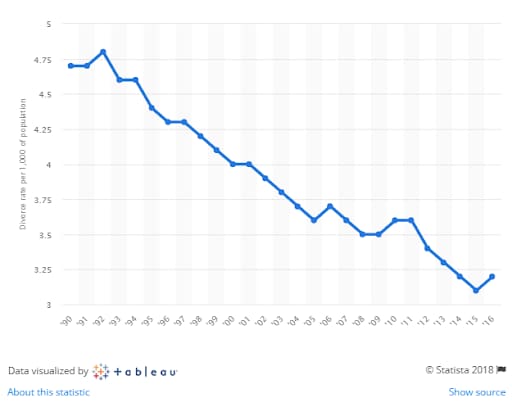
We’ve all heard the statistic that 50% of marriages end in divorce. Actually, that’s a myth. First, in no way does that mean your particular marriage only has a 50% chance of lasting a lifetime. It simply means that at one point in our nation’s history (a couple decades ago now) for every 2 marriages in a given year, there was 1 divorce. The divorce rate was half that of the marriage rate.

This phenomenon occurred on the heels of court rulings that gave women more authority and control in filing for divorce proceedings. When women were given the chance, they were finally able to end a bad marriage. Imagine being stuck in an abusive marriage, or knowing your spouse is sleeping around, and not being able to do anything about it.

In reality, however, the divorce rate has been on the decline – dropping around 18% over the past decade? Why? Because newly married young people are staying together longer. True, fewer young adults are currently married than ever before (functioning under the mindset of ‘if it’s just going to end in divorce, then why bother?’). But those who do choose to get married are remaining more faithful to each other than comparative couples of previous generations.

This may come as no surprise, but infidelity is still listed as the top specific reason for divorce at nearly 30%. Unfortunately those statistics are not much different for couples inside the church.

The positive intention behind the prohibition is to uphold and honor the covenant of marriage. God railed against the apathetic treatment of wedding vows in the prophetic book of Malachi.

Has not the one God made you? You belong to him in body and spirit. And what does the one God seek? Godly offspring. So be on your guard, and do not be unfaithful to the wife of your youth.
“The man who hates and divorces his wife,” says the Lord, the God of Israel, “does violence to the one he should protect,” says the Lord Almighty.
So be on your guard, and do not be unfaithful.
(Malachi 2:15-16)

Did you catch that line? The man who hates and divorces his wife does violence to the one he should protect. This is where we need to speak wisdom into the subject of adultery, unfaithfulness, and divorce. Adultery does not JUST mean sexual immorality. Adultery is not JUST about sex. Adultery is about breaking a covenant. Israel was often called an “adulterous” nation for breaking their covenant with God by worshiping other gods, mistreating the poor, abusing the sacrificial system, taking advantage of people through unbalanced weights and measures, etc.

Israel was in a covenant with God. They broke that covenant and were labeled “adulterers.” Marriage is not just a financial or social institution. It’s a covenantal arrangement between a man, a woman, and God. To break that covenant is to commit adultery – by sleeping around, by abusing your spouse, by neglecting them, and by “doing violence against the one you should protect.” Marriage is so much more than sex. So is adultery.

In the days of Jesus there was a great debate on this issue. Some took the side of Rabbi Hillel who taught that a man could divorce his wife for basically any reason. He emphasized the phrase “who becomes displeasing to him.” Others took the side of Rabbi Shammai who taught that marital unfaithfulness was the only legal grounds for divorce. Whose side did Jesus take?

Some Pharisees came to him to test him. They asked, “Is it lawful for a man to divorce his wife for any and every reason?”
“Haven’t you read,” he replied, “that at the beginning the Creator ‘made them male and female,’ and said, ‘For this reason a man will leave his father and mother and be united to his wife, and the two will become one flesh’? So they are no longer two, but one flesh. Therefore what God has joined together, let no one separate.”
“Why then,” they asked, “did Moses command that a man give his wife a certificate of divorce and send her away?”
Jesus replied, “Moses permitted you to divorce your wives because your hearts were hard. But it was not this way from the beginning. I tell you that anyone who divorces his wife, except for sexual immorality, and marries another woman commits adultery.”
(Matthew 19:3-9)

Even though Jesus wasn’t married, he upheld the importance of marriage. Faithfulness to one’s spouse goes hand in hand with one’s faithfulness to God. That’s why Jesus said such radical things as this:

“You have heard that it was said, ‘You shall not commit adultery.’ But I tell you that anyone who looks at a woman lustfully has already committed adultery with her in his heart. If your right eye causes you to stumble, gouge it out and throw it away. It is better for you to lose one part of your body than for your whole body to be thrown into hell. And if your right hand causes you to stumble, cut it off and throw it away. It is better for you to lose one part of your body than for your whole body to go into hell.”
(Matthew 5:27-30)

In other words, don’t even think about cheating on your wife. Don’t even think about sleeping around with men who aren’t your husband. Because eventually thoughts will become actions. People often leave their partners in the head long before they leave them in the bed.

You can see why these commandments are so important. God wanted to ensure a thriving society for his people. When cultures fail to honor their family commitments, when they treat human life as expendable, and when they cease to uphold their wedding vows, society begins to break down. Life, marriage, family – these things should be honored and kept sacred for our own good and the good of society. This is why I try to live up to Jesus’ standard and put into practice the words of Paul in Ephesians:

Husbands, love your wives, just as Christ loved the church and gave himself up for her to make her holy, cleansing her by the washing with water through the word, and to present her to himself as a radiant church, without stain or wrinkle or any other blemish, but holy and blameless. In this same way, husbands ought to love their wives as their own bodies. He who loves his wife loves himself. After all, no one ever hated their own body, but they feed and care for their body, just as Christ does the church—for we are members of his body. “For this reason a man will leave his father and mother and be united to his wife, and the two will become one flesh.” This is a profound mystery—but I am talking about Christ and the church. However, each one of you also must love his wife as he loves himself, and the wife must respect her husband.
(Ephesians 5:25-33)

_____________________________

Have you heard people toss around the “50%” statistic in relation to marriage and divorce? How does it make you feel about marriage? Is it worth fighting for? Or is it not worth bothering?

Do you think that healthy marriages are a vital part of a healthy society? Why or why not?

In what specific ways can you embody Christ’s sacrificial love in your marriage?

LIFE | 40 Days of Focus, Day 13


“You shall not murder.”
(Exodus 20:13)

I think it’s safe to assume that the majority of us could read this command and think, “Done. Next!”

All in all, it seems pretty easy not to kill people. I personally don’t know any murderers. The overall rate of murder and violent crimes is on the decline throughout most of the country. So…odds are that you will see command number six and think, “I’m good.

But you know it’s not that easy. If it were that easy, Jesus wouldn’t have had to bring it up in the Sermon on the Mount:

“You have heard that it was said to the people long ago, ‘You shall not murder, and anyone who murders will be subject to judgment.’ But I tell you that anyone who is angry with a brother or sister will be subject to judgment. Again, anyone who says to a brother or sister, ‘Raca,’ is answerable to the court. And anyone who says, ‘You fool!’ will be in danger of the fire of hell.”
(Matthew 5:21-22)

I find it helpful to reframe these “you shall not” commands and find the positive intention behind the prohibition. This command, as Jesus points out, is not just about not killing, its intention is the preservation of life. To take another person’s life is to snuff out the most sacred part of creation. We can understand that. But to insult, degrade, and oppress another person is to snuff out the Image of God within them, which, according to Jesus, is just another way of violating the sixth command.

So yes, all Christians should be on the side of life. I don’t want to use the term “pro-life” because that has taken on such a one-dimensional connotation. Abortion is DEFINITELY against the sixth command – but so is racism and prejudice and police brutality and sexual abuse and bombing civilians and torture and hate speech and capital punishment and the military industrial complex.

Think of it this way. Where God is, there is life. Through Jesus’ own death and resurrection, he conquered death. Beyond that, his death revealed the baseless and gratuitous violence of the state for what it was. The Pax Romana offered peace at the edge of a sword – and that’s not true peace. The way of Christ – who is the Way, the Truth, and the Life – is the way of the cross. It’s dying to yourself so you can really know what life means.

Jesus tells what I consider to be the scariest story ever in Matthew 25.

“Then he will say to those on his left, ‘Depart from me, you who are cursed, into the eternal fire prepared for the devil and his angels. For I was hungry and you gave me nothing to eat, I was thirsty and you gave me nothing to drink, I was a stranger and you did not invite me in, I needed clothes and you did not clothe me, I was sick and in prison and you did not look after me.’
“They also will answer, ‘Lord, when did we see you hungry or thirsty or a stranger or needing clothes or sick or in prison, and did not help you?’
“He will reply, ‘Truly I tell you, whatever you did not do for one of the least of these, you did not do for me.’
“Then they will go away to eternal punishment, but the righteous to eternal life.”
(Matthew 25:41-46)

It’s not enough to not murder. Just because I don’t kill you doesn’t mean I love you. When I’m willing to lay down my own life for your sake, though, that’s true love. That’s the true heart of the sixth command. You may not go around murdering people, but do you help feed the hungry? Do you help provide water for those who have nothing to drink? Do you help clothe the naked? Are you a loving presence for those who are sick or in prison?

In other words, are you on the side of life or death?

“Jesus in Disguise” statue in Rome
If you search the Bible for the phrase “choose life” you will be directed to a powerful passage in Deuteronomy 30, some of Moses’ last words to the nation of Israel before he died:

See, I set before you today life and prosperity, death and destruction. For I command you today to love the Lord your God, to walk in obedience to him, and to keep his commands, decrees and laws; then you will live and increase, and the Lord your God will bless you in the land you are entering to possess…
This day I call the heavens and the earth as witnesses against you that I have set before you life and death, blessings and curses. Now choose life, so that you and your children may live and that you may love the Lord your God, listen to his voice, and hold fast to him. For the Lord is your life, and he will give you many years in the land he swore to give to your fathers, Abraham, Isaac and Jacob.
(Deuteronomy 30:15-16, 19-20)

Don’t just not kill people. Choose life.

Don’t just be anti-abortion. Choose life.

Don’t just look out for your own interests. Choose life.

Don’t judge the sick, hungry, and homeless. Choose life.

There’s an amazing story of this in action. In the early days of the church, the Christians were living in a culture that did not value the life of infants. The fathers could make a decision to literally discard a baby for various reasons – maybe it was a deformity, maybe it was a little too small for its age, maybe it was a girl. The father would take this unwanted baby and leave it in the town dump to die from the elements. The Christians took Jesus’ call to choose life seriously. They went out and rescued these babies, adopting them and raising them as their own. The Roman government began to notice that these unwanted babies were growing up to become normal, healthy, functioning members of society and eventually outlawed the practice of infanticide.

When God’s people choose life, we can literally change the world.
______________________________

When people talk about being “pro-life” do they only mean in terms of abortion or is it in every aspect of life? What do you think about that?


What do you think of this quote? “If Jesus commanded us to love our enemies, I think he meant we ought not kill them.” Does this mean we all have to be strict pacifists? Why or why not?


If you’re honest with yourself, how often do you find yourself “murdering” someone in the sense that Jesus talks about? What do you think you could do to eliminate those attitudes from your heart?

HONOR | 40 Days of Focus, Day 12


“Honor your father and your mother, so that you may live long in the land the Lord your God is giving you.”
(Exodus 20:12)

The first four of the 10 Commandments deal with our relationship to God. We have no God but YHWH. We will not craft an image or idol depicting God in order to worship it. We will keep God’s name holy. We will consecrate a time of Sabbath rest to disconnect from the world and reconnect with God and each other.

The fifth commandment turns the focus toward our relationship with others. What is the very first relationship we ever experience? Our parents. Like it or not, you do not get to choose your parents. They are with you for life. Our nuclear family is the primary metaphor for how we understand and relate to God. If we are to think of God as our Father or Mother, like biblical imagery often does, we better take those relationships seriously.

Side note: I find it fascinating that both Father and Mother are mentioned as worthy of honor. Most patriarchal societies only honored the Father as the head of the household. It’s important to remember that the Bible was written in a patriarchal context and was influenced by patriarchy, but that was never the express intention of God – in creation or in his first and most important commands.

This is the first command to have a why to it, or a promise attached to it. “So that you may live long in the land the Lord your God is giving you.” I mean, this makes sense, doesn’t it? We’ve all had moments when we messed up in a big way and it could have all been avoided had we just listened to our parents in the first place. Ugh…don’t we just hate it when our parents were right all along? It’s like they actually knew what they were talking about!

It’s important to learn this lesson as children, but it can be even more important to live it out as adults. It’s not just teenagers who struggle to honor their parents. Grown children can be just as hesitant to listen to feedback, follow advice, or give the honor due their older parents. This is nothing new. In fact, one of the many hypocrisies Jesus pointed out about the Pharisees concerned this very thing:

“You have a fine way of setting aside the commands of God in order to observe your own traditions! For Moses said, ‘Honor your father and mother,’ and, ‘Anyone who curses their father or mother is to be put to death.’ But you say that if anyone declares that what might have been used to help their father or mother is Corban (that is, devoted to God)—then you no longer let them do anything for their father or mother. Thus you nullify the word of God by your tradition that you have handed down. And you do many things like that.”
(Mark 7:9-13)

They were using their supposed religious devotion as an excuse for not helping their aging parents. Ouch. Jesus says that our family relations are more important than that. God doesn’t want our stuff. He wants us to take care of each other, especially our family, and honor our commitments.

The family – father, mother, child – reveal something of God’s own character and nature to the world. There is a oneness from this communal bond. The two – mother and father – become one flesh, literally in the child. God’s own nature is a oneness in community – Father, Son, Spirit. Our family structures are not just coincidental byproducts of evolution or the agricultural revolution. Family represents God’s own self to the world. The only thing declared “not good” in creation was that the man was alone. We are created out of community and for community, love, and oneness with the other.

That’s something to be honored.

Again, some people get caught up on the patriarchal structure of the family in the Bible. But in reality, Scriptures fight against the traditional family hierarchy. The Father is not the head of the house – Jesus is. Women do not submit to men – we submit to each other. Children are to honor and obey their parents – but fathers are to be lenient and understanding. The Bible actually subverts the traditional teachings surrounding the family:

Children, obey your parents in the Lord, for this is right. “Honor your father and mother”—which is the first commandment with a promise—“so that it may go well with you and that you may enjoy long life on the earth.”
Fathers, do not exasperate your children; instead, bring them up in the training and instruction of the Lord.
(Ephesians 6:1-4)

Text your parents and tell them you love them. Better yet, call them and talk to them. Show them the honor and respect they are due – not because they deserve it, but because God thinks it’s important enough the make the effort.

_________________________

Did you ever have a time when things would have gone better for you if you had listened to your parents? What did you learn from that?


Do you have a father who raised you in the “training and instruction of the Lord?” If so, have you taken time to thank him for that? If not, what would you tell him if you could go back in time and have a do-over?


What are some specific ways you can show honor to your parents this week?