Page 23 of 70

11 Great Enneagram Resources

You may have no idea what I mean when I talk about the Enneagram. Or you may have been getting to know the Enneagram for a while now. Whether you’re a complete beginner or more advanced, I want to share some resources that I have found really helpful over the last couple of years. Whether you would rather read books, listen to podcasts, or watch online videos, I’ve got you covered.

FOR ENNEAGRAM NOVICES


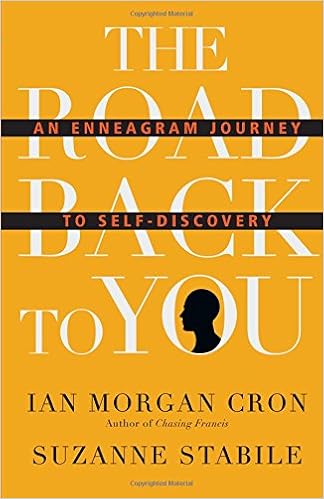
1) The Road Back to You, by Ian Morgan Cron and Suzanne Stabile
This book is by far the best introductory primer on the Enneagram. It gives a great overview of what the Enneagram is, how to use it, and a basic description of each type. You will be tempted to skip straight to the number you think you are, but you can’t fully understand your number without knowing the other eight numbers, too. I recommend getting a physical copy of the book so you can share it with your spouse, family, and friends. You’re going to want to share it when you’re done, I promise!

2) The Road Back to You Podcast with Ian Morgan Cron and Suzanne Stabile
The podcast makes a great supplement to the book. Ian and Suzanne use this platform to explain each type more in depth and to interview people of each type – celebrities, authors, musicians, pastors, and more. It’s always a great time with these two.


3) EXPLOREYOURTYPE.COM
You are not very likely to discover your dominant type by simply taking an online assessment. It’s always recommended to thoroughly research each type to discover which one describes you the best. But if you’re on the fence between two or three different numbers, this assessment can help narrow it down for you.

4) Sandals Church, “A Series Called YOU”
Pastor Matt Brown of Sandals Church in California recently gave a sermon series exploring each of the nine types from a biblical perspective. You can find these on YouTube. Here’s the first one in the series.

FOR MORE ADVANCED ENNEAGRAM USERS

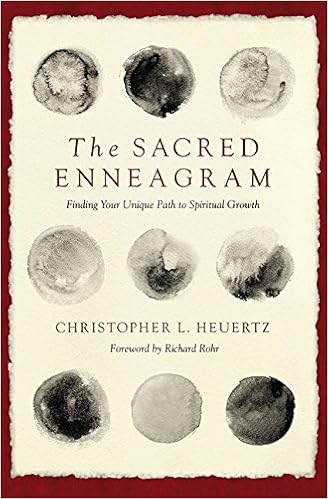
5) The Sacred Enneagram, by Chris Heuertz
So you know your type. Now what? Heuertz leads us on a journey to transformation and deeper spiritual growth. Heurtz’s own life experience and knowledge of the Enneagram is truly inspiring. He challenges his readers to use their knowledge of their type to develop contemplative prayer and meditative practices.


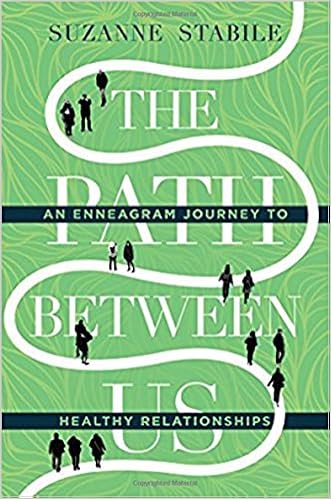
6) The Path Between Us, by Suzanne Stabile
I’m currently reading this new release, so I can’t give a full review. But I know it’s worth recommending. Stabile is a relationship expert, brilliantly explaining how the Enneagram types relate to and work with each other.


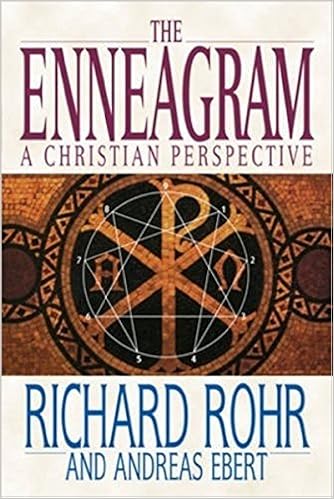
7) The Enneagram: A Christian Perspective, by Richard Rohr and Andreas Ebert
This is nearly the literal textbook for studying the Enneagram. This is not for the casual novice or first time reader. It’s a beast of a book to get through. But the depth of knowledge and wisdom contained within the pages make it well worth the effort for those who are willing to put in the work. Rohr is truly one of the greatest Enneagram masters of our time.


8) Typology Podcast with Ian Morgan Cron
After completing their Road Back to You podcast, Cron and Stabile went their own ways. Cron started up this podcast that picks up where The Road Back to You left off. It’s still and interview-based podcast exploring the uniqueness of each of the nine types. Typology assumes the listeners have a working knowledge of the Enneagram in order to take us deeper into the types.


9) Sleeping At Last Podcast
Singer/Song Writer/Musician Ryan O’Neal produces music under the name Sleeping At Last. O’Neal has been captivated by the beauty of the Enneagram in recent years and has undertaken a project to write and record one song for each of the nine types. On this podcast he plays the song, details his writing process, and explores each type with the help of his friend Chris Heuertz (author of The Sacred Enneagram).


10) ENNEAGRAMINSTITUTE.COM
The Enneagram Institute offers a ton of great online resources, like articles, type descriptions, and assessments. It can serve as a helpful reference guide in keeping it all straight and learning more about the nuances and subtleties of the Enneagram.

11) Casey McCollum
McCullom is an Enneagram teacher and trainer who hosts workshops and coaching sessions for people across the country. He has a great online presence – Facebook and Instagram – and is always sharing helpful bits of wisdom and advice. He is definitely worth the follow.


BONUS:
12) Enneadog on Twitter
This is a Twitter account that describes the different Enneagram types through Dog GIFs. It’s as wonderful as it sounds. Give them a follow!

What would you add to this list? Are there any other Enneagram resources you’ve found particularly helpful? Share them below in the comments.

3 Life Traps to Avoid

Idolatry is a trap.

An idol, as we saw last time, is something that makes big promises, takes all it can, and gives nothing in return. This video from I Am Second featuring hit singer Tori Kelly does a fantastic job illustrating this point. Check it out:

Tori Kelly was promised the world. She was promised everything she could want – fame, fortune, success as a singer. But her “idol” deemed her not good/pretty/bubbly enough. So long, see you later. Next!

She had to learn not to tie her identity to anything other than Christ. Kelly had to learn to let go and gain her freedom (remember the Monkey Trap?).

THE THREE TRAPS

If idolatry is a trap, it’s helpful to know what kind of traps to specifically be on the lookout for. The Bible identifies three main traps, and life has confirmed this to be true. Here’s exactly what we need to watch for:

Do not love this world nor the things it offers you, for when you love the world, you do not have the love of the Father in you. For the world offers only a craving for physical pleasure, a craving for everything we see, and pride in our achievements and possessions. These are not from the Father, but are from this world. And this world is fading away, along with everything that people crave. But anyone who does what pleases God will live forever. (1 John 2:15-17)

Did you see the traps? 1) Craving for physical pleasure, 2) Craving for everything we see, and 3) Pride in our achievements and possessions. These are the tools Satan uses to draw us away from God and trap us in idolatry. We fall for them all the time. Every single one of us has been trapped by at least one of these tricks. And they are literally as old as human history.

LITERALLY, THE OLDEST TRICK IN THE BOOK

The Bible opens with the story of creation in Genesis 1 and 2. God creates the world and everything in it. God crowns his creation with God’s masterpiece – humanity, God’s own image bearers. God places the first man and woman in a garden called Eden. It’s a paradise – free of sin, pain, death, and I assume mosquitoes. They have one God-given rule, only one! Don’t eat from the Tree of the Knowledge of Good and Evil. That’s it. There’s one tree you can’t eat from. Everything else is fair game. How could they possibly mess that up?

The serpent was the shrewdest of all the wild animals the Lord God had made. One day he asked the woman, “Did God really say you must not eat the fruit from any of the trees in the garden?”
“Of course we may eat fruit from the trees in the garden,” the woman replied. “It’s only the fruit from the tree in the middle of the garden that we are not allowed to eat. God said, ‘You must not eat it or even touch it; if you do, you will die.’”
“You won’t die!” the serpent replied to the woman. “God knows that your eyes will be opened as soon as you eat it, and you will be like God, knowing both good and evil.”
The woman was convinced. She saw that the tree was beautiful and its fruit looked delicious, and she wanted the wisdom it would give her. So she took some of the fruit and ate it. Then she gave some to her husband, who was with her, and he ate it, too. At that moment their eyes were opened, and they suddenly felt shame at their nakedness. So they sewed fig leaves together to cover themselves. (Genesis 3:1-7)

Did you see the traps? Look more closely. She saw that the fruit 1. looked delicious (cravings for physical pleasure), 2. looked beautiful (cravings for everything we see), and 3. would grant her the wisdom that she wanted (pride in our achievements and possessions). The Serpent (aka Satan) pulled out all the stops. He set all three traps in place, and she fell for every single one.

**Notice, by the way, that she gave the fruit to her husband “who was with her.” Adam wasn’t some innocent bystander. It’s not like he was off somewhere else completely unaware of what was happening. Adam was fooled just as much as Eve.**

And with all three traps set and then sprung, sin and idolatry entered the world.

At the end of Genesis 3, however, God makes a promise that some day one of Eve’s offspring would crush the head of the serpent once and for all.

BREAKING FREE

Fast forward to the 1st Century CE in Palestine. A Jewish Rabbi is on the scene named Yeshua (or Jesus to us Westerners). Jesus is baptized by his cousin John in the Jordan River. As he came up out of the water, the heavens part and the voice of God could be heard proclaiming “You are my Son whom I love. With you I am well pleased.” And the Holy Spirit descends upon Jesus in the form of a dove. This is a literal re-creation story.

And just as with the creation story in Genesis, so it is with Jesus. He is immediately led into the Judean wilderness where he fasts for 40 days and faces temptations from Satan. Imagine fasting for 40 days! That’s about the limit for the human body to survive without food. Some of us get hangry after 40 minutes without eating. Picture being on-the-brink-of-literal-starvation-hangry…and then literal Satan shows up. Ugh…. Just read this passage while I go get a snack.

Then Jesus, full of the Holy Spirit, returned from the Jordan River. He was led by the Spirit in the wilderness, where he was tempted by the devil for forty days. Jesus ate nothing all that time and became very hungry.
Then the devil said to him, “If you are the Son of God, tell this stone to become a loaf of bread.”
But Jesus told him, “No! The Scriptures say, ‘People do not live by bread alone.’”
Then the devil took him up and revealed to him all the kingdoms of the world in a moment of time. “I will give you the glory of these kingdoms and authority over them,” the devil said, “because they are mine to give to anyone I please. I will give it all to you if you will worship me.”
Jesus replied, “The Scriptures say,
‘You must worship the Lord your God
    and serve only him.’”
Then the devil took him to Jerusalem, to the highest point of the Temple, and said, “If you are the Son of God, jump off! For the Scriptures say,
‘He will order his angels to protect and guard you.
And they will hold you up with their hands
    so you won’t even hurt your foot on a stone.’”
Jesus responded, “The Scriptures also say, ‘You must not test the Lord your God.’”
When the devil had finished tempting Jesus, he left him until the next opportunity came. (Luke 4:1-13)

Ok, did you see the traps that time? Really, Satan couldn’t make it any more obvious. It’s the same three traps as he used in the Garden all those thousands of years before.

  1. Turn these stones to bread = cravings for physical pleasure
  2. I’ll give you all the kingdoms of the world = cravings for everything we see
  3. Throw yourself down from the Temple in front of all these crowds of people, proving to everyone who you truly are and what you’re capable of = pride in our achievements or possessions

However, where Adam and Eve failed, Jesus successfully avoided the traps and exposed them for what they truly were – empty promises.

UNHOLY TRINITY

These three traps can be thought of like this:

“Cravings for Physical Pleasure” = Self-Centeredness – only caring about my needs, my physical cravings, my appearance, my schedule, my success, me – me – me

“Cravings for Everything We See” = Greed – never being satisfied with what I have, always wanting more things, new, shiny, latest and greatest, trendy, jealous, more – more – more

“Pride in Our Achievements and Possessions” = Pride – success, achievement, and being the best are the only things that matter. Second place is first loser. I have to be the best me, and I need other people to know it. Failure is not an option, win – win – win

Self-Centeredness, Greed, and Pride are the core tricks of the trade for Satan. They are the main ways our idols keep us trapped. Here’s what that looks like in real life.

My relationships become an idol when I make it all about me – what I can get out it, how my needs are being met, how that person make me feel.
Relationships become an idol when I’m greedy – always wanting more time, more devotion, or simply moving on to the next person if you aren’t good enough for me anymore.
And relationships become an idol when I become prideful – I have to have the best relationship, or at the very least we have to appear successful. I keep score of who does more for the other person and become resentful when the other person isn’t pulling their weight.

Work can become an idol when I’m self-centered – looking out for my own interests instead of the good of the company, doing anything to get more money or more promotions, making everything a competition with my coworkers.
Work can become an idol when I fall into greed – working longer hours for more overtime to bring home a bigger pay check to a wife and kids I never see so we can buy more stuff we never use.
Work can become an idol when I let my pride get in the way – making sure everyone knows how good I am, making myself indispensable, getting jealous of anyone else who gets promotions, always self-promoting and emphasizing my own achievements and successes.

FOLLOW THE GUIDE

These are the traps of idolatry. They aren’t always easy to see. Sometimes navigating life feels like that scene in Indiana Jones: The Last Crusade. The only way we know how to avoid the traps is by learning from those who have gone before us. Self-centeredness, Greed, and Pride can suck you in, keep you trapped, and totally derail your life. Maybe now that we know what to look out for, we can follow in the steps of Jesus and avoid these snares of life.

Which of the three traps is most difficult for you to avoid? How might these traps be lying in wait for us even in the church? Let me know in the comments below, and don’t forget to subscribe so you never miss a post!

Review: Unarmed Empire: In Search of Beloved Community

Unarmed Empire: In Search of Beloved Community
Unarmed Empire: In Search of Beloved Community by Sean Palmer
My rating: 4 of 5 stars

I’ve been following Sean Palmer’s work for a while now. I’ve read his earlier blog posts. I’ve heard him speak on different occasions and to different audiences. The modern church is blessed to have pastors and authors like Palmer.

In “Unarmed Empire” Palmer lays out a clear, inspiring vision of what the church can be – and is in some cases. Our world seems to be divided and partisan now more than ever in recent history. That division and partisanship has bled over into the church, too. Palmer gives me hope that there is a way out of the political quandary in which we’ve found ourselves.

If you are a church leader – official or layperson – this book is a must-read. Take it and see how your church stacks up. Are we loving? Are we open and welcoming? Are we living life together? Are we emphasizing community rather than the individual?

The church is going to survive our mess. I am confident that God is faithful in that regard. But if our church leaders don’t wake up to the realities of the situation and lay down the weapons of war handed to us by the world, then it’s going to be a real struggle in the coming decades.

View all my reviews

Review: An Absolutely Remarkable Thing

An Absolutely Remarkable Thing
An Absolutely Remarkable Thing by Hank Green
My rating: 5 of 5 stars

Hank Green’s appropriately named debut novel “An Absolutely Remarkable Thing” is a marvel of our time. The book is at once a fun, thrilling sci-fi story about aliens making first contact. At the same time it gives a stark look at the realities of the modern world. It seems like an attempt to answer many questions, chief of which are 1) What could legitimately happen in the world if a sentient alien race made first contact with us on planet earth? and 2) What does it actually do to a person to be suddenly thrust into the spotlight of fame and fortune in the age of the internet? I can think of no person better equipped to answer these questions than Hank Green.

The story is well-paced, being told in an after-the-fact first-person account by the main character, April. HG’s character development is every bit on par with his brother’s (John Green). April and her friends Andy, Maya, Miranda, and Robin are an adult Goonies as they strive to unlock the mysteries of the Carls. Honestly, the characters and their quests remind me a lot of Ernest Cline’s book “Ready Player One.” There are a lot of similarities. I’m not sure if that was on purpose or coincidental. But if you enjoyed RPO, then you will really like AART.

The characters are likable and relatable. They are all of us. Well, all of us young adults/”Millennials” at least. The plot moves along at a pace somewhere between comfortable and suspenseful. It never really drags nor seems like too much too quickly.

What I appreciate the most is the honest handling of the real world divisions facing our society. In the story people essentially choose sides. April wrestles with an Us-vs.-Them attitude throughout most of the story, and it ultimately changes her into the person she never wanted to be. Most of all I appreciate the fact that HG points out the pros and cons of each opposing viewpoint. Neither side is completely vindicated and neither side is entirely wrong. We must pull together as a society and learn that lesson before something worse happens.

It’s all to eerie that a month after this book comes out there were bombs mailed in packages to current and former political leaders in this country (USA). An arrest has been made. No injuries were reported. But we still don’t know the full story or the motivations behind this attempted attack. The political climate of the book and of real life pushes people to the extremes. Any political extreme can be dangerous. It’s time we learn our lesson. An Absolutely Remarkable Thing can help teach us.

View all my reviews

Jonah: Bravely Ran Away

Ok, so here’s the thing. Psychologists sometimes explain consciousness as the story we tell ourselves. We make meaning out of anything and everything. We have supporting characters and extras, protagonists and antagonists. And wouldn’t you know it? We just so happen to always be the hero in our own story. One of the best portrayals of this is in the Will Ferrel movie Stranger Than Fiction.

We are the hero in the story we tell ourselves that makes up our conscious experience of life.

Got it?

Good.

So the thing to remember about Jonah is that he is the hero in his own story. No, he may not be the “hero” in the story recorded in Scripture. But in the moment, to himself, he is definitely the good guy. Jonah is doing what he thinks is right. He/Israel is the good guy. Nineveh/Assyria is the bad guy.

Where does that put God?

There’s an interesting scene in the book of Joshua. The Hebrew nation is on the verge of entering the Promised Land after 40 years of nomadic life in the wilderness. The only thing standing in their way is the heavily fortified city of Jericho. Joshua is walking around the area one time and he’s stopped in his tracks by an Angel from God. Joshua asks if the Angel is on their side or on the side of Jericho. The Angel’s answer? “Neither.” (Joshua 5:13-15)

Is God for us or for our enemies? Neither. That’ not how this works.

Jonah thinks he’s doing the right thing by disobeying God. The call to Nineveh seems traitorous. Jonah still has this “us vs. them” mentality. God doesn’t play those games. God is not for someone if it means being against someone else. God is truly for all people, everywhere.

For God so loved the world, that he gave his only Son, that whoever believes in him should not perish but have eternal life. For God did not send his Son into the world to condemn the world, but in order that the world might be saved through him. (John 3:16-17)

The Lord is not slow to fulfill his promise as some count slowness, but is patient toward you, not wishing that any should perish, but that all should reach repentance. (2 Peter 3:9)

…but God shows his love for us in that while we were still sinners, Christ died for us. (Romans 5:8)

It’s completely counter to the message of Scripture to believe there are some people not worth saving. God gave Jonah a mission to go to the Assyrians in Nineveh. Jesus gave his disciples (including us!) a mission to go into “all the world” and take the message of God’s grace to “every nation.” All means all. Every means every.

But there’s more to it for Jonah. This is possibly the most shocking part of Jonah’s escape. God gives a chilling warning to Ezekiel (who was after Jonah, but I believe the warning would still apply to Jonah).

Once again a message came to me from the Lord: “Son of man, give your people this message: ‘When I bring an army against a country, the people of that land choose one of their own to be a watchman. When the watchman sees the enemy coming, he sounds the alarm to warn the people. Then if those who hear the alarm refuse to take action, it is their own fault if they die. They heard the alarm but ignored it, so the responsibility is theirs. If they had listened to the warning, they could have saved their lives. But if the watchman sees the enemy coming and doesn’t sound the alarm to warn the people, he is responsible for their captivity. They will die in their sins, but I will hold the watchman responsible for their deaths.’
“Now, son of man, I am making you a watchman for the people of Israel. Therefore, listen to what I say and warn them for me. If I announce that some wicked people are sure to die and you fail to tell them to change their ways, then they will die in their sins, and I will hold you responsible for their deaths. But if you warn them to repent and they don’t repent, they will die in their sins, but you will have saved yourself.” (Ezekiel 33:1-9)

Did you catch that? If you know something bad is going to happen and you don’t tell anyone – that’s on you! So often we use fear of rejection as a reason not to share the Gospel with people. But if we neglect to tell people about Jesus, then their eternal destruction is on us. If we tell them and they refuse to listen, then that’s on them.

Jonah refused to go to Nineveh and warn them of the coming destruction. In doing so, he was accepting responsibility for their demise.

If Jonah is the hero and Nineveh is the enemy, then it obviously makes sense that Jonah would do this. He’s single handedly ensuring the downfall of Israel’s greatest enemy. Way to go, Jonah!

Our task is to see the world as God see it – not as us vs. them, not as winners and losers, not as good and evil, but as God’s children. Or as Jesus would put it – the 99 sheep in the fold and the one lost sheep waiting to be found.

What do you think? Was Jonah doing the right thing for Israel? What would you do if God called you to share the Gospel with your “enemies?” Keep the conversation going in the comments, and be sure to subscribe so you never miss a post!

Jonah: Nope

Have you ever heard God speak directly to you? Odds are that you haven’t. I would say that most
people don’t.

If you did, how would you respond?

The closest I’ve come to hearing God speak to me happened when I was just out of my freshman year of high school. I was fifteen years old. We were at church camp that summer. It was one of those super emotional nights where a bunch of campers were thinking seriously about their lives. We ended each night with a time of singing. That night so many youth ministers and counselors were busy talking with teens in need that they turned over the song leading to some of us young guys. I got up in the middle of everyone and led a few songs. In that moment I could see and feel the Spirit of God at work in the lives of my peers. In that moment I felt/heard God tell me that this was what I was meant to do with my life.

From that moment on I began to pursue my calling to youth ministry and worship leading. I’ve been doing that full time for the last eight years. It hasn’t always been easy or fun or glamorous. But I can’t see myself doing anything else.

If God were to speak to you, how would you respond?

The Bible is littered with stories of men and women encountering the divine. The most common reaction is terror. They fall down in fear (Isaiah, Peter, Paul). Some of them choose to test and argue with the divine (Moses, Gideon). Others “gird up their loins” for a wrestling match (Jacob!). Still others willingly submit and obey (Samuel, Mary).

And then there’s Jonah.

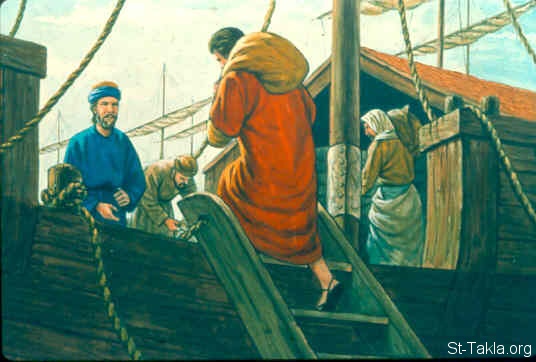
Now the word of the Lord came to Jonah the son of Amittai, saying, “Arise, go to Nineveh, that great city, and call out against it, for their evil has come up before me.” But Jonah rose to flee to Tarshish from the presence of the Lord. He went down to Joppa and found a ship going to Tarshish. So he paid the fare and went down into it, to go with them to Tarshish, away from the presence of the Lord. (Jonah 1:1-3)

Jonah quietly slips out the back door without saying a word. He doesn’t protest or argue. He doesn’t try to bargain with God or air his grievances. He simply makes like a tree and leaves.

Obviously, Jonah doesn’t want to go to Nineveh. But when does God ever call us to something we already want to do? I guarantee you that God will never call you to pursue a promotion, a bigger pay check, more exotic vacations, a larger home, a nicer car, a more respectable position.

NOPE!

As Dietrich Bonhoeffer put it, “When Christ calls a man, he bids him come and die.” God called Moses to confront his past and lead an unwilling slave population to freedom. God called Gideon to face down an enemy army with just 300 men carrying trumpets and torches. God called Isaiah to speak out against the evil kings and governments. God called Saul/Paul to take the gospel to the Gentiles, literally saying, “I will show him how much he must suffer for my name.”

God calls Jonah to go to Nineveh. Jonah thinks Nope! and runs the other direction. Jonah was totally cool with the stuff that benefitted his own people and his own standing among them. Jonah would prophesy all day long about how Israel would increase and their nation would become great again. But a mission trip to Nineveh? The enemy? No thanks, I’d rather not.

When I look at the state of the church in America, I am saddened to see so many people walking out the doors never to return. I’ve seen people leave our church without saying a word to anyone. They don’t want to have that confrontation, so they simply leave. They escape silently like Jonah rather than stick it out through a tough situation.

I also see certain churches thriving and growing at an unbelievable rate. Then I hear what their pastors are preaching and I’m sick to my stomach. They make it seem like following Jesus is always an easy and #blessed life. Follow Jesus and you’ll get that promotion. Follow Jesus and your family will be perfect. Follow Jesus and all that you want is within your reach.

Nothing could be further from the truth. We’re never guaranteed and easy life in the here and now. But we are guaranteed that God will be with us no matter what we go through.

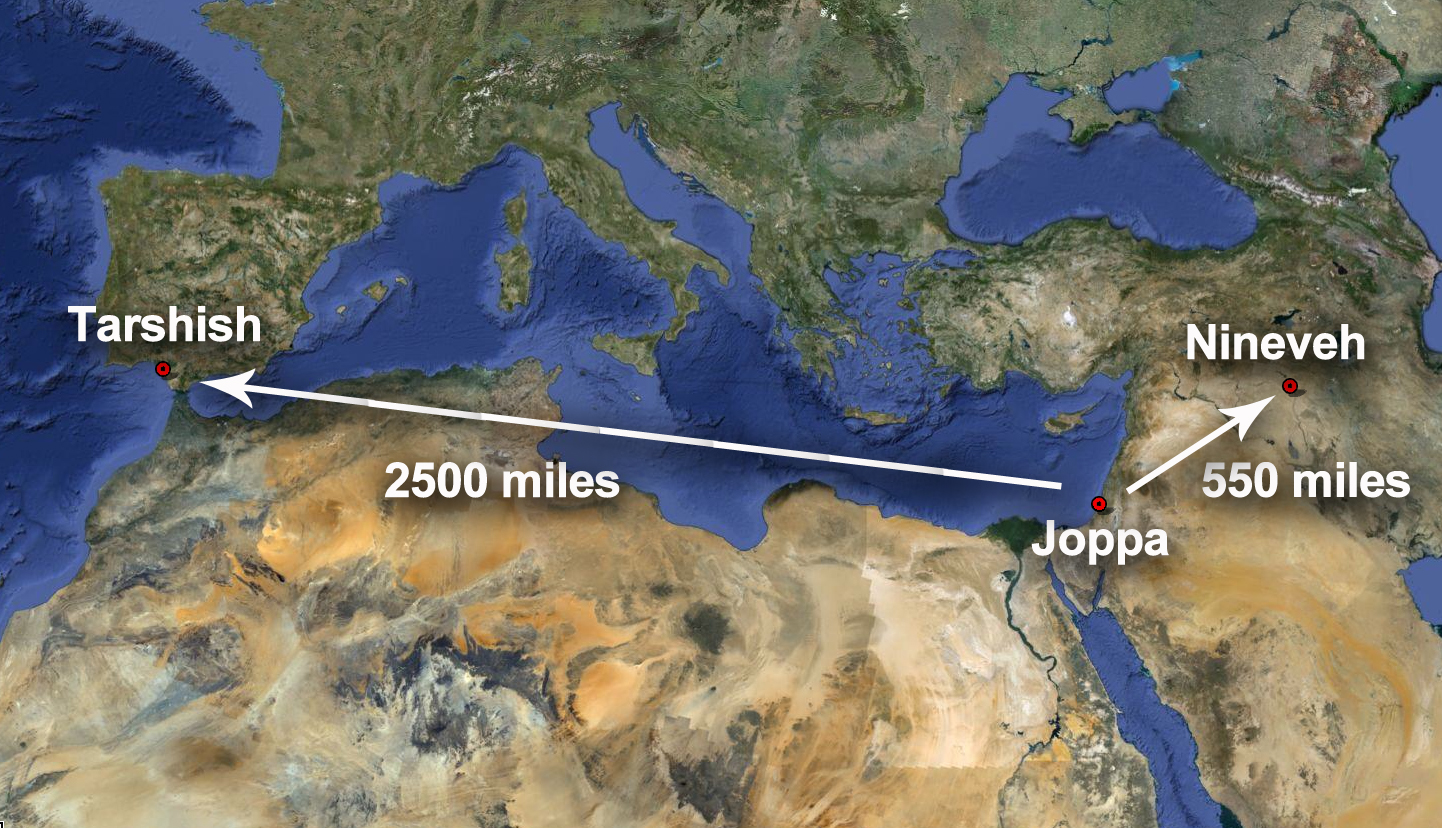
God would have been with Jonah every step of the way on the 550 mile journey to Nineveh. But Jonah would rather go to Tarshish without God than to Nineveh with God.

Still Nope!

And here is one of the great ironies of the story. **Spoilers** The wind and the waves obey God. The gentile, pagan sailors obey God. The fish obeys God. The people and king of Nineveh obey God. The plant obeys God. The worm obeys God. The only player in the whole story who doesn’t obey God is the prophet of God!

If God were to speak to you and call you to a mission, what would you do? Creation has no choice but to obey the sovereign Word of the Lord. But humans have the ability to say Nope! and move on. God always gives his people a choice. You are always given a choice.

What’s your Nineveh that you might be avoiding?
What good but difficult thing might God be calling you to do that you would rather not bother with?
Are we really any better than Jonah?

Tell me, have you ever heard God speak to you? What did God say? How did you respond? Let me know in the comments, and subscribe for email notifications so you never miss a post.

Alexa, Share My Halloween Playlist

Do you have access to Amazon Prime Music?

Do you love Halloween as much as I do?

Here’s a fun playlist of Halloween (and Halloween-inspired) songs for your costume party or for playing in the car while taking the kids to Trunk-Or-Treat this weekend.

If you don’t have Amazon Music, I’m sure you could make a similar (or better) playlist using Spotify, Apple Music, or whatever service you prefer.

What songs would you add to this playlist? Let me know in the comments below!

3 Benefits of the Enneagram

If you’ve been paying attention to Christian books, podcasts, Twitter, and YouTube, then I’m sure you’ve at least heard of something called the Enneagram. You may be familiar with it, or you may have no idea what that term means. I’m no expert, and I’ll direct you to some helpful resources in a coming post. But for now, I want to mention just three key ways my life has improved because of this tool called the Enneagram (inn-ē-uh-gram).

1) The Enneagram has introduced me to myself.

At its most basic, the Enneagram is a personality typing system. You may have taken some kind of personality assessment before, like the Meyers-Briggs (I’m an ENFJ, whatever that means). The Enneagram spells out nine different personality types represented by a number along a circular figure. Each number represents a different way of viewing and interacting with the world.

You may wonder what’s the big deal. But it’s more than just picking a number or taking a test online. As you’re reading through the descriptions of the numbers, there will come a point when you feel like you’ve been punched in the gut. You’ll get a sinking feeling in your stomach because suddenly you feel exposed for all the world to see. The Enneagram knows your deepest fears, shortcomings, and desires. The Enneagram knows how you react in stress and how you react in security. It reveals healthy and unhealthy patterns of behavior that creep up in your life.

I remember having that experience. I identify as a dominant Type THREE, sometimes called the Performer or Achiever. In times of stress, according to the Enneagram, I take on the unhealthy characteristics of a Type NINE, the Peacemaker. As I read the description of what that looked like, my jaw dropped. I think I got goosebumps. I felt nervous – in my bedroom alone reading this to myself. The way it described a THREE in stress was exactly what I found myself doing when I was going through times of “disintegration,” frustration, and stress.

It was like I was finally seeing myself clearly in the mirror for the first time. Warts and all. It isn’t a fun process. You may not like what you learn about yourself. But somehow you will know it’s all true.

2) The Enneagram has given me a new language.

I’ve never really been good at emotions and feelings. Chalk that up to being a THREE, I guess. But the Enneagram has given me a whole new vocabulary with which to communicate more clearly about my feelings.

Katelyn and I have been married for almost ten and a half years. We dated four and a half years before that. We’ve known each other for over fifteen years, and it’s just been in the last couple of years that we have really started to understand each other. She has learned things about me that I didn’t even know how to tell her – because I didn’t have the language for it. I’ve learned things about her that I never really would have known otherwise. We have been able to connect on a deeper level than ever because of the Enneagram.

Not only that, but it has helped me in my ministry. I work with teenagers full time. They are growing and developing their personalities at breakneck speed. They don’t know what’s going on inside them. But in listening to their stories and hearing how they describe themselves, their fears, their desires, their insecurities, I am better able to connect with them. The more knowledge I gain of the other eight types, the better I am to connect with people where they are and truly begin to understand what they’re going through and how they see the world.

3) The Enneagram has taught me what it means to love God with all my heart, soul, mind, and strength, and to love my neighbor as myself.

The Nine types of the Enneagram have been called “The Nine Faces of God.” Each type reveals something of God’s own nature. Each type is also a path toward transformation in Christ. It’s not just a way of being, it’s a way of becoming who we were made to be. The Enneagram reveals the defense mechanisms we put in place to keep God and people at a distance. It also shows us what it looks like to break down those walls and allow ourselves to be fully known and loved.

The Enneagram is teaching me what it looks like to love God with my whole self, not just my intellect, not just my instincts, not just my emotions, but all of it. The Enneagram urges us to integrate head, heart, and hands. True worship and spiritual transformation is a process that includes thinking, feeling, and doing. Each of us is dominant in one area and regressive in another. Our task to to lean into the areas of weakness to become a fully integrated worshiper of God.

Through learning the Enneagram and confronting my “shadow side,” I am brought to a place of self-love and self-acceptance. Out of that place of inward health, I am better able to show love, grace, and forgiveness toward others. In other words, the Enneagram is a tool for developing empathy.

Jesus said the greatest command in Scripture is to love God with all you have and to love your neighbor as yourself. I have not found a more practical tool for learning how to love than the Enneagram.

Are you familiar with the Enneagram? What’s your Type? How has knowing the Enneagram helped you? Let me know in the comments below.

Jonah: World’s Worst Prophet

I may be one of the few people in the world who considers Jonah among my favorite books of the Bible. Don’t @ me. The book of Jonah has a lot of things going for it:

  1. Emphasis on God’s grace, mercy, love, and forgiveness
  2. High seas adventure
  3. Near death experiences
  4. A man swallowed by a gigantic sea creature
  5. An entire city on the verge of destruction
  6. Angry outbursts and melodrama by the overly emotional main character
  7. A protagonist that you just can’t really like, but is also super relatable
  8. Twists, reversals, and ironic situations
  9. A cliff hanger ending
There has been a lot of debate in scholarship about whether Jonah is based on a true story or if it’s merely a fictional parable. I’m not going to get into it much except to say that it has a lot of similarities to the stories of Elijah and Elisha. If it’s based on a true story, then it’s quite a remarkable tale! But if it’s not grounded in fact, it is still an amazing story that illustrates God’s love to its fullest extent and reveals our own failure to live up to God’s expectations.
If the story of Jonah is a parable, it is, in a way, THE parable of the Bible.
It begins with a pretty standard format:

Now the word of the Lord came to Jonah the son of Amittai… (Jonah 1:1)

Right from the start there are some things worth diving into. (Pun intended)
THE WORD OF YHWH
The author wants us to know that God is the main character, the main driver of the plot in this story. Nothing else would have occurred had it not been set in motion by “The Word of YHWH.” God is the main character. Jonah is just playing a supporting role in God’s story.
I can think of a couple other instances when God’s word set great things in motion. Immediately this should bring us back to Genesis 1 – the beautiful song of creation that begins our whole Bible. It is by the power of God’s word that he sets time and space into motion. “And God said…” is the driving force of creation. God’s word has power. God’s word must be obeyed – at least by nonhuman creation. That is an important distinction to keep in mind.
For Christians, this should also bring us to John 1, “In the beginning was the Word…” John wants us to know that “the Word of YHWH” took on flesh and moved into the neighborhood. His name is Jesus. Immediately, there is a solid connection between Jesus and Jonah – a connection that will be made more and more clear as the story unfolds.
JONAH, SON OF AMITTAI
What do we know about Jonah? First off, names almost always have significant meaning in the Bible. This is no exception. Jonah’s name is the Hebrew word for “dove.” He is the son of Amittai, whose name means “God is Faithful.” Jonah is a flighty prophet, here one moment and gone the next. When things get uncomfortable, he flees. But he is the son of God’s faithfulness. Where Jonah runs away, God is faithful in pursuing Jonah. God is faithful to Jonah even if Jonah is not faithful to God.
“Jonah, son of Amittai” is a good synopsis of what the story is about.
This is not the first time we encounter Jonah, either. We find him first mentioned in 2 Kings 14.

In the fifteenth year of Amaziah the son of Joash, king of Judah, Jeroboam the son of Joash, king of Israel, began to reign in Samaria, and he reigned forty-one years. And he did what was evil in the sight of the Lord. He did not depart from all the sins of Jeroboam the son of Nebat, which he made Israel to sin. He restored the border of Israel from Lebo-hamath as far as the Sea of the Arabah, according to the word of the Lord, the God of Israel, which he spoke by his servant Jonah the son of Amittai, the prophet, who was from Gath-hepher. For the Lord saw that the affliction of Israel was very bitter, for there was none left, bond or free, and there was none to help Israel. But the Lord had not said that he would blot out the name of Israel from under heaven, so he saved them by the hand of Jeroboam the son of Joash. (2 Kings 14:23-27)

Jonah was a prophet in the Norther Kingdom of Israel during the reign of Jeroboam II (ca. 750 BC).

During Jeroboam’s reign (who was an evil king, BTW) the borders of Israel were restored to the greatest extent they had ever been. Israel gain in power like it hadn’t seen in a long, long time. Israel improved its military, its economy, and everything was going well. Israel had been made great again, all thanks to the prophetic word of Jonah, son of Amittai.

So we know that Jonah worked closely with the king. We know that Jonah oversaw one of the greatest surges in nationalistic power they had ever seen. We know that Israel’s enemies were losing strength during this time. Jonah was surely swelled up with nationalistic pride and probably equated patriotism with religious fervor.

That’s why the next words in the story are so shocking:

“Arise, go to Nineveh, that great city, and call out against it, for their evil has come up before me.” (Jonah 1:2)

This was the first time God had called one of his prophets to go specifically to a gentile nation for the purpose of prophesying to/against them. Why is this important? Why Nineveh?

NINEVEH
The earliest mention of Nineveh is way back in Genesis 10. It was one of the major cities established in the Fertile Crescent along the Tigris River. Genesis claims that it was established by Nimrod as part of his kingdom. This automatically puts Nineveh in a bad light, because Nimrod was viewed as an enemy of God.

Nineveh is a very ancient city. It was an ancient city by the time the Assyrian Empire rose to power. The Assyrians were brutal. When they overthrew a city or nation, they would completely decimate its people and culture. Assyria had its eyes set on Israel for a while because Israel was a very strategic location. But during Jonah’s time the Assyrian Empire had a string of incompetent rulers and was in a period of decline and upheaval.

Nineveh was not the capital city of Assyria at that time. But it was easily representative of the Assyrian Empire in much the same way New York City, Chicago, or Los Angeles would be representative of the USA. If God wanted to send a message to the Assyrian Empire, Nineveh was as good of a place as any.

But why even bother?

God tells Jonah that their “evil has come up before me.” The phrase is similar to saying, “I’ve had it up to HERE with their evil!” YHWH had not turned a blind eye to the evils of the empire and the surrounding nations. YHWH would seize this moment of opportunity, while the empire was up against the ropes in decline, to try and reach them with his message of mercy.

And God chose Jonah to be the mouthpiece, the arbiter of grace to Israel’s enemy.

What could possibly go wrong?

God told Jonah to get up and go to Nineveh…

But Jonah rose to flee to Tarshish from the presence of the Lord. He went down to Joppa and found a ship going to Tarshish. So he paid the fare and went down into it, to go with them to Tarshish, away from the presence of the Lord. (Jonah 1:3)

Jonah, what are you doing? Running away from God? Are you crazy?

Notice a few things about this verse. Tarshish is mentioned three times. This was a purposeful, deliberate plan on Jonah’s part. He didn’t just show up and board the first boat he came across. He wanted to pick the farthest point on the map – a three year round trip by some estimates.

“From the presence of the Lord” is said twice. Jonah knew he was directly disobeying God. He was doing everything he could to get out of this trip. By why would he think God wouldn’t be in Tarshish? Because Isaiah had said as much:

I will set a sign among them. And from them I will send survivors to the nations, to Tarshish, Pul, and Lud, who draw the bow, to Tubal and Javan, to the coastlands far away, that have not heard my fame or seen my glory. (Isaiah 66:19)

God’s word and presence hadn’t been proclaimed in Tarshish. Perfect. Let’s go there!

Jonah went down to Joppa and down into the boat. This begins a downward spiral, descending into further rebellion and distance from God and closer to chaos and the grave.

And that phrase “paid the fare” is better understood as commissioning the whole ship and crew for the voyage. He wasn’t just buying a ticket for a bunk on the boat. He was financing the entire mission.

Verse three emphasizes the lengths to which Jonah was willing to go in order NOT to do what God told him to do. Nineveh was about a 550 mile, relatively easy trip across land via trade routes. Tarshish was on the Southern coast of Spain at the farthest edge of the Mediterranean Sea, risking storms, shipwrecks, pirates, disease, and more.

Jonah truly was the world’s worst prophet. I don’t like Jonah.

But then I realize that I see so much of Jonah inside me. To what lengths have I gone to avoid doing what God has called me to do? Who am I staying away from? What am I running from? What responsibilities am I shrugging off?

There’s a little bit of Jonah in all of us.

6 Reasons Christians Should Care About Climate Change

Recently the Intergovernmental Panel on Climate Change (IPCC) released its latest report on the state of global climate change. Things are not looking good to say the least. You can easily look up the report and read it for yourself. At the rate we’re going, we have about 12 years to come together as a global community and turn things around.

It’s almost time to hit the panic button.

Mike McHargue released an episode of his podcast “Ask Science Mike” this week discussing the report and what we can/should do about it. I highly recommend giving it a listen (begin at about the 5:38 mark). It’s upsetting to me that we could be experiencing the catastrophic effects of global warming within our lifetime. We’re not just talking about the distant future of our grandchildren’s grandchildren. We are talking about a couple of decades from now.

When I was younger I remember hearing people in the church shrug off the warnings of global warming. I would hear things like, “The climate has changed before. It’s a completely natural part of Earth’s cycles.” Or “who are we to think that humans could cause such a thing as this?” Or worse, “God said he would never destroy the Earth again, so there’s nothing we can do to destroy it.”

There are still climate change deniers, but I think it’s time we all got more serious about this. Caring for the environment should not be a partisan issue. Reducing our energy consumption and carbon footprint should not be viewed as a bad thing. Even if you don’t believe that human activity (eg. burning fossil fuels and stripping rainforests to make pasture land for livestock) is driving climate change, I still think there are plenty of reasons to start taking better care of our planet.

I’m no Captain Planet, but here are six key reasons I believe Christians should care about the environment.

1) We are created in the Image of God.

Our Scriptures begin with the story of creation (Genesis 1, 2). Genesis 1 is a beautiful song depicting God’s work in breathtaking poetic language. God creates light, then oceans and atmosphere, then dry land and vegetation, then birds and fish, then land animals. Last of all God created humans:

Then God said, “Let us make mankind in our image, in our likeness, so that they may rule over the fish in the sea and the birds in the sky, over the livestock and all the wild animals, and over all the creatures that move along the ground.”
So God created mankind in his own image,
in the image of God he created them;
male and female he created them. (Genesis 1:26-27)

Men and women – ALL homo sapiens – are created in the Image of God. This is one of the foundational truths of the Bible. If we don’t have that as our starting point, then nothing else really matters. The Image of God is a loaded term. We could write entire volumes of books on what the term means and its implications. But suffice it to say that human beings are God’s representatives to the rest of creation.

Humans were endowed with certain cognitive, physical, and social capabilities that (as far as we know) are unprecedented in the known universe. Humans have survived not because we are the most well evolved species on the planet, but because we have a language, fine motor skills, and social cooperation. A lone human will not survive for long. But get 20 or 30 of us together and we can create our own society.

As God’s image bearers, we have some of the divine spirit in us, too. We have the ability to show love and compassion, forgiveness and mercy. We share in God’s creative work, too. We see the world not just as it is but as it could be. Humans can help tame the chaos. Humans can help bring order and flourishing for all the codependent ecosystems.

Since humans are created in God’s image and likeness, then our first inclination should be to do the things God would do. That includes, but is certainly not limited to, caring for the rest of non-human creation on this planet.

2) God placed humans in charge of tending and caring for the Earth.

Closely connected with the first point is this: we bear the divine image and are given a divine vocation.

God blessed them and said to them, “Be fruitful and increase in number; fill the earth and subdue it. Rule over the fish in the sea and the birds in the sky and over every living creature that moves on the ground.” (Genesis 1:28)

This is where a lot of people have gotten tripped up over the centuries. What does it meant to “subdue” and “rule over”? I believe many men have taken that to mean the Earth is ours to do with as we please. Some think this means that the Earth and everything in it was made for humanity to use, to exploit, to take advantage of for our own personal gains.

But this is kingly language. Humanity is “ruling over” the Earth is God’s vassal governors. Yes, there are parts of this world that I am glad to have brought under our control. But what do we do once we have brought about order and submission? I don’t believe the answer is to run roughshod over creation. We should instead do everything within our power to make creation come alive and flourish to the glory of God. After all, creation itself is supposed to reveal something of God to us – namely God’s divine nature and eternal power (Romans 1:20).

Would nonhuman creation call us benevolent rulers or maniacal tyrants?

3) Our actions impact more than just ourselves.

What comes to mind when you think of the word “sin”? The Bible is littered with lists of sins – those actions and attitudes that are contrary to God’s way of life for his people. But take a look at one of those lists – any list. Think about anything we would consider to be a sin.

Is there a sin that affects only you and no one/nothing else in any way?

Any sin you can think of has an impact greater than the one committing the sin. That’s why it’s such a big deal to God. God is community and love within Godself. God creates out of communal love for the purpose of communal love. That’s why God said, “It is not good for the man to be alone. I will make a helper suitable for him” (Genesis 2:18).

When the first humans sinned by eating the fruit from the “Tree of the Knowledge of Good and Evil” (Genesis 3), God plainly laid out the consequences to their action. They did not die immediately, but they were separated 1) from God, 2) from each other, and 3) from the rest of creation. Sin drove a wedge between all these relationships.

Hear this: our sin of greed has caused potentially irreparable harm to the rest of creation.

For the creation waits in eager expectation for the children of God to be revealed. For the creation was subjected to frustration, not by its own choice, but by the will of the one who subjected it, in hope that the creation itself will be liberated from its bondage to decay and brought into the freedom and glory of the children of God. (Romans 8:19-21)

Our sin of greed has made matters exponentially worse since the industrial revolution. Our desire for more – more money, more power, more things, more comfort, more convenience – has had devastating effects on the rest of creation. I can only imagine that creation is crying out more than ever, is more frustrated than ever at being subject to bondage.

We must be willing to take responsibility for our own actions and begin living in such a way as to reduce the harmful impacts of our own greed and evil desires.

4) It’s more economical.

Ok, so maybe you’re not convinced by the science or the theology. But everyone should be able to get behind the economics of sustainability. And no, I’m not talking about going out and buying a Prius. In fact, the more economical thing to do is to keep your vehicles as long as possible, keep them well maintained, and drive more efficiently.

Come on. Who wouldn’t want to pay less for gas? Who wouldn’t want to see a smaller electricity or water bill? Who wouldn’t want to support local farmers and merchants rather than gigantic, unsustainable mega-corporations?

We live in a consumeristic society. The real challenge is to consume less and create/contribute more. This is called stewardship. There’s a whole case for stewardship to be made in Scripture. Basically, everything belongs to God. The blessings we have come from God and are meant to be used to bless others.

Every good and perfect gift is from above, coming down from the Father of the heavenly lights, who does not change like shifting shadows. (James 1:17)

Honor the Lord with your wealth,
    with the firstfruits of all your crops (Proverbs 3:9)

We have a say as consumers. We vote with our dollars. Companies pay attention to market trends. If we are spending more of our money on locally-sourced, sustainable, and/or fair trade products, then producers and manufacturers will take note. If we invest more into green companies who are working to develop more efficient forms of energy at lower costs, then we will all benefit in the long run.

Renewable energy and sustainable products just make more economic sense. We must be better stewards of the blessings God has given us.

5) It’s a justice thing.

This should be a really big wake-up call for Christians globally. According to all predictions that I’ve seen, those who are less well off are going to be the most impacted by climate change. Not everyone can afford to move. Not everyone can keep up with the predicted rise in food and energy costs. In extreme weather events, those with poorer housing and shelter are going to be the least able to survive. We must be preparing for a humanitarian crisis unlike anything we’ve ever seen. Climate change has the potential to produce more refugees globally than we could possibly support.

When economies collapse, it will be “the least of these” who suffer the most. When hurricanes gain unprecedented strength, it will be “the least of these” who are swallowed in the storm surge. When wild fires rage and crops fail and sea levels rise, it will be “the least of these” who will experience the greatest impact.

“Then he will say to those on his left, ‘Depart from me, you who are cursed, into the eternal fire prepared for the devil and his angels. For I was hungry and you gave me nothing to eat, I was thirsty and you gave me nothing to drink, I was a stranger and you did not invite me in, I needed clothes and you did not clothe me, I was sick and in prison and you did not look after me.’
“They also will answer, ‘Lord, when did we see you hungry or thirsty or a stranger or needing clothes or sick or in prison, and did not help you?’
“He will reply, ‘Truly I tell you, whatever you did not do for one of the least of these, you did not do for me.’” (Matthew 25:41-45)

Instead of preparing to help the countless numbers of refugees men and women God’s Image Bearers who will be negatively affected by climate change, we are severely cutting down on the number of refugees we will allow into this country. We are building a wall along our souther border with Mexico to prevent people from entering the US. We are scaling back the amount of global aide and support given to developing nations. We have pulled out of the Paris Climate Agreement. We have alienated our closest allies and buddied up with tyrannical dictators. We have beefed up our military spending while making cuts to social security and healthcare.

Remember – we will be judged by how we treated “the least of these.”

6) The Kingdom of God promotes flourishing of all people and all creation.

This isn’t heaven yet. Not by a long shot. But that shouldn’t stop us from trying to make this world a little more like heaven.

One of the key differentiators between the Kingdom of Heaven and the Kingdoms of the World is abundance versus scarcity. God’s kingdom is one of abundance. In God’s kingdom everyone has enough, everyone has clothes, food, shelter. Everyone’s needs are taken care of. Everyone is given the chance to flourish and thrive and reach their fullest potential.

The Kingdoms of this World live on a scarcity mindset. The fear is that there is not enough for everyone. There won’t be enough food or water or luxuries, so we have to forcibly take and/or protect what’s ours.

This will only get worse with climate change. Resources will become more scarce. Water sources will dry up. Fossil fuel reserves will become depleted. Useable farmland could all but vanish. Extinctions could occur on widespread scales along the entire food chain. Scarcity will be the new norm.

Jesus said, “The thief comes only to steal and kill and destroy; I have come that they may have life, and have it to the full” (John 10:10). Scarcity defines the kingdoms, empires, and nations of this world. Abundance defines the kingdom of heaven.

Think about everything Jesus did in order to prove this very point. He healed the sick, blind, lame, and deaf. He preached to the poor and outcasts. He caused a miraculous catch of fish – so much that it nearly sank the boats. He took a few loaves of bread and some fish and multiplied them into enough food to feed thousands.

Jesus came to preach a kingdom of abundance, not so that we could greedily hoard it all, but so that we could all share what we have and provide for each other out of that abundance.

This is exactly what the early Christians did:

All the believers were one in heart and mind. No one claimed that any of their possessions was their own, but they shared everything they had. With great power the apostles continued to testify to the resurrection of the Lord Jesus. And God’s grace was so powerfully at work in them all that there were no needy persons among them. For from time to time those who owned land or houses sold them, brought the money from the sales and put it at the apostles’ feet, and it was distributed to anyone who had need. (Acts 4:32-35)

In the coming decades it will be increasingly important that God’s people live out of a place of abundance – sharing what we have, giving to those in need, not taking more than we need. The fear of scarcity has no place in the kingdom of heaven. But if we want to prevent widespread scarcity of resources (necessities, not just luxuries), then we need to take this as seriously as the early church did. We must redefine “enough.” We must reprioritize our wants and our needs. We must celebrate and become good stewards of the blessings we have from God in Christ. And we must be willing to share with those in need.

I’m not perfect at any of this. In fact, I’ve gotten lazier about these things in the last few years. But it’s up to each one of us to make little changes that will make a big impact.

MARANATHA

That’s an ancient word/phrase meaning “Lord, come quickly.” It could mean we want Christ to return and for the kingdom of heaven to be fully realized as promised at the end of Revelation. Or it could mean that we need God to act in a big way, to show up and put everything to right.

As we proceed into a potentially ominous future, I believe this prayer is critical for God’s people. It reminds us who is ultimately in charge. It reminds us that this isn’t heaven yet. It reminds us of the hope we have in Christ Jesus that one day all will be made new.

Maranatha.