Page 29 of 82

Messiah Is Coming, pt. 1

In the beginning God created the heavens and the earth. We know that story. We know its power, its beauty, its wonder. God simply spoke into being all the we see, hear, feel, taste, and smell. At God’s word, galaxies were formed and our planet burst to life with vegetation and wildlife. The crowning jewel of God creation in this opening song of Scripture is man and woman who were created in God’s own image and likeness.

And God saw all that he had made, and it was very good.
God planted a garden in Eden in which the man and woman could live out their calling to “be fruitful and multiply, fill the earth and subdue it.” God placed man in the garden to tend it and protect it. God gave the man a woman as a helper equal to and suitable for him.
And all was right and good and pure and innocent. For a while at least.
Because somehow, God’s good creation was yet susceptible to the influence of evil. The deceiver slithered into the scene, hissing lies and injecting doubts like venom in the bloodstream. The serpent fooled the humans into breaking God’s one rule by making them believe that God was holding out on them.

The woman ate the fruit and then gave it to her husband, and he ate, too. Their eyes were open to the realities of their sin, their nakedness, their shame. They hid from God. For the first time ever they felt unsafe in God’s presence.

Maybe you remember what that was like? The first time you felt like you hadn’t just done something bad but that you were bad? That’s shame.
Every sin has a consequence. From that point on we would be subject to broken relationships – with each other, with the earth, and with God. But God would not leave his children in this helpless state. He would not let that evil serpent win. He would set it all right one day through the woman’s own offspring.

God (to the serpent):
What you have done carries great consequences.
Now you are cursed more than cattle or wild beasts.
You will writhe on your belly forever,
consuming the dust out of which man was made.
I will make you and your brood enemies
of the woman and all her children;
The woman’s child will stomp your head,
and you will strike his heel. 
(Genesis 3:14-15 | The Voice)

God had a plan from the beginning. That last sentence is commonly known as the protoevangelion, “the first gospel.” God would not leave his children in the grasp of the serpent.
The Deliverer is coming.

Fast forward in the story, past the flood, past the tower of Babel, and we’re introduced to a man named Abram (later known as Abraham) who lived in the Mesopotamian city of Ur. Abram was married, childless, and very wealthy. God chose Abram to be an integral part of his great plan to rescue his children from the schemes of the serpent.

Abram, get up and go! Leave your country. Leave your relatives and your father’s home, and travel to the land I will show you. Don’t worry—I will guide you there. I have plans to make a great people from your descendants. And I am going to put a special blessing on you and cause your reputation to grow so that you will become a blessing and example to others. I will also bless those who bless you and further you in your journey, and I’ll trip up those who try to trip you along the way. Through your descendants, all of the families of the earth will find their blessing in you. (Genesis 12:1-3 | The Voice)

Abram would become the father of Isaac. Isaac would become the father of Jacob, who would later be named Israel. Jacob would become the father of Judah, from whose line would come the kings and the Messiah. From one family, all nations would be blessed, all peoples would be rescued from the power of evil. From one family God would work to create one new family, one new humanity.
The Messiah is coming.

rCQ: Questions from an atheist

/r/Christianity Questions

Recently, I came across this series of of questions asked by a Reddit user:

1) Do you agree with everything in the bible, sometimes it can be really messed up (like those quotes atheists like to bring up when they are debating with christians for example “Now therefore, kill every male among the little ones, and kill every woman who has known man intimately. But all the girls who have not known man intimately, spare for yourselves. Numbers 31:17-18”

2) Is the Bible like your law or advice for better life?

3) How often do you question your beliefs?

4) Are creationists the majority of christians?

Here are my answers:

1) It is my belief that if it can’t be said about Christ, it can’t be said about God (seeing as they are one and the same). I read about the violence of the nations in the Hebrew Scriptures in light of the cross of Christ. Jesus’ violent death at the hands of the state reveals the evil of state-sanctioned killing. So no, I don’t particularly “agree” that God truly commanded the killing of innocents. It was a shocking reality of war. I think this actually gives credence to the reliability of Scriptures. The writers certainly don’t try to sanitize or sugar coat anything. God is for sure a God of justice, but God is more so a God of grace and mercy, willing and desiring to save all who would turn to God.

2) The Bible is an argument about God. It’s a compilation of history, law, poetry, prophetic writings, letters, and biographical accounts. The Bible is a collection of 66 (or more) individual documents by at least 40 different authors/editors, written and compiled over the course of about 1500 years. It’s so much MORE than a law or book of good advice. It’s a window into how the people of God have interacted with, debated about, and sometimes literally wrestled with God. It’s the story of God and his people. The closest thing we Christians have to a “law” is maybe Matthew 5-7, the Sermon on the Mount. But it really boils down to “Love God with all your heart, soul, mind, and straight, and love your neighbor as yourself.” That is our law. That is our advice for a better life.

3) I question my beliefs all the time. Doubt is not the opposite of faith. Certainty is. Faith isn’t faith if there isn’t a degree of doubt, the idea that I could be wrong about all this. Certainty is the destroyer of faith, because as soon as your faith becomes too rigid it stops growing and evolving.

4) Young Earth Creationism stems from a demand for a 100% literal reading of Genesis 1-11. That view is dying off, and certainly isn’t as much of a stronghold as it used to be.

rCQ: Did Judas believe Jesus was the Son of God?

I’ve been browsing the r/Christianity subreddit. Some of it is weird and a bit out there. But there are also some people asking great questions. I am a sucker for good questions, so I decided to begin a series on my blog called r/Christianity Questions (or rCQ for short).


Recently I came across this question:

Did Judas believe Jesus was the Son of God?

Here’s my answer.

[TL;DR version – No, Judas didn’t know Jesus was the Son of God like we know him to be. No, I don’t think Judas really knew what he was doing because he didn’t understand Jesus’ mission. Yes, I think Judas could have been forgiven had he not hanged himself.]

It depends on what you mean “Son of God.” The phrase is a Messianic title taken from Psalm 2, which God actually quotes at Jesus’ baptism. The Messiah would be hailed as “God’s Son” in a kingly sense, not necessarily in a divine incarnation sense. In that regard, I’m not sure that any of the apostles truly believed to the fullest extent. Even when Peter confesses that Jesus was the Christ, the son of the living God (Matthew 16:16), he has Psalm 2 and maybe Daniel 7 in mind.

He said to me, “You are my son;
today I have become your father. (Psalm 2:7)

What happened with Judas, in my understanding, is that he was trying to force Jesus’ hand at overthrowing the Romans. He saw an opportunity to make a little money, get Jesus arrested, and maybe beaten. I don’t think he realized the lengths to which the Jewish leaders would take the whole thing. And I think Judas believed Jesus would defend himself in some way. It makes some sort of sense. If Judas had devoted the past few years of his life to following someone who was going to be the Messiah, Israel’s deliverer who would overthrow Roman rule and establish an independent Jewish state as the heir to David’s throne (see John 6:14-15), then maybe Judas was simply trying to start the ball rolling. It’s clear from James’ and John’s question about sitting at Jesus right and left when he came into his kingdom (Mark 10:35-40) that this was the vision the other apostles had for the kingdom.

It’s not until Jesus’ trial that we hear “my kingdom is not of this world. If it were, my followers would fight for me” (John 18:36). Judas wanted a fight. Peter wanted a fight – hence the sword in the garden (John 18:10). James and John wanted a fight. But that was not the way of Jesus.

What really gives away that Judas didn’t actually think Jesus was going to be killed because of his betrayal is this:

When Judas, who had betrayed him, saw that Jesus was condemned, he was seized with remorse and returned the thirty pieces of silver to the chief priests and the elders. “I have sinned,” he said, “for I have betrayed innocent blood.”
“What is that to us?” they replied. “That’s your responsibility.”
So Judas threw the money into the temple and left. Then he went away and hanged himself. (Matthew 27:3-5)

Judas assumed (rightly) that the leaders wouldn’t have enough evidence to charge Jesus, much less convict him of anything. Judas also assumed (wrongly) that Jesus could and would defend himself against any accusations. Sometimes, it’s even the wrongful arrest of a movement leader that gives said movement legitimacy. Maybe Judas wanted to thrust Jesus into the spotlight for all to see. Little did he know just how well his plan would succeed in doing that.

There’s also the question: Could Judas have been forgiven? And I think the answer is yes. All the other disciples were forgiven. Saul (aka Paul) was forgiven. Jesus cried out for God to forgive the very people who nailed him to that cross because they (like Judas) didn’t know what they were doing.

Don’t get me wrong. I’m not defending Judas’ actions. What he did was greedy at best (John 12:4-6) and pure evil at worst (John 13:2). But Judas also wasn’t the only one who betrayed Jesus that night. All the apostles ran. Everyone deserted. Peter denied even knowing Jesus at all.

It wasn’t until after the resurrection that Peter and the other apostles began to really know what it meant for Jesus to be the “Son of God” in the fullest meaning of the phrase.

Alexa, Share My Thanksgiving Playlist

You know, I hear all the time that people listen to Christmas music in November because there isn’t “Thanksgiving Music.”  I call B.S. (bologna sandwich)! Here is my playlist that gets me in the Thanksgiving mood. These are songs that remind me of God and his blessings – my wife and kids, home, family, friends, love, belonging, joy, freedom.

It’s got a little bit of everything, from show tunes to indie/folk to rap to pop punk. There’s Mumford & Sons, U2, Queen, Lecrae, Michael Bublé, and more. If you’ve got a long road trip before digging into the pile of mashed potatoes or if you need something to listen to in the kitchen while you’re cooking, go ahead and give these songs a listen.

Jesus Is the New Jonah…And So Are You.

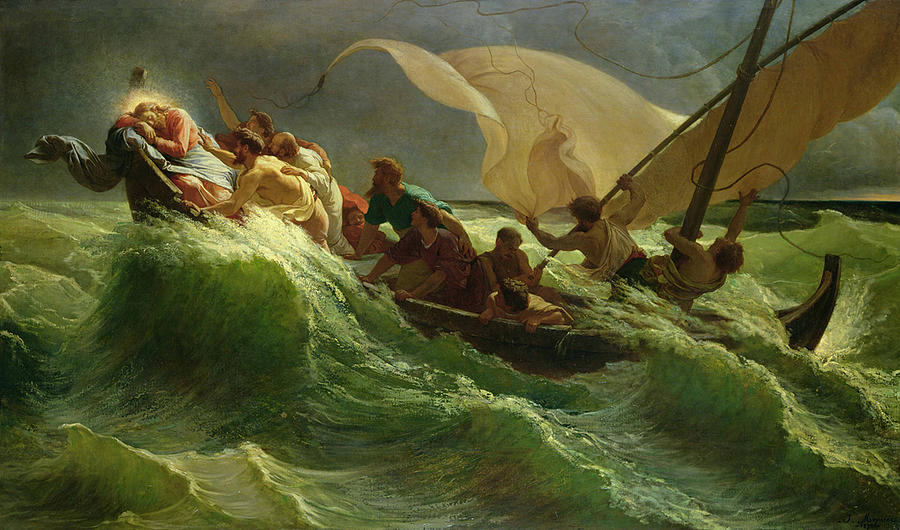
A prophet of God sleeping in a boat at sea during a particularly violent storm which has everyone else on board panicked. The prophet is rudely awakened and miraculously causes the storm to cease.

Stop me if you’ve heard this one before.

The more I study the story of Jonah, the clearer it becomes that Jesus based a lot of his ministry and teachings on the life of Jonah. The connections become obvious to anyone paying attention. In fact, Jesus makes it obvious for us by coming right out and telling us that “something greater than Jonah is here” (Matthew 12).

So how is Jesus the new Jonah?

We’ll look at this throughout the story, but let’s just stay in chapter 1 for now.

THE WORD OF THE LORD

The opening phrase of Jonah’s story should perk the ears of Christians. “The Word of the Lord…” doesn’t that have some significance?

Look at how John’s gospel begins: In the beginning was the Word, and the Word was with God, and the Word was God.

Jesus IS the Word of God. Jesus’ story is inextricably connected to Jonah’s from the opening phrase.

GO TO NINEVEH

God calls Jonah to leave his home (Israel) and go to a foreign, hostile land (Nineveh) to proclaim God’s message. Jonah, somewhat understandably, is hesitant to do this. Instead, he runs away from the call to foreign missions.

Where is Jesus in this? How is Jesus the new Jonah in this regard? The answer is best summarized in Philippians 2:

Who, being in very nature God,
Did not consider equality with God something to be used to his own advantage;
Rather, he made himself nothing
By taking on the very nature of a servant,
Being made in human likeness,
And being found in appearance as a man,
He humbled himself
By becoming obedient to death –
Even death on a cross!

Looking back at John 1, The Message version puts it this way:

The Word became flesh and blood and moved into the neighborhood.

Jesus was sent on a mission from God to leave his home in heaven, to come to a foreign land (the world), to preach to a hostile population, and ultimately to be killed for it.

Jonah didn’t want to leave Israel and go to Nineveh for fear of what might happen. Christ left heaven and came to Earth fully knowing what would happen. Christ is the greater Jonah.
THE STORM AT SEA

Then there’s the storm. I want to draw your attention to all the parallels between Jonah 1:3-16 and Mark 4:35-41.

Sailing in the opposite direction/other side

  • But Jonah ran away from the Lord and headed for Tarshish. (Jonah 1:3)
  • That day when evening came, he said to his disciples, “Let us go over to the other side.” (Mark 4:35)

Violent windstorm on the sea and imminent danger of ship’s sinking

  • Then the Lord sent a great wind on the sea, and such a violent storm arose that the ship threatened to break up. (Jonah 1:4)
  • A furious squall came up, and the waves broke over the boat, so that it was nearly swamped. (Mark 4:37)

Deep sleep during the storm

  • All the sailors were afraid and each cried out to his own god. And they threw the cargo into the sea to lighten the ship. But Jonah had gone below deck, where he lay down and fell into a deep sleep. (Jonah 1:5)
  • Jesus was in the stern, sleeping on a cushion. (Mark 4:38)

Rude awakening by frightened shipmates

  • The captain went to him and said, “How can you sleep? Get up and call on your god! Maybe he will take notice of us so that we will not perish.” (Jonah 1:6)
  • The disciples woke him and said to him, “Teacher, don’t you care if we drown?” (Mark 4:38)

Calming of sea by protagonist’s actions

  • Then they took Jonah and threw him overboard, and the raging sea grew calm. (Jonah 1:15)
  • He got up, rebuked the wind and said to the waves, “Quiet! Be still!” Then the wind died down and it was completely calm. (Mark 4:39)

Shipmates’ awestruck fear at divine power

  • At this the men greatly feared the Lord, and they offered a sacrifice to the Lord and made vows to him. (Jonah 1:16)
  • They were terrified and asked each other, “Who is this? Even the wind and the waves obey him!” (Mark 4:41)

Before you start crying “Coincidence!” I must remind you that it was Jesus himself who drew the parallels between his ministry and Jonah’s. Jesus’ earliest followers purposefully pointed to these connections in the way they told their stories.

God was trying to teach Jonah (and subsequently Israel) the lesson that God cares about the Gentile nations, too. As Peter and Paul would put it, God wants all people everywhere to be saved (Acts 17:30; 2 Peter 3:9). God loved the world to the extent that he sent his one and only Son (John 3:16).

Not long after Jonah, the Assyrian Empire would rise in power once again and overthrow the evil kingdom of Israel, taking their people into exile and erasing them from the annals of history. Even in the face of this unspeakable tragedy, God still had a bigger plan in mind:

“It is too small a thing for you to be my servant
To restore the tribes of Jacob
And bring back those of Israel I have kept.
I will also make you a light for the Gentiles,
That my salvation may reach to the ends of the earth.” (Isaiah 49:6)

Jesus, with this very passage in mind, would tell his earliest followers, “You are the light of the world” (Matthew 5).

Jesus is Jonah. So am I. So are you. Each one of us is called to leave the comfort and security of our own tribe in order to take God’s word to the nations.

MORE POSTS IN MY JONAH SERIES:

The Fear of Insignificance | My Life As A THREE

In his book The Sacred Enneagram, Chris Heuertz explains it this way:

Their quietly competitive nature is rooted in their inner drive to prove to themselves that they are valuable. This inner drive is perpetuated by the Basic Fear of the Three, that somehow they are hopelessly worthless and characteristically base.

Ian Cron and Suzanne Stabile frame it this way in The Road Back to You:

Once in a blue moon when Threes slow down long enough to reflect on their lives, they might feel like they’re a fraud. I wear a thousand masks, but which is the authentic me? When this flash of insight comes to them it surfaces a Three’s worst fear: What if there’s no one behind the image? What if I’m no more than an empty suit?

The Basic Need for Threes is success, whatever that looks like to us. You would think that would make failure the corresponding Fear of the Three. And while we Threes try to avoid *public* failure at all costs, I’m not really that afraid of failure. If I try something and it doesn’t work, then I try something else. Threes are adaptable like that.

The problem with failure, though, is that it’s so closely tied to our own sense of self-worth. We avoid failure because we fear being viewed as not valuable, worthless, useless, insignificant. If I’m going to bust my tail working, performing, achieving, sacrificing, doing…I want to know that it will all be worth it in the end.

What if I’m no more than an empty suit?


THE SEARCH FOR SIGNIFICANCE

Again, I can’t speak for all Threes, I can only share my own experience. But I think I can say this with confidence: Being a Three pastor is so hard!

You would think that pastoring would be great for Threes. We get to be up in front leading. Our job is very performative. We get the praise and respect of a lot of people. We get to change masks constantly and almost no one knows. (I’ll get to the mask-wearing bit in a later post.)

While all those things are true, it can also be incredibly frustrating work. There is no end to ministry. I can never say that I’m done or that I’ve accomplished everything I want to. There is often very little guidance and few guidelines. And worst of all, there is no good, clear measure of success for a pastor.

Is success defined by attendance numbers? Baptisms? Giving? What happens when the numbers begin to drop? Even if it’s not our fault, we can’t help but take these things personally – because our identity is so closely tied to what we do.

And to make matters worse, the 21st Century American culture doesn’t value the leadership of pastors (especially youth pastors!) like we used to. Church is optional, even for most Christians. The job of pastoring is getting harder and harder with less and less payoff. That’s a terrible way of viewing the work, but it’s how Threes, especially, see the world.

So as a minister, I’ve found that I can’t stake my sense of significance solely within the framework of traditional church. If I want to make an impact, I have to be involved in other aspects of community life. That’s why you won’t find me in the office as much as you used to. I get the feeling that I’m not the only minister who feels this way.

MORE THAN USELESS

Where have I been searching for significance?

I’ve been substitute teaching at the high school and junior high in town. I’ve been getting involved with the Fellowship of Christian Athletes at both schools. I hold leadership positions in both the Mitchell Area Ministerial Association and the Lawrence County Youth Network. There is a Teen Pregnancy Prevention Coalition that has started up recently that I’m involved with. I’m getting my oldest son involved in Scouts and Soccer programs.

I write blog posts.

As I type all this out I realize that significance is another one of those intangibles. That’s the paradox of the Three. We want to feel significant so badly that we exchange significance for busyness in order to feel like we’re somehow gaining significance.

The “wounding message” Threes received in childhood is that we are loved and valued for what we do. Threes don’t crave success. We crave the feelings love and significance that comes from it. This sets us on an endless cycle to do more in order to feel more valuable. Believe it or not, Threes really do have a hard time accepting that we are loved no matter what we do. We all need to have a moment of realization that we have intrinsic worth and value whether we “succeed” or not.

It took me a long time to come to grips with this. And still most days I have a hard time remembering it. And this is why one of the best things that can happen to a Three is to experience that which we strive so hard to avoid: public failure. For many Threes, myself included, the only thing that will finally and fully convince us of our own value is failing publicly in a big way – and still receiving love and acceptance from those closest to us.

When I fail and think What if I’m no more than an empty suit? God is there to remind me that I am his beloved child. That’s why this song from Relient K has been so helpful to me over the years.

If you are a Three, what has been your experience with finding significance? Do you struggle with earning love and worth? Remember that you are God’s beloved, not because of anything you’ve done but because of who God is.

4 Life Changing TED Talks

My reaction to most TED Talks is, Huh…that was interesting. And then I go about my day.

But every so often there is a Talk that sticks with me. It get lodged inside my brain. It goes on repeat, and I can’t help but think about it. I come back to it time and time again in conversation or my own thoughts and research.

These four in particular are on that playlist. These are the videos I wish EVERY person would watch, because they will challenge you to grow. They will make you uncomfortable. They will question the status quo. They will help you see yourself, others, and the world in a new way.

These Talks emphasize Vulnerability, Humility, Empathy, and Creativity. Chances are you’ve probably seen one or two of these before. If you have, watch them again. I’m sure you’ll find something new. If not, prepare to have your world turned on its head.
_________________________

Brené Brown | THE POWER OF VULNERABILITY

_________________________

Kathryn Shultz | ON BEING WRONG

_________________________

Sam Richards | A RADICAL EXPERIMENT IN EMPATHY

_________________________

Ken Robinson | DO SCHOOLS KILL CREATIVITY?

What TED Talks have been particularly impactful for you? Share them with me in the comments, and don’t forget to SUBSCRIBE so you never miss a post!

Review: The Path Between Us: An Enneagram Journey to Healthy Relationships

The Path Between Us: An Enneagram Journey to Healthy Relationships
The Path Between Us: An Enneagram Journey to Healthy Relationships by Suzanne Stabile
My rating: 5 of 5 stars

I’ve been following the work of Suzanne Stabile and Ian Cron for a couple of years now. I’ve read The Road Back to You, and I was an avid listener of their podcast by the same name. I’ve continued to follow Ian’s podcast, Typology, but I’ve kind of lost touch with Suzanne.

Until this book.

Suzanne Stabile has a way of understanding relationship dynamics better than the vast majority of people. This book, The Path Between Us, is going to be a helpful reference guide for years to come. The Enneagram is abundant in wisdom not just for discovering more about ourselves but understanding who we are in relation to other people. Why is it hard for Sevens and Fours to experience lasting, fruitful relationships? Why do Fives and Ones butt heads all the time? How can Threes seem so outgoing but be so inwardly lonely?

This is not a book for Enneagram novices. This is not the first book you should read on the subject. But if you’ve read The Road Back to You and have put in some Enneagram work in your own life, this is a great book to take you to the next level.

And if you’re having trouble finding your own particular number, this can help narrow it down for
you by revealing how the different types interact with each other. If you’re stuck between two or three numbers, Suzanne’s relational insights can help reveal what’s really going on so you can be more confident in knowing your type and knowing what to do next.

S0 many people can benefit from this book – managers, pastors, parents, spouses. Basically, if you deal with or interact with people on a regular basis, this book is for you.

View all my reviews

Jonah: Unnecessary Sacrifice

Last time we saw that Jonah spilled the beans about who he was, what God he served, and what he was doing on the boat. Jonah was a Hebrew. He was a worshiper of YHWH, the creator of the sea and dry land. And he was on the boat because he was running from YHWH, the creator of the sea, ON THE SEA.

The rest of the sailors are rightfully panicked.

This terrified them and they asked, “What have you done?” (They knew he was running away from the Lord, because he had already told them so.)
The sea was getting rougher and rougher. So they asked him, “What should we do to you to make the sea calm down for us?”
“Pick me up and throw me into the sea,” he replied, “and it will become calm. I know that it is my fault that this great storm has come upon you.” (Jonah 1:10-12)

Wait, what? This raises so many questions for me. Let’s look at the a bit more closely.

WHAT GOD WANTS VS. WHAT JONAH WANTS

What does God want? God wants Jonah to go to Nineveh and preach against it in order that they might have a chance to repent from their evil ways. God wants to grant mercy to Israel’s enemy. God wants to make a great name for himself among the nations and draw all peoples to him. God wants all people everywhere to come to repentance.

What does Jonah want? Basically…not that. Jonah wants the Assyrians to get what’s coming to them. Jonah wants his enemies to perish and for Israel to thrive. In fact, Jonah would rather die than to offer mercy to the Assyrians.

And that’s the problem. Jonah isn’t heroically and selflessly offering his own life in order to save others. We’ve already seen that Jonah cares nothing about the Gentile sailors he hired. We already know that Jonah would do literally anything to avoid going to Nineveh to preach to the Assyrians. Jonah isn’t taking a bullet for anyone. Jonah isn’t sacrificing himself in exchange for someone else’s life.

Jonah is sacrificing himself as a last ditch effort to escape God’s call. This isn’t martyrdom. It’s assisted suicide.

IT DIDN’T HAVE TO BE THIS WAY


The entire story of Jonah is based on the premise that God relents from sending calamity when people repent of their evil ways and turn to him. We see that with the sailors, and we will see it later with the people of Nineveh. But Jonah doesn’t get it.

Or maybe he does.

You see, Jonah doesn’t ever repent. Jonah skips straight to the sacrifice part of it. He cries “throw me overboard!” but he never cries out, “I’m sorry!” Jonah is willing to offer himself as a sacrifice, but isn’t willing to repent and turn from his own evil ways and attitudes.

I truly believe that God could have stopped the storm without Jonah’s sacrifice. If Jonah had repented and had a genuine change of heart on the deck of that ship, God could have stopped the storm. They could have made for a safe harbor. Jonah could have disembarked in safety to make his way to Nineveh. But that’s not what happened.

Instead, the men did their best to row back to land. But they could not, for the sea grew even wilder than before. Then they cried out to the Lord, “Please, Lord, do not let us die for taking this man’s life. Do not hold us accountable for killing an innocent man, for you, Lord, have done as you pleased.” Then they took Jonah and threw him overboard, and the raging sea grew calm. (Jonah 1:13-15)

Amazingly, the sailors tried everything they could to save Jonah’s life and the lives of all the crew. That’s way more than could be said for Jonah himself. But when they tried to row toward land, the storm grew more violent. Why?

I think God was giving Jonah what he wanted – at least a taste of it. Ok Jonah, you say you’d rather die than go to Nineveh. Let’s see.

So they threw Jonah overboard just as they had done with the cargo earlier. And what do you know? The sea grew completely calm. It worked! Kind of.

WHAT GOD REALLY WANTS

Was Jonah’s self-sacrifice really necessary? I don’t think so.

Why do I think not? Because Bible.
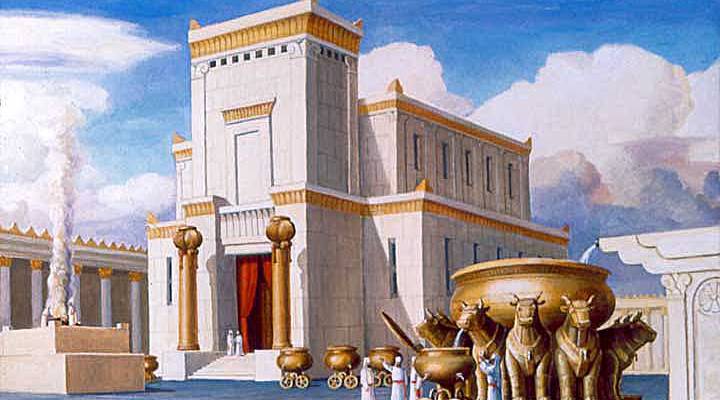
Jonah lived in a religious era that was intimately familiar with animal sacrifice. It was common practice among not just the people of Israel, but also among most ancient cultures. An animal would be killed and burned on some kind of altar in order to get the attention of the gods or to remind the people that they deserve what the animal is getting.

Sacrifices did not remove or forgive sins.

It is impossible for the blood of bulls and goats to take away sins. (Hebrews 10:4)

The scapegoat (Leviticus 16) was the representation of Israel’s sins being forgiven. But even then, it wasn’t the goat – it was God who forgave sins.

“Why does this fellow talk like that? He’s blaspheming! Who can forgive sins but God alone?” (Mark 2:7)

God doesn’t demand a sacrifice. God doesn’t want them because God knew that humans would easily substitute the sacrifice for true repentance. Seriously, I know I’ve sinned before and thought It’s ok, God will forgive me. We have a tendency to believe that we can do whatever we want, say whatever we want, live however we want, and it’s ok. We’ll just go to church, pray, take the Lord’s Supper, and it will all be good.

To quote The Good Place, “That’s bull shirt.”

This is the exact mindset that Jeremiah railed against:

“‘Will you steal and murder, commit adultery and perjury, burn incense to Baal and follow other gods you have not known, and then come and stand before me in this house, which bears my Name, and say, “We are safe”—safe to do all these detestable things? Has this house, which bears my Name, become a den of robbers to you? But I have been watching! declares the Lord.” (Jeremiah 7:9-11)

This was the exact mindset that Micah railed against:

With what shall I come before the Lord
    and bow down before the exalted God?
Shall I come before him with burnt offerings,
    with calves a year old?
Will the Lord be pleased with thousands of rams,
    with ten thousand rivers of olive oil?
Shall I offer my firstborn for my transgression,
    the fruit of my body for the sin of my soul?
He has shown you, O mortal, what is good.
    And what does the Lord require of you?
To act justly and to love mercy
    and to walk humbly with your God. (Micah 6:6-8)

This was the exact mindset that Amos railed against:

“I hate, I despise your religious festivals;
    your assemblies are a stench to me.
Even though you bring me burnt offerings and grain offerings,
    I will not accept them.
Though you bring choice fellowship offerings,
    I will have no regard for them.
Away with the noise of your songs!
    I will not listen to the music of your harps.
But let justice roll on like a river,
    righteousness like a never-failing stream!” (Amos 5:21-24)

Finally, Jesus railed against this mindset by quoting Hosea:

I tell you that something greater than the temple is here. If you had known what these words mean, ‘I desire mercy, not sacrifice,’ you would not have condemned the innocent. (Matthew 12:6-7, quoting Hosea 6:6)

I believe God knew there would come a time when sacrifices could no longer be used as a crutch or an excuse. God knew there would come a time when his people could no longer offer sacrifices and burnt offerings. Through his own sacrifice, Jesus put an end to the sacrificial system and reconciled everyone to God.

SACRIFICES WERE NEVER THE POINT. MERCY WAS THE POINT.

But Jonah completely missed that. He sacrificed his own life to avoid showing mercy to others. Jonah got it all completely backwards.

That’s why I think God let him go through with it. Jonah had more lessons to learn.

So as Jonah sank down into the depths, the sailors went about their way – forever changed.

At this the men greatly feared the Lord, and they offered a sacrifice to the Lord and made vows to him. (Jonah 1:16)

Yes, they offered sacrifices. But their sacrifices were in response to what YHWH had done. Their sacrifice was a form of worship, the kind of sacrifice Paul would encourage us to make with our lives in worship to God as a response for all God has done for us (Romans 12:1).

The sailors were converted to become true worshipers of YHWH (as Jonah had claimed to be), while the prophet of YHWH sank down to the bottom of the sea. It saddens me to think that Jonah never knew what happened with those sailors. But it also reminds me that I have no control over who gets to experience the mercy, forgiveness, and salvation of God. As God says to Moses:

I will have mercy on whom I will have mercy, and I will have compassion on whom I will have compassion. (Exodus 33:19)

GOD’S NOT DONE

That could have easily been the end of Jonah. If I were God, I probably would have just let Jonah drown (that’s what he wanted, after all) and found someone else to go to Nineveh. But that’s not the God of the Bible. Our God is one who pursues us, who leaves the ninety-nine and goes after the one. Even if that one is an unrepentant, racist, nationalistic prophet who cares about no one but himself. God still pursues Jonah to the ends of the earth and to the depths of the sea. God has mercy on the one who deserves it the least.

But sometimes God’s mercy can come in unexpected ways:

Now the Lord provided a huge fish to swallow Jonah… (Jonah 1:17a)

More posts in the Jonah series:
If you like these posts, go ahead and share it on your favorite social media platform, and don’t forget to subscribe so you never miss a post!

Review: The Prodigal Prophet: Jonah and the Mystery of God’s Mercy

The Prodigal Prophet: Jonah and the Mystery of God's Mercy
The Prodigal Prophet: Jonah and the Mystery of God’s Mercy by Timothy J. Keller
My rating: 5 of 5 stars

The book of Jonah is every bit as relevant today as it was 2500 years ago.

I’ve been a fan of Timothy Keller since college. The first book of his I read was “The Reason for God.” I really admire the work Keller has done pastoring in Manhattan and reaching millions with his books. Another of my favorites was “The Prodigal God,” where Keller explores the deeper meanings of the Parable of the Prodigal Son from Luke 15. “The Prodigal Prophet” is a natural follow-up to that book. Keller emphasizes the fact that Jonah represents both brothers in Jesus’ parable, the younger brother in Jonah 1 and 2, the older brother in Jonah 3 and 4.

Kellers latest book and the story of Jonah are extremely timely for our political/religious climate. The story of Jonah, Keller argues, emphasizes topics like nationalism, racism, prejudice, and religious elitism. Jonah reveals the dangers of conjoining religion and patriotism and placing national pride over devotion to God.

Jonah is full of reversals. The prophet of God refuses to pray while the pagan Gentile sailors cry out to their own gods and become worshipers of YHWH. Jonah remains hard-hearted and even violent in his view of the Assyrians while the Assyrians’ hearts are softened and they turn from their violent, evil ways. Jonah’s biggest issue is not with the Gentiles, it’s with God who would offer mercy and forgiveness to his enemies.

I appreciate Keller’s honesty and courage to present the truth about justice, grace, mercy, and forgiveness on more than just an individual scale. Through the story of Jonah, God is showing that he cares for all people everywhere, even the pagan, Gentile sailors; even the brutally violent Assyrian Empire. God cares. God wants to show grace and forgiveness. Are we willing to follow a God who wants to show love to those we consider our enemy?

Overall, Keller’s latest book is a quick, thrilling read diving into the story of Jonah and its implications for the 21st Century. This would make an excellent series to preach through or teach in a Bible class setting. I’d recommend this book for all church leaders, pastors, and teachers, especially if you are concerned with issues of justice.

View all my reviews