Page 27 of 82

He Did What, Now?

Since you died with Christ to the elemental spiritual forces of this world, why, as though you still belonged to the world, do you submit to its rules: “Do not handle! Do not taste! Do not touch!”? These rules, which have to do with things that are all destined to perish with use, are based on merely human commands and teachings. (Colossians 2:20-22)
********

One thing that amazes me about Jesus is how he straight up doesn’t care about cultural, societal, and even religious norms. Jesus doesn’t operate under the “We’ve never done it that way” banner. Jesus doesn’t care about how we’ve always done it. He came to show us a new way, a better way.

Norms are based on fear – go along to get along, just keep your head down and go with the crowd. I heard this in a presentation recently by some folks from a group called Axis: “The problem today isn’t unanswered questions. The problem is unquestioned answers.” We get ourselves into trouble as a society when we don’t bother questioning the way things have always been – who’s in and who’s out, what’s trendy and what’s taboo. Jesus simply doesn’t play by the same rules. Just when you think you’ve got him figured out, he flips the script.
YOU’RE NOT SUPPOSED TO TOUCH THAT

At the end of Mark 1, we’re briefly introduced to a man. We don’t now much about him. All it really says is that he’ “a man with leprosy.” I wish I knew more – How long did he have the disease? Did he have a wife and kids? What did he do before he got leprosy? How far along was the disease? How bad of condition is he in?
But we do know a couple of things. 1) He had leprosy, or a really bad, really contagious skin disease. 2) He wasn’t supposed to be around people. 3) Nobody who was “clean” was supposed to touch someone with leprosy for fear of catching the disease themselves or being declared “unclean” for a period of time.
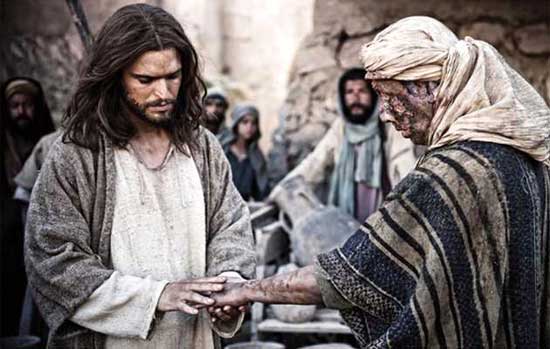
There was no cure for leprosy. True leprosy, in fact, isn’t a skin disease per se. It’s a nerve disease. Leprosy affects your sense of touch. You begin to lose feeling in your skin and muscle tissue. It can manifest as a skin disease because lepers will often cut themselves and not know it. The wound then becomes infected and the infection can spread through other parts of the body. Lepers were relegated to their own communities outside of the towns and villages. They were essentially quarantined until they died.
Imagine losing all sense of feeling and not being able to hug your wife and kids, not being able to shake hands or high five or experience human contact in any form. I would go crazy!
So this man breaks all the rules and makes his way to Jesus. “If you are willing,” he said, “you can make me clean.”
Jesus could have just said the word – but he didn’t. Jesus “reached out his hand and touched the man.” Jesus, you aren’t supposed to touch him! Everyone knows that. Ew…go wash your hands, right now.
Jesus didn’t have to touch the man. Jesus wasn’t supposed to touch the man. But the man needed to be touched. You see, Jesus always placed people before norms and traditions (and even Laws).
YOU’RE NOT SUPPOSED TO SAY THAT

The next story Mark tells is of a paralyzed man whose friends lowered him down through the ceiling of the house where Jesus was teaching. Only true friends will cause vandalism on your behalf.
So there’s this paralyzed man with a newly made spotlight on him, front and center for all to see. Again, Jesus could have just said the word and the man would have been healed. But Jesus says the unthinkable: “Son, your sins are forgiven.”
The gasps would have been audible. The teachers of the law were only saying what everyone else would have been thinking. “Who can forgive sins but God alone?”
Exactly.
The problem is there is no “proof” of sins being forgiven. Anyone could just say it. That doesn’t make it true. Jesus proves the point, though, by saying the word and healing the man. Everyone is shocked, and they rightly conclude, “We’ve never seen anything like this!” Yes, because Jesus doesn’t do or say what we expect him to do or say.
YOU’RE NOT SUPPOSED TO HANG OUT WITH THEM

It gets worse.
Mark then tells the story of Jesus’ encounter with a man named Levi (also known as Matthew). Levi was a tax collector or, as his fellow Jews would call him, a traitor. Tax collectors had literally sold out to the enemy – Rome. The Roman army was occupying the territory of Israel and was using Jewish taxes to pay for their occupation. For a Jew to collect taxes from other Jews to support the occupying army was absolutely reprehensible. You’ll notice that they are even given their own category – “sinners and tax collectors.”
So Jesus goes up to Levi at his tax booth. You would think that Jesus is going to encourage Levi to stop taking money from the Jews to support the Romans, that he should be ashamed of himself, and that he’s on the fast track to hell. But that’s just what we would do, not what Jesus does.
Jesus simply says, “Follow me.”
And Levi does!
That night they throw a big party at Levi’s house, inviting all the other “tax collectors and sinners” to join them. You’ll also notice that parties broke out wherever Jesus went.
This caught the attention of the Pharisees who questioned why Jesus was doing this. What Rabbi in his right mind would be caught dead eating with “those people?”
Jesus simply responds, “It is not the healthy who need a doctor, but the sick. I have not come to call the righteous, but sinners.”
I think Jesus is really throwing shade at the Pharisees, because they would know the passage from Isaiah – “There is none who is righteous, no not one.” We’re all sick in need of healing. We’re all sinners in need of forgiveness. The difference is that the tax collectors and sinners acknowledge their own brokenness and accept Jesus’ ability to fix them. You’ve heard it said, “If it ain’t broke, don’t fix it.” But I tell you, “If you don’t know you’re broken, you can’t ever get fixed.”
WHO DOES HE THINK HE IS?
Here’s the really interesting part about all this.
Where were lepers supposed to go in order to be declared “Clean” again? The Temple.
Where were people supposed to go in order for their sins to be forgiven? The Temple.
Where was the one place “tax collectors and sinners” were prohibited from going? The Temple.
Jesus is the meeting point between heaven and earth, like the Temple was supposed to be. In Jesus, God dwelled among his people. Jesus embodied everything the Temple was supposed to be. Instead of being made unclean, Jesus makes the unclean clean again. Jesus forgives and takes away people’s sins. And if tax collectors aren’t welcome at the Temple, then Jesus will take the Temple to them!
WHO DO YOU THINK YOU ARE?

This shouldn’t be much of a surprise. Not soon after Mark wrote his gospel account, the Temple in Jerusalem would be completely demolished by the Roman army. There hasn’t been a Temple in Jerusalem since the year 70. But just as Jesus took the job of the Temple upon himself, so we, his church, become the living, breathing Temple of God wherever we gather.

Don’t you know that you yourselves are God’s temple and that God’s Spirit dwells in your midst?
(1 Corinthians 3:16)

So what does this mean for us? We should be a place where people are made clean, where the broken are made whole, where sinners find forgiveness and acceptance, where the sick are made well, where the poor and the outcast are full members, and where all the wrong people are united under the one Lord Jesus Christ.
Want to be like Jesus? Touch the untouchable. Forgive the unforgivable. And throw parties with all the wrong people. In other words, be the Temple of God wherever you go.

Biblical Enneagram Types: FOURS

Do you have that friend who’s just a bit different? They’re the ones with the unique hair styles, kinda “out there” clothing choices, who listen to bands you’ve never heard of. They are outside-the-box thinkers. They don’t like to be labeled or categorized.

In fact, if they think “I’m not any of the Enneagram numbers. I’m my own number!” then they’re most likely a FOUR.

Maybe this describes you or someone you know. Fours, often called the Individualist, are, in fact, different. According to some experts, there are probably fewer Fours than any other number. Fours fear being “normal” or just like everyone else, but they also deeply desire to belong and feel accepted. That’s the tension of Fours. They want to be accepted as part of the group while maintaining their own individual identity.

This all leads to the vice of Fours: envy. They see the life everyone else has – their perfect and pretty Instagram lives – and they want that. Everyone else seems so normal and happy, why can’t I be? If Fours aren’t careful and self-aware, they can let their envy drive them to really dark places – which is where Fours like to hang out, anyway.

It’s been said, “Fours don’t have feelings. Fours are feelings.” In this way, they couldn’t be more different than their Three neighbors, who are feeling repressed. Threes have difficulty accessing and expressing their emotions. Fours have trouble NOT accessing and expressing them.

Fours see the world in a way that is profoundly concerned with beauty and truth and art. A lot of Fours are poets and artists and mystics and song writers.

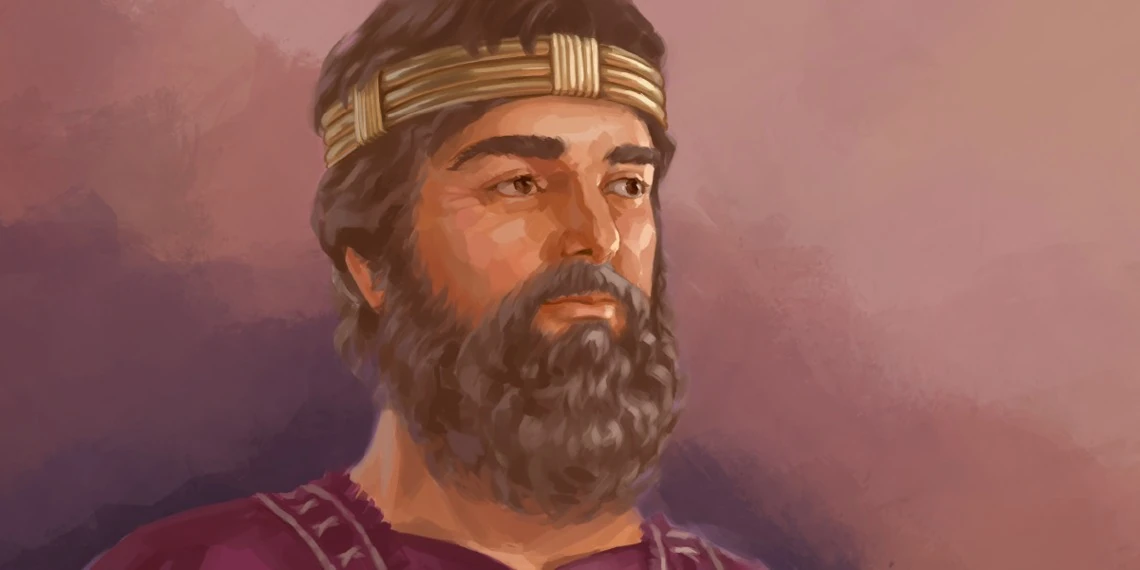
One famous Four was a King.

No, I’m not talking about David. He was probably a Seven. I’m talking about King Saul. You can read his story in the book of 1 Samuel.

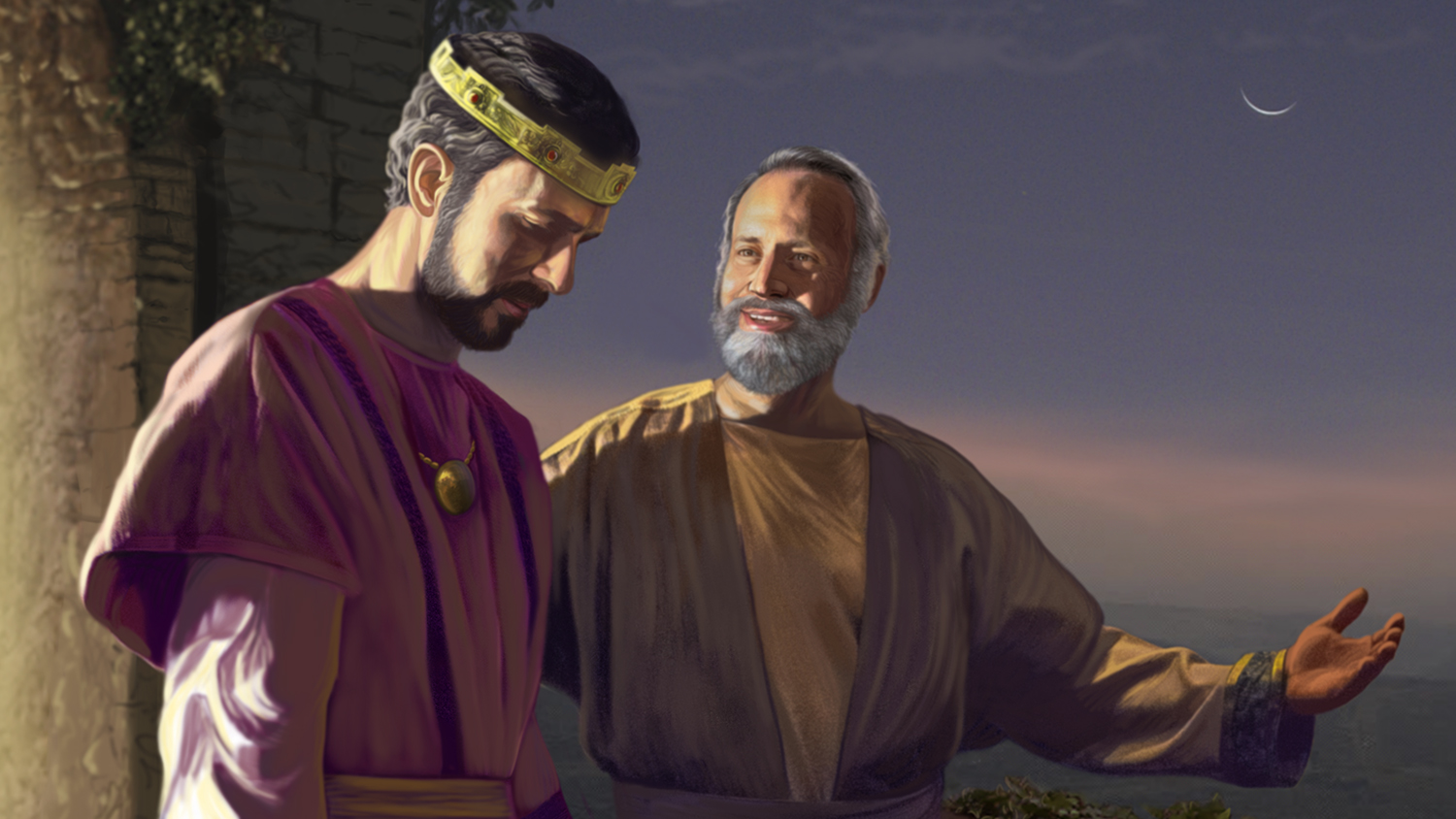
Saul’s life was full of twists and turns, highs and lows, and ultimately ended in tragedy. From early in his life he was signaled out as different. He was “head and shoulders” above everyone else – literally. He was a tall, stately man. But like many Fours he was full of shame and self-doubt. When the prophet Samuel first met Saul, here’s how that conversation went:

“And to whom is all the desire of Israel turned, if not to you and your whole family line?”
Saul answered, “But am I not a Benjamite, from the smallest tribe of Israel, and is not my clan the least of all the clans of the tribe of Benjamin? Why do you say such a thing to me?”
(1 Samuel 9:20-21)

Self-doubt and self-degradation are snares for a Four. Saul had no confidence in his own abilities. He had trouble seeing in himself the things that other people saw. In fact, the very next chapter records the story when Saul actually gets publicly chosen to be king – and he hides!

Finally Saul son of Kish was taken. But when they looked for him, he was not to be found. So they inquired further of the Lord, “Has the man come here yet?”
And the Lord said, “Yes, he has hidden himself among the supplies.”
They ran and brought him out, and as he stood among the people he was a head taller than any of the others. Samuel said to all the people, “Do you see the man the Lord has chosen? There is no one like him among all the people.”
(1 Samuel 10:21-24)

Saul is different than everyone else – a head taller than all the others. He was gifted in ways he didn’t even see in himself. He was unsure and lacked confidence in his abilities. And Samuel says the most “Four” thing ever – There is no one like him among all the people.

Things went ok for Saul in the beginning, but it wasn’t long before his kingship took a turn for the worst. There was a time when he achieved a victory over his enemies, the Philistines. Samuel the prophet told Saul to wait until he arrived in order to offer sacrifices to God. But Saul didn’t like that idea. He waited for a while but grew impatient.

He waited seven days, the time set by Samuel; but Samuel did not come to Gilgal, and Saul’s men began to scatter. So he said, “Bring me the burnt offering and the fellowship offerings.” And Saul offered up the burnt offering. Just as he finished making the offering, Samuel arrived, and Saul went out to greet him.
“What have you done?” asked Samuel.
(1 Samuel 13:8-10)

If some numbers on the Enneagram are prone to ask “Why?” Fours are prone to ask “Why not?” Why not me? Why not Saul? Why couldn’t Saul just go ahead with the sacrifices? Why do we have to wait for Samuel? What’s so special about Samuel? Why not me?

The envy of a Four can start out so small, but it can escalate rapidly and grow out of control. Envy cost Saul his kingdom. And envy would ultimately cost Saul his life.

Things when from bad to worse as Saul continued to spiral toward the darkness. Fours are comfortable in the melancholy and the sadness. But don’t make it where you live. Unfortunately, that’s exactly where Saul found himself. After a string of bad choices and rash misjudgments, we see a tipping point for Saul:

Now the Spirit of the Lord had departed from Saul, and an evil spirit from the Lord tormented him.
(1 Samuel 16:14)

The king’s officials brought in musicians to help calm his mood or cheer him up. It didn’t work. Saul just continued to lash out at the innocent people around him. David was one of those musicians. Saul tried multiple times to kill him. Saul even threatened his own son, Jonathan, for befriending and helping David.

In times of stress, Fours really tend to struggle with jealousy and envy of others. David was the new, rising star among the people of Israel. The people even made up songs comparing David and Saul. Unhealthy Fours are constantly comparing their lives to others – and the others always have it better than they do.

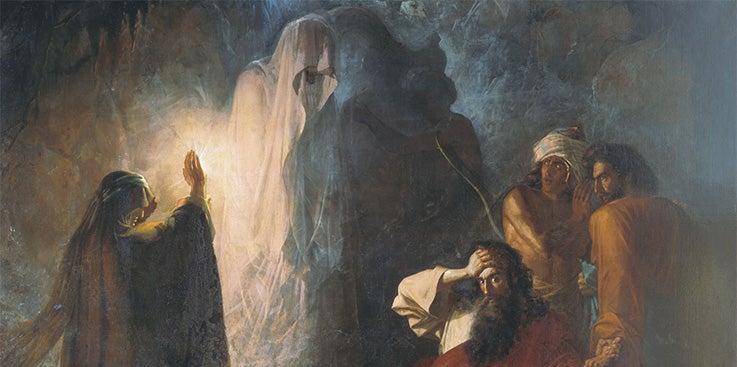
Fours, for better or worse, are outside-the-box thinkers. They will come up with solutions to problems that others never would even consider. In Saul’s life, however, this didn’t really do him much good. One of the most interesting stories from his life is when he paid a late night, costume-clad visit to a medium’s hut. (If you have a friend who suggests going to a fortune teller for fun, they’re probably a Four…)

He dawns a disguise and calls upon this witch to summon the spirit of Samuel, who had passed away some years earlier. The ghost of Samuel tells Saul that because of his sinful choices and actions, both he and his son would die in the upcoming battle. Sure enough, the next day Jonathan fell in battle. Saul witnessed it all and fell on his own sword, taking his life.

Fours have a tendency to wallow. Especially if they are unhealthy, Fours can go to that dark, sad place and have a hard time getting back out. I think that’s why Fours like to surround themselves with art and beauty. Beauty gives us a reason to hope, and hope drives us out of despair.

Saul had cut himself off from all beauty and hope, being driven by nothing other than his envy toward David. That envy fueled his own insecurities, shame, and self-doubt, ultimately leading to his demise.

Fours, your life doesn’t have to be a Shakespearean tragedy! You don’t have to live in the drama and the melancholy. Those places are fine to visit, but you don’t want to live there. Don’t settle in. Find out what is bringing on those feelings of sadness or depression and deal with them. Don’t blame it all on other people or circumstances beyond your control. Saul blamed all his problems on David instead of taking ownership of his own idiotic choices that got him into the mess.

Fours – find things that bring you true joy in life. Don’t worry so much about fitting in or being unique or whatever it might be on any given day. Focus on finding true joy and beauty in your ordinary, everyday, mundane, routine life.

Believe me, you make our lives so much more interesting just by being you.
______________________________

Who Is This Guy?

We just finished the Christmas season. One of my favorite Christmas hymns is “What Child Is This?” From his conception and birth there was something different about the one they called Jesus. But who is he? What makes him so special?

-WHO IS JESUS?-

I believe that is the most important question you will ever have to answer. And believe me – everyone has an answer for that question. Every single person in the world has their own answer, even if it’s “I don’t know.”

So who is Jesus to you?

You might give the good Sunday school answers: Savior, Messiah, Christ, Lord, King, Son of God, Holy, Perfect, God with Us, Prince of Peace, Friend, Brother, The Word.

He is indeed all this and more. However, do we really understand what those titles and roles actually mean? Probably not. It’s like when you first began to be curious about your dad’s job. When you were young, you probably asked your dad what he did. And he probably told you, but you as a four-year-old had no idea what a proctologist or a regional manager or a vice president of finances was. But you would tell your friends just to impress them.

Hopefully in the coming weeks we will begin to actually understand what those titles actually mean.

-WHO DO PEOPLE SAY THAT I AM?-

There’s an interesting conversation Jesus has with his disciples right in the middle of Mark’s Gospel. He asked them, “Who do people say that I am?” They replied, “Some say John the Baptist; others say Elijah; and still others, one of the prophets.” (Mark 8:27-28)

Who is Jesus from a worldly point of view today? If you were to ask the average Joe off the street what they thought about Jesus, what might they say?

He’s a good teacher. He’s a myth. He’s a prophet. He’s a religious zealot who got himself killed. He’s a Jewish rabbi who became a legend. He’s a nobody.

Basically any answer you would get could start with the word “just.” He’s just ________________. But as we take a look through the Gospel of Mark, we will see that Jesus isn’t just anything. He isn’t even just the Savior, the Messiah, the Son of God. He’s all that and more. Jesus is more than we can ever really grasp. That’s why people had such a hard time figuring him out. Even his closest disciples and friends – even his own family – didn’t really know what to make of him.

-JESUS IS…-

So who is Jesus? We’re going to dive into Mark’s Gospel to find out. But since Mark isn’t too patient in his writing, he spoils the whole thing right off the bat.

The beginning of the good news about Jesus the Messiah, the Son of God…
(Mark 1:1)

Every word of that sentence is loaded. “The beginning” automatically takes our minds back to Genesis 1 – “In the beginning, God created the heavens and the earth.” Mark wants us to know that something new is happening. Creation 2.0 is underway.

“The good news” is a very specific phrase that Mark is using. Our word “gospel” comes from the Old English phrase “good spell,” meaning a good word/news. It’s rooted in the Greek word evangelion, from which we get the word “evangelism.” This was a very familiar concept in the Roman world. Whenever a Roman general was victorious in battle, they would send messengers into the surrounding territories to tell the “good news” about the victory over their enemies. Or if a new emperor took the throne, messengers would go throughout the empire proclaiming the “good news” about the new Caesar, often hailed as a “son of the gods.” Mark uses that word intentionally, signaling that a great victory has been won and a new king is on the throne.

“About Jesus…” Did you know that wasn’t his name? Jesus comes from the Greek-ified (or Hellenized) version of the Hebrew name Yeshua. In English that would be the name Joshua. It was a super common name back then, and it’s still a super common name in our culture. But it’s a powerful name. It means “YHWH saves.” His name is his mission.

“The Messiah” is a term that means “anointed one.” This refers to an anointing ceremony that would set a person aside (sanctify) for a specific purpose – to become king or to achieve a specific task for God and his people, etc. This word is also translated “Christ.”

“The Son of God” is a phrase taken directly from Psalm 2, which was a coronation song in Israel commemorating the crowning of a new king in Jerusalem. In the middle of Psalm 2 God says, “You are my son, today I have become your Father.”

Mark makes it clear from the very beginning who he thinks Jesus is. He’s stating his thesis, and everything to follow is meant as evidence to back up his thesis. This gospel account is crammed full of people trying to figure out who Jesus is, and inviting the reader along on the journey of discovery.

Take the first chapter, for instance. That’s where we will begin. Grab your Bible or Bible app (or click on this link) to read Mark 1:4-39. Try and spot all the times we’re told who Jesus is or what he is doing. There’s also one big question asked about Jesus in chapter 1.

Who is Jesus according to Mark 1?

  • One more powerful than John the Baptist, who will baptize with the Holy Spirit (1:7-8)
  • God’s Son, with whom God is well pleased (1:11)
  • Rabbi, calling his disciples (1:16-20)
  • The Holy One of God (1:24)
  • Exorcist (1:27)
  • Healer (1:30-34)
  • Traveling preacher/miracle worker/exorcist (1:39)

What big question is asked about Jesus in Mark 1?

“What is this? A new teaching—and with authority! He even gives orders to impure spirits and they obey him.”
(Mark 1:27)

When he commanded the demon and drove it out, the people had never seen anything like that. They were completely astonished at Jesus’ authority. You see, it’s one thing to claim to be the Messiah, the Son of God. It’s another thing to back it up with actions that others can see and report on. (We’ll get deeper into that in chapter 2.)

-BE LIKE JESUS-

Mark’s gospel also focuses on what it means to be a disciple of Jesus. We are introduced to Jesus’ first disciples in chapter 1 – Peter, Andrew, James, and John. These two sets of brothers were also professional fishermen. Jesus, a rabbi, called them to be his disciples – and they dropped everything to follow him. The rabbi-disciple relationship was quite unique. We don’t really have anything like that in the US. A disciple was a student, the rabbi was a teacher. But the goal wasn’t just to learn what the rabbi knew. The goal was to live as the rabbi lived and to do what the rabbi did.

Disciples of Jesus should strive to BE LIKE JESUS. Not necessarily to perform miracles and drive out demons. But there are things we can learn from Jesus and imitate in our own lives as his followers. Here’s what I see from chapter 1.

BE BAPTIZED.
Jesus was baptized. His disciples were baptized. He commands others to baptize and be baptized. You should do it, too. In my understanding, the journey of discipleship doesn’t really begin until you commit your life to Christ in the waters of baptism.

KEEP THE MESSAGE SIMPLE.
So often the biggest hinderance in sharing our faith with others is the fear that we don’t know enough. I would disagree with that. Jesus’ first message was as simple as it comes – “The time has come. The kingdom of God has come near. Repent and believe the good news!” You don’t have to deliver a doctoral level thesis paper in order to share your faith with someone. Invite them to church. Tell them what God has done in your life. Let them know that Jesus loves them and that they can experience grace and forgiveness. Keep it simple.

TAKE TIME FOR PEOPLE.
Jesus invested in his disciples. He chose them, he called them, and he shared his life with them. He also took time for people like Peter’s mother-in-law who was sick with a fever. Jesus took her by the hand and healed her. Jesus was never too busy, never too rushed, never too hurried to stop and spend time with people who needed him. Take time for the people who matter most to you. Invest in those relationships.

VALUE YOUR ALONE TIME WITH GOD.
Even in the hustle and bustle of his life, Jesus made time to spend with God. He had to get up very early in the morning to do it, but he prioritized it. Jesus knew that he couldn’t make it through the day without spending time in prayer and worship with God. For so many of us, time is our most precious resource. We just don’t have enough of it. So make sure that God and others are getting the “first fruits” of your time.

DON’T GO WITH THE CROWD.
The disciples found Jesus praying alone and kind of told him off. “Everyone is looking for you!” But Jesus didn’t take the bait. He could have gone back to the crowd, amassed a following, grown in his popularity and celebrity status. But he didn’t. He kept his mission small. I can’t help but think of our culture today. If it could be summed up by one phrase, I think “everyone is looking for you” would be a really good one. We are expected to be available 24/7 via text, Snapchat, or DM. If we get a notification, we better check it and respond immediately. Jesus tells us not to take the bait. If you always give in to the notion that “everyone is looking for you,” then you are giving other people way too much control over your life.
___________________________________

For an excellent introduction to the Gospel of Mark, check out this video by The Bible Project.


What I Read in 2018

A reader lives a thousand lives before he dies. The man who never reads lives only one.
-George R.R. Martin

Every year I like to track the books I read. It’s always interesting to look back and remember all the authors and stories that have journeyed with me on yet another trip around the sun. Here is my list of books and authors from my 2018 list along with some highlights and recommendations.

[books in RED are stories I read to my 8yr old son, books in BLUE are ones I’m still working on, books with an * were audiobooks]

  1. David and Goliath, by Malcolm Gladwell
  2. *A Team of Rivals, by Doris Kearns Goodwin
  3. Magnus Chase: Ship of the Dead, by Rick Riordan
  4. The Voyage of the Dawn Treader, by CS Lewis
  5. Falling Upward, by Richard Rohr
  6. The Silver Chair, by CS Lewis
  7. A Wrinkle in Time, by Madeleine L’Engle
  8. Unashamed, by Lecrae
  9. Enneagram: A Christian Perspective, by Richard Rohr and Adreas Ebert
  10. *Freakonomics, by Steven Levitt and Stephen Dubner
  11. *Superfreakonomics, by Steven Levitt and Stephen Dubner
  12. The Last Battle, by CS Lewis
  13. Prince of Fools, by Mark Lawrence
  14. Charlotte’s Web, by EB White
  15. *I Am Malala, by Malala Yousafzai
  16. The Liar’s Key, by Mark Lawrence
  17. Reviving Old Scratch, by Richard Beck
  18. *Star Wars Aftermath, by Chuck Wendig
  19. *Star Wars Aftermath: Life Debt, by Chuck Wendig
  20. The Wheel of Osheim, by Mark Lawrence
  21. Ophelia and the Marvelous Boy, by Karen Foxbe
  22. Red Sister, by Mark Lawrence
  23. *Star Wars Aftermath: Empire’s End, by Chuck Wendig
  24. Dark Matter, by Blake Crouch
  25. The Day the Revolution Began, by NT Wright
  26. The Sacred Enneagram, by Chris Heuertz
  27. Artemis Fowl, by Eoin Colfer
  28. Unarmed Empire, by Sean Palmer
  29. *Bloodline, by Claudia Gray
  30. Blink, by Malcolm Gladwell
  31. Lost Souls (Frankenstein #4), by Dean Koontz
  32. I’m Still Here, by Austin Channing-Brown
  33. Artemis Fowl: The Arctic Incident, by Eoin Colfer
  34. The Path Between Us, by Suzanne Stabile
  35. *Grant, by Ron Chernow
  36. The Prodigal Prophet, by Tim Keller
  37. An Absolutely Remarkable Thing, by Hank Green
  38. Daring Greatly, by Brené Brown
  39. Dracula, by Bram Stoker
  40. Artemis Fowl: Eternity Code, by Eoin Colfer
  41. Harry Potter and the Sorcerer’s Stone, by JK Rowling
  42. Everyone Always, by Bob Goff
So, this year I’ve developed a love for audiobooks. It started last year, but I really enjoyed them a lot this year. Nine books on my list were audiobooks. These are great for turning on while I’m out running the trails every week or when I’m doing the dishes. The Star Wars audiobooks have amazing production value. It’s like listening to a movie. They’re kind of like the old-time radio shows, with sound effects and background music.

I also have found that I much prefer physical books to ebooks. I appreciate being able to pull up a book on my iPad through Kindle or Overdrive, but it’s not as enjoyable for me as reading a physical paper book.

MY TOP BOOKS

Here are what I would consider my top books on the year in both fiction and non-fiction reads.

NON-FICTION

I Am Malala is an autobiographical memoir by Malala Yousafzai. The now-twenty-one-year-old Oxford student from Pakistan dared to stand up against the Taliban and was nearly assassinated at the age of 14. Her story is an amazing testament to the best and worst of humanity.

I’m Still Here, by Austin Channing-Brown is an eye-opening look at racism and bias in the US, especially among evangelical church-goers.

Grant, by Ron Chernow is an extensive look at the life and times of Ulysses S Grant, hero of the Civil War and 18th President. I’m still working through the audiobook, as it’s 38 discs with a 48-hour runtime (!), but what I’ve heard is absolutely amazing. Grant was one of the truly good men of his day. Many wanted to fight to end slavery, but Grant wanted to fight for equality and full citizenship for people of color.


FICTION

An Absolutely Remarkable Thing, by Hank Green, feels like an instant modern classic. It’s at once both an intriguing, fun sci-fi thriller AND an in depth analysis of our internet-celebrity culture and an outrage-driven news cycle. But what I got from it was an optimistic take on what the internet could/should be if we let it unite us instead of dividing us.

Dracula is a classic for a reason. Bram Stoker was ahead of his time with this book. It could have been debuted last week and would be every bit as thrilling and captivating. Honestly, it took me a couple of tries to really get into this book, and I’m so glad I finally did. The whole book is comprised of “found” materials – letters, journal entries, news articles, telegram correspondence. But some of the scenes are absolutely gut wrenching and terrifying. If you like vampire novels and movies, go back to the source with this one.

Mark Lawrence has quickly become one of my favorite fantasy authors. Last year I read his Broken Empire trilogy. This year, I made it through his Red Queen’s War trilogy, which takes place in the same world concurrently with the Broken Empire books. It focuses on different characters on a different quest, and it brings in elements of Norse mythology. If you are a fan of medieval fantasy, you need to check out Mark Lawrence. The Red Queen’s War trilogy includes Prince of Fools, The Liar’s Key, and The Wheel of Osheim.

What are your favorite books you’ve read this year? Let me know in the comments, and be sure to connect with me on Goodreads.

7 Free (or Cheap) Apps to Actually Improve Your Life in 2019

I LOOOVE technology. It’s amazing. I’ve been following a lot of tech YouTubers over the last few years just to keep up with everything that’s happening in the field.

That being said, I’m also aware of how much technology has infiltrated every aspect of our lives. (See previous post.) In fact, check out this report from the Nielsen Research Group:

According to the first-quarter 2018 Nielsen Total Audience Report, nearly half an adults’ day is dedicated to consuming this content. In fact, American adults spend over 11 hours per day listening to, watching, reading or generally interacting with media. Behind this surge are the growing use of new platforms, as well as the younger, multicultural generations who leverage them.

That was as of July, 2018. And I doubt things have gotten any better.

Smartphones, screens, and communication technologies are here to stay whether we like it or not. The question is, as per the previous post, how can we use these devices in a way that actually benefits our lives and brings some level of sustainable improvement?

Below, I’m going to share with you seven smartphone apps that are free or cheap to download that can help you achieve your goals. I’m a little biased, because these are apps that I use regularly. There may be better ones out there, but I haven’t found them. And I do a lot of research before downloading and using an app. [And I use an iPhone, but most of this should be applicable for Android users as well.]

WANT TO LOSE WEIGHT?

My Fitness Pal, by UnderArmour, is one of the best dieting apps out there. The free version has plenty of features for your average Joe. It tracks calories, it can scan the barcodes on the foods you buy, it has entire menus from restaurants, it tracks your macros (Fat, Protein, Carbs) and some of your micronutrients (vitamins and such). It syncs really well with Apple Health to track your steps and calories burned during other exercises. It’s fully customizable to your specific food needs, whether you’re trying to lose, gain, or maintain.

I was hesitant to try this for a long time. Some people say that weight loss is a simple matter of calories in versus calories burned. That’s partially true. But if you really want to get healthier, you need to focus on the right kind of calories. My Fitness Pal helps with that by tracking your macros. When I finally tried it back in September, I lost seven pounds within four weeks. I think that was a little too much, too quickly, so I backed off a bit. But at the beginning of the year I was pushing 200 lbs. Now I’m right in the low 180s. I feel much better than I did, and I’m still eating basically what I want to eat.

WANT TO GET IN SHAPE?

Nike Run Club is a free app that tracks your run/walks. It gives you the estimated calories burned, which syncs with Apple Health. It stores all your information and gives you certain achievements along the way. The app includes access to guided runs that are awesome whether you’re a serious trainer or a first time runner. I’ve been using this for a long time. There are probably better running apps, but for what you get for free, I haven’t found one to replace Nike Run Club.

Nike Training Club is another good free app from Nike. This includes different workouts – everything from yoga to plyometrics to strength training. You download the workout you want, it times it out and walks you through step by step. There are even videos demonstrating the exercises for you. I wouldn’t want this as my main strength training app, but it’s a good supplement.

Starting Strength is a company I first heard of a few years ago from The Art of Manliness Podcast. Brett McKay, the podcast host, has been in the Starting Strength program for a while now and has shared his journey on the podcast and through his website. Starting Strength is all about barbell training, emphasizing the core lifts – squat, deadlift, bench press, military press, and power clean. If you have access to a barbell, a squat rack, and plates, then you can do this program. The app is $8.99, which is a lot for an app, but it’s a LOT less than other fitness apps that require a monthly subscription. Through the Starting Strength app you will get access to instructional tutorials, customizable workouts, and more. The app takes all the guess work out of it for you. You tell the app what your 5-rep workset is, and it does the rest. It even tells you the exact plates to load onto the bar, so you don’t have to stop and do math in the middle of your workout!

It’s a killer program. When you start, you will feel like dying. But you will get stronger. Go watch these instructional videos to help you get a sense of what the program is all about.

WANT TO TAKE CONTROL OF YOUR FINANCES?

Every Dollar is a free app from the Dave Ramsey company. Say what you will about his practices and principles – the system works. Financial Peace University has helped thousands of families get out of debt and find financial freedom. I hate budgeting. I hate finances. I hate all things to do with money. My wife is awesome at taking care of the vast majority of that stuff for our family. Every Dollar makes it so much easier to track where we spend our money. You simply lay out your budget for the month, plug in all your expenditures, and it does the rest. *Honesty Moment* We haven’t been using this nearly as much as we should, but it’s our goal to get serious about it again this year.

WANT TO GROW SPIRITUALLY?

Most Christians with a smartphone that I know already have the YouVersion Bible app. But I don’t think most people realize how many tools this little app can pack into it. You have access to virtually every English translation. There are links to videos for the passage you’re reading. You can make images of verses to share on Instagram. There are hundreds of great Bible studies built into the app from leading scholars, pastors, and authors. You can connect with friends and do one of the Bible studies together within the app. It can send you the verse of the day, so you can begin every day with an inspiring passage. If you have this app, spend some time exploring everything it’s capable of.

Pray as You Go is an app for 10-15 minutes of guided prayer and meditation. There is a new one each day, with a specific passage of Scripture, thoughts, questions, and prayers based on that passage. If you struggle with knowing how or when to pray, this app can really help you with that.


What apps would you suggest for helping us reach our goals in 2019? Let me know in the comments, and be sure to subscribe so you don’t miss a post!

Ditching Social Media to Regain Our Sanity

Did you know that nearly 80% of adults in the US own a smartphone? That’s nuts! Just a few years ago it was around 30%. Smartphones are getting better every year. They have better cameras, longer battery lives, clearer screens, and smoother designs.

I recently got Apple’s new iPhone XR. It’s an amazing upgrade from my nearly-three-year-old SE. But I’ve noticed something. Since I’ve gotten a new phone, I’ve been spending more time on it. Thanks to Apple’s new Screen Time tracker, my screen time has nearly doubled! Yikes…

Have you seen the photographs of people with their smartphones edited out? Photographer Eric Pickersgill took photos of people in their everyday lives with their smartphones and then edited the devices out of the pictures. It’s humorous in a disturbing and uncomfortable way. You can check out his full gallery here: https://www.removed.social

Every new year people try to make goals for self-improvement and such. Most fail miserably. But I don’t think that means we should quit setting and attempting to achieve certain goals.

For 2019, I want to become better at using my iPhone.

Smartphones are an AMAZING tool. There is far more computing power in your pocket than it took to land a man on the moon. Unfortunately, for many of us our smartphones have gone from being tools to becoming masters. We find ourselves being used by our technology more than we actually use it. We consume more than we create. And this is worst through social media sites that are run by advertisers.

In his book The Next Story, author Tim Challies poses the question: Do you own your technology or does it own you?

In today’s digital world, we are not the consumer, we are the product. Your attention, your personal information, your ideas and opinions, are all being sold to the highest bidder. All that info is being plugged into an algorithm, the sole purpose of which is to keep your attention for longer.

You’re probably reading this on a smartphone or tablet right now through a link you saw on social media!!!

Ok, deep breath…

So for 2019, would you join me in becoming better at using our smartphones instead of being used by them? Studies show that we would all be happier, more productive, and higher functioning humans if we would just put down our phones, sign off of social media, and actually live our lives.

Tomorrow I’ll share the smartphone apps I have that I intend to use to help make my life better in 2019. Yes, it’s possible. Like I said, our smartphones are incredible tools! So let’s use them rather than being used by them.

Biblical Enneagram Types: THREES

Enneagram Type THREES are commonly known as “The Performer” or “The Achiever.” Threes are driven by a need to succeed, or at least to appear successful. Threes aim to impress others with their skills, their knowledge, and their accomplishments. This is why the vice of Threes is deceit. Threes are expert “mask-wearers.” Threes can become whoever they need to be in any given situation in order to fit in or to make others think highly of them. The danger for Threes is that they can become social chameleons to the point that they lose their own identity, deceiving others to the degree that they end up believing their own false persona. Self-deceit is the true vice of Threes.

But the gift of Threes is truthfulness and authenticity. Threes have really good BS-detectors. They can see through the charades of others because they are so accustomed to the games people play. Healthy Threes value honesty in their relationships and with themselves. They can give you an honest assessment of the world as they see it, and they can tell you how to make things better. Streamlining, productivity, and efficiency are second nature to Threes.

Threes get stuff done.

Every Type has some of God’s own nature in them. When I think of the Performer or Achiever, I think of all the times we are reminded of what God has done for us. “Come and see what God has done.” “The Lord has done great things.”

As a Three, I relate to God as “The First Mover.” God has done the work of salvation for us. This also reassures me that there’s nothing I can do to make God love me any more or any less. I don’t have to work for God’s acceptance. I don’t have to “succeed” in order to earn God’s favor.

One prime example of a Three in the Bible is Jacob. Jacob’s story is recorded in the middle part of Genesis. Jacob and his brother Esau were the fraternal twin sons of Isaac and Rebekah, the grandsons of Abraham and Sarah. Even from the womb, Jacob was a deceiver. At their birth, Jacob’s limb stuck out first, but his brother was actually the firstborn. Jacob came second, grasping the heal of Esau. Jacob’s name literally means “heal grabber” or “deceiver.”

Jacob would eventually go on to trick his older brother out of his birthright and his blessing. Jacob’s early days represent the unhealthiest side of Threes – success at any cost. Unhealthy Threes can be ultra-competitive. They divide the world into winners and losers, and they definitely wouldn’t be caught dead among the “losers.” Failure is not an option. For unhealthy Threes like Jacob, the ends absolutely justify the means in achieving success and being known as the best.

Unhealthy Threes are not in tune with their emotions at all. They have the ability to compartmentalize their lives in such a way that negative emotions don’t necessarily have any bearing their ability to perform. But this can also mean that Threes try to avoid conflict, especially in times of stress. Rather than confront Esau and own up to his actions, Jacob runs.

While on the run, Jacob receives a vision from God with angels ascending and descending from heaven. Even at his lowest, God reassured Jacob that he was with him, that he was watching over him, that he was loved and pursued. I think this is a message that most Threes need to hear.

Jacob then went to work for his Uncle Laban. While working there, Laban gave Jacob a taste of his own medicine by deceiving him into marrying Leah AND Rachel. But during this time it seems as if Jacob turns a corner. He no longer tries to win at all costs. He works hard for what he wants, knowing that his efforts will pay off in the end if he’s patient enough to follow through. While working for Laban, Jacob gains wives and sons and a lot of wealth. But he also learns patience and humility.

Threes grow through struggle and challenge. If things come too easy to Threes, then they stay stuck in their unhealthy patterns of vanity, deception, and a win-at-all-costs mentality.

The ultimate challenge for Jacob came when he made the decision to go home and confront his past – possibly one of the hardest things for a Three to do. While Jacob was making his way back home, he had an encounter with God that would leave him crippled. Jacob wrestled with God all night, showing his dedication to the struggle and his unwillingness to give up when things got hard – true growth for a Three. In security, Threes go to the healthy side of Six, the Loyalist. They become more others-focused, more dedicated, more loyal, more in touch with their own emotions and those of others. In refusing to give up when things got hard, Jacob showed real maturity and transformation.

But he also failed. Jacob didn’t win in his wrestling match. Sometimes, the best thing that can happen to a Three is failure. We learn far more from our failures than we do from our successes. Threes want to avoid failure at all costs, but it’s the very thing that can lead to growth and transformation.

When Jacob finally did confront Esau, things were not nearly as bad as he had imagined. He had feared for the worst – that Esau would still hold his deceptions against him and would seek revenge for all that Jacob had taken from him. Much to Jacob’s surprise, he was greeted with the open arms of forgiveness.

This can completely rock a Threes’ world. Threes, especially unhealthy Threes, have a hard time believing that they are worthy of love and acceptance. They know their own deceitfulness and vanity. They know their own faults that they are trying to hide from the rest of the world. When those faults, failures, shortcomings, and sins are laid bare for all the world to see, and they are still forgiven and loved anyway, that is almost more than a Three can bear.

Before Jacob met his brother face to face, he tried to soften things up by sending flocks and herds and gifts. Look at the interaction that follows.

Esau asked, “What’s the meaning of all these flocks and herds I met?”
“To find favor in your eyes, my lord,” he said.
But Esau said, “I already have plenty, my brother. Keep what you have for yourself.”
“No, please!” said Jacob. “If I have found favor in your eyes, accept this gift from me. For to see your face is like seeing the face of God, now that you have received me favorably. Please accept the present that was brought to you, for God has been gracious to me and I have all I need.” And because Jacob insisted, Esau accepted it.
(Genesis 33:8-11)

Once Threes turn a corner in their lives they are no longer driven by success, vanity, and appearances, but rather by truthfulness, authenticity, and acceptance. This can take a lifetime for a Three to learn, and it only comes through the very thing Threes avoid the most – failure.

If you are a Three, like I am, you must stop fearing failure. You must stop believing the lies: “I am what I do; I am what I have; and I am what others say I am.” You are a child of God. You are loved, accepted, and pursued by God. Even if your worst and darkest part of yourself is fully known, you can also experience love and grace and forgiveness.
___________________________________________

If you haven’t yet, check out the song “Three” by Sleeping at Last

Messiah Is Coming, part 5

If you haven’t yet, read part 1, part 2, part 3, and part 4.

In the beginning God created the heavens and the earth. And God saw all that he had made, and it was very good. But then sin and rebellion entered the garden, derailing God’s creation and breaking relationships. Humans would no longer share in the free and full relationship of love with God and each other. Evil had entered their hearts, dragging them away from God and driving a wedge between each other.

But God – don’t we love that phrase? – but God would not let his children suffer forever under the weight of their sin and brokenness and death. God would send a rescuer, someone of Eve’s own offspring, who would crush the head of the serpent once and for all. This One would deal a crushing blow to death itself, although he would endure the full force of the serpent’s venom in the process.

God worked through his people to prepare the world for the coming chosen One. Through Abraham, God promised a world-wide blessing. Through Moses, God promised the Prophet who would bring God’s word to his people. Through David, God promised a King on the throne in Zion forever, one who would be regarded as the Son of God and a Priest in the order of Melchizedek. Through Isaiah God foretold that this coming One would be born of a virgin and would be called Wonderful Counselor, Prince of Peace, Mighty God, Everlasting Father, Emmanuel – God with us. The One to come would establish justice and bring freedom for the oppressed. The One to come would be a servant who would suffer and die but would be raised again to the glory of God.

I’m mindful of Peter’s words in 1 Peter 1:10-12:

The prophets who spoke of this outpouring of grace upon you diligently searched and inquired of the Lord about this salvation: to whom and to what time was the indwelling Spirit of the Anointed referring when He told them about the suffering of the Anointed and the honor that would follow it? The Spirit revealed to them they were not serving themselves but you. And you have learned from those who told you the good news by the Spirit that was sent down from heaven. Even the heavenly messengers would like to explore this news.

Might the other prophets have something to tell us of the One who is to come, the Anointed One, the Messiah?

According to the prophet Malachi, the Messiah would be preceded by another prophet in the spirit of Elijah.

Keep watch. I am sending Elijah the prophet to you before the arrival of the great and terrible day of the Eternal One, and he will return parents’ hearts to their children and children’s hearts to their parents, or else I will come and strike the land of promise with a curse of annihilation.
(Malachi 4:5-6 | The Voice)

According the Micah, the Messiah would be born in the rural backwater town of Bethlehem, the same home village of King David:

But you, Bethlehem of Ephrathah,
of the clans of Judah, are no poor relation—
From your people will come a Ruler
who will be the shepherd of My people, Israel,
Whose origins date back to the distant past,
to the ancient days.
(Micah 5:2 | The Voice)

From the prophet Hosea we learn that the Messiah would spend time in Egypt as a young child.

When Israel was a child, I loved him;
and out of Egypt I called My son.
(Hosea 11:1 | The Voice)

Jeremiah longed for a day when the Messiah would establish a new covenant with God’s people, a covenant not based on works but based on faith and grace and love.

Look, the days are coming when I will bring about a new covenant with the people of Israel and Judah. It will not be like the covenant I made with their ancestors long ago when I took them by the hand and led them out of slavery in Egypt. They did not remain faithful to that covenant—even though I loved and cared for them as a husband. This is the kind of new covenant I will make with the people of Israel when those days are over. I will put My law within them. I will write it on their hearts. I will be their God, and they will be My people. No longer will people have to teach each other or encourage their family members and say, “You must know the Eternal.” For all of them will know Me intimately themselves—from the least to the greatest of society. I will be merciful when they fail and forgive their wrongs. I will never call to mind or mention their sins again.
(Jeremiah 31:31-34 | The Voice)

The prophet and Old Testament hero Daniel was given a vision of this Messiah as he would be received in glory at the throne of God.

I saw another spectacle in the night visions:
I looked and saw someone like a son of man
coming with the clouds of heaven.
He approached the Ancient of Days
and was ushered into His presence.
To Him was given authority, honor, and a kingdom
so that all people of every heritage, nationality, and language might serve Him.
His dominion will last forever,
His throne will never pass away,
and His kingdom will never be destroyed.
(Daniel 7:13-14 | The Voice)

I could go on, but I simply don’t have time to mention all the prophecies concerning the Messiah. I wish we could see all the times the Christ appeared throughout the Hebrew Scriptures, often known as The Angel (or Messenger) of the Lord.

The Coming Messiah would be a symbol of hope and God’s promises to his people for over a thousand years. And as we approach Christmas, we recognize that on one ordinary night in an ordinary stable in an ordinary town, two ordinary people became parents to the most extraordinary child.

The Word became flesh. The Promise took on skin and bone. The Light of the World stepped down into darkness. Son of God, Son of Man, Prophet, Priest, King. The Prophets foretold his coming. The angels waited with eager anticipation.

The Messiah is coming.

Biblical Enneagram Types: TWOS

The Enneagram Type TWO is commonly known as the Helper. Twos have a need to be needed. Hospitality is their jam. They are always ready to play host or hostess at a moment’s notice. There’s always more room at the table with Twos.

Twos are, outwardly, very others-focused. Helpers tend to focus on the emotions and needs of the other people in their lives, often to the neglect of their own needs. Helpers are always wanting to make sure others are taken care of and can be hesitant to make their own needs and desires known. I emphasize the outwardness of their actions because Twos (like many numbers) live in a place of tension between their outward actions and their inward motivations.

Twos will help clear the table and wash the dishes at a friend’s house after the dinner party without being asked. But Twos, especially unhealthy Twos, can be resentful that no one else offered to join in. Twos are in that weird space of appearing humble but acting out of a sense of pride. They want to be needed, they want to help, but they can easily become bitter towards those who don’t help them.

Or to the other extreme, Twos can make themselves indispensable to someone they love and develop an unhealthy codependency. Twos can be enablers of bad behaviors in those they love because they so desperately need to be needed. If you are a Two or are in relationship with someone who is a Two, these are things to look out for.

But we all love the Twos in our lives. It’s no surprise to me that most women who are mothers identify, at least somewhat, as a Two. Mothers are the best example of Helpers in our every day lives. Moms are there for us no matter what. Moms want to make sure that we’ve gotten enough to eat, that our hair is combed, that our jersey is washed, and that our khakis aren’t wrinkled. This has been changing some over the past few decades as gender roles and household norms transform. More husbands/dads are picking up the load and not leaving everything to the wife/mother to do.

I don’t know if my mom is a Two, but when I read the description of what Helpers are like, I think of her and many other great women I know. This is even reflected in the language of Genesis 2 when God creates a “helper” for Adam, one who is suitable and compatible for him.

Do you know who else in the Bible is described as a Helper? God. Check out these descriptions of God:

Blessed are you, Israel! Who is like you, a people saved by the Lord? He is your shield and helper and your glorious sword. Your enemies will cower before you, and you will tread on their heights.
(Deuteronomy 33:29)

But you, God, see the trouble of the afflicted; you consider their grief and take it in hand. The victims commit themselves to you; you are the helper of the fatherless.
(Psalm 10:14)

The Lord is with me; he is my helper. I look in triumph on my enemies.
(Psalm 118:7)

So we say with confidence, “The Lord is my helper; I will not be afraid. What can mere mortals do to me?”
(Hebrews 13:6)

Like all types, Twos have something special of God’s own character within them. Twos came “not to be served, but to serve.” Twos will drop what they’re doing and help you in a moment’s notice.

But because Twos struggle inwardly with pride, their helpfulness can often be tainted by ulterior motives, bitterness, and resentfulness.

The classic story of a Two is found in Luke 10:38-42.

As Jesus and his disciples were on their way, he came to a village where a woman named Martha opened her home to him. She had a sister called Mary, who sat at the Lord’s feet listening to what he said. But Martha was distracted by all the preparations that had to be made. She came to him and asked, “Lord, don’t you care that my sister has left me to do the work by myself? Tell her to help me!”
“Martha, Martha,” the Lord answered, “you are worried and upset about many things, but few things are needed—or indeed only one. Mary has chosen what is better, and it will not be taken away from her.”

Notice a few things. Mary and Martha live together, but who opened their home to Jesus? Martha. Who was making all the preparations? Martha. Who refused to ask her sister for help and let her resentfulness bubble over into an angry outburst? Martha.

Martha, Martha, Martha…

Martha sounds like a classic Two in this story. She’s playing the welcoming, gracious hostess to Jesus and his disciples. There are things to clean and an entire meal to prepare. Martha is definitely up for the challenge, but she can’t do it all on her own. She needs her sister to help. Unfortunately, Mary is nowhere to be found.

Mary, probably a Four, is completely bailing on Martha in order to sit with the guys and listen to Jesus teach. So Martha tattles to Jesus and tries to make him tell Mary to help her out.

Twos are in the Heart Triad. Twos, Threes, and Fours are more image-conscious than the other numbers. For Twos, it’s important to make serving and helping look effortless. Twos are more likely to have magazine-ready center pieces on their dining tables. Twos want everyone to think that they are humble, selfless, and that they’ve got it all together. But the family members of Twos know the reality of the situation.

I would bet you money (if I were a betting man) that this wasn’t the first time Martha had had this “discussion” with Mary.

Twos want to feel appreciated, and they want their efforts to be noticed. They just have trouble making their needs known. Bitterness takes root and grows when needs and expectations are not clearly communicated.

Twos need to learn the lesson that Jesus taught Martha. Only one thing matters – sitting at the feet of Jesus and learning from him. Jesus was a servant! Jesus was a helper! Jesus had a lot of Two in him. But Jesus taught us how to love with no strings attached.

In other words, what good is it if you have perfect table decorations but you miss out on the meal?

Serving is a gift (Romans 12:7). We all need Helpers in our lives. Some of my favorite people are Twos. We have much to learn from you and much to love about you. But we also need you to be real with us. We need you to let us help you. We need you to be open and honest about your feelings before you hold them all in and explode like Martha.

You have loved us and served us. Now let us return the favor. Sit down and take a load off.

__________________________________

If you are a Two, be sure to check out the song “Two” by Sleeping at Last

Messiah Is Coming, part 4

If you haven’t yet, read part 1, part 2, and part 3.

The history of Israel was a rough ride. You can read all the good, the bad, and the very ugly in the books of 1 & 2 Kings. God made a great promise to King David, but because of the foolishness of David’s own grandson, Rehoboam, the kingdom divided into two distinct nations – the 10 Northern Tribes formed the nation of Israel (also known as Ephraim), and the 2 Southern Tribes of Judah and Benjamin formed the nation of Judah.

The monarchies of these respective kingdoms were riddled with wickedness and sin. There was no one to keep the kings in line. They were answerable to no one, seemingly above the Law. So God raised up a school of Prophets who would be his mouthpiece to the kings. Samuel, Nathan, Elijah, Elisha, Jeremiah, Amos – all these men and more were God’s means of speaking truth to the powers that be. But none would be more well-known or have a greater lasting impact than the priest-turned-prophet Isaiah.

Isaiah would become the most-quoted prophet in the New Testament. His writings became known as “The First Gospel.” This is because much of what we know about Jesus’ life and ministry was foreshadowed in Isaiah’s prophecies.

In chapter 7, Judah was being threatened by the joint armies of Aram and Israel. God reassured King Ahaz that the threat would pass and everything would be ok. In fact, God gave Ahaz a sign that God had everything under control.

Listen then. You are none other than the house of David, the one who inherited God’s promise of permanent kingship for David’s descendants. Is it so easy to be a bore to people that you would exhaust God’s patience too? Suit yourself. The Lord will give you a proof-sign anyway: See, a young maiden will conceive. She will give birth to a son and name Him Immanuel, that is, “God with us.”  There will indeed be something Godlike about Him. He’ll be eating curds and honey when he knows to choose what is right and good and refuse what is not. But before the boy has the wisdom to refuse evil and choose good the territory of the two kings you now dread will be abandoned.
(Isaiah 7:13-16 | The Voice)

When the Southern nation of Judah felt anger toward their Northern neighbors in the region of Galilee, God reassured them that things would not always be this way. Darkness will turn to light, night will become day, and enemies will become brothers once again – all because of a baby.

Hope of all hopes, dream of our dreams,
a child is born, sweet-breathed; a son is given to us: a living gift.
And even now, with tiny features and dewy hair, He is great.
The power of leadership, and the weight of authority, will rest on His shoulders.
His name? His name we’ll know in many ways—
He will be called Wonderful Counselor, Mighty God,
Dear Father everlasting, ever-present never-failing,
Master of Wholeness, Prince of Peace.

His leadership will bring such prosperity as you’ve never seen before—sustainable peace for all time.
This child: God’s promise to David—a throne forever, among us,
to restore sound leadership that cannot be perverted or shaken.

He will ensure justice without fail and absolute equity. Always.
The intense passion of the Eternal, Commander of heavenly armies, will carry this to completion.
(Isaiah 9:6-7 | The Voice)

God, through Isaiah, had much to say about this child who would come, who would be a sign of God’s presence with his people, who would reunite the people of God’s chosen nation.

Look here, let Me present My servant;
I have taken hold of him.
He is My chosen, and I delight in him.
I have put My Spirit on him;
by this he will bring justice to the nations.
(Isaiah 42:1 | The Voice)

The Servant, the Chosen One, the Beloved would be God’s agent for justice and righteousness in the world, calling people to faithfulness. But the words of Isaiah 52 and 53 also remind us that this Servant would suffer unimaginably at the hands of the worldly governments. The Servant, Emmanuel, would suffer and die and be vindicated by God for all to see.

See here! My servant will succeed.
He will grow in character and reputation, achieving high standing and status.
Just as people used to be shocked by you,
even so his appearance was disfigured;
His form—once glorious—was marred until it hardly seemed human.

Now many nations will be astonished at his prominence;
world rulers will be speechless in his presence,
For they will see what they’ve never been told;
they will understand what they’ve never heard.
(Isaiah 52:13-15 | The Voice)

It is only through the Chosen Servant’s suffering, death, and resurrection that he would complete the ultimate objective – bringing about God’s kingdom here on earth.

The Spirit of the Lord, the Eternal, is on me.
The Lord has appointed me for a special purpose.

He has anointed me to bring good news to the poor.
He has sent me to repair broken hearts,
And to declare to those who are held captive and bound in prison, “Be free from your imprisonment!”
He has sent me to announce the year of jubilee, the season of the Eternal’s favor:
for our enemies it will be a day of God’s wrath;
For those who mourn it will be a time of comfort.
(Isaiah 61:1-2 | The Voice)

The Messiah would be known as a Servant, on whom the Spirit of God would descend, and who would be chosen and loved by God – the one and only beloved. This Suffering Servant would right all wrongs and set the Kingdom of Heaven in motion, bringing joy and light and freedom and favor.

The Messiah is coming.