Page 30 of 82

Review: Daring Greatly: How the Courage to Be Vulnerable Transforms the Way We Live, Love, Parent, and Lead

Daring Greatly: How the Courage to Be Vulnerable Transforms the Way We Live, Love, Parent, and Lead
Daring Greatly: How the Courage to Be Vulnerable Transforms the Way We Live, Love, Parent, and Lead by Brené Brown
My rating: 5 of 5 stars

This book kicked my butt.

If you want a book that’s going to make you feel all warm and fuzzy inside, this is not that book. If you want an easy self-help reader to take with you on vacation. This is not that book.

Brené Brown’s combination of research and anecdotes will make you uncomfortable, anxious, and even angry at yourself. It will drag you through the dirt and filth of your own inner workings, digging up long-dead traumas and embarrassments along the way. That’s called vulnerability.

The journey Brown takes you on is long, winding, and difficult, and the destination is uncertain. But that’s life. The most important endeavors are often the most challenging.

As a person who is averse to failure, feelings, and vulnerability (Enneagram Type 3), this book challenged me every step of the way. But I particularly appreciated her chapters on 1) a culture scarcity vs. abundance, 2) how men and women experience and process shame, and 3) parenting.

The scarcity mindset explains SO MUCH of what happens in our culture – from celebrities to sports to academics to the news and politics. Even reading this six years after its publication, the things Brown says about scarcity are every bit as relevant today. If anything, it’s gotten worse.

The chapter explaining the differences between men and women was both an “Aha!” moment and a “Duh!” moment. That’s what happens when someone finally puts into words what we’re all feeling but not talking about. My heart breaks for the women who constantly feel shamed for their looks, their tenderness, and their mothering. But I also have empathy for the men who fear being judged as incompetent or impotent. The shame felt from not being “manly” enough is a real threat to true masculinity.

Finally, her closing chapter on parenting is a MUST READ for parents – whether first time parents of a newborn or empty nesters. Vulnerability plays a huge role in Wholehearted parenting. We need to both model it and provide space for our children to be vulnerable, too. The section on hope and struggle was just fantastic.

I cannot recommend this book enough to anyone in a leadership position – parents, principals, pastors, and anyone who works with/for people. Take Brown’s message to heart, and it will touch nearly every aspect of your life.

View all my reviews

My Definitively Subjective Star Wars Movie Ranking

It’s an amazing time to be a nerd.

I’ve found myself thinking and saying that a lot over the last several years. I’ve always been a nerd – Star Wars, Lord of the Rings, Harry Potter, Monty Python, DC, Marvel, and everything in between.

I remember sitting in elementary school having Star Wars trivia contests with my friends. Who was Luke’s childhood best friend? What was the name of the droid Uncle Owen almost bought instead of R2-D2? That sort of thing.

When I was home sick as a kid, I wore out our Star Wars trilogy VHS tapes.

And yes, Han shot first.

I have LOVED the onslaught of new Star Wars movies. They should have waited to release Solo until this holiday season, but whatever. I am definitely not one of those Star Wars “fans” who nitpick every little thing and boycott the movies. I will have opening night tickets to every single Star Wars movie and will see it multiple times in theater.

Is every Star Wars movie a masterpiece? No, not by a long shot. But each movie has something I can really appreciate for what it’s worth. And I just want to say….if you only really like 2 out of 10 movies, then you aren’t truly a Star Wars fan.

So without further ado, here is my Definitively Subjective Star Wars Movie Ranking.

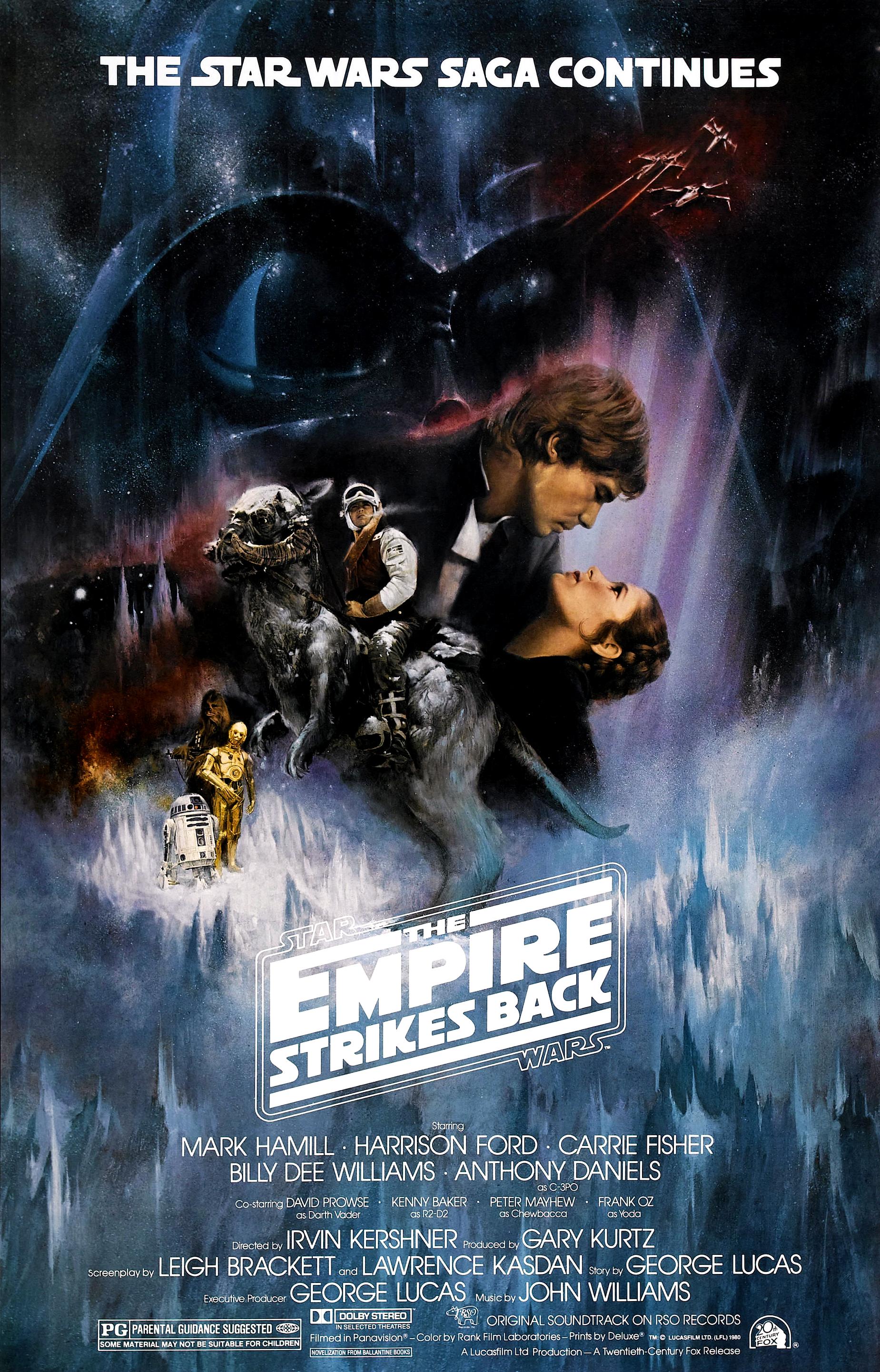
1. Star Wars: Episode V – The Empire Strikes Back
Rarely in the world of cinema is a sequel better than the first. Empire is a near-perfect follow-up to the surprise worldwide phenomenon. We thought that after the destruction of the Death Star, the rebels would have the Empire up against the ropes. But the opposite ends up being the case. The scrappy rebellion is still fighting for survival against the galactic war machine helmed by Darth Vader.

In a masterful piece of story telling, the good guys don’t win the day. The plot is full of betrayals, backstabbing, double crossing, love, jealousy, and “defeat snatched from the jaws of victory.” I mean, it doesn’t get any more Star Wars than this installment. It has the most-quoted lines (“No! I am your father.”) and the most iconic imagery (AT-ATs, carbonite, light saber duels, and Yoda). The Empire Strikes Back is what every movie sequel strives to be.

2. Star Wars: Episode IV – A New Hope
The indie movie that became a global cultural phenomenon was ahead of its time in many ways. It’s a traditional “hero’s journey” movie that has been copied time and time again – because it works. I will forever be loyal to this movie that introduced us to Luke, Han, Chewbacca, Leia, Obi-Wan, C-3PO, R2-D2, and Darth Vader. For a 1970s sci-fi movie made on a shoe-string budget with practical effects and first-time actors, this movie still holds up surprisingly well 40 years later.


This is where it gets a bit more controversial and subjective…..

3. Star Wars: Episode VII – The Force Awakens
The characters, plot, action, and humor of The Force Awakens make this one of the most rewatchable installments in the saga. Yes, it has a lot of similarities to the original. Yes, Kylo Ren is an angsty emo kid. Yes, ****SPOILERS**** Han Solo dies. But The Force Awakens recaptures the feel and magic of the original trilogy. I absolutely love Rey and Poe and BB-8 and Finn.

4. Rogue One: A Star Wars Story
The first non-saga movie was a pleasant surprise. I appreciate everything it was trying to do. Yeah, you could say it was a whole movie just to fill a plot hole in the original. But it was more than that. It made the Empire worth fearing. It established the original trilogy within the galaxy ruled under the tyrannical fist of the Empire. Rogue One also shows the moral ambiguity of the rebellion at times.

And come on – that last 90 seconds with Darth Vader was one of the best scenes in the entirety of Star Wars.

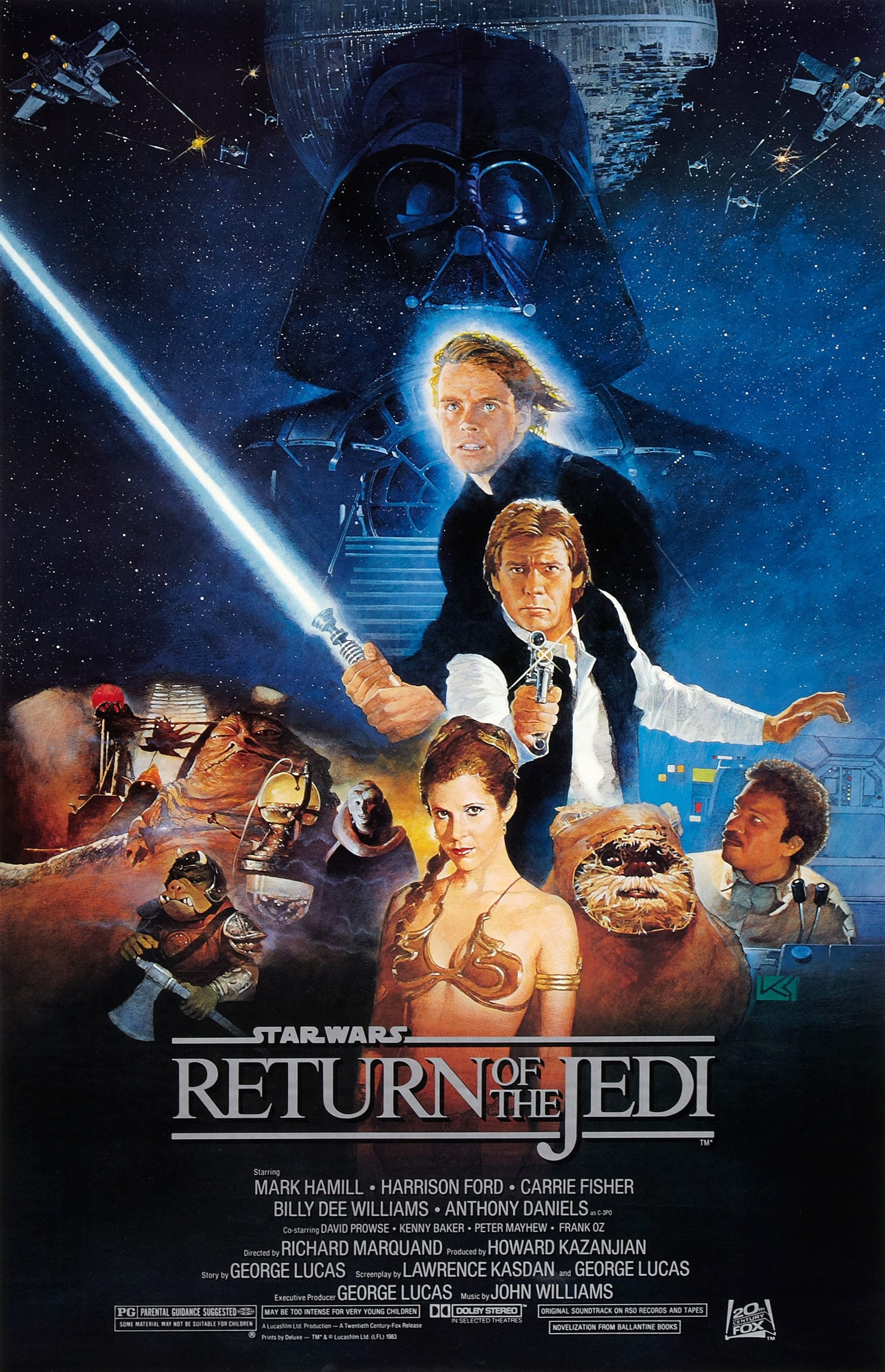
5. Star Wars: Episode VI – Return of the Jedi
I’ve gotta say that when I was a kid, this was my favorite. I loved the scenes in Jabba’s palace. I loved the Ewoks. I loved the speeder bikes and the space battle. I loved the duel between Luke and Vader at the end with the redemption of Vader. But when I watch it as an adult I realize how much this movie was targeted to kids. It could have been a lot darker and grittier following ESB. But they played it safe in order to sell more toys – which totally worked. I only hope the newest trilogy doesn’t follow the same path with Episode IX.

6. Star Wars: Episode VIII – The Last Jedi
This movie took a lot of risks. The “fans” complained that The Force Awakens was too much like the originals, so The Last Jedi tried to break away from the common tropes and expectations of the originals – and the “fans” complained again. I thought it worked really well on many levels. It was a very meta movie, telling you the whole time what it was doing – “Let the past die…” “This is not going to go the way you think…” Kylo Ren and Rey both came into their own. They can no longer rely on the past to lead them into the future. I think that says something about Star Wars over all.

The Last Jedi has one of the coolest light saber battles, one of the most visually stunning space battle scenes, and Yoda! It would be higher on my list, but it’s not quite as rewatchable as others.

7. Star Wars: Episode III – Revenge of the Sith
Revenge of the Sith had the darkness and the grittiness that I wish Return of the Jedi would have had. RotS, however, almost goes too dark. But it captures the transformation of Anakin to Vader in a visceral way. Obi Wan is the hero of the prequels. As unbelievable as Anakin and Obi Wan’s friendship seems at some points because of bad acting/writing, when things fall apart, you feel it. That final duel between them is haunting.

Full disclosure, I’ve seen Revenge of the Sith fewer times than any other movie on this list.

8. Solo: A Star Wars Story
I really enjoyed Solo. It was a fun, campy, action-packed heist movie. Think Italian Job in space. Was it entirely necessary? No. But I’m glad it’s here. Like Rogue One, Solo establishes the Empire as a force to be feared and the rebellion as a fledgling grassroots resistance movement. The actor playing Han offered a surprisingly convincing portrayal of the character. Lando was spot-on. I loved seeing the fresh, new Millennium Falcon pull of the Kessel Run. And when Maul appeared on screen, there was an audible gasp throughout the theater. There’s SO MUCH they could do with the Maul storyline…if they ever do another “Star Wars Story.”

9. Star Wars: Episode I – The Phantom Menace
THE BAD: the writing, the politics (Trade Federation? Are you kidding?), goofy battle droids, naked C-3PO, midichlorians, and Jar. Jar. Binks.

THE GOOD: the worlds, Qui Gon Jinn and Obi Wan Kinobi, Darth Maul with the double-bladed lightsaber, the BEST light saber duel in all of Star Wars, the pod race, expanding the Jedi/Force lore

10. Star Wars: Episode II – Attack of the Clones
I’ve tried rewatching this a few time recently and get the same feeling each time: Bored. I forgot how much of this movie involves slowly walking and talking. There’s action at the beginning and in the last 30 minutes. The rest is just slow and/or annoying. There is absolutely no chemistry between Anakin and Padme. Obi Wan’s skills are wasted. The main villain, Count Dooku, is completely dull and forgettable. If anything, this movie feels like an introduction to the Clone Wars animated series – which I think is better than Attack of the Clones.

How does your list compare? I know this is a pretty controversial subject among nerds, but I’d love to hear from you.

For comparison’s sake, here are the Star Wars movies ranked by Tomatometer Score:
1. The Empire Strikes Back (95%)
2. The Force Awakens (93%)
3. A New Hope (93%)
4. The Last Jedi (91%)
5. Rogue One (84%)
6. Return of the Jedi (80%)
7. Revenge of the Sith (79%)
8. Solo (70%)
9. Attack of the Clones (66%)
10. The Phantom Menace (55%)

Jonah: Who Are You?

The storm at sea is threatening to kill them all. The waves are swelling and breaking over the boat. The wind is driving the rain like gravel into their faces. They are frantically hurling the cargo boxes overboard in an effort to lighten the ship.

In the midst of this fear and panic, they find someone who really couldn’t be bothered by it all – Jonah, a prophet on the run.

After quite a rude awakening, Jonah is brought to meet with the rest of the crew. They’ve got to find out who is responsible for this storm – not necessarily what person, but what god/deity  is behind this. The most obvious god to pinpoint would be Ba’al, the Storm God of the Ancient Near-East. But Ba’al isn’t responding right now (shocker!), so they have to figure this out.

They cast lots (think Yahtzee, but with higher stakes). The lot falls to Jonah (shocker again!). Check out the interaction that follows:

Then the sailors said to each other, “Come, let us cast lots to find out who is responsible for this calamity.” They cast lots and the lot fell on Jonah. So they asked him, “Tell us, who is responsible for making all this trouble for us? What kind of work do you do? Where do you come from? What is your country? From what people are you?”
He answered, “I am a Hebrew and I worship the Lord, the God of heaven, who made the sea and the dry land.”
This terrified them and they asked, “What have you done?” (Jonah 1:7-10)

They want to know his job, his region, his country, his tribe, his shopping habits, his Social Security number, his mother’s maiden name. They interrogate Jonah to find out which god he might have angered. In the ancient world gods were viewed as very tribal and/or territorial. Your family would have certain gods. You tribe would have other gods. Your country and region would have bigger gods. Even certain occupations, like merchants and sailors, had their own gods. So they have to narrow it down.

Let’s look again at Jonah’s response to this line of questioning:

“I am a Hebrew and I worship the Lord, the God of heaven, who made the sea and the dry land.”

This is an interesting response for several reasons.

NATION OVER GOD

Jonah does the same thing I see so many people doing today. His first identifier was his country – “I am a Hebrew.” His identity was first and foremost grounded in his particular geopolitical situation. Jonah was a Hebrew before he was a worshiper of YHWH.

If you look back at 2 Kings 14, you will see that Jonah had every reason to be patriotic. Israel had just experienced the greatest time of political, economic, and military expansion in decades thanks to the word of God through his prophet Jonah. The king was evil, the nation was evil, yet God blessed them anyway. Jonah was at the top of his game. Jonah seems to be more than just a patriot, though. He has tendencies toward nationalism, the ideology that proclaims “My country, right or wrong.”

Today we have two identifiers – Christian and American. Which one is the noun and which is the adjective? That makes all the difference in the world. Are you a Christian American? Or are you an American Christian? Say you meet a foreigner for the first time and you’re getting to know each other. Do you tell that person you’re a Christian or an American first?

For Jonah it was clear that his allegiance to his country took precedent over his allegiance to God. He would rather blatantly disobey God than have a hand in saving Israel’s enemies. But when we become followers of Christ, we are now citizens of a new kingdom, a global kingdom. It’s great to be proud of your country and seek God’s blessing on the place you live (see Jeremiah 29). But it’s not ok to do that to the exclusion or detriment of other countries and nationalities.

YHWH, THE GOD OF HEAVEN

Jonah reveals the sacred covenant name of God to these sailors – YHWH. Any time you see “the LORD” in your Bibles, that is a replacement for the name YHWH. Jonah says, “I worship YHWH.”

But here’s the thing – YHWH was never just a regional God. YHWH had gone by other names, too. Most commonly the name El. El is the more widely used word/name for God. YHWH was the special name God gave to Moses in Exodus when establishing a covenant with the Hebrews.

I’m no Hebrew scholar, but from what I’ve heard and read, the name El is closely related to the name Ba’al, who was frequently referred to as “The God of Thunder” or “The God of the Heavens.” Jonah introduces these sailors to YHWH, the God of Heaven. Essentially, Jonah is using language they would have been familiar with to introduce them to YHWH and emphasize what a big deal this God is.

CREATOR OF THE SEA AND THE DRY LAND


Jonah gives the sailors the most basic Bible school lesson about who God is. YHWH created the sea and the dry land. That’s also a Hebrew way of implying “and everything in them.” So let’s all sing the Days of Creation song!

But this is an important distinction to make. Ba’al may have been “The Storm God” but he didn’t create the sea. There’s a big difference between having control over something and being the creator of something. I may know how to drive my Toyota, but I didn’t build it. My father-in-law worked at the plant where my vehicle was made. He knows where the parts came from and how they are all put together. If there’s an issue with the car, I defer to him.

YHWH isn’t just some little-case-g god like Ba’al. YHWH is the one who created everything that Ba’al supposedly controlled.

This rightly has the sailors terrified. “How can you run away from ‘the God who created the sea’ on the sea!

WHO’S IN CONTROL HERE?


With as crazy as things are, we always have to remember who is in control. God has not abdicated his throne to the big wigs in Washington. YHWH is still the God of Heaven who created the sea and the dry land and everything they contain.

When our identity is primarily rooted in our nationality or politics, then we will always be on shifting sand. We’ll be like the foolish man who built his house on the beach with no foundation. Nations rise and fall. Politics change daily.

But if our identity is rooted in God and the kingdom of heaven, we know we will always be on solid footing, not being tossed around by the winds of political storms.

Jonah: Wake Up, Idiot!

Jonah runs from God.

We should all realize the ridiculousness of this decision. Unfortunately, we all too often find ourselves in the same boat (pun intended).


But look what happens next.

But the Lord hurled a powerful wind over the sea, causing a violent storm that threatened to break the ship apart. Fearing for their lives, the desperate sailors shouted to their gods for help and threw the cargo overboard to lighten the ship.
But all this time Jonah was sound asleep down in the hold. So the captain went down after him. “How can you sleep at a time like this?” he shouted. “Get up and pray to your god! Maybe he will pay attention to us and spare our lives.” (Jonah 1:4-6)

The reaction of the sailors is telling. They knew this storm was not natural. It takes them completely by surprise and with such a ferocity that it can only be divine in origin – a punishment from the gods upon someone aboard the boat.

We have information that the sailors don’t. Jonah has information the sailors don’t. This whole section is just fascinating. I want to make a few key observations about the story so far as the action picks up. The gentile, pagan sailors are set in direct contrast to the prophet of YHWH.

OUR RESPONSE TO TRAGEDY

The storm hits. The ship threatens to break up. The sailors begin throwing the cargo (their livelihood, the very thing that makes this whole mission economically viable) into the sea, and they begin to cry out to their gods. Not just “thoughts and prayers,” but prayer accompanied by action. These gentile idol-worshipers demonstrate what James means when he says “faith without works is dead.” It also reminds me of something St. Augustine said: “Pray as though everything depended on God. Work as though everything depended on you.”

When tragedy strikes, by all means PRAY! But then do something about it.

Jonah did neither. He was down in the boat below deck. The Hebrew phrase may even indicate that he had holed up somewhere in the very cargo bay being emptied out by the sailors, and that’s how he was discovered. But he wasn’t just hiding. He was in a deep sleep. Not praying, not acting, not helping.

OUR REGARD FOR HUMAN LIFE

The sailors did everything they could to save the lives of everyone on board. They dumped the cargo. They cried out to their gods. They cast lots to discover the responsible party. And even when Jonah was found out and told them to toss him overboard, they still tried to save his life and row back to land. Saving human life was more important to them than the cargo. More than that, **and really listen to this** saving human life was more important to them than following the orders of God’s prophet! Even though the prophet of YHWH was telling them to let him drown, they didn’t want to accept that course of action. Even though Jonah was the one responsible for this tragedy, the sailors still thought his life was worth saving.

Jonah, on the other hand, had no regard for human life. In his opinion, it would be better if the whole ship sank and everyone drowned than to go to Nineveh and possibly save the Assyrians from disaster. By not caring what happened aboard the boat, Jonah was essentially taking responsibility for his own death, the deaths of all the men on board, and the deaths of thousands of Ninevites.

OUR WILLINGNESS TO BE CRITIQUED BY THE WORLD

The sailors cried out to their gods. They did everything within their power to save the lives off all their shipmates. So when they discovered Jonah asleep below deck, the captain was well within his rights to call the prophet to task. “Get up! Call…” These are the very first words that came to Jonah from YHWH. Now they are being repeated verbatim by the pagan ship captain.

The captain was absolutely right to criticize Jonah’s laziness and lack of concern. The captain was absolutely right to urge Jonah, the prophet of God, to call out to God. But I don’t think Jonah appreciated being called out like that. Why? Because he Still. Doesn’t. Pray. Jonah stubbornly refuses to lift a finger or a prayer to help anyone else.

When the world see Christians acting un-Christ-like, they have every right to call us out on it. Non-believers may not know as much about the Bible or our faith as we do, but most of them know that whole “Love God, and love your neighbor” thing. That’s kind of a big deal. If Christians are failing to fulfill the greatest commands in the whole Bible, then we should be criticized for it. If we are willingly “falling asleep” to the tragedies and hardships of our neighbors, we deserve to be called out. If we can’t be bothered to seek the good of people who are different from us, then the world has every right to ridicule us and point out our hypocrisy.

When we don’t denounce nationalism, white supremacy, anti-Semitism, racism, classism, sexism, and every other kind of discrimination, we deserve every bit of  finger pointing we get from the world. Maybe, just maybe, that will wake us up to action and love.

OUR LOVE FOR AND RELIANCE ON “THE OTHER”

The sailors didn’t really care which god caused this storm. They didn’t really care who worshiped whom or who was from where. The important thing to them was that they were all in the same boat. If everyone doesn’t work together, then they could all die. What a metaphor for life.

They sailors didn’t let their religion, as it were, keep them from banding together to save everyone. The same could not be said for Jonah. He used his religious and civil convictions as a justification for not helping others – both the Ninevites and the pagan sailors.

When we hear “Love your neighbor as yourself,” we often interpret that how Jonah and his fellow Israelites did. Your neighbors are those closest to you – physically, socially, relationally, and religiously. But Jesus completely reinterprets this command. In Luke 10 a man asks the question that’s on all of our minds, “Who is my neighbor?” Jesus’ brilliant answer literally changed history. Jesus knew that in asking “Who is my neighbor?” the man really wants to know “Who isn’t my neighbor.” If we define the neighbor, then there will always be people who fall outside that definition.

So Jesus told a story about a man who was ambushed by robbers, stripped of his money and clothing, and left for dead on the side of the road. In other words, here was a man devoid of any identifying markers. You couldn’t tell how rich he was, where he came from, what ethnicity he was, what language he spoke, or anything else. The priest and the Levite passed by on the other side, refusing to help the man. They, like Jonah, used their religious obligations as an excuse for not helping. But the Samaritan came along, saw a man in need, and without a second thought stopped to help. The man he helped was Jewish. It makes me wonder, If the man had been conscious, would he have accepted help from the Samaritan?


We may be willing to help and even love people who are different from us – homeless or Muslim or LGBTQ or Democrat or undocumented immigrant, etc. But are we willing to accept love and help from those same people?

We can extend love, but can we receive it?

I think deep down Jonah resented the fact that he had to rely on the very people he would rather avoid. Jonah doesn’t care about these sailors. It’s not that he actively hates them like he does the Assyrians. He just has no obligation or commitment to them whatsoever. If one of them was injured on the side of the road, Jonah would probably pass by on the other side. But the sailors care about Jonah. The sailors want to save his life. The sailors would stop to help Jonah if he were the man in Jesus’ story.

It’s an attitude of supremacy to be willing to extend help to someone you consider “lesser” but to be unwilling to receive help from those same people.

WAKE UP!

Jonah had to be awakened to the plight of the ship and the crew. As long as he remained unaware of the problem he could plead ignorance. His lack of concern or action was somewhat understandable. But as soon as he was awake and aware of the situation, Jonah had an obligation to act.

Christians, many of us need to wake up. We need the world to shout us awake to the disaster befalling much of the world. We need to wake up to the rates of depression and suicide among LGBTQ teenagers. We need to wake up to the abject poverty, evil, and governmental corruption driving Central American families from their homes to seek asylum north of the border. We need to wake up to the tyrannical rule of dictators around the world. We need to wake up to the rise carbon dioxide levels in the atmosphere. We need to wake up to the opioid crisis plaguing the Midwest and the sheer number of orphans being left in its wake. We need to wake up to the dangers of religious nationalism. We need to wake up to the experience of People of Color in our country.

After all, we’re all in the same boat.

“How can you sleep at a time like this? Get up and pray to your god! Maybe he will pay attention to us and spare our lives.”

________________________________
This post is part of an ongoing series on the book of Jonah. Click the links below to view other posts.
Jonah: Bravely Ran Away!
Jonah: Nope
Jonah: World’s Worst Prophet

11 Great Enneagram Resources

You may have no idea what I mean when I talk about the Enneagram. Or you may have been getting to know the Enneagram for a while now. Whether you’re a complete beginner or more advanced, I want to share some resources that I have found really helpful over the last couple of years. Whether you would rather read books, listen to podcasts, or watch online videos, I’ve got you covered.

FOR ENNEAGRAM NOVICES


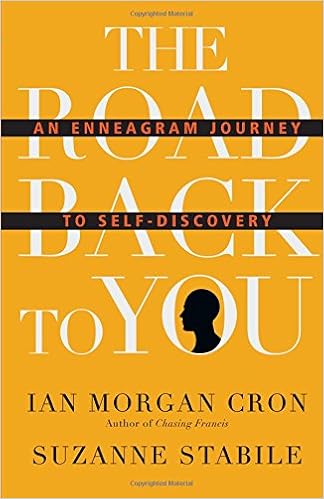
1) The Road Back to You, by Ian Morgan Cron and Suzanne Stabile
This book is by far the best introductory primer on the Enneagram. It gives a great overview of what the Enneagram is, how to use it, and a basic description of each type. You will be tempted to skip straight to the number you think you are, but you can’t fully understand your number without knowing the other eight numbers, too. I recommend getting a physical copy of the book so you can share it with your spouse, family, and friends. You’re going to want to share it when you’re done, I promise!

2) The Road Back to You Podcast with Ian Morgan Cron and Suzanne Stabile
The podcast makes a great supplement to the book. Ian and Suzanne use this platform to explain each type more in depth and to interview people of each type – celebrities, authors, musicians, pastors, and more. It’s always a great time with these two.


3) EXPLOREYOURTYPE.COM
You are not very likely to discover your dominant type by simply taking an online assessment. It’s always recommended to thoroughly research each type to discover which one describes you the best. But if you’re on the fence between two or three different numbers, this assessment can help narrow it down for you.

4) Sandals Church, “A Series Called YOU”
Pastor Matt Brown of Sandals Church in California recently gave a sermon series exploring each of the nine types from a biblical perspective. You can find these on YouTube. Here’s the first one in the series.

FOR MORE ADVANCED ENNEAGRAM USERS

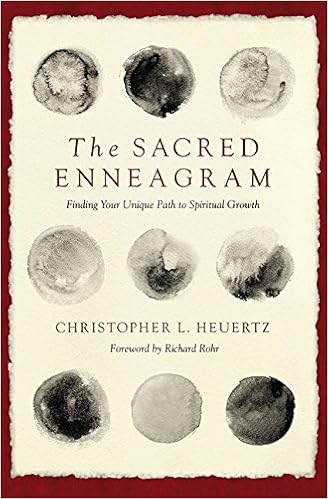
5) The Sacred Enneagram, by Chris Heuertz
So you know your type. Now what? Heuertz leads us on a journey to transformation and deeper spiritual growth. Heurtz’s own life experience and knowledge of the Enneagram is truly inspiring. He challenges his readers to use their knowledge of their type to develop contemplative prayer and meditative practices.


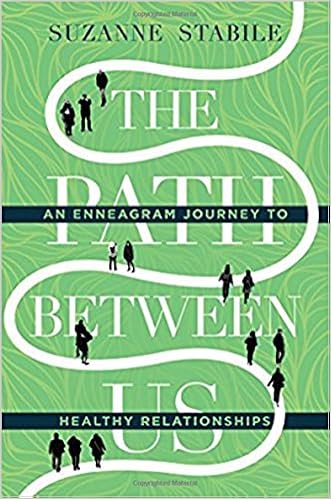
6) The Path Between Us, by Suzanne Stabile
I’m currently reading this new release, so I can’t give a full review. But I know it’s worth recommending. Stabile is a relationship expert, brilliantly explaining how the Enneagram types relate to and work with each other.


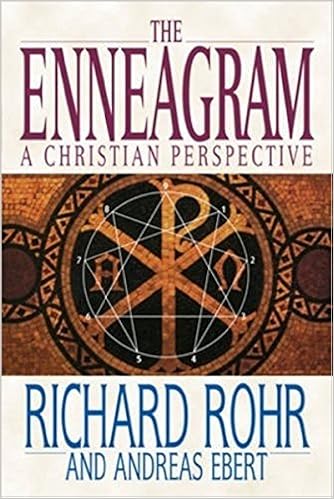
7) The Enneagram: A Christian Perspective, by Richard Rohr and Andreas Ebert
This is nearly the literal textbook for studying the Enneagram. This is not for the casual novice or first time reader. It’s a beast of a book to get through. But the depth of knowledge and wisdom contained within the pages make it well worth the effort for those who are willing to put in the work. Rohr is truly one of the greatest Enneagram masters of our time.


8) Typology Podcast with Ian Morgan Cron
After completing their Road Back to You podcast, Cron and Stabile went their own ways. Cron started up this podcast that picks up where The Road Back to You left off. It’s still and interview-based podcast exploring the uniqueness of each of the nine types. Typology assumes the listeners have a working knowledge of the Enneagram in order to take us deeper into the types.


9) Sleeping At Last Podcast
Singer/Song Writer/Musician Ryan O’Neal produces music under the name Sleeping At Last. O’Neal has been captivated by the beauty of the Enneagram in recent years and has undertaken a project to write and record one song for each of the nine types. On this podcast he plays the song, details his writing process, and explores each type with the help of his friend Chris Heuertz (author of The Sacred Enneagram).


10) ENNEAGRAMINSTITUTE.COM
The Enneagram Institute offers a ton of great online resources, like articles, type descriptions, and assessments. It can serve as a helpful reference guide in keeping it all straight and learning more about the nuances and subtleties of the Enneagram.

11) Casey McCollum
McCullom is an Enneagram teacher and trainer who hosts workshops and coaching sessions for people across the country. He has a great online presence – Facebook and Instagram – and is always sharing helpful bits of wisdom and advice. He is definitely worth the follow.


BONUS:
12) Enneadog on Twitter
This is a Twitter account that describes the different Enneagram types through Dog GIFs. It’s as wonderful as it sounds. Give them a follow!

What would you add to this list? Are there any other Enneagram resources you’ve found particularly helpful? Share them below in the comments.

3 Life Traps to Avoid

Idolatry is a trap.

An idol, as we saw last time, is something that makes big promises, takes all it can, and gives nothing in return. This video from I Am Second featuring hit singer Tori Kelly does a fantastic job illustrating this point. Check it out:

Tori Kelly was promised the world. She was promised everything she could want – fame, fortune, success as a singer. But her “idol” deemed her not good/pretty/bubbly enough. So long, see you later. Next!

She had to learn not to tie her identity to anything other than Christ. Kelly had to learn to let go and gain her freedom (remember the Monkey Trap?).

THE THREE TRAPS

If idolatry is a trap, it’s helpful to know what kind of traps to specifically be on the lookout for. The Bible identifies three main traps, and life has confirmed this to be true. Here’s exactly what we need to watch for:

Do not love this world nor the things it offers you, for when you love the world, you do not have the love of the Father in you. For the world offers only a craving for physical pleasure, a craving for everything we see, and pride in our achievements and possessions. These are not from the Father, but are from this world. And this world is fading away, along with everything that people crave. But anyone who does what pleases God will live forever. (1 John 2:15-17)

Did you see the traps? 1) Craving for physical pleasure, 2) Craving for everything we see, and 3) Pride in our achievements and possessions. These are the tools Satan uses to draw us away from God and trap us in idolatry. We fall for them all the time. Every single one of us has been trapped by at least one of these tricks. And they are literally as old as human history.

LITERALLY, THE OLDEST TRICK IN THE BOOK

The Bible opens with the story of creation in Genesis 1 and 2. God creates the world and everything in it. God crowns his creation with God’s masterpiece – humanity, God’s own image bearers. God places the first man and woman in a garden called Eden. It’s a paradise – free of sin, pain, death, and I assume mosquitoes. They have one God-given rule, only one! Don’t eat from the Tree of the Knowledge of Good and Evil. That’s it. There’s one tree you can’t eat from. Everything else is fair game. How could they possibly mess that up?

The serpent was the shrewdest of all the wild animals the Lord God had made. One day he asked the woman, “Did God really say you must not eat the fruit from any of the trees in the garden?”
“Of course we may eat fruit from the trees in the garden,” the woman replied. “It’s only the fruit from the tree in the middle of the garden that we are not allowed to eat. God said, ‘You must not eat it or even touch it; if you do, you will die.’”
“You won’t die!” the serpent replied to the woman. “God knows that your eyes will be opened as soon as you eat it, and you will be like God, knowing both good and evil.”
The woman was convinced. She saw that the tree was beautiful and its fruit looked delicious, and she wanted the wisdom it would give her. So she took some of the fruit and ate it. Then she gave some to her husband, who was with her, and he ate it, too. At that moment their eyes were opened, and they suddenly felt shame at their nakedness. So they sewed fig leaves together to cover themselves. (Genesis 3:1-7)

Did you see the traps? Look more closely. She saw that the fruit 1. looked delicious (cravings for physical pleasure), 2. looked beautiful (cravings for everything we see), and 3. would grant her the wisdom that she wanted (pride in our achievements and possessions). The Serpent (aka Satan) pulled out all the stops. He set all three traps in place, and she fell for every single one.

**Notice, by the way, that she gave the fruit to her husband “who was with her.” Adam wasn’t some innocent bystander. It’s not like he was off somewhere else completely unaware of what was happening. Adam was fooled just as much as Eve.**

And with all three traps set and then sprung, sin and idolatry entered the world.

At the end of Genesis 3, however, God makes a promise that some day one of Eve’s offspring would crush the head of the serpent once and for all.

BREAKING FREE

Fast forward to the 1st Century CE in Palestine. A Jewish Rabbi is on the scene named Yeshua (or Jesus to us Westerners). Jesus is baptized by his cousin John in the Jordan River. As he came up out of the water, the heavens part and the voice of God could be heard proclaiming “You are my Son whom I love. With you I am well pleased.” And the Holy Spirit descends upon Jesus in the form of a dove. This is a literal re-creation story.

And just as with the creation story in Genesis, so it is with Jesus. He is immediately led into the Judean wilderness where he fasts for 40 days and faces temptations from Satan. Imagine fasting for 40 days! That’s about the limit for the human body to survive without food. Some of us get hangry after 40 minutes without eating. Picture being on-the-brink-of-literal-starvation-hangry…and then literal Satan shows up. Ugh…. Just read this passage while I go get a snack.

Then Jesus, full of the Holy Spirit, returned from the Jordan River. He was led by the Spirit in the wilderness, where he was tempted by the devil for forty days. Jesus ate nothing all that time and became very hungry.
Then the devil said to him, “If you are the Son of God, tell this stone to become a loaf of bread.”
But Jesus told him, “No! The Scriptures say, ‘People do not live by bread alone.’”
Then the devil took him up and revealed to him all the kingdoms of the world in a moment of time. “I will give you the glory of these kingdoms and authority over them,” the devil said, “because they are mine to give to anyone I please. I will give it all to you if you will worship me.”
Jesus replied, “The Scriptures say,
‘You must worship the Lord your God
    and serve only him.’”
Then the devil took him to Jerusalem, to the highest point of the Temple, and said, “If you are the Son of God, jump off! For the Scriptures say,
‘He will order his angels to protect and guard you.
And they will hold you up with their hands
    so you won’t even hurt your foot on a stone.’”
Jesus responded, “The Scriptures also say, ‘You must not test the Lord your God.’”
When the devil had finished tempting Jesus, he left him until the next opportunity came. (Luke 4:1-13)

Ok, did you see the traps that time? Really, Satan couldn’t make it any more obvious. It’s the same three traps as he used in the Garden all those thousands of years before.

  1. Turn these stones to bread = cravings for physical pleasure
  2. I’ll give you all the kingdoms of the world = cravings for everything we see
  3. Throw yourself down from the Temple in front of all these crowds of people, proving to everyone who you truly are and what you’re capable of = pride in our achievements or possessions

However, where Adam and Eve failed, Jesus successfully avoided the traps and exposed them for what they truly were – empty promises.

UNHOLY TRINITY

These three traps can be thought of like this:

“Cravings for Physical Pleasure” = Self-Centeredness – only caring about my needs, my physical cravings, my appearance, my schedule, my success, me – me – me

“Cravings for Everything We See” = Greed – never being satisfied with what I have, always wanting more things, new, shiny, latest and greatest, trendy, jealous, more – more – more

“Pride in Our Achievements and Possessions” = Pride – success, achievement, and being the best are the only things that matter. Second place is first loser. I have to be the best me, and I need other people to know it. Failure is not an option, win – win – win

Self-Centeredness, Greed, and Pride are the core tricks of the trade for Satan. They are the main ways our idols keep us trapped. Here’s what that looks like in real life.

My relationships become an idol when I make it all about me – what I can get out it, how my needs are being met, how that person make me feel.
Relationships become an idol when I’m greedy – always wanting more time, more devotion, or simply moving on to the next person if you aren’t good enough for me anymore.
And relationships become an idol when I become prideful – I have to have the best relationship, or at the very least we have to appear successful. I keep score of who does more for the other person and become resentful when the other person isn’t pulling their weight.

Work can become an idol when I’m self-centered – looking out for my own interests instead of the good of the company, doing anything to get more money or more promotions, making everything a competition with my coworkers.
Work can become an idol when I fall into greed – working longer hours for more overtime to bring home a bigger pay check to a wife and kids I never see so we can buy more stuff we never use.
Work can become an idol when I let my pride get in the way – making sure everyone knows how good I am, making myself indispensable, getting jealous of anyone else who gets promotions, always self-promoting and emphasizing my own achievements and successes.

FOLLOW THE GUIDE

These are the traps of idolatry. They aren’t always easy to see. Sometimes navigating life feels like that scene in Indiana Jones: The Last Crusade. The only way we know how to avoid the traps is by learning from those who have gone before us. Self-centeredness, Greed, and Pride can suck you in, keep you trapped, and totally derail your life. Maybe now that we know what to look out for, we can follow in the steps of Jesus and avoid these snares of life.

Which of the three traps is most difficult for you to avoid? How might these traps be lying in wait for us even in the church? Let me know in the comments below, and don’t forget to subscribe so you never miss a post!

Review: Unarmed Empire: In Search of Beloved Community

Unarmed Empire: In Search of Beloved Community
Unarmed Empire: In Search of Beloved Community by Sean Palmer
My rating: 4 of 5 stars

I’ve been following Sean Palmer’s work for a while now. I’ve read his earlier blog posts. I’ve heard him speak on different occasions and to different audiences. The modern church is blessed to have pastors and authors like Palmer.

In “Unarmed Empire” Palmer lays out a clear, inspiring vision of what the church can be – and is in some cases. Our world seems to be divided and partisan now more than ever in recent history. That division and partisanship has bled over into the church, too. Palmer gives me hope that there is a way out of the political quandary in which we’ve found ourselves.

If you are a church leader – official or layperson – this book is a must-read. Take it and see how your church stacks up. Are we loving? Are we open and welcoming? Are we living life together? Are we emphasizing community rather than the individual?

The church is going to survive our mess. I am confident that God is faithful in that regard. But if our church leaders don’t wake up to the realities of the situation and lay down the weapons of war handed to us by the world, then it’s going to be a real struggle in the coming decades.

View all my reviews

Review: An Absolutely Remarkable Thing

An Absolutely Remarkable Thing
An Absolutely Remarkable Thing by Hank Green
My rating: 5 of 5 stars

Hank Green’s appropriately named debut novel “An Absolutely Remarkable Thing” is a marvel of our time. The book is at once a fun, thrilling sci-fi story about aliens making first contact. At the same time it gives a stark look at the realities of the modern world. It seems like an attempt to answer many questions, chief of which are 1) What could legitimately happen in the world if a sentient alien race made first contact with us on planet earth? and 2) What does it actually do to a person to be suddenly thrust into the spotlight of fame and fortune in the age of the internet? I can think of no person better equipped to answer these questions than Hank Green.

The story is well-paced, being told in an after-the-fact first-person account by the main character, April. HG’s character development is every bit on par with his brother’s (John Green). April and her friends Andy, Maya, Miranda, and Robin are an adult Goonies as they strive to unlock the mysteries of the Carls. Honestly, the characters and their quests remind me a lot of Ernest Cline’s book “Ready Player One.” There are a lot of similarities. I’m not sure if that was on purpose or coincidental. But if you enjoyed RPO, then you will really like AART.

The characters are likable and relatable. They are all of us. Well, all of us young adults/”Millennials” at least. The plot moves along at a pace somewhere between comfortable and suspenseful. It never really drags nor seems like too much too quickly.

What I appreciate the most is the honest handling of the real world divisions facing our society. In the story people essentially choose sides. April wrestles with an Us-vs.-Them attitude throughout most of the story, and it ultimately changes her into the person she never wanted to be. Most of all I appreciate the fact that HG points out the pros and cons of each opposing viewpoint. Neither side is completely vindicated and neither side is entirely wrong. We must pull together as a society and learn that lesson before something worse happens.

It’s all to eerie that a month after this book comes out there were bombs mailed in packages to current and former political leaders in this country (USA). An arrest has been made. No injuries were reported. But we still don’t know the full story or the motivations behind this attempted attack. The political climate of the book and of real life pushes people to the extremes. Any political extreme can be dangerous. It’s time we learn our lesson. An Absolutely Remarkable Thing can help teach us.

View all my reviews

Jonah: Bravely Ran Away

Ok, so here’s the thing. Psychologists sometimes explain consciousness as the story we tell ourselves. We make meaning out of anything and everything. We have supporting characters and extras, protagonists and antagonists. And wouldn’t you know it? We just so happen to always be the hero in our own story. One of the best portrayals of this is in the Will Ferrel movie Stranger Than Fiction.

We are the hero in the story we tell ourselves that makes up our conscious experience of life.

Got it?

Good.

So the thing to remember about Jonah is that he is the hero in his own story. No, he may not be the “hero” in the story recorded in Scripture. But in the moment, to himself, he is definitely the good guy. Jonah is doing what he thinks is right. He/Israel is the good guy. Nineveh/Assyria is the bad guy.

Where does that put God?

There’s an interesting scene in the book of Joshua. The Hebrew nation is on the verge of entering the Promised Land after 40 years of nomadic life in the wilderness. The only thing standing in their way is the heavily fortified city of Jericho. Joshua is walking around the area one time and he’s stopped in his tracks by an Angel from God. Joshua asks if the Angel is on their side or on the side of Jericho. The Angel’s answer? “Neither.” (Joshua 5:13-15)

Is God for us or for our enemies? Neither. That’ not how this works.

Jonah thinks he’s doing the right thing by disobeying God. The call to Nineveh seems traitorous. Jonah still has this “us vs. them” mentality. God doesn’t play those games. God is not for someone if it means being against someone else. God is truly for all people, everywhere.

For God so loved the world, that he gave his only Son, that whoever believes in him should not perish but have eternal life. For God did not send his Son into the world to condemn the world, but in order that the world might be saved through him. (John 3:16-17)

The Lord is not slow to fulfill his promise as some count slowness, but is patient toward you, not wishing that any should perish, but that all should reach repentance. (2 Peter 3:9)

…but God shows his love for us in that while we were still sinners, Christ died for us. (Romans 5:8)

It’s completely counter to the message of Scripture to believe there are some people not worth saving. God gave Jonah a mission to go to the Assyrians in Nineveh. Jesus gave his disciples (including us!) a mission to go into “all the world” and take the message of God’s grace to “every nation.” All means all. Every means every.

But there’s more to it for Jonah. This is possibly the most shocking part of Jonah’s escape. God gives a chilling warning to Ezekiel (who was after Jonah, but I believe the warning would still apply to Jonah).

Once again a message came to me from the Lord: “Son of man, give your people this message: ‘When I bring an army against a country, the people of that land choose one of their own to be a watchman. When the watchman sees the enemy coming, he sounds the alarm to warn the people. Then if those who hear the alarm refuse to take action, it is their own fault if they die. They heard the alarm but ignored it, so the responsibility is theirs. If they had listened to the warning, they could have saved their lives. But if the watchman sees the enemy coming and doesn’t sound the alarm to warn the people, he is responsible for their captivity. They will die in their sins, but I will hold the watchman responsible for their deaths.’
“Now, son of man, I am making you a watchman for the people of Israel. Therefore, listen to what I say and warn them for me. If I announce that some wicked people are sure to die and you fail to tell them to change their ways, then they will die in their sins, and I will hold you responsible for their deaths. But if you warn them to repent and they don’t repent, they will die in their sins, but you will have saved yourself.” (Ezekiel 33:1-9)

Did you catch that? If you know something bad is going to happen and you don’t tell anyone – that’s on you! So often we use fear of rejection as a reason not to share the Gospel with people. But if we neglect to tell people about Jesus, then their eternal destruction is on us. If we tell them and they refuse to listen, then that’s on them.

Jonah refused to go to Nineveh and warn them of the coming destruction. In doing so, he was accepting responsibility for their demise.

If Jonah is the hero and Nineveh is the enemy, then it obviously makes sense that Jonah would do this. He’s single handedly ensuring the downfall of Israel’s greatest enemy. Way to go, Jonah!

Our task is to see the world as God see it – not as us vs. them, not as winners and losers, not as good and evil, but as God’s children. Or as Jesus would put it – the 99 sheep in the fold and the one lost sheep waiting to be found.

What do you think? Was Jonah doing the right thing for Israel? What would you do if God called you to share the Gospel with your “enemies?” Keep the conversation going in the comments, and be sure to subscribe so you never miss a post!
Jonah: Nope

Have you ever heard God speak directly to you? Odds are that you haven’t. I would say that most
people don’t.

If you did, how would you respond?

The closest I’ve come to hearing God speak to me happened when I was just out of my freshman year of high school. I was fifteen years old. We were at church camp that summer. It was one of those super emotional nights where a bunch of campers were thinking seriously about their lives. We ended each night with a time of singing. That night so many youth ministers and counselors were busy talking with teens in need that they turned over the song leading to some of us young guys. I got up in the middle of everyone and led a few songs. In that moment I could see and feel the Spirit of God at work in the lives of my peers. In that moment I felt/heard God tell me that this was what I was meant to do with my life.

From that moment on I began to pursue my calling to youth ministry and worship leading. I’ve been doing that full time for the last eight years. It hasn’t always been easy or fun or glamorous. But I can’t see myself doing anything else.

If God were to speak to you, how would you respond?

The Bible is littered with stories of men and women encountering the divine. The most common reaction is terror. They fall down in fear (Isaiah, Peter, Paul). Some of them choose to test and argue with the divine (Moses, Gideon). Others “gird up their loins” for a wrestling match (Jacob!). Still others willingly submit and obey (Samuel, Mary).

And then there’s Jonah.

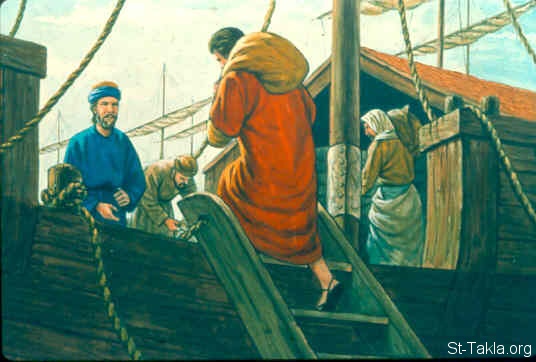
Now the word of the Lord came to Jonah the son of Amittai, saying, “Arise, go to Nineveh, that great city, and call out against it, for their evil has come up before me.” But Jonah rose to flee to Tarshish from the presence of the Lord. He went down to Joppa and found a ship going to Tarshish. So he paid the fare and went down into it, to go with them to Tarshish, away from the presence of the Lord. (Jonah 1:1-3)

Jonah quietly slips out the back door without saying a word. He doesn’t protest or argue. He doesn’t try to bargain with God or air his grievances. He simply makes like a tree and leaves.

Obviously, Jonah doesn’t want to go to Nineveh. But when does God ever call us to something we already want to do? I guarantee you that God will never call you to pursue a promotion, a bigger pay check, more exotic vacations, a larger home, a nicer car, a more respectable position.

NOPE!
As Dietrich Bonhoeffer put it, “When Christ calls a man, he bids him come and die.” God called Moses to confront his past and lead an unwilling slave population to freedom. God called Gideon to face down an enemy army with just 300 men carrying trumpets and torches. God called Isaiah to speak out against the evil kings and governments. God called Saul/Paul to take the gospel to the Gentiles, literally saying, “I will show him how much he must suffer for my name.”

God calls Jonah to go to Nineveh. Jonah thinks Nope! and runs the other direction. Jonah was totally cool with the stuff that benefitted his own people and his own standing among them. Jonah would prophesy all day long about how Israel would increase and their nation would become great again. But a mission trip to Nineveh? The enemy? No thanks, I’d rather not.

When I look at the state of the church in America, I am saddened to see so many people walking out the doors never to return. I’ve seen people leave our church without saying a word to anyone. They don’t want to have that confrontation, so they simply leave. They escape silently like Jonah rather than stick it out through a tough situation.

I also see certain churches thriving and growing at an unbelievable rate. Then I hear what their pastors are preaching and I’m sick to my stomach. They make it seem like following Jesus is always an easy and #blessed life. Follow Jesus and you’ll get that promotion. Follow Jesus and your family will be perfect. Follow Jesus and all that you want is within your reach.

Nothing could be further from the truth. We’re never guaranteed and easy life in the here and now. But we are guaranteed that God will be with us no matter what we go through.

God would have been with Jonah every step of the way on the 550 mile journey to Nineveh. But Jonah would rather go to Tarshish without God than to Nineveh with God.

Still Nope!

And here is one of the great ironies of the story. **Spoilers** The wind and the waves obey God. The gentile, pagan sailors obey God. The fish obeys God. The people and king of Nineveh obey God. The plant obeys God. The worm obeys God. The only player in the whole story who doesn’t obey God is the prophet of God!

If God were to speak to you and call you to a mission, what would you do? Creation has no choice but to obey the sovereign Word of the Lord. But humans have the ability to say Nope! and move on. God always gives his people a choice. You are always given a choice.

What’s your Nineveh that you might be avoiding?
What good but difficult thing might God be calling you to do that you would rather not bother with?
Are we really any better than Jonah?

Tell me, have you ever heard God speak to you? What did God say? How did you respond? Let me know in the comments, and subscribe for email notifications so you never miss a post.