Page 19 of 70

Regional Rabbi Allegedly Controls Storms, Demons; Thousands of Pigs Killed

Sometimes I wonder what it would be like to be a journalist for the local Galilee Times newspaper in the days of Jesus…
_______________________________

Regional Rabbi Allegedly Controls Storms, Demons; Thousands of Pigs Killed


Earlier today, reports poured in from around the Sea of Galilee. This lake, a hub of fishing and other industry in this rural area, has lately been at the epicenter of some amazing claims. The latest witness reports indicate that a stronger than usual storm sprang up overnight, stirring the entire lake into chaos. Several fishing vessels were caught in the middle of the intense gale and were nearly capsized. According to several witness accounts, a Rabbi named Jesus of Nazareth allegedly stopped the storm as quickly as it had arisen.


Peter, one of Jesus’ disciples and appointed spokesman for the group, told reporters, “The storm came on us more suddenly than I’ve ever seen. One minute it was clear sailing. The next, everything was pitch black, and our boat started being tossed around like a child’s toy. With the waves breaking over the boat and the downpour of rain, we couldn’t bail out the water fast enough.” Peter and his brother Andrew were professional fisherman on the lake before becoming disciples of Jesus.


“I’ve seen my fair share of storms over the years,” Peter continued, “but nothing like this. I thought for sure we were going to die. But then I noticed Jesus in the back of the boat asleep on a cushion! I thought, Who could sleep at a time like this? So me and my buddies woke him up. Then Jesus made his way to the front of the boat, looked out at the storm, and – I swear – he shouted, ‘Shut up! Calm down!'”


According to Peter and the others in the boat, the wind immediately stopped, the waves calmed down, and the clouds vanished. “We were all terrified,” said Peter. “I mean, who does that? We still don’t know exactly how that happened. We’re still in shock.”


The story then takes a bizarre turn. Once safely through the storm, their boat made land at the local gentile cemetery on the other side of the lake in the region of the Gerasenes. As the sun was dawning and the disciples were making landfall, a local madman ran out to them yelling and screaming. After a brief conversation with Jesus, the Rabbi from Nazareth apparently cast out a “legion of demons” from the man. These demons then possessed a herd of pigs grazing at a nearby farm. Witnesses say the pigs turned mad and rushed off the side of the hill into the lake, drowning.


Our reporters caught up with the man, who wished to remain anonymous, after the fact. They found him well mannered and articulate. They asked him for his account of what happened. “The last few years have been a blur for me,” he began. “Once I felt the darkness take hold, I was powerless to stop it. I heard voices screaming in my head that no one else could hear. They told me to hurt myself. They wanted me to kill myself but I resisted that as much as I could. I didn’t know how much longer I could hold out, though. My family didn’t want me around. No one in town would take me in. I began living in the graveyard about a year ago. Local officials would try to bind me, but no matter what ropes or chains they put on me, I would somehow break through them.”


The owners of the nearby pig farm who lost their entire herd offered some of their own comments on what happened. “Yeah, he was crazy all right. No one wanted to go near there. We thought we were far enough away. Guess we thought wrong. Everyone had just kind of come to accept the crazy man in the cemetery. We figured he wouldn’t be around much longer, anyway. Seemed as good a place as any for him to die. But then that Jesus character showed up and ruined everything.”


According to the man’s testimony, the demons were terrified of Jesus. They thought he would send them to “the abyss” and destroy them. They begged to be sent out of the man and into the pigs.


“We heard all this shouting and commotion,” said the pig farmer. “It was coming from the graveyard. Next thing we knew our pigs – about 2,000 of them, mind you – got this crazy look in their eyes. They grew restless and out of control. They broke straight through the fencing, ran down the hill, and to the last one they all drowned in the lake. There was nothing we could do. That was our entire livelihood – gone in an instant.”


The farmers ran back into town to tell the others what had just happened. A large number of the townsfolk came out to the scene of the incident.


“I’m not sure which was more upsetting,” said one local man, “the madman sitting there, still and calm, or the image of 2,000 pig carcasses floating in the lake. We were all shocked and horrified.”


All the townspeople urged Jesus and his disciples to leave.


“He had caused enough damage for one day. We may never recover from this,” said the pig farmer, visibly distraught.


Our reporters asked for one last statement from the previously-madman. “They asked him to leave. I tried to go with him! The last thing I wanted to do was stay around here, with the people who would just have soon seen me dead as healed. I wanted to go with him so badly, but he wouldn’t let me. He told me to go back home and tell everyone what the Lord has done for me. So I’m here to tell everybody that Jesus of Nazareth is unlike anyone I’ve ever met. Everyone was powerless to help, until he came ashore. There’s something special about him. Others may be afraid of him, but I owe my life to him. I’ll do whatever it takes to help those farmers recover, so long as they all know that Jesus has true power from on high.”


We may never know what really happened on the lake last night or on the shore earlier this morning. These claims are outlandish, some would even say blasphemous. But with so many corroborating witness accounts, it is difficult to dismiss the fact that something amazing did indeed happen. The Galilee Times will keep following the trail of stories left behind from Jesus, the Rabbi from Nazareth.


(For the full story, see Mark 4:35 – 5:20)

Biblical Enneagram Types: SIXES

According to some Enneagram teachers, there are probably more Sixes than any other Type. The world needs Sixes, also called Loyalists, to ensure that the community is preserved and that we’re prepared when disaster strikes.

Trust is a big issue for Sixes. If you have earned their trust – as a leader, friend, or spouse – then they will be with you through thick and thin. They won’t jump ship. But Sixes can also be some of the more skeptical people in your life. Often Sixes find themselves playing “Devil’s Advocate” – asking probing or even accusatory questions. They aren’t purposefully trying to be obnoxious or derail the whole system. They just want to know that those in charge have everything under control and have planned for anything that can and will go wrong.

Perfect gift for the Sixes in your life!

Sixes are worst-case-scenario thinkers. They live in the world of “mights”, “coulds”, and hypotheticals. If there ever is a real disaster or problem, you want a Six around because they’ve already gone through the scenario multiple times in their head.

Sixes are more likely to actually count the number of rows to the exit on the airplane and pay attention to the safety briefing before takeoff “just in case.”

There is safety in numbers. Always be prepared. These are the mantras that get a Six through the day.

Every number on the Enneagram lives in some sort of inner tension. For Sixes, that tension comes in their relation to authority. As children Sixes picked up on the fact that the adults in charge can’t always be trusted. So as adults they are inherently skeptical of those in power. At the same time, through, their greatest need is a sense of safety and security. Some Sixes end up trusting too strongly in human authority figures and are inevitably let down at some point. Other Sixes end up distrusting nearly all authority figures in order to protect themselves from that same disappointment. This is the difference between “Phobic” and “Counterphobic” Sixes. All Sixes must deal with their fear. Phobic Sixes tend to have more of a “flight” response, whereas Counterphobic Sixes have a more aggressive “fight” response.

ON THIS ROCK I WILL BUILD MY CHURCH

An excellent example of a Six in the Bible is Simon Peter.

Peter was the foremost among the disciples, not because he was the most loving or most knowledgable, but because he was the most committed to Jesus and the group. Peter latched onto Jesus as an authority figure like none other. Peter definitely had his share of screwups – recorded for us to laugh at 2,000 years later! – but he is also the one primarily entrusted with carrying on Jesus’ mission after the resurrection and ascension.

Who was the first to confess true belief in who Jesus was? Peter.

Who played “Devil’s Advocate” when Jesus told the disciples he was going to be killed? Peter.

Who jumped out of the relative safety of the boat during the storm into the certain terror of the raging sea in order to be near Jesus? Peter.

Who was the closest friend and confidant of Jesus? Peter.

Who was the leader of the disciples? Peter.

Who was willing to fight and die for Jesus? Peter.

When push came to shove, who gave into fear time and time again? Peter.

Who did Jesus want the women to specifically tell about his resurrection? Peter.

Who was able to overcome his fear and deliver one of the most powerful sermons in recorded history? Peter.

Peter attached himself to Jesus, but he also had his own fears and anxieties to overcome. Peter had a hard time coming to grips with the fact that Jesus was going to leave them. When Jesus said “let not your hearts be troubled – you believe in God, believe also in me,” I’m sure he was speaking directly to Peter. As a Six, Peter needed as much reassurance as he could get that everything was going to be ok. Jesus is basically telling Peter, “You’ve trusted me this far. Trust me a little more.”

All those times that Jesus had to say, “Do not be afraid,” I’m sure he was speaking directly to Peter.

That conversation that Jesus and Peter had on the beach after his resurrection always gets to me. Three times Jesus asked Peter, “Do you love me?” And three times Peter replied, “Yes, Lord. You know I love you.” Jesus’ response to Peter’s affirmation of love is an instruction to take care of the others. Jesus made it clear that he wasn’t planning on sticking around for a long time. He had to leave. But he promised that he would not leave them as orphans.

Side note: I think one of the worst things that can happen to a teenager in the church is to go through multiple youth ministers over the course of a few short years. Teens need someone who is going to be there for them through it all. It takes a few years for them to trust their youth minister, and by then he’s already moving on to the next church. That can be absolutely devastating, especially for Sixes who already have trust issues.

Back to the point. Jesus is redirecting Peter away from a single point of loyalty to a more group-oriented commitment. Jesus is encouraging Peter to step up and commit not just to Jesus but to the group. Jesus knew that Peter, the Loyalist, was going to be the glue that held the group together.

Peter was stronger than he knew. Jesus saw that from the beginning. That’s why he changed his name from Simon to Peter in the first place. Peter was going to be that solid bedrock, that foundational member of the group. It took some time for Peter to see in himself what Jesus had seen all along.

Sixes, you must know that you are stronger than you think. You are more capable than you think. We value your leadership, your loyalty, your commitment, and even your questions. You are the bedrock of our churches and families and organizations. Without you we would all tend to simply drift apart from each other. You keep us grounded and secure. You help provide us with the security you so desire for yourselves.

Sixes, hear again the words of the Master, “Do not let your hearts be troubled. You believe in God – believe also in me.”
______________________________

Check out the song “Six” by Sleeping At Last

Is He Ignorant or Just Plain Evil?

Are you familiar with Godwin’s Law? Back in the early 90s, American lawyer and author Mike Godwin developed a law of civil discourse. Basically, Godwin observed that the longer an argument raged on, the more likely it would be that at least one party would compare the opposing party to the Nazis and/or Hitler.

How much more true are his findings thirty years later!

There’s something interesting that happens when we disagree with someone. When we think someone is wrong and we are right, then they must be 1) ignorant, because anyone who truly knew the all the facts would come to the same conclusion as us, or 2) blatantly evil, because if they know the facts and still disagree with us they must have some inherently corrupt worldview or agenda.

We have come to believe that no reasonable person would be X. We are reasonable people, so we believe X. That person doesn’t believe X; therefore, they must not be a reasonable person – either ignorant of the facts or unreasonably evil.

This happens All. The. Time.

There’s even an entire TEDTalk about it! It happens to be one of my favorites. You should watch it if you’ve never seen it before:

The “ignorant or evil” discourse took on a whole new level during the 2016 presidential election season. People simply refused to engage in civil discourse and public disagreement in a heart of tolerance and understanding. We all just went off the deep end and viewed “the other” as either uneducated ignoramuses or (sometimes literally) Nazis. This Psychology Today article reveals some deep insight into the American psyche over the last few years.

If we have friends supporting the wrong candidate, we might charitably classify them as “ignorant” (unless we’ve secretly believed they were crazy all along). We can write some off as blind, knee-jerk partisans; their party’s candidate could engage in any kind of wrongdoing and they would still support him or her. (We might privately chalk that up to a special kind of stupidity.) But more and more, it seems, true believers skip the preliminaries and go straight to regarding anyone who supports the wrong candidate as just plain evil. After all, how can they possibly abide the lack of integrity, the poor judgment, the unwillingness to be transparent, etc., unless they are as bad as their candidate?

Of course, this is nothing new. Not even a little bit. As I’m combing through the Gospel of Mark once again, I’m finding all sorts of new insights that I never noticed before. I want to draw your attention to Mark 3:20-35. There are two groups wanting to stop Jesus. The first is his family, those closest to him, who grew up with him, who think that Jesus is wrong and needs to stop. The second group is comprised of the professional haters out there, those who have seen Jesus from a distance, who bash him on Twitter and spread rumors about him in 4-Chan, but would never confront him face-to-face. In doing so, they completely dehumanize him. Check it out.

Then Jesus entered a house, and again a crowd gathered, so that he and his disciples were not even able to eat. When his family heard about this, they went to take charge of him, for they said, “He is out of his mind.
And the teachers of the law who came down from Jerusalem said, “He is possessed by Beelzebul! By the prince of demons he is driving out demons.
So Jesus called them over to him and began to speak to them in parables: “How can Satan drive out Satan? If a kingdom is divided against itself, that kingdom cannot stand. If a house is divided against itself, that house cannot stand. And if Satan opposes himself and is divided, he cannot stand; his end has come. In fact, no one can enter a strong man’s house without first tying him up. Then he can plunder the strong man’s house. Truly I tell you, people can be forgiven all their sins and every slander they utter, but whoever blasphemes against the Holy Spirit will never be forgiven; they are guilty of an eternal sin.”
He said this because they were saying, “He has an impure spirit.”
Then Jesus’ mother and brothers arrived. Standing outside, they sent someone in to call him. A crowd was sitting around him, and they told him, “Your mother and brothers are outside looking for you.”
“Who are my mother and my brothers?” he asked.
Then he looked at those seated in a circle around him and said, “Here are my mother and my brothers! Whoever does God’s will is my brother and sister and mother.”

Did you see that? Jesus’ detractors were using the ignorant or evil arguments against him! His family thought he had gone off the deep end. He’s out of his mind. He’s completely lost it. He’s just ignorant, otherwise he would know not so say or do these things.

But the extreme haters equated Jesus, not with the Nazis since they wouldn’t be around for another 1900 years, but with Satan, or Beelzebul, the Prince of Demons. He’s evil! He’s in league with Satan. He’s sold his soul to the Devil.

You see, if Jesus is in fact wrong, those are really the only conclusions we can come to. He’s either a lunatic, out of his mind, or he’s a liar, operating for the Father of Liars.

But Jesus isn’t wrong – the others are. His family is in fact ignorant of who he really is. And the teachers of the law are the ones more in league with Satan and his demons. Brilliantly, though, Jesus doesn’t answer false rhetoric with more false rhetoric. He doesn’t call his family ignorant – he redefines family as those who do the will of God the Father. And he doesn’t call the teachers of the law evil – he just points out the logical inconsistencies of their arguments and drops the mic.

As the TEDTalk above points out, being wrong feels just like being right – unless and until we know we’re wrong. Jesus is trying to point out how the others are wrong about him, but in a loving way to his family and in a logical way to his haters. He doesn’t get baited into arguments about things that don’t matter. Love doesn’t do that. Love gives opportunities for wrongs to be made right rather than keeping a record of wrongs.

It wouldn’t be until after his resurrection that his mother and brothers truly came to believe in Jesus as God’s Son, not Joseph’s. His mother became a prominent matriarch among the early church, and two of his brothers (James and Jude) wrote letters that would be preserved in the New Testament canon to this day.

I think there’s a TON that we can learn from Jesus that is just as applicable to us in the digital age as it was in the iron age. Don’t take the bait. Don’t feed the trolls. Haters gonna hate – don’t play their game. And above all – speak (or text) the truth in love. Remember who the true enemy is. *Hint* They’re not on the other side of that keyboard (Ephesians 6:12). And remember who your true family is. *Hint* They’re in every nation and every political party across the globe (Revelation 7:9).

Who Are These Guys?

If you want to win the gold medal for basketball in the Olympics, you can’t get much better than the 1992 USA “Dream Team.”

This group of men would go down in history as “the greatest sports team ever assembled.” After a disastrous 1988 run at the Olympics – losing to the USSR and settling for bronze – the USA recruited professional players for the first time ever. This hall-of-fame lineup included Michael Jordan, Larry Bird, Magic Johnson, John Stockton, Charles Barkley, Scotty Pippen, Patrick Ewing, and Carl Malone. They were a force to be reckoned with, to put it lightly.

Needles to say, the Dream Team put the US back on top by winning the gold medal in 1992. And it wasn’t even close – the closest game happened to be the gold medal game against Croatia and was won by 32 points (117 to 85).

The sheer dominance of this team, their performance and teamwork, cannot be understated. They took the world by storm and are now a thing of legend. They were the best of the best of the best.
___________________
If you want to assemble a team to begin a world-changing movement that would alter the course of history as we know it, you can’t get much worse than the Twelve.

In Mark 3 we see that Jesus is amassing a following. His movement is growing and gaining momentum. He could have stayed in the spotlight and enjoyed being the sole leader of this revival. But he knew that wouldn’t work in the long run. Countless others have tried that. And when the leader dies or leaves, the movement dies with him.

Jesus, as a Rabbi, chose twelve men to be his disciples. These men would spend all their time with Jesus. They would eat with him, sleep by him, travel with him, and hang on his every word. The goal of a disciple was to teach like his rabbi, speak like his rabbi, eat like his rabbi, interact with people like his rabbi – even, and this is true, relieve himself like his rabbi. The Rabbi-Disciple relationship was one in which the disciple was becoming more and more like his rabbi every day.

Jesus knew the importance of his mission and the sheer scope of what he was trying to do. You would think he would try to assemble the “Dream Team,” right? I can imagine him going to the synagogues, the Temple, the places of learning and religious devotion to recruit the brightest and best young men with the most potential. I mean, that’s what we would do.

But of course, that’s not what Jesus did. He looked out at the crowd that had gathered and made his selection then and there.

Jesus went up on a mountainside and called to him those he wanted, and they came to him. He appointed twelve that they might be with him and that he might send them out to preach and to have authority to drive out demons. These are the twelve he appointed: Simon (to whom he gave the name Peter), James son of Zebedee and his brother John (to them he gave the name Boanerges, which means “sons of thunder”), Andrew, Philip, Bartholomew, Matthew, Thomas, James son of Alphaeus, Thaddaeus, Simon the Zealot and Judas Iscariot, who betrayed him.
(Mark 3:13-19)

We don’t know much about these men, but we do know some things. We know from the start that these were not the religious elites. They weren’t already disciples of another Rabbi, which means they hadn’t made the cut when they were younger.

These weren’t just the worst players in the NBA. These were the guys that got cut from their high school teams.

James and John were fishermen. Their father, Zebedee, owned his own fishing business with several boats and other hired men. Simon/Peter and his brother Andrew were probably business partners with James and John. They were uneducated blue-collar workers. How were they going to change the world?

Matthew, also called Levi whom we met earlier, was a tax collector for the Roman government. The other man named Simon came from a group of assassins and guerrilla warriors known as the Zealots. The Zealots hated Rome with a passion. They were commonly regarded as terrorists whose sole purpose was to drive the Roman army out of their territory. Simon would have tried to kill tax collectors like Matthew.

We don’t know a lot about Judas Iscariot, but he was probably from a wealthy family. He was the one in charge of the money. He had problems with greed. He didn’t like the way Jesus was going about his mission, and so Judas would betray him to the Jewish officials.

Nobodies. Fishermen. Tax Collectors. Assassins. Swindlers and Conmen.

Are these the men with which Jesus was to inaugurate the Kingdom of Heaven here on earth? Are these really the guys who would help Jesus overthrow evil, defeat death, and bring about a whole new world order?

Apparently.

Twelve disciples. One Rabbi. Three years.

Go.
_______________________________

Biblical Enneagram Types: FIVES

Fives are some of the unsung heroes of the Enneagram. They don’t like the recognition and the spotlight. They don’t seek to be honored at banquets or showered with public praise. Fives know what they know and they do what they do – and they do it well. I’ve never met a Five who wasn’t at least somewhat knowledgable in virtually everything. Fives are the researchers behind the project. They are the quality engineers making sure your new car runs perfectly. They are the chemists developing new, safer, more sustainable formulas and medicines.

If you have a five in your life, you know they are great to have around. They’re like a walking Google search. Ask them a question, and they can probably give you an answer. If not, they’ll disappear for a while and then come back with one.

Fives read the Encyclopedia for fun as children.

Fives, often called Observers or Investigators, are not typically very outgoing – which is interesting because they share a line with Sevens. Fives tend to keep to themselves at parties and family gatherings. Most Fives will have a “fortress of solitude” where they can disappear for a while. It’s their space, and no one else is allowed in unless invited and accompanied by the Five. Respect their space and their privacy.

Being around large groups of people or in the spotlight for extended periods of time saps the emotional energy right out of a Five. But if you give them a task – a research project or something requiring their technical expertise – they will do it better than anyone.

One example of a Five in the Bible is (probably) Nicodemus. He only appears in John’s gospel account, but he must have made an impact on John. He doesn’t just pop up once but three times. Each time reveals something more about him.

EXPLAINING GOD

Nicodemus is a Five, but he’s a Five on a journey toward something greater than he could have imagined. (I’ll call him Nic from here on out. Nicodemus is tedious to type each time.)

Nic first appears in John 3.

Now there was a Pharisee, a man named Nicodemus who was a member of the Jewish ruling council. He came to Jesus at night…
(John 3:1-2a)

Here are a few things we know about him, and they fit really well with type Five. 1) He was a Pharisee. Pharisees were concerned with doing the right things in the right ways. As a group they were probably a collective One, but they would be very appealing to Fives like Nic. 2) He was a member of the Jewish ruling council – also known as the Sanhedrin. The Sanhedrin was comprised of top lawyers from both the Pharisees and the Sadducees. It was essentially a two party system not that much different than we have today. So Nic was one of the top 70 law experts in the nation. 3) He came to Jesus at night. Why at night? Was he scared? I used to think so. But if I view Nic as a Five, then it makes perfect sense. He wasn’t afraid of the crowds, he just wanted Jesus to himself. He needed that one-on-one time to go deep.

Nic starts up the conversation with Jesus this way:

“Rabbi, we know that you are a teacher who has come from God. For no one could perform the signs you are doing if God were not with him.”

No flattery. No lofty or buttery language. Just right to the point. Respectful, but straight shooting.

Also, notice the scientific language as he opens. We know X because Y. Here’s a hypothesis: Jesus is a Rabbi sent from God. Here’s how we test the hypothesis: Observe the works he is doing. Analysis: No one could perform these signs if they were not from God. Jesus is performing these signs. Therefore, Jesus is from God.


Many Fives approach faith the same way they approach any other aspect of their lives. They tend to be very evidence-based and by-the-book. But they might not be so keen on church small groups or meet and greet time in worship. They want the sermon to be factual and Scripture-driven without a lot of flowery language or stories.

So what does Jesus do? He immediately responds with metaphorical (even poetic) language.

“Very truly I tell you, no one can see the kingdom of God unless they are born again.”

Nic is not tracking with Jesus. He’s trying to take Jesus literally (Can a man enter his mother’s womb a second time? That’s scientifically impossible!). But Jesus is relentless. He starts off with figurative language and then reels it in using Nic’s own worldview against him and exposing the insufficiencies of a purely materialistic approach to faith.

“The wind blows wherever it pleases. You hear its sound, but you cannot tell where it comes from or where it is going. So it is with everyone born of the Spirit.”

You want to talk scientifically, rationally, and logically about God, as if God is a formula? Nic, you can’t even explain the wind, much less God. Even today, we can’t explain everything about the world, atoms, the universe. How much less can we explain the Creator of it all? But we can feel the effects of God all around us.

Fives don’t like that word – feel. Jesus is trying to get Nic to feel something when all he knows how to do is think. God gave us a brain, yes. But he also gave us a heart. (And I know the heart doesn’t actually control our emotions, that’s all in the brain. Just go with it, Fives! Haha)

Nic still isn’t picking up what Jesus is putting down. He’s still asking questions. (Fives are the most inquisitive number on the Enneagram.) So Jesus tries to put it in terms Nic just might finally get.

“You are Israel’s teacher and do you not understand these things? Very truly I tell you, we speak of what we know, and we testify to what we have seen, but still you people do not accept our testimony. I have spoken to you of earthly things and you do not believe; how then will you believe if I speak of heavenly things? No one has ever gone into heaven except the one who came from heaven—the Son of Man. Just as Moses lifted up the snake in the wilderness, so the Son of Man must be lifted up, that everyone who believes may have eternal life in him.”

As far as we can tell, that’s the end of the conversation. Jesus doesn’t give Nic the answers. He gives him homework. Jesus gives Nic a research project. Son of Man – go look into Daniel 7 and figure out who I am. Moses lifted up the snake in the desert – go back to Numbers 21 and see how God saved the people.

TAKING A STAND

And you know what? Nic did his homework. He did his research. He found answers. How do I know? The next time we see him, he’s coming to Jesus’ defense – citing Jewish Law back to the people who would be willing to bend the rules in order to silence Jesus.

Nicodemus, who had gone to Jesus earlier and who was one of their own number, asked, “Does our law condemn a man without first hearing him to find out what he has been doing?”
(John 7:50-51)

This is huge for a Five. When Fives are in health and security, they can draw on the positive energies of Type 8, the Challenger. Fives in this space are more willing to make their voice be heard and to stand up for their beliefs. Eights are concerned about justice and fighting for the underdog. Nic goes to this Eight space because he’s more secure in who he is and what God has called him to do. He get’s chastised and mocked for it, but he doesn’t back down.

FROM GREEDY TO GIVING

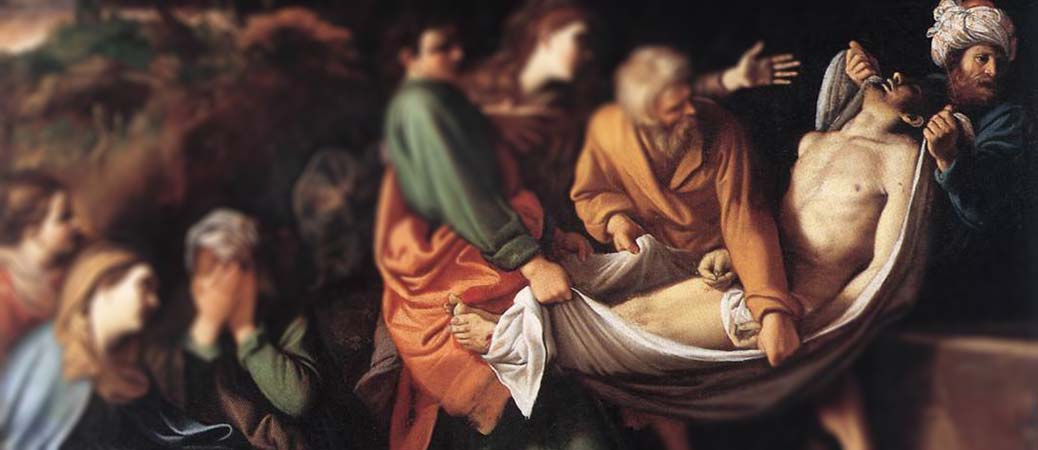
The final time we see Nic is at the very end (or what they thought was the end). After Jesus died, he was placed in the tomb of Joseph of Arimathea – another Pharisee and Sanhedrin member. Joseph was joined by Nic in preparing the body for burial. Don’t overlook what it says about Nic.

He was accompanied by Nicodemus, the man who earlier had visited Jesus at night. Nicodemus brought a mixture of myrrh and aloes, about seventy-five pounds.
(John 19:39)

Seventy-five pounds of aloes, oils, and spices?! That’s a ton, and it would have cost a ton, too. The major vice of a Five is avarice (or greed). Fives can tend to be borderline hoarders. Fives will often keep the most random stuff and stockpile it because who know? We might need that someday. Fives can be very stingy with their knowledge, their possessions, their time, and the emotions. Fives keep things to themselves – literally.

When a Five moves to a place of health, they can become some of the most generous people in the world. They no longer operate out of a scarcity mindset. They realize that they have more than they need, and there’s plenty to go around. Healthy Fives can be some of the best teachers and mentors and philanthropists.

Nic, in one last act of faith, offered up probably thousands of dollars worth of burial spices that he had likely been storing away for himself or a family member – because you never know. But then he saw someone else in need of what he had, and he gave it freely.

FROM HEAD TO HEART

Nic wasn’t in the spotlight. He quite literally avoided it. But his transformation is incredibly apparent in such a few verses.

Fives, the greatest distance between two points in your body is not from the top of your skull to the balls of your feet. The longest distance is between your head and your heart. Nic didn’t experience real transformation until Jesus opened up his heart to feeling what God was doing. Sometimes there are no explanations. Sometimes there is insufficient evidence. Are you able to believe anyway? Do you trust God even when it doesn’t make logical sense?

Review: Everybody, Always: Becoming Love in a World Full of Setbacks and Difficult People

Everybody, Always: Becoming Love in a World Full of Setbacks and Difficult People
Everybody, Always: Becoming Love in a World Full of Setbacks and Difficult People by Bob Goff
My rating: 4 of 5 stars

Bob Goff wears me out.

He is so high energy that he jokes about himself, “I make coffee nervous.” He said at a seminar I recently attended, “Coffee drinks me to wake up!” Bob has a different spirit than anyone I’ve ever met. Most people look at difficult situations and ask “Why?” Bob asks “Why not?”

On the Enneagram, Bob is a Seven with a Seven wing. On the one hand I admire him and am a little envious of the sheer amount of energy he exudes, on the other hand living his life for a week would completely destroy me. I get that he’s not calling us to live like he does. Not many of us can travel hundreds of thousands of miles a year across the globe, making multiple trips to places like Uganda every year. I’m never going to build a lodge resort in the back woods of Canada. But that’s not the point. The point is to live out the love of Christ wherever you are to the people you’re with.

More than anyone else I’ve ever met, Bob embodies what Jesus says in John 3: “The wind blows wherever it pleases. You hear its sound, but you cannot tell where it comes from or where it is going. So it is with everyone born of the Spirit.” Bob is not controlled by anyone except the Spirit of God. Bob has an openness to the urging of God’s Spirit and an availability to people and opportunities like I’ve never seen before. Bog Goff is a living, breathing example of what it means to be “born of the Spirit” and to love others as Christ has loved him.

I have my personal reasons for giving “Everybody, Always” four stars instead of five. For one, I prefer books that are a bit more….focused in their scope. I had the same feelings about “Love Does.” It’s just a bit too scattered. The last few chapters of the book are all focused on one single story and its outcome, and it’s one of the most inspiring stories demonstrating the power of God’s love that I’ve ever read. Besides that, every chapter heads off in a completely different direction. It’s GREAT for readers who don’t have a lot of time or with short attention spans. But it’s somewhat disjointed for simply sitting down and reading through.

Also, and another commenter made this point, Bob writes from a very privileged position. White, Christian, male, upper class, lawyer – it doesn’t get much better than that. Granted, he uses his wealth, privilege, position, and knowledge to make an amazing difference in the world. But he talks about dropping $95 per visit to Disneyland like it’s nothing. He makes multiple airplane trips per week like it’s normal. He owns a house in San Diego and a lodge in British Columbia. I can’t even begin to relate to that kind of money and privilege. He may lose some readers because of these things.

Everyone needs someone like Bob Goff in their lives. God is using him in big ways. He’s encouraging and hilarious and available. He literally puts his personal cell phone number in the back of his books and will answer your calls. Bob is inspiring a whole new generation of people – believers AND nonbelievers alike, to love – Everybody, Always. Go and do likewise.

View all my reviews

He Did What, Now?

Since you died with Christ to the elemental spiritual forces of this world, why, as though you still belonged to the world, do you submit to its rules: “Do not handle! Do not taste! Do not touch!”? These rules, which have to do with things that are all destined to perish with use, are based on merely human commands and teachings. (Colossians 2:20-22)
********

One thing that amazes me about Jesus is how he straight up doesn’t care about cultural, societal, and even religious norms. Jesus doesn’t operate under the “We’ve never done it that way” banner. Jesus doesn’t care about how we’ve always done it. He came to show us a new way, a better way.

Norms are based on fear – go along to get along, just keep your head down and go with the crowd. I heard this in a presentation recently by some folks from a group called Axis: “The problem today isn’t unanswered questions. The problem is unquestioned answers.” We get ourselves into trouble as a society when we don’t bother questioning the way things have always been – who’s in and who’s out, what’s trendy and what’s taboo. Jesus simply doesn’t play by the same rules. Just when you think you’ve got him figured out, he flips the script.
YOU’RE NOT SUPPOSED TO TOUCH THAT

At the end of Mark 1, we’re briefly introduced to a man. We don’t now much about him. All it really says is that he’ “a man with leprosy.” I wish I knew more – How long did he have the disease? Did he have a wife and kids? What did he do before he got leprosy? How far along was the disease? How bad of condition is he in?
But we do know a couple of things. 1) He had leprosy, or a really bad, really contagious skin disease. 2) He wasn’t supposed to be around people. 3) Nobody who was “clean” was supposed to touch someone with leprosy for fear of catching the disease themselves or being declared “unclean” for a period of time.
There was no cure for leprosy. True leprosy, in fact, isn’t a skin disease per se. It’s a nerve disease. Leprosy affects your sense of touch. You begin to lose feeling in your skin and muscle tissue. It can manifest as a skin disease because lepers will often cut themselves and not know it. The wound then becomes infected and the infection can spread through other parts of the body. Lepers were relegated to their own communities outside of the towns and villages. They were essentially quarantined until they died.
Imagine losing all sense of feeling and not being able to hug your wife and kids, not being able to shake hands or high five or experience human contact in any form. I would go crazy!
So this man breaks all the rules and makes his way to Jesus. “If you are willing,” he said, “you can make me clean.”
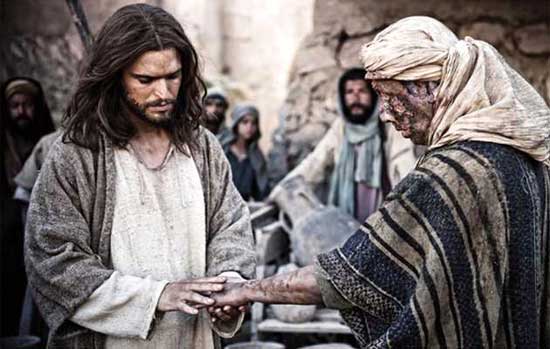
Jesus could have just said the word – but he didn’t. Jesus “reached out his hand and touched the man.” Jesus, you aren’t supposed to touch him! Everyone knows that. Ew…go wash your hands, right now.
Jesus didn’t have to touch the man. Jesus wasn’t supposed to touch the man. But the man needed to be touched. You see, Jesus always placed people before norms and traditions (and even Laws).
YOU’RE NOT SUPPOSED TO SAY THAT

The next story Mark tells is of a paralyzed man whose friends lowered him down through the ceiling of the house where Jesus was teaching. Only true friends will cause vandalism on your behalf.
So there’s this paralyzed man with a newly made spotlight on him, front and center for all to see. Again, Jesus could have just said the word and the man would have been healed. But Jesus says the unthinkable: “Son, your sins are forgiven.”
The gasps would have been audible. The teachers of the law were only saying what everyone else would have been thinking. “Who can forgive sins but God alone?”
Exactly.
The problem is there is no “proof” of sins being forgiven. Anyone could just say it. That doesn’t make it true. Jesus proves the point, though, by saying the word and healing the man. Everyone is shocked, and they rightly conclude, “We’ve never seen anything like this!” Yes, because Jesus doesn’t do or say what we expect him to do or say.
YOU’RE NOT SUPPOSED TO HANG OUT WITH THEM

It gets worse.
Mark then tells the story of Jesus’ encounter with a man named Levi (also known as Matthew). Levi was a tax collector or, as his fellow Jews would call him, a traitor. Tax collectors had literally sold out to the enemy – Rome. The Roman army was occupying the territory of Israel and was using Jewish taxes to pay for their occupation. For a Jew to collect taxes from other Jews to support the occupying army was absolutely reprehensible. You’ll notice that they are even given their own category – “sinners and tax collectors.”
So Jesus goes up to Levi at his tax booth. You would think that Jesus is going to encourage Levi to stop taking money from the Jews to support the Romans, that he should be ashamed of himself, and that he’s on the fast track to hell. But that’s just what we would do, not what Jesus does.
Jesus simply says, “Follow me.”
And Levi does!
That night they throw a big party at Levi’s house, inviting all the other “tax collectors and sinners” to join them. You’ll also notice that parties broke out wherever Jesus went.
This caught the attention of the Pharisees who questioned why Jesus was doing this. What Rabbi in his right mind would be caught dead eating with “those people?”
Jesus simply responds, “It is not the healthy who need a doctor, but the sick. I have not come to call the righteous, but sinners.”
I think Jesus is really throwing shade at the Pharisees, because they would know the passage from Isaiah – “There is none who is righteous, no not one.” We’re all sick in need of healing. We’re all sinners in need of forgiveness. The difference is that the tax collectors and sinners acknowledge their own brokenness and accept Jesus’ ability to fix them. You’ve heard it said, “If it ain’t broke, don’t fix it.” But I tell you, “If you don’t know you’re broken, you can’t ever get fixed.”
WHO DOES HE THINK HE IS?
Here’s the really interesting part about all this.
Where were lepers supposed to go in order to be declared “Clean” again? The Temple.
Where were people supposed to go in order for their sins to be forgiven? The Temple.
Where was the one place “tax collectors and sinners” were prohibited from going? The Temple.
Jesus is the meeting point between heaven and earth, like the Temple was supposed to be. In Jesus, God dwelled among his people. Jesus embodied everything the Temple was supposed to be. Instead of being made unclean, Jesus makes the unclean clean again. Jesus forgives and takes away people’s sins. And if tax collectors aren’t welcome at the Temple, then Jesus will take the Temple to them!
WHO DO YOU THINK YOU ARE?

This shouldn’t be much of a surprise. Not soon after Mark wrote his gospel account, the Temple in Jerusalem would be completely demolished by the Roman army. There hasn’t been a Temple in Jerusalem since the year 70. But just as Jesus took the job of the Temple upon himself, so we, his church, become the living, breathing Temple of God wherever we gather.

Don’t you know that you yourselves are God’s temple and that God’s Spirit dwells in your midst?
(1 Corinthians 3:16)

So what does this mean for us? We should be a place where people are made clean, where the broken are made whole, where sinners find forgiveness and acceptance, where the sick are made well, where the poor and the outcast are full members, and where all the wrong people are united under the one Lord Jesus Christ.
Want to be like Jesus? Touch the untouchable. Forgive the unforgivable. And throw parties with all the wrong people. In other words, be the Temple of God wherever you go.

Biblical Enneagram Types: FOURS

Do you have that friend who’s just a bit different? They’re the ones with the unique hair styles, kinda “out there” clothing choices, who listen to bands you’ve never heard of. They are outside-the-box thinkers. They don’t like to be labeled or categorized.

In fact, if they think “I’m not any of the Enneagram numbers. I’m my own number!” then they’re most likely a FOUR.

Maybe this describes you or someone you know. Fours, often called the Individualist, are, in fact, different. According to some experts, there are probably fewer Fours than any other number. Fours fear being “normal” or just like everyone else, but they also deeply desire to belong and feel accepted. That’s the tension of Fours. They want to be accepted as part of the group while maintaining their own individual identity.

This all leads to the vice of Fours: envy. They see the life everyone else has – their perfect and pretty Instagram lives – and they want that. Everyone else seems so normal and happy, why can’t I be? If Fours aren’t careful and self-aware, they can let their envy drive them to really dark places – which is where Fours like to hang out, anyway.

It’s been said, “Fours don’t have feelings. Fours are feelings.” In this way, they couldn’t be more different than their Three neighbors, who are feeling repressed. Threes have difficulty accessing and expressing their emotions. Fours have trouble NOT accessing and expressing them.

Fours see the world in a way that is profoundly concerned with beauty and truth and art. A lot of Fours are poets and artists and mystics and song writers.

One famous Four was a King.

No, I’m not talking about David. He was probably a Seven. I’m talking about King Saul. You can read his story in the book of 1 Samuel.

Saul’s life was full of twists and turns, highs and lows, and ultimately ended in tragedy. From early in his life he was signaled out as different. He was “head and shoulders” above everyone else – literally. He was a tall, stately man. But like many Fours he was full of shame and self-doubt. When the prophet Samuel first met Saul, here’s how that conversation went:

“And to whom is all the desire of Israel turned, if not to you and your whole family line?”
Saul answered, “But am I not a Benjamite, from the smallest tribe of Israel, and is not my clan the least of all the clans of the tribe of Benjamin? Why do you say such a thing to me?”
(1 Samuel 9:20-21)

Self-doubt and self-degradation are snares for a Four. Saul had no confidence in his own abilities. He had trouble seeing in himself the things that other people saw. In fact, the very next chapter records the story when Saul actually gets publicly chosen to be king – and he hides!

Finally Saul son of Kish was taken. But when they looked for him, he was not to be found. So they inquired further of the Lord, “Has the man come here yet?”
And the Lord said, “Yes, he has hidden himself among the supplies.”
They ran and brought him out, and as he stood among the people he was a head taller than any of the others. Samuel said to all the people, “Do you see the man the Lord has chosen? There is no one like him among all the people.”
(1 Samuel 10:21-24)

Saul is different than everyone else – a head taller than all the others. He was gifted in ways he didn’t even see in himself. He was unsure and lacked confidence in his abilities. And Samuel says the most “Four” thing ever – There is no one like him among all the people.

Things went ok for Saul in the beginning, but it wasn’t long before his kingship took a turn for the worst. There was a time when he achieved a victory over his enemies, the Philistines. Samuel the prophet told Saul to wait until he arrived in order to offer sacrifices to God. But Saul didn’t like that idea. He waited for a while but grew impatient.

He waited seven days, the time set by Samuel; but Samuel did not come to Gilgal, and Saul’s men began to scatter. So he said, “Bring me the burnt offering and the fellowship offerings.” And Saul offered up the burnt offering. Just as he finished making the offering, Samuel arrived, and Saul went out to greet him.
“What have you done?” asked Samuel.
(1 Samuel 13:8-10)

If some numbers on the Enneagram are prone to ask “Why?” Fours are prone to ask “Why not?” Why not me? Why not Saul? Why couldn’t Saul just go ahead with the sacrifices? Why do we have to wait for Samuel? What’s so special about Samuel? Why not me?

The envy of a Four can start out so small, but it can escalate rapidly and grow out of control. Envy cost Saul his kingdom. And envy would ultimately cost Saul his life.

Things when from bad to worse as Saul continued to spiral toward the darkness. Fours are comfortable in the melancholy and the sadness. But don’t make it where you live. Unfortunately, that’s exactly where Saul found himself. After a string of bad choices and rash misjudgments, we see a tipping point for Saul:

Now the Spirit of the Lord had departed from Saul, and an evil spirit from the Lord tormented him.
(1 Samuel 16:14)

The king’s officials brought in musicians to help calm his mood or cheer him up. It didn’t work. Saul just continued to lash out at the innocent people around him. David was one of those musicians. Saul tried multiple times to kill him. Saul even threatened his own son, Jonathan, for befriending and helping David.

In times of stress, Fours really tend to struggle with jealousy and envy of others. David was the new, rising star among the people of Israel. The people even made up songs comparing David and Saul. Unhealthy Fours are constantly comparing their lives to others – and the others always have it better than they do.

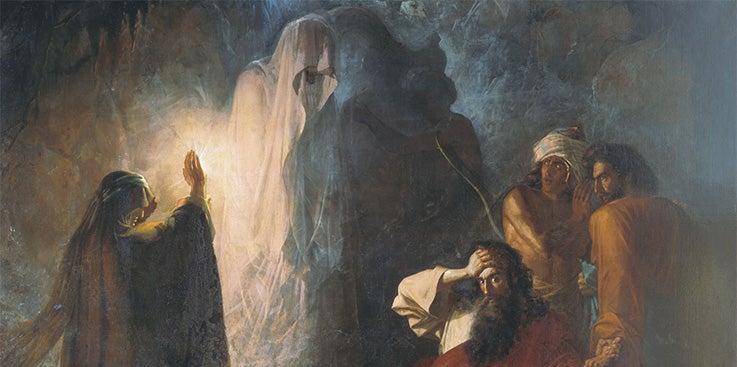
Fours, for better or worse, are outside-the-box thinkers. They will come up with solutions to problems that others never would even consider. In Saul’s life, however, this didn’t really do him much good. One of the most interesting stories from his life is when he paid a late night, costume-clad visit to a medium’s hut. (If you have a friend who suggests going to a fortune teller for fun, they’re probably a Four…)

He dawns a disguise and calls upon this witch to summon the spirit of Samuel, who had passed away some years earlier. The ghost of Samuel tells Saul that because of his sinful choices and actions, both he and his son would die in the upcoming battle. Sure enough, the next day Jonathan fell in battle. Saul witnessed it all and fell on his own sword, taking his life.

Fours have a tendency to wallow. Especially if they are unhealthy, Fours can go to that dark, sad place and have a hard time getting back out. I think that’s why Fours like to surround themselves with art and beauty. Beauty gives us a reason to hope, and hope drives us out of despair.

Saul had cut himself off from all beauty and hope, being driven by nothing other than his envy toward David. That envy fueled his own insecurities, shame, and self-doubt, ultimately leading to his demise.

Fours, your life doesn’t have to be a Shakespearean tragedy! You don’t have to live in the drama and the melancholy. Those places are fine to visit, but you don’t want to live there. Don’t settle in. Find out what is bringing on those feelings of sadness or depression and deal with them. Don’t blame it all on other people or circumstances beyond your control. Saul blamed all his problems on David instead of taking ownership of his own idiotic choices that got him into the mess.

Fours – find things that bring you true joy in life. Don’t worry so much about fitting in or being unique or whatever it might be on any given day. Focus on finding true joy and beauty in your ordinary, everyday, mundane, routine life.

Believe me, you make our lives so much more interesting just by being you.
______________________________

Who Is This Guy?

We just finished the Christmas season. One of my favorite Christmas hymns is “What Child Is This?” From his conception and birth there was something different about the one they called Jesus. But who is he? What makes him so special?

-WHO IS JESUS?-

I believe that is the most important question you will ever have to answer. And believe me – everyone has an answer for that question. Every single person in the world has their own answer, even if it’s “I don’t know.”

So who is Jesus to you?

You might give the good Sunday school answers: Savior, Messiah, Christ, Lord, King, Son of God, Holy, Perfect, God with Us, Prince of Peace, Friend, Brother, The Word.

He is indeed all this and more. However, do we really understand what those titles and roles actually mean? Probably not. It’s like when you first began to be curious about your dad’s job. When you were young, you probably asked your dad what he did. And he probably told you, but you as a four-year-old had no idea what a proctologist or a regional manager or a vice president of finances was. But you would tell your friends just to impress them.

Hopefully in the coming weeks we will begin to actually understand what those titles actually mean.

-WHO DO PEOPLE SAY THAT I AM?-

There’s an interesting conversation Jesus has with his disciples right in the middle of Mark’s Gospel. He asked them, “Who do people say that I am?” They replied, “Some say John the Baptist; others say Elijah; and still others, one of the prophets.” (Mark 8:27-28)

Who is Jesus from a worldly point of view today? If you were to ask the average Joe off the street what they thought about Jesus, what might they say?

He’s a good teacher. He’s a myth. He’s a prophet. He’s a religious zealot who got himself killed. He’s a Jewish rabbi who became a legend. He’s a nobody.

Basically any answer you would get could start with the word “just.” He’s just ________________. But as we take a look through the Gospel of Mark, we will see that Jesus isn’t just anything. He isn’t even just the Savior, the Messiah, the Son of God. He’s all that and more. Jesus is more than we can ever really grasp. That’s why people had such a hard time figuring him out. Even his closest disciples and friends – even his own family – didn’t really know what to make of him.

-JESUS IS…-

So who is Jesus? We’re going to dive into Mark’s Gospel to find out. But since Mark isn’t too patient in his writing, he spoils the whole thing right off the bat.

The beginning of the good news about Jesus the Messiah, the Son of God…
(Mark 1:1)

Every word of that sentence is loaded. “The beginning” automatically takes our minds back to Genesis 1 – “In the beginning, God created the heavens and the earth.” Mark wants us to know that something new is happening. Creation 2.0 is underway.

“The good news” is a very specific phrase that Mark is using. Our word “gospel” comes from the Old English phrase “good spell,” meaning a good word/news. It’s rooted in the Greek word evangelion, from which we get the word “evangelism.” This was a very familiar concept in the Roman world. Whenever a Roman general was victorious in battle, they would send messengers into the surrounding territories to tell the “good news” about the victory over their enemies. Or if a new emperor took the throne, messengers would go throughout the empire proclaiming the “good news” about the new Caesar, often hailed as a “son of the gods.” Mark uses that word intentionally, signaling that a great victory has been won and a new king is on the throne.

“About Jesus…” Did you know that wasn’t his name? Jesus comes from the Greek-ified (or Hellenized) version of the Hebrew name Yeshua. In English that would be the name Joshua. It was a super common name back then, and it’s still a super common name in our culture. But it’s a powerful name. It means “YHWH saves.” His name is his mission.

“The Messiah” is a term that means “anointed one.” This refers to an anointing ceremony that would set a person aside (sanctify) for a specific purpose – to become king or to achieve a specific task for God and his people, etc. This word is also translated “Christ.”

“The Son of God” is a phrase taken directly from Psalm 2, which was a coronation song in Israel commemorating the crowning of a new king in Jerusalem. In the middle of Psalm 2 God says, “You are my son, today I have become your Father.”

Mark makes it clear from the very beginning who he thinks Jesus is. He’s stating his thesis, and everything to follow is meant as evidence to back up his thesis. This gospel account is crammed full of people trying to figure out who Jesus is, and inviting the reader along on the journey of discovery.

Take the first chapter, for instance. That’s where we will begin. Grab your Bible or Bible app (or click on this link) to read Mark 1:4-39. Try and spot all the times we’re told who Jesus is or what he is doing. There’s also one big question asked about Jesus in chapter 1.

Who is Jesus according to Mark 1?

  • One more powerful than John the Baptist, who will baptize with the Holy Spirit (1:7-8)
  • God’s Son, with whom God is well pleased (1:11)
  • Rabbi, calling his disciples (1:16-20)
  • The Holy One of God (1:24)
  • Exorcist (1:27)
  • Healer (1:30-34)
  • Traveling preacher/miracle worker/exorcist (1:39)

What big question is asked about Jesus in Mark 1?

“What is this? A new teaching—and with authority! He even gives orders to impure spirits and they obey him.”
(Mark 1:27)

When he commanded the demon and drove it out, the people had never seen anything like that. They were completely astonished at Jesus’ authority. You see, it’s one thing to claim to be the Messiah, the Son of God. It’s another thing to back it up with actions that others can see and report on. (We’ll get deeper into that in chapter 2.)

-BE LIKE JESUS-

Mark’s gospel also focuses on what it means to be a disciple of Jesus. We are introduced to Jesus’ first disciples in chapter 1 – Peter, Andrew, James, and John. These two sets of brothers were also professional fishermen. Jesus, a rabbi, called them to be his disciples – and they dropped everything to follow him. The rabbi-disciple relationship was quite unique. We don’t really have anything like that in the US. A disciple was a student, the rabbi was a teacher. But the goal wasn’t just to learn what the rabbi knew. The goal was to live as the rabbi lived and to do what the rabbi did.

Disciples of Jesus should strive to BE LIKE JESUS. Not necessarily to perform miracles and drive out demons. But there are things we can learn from Jesus and imitate in our own lives as his followers. Here’s what I see from chapter 1.

BE BAPTIZED.
Jesus was baptized. His disciples were baptized. He commands others to baptize and be baptized. You should do it, too. In my understanding, the journey of discipleship doesn’t really begin until you commit your life to Christ in the waters of baptism.

KEEP THE MESSAGE SIMPLE.
So often the biggest hinderance in sharing our faith with others is the fear that we don’t know enough. I would disagree with that. Jesus’ first message was as simple as it comes – “The time has come. The kingdom of God has come near. Repent and believe the good news!” You don’t have to deliver a doctoral level thesis paper in order to share your faith with someone. Invite them to church. Tell them what God has done in your life. Let them know that Jesus loves them and that they can experience grace and forgiveness. Keep it simple.

TAKE TIME FOR PEOPLE.
Jesus invested in his disciples. He chose them, he called them, and he shared his life with them. He also took time for people like Peter’s mother-in-law who was sick with a fever. Jesus took her by the hand and healed her. Jesus was never too busy, never too rushed, never too hurried to stop and spend time with people who needed him. Take time for the people who matter most to you. Invest in those relationships.

VALUE YOUR ALONE TIME WITH GOD.
Even in the hustle and bustle of his life, Jesus made time to spend with God. He had to get up very early in the morning to do it, but he prioritized it. Jesus knew that he couldn’t make it through the day without spending time in prayer and worship with God. For so many of us, time is our most precious resource. We just don’t have enough of it. So make sure that God and others are getting the “first fruits” of your time.

DON’T GO WITH THE CROWD.
The disciples found Jesus praying alone and kind of told him off. “Everyone is looking for you!” But Jesus didn’t take the bait. He could have gone back to the crowd, amassed a following, grown in his popularity and celebrity status. But he didn’t. He kept his mission small. I can’t help but think of our culture today. If it could be summed up by one phrase, I think “everyone is looking for you” would be a really good one. We are expected to be available 24/7 via text, Snapchat, or DM. If we get a notification, we better check it and respond immediately. Jesus tells us not to take the bait. If you always give in to the notion that “everyone is looking for you,” then you are giving other people way too much control over your life.
___________________________________

For an excellent introduction to the Gospel of Mark, check out this video by The Bible Project.


What I Read in 2018

A reader lives a thousand lives before he dies. The man who never reads lives only one.
-George R.R. Martin

Every year I like to track the books I read. It’s always interesting to look back and remember all the authors and stories that have journeyed with me on yet another trip around the sun. Here is my list of books and authors from my 2018 list along with some highlights and recommendations.

[books in RED are stories I read to my 8yr old son, books in BLUE are ones I’m still working on, books with an * were audiobooks]

  1. David and Goliath, by Malcolm Gladwell
  2. *A Team of Rivals, by Doris Kearns Goodwin
  3. Magnus Chase: Ship of the Dead, by Rick Riordan
  4. The Voyage of the Dawn Treader, by CS Lewis
  5. Falling Upward, by Richard Rohr
  6. The Silver Chair, by CS Lewis
  7. A Wrinkle in Time, by Madeleine L’Engle
  8. Unashamed, by Lecrae
  9. Enneagram: A Christian Perspective, by Richard Rohr and Adreas Ebert
  10. *Freakonomics, by Steven Levitt and Stephen Dubner
  11. *Superfreakonomics, by Steven Levitt and Stephen Dubner
  12. The Last Battle, by CS Lewis
  13. Prince of Fools, by Mark Lawrence
  14. Charlotte’s Web, by EB White
  15. *I Am Malala, by Malala Yousafzai
  16. The Liar’s Key, by Mark Lawrence
  17. Reviving Old Scratch, by Richard Beck
  18. *Star Wars Aftermath, by Chuck Wendig
  19. *Star Wars Aftermath: Life Debt, by Chuck Wendig
  20. The Wheel of Osheim, by Mark Lawrence
  21. Ophelia and the Marvelous Boy, by Karen Foxbe
  22. Red Sister, by Mark Lawrence
  23. *Star Wars Aftermath: Empire’s End, by Chuck Wendig
  24. Dark Matter, by Blake Crouch
  25. The Day the Revolution Began, by NT Wright
  26. The Sacred Enneagram, by Chris Heuertz
  27. Artemis Fowl, by Eoin Colfer
  28. Unarmed Empire, by Sean Palmer
  29. *Bloodline, by Claudia Gray
  30. Blink, by Malcolm Gladwell
  31. Lost Souls (Frankenstein #4), by Dean Koontz
  32. I’m Still Here, by Austin Channing-Brown
  33. Artemis Fowl: The Arctic Incident, by Eoin Colfer
  34. The Path Between Us, by Suzanne Stabile
  35. *Grant, by Ron Chernow
  36. The Prodigal Prophet, by Tim Keller
  37. An Absolutely Remarkable Thing, by Hank Green
  38. Daring Greatly, by Brené Brown
  39. Dracula, by Bram Stoker
  40. Artemis Fowl: Eternity Code, by Eoin Colfer
  41. Harry Potter and the Sorcerer’s Stone, by JK Rowling
  42. Everyone Always, by Bob Goff
So, this year I’ve developed a love for audiobooks. It started last year, but I really enjoyed them a lot this year. Nine books on my list were audiobooks. These are great for turning on while I’m out running the trails every week or when I’m doing the dishes. The Star Wars audiobooks have amazing production value. It’s like listening to a movie. They’re kind of like the old-time radio shows, with sound effects and background music.

I also have found that I much prefer physical books to ebooks. I appreciate being able to pull up a book on my iPad through Kindle or Overdrive, but it’s not as enjoyable for me as reading a physical paper book.

MY TOP BOOKS

Here are what I would consider my top books on the year in both fiction and non-fiction reads.

NON-FICTION

I Am Malala is an autobiographical memoir by Malala Yousafzai. The now-twenty-one-year-old Oxford student from Pakistan dared to stand up against the Taliban and was nearly assassinated at the age of 14. Her story is an amazing testament to the best and worst of humanity.

I’m Still Here, by Austin Channing-Brown is an eye-opening look at racism and bias in the US, especially among evangelical church-goers.

Grant, by Ron Chernow is an extensive look at the life and times of Ulysses S Grant, hero of the Civil War and 18th President. I’m still working through the audiobook, as it’s 38 discs with a 48-hour runtime (!), but what I’ve heard is absolutely amazing. Grant was one of the truly good men of his day. Many wanted to fight to end slavery, but Grant wanted to fight for equality and full citizenship for people of color.


FICTION

An Absolutely Remarkable Thing, by Hank Green, feels like an instant modern classic. It’s at once both an intriguing, fun sci-fi thriller AND an in depth analysis of our internet-celebrity culture and an outrage-driven news cycle. But what I got from it was an optimistic take on what the internet could/should be if we let it unite us instead of dividing us.

Dracula is a classic for a reason. Bram Stoker was ahead of his time with this book. It could have been debuted last week and would be every bit as thrilling and captivating. Honestly, it took me a couple of tries to really get into this book, and I’m so glad I finally did. The whole book is comprised of “found” materials – letters, journal entries, news articles, telegram correspondence. But some of the scenes are absolutely gut wrenching and terrifying. If you like vampire novels and movies, go back to the source with this one.

Mark Lawrence has quickly become one of my favorite fantasy authors. Last year I read his Broken Empire trilogy. This year, I made it through his Red Queen’s War trilogy, which takes place in the same world concurrently with the Broken Empire books. It focuses on different characters on a different quest, and it brings in elements of Norse mythology. If you are a fan of medieval fantasy, you need to check out Mark Lawrence. The Red Queen’s War trilogy includes Prince of Fools, The Liar’s Key, and The Wheel of Osheim.

What are your favorite books you’ve read this year? Let me know in the comments, and be sure to connect with me on Goodreads.