
Page 15 of 82
You’re in Exile. What Now?! (Jeremiah 29)

I’m sure you’ve likely heard or read Jeremiah 29:11. It’s a great verse. It really is!
“For I know the plans I have for you,” declares the Lord, “plans to prosper you and not to harm you, plans to give you hope and a future.”
It’s an inspiring verse of hope and an encouragement to trust in God. He will provide for us and take care of us. God has our best interests in mind. He doesn’t want us to fail but to succeed and prosper as his people.
But let’s put this verse back into context, and it might just be even more relevant for us. (Read the full letter from God/Jeremiah to the exiles here.)
God, through his prophet Jeremiah, is writing a letter to the Jews who are in exile. They have been conquered by the Babylonian Empire, and thousands of them now have been uprooted and forced to live as foreigners in Babylon.
Imagine your entire life being torn from you. Imagine an invading army destroys your hometown, burns down your church, demolishes your schools, and takes you and all your friends hundreds of miles away. You don’t know the culture or the language or the religion or the food. You have no rights and none of the comforts of home. What would you do?
Would you fight, resist, and rebel? Would you assimilate as quickly as possible, go along to get along? Would you do just enough to get by, holding onto the hope that any day now God would deliver you and bring you back home? Or would you be somewhere in between?
In Jeremiah’s day there was a little of all of that. And in this letter God addresses all these groups with all their different outlooks and attitudes.
God tells them:
- Don’t stop living your life. Marry, have kids, build homes, cause you’re gonna be here a while.
- Seek the peace and prosperity of Babylon; if it prospers then you will also prosper.
- Don’t stop believing. Hold onto that feeling. (Just seeing if you’re paying attention)
- Don’t listen to those who give you a false hope that it will all be over soon.
- Don’t listen to those who are inciting violence and rebellion. It won’t end well for them.
- Get comfortable because you’re going to be here for 70 years.
God wants his people to still be his people even though they are in exile. Even without the Temple, they can still worship. They can still pray. They can still live out the covenantal laws. They can still seek him with all their heart. The true test of their faith in him is this: can they remain faithful to God even if they aren’t the ones to directly benefit from that faithfulness, but rather for the sake of their children or grandchildren?
God promises to be found by them, even in Babylon. God will be found by us, even in the midst of political turmoil and a global pandemic. We are living as foreigners and exiles, but we must continue to seek God with our whole heart, and we must not put our trust in the false hope offered by others.
God has plans for his people – including our own children and grandchildren. What choices can we make today that will improve the lives of those who come after us? What legacy do we want to leave for the future generations?
God makes one thing clear to his people. The exile will end. Sure enough, right at 70 years after the initial wave of Israelites were taken into captivity (609BC), Babylon was overthrown by Persia, whose emperor, Cyrus, released the people of Israel to go back home (539BC).
God is faithful. God keeps his promises. God has plans for us, too. This pandemic will end. The political turmoil will pass. Your “now” is not your “forever.” But Jesus Christ is the same yesterday, today, and forever. Hope placed in God in never a false or misplaced hope.
__________________________________
Feel free to download these images and set them as your phone’s lock screen as you focus on Jeremiah 29 this week.


What If Jesus Was Serious About the Poor?

Hey Jesus, I have a question for you. I heard something you said recently, and I think I need a little explanation. You said, “Blessed are you who are poor, for yours is the kingdom of heaven.”
Yes. What don’t you understand about that?
Well, it’s just that I hear a different message in our churches and from Christians online. I hear pastors on TV and the internet talk about how God is supposed to bless us with money and whatever else we want. They toss around the phrase, “Name it, and claim it.” They point to the time you said we will get whatever we want if we ask for it in faith. So…if I don’t get what I want, then doesn’t that mean I don’t have enough faith? Doesn’t that mean the poor simply aren’t faithful enough for God to bless them?
I see. I think those people are referring to what I told my disciples before I went to the cross. During our last Passover meal together I told them I would send the Helper, the Holy Spirit, to them and through his power they would do even greater things than they saw me do. This was all for the advancement of the Kingdom so the church would grow and thrive in Judea and Rome. This has nothing to do with personal wealth or blessing. In fact, I told them they would also face the same kind of hatred and suffering as me. I was poor. I suffered greatly. I didn’t live a comfortable, easy middle-class life. If “name it, and claim it” were true, then I guess I didn’t have enough faith when I asked the Father to let the cup pass from me.
No, let me make this clear. A person’s wealth and status are no indication of their level of faith or of God’s blessing and approval.
Ok, I think I understand that the whole “prosperity gospel” isn’t what you taught. But to call the poor “blessed?” I mean, from what I hear they are only poor because they’re too lazy. They would rather live off of unemployment or disability checks than go to work on a regular basis. We live in a world that rewards personal responsibility and work ethic. Isn’t that how we solve poverty?
Ah yes, laziness. The unpardonable sin of a capitalistic society. Do you remember when we passed a man born blind? The disciples asked me who had sinned – the man or his parents. Do you recall my answer?
Um…you said neither?
Right. My disciples wanted to blame the victim or his parents for his circumstance. It’s not always “personal responsibility” that gets someone into the terrible situation. It’s not always a smoker who gets lung cancer. It’s not always a drunk driver who gets killed in a car wreck. Just because someone is poor doesn’t mean they’re lazy. We want to look for easy answers to complex problems. But “time and chance happen to them all.” If someone can live more easily on an unemployment or disability check from the government than they could working full time, doesn’t that say something about the greediness of employers?
Whoa, Jesus you’re starting to sound socialist. We believe in free market capitalism. Even Paul said that if someone doesn’t work, then they shouldn’t eat. Right?
Yes, and so I made all 5,000 men wash dishes to pay for the meal I fed them.
Oh….
Paul was writing to my followers in Thessaloniki. They thought I was going to come back at any moment. They believed my triumphant return was imminent, so many were quitting their jobs and becoming idle waiting around for me. They became a burden to others when they were fully capable to providing for themselves. It was a fundamental misunderstanding that Paul was trying to correct.
But you are still equating poverty with laziness. Do you remember the story I told about the vineyard owner who went out at different points in the day to hire workers?
Oh yeah! And the lazy ones who got hired last were paid the same as those who had slaved away under the hot sun all day. That still doesn’t really seem right to me…
Who told you they were lazy?
I mean, they weren’t hired until late in the day. They obviously slept in and goofed off all morning, right? That’s how I heard it.
But that’s not what I said. I never said those workers were lazy. I simply said that no one else had hired them. I never gave a reason. You read into that. This is a story about how the Gentiles would be invited into the Kingdom and receive the full blessing of salvation right alongside the Jews. But it also has real world implications. Those hired last still needed to feed their families. And the vineyard owner had the right to do what he wanted with his own money–and that meant being more generous to his workers.
Yeah, so that’s why we have a minimum wage.
Have you tried living on $7.50/hour? Didn’t you see the recent headline stating minimum wage is not enough to afford the average rent in any single state in the US? The CEOs are making billions while the workers are living in poverty. This is the exact kind of behavior that my prophets scolded the leaders of Israel for. The rich are getting richer and the poor are getting poorer. This is not sustainable.
Ok, Jesus. It’s starting to sound like you don’t believe in The American Dream.
And what is this “American Dream?”
Well, from what I can find on Wikipedia…
The American Dream is a national ethos of the United States, the set of ideals (democracy, rights, liberty, opportunity and equality) in which freedom includes the opportunity for prosperity and success, as well as an upward social mobility for the family and children, achieved through hard work in a society with few barriers. In the definition of the American Dream by James Truslow Adams in 1931, “life should be better and richer and fuller for everyone, with opportunity for each according to ability or achievement” regardless of social class or circumstances of birth.
You know, the whole – spouse, 2.5 kids, suburban home with a dog and white picket fence, a steady job and a 401K so we can retire early and enjoy life.
Oh, so the American Dream ultimately ends in laziness.
Wait, no–
Do you remember another story I told, sometimes called “The Rich Fool?” Maybe you should go back and read it for yourself real quick:
“The ground of a certain rich man yielded an abundant harvest. He thought to himself, ‘What shall I do? I have no place to store my crops.’
“Then he said, ‘This is what I’ll do. I will tear down my barns and build bigger ones, and there I will store my surplus grain. And I’ll say to myself, “You have plenty of grain laid up for many years. Take life easy; eat, drink and be merry.”’
“But God said to him, ‘You fool! This very night your life will be demanded from you. Then who will get what you have prepared for yourself?’
“This is how it will be with whoever stores up things for themselves but is not rich toward God.”
If you want to talk about laziness, look at the man in this story. He didn’t plant the entire field himself. He didn’t tend the crops by himself. He didn’t harvest all by himself. He didn’t even build the barns by himself. He most certainly had workers to help with the entire process. But he only gives credit to himself. He only thinks of himself and how he won’t have to work anymore. He could have given his workers a bonus. He could have fed the town. He could have given seeds to other struggling farmers. He could have done so much good, but be was selfish and lazy, and it cost him his life.
Read also what my brother James wrote:
Now listen, you rich people, weep and wail because of the misery that is coming on you. Your wealth has rotted, and moths have eaten your clothes. Your gold and silver are corroded. Their corrosion will testify against you and eat your flesh like fire. You have hoarded wealth in the last days. Look! The wages you failed to pay the workers who mowed your fields are crying out against you. The cries of the harvesters have reached the ears of the Lord Almighty. You have lived on earth in luxury and self-indulgence. You have fattened yourselves in the day of slaughter. You have condemned and murdered the innocent one, who was not opposing you.
It’s not a sin to be rich. I had many wealthy patrons supplying for our financial needs during my ministry on earth. The earliest church met in the homes of wealthier believers. But they provided for each others’ needs. There were no needy persons among them – which is exactly what I wanted. Money is not evil, but my servant Paul was right in warning how the love of money leads to all sorts of evil. Wealth and power was one of the temptations Satan flaunted before me, but it would have required worshiping him. Many people still face that same temptation today, even in the church.
My kingdom has always thrived away from seats of wealth and power. Even today my church is growing in the global South and East while it is shrinking, or being pruned rather, in the global North and West. My mission was to bring good news to the poor. The good news is that the kingdom of heaven is theirs! But often good news for one group is bad news to another. The kingdom of heaven is for the poor, but the rich will find it incredibly difficult to enter.
Huh, so I guess you were serious about what you said…
The Greatest Stories Ever Told

If you’re like me–a kid who grew up in church his whole life with Bible classes and VBS and Bible Bowl, etc. etc…–then you’ve probably heard this definition of “parable:”
An earthly story with a heavenly meaning.
Yep. My Bible class teachers always had to make a distinction between a Parable, a story told by Jesus to communicate a deeper meaning about life in the Kingdom of God, and a Fable, a cute little children’s story meant to get us to behave. There is a fundamental difference between the Parable of the Lost Sheep and the story of The Boy who Cried Wolf.
I’ve been thinking a lot about Parables lately. I am a big reader of fiction, specifically sci-fi and fantasy with the occasional YA novel or mystery/thriller thrown in. Right now I have the honor and joy of reading The Lord of the Rings to my nine year old son at night before bed. We’re in The Return of the King, and I don’t really want it to be over. He is experiencing this story for the first time, and in a way I’m also experiencing it anew. Tolkien drew a lot from his experiences in war, and it’s obvious to me as an adult that he is purposefully working in some bigger themes about good and evil, war and peace, heroism and bravery, faith and doubt, death and resurrection, betrayal and redemption. But I don’t expect my nine year old to catch all of that on his first experience of it. All he knows is that the odds are terribly stacked against Aragorn, Frodo, Gandalf, and their companions.
I love this quote from renowned author G. K. Chesterton:
“Fairy tales do not tell children the dragons exist. Children already know that dragons exist. Fairy tales tell children the dragons can be killed.”
Chesterton, Tolkien, Lewis–all great story tellers in their own right–are all drawing from the Greatest Story Teller. I don’t say that lightly. The Parables of Jesus are master works in storytelling. They transcend time, space, culture, language, and even religion. We have spent 2,000 years plumbing the depths of these stories, and we still haven’t found the sea floor. There is always another stone to overturn, another corner to round, another hill to climb, another viewing angle to enjoy.
Are the Parables “earthly stories with heavenly meanings?” Yes. But they’re also earthly stories with earthly meanings. Here’s what I mean.
In the Parable of the Lost Sheep, the shepherd leaves the ninety-nine sheep in his flock and goes on a search for the one sheep that had gone astray. This is obviously about the lengths God in Christ would go to in order to rescue humanity. However, isn’t it also an example of how we should treat each other? In Galatians 6 and James 5 we are encouraged to chase after the brother or sister who has gone astray and restore them in love. Sometimes we’re the lost sheep. Sometimes we’re among the larger flock. Sometimes we’re the shepherd.
Or what about the Parable of the Prodigal Son (a poorly named one, in my opinion). Sometimes we’re the lost son who wants to find his way back into the family. Sometimes we’re the father who should be looking for our lost ones and welcoming them back with open arms and a party. Other times we’re the older brother who withholds grace and gets indignant at the forgiveness of others. But shouldn’t this story inspire us to be more like the father and less like the older brother in our dealings with each other?
Shouldn’t the Parable of the Vineyard Workers inspire business owners and employers to be more generous in their hiring and in their payment?
Shouldn’t the Parable of the Rich Man and Lazarus warn those of us who are rich to get over own own entitlement and to give to the poor and destitute who are right outside our door?
Shouldn’t the Parable of the Unmerciful Servant challenge us to be as merciful towards others as God has been towards us, and maybe even LITERALLY cancel debts?
These stories from Jesus teach us about God, absolutely. But they also teach us about our own human nature. They teach us what it looks like (or should or shouldn’t look like) to actually live in the Kingdom of Heaven.
I think the problem is that so many of us Christians have over-spiritualized and/or individualized the things in Scripture. We hear the teachings of Jesus, but walk away thinking he didn’t really mean what he said, or his way of life wouldn’t work in the 21st Century, or we can take things figuratively all the time, or it’s all about me and my individual relationship with God.
The goal of Jesus’ Parables was to present the truths of the Kingdom of God to the people in such a way that only those who really stopped to think them through would begin to understand their deeper meaning and implication. The Parable of the Sower is a Parable about Parables. Not everyone is going to get them! We’ve had two millennia to wrestle with these stories, and we still struggle to sit with them long enough to really understand.
I’m not saying I fully get them either. I’m not trying to place myself on a pedestal. But when we hear the Parable of the Good Samaritan and come away thinking Jesus is just telling us to be a good person who helps people sometimes, we’re missing the bigger point.
I don’t want to live in a world in which the Parable of the Good Samaritan was never told. I don’t want to be a part of the church that doesn’t revisit the Parable of the Prodigal Son frequently. I don’t want to be a part of an economic and religious system that hasn’t been shaped by the Parable of the Rich Man and Lazarus. These stories are not just life changing, they’re world changing.
They don’t just teach us about God. They teach us about ourselves.
_____________
So what’s your favorite Parable and why? What parables do you think we should go more in depth? Let me know in the comments, and subscribe so you never miss a post!
Cancel Culture: A Christ-Follower’s Response

[Don’t forget to check out the previous post concerning Cancel Culture.]
Cancel Culture. That’s such a buzz-worthy topic right now. It seems like every week a new celebrity is in danger of being “cancelled.” But surely those among the Christian community who decry the practice have never been guilty of similar actions against their own, right?
Ahem…
It hurts my heart to see my brothers and sisters in Christ go after each other and attack one another’s character. Cancel culture is alive and well even within the church. So what are we to do? Should we shine a spotlight on everyone’s sins or what we consider to be “false teaching” in order to shame them into repentance? Should we sweep it under the rug and pretend like there’s nothing to see here when the lives and faith of people are at stake?
Here are six ways we Christians to can stop propagating cancel culture while still maintaining our own integrity, values, and standards.
1. Stop being shocked all the time.
Whenever accusations are brought against someone – a celebrity, a pastor, or whomever – I inevitably see people react by saying, “I just can’t believe it!” or something to that effect. So first of all, let’s stop being so shocked all the time that people are sinners. Look inside yourself. Is there something in your own life currently or from your past that would shock most people who claim to know you?
Yeah, same.
We can be heartbroken and grieve. We can get angry at being deceived. But we shouldn’t be shocked or in denial all the time. It shouldn’t rock your world to find out that imperfect people are imperfect.
2. Wait to respond.
I intentionally stop myself from responding publicly to every new scandal or breaking news event. There is always more to the story. There will most certainly be more revelations as the investigation gets underway or when more people come forward with their story. I see many Christians jump on the judgmental bandwagon without knowing all the facts, and we make statements that age like milk. If we’re not careful, we could very well be in violation of the Ninth Commandment (You shall not bear false witness against your neighbor) by sharing rumors and spreading misinformation, knowingly or not.
3. Love the sinner, hate your own dang sin.
I know we mean well when we talk about “hating the sin” but loving “the sinner.” But that line is too thin for me to be comfortable with. Love the sinner. Full stop.
Do you remember who Jesus hung out with all the time? “Sinners” and tax collectors. Do you remember what names Jesus got called? A drunkard and a glutton. Was Jesus ever in danger of passively condoning the sinful behavior of those whom he loved? Absolutely not! But in showing them the unconditional love of the Father, life change was sure to follow.
So many of us eagerly jump in to help someone remove the “speck” of sin from their eye, all the while needing emergency medical care to remove the beam that’s gotten lodged in our own eye. Jesus plainly tells us that we need to get our own junk figured out before we can even think to begin helping others. Too often I have seen Christian celebrities, televangelists, and pastors rage against a particular sin (adultery, drunkenness, gambling, drug use, abuse, etc) only to find out they have fallen deeply into that very sin.
Love the sinner. We’re all sinners. Hate your own sin. Ruthlessly address your own brokenness. Then maybe you’ll be equipped with the empathy and compassion necessary to help others out of their own struggle.
4. Forgiveness is not optional.
One of Jesus’ hardest teachings is this: If you don’t forgive others, God will not forgive you. Here’s the thing, forgiveness has nothing to do with whether the other person deserves it or not. Forgiveness frees you to move on. The Greek word literally means to exhale, to let go, to release. Forgiveness only requires one person – You.
Reconciliation and trust, on the other hand, is a two-way street. You can forgive someone, but that doesn’t mean you’re best buddies. We can collectively forgive a celebrity for their wrongdoing, but that doesn’t mean we continue to support them.
5. Use the brain that God gave you!
I’m reminded to two somewhat cliche truisms. 1) You can fool all the people some of the time, and some of the people all of the time, but you can’t fool all the people all the time. And 2) It’s easier to fool someone than to convince them that they’ve been fooled.
We Christians need to pray for discernment and wisdom in making proper judgment calls. BuT i ThOuGhT yOu WeReN’t SuPpOsEd To JuDgE! Yeah, well Jesus did say, “Don’t judge, or you will be judged.” But he also said, “You will know them by their fruits.” A bad tree can’t bear good fruit. We can look at a person’s life and see deep down what kind of person they are. For instance, how do they treat their waiter at the restaurant? How do they interact with the employees lower down the ranks? How do they carry themselves when things don’t go 100% according to plan, or when they don’t get their way?
We can make proper judgments based on the fruit of people’s lives, especially if they live in the public eye. When it comes to pastors and ministers, it’s even more critical. My job is the only one with a warning label on it. We pastors and church leaders will receive a stricter judgment in the end. I need people in my life who will hold me accountable and will call me on my junk. I think we all do.
6. Act justly. Love mercy. Walk humbly.
Let’s be men and women of integrity. Pursue justice. Holding wrongdoers accountable is imperative for a functioning society. Do what is right and invite others to do the same.
Let’s be willing to show mercy to all, and love doing it! That means we shouldn’t get indignant when someone doesn’t get the public shaming and lashing that we think they deserve. We don’t cynically look down our noses at those who choose to forgive, but rather celebrate those moments of mercy and grace.
Let’s walk in humility, knowing that we are all sinners in need of grace. Paul is an example of this. He never places himself on a pedestal. Instead, he draws attention to his own horrible, sin-filled past as an example of just how amazing God’s grace is. He fully owns his sins and failures. He knew full well that God opposes the proud but gives grace to the humble.
__________________
To sum up, our lives as Christ followers should be governed by these key words that I’ve mentioned above:
Love
Patience
Humility
Empathy
Compassion
Grace
Forgiveness
Justice
Mercy
That’s how we begin to cancel Cancel Culture.
What would you add to the list? Share your thoughts in the comments below, and be sure to subscribe so you don’t miss out on future posts like this.
Should Christians Participate in Cancel Culture?
Cancelled.
Fans of the show Firefly still get traumatized by that word. Too soon?
We’re growing more accustomed to things we love becoming cancelled – trips, conferences, events, movie premiers, sports seasons, television series. But we’re also growing more accustomed to a phenomenon known as “cancel culture,” in which people get “cancelled.”
Stop me if you’ve seen this before. A person achieves celebrity status – musician, actor, comedian, athlete, or even pastors. They enjoy the limelight, the success, the wealth, the fame for a while, sometimes even decades. But then something comes to light that they would rather have left hidden away in the darkness of their past – racist, sexist, homophobic comments or Tweets; “black face”; abuse accusations, etc. Suddenly the thing they thought was dead and buried has been resuscitated and weaponized against them. Now in the “attention economy,” there is an attempt to “cancel” said celebrity in order to remove them from our collective attention.
Ironically, doing so often causes more attention to be placed on the person, and as they say – even bad attention is still attention.
So maybe the person shrinks back behind the curtains for a while. Maybe they go to counseling or rehab or even prison. Maybe they’ve lost their job or their sponsors or their fans or their livelihood.
The question we Christ-followers need to ask ourselves is, Is cancel culture something we should be participating in?
That’s a tricky question, obviously. I think there are two sides to it. On the one hand, none of us want our entire lives to be judged on the basis of our worst day, weakest moments, or most embarrassing slips of judgment. On the other hand, there are those who are covering up serious crimes and abuses that should come to light so justice may be served.
Here’s where I think the teachings of Jesus can be helpful, as always. Look at what he says in Luke 6. Read this very slowly and consider how it applies to our discussion of “cancel culture.”
“Do not judge, and you will not be judged. Do not condemn, and you will not be condemned. Forgive, and you will be forgiven. Give, and it will be given to you. A good measure, pressed down, shaken together and running over, will be poured into your lap. For with the measure you use, it will be measured to you.”
(Luke 6:37-38 | NIV)
I heard on a Podcast just this morning an observation that struck me. They said something like, when left to its own devices the human heart will default to self-righteousness. I think that’s why Scripture so often reminds us that no one is righteous on his own. No one measures up to her own standards, much less to God’s standards. So we default to self-righteousness. At least I’m not as bad as THOSE people. Look how racist, how hateful, how abusive THEY are. But we must realize that deep down we’re all sinners in need of grace.
I think we have overused the word “Grace” to the point that it has lost some of its edge. Justice and wrath and punishment are not the scandal. Grace is. Deep down we want these celebrities to pay the price for their actions, words, or attitudes. We want them to be “disgraced” and shamed, because in some twisted way it makes us feel better about ourselves.
But Jesus tells his followers not to judge, or we will be judged. Don’t condemn, or we, too, will be condemned. I’ve never understood why some Christians take so much pleasure in pointing out other people’s sins and casting judgement on them. We even have a saying that is not biblical – “Love the sinner, but hate the sin.” I think Jesus challenges that sentiment. He says, “Love the sinners, but hate your own sin.”
Forgive, and you will be forgiven. Elsewhere he warns that if we don’t forgive others, then our Heavenly Father won’t forgive us our sins.
One major problem with cancel culture is the double standard we so often use. We are sinners calling out other sinners. I call this “Plank Eye Syndrome.”
“Why do you look at the speck of sawdust in your brother’s eye and pay no attention to the plank in your own eye? How can you say to your brother, ‘Brother, let me take the speck out of your eye,’ when you yourself fail to see the plank in your own eye? You hypocrite, first take the plank out of your eye, and then you will see clearly to remove the speck from your brother’s eye.”
(Luke 6:41-42 | NIV)
Jesus reminds us, “With the measure you use, it will be measured to you.” In other words, be as merciful towards others as you want God to be towards you. If you don’t want to be judged and condemned by God, then don’t judge and condemn others. If you want God to forgive you and show you mercy, then show mercy and forgiveness to others.
Am I saying there is never a time to call out someone else’s sin? No! Especially if they are causing harm to others, we need to try and put a stop to it. Jesus called out the Pharisees for their strict religious fundamentalism that was actually keeping people out of a relationship with God. Paul called out Peter for his unconscious prejudice against the Gentiles. The Prophets called out the kings and religious leaders of Israel for neglecting to take care of the most vulnerable among them.
But I think too many of us are far too eager to grab our stones and cut line to get the best shot at one whom society has condemned already.
So what practical steps can we take to combat this wild phenomenon of Cancel Culture and show the world a better way? More on that next time.
Jesus and Systemic Evil: The Faith of the Centurion
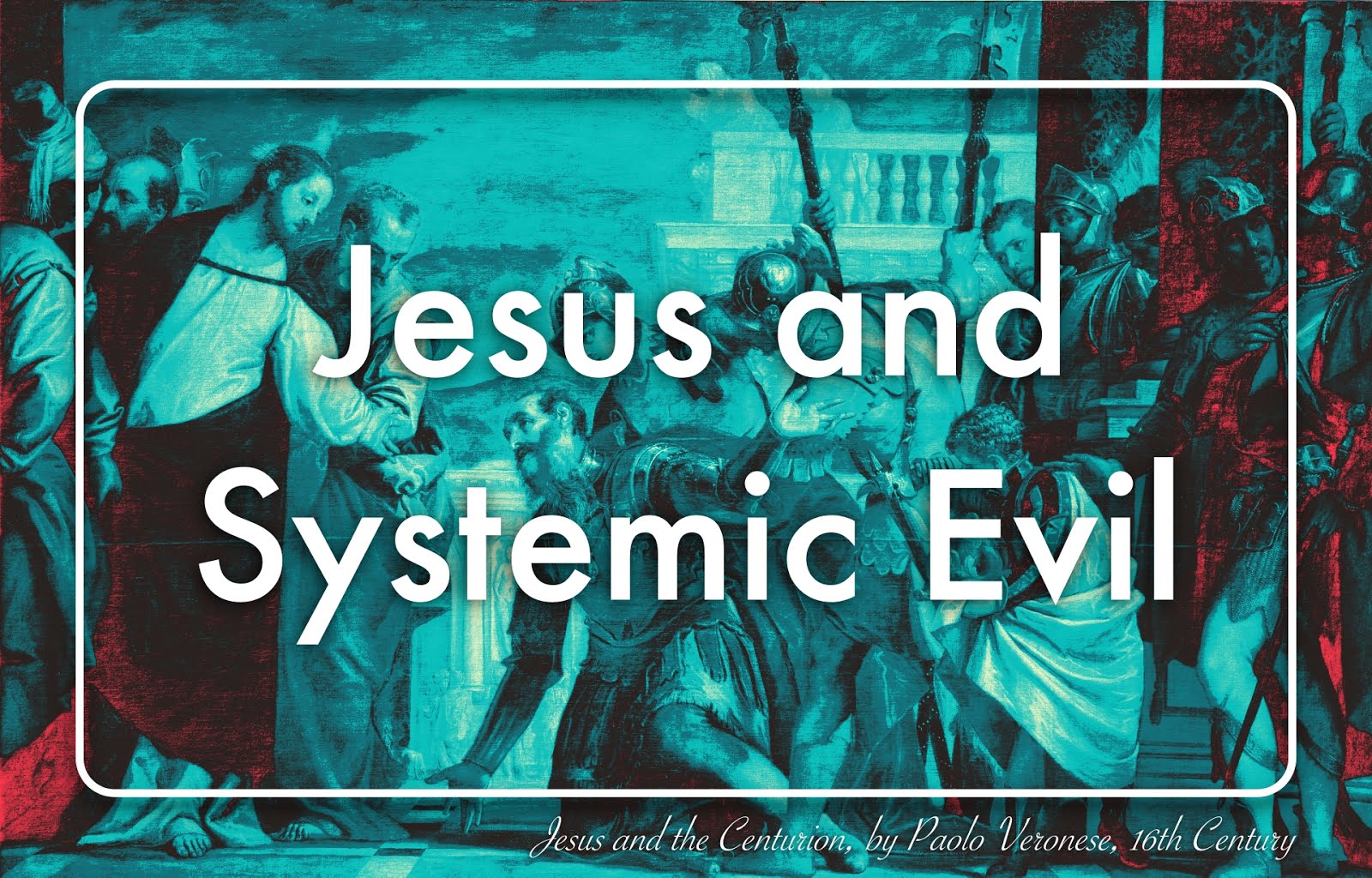
One of the most amazing stories in the Gospels occurs soon after the Sermon on the Mount in Matthew 8:5-13; or the Sermon on the Plain in Luke 7:1-10. Read those accounts of this story if you haven’t.
When Jesus talks to the Jews about their “enemies” he is undoubtedly referring to Rome. The Roman Empire is THE enemy in the New Testament. And everywhere they looked there were reminders of Rome, reminders of who was in charge, who called the shots, who ran the show. Israel did experience a certain level of freedom and autonomy – but only if they kept themselves in line.
But even so, Rome wanted to make sure that nobody forgot who was the boss. Their coins were imprinted with the profile of Caesar. They used these coins to pay taxes which were collected by fellow Jews who had defected to serve the cause of Rome. These taxes went to support the Roman military machine, including the occupying Roman soldiers in every town of significance.
Roman soldiers were basically the closest analog to law enforcement officers that we see in Scripture.
Maybe you can see where I’m going with this.
With all of this in mind, we now turn to the story of the Roman Centurion in Matthew 8 and Luke 7. As Jesus approached Capernaum, the Roman Centurion in command of the garrison just outside of town came out to meet Jesus (Matthew’s account) or sent someone to speak on his behalf (Luke’s account). Capernaum was a sleepy little fishing village. It was Peter’s and Andrew’s hometown, and it served as Jesus’ base of operations during his Galilean ministry.
 So the Roman Centurion pleads with Jesus to heal his personal servant whom he holds in deep regard. Here’s the cool part. This Centurion is one of the good ones. We don’t know much about him, but Luke’s account informs us that this Centurion provided the funds for the residents to build a synagogue in town. He is well-respected by the people of Capernaum, which is significant and speaks volumes about the character of this man.
I don’t want to focus on the request and the miracle itself, because if we peel back the layers, the miracle is the least significant part of this exchange. There are three things I want to highlight.
1. The Centurion calls Jesus “Lord”
No, this is not a divine title. It’s not the same as saying “Jesus is Lord.” Lord means “master” or “sir.” It’s a title of respect, acknowledging the authority of a person in power.
Stop. Sit with that for a moment.
Here’s a Roman Centurion, leader of a hundred or more soldiers in the most effective military the world had ever seen. He was a man of power, wealth, privilege, honored and revered by all. And he called Jesus – a poor, homeless, dark-skinned, Jewish rabbi, one who was at the bottom rung of the Roman societal ladder – Lord. He said, “I’m not worthy to have you come to my house.” This Centurion set aside his power, privilege, and dignity in order to elevate this poor, homeless, dark-skinned Jewish man. Let that sink in.
2. Jesus commends the faith of the Centurion
Again, we don’t know much about this man, but he wasn’t Jewish. He wasn’t an Israelite. We have no indication that he believed in YHWH or held any interest in the Jewish religion at all – apart from funding their synagogue. He was an outsider. As much as a typical Roman authority figure might look down on the Jews, the Jews were also very prejudice against Roman authority figures.
But this guy gets it, and Jesus honors him for it.
3. Jesus once again reminds us this kingdom is different
I’m sure a crowd had formed at this point. At the very least his disciples were there. After praising the faith of this Centurion, he turned around and basically told his followers and bystanders, “Get used to it.” People are going to be coming from all over the place to be a part of this thing, while the locals are going to miss it entirely.
__________________________________
Roman Centurions were terrible. The whole system was rigged against the Jews. They had very limited rights and freedoms. One of the most “ominous weapons” at Rome’s disposal was the cross of crucifixion. Rome loved using this torture device to snuff out rebellions and to serve as a warning to any would-be insurrectionists. Roman soldiers would carry out the floggings and beatings. They were the muscle of the empire. They would hammer the spikes through the hands and heals of anyone who dared to challenge the might of Rome. Crucifixions in the thousands were not uncommon, and they were overseen by Centurions.
Violence. Brutality. Oppression. Zero accountability.
This was a system of evil meant to keep the Jews in their place.
So does this interaction between Jesus and the Roman Centurion mean that he approved of the system and supported all Roman officers? Absolutely not! It was this very system that would ultimately torture and kill Jesus on false charges, without a fair trial, and with no mercy. But even from the cross Jesus cried out, “Father, forgive them for they don’t know what they are doing.”
Here’s the takeaway. As a follower of Christ, I can support, respect, and love law enforcement officers – while also being critical of the system of violence, brutality, oppression, and injustice. I can show my respect and appreciation for American soldiers – while also standing against war and needless bloodshed.
Jesus shows us that we can and should love the people while also speaking out and advocating for change within the systems. In other words – “Love the sinner, but hate the sin.”
Jesus certainly wasn’t advocating for the Roman occupying forces. But he honored the lives of the Roman soldiers he encountered and even prayed for the forgiveness of those killing him.
And it’s not just Jesus. We see the same thing happen with Peter and Paul. Peter famously travels to the house of Cornelius, another Roman Centurion. He preaches to his entire household and baptizes them all. Peter would later be crucified upside down by Roman soldiers under the orders of Caesar Nero.
Paul wrote in his letter to the Romans for them to follow the laws and obey those in authority. But then Paul would later be beheaded, also under Nero.
By now we’ve all seen the videos. We’ve all heard the accounts. There are dozens of videos circulating of police officers kneeling with, marching with, and praying with protestors. But there are also dozens of videos of police officers beating, pepper-spraying, and needlessly arresting protestors. I want to echo the words of Jesus when he prayed, “Father, forgive them, for they know not what they do.”
As Christians we are encouraged and instructed to pray for those in power, to obey those in authority, and to honor the king. But we are also told to take up the armor of God so that we can stand against the evil schemes of the devil, “against the rulers, against the authorities, against the powers of this dark world and against the spiritual forces of evil in the heavenly realms.”
I appreciate the sacrifices that our law enforcement officers make on a daily basis. One of my Elders is a State Trooper. His Facebook post the other day really pricked me. It’s easy to scapegoat the police right now as the cause to all our problems. But I don’t think that’s fair because a) they are victims of sin just as much as any of us, and b) systemic problems by definition are multifaceted and complex. So I support and respect our officers of the law. I can’t imagine what they’re going through right now.
But the system should be challenged and critiqued. Those with the authority to enforce the law should be held to a higher standard of accountability than regular citizens – just as I as a minister am held to a higher standard of judgment before God than those under my care.
Racial inequality has plagued humanity since civilization began. Anyone who fights for equality will meet incredible resistance. But the way of Jesus shows us what it looks like to fight the system. It looks like the Oppressor calling the Oppressed “Master.” It looks like intentional diversity, forcing us to get outside our comfort zone. And it looks like an innocent man wrongly executed by the state crying out, “Father, forgive them for they know not what they do.”
Jesus and Systemic Evil: Kingdom v. Empire

As a Christian and a minister I try my best to base my worldview on the life and teachings of Jesus. He is the lens through which I view the world, society, religion, politics, the news, etc. So obviously I’ve been giving a lot of thought to how Jesus addressed some of the very issues we are facing today.
Particularly I’ve been thinking about the way of Jesus in response to the protests concerning police violence and systemic racism.
Yikes.
These are difficult waters to navigate, but we must brave the rough waters ahead.
IT’S NOT JUST FOR YOU
I want to begin by drawing your attention to two of Jesus’ earliest sermons. His first real “sermon” was delivered in his hometown of Nazareth (Luke 4:14-30). One Sabbath he got up to read from the scroll of Isaiah. He reads what we would label Isaiah 61:1-2a –
The Spirit of the Sovereign Lord is on me,
because the Lord has anointed me
to proclaim good news to the poor.
He has sent me to bind up the brokenhearted,
to proclaim freedom for the captives
and release from darkness for the prisoners,
to proclaim the year of the Lord’s favor
Then he sat down and declared that this passage had been fulfilled in their hearing. In other words, Jesus is the one through whom these things would come about. The kingdom of God is now here. The kingdom of heaven is breaking into the world. This is purposefully set over and against the Roman Empire and the corrupt religious system in Jerusalem.
We must contextualize Jesus. He didn’t preach in a vacuum.
So far so good. But then he went on to remind them about the stories from 1st and 2nd Kings where the widow in Sidon (not Israel) was saved by God’s miracle through Elijah and where Naaman, the general of Aram’s (not Israel’s) army, was cured of leprosy through Elisha. The crowd immediately turned on Jesus to the point of wanting to kill him! Why? Because he is reminding them that God cares about other people, too, not just the children of Israel. He was calling out their deep-seated prejudice against outsiders, the gentiles. And he is making it crystal clear that this kingdom is not just an Israel thing. It’s a kingdom for everyone.
This is a classic example of a phenomenon we see happening even today in society. Let’s say a certain people group enjoys a level of privilege, power, or special status among society (in this case, the Jews were the People of God and no one else was). There is a nice, obvious Us and Them set up where everyone knows their place. But then things start to change. Suddenly THEY start to gain access to the special privileges that have only been reserved for US. When THEY start gaining rights and privileges and status and wealth and power and freedoms, then it can feel like losing for US. WE haven’t lost anything. But since THEY are gaining, it can feel threatening for US. Again, in this case it was the Jews’ status as God’s chosen, special people. But Jesus assures them that there are going to be a lot of THEM in the kingdom, too.
KINGDOM OF GOD
v.
EMPIRE OF ROME
Next we move to his greatest recorded sermon, the Sermon on the Mount (Matthew 5-7). The comparisons and contrasts of Jesus’ sermon with the Torah were evident to all his original audience. Jesus is setting himself up as the New Moses, so to speak. But this new constitution of the new kingdom doesn’t start with a list of requirements and laws, dos and don’ts. It begins with blessings. But these blessings are not like the list of blessings and curses found in Deuteronomy. There is nothing we have to do to earn the blessing. It is freely given. The kingdom of God is not a meritocracy.
The ethics and values of the Sermon on the Mount are also purposefully juxtaposed to those of both Israel’s corrupt religious system and the Pax Romana. Yes, the kingdom Jesus established is the anti-empire, anti-Rome, anti-Caesar kingdom. But not in the ways we might think.
Do you remember that whole thing about “going the second mile” (Matthew 5:41)? That was a direct reference to a common, hated practice. Any Roman soldier could force any Jew in Israel to carry his pack and gear for one mile. Jesus says, “go with them a second mile.” By willingly going the second mile, his followers would be highlighting the abuse of this system by those in power.
When Jesus told his followers to “love your enemies” (Matthew 5:44), who are those enemies he’s talking about? Rome, of course. Rome was the power house. Rome was the occupying military force. Rome was the vile beast of Daniel 7 and the harlot “Babylon” in Revelation. It was at the hands of Rome that countless Christians would die, including Peter and Paul. Rome was systemically evil, violent, and corrupt.
There were basically four responses to the systemic evil of Roman power within the Jewish ranks. There were those like the Sadducees and the Temple Priests who buddied up with Rome. Then there were the Zealots who actively fought against the Roman occupation. Some opted to simply retreat from society altogether, like the Essenes of Qumran (think Dead Sea Scrolls). And finally there were those like the Pharisees who believed that through religious piety and adherence to the Law they could win God’s favor, causing him to deliver them from Roman oppression, like had happened with Egypt, Assyria, Babylon, and Greece.
Jesus introduced a new way, the way of love and self-sacrifice. It wasn’t the obvious way. In fact, it was the more difficult way that not many would find and follow (Matthew 7:13-14). But it was the only way. A mere forty years after Jesus’ death and resurrection, Jerusalem would be sacked and the Temple would be razed to the ground never to be rebuilt. The Jews would revolt against Rome, hoping to overcome violence with more violence. The result would be utter catastrophe. But by that time (70AD) the Good News of the Kingdom of God had already spread across the Roman Empire and beyond. This new kingdom was defined not by borders or race or language, but by submission to Christ the King.
KINGDOM CITIZENS
v.
SYSTEMIC EVIL
Empires come and go. There may come a day when the United States of America is no more. But the kingdom of God will never fail. There is undeniably systemic evil and racism built into the American way of life – from income inequality to healthcare access to education opportunities to law enforcement and adjudication. But our citizenship is in heaven, Paul reminds us (Philippians 3:20). Our fight is not against flesh and blood (Ephesians 6:12), but against those ingrained, unconscious evils that persist in our human power structures – in our precincts and court rooms and statehouses and even among our churches.
So how do we, as citizens of the kingdom of heaven, address and confront those evils? That’s where we will pick up next time.
Justice and the New Covenant
Nine Tips to Discover Your Enneagram Type

So you want to discover your Enneagram number? Awesome. Welcome to the movement.
Unfortunately, it’s not as simple as taking a test. Discovering your Enneagram type isn’t like taking a Buzzfeed quiz to find out what Disney Princess you are. In fact, you will notice that taking an online questionnaire is the last thing I mention. Online quizzes should NOT be your first go-to for discovering your type.
The Enneagram, in my understanding and opinion, is different than other personality typing systems. Yes, the Myers-Briggs, or the DISC, or the Strength-Finders tests can all give you a good overview of who you are. But those tests and systems tend to be more descriptive than proscriptive. Here’s what I mean. The Enneagram is not just a personality typing system. Think of it more as the art of self-discovery and transformation. It doesn’t just tell you who you are, it tells you who you don’t want others to know you are. It reveals the masks and defense mechanisms you’ve come to hide behind. It tells you what happens when you are at your lowest, and it gives you a path of growth toward health and wholeness.
To find out more, check out my two-part posts on “Why the Enneagram?”
WHY THE ENNEAGRAM, PT 1
WHY THE ENNEAGRAM, PT 2
So you want to discover your Enneagram type, but don’t know where to start? Here are some way to help you get going on the journey.
0. Self-Awareness and Brutal Self-Honesty
The journey of the Enneagram is not something to be taken lightly. I know it’s a huge fad right now. It’s really hip and trendy, especially among Christians. But not everybody is ready for this journey. It’s not recommended for people under about age 20. And if you don’t have a certain level of self-awareness and cannot be honest about the darker sides of your personality, then you won’t get very far. This is a wisdom tradition, so there is a certain degree of maturity, honesty, and vulnerability that goes into this.
1. Read a Book
 Specifically this book: The Road Back to You, by Ian Cron and Suzanne Stabile. This is THE primer on the Enneagram. It’s an easy read, and you will be hooked in no time. The temptation will be to skim through the types until you get to one that sounds like you. But I promise, patience is critical when learning about the Enneagram for the first time. You must take the time to learn about all nine types to understand the interplay between them all. The wings, the stress and security lines, the stances – it’s very dynamic, and all the numbers interact with each other. So read, not just blogs and internet articles – read this book.
2. Research Online
Specifically, look to websites like The Enneagram Institute for further research and insights into the Enneagram types. Many sites like this will have a quiz or questionnaire section. You’re not ready for that yet.
3. Stress and Security Lines
 Ok, say you have read through the types, done a little extra research, but you’re still not quite sure. If you have it narrowed down to two or three different numbers, pay special attention to the stress and security lines. On the Enneagram symbol itself, you will notice each number has two arrows connected to it. The arrow pointing toward another number indicates the security line. In other words, in health and security your number takes on the positive aspects of that connecting number. The opposite is also true. In stress, your number takes on the unhealthy aspects of the number with the arrow pointing away.
For instance, I am a type Three. When everything is going great and I’m in the groove, then I tend to go to the healthy side of type Six. But when I’m stressed, anxious, etc. then I take on the unhealthy aspects of type Nine. That was the real kicker for me. I wasn’t sure if I was a One or a Three. When I read about going to Nine in stress, my jaw dropped and I got all tense. Who could ever know that about me? That sealed the deal. So if you’re between two or three numbers, check out those stress and security lines.
4. Stances
 This is a little bit more technical. The numbers can be subdivided into three sets of three stances – Aggressive, Dependent, and Withdrawing. The Aggressive Stance includes types 3, 7, and 8. These types tend to move toward others, and they tend to be future-oriented. The Dependent Stance includes types 6, 1, and 2. These types tend to come alongside others, and they have a present-focused relation to time. The Withdrawing Stance includes type 9, 4, and 5. They tend to move away from others and are more past-oriented. This is highly simplified, but if you are between a couple of numbers that happen to be in different Stances, this might help you home in on one.
5. Subtypes
Each number can be further subdivided into three different subtypes: Social, Sexual (or One-to-One depending on who you read), and Self-Preservation. These subtypes are all about how you relate to others. Are you more social and like to have a lot of relationships? Are you more geared toward fewer but deeper relationships? Are you more concerned about how others perceive you and tend to stick to yourself more often? One of these subtypes will actually be the “counter-type” for a given number. This can make it more difficult to nail down sometimes. Your subtype may mean that your behavior tends to look very different than the “normal” type. For instance, I’m a Self-Preservation Three, which I believe is the counter-type. That explains why Social Threes (the typical, almost caricature of a Three) bug me so much.
6. Podcasts
There are some great podcasts out there for those of you who are into that sort of thing. You can start with The Road Back to You podcast hosted by the authors of the book, Ian Cron and Suzanne Stabile. Then there is Ian Cron’s podcast called Typology. Suzanne Stabile has her own called The Enneagram Journey. The Sleeping At Last podcast featured Chris Heuertz, another Enneagram expert, as Ryan O’Neal wrote a song specific for each number. I’m sure there are plenty of others, but these are some I’d recommend.
7. Ask Someone for Help
By now you may know someone who is well versed in the Enneagram. It might help to have a conversation with someone who knows you well. But I’ve found that if there is a little bit of distance in the relationship it can go a lot better. The Enneagram reveals what’s best about you and what’s worst about you. If you are getting help from someone to figure out your type, be sure it’s someone with whom you can be completely honest.
8. Attend a Workshop
I know it’s not really possible at the moment to attend an in-person workshop, but I know Enneagram teachers who host them multiple times a year around the country. You might even be able to catch an online seminar or two in the time being. Hearing a professional Enneagram expert discuss the type and answer questions can open up the whole world.
9. Take a Test Online
After you’ve gone through multiple steps above and still aren’t sure, then you have my permission to go online and take some kind of a test. But not all tests are created equal. For one of the very best tests, you can pay around $70. It will also include a comprehensive overview of your type along with multiple, high quality resources. For the free quizzes….well, you get what you pay for.
__________________
There you go. These are nine tips to help you discover your Enneagram type. Are there any other methods or insights that I missed? What did you find most helpful in learning your number? Let me know in the comments, and be sure to check out these other helpful resources.
11 GREAT ENNEAGRAM RESOURCES
 Daniel N. Lee