Page 7 of 9

Who Are These Guys?

If you want to win the gold medal for basketball in the Olympics, you can’t get much better than the 1992 USA “Dream Team.”

This group of men would go down in history as “the greatest sports team ever assembled.” After a disastrous 1988 run at the Olympics – losing to the USSR and settling for bronze – the USA recruited professional players for the first time ever. This hall-of-fame lineup included Michael Jordan, Larry Bird, Magic Johnson, John Stockton, Charles Barkley, Scotty Pippen, Patrick Ewing, and Carl Malone. They were a force to be reckoned with, to put it lightly.

Needles to say, the Dream Team put the US back on top by winning the gold medal in 1992. And it wasn’t even close – the closest game happened to be the gold medal game against Croatia and was won by 32 points (117 to 85).

The sheer dominance of this team, their performance and teamwork, cannot be understated. They took the world by storm and are now a thing of legend. They were the best of the best of the best.
___________________
If you want to assemble a team to begin a world-changing movement that would alter the course of history as we know it, you can’t get much worse than the Twelve.

In Mark 3 we see that Jesus is amassing a following. His movement is growing and gaining momentum. He could have stayed in the spotlight and enjoyed being the sole leader of this revival. But he knew that wouldn’t work in the long run. Countless others have tried that. And when the leader dies or leaves, the movement dies with him.

Jesus, as a Rabbi, chose twelve men to be his disciples. These men would spend all their time with Jesus. They would eat with him, sleep by him, travel with him, and hang on his every word. The goal of a disciple was to teach like his rabbi, speak like his rabbi, eat like his rabbi, interact with people like his rabbi – even, and this is true, relieve himself like his rabbi. The Rabbi-Disciple relationship was one in which the disciple was becoming more and more like his rabbi every day.

Jesus knew the importance of his mission and the sheer scope of what he was trying to do. You would think he would try to assemble the “Dream Team,” right? I can imagine him going to the synagogues, the Temple, the places of learning and religious devotion to recruit the brightest and best young men with the most potential. I mean, that’s what we would do.

But of course, that’s not what Jesus did. He looked out at the crowd that had gathered and made his selection then and there.

Jesus went up on a mountainside and called to him those he wanted, and they came to him. He appointed twelve that they might be with him and that he might send them out to preach and to have authority to drive out demons. These are the twelve he appointed: Simon (to whom he gave the name Peter), James son of Zebedee and his brother John (to them he gave the name Boanerges, which means “sons of thunder”), Andrew, Philip, Bartholomew, Matthew, Thomas, James son of Alphaeus, Thaddaeus, Simon the Zealot and Judas Iscariot, who betrayed him.
(Mark 3:13-19)

We don’t know much about these men, but we do know some things. We know from the start that these were not the religious elites. They weren’t already disciples of another Rabbi, which means they hadn’t made the cut when they were younger.

These weren’t just the worst players in the NBA. These were the guys that got cut from their high school teams.

James and John were fishermen. Their father, Zebedee, owned his own fishing business with several boats and other hired men. Simon/Peter and his brother Andrew were probably business partners with James and John. They were uneducated blue-collar workers. How were they going to change the world?

Matthew, also called Levi whom we met earlier, was a tax collector for the Roman government. The other man named Simon came from a group of assassins and guerrilla warriors known as the Zealots. The Zealots hated Rome with a passion. They were commonly regarded as terrorists whose sole purpose was to drive the Roman army out of their territory. Simon would have tried to kill tax collectors like Matthew.

We don’t know a lot about Judas Iscariot, but he was probably from a wealthy family. He was the one in charge of the money. He had problems with greed. He didn’t like the way Jesus was going about his mission, and so Judas would betray him to the Jewish officials.

Nobodies. Fishermen. Tax Collectors. Assassins. Swindlers and Conmen.

Are these the men with which Jesus was to inaugurate the Kingdom of Heaven here on earth? Are these really the guys who would help Jesus overthrow evil, defeat death, and bring about a whole new world order?

Apparently.

Twelve disciples. One Rabbi. Three years.

Go.
_______________________________

Biblical Enneagram Types: FIVES

Fives are some of the unsung heroes of the Enneagram. They don’t like the recognition and the spotlight. They don’t seek to be honored at banquets or showered with public praise. Fives know what they know and they do what they do – and they do it well. I’ve never met a Five who wasn’t at least somewhat knowledgable in virtually everything. Fives are the researchers behind the project. They are the quality engineers making sure your new car runs perfectly. They are the chemists developing new, safer, more sustainable formulas and medicines.

If you have a five in your life, you know they are great to have around. They’re like a walking Google search. Ask them a question, and they can probably give you an answer. If not, they’ll disappear for a while and then come back with one.

Fives read the Encyclopedia for fun as children.

Fives, often called Observers or Investigators, are not typically very outgoing – which is interesting because they share a line with Sevens. Fives tend to keep to themselves at parties and family gatherings. Most Fives will have a “fortress of solitude” where they can disappear for a while. It’s their space, and no one else is allowed in unless invited and accompanied by the Five. Respect their space and their privacy.

Being around large groups of people or in the spotlight for extended periods of time saps the emotional energy right out of a Five. But if you give them a task – a research project or something requiring their technical expertise – they will do it better than anyone.

One example of a Five in the Bible is (probably) Nicodemus. He only appears in John’s gospel account, but he must have made an impact on John. He doesn’t just pop up once but three times. Each time reveals something more about him.

EXPLAINING GOD

Nicodemus is a Five, but he’s a Five on a journey toward something greater than he could have imagined. (I’ll call him Nic from here on out. Nicodemus is tedious to type each time.)

Nic first appears in John 3.

Now there was a Pharisee, a man named Nicodemus who was a member of the Jewish ruling council. He came to Jesus at night…
(John 3:1-2a)

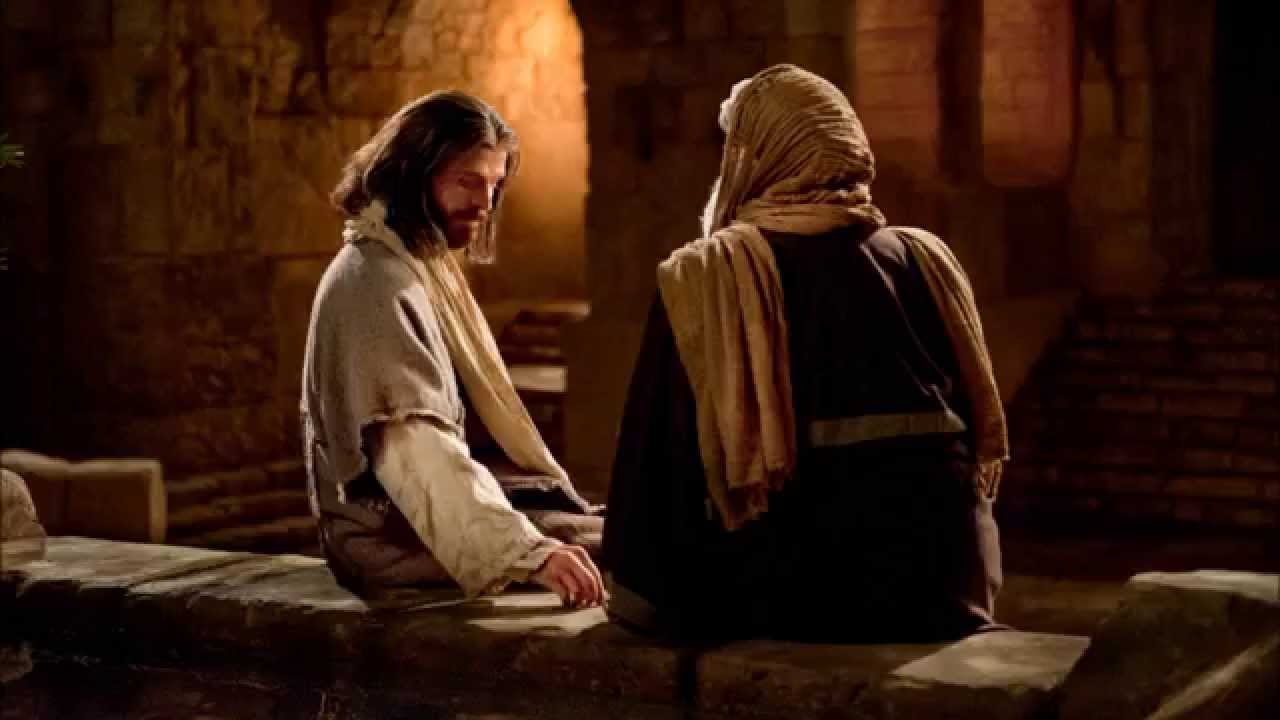
Here are a few things we know about him, and they fit really well with type Five. 1) He was a Pharisee. Pharisees were concerned with doing the right things in the right ways. As a group they were probably a collective One, but they would be very appealing to Fives like Nic. 2) He was a member of the Jewish ruling council – also known as the Sanhedrin. The Sanhedrin was comprised of top lawyers from both the Pharisees and the Sadducees. It was essentially a two party system not that much different than we have today. So Nic was one of the top 70 law experts in the nation. 3) He came to Jesus at night. Why at night? Was he scared? I used to think so. But if I view Nic as a Five, then it makes perfect sense. He wasn’t afraid of the crowds, he just wanted Jesus to himself. He needed that one-on-one time to go deep.

Nic starts up the conversation with Jesus this way:

“Rabbi, we know that you are a teacher who has come from God. For no one could perform the signs you are doing if God were not with him.”

No flattery. No lofty or buttery language. Just right to the point. Respectful, but straight shooting.

Also, notice the scientific language as he opens. We know X because Y. Here’s a hypothesis: Jesus is a Rabbi sent from God. Here’s how we test the hypothesis: Observe the works he is doing. Analysis: No one could perform these signs if they were not from God. Jesus is performing these signs. Therefore, Jesus is from God.


Many Fives approach faith the same way they approach any other aspect of their lives. They tend to be very evidence-based and by-the-book. But they might not be so keen on church small groups or meet and greet time in worship. They want the sermon to be factual and Scripture-driven without a lot of flowery language or stories.

So what does Jesus do? He immediately responds with metaphorical (even poetic) language.

“Very truly I tell you, no one can see the kingdom of God unless they are born again.”

Nic is not tracking with Jesus. He’s trying to take Jesus literally (Can a man enter his mother’s womb a second time? That’s scientifically impossible!). But Jesus is relentless. He starts off with figurative language and then reels it in using Nic’s own worldview against him and exposing the insufficiencies of a purely materialistic approach to faith.

“The wind blows wherever it pleases. You hear its sound, but you cannot tell where it comes from or where it is going. So it is with everyone born of the Spirit.”

You want to talk scientifically, rationally, and logically about God, as if God is a formula? Nic, you can’t even explain the wind, much less God. Even today, we can’t explain everything about the world, atoms, the universe. How much less can we explain the Creator of it all? But we can feel the effects of God all around us.

Fives don’t like that word – feel. Jesus is trying to get Nic to feel something when all he knows how to do is think. God gave us a brain, yes. But he also gave us a heart. (And I know the heart doesn’t actually control our emotions, that’s all in the brain. Just go with it, Fives! Haha)

Nic still isn’t picking up what Jesus is putting down. He’s still asking questions. (Fives are the most inquisitive number on the Enneagram.) So Jesus tries to put it in terms Nic just might finally get.

“You are Israel’s teacher and do you not understand these things? Very truly I tell you, we speak of what we know, and we testify to what we have seen, but still you people do not accept our testimony. I have spoken to you of earthly things and you do not believe; how then will you believe if I speak of heavenly things? No one has ever gone into heaven except the one who came from heaven—the Son of Man. Just as Moses lifted up the snake in the wilderness, so the Son of Man must be lifted up, that everyone who believes may have eternal life in him.”

As far as we can tell, that’s the end of the conversation. Jesus doesn’t give Nic the answers. He gives him homework. Jesus gives Nic a research project. Son of Man – go look into Daniel 7 and figure out who I am. Moses lifted up the snake in the desert – go back to Numbers 21 and see how God saved the people.

TAKING A STAND

And you know what? Nic did his homework. He did his research. He found answers. How do I know? The next time we see him, he’s coming to Jesus’ defense – citing Jewish Law back to the people who would be willing to bend the rules in order to silence Jesus.

Nicodemus, who had gone to Jesus earlier and who was one of their own number, asked, “Does our law condemn a man without first hearing him to find out what he has been doing?”
(John 7:50-51)

This is huge for a Five. When Fives are in health and security, they can draw on the positive energies of Type 8, the Challenger. Fives in this space are more willing to make their voice be heard and to stand up for their beliefs. Eights are concerned about justice and fighting for the underdog. Nic goes to this Eight space because he’s more secure in who he is and what God has called him to do. He get’s chastised and mocked for it, but he doesn’t back down.

FROM GREEDY TO GIVING

The final time we see Nic is at the very end (or what they thought was the end). After Jesus died, he was placed in the tomb of Joseph of Arimathea – another Pharisee and Sanhedrin member. Joseph was joined by Nic in preparing the body for burial. Don’t overlook what it says about Nic.

He was accompanied by Nicodemus, the man who earlier had visited Jesus at night. Nicodemus brought a mixture of myrrh and aloes, about seventy-five pounds.
(John 19:39)

Seventy-five pounds of aloes, oils, and spices?! That’s a ton, and it would have cost a ton, too. The major vice of a Five is avarice (or greed). Fives can tend to be borderline hoarders. Fives will often keep the most random stuff and stockpile it because who know? We might need that someday. Fives can be very stingy with their knowledge, their possessions, their time, and the emotions. Fives keep things to themselves – literally.

When a Five moves to a place of health, they can become some of the most generous people in the world. They no longer operate out of a scarcity mindset. They realize that they have more than they need, and there’s plenty to go around. Healthy Fives can be some of the best teachers and mentors and philanthropists.

Nic, in one last act of faith, offered up probably thousands of dollars worth of burial spices that he had likely been storing away for himself or a family member – because you never know. But then he saw someone else in need of what he had, and he gave it freely.

FROM HEAD TO HEART

Nic wasn’t in the spotlight. He quite literally avoided it. But his transformation is incredibly apparent in such a few verses.

Fives, the greatest distance between two points in your body is not from the top of your skull to the balls of your feet. The longest distance is between your head and your heart. Nic didn’t experience real transformation until Jesus opened up his heart to feeling what God was doing. Sometimes there are no explanations. Sometimes there is insufficient evidence. Are you able to believe anyway? Do you trust God even when it doesn’t make logical sense?

He Did What, Now?

Since you died with Christ to the elemental spiritual forces of this world, why, as though you still belonged to the world, do you submit to its rules: “Do not handle! Do not taste! Do not touch!”? These rules, which have to do with things that are all destined to perish with use, are based on merely human commands and teachings. (Colossians 2:20-22)
********

One thing that amazes me about Jesus is how he straight up doesn’t care about cultural, societal, and even religious norms. Jesus doesn’t operate under the “We’ve never done it that way” banner. Jesus doesn’t care about how we’ve always done it. He came to show us a new way, a better way.

Norms are based on fear – go along to get along, just keep your head down and go with the crowd. I heard this in a presentation recently by some folks from a group called Axis: “The problem today isn’t unanswered questions. The problem is unquestioned answers.” We get ourselves into trouble as a society when we don’t bother questioning the way things have always been – who’s in and who’s out, what’s trendy and what’s taboo. Jesus simply doesn’t play by the same rules. Just when you think you’ve got him figured out, he flips the script.
YOU’RE NOT SUPPOSED TO TOUCH THAT

At the end of Mark 1, we’re briefly introduced to a man. We don’t now much about him. All it really says is that he’ “a man with leprosy.” I wish I knew more – How long did he have the disease? Did he have a wife and kids? What did he do before he got leprosy? How far along was the disease? How bad of condition is he in?
But we do know a couple of things. 1) He had leprosy, or a really bad, really contagious skin disease. 2) He wasn’t supposed to be around people. 3) Nobody who was “clean” was supposed to touch someone with leprosy for fear of catching the disease themselves or being declared “unclean” for a period of time.
There was no cure for leprosy. True leprosy, in fact, isn’t a skin disease per se. It’s a nerve disease. Leprosy affects your sense of touch. You begin to lose feeling in your skin and muscle tissue. It can manifest as a skin disease because lepers will often cut themselves and not know it. The wound then becomes infected and the infection can spread through other parts of the body. Lepers were relegated to their own communities outside of the towns and villages. They were essentially quarantined until they died.
Imagine losing all sense of feeling and not being able to hug your wife and kids, not being able to shake hands or high five or experience human contact in any form. I would go crazy!
So this man breaks all the rules and makes his way to Jesus. “If you are willing,” he said, “you can make me clean.”
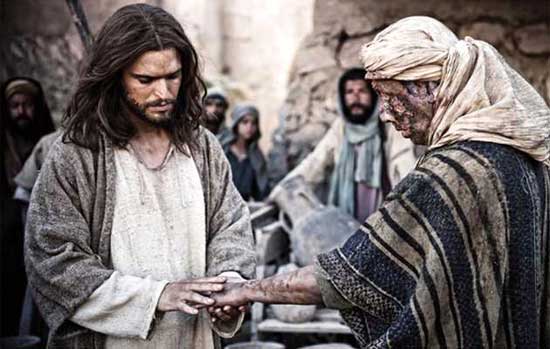
Jesus could have just said the word – but he didn’t. Jesus “reached out his hand and touched the man.” Jesus, you aren’t supposed to touch him! Everyone knows that. Ew…go wash your hands, right now.
Jesus didn’t have to touch the man. Jesus wasn’t supposed to touch the man. But the man needed to be touched. You see, Jesus always placed people before norms and traditions (and even Laws).
YOU’RE NOT SUPPOSED TO SAY THAT

The next story Mark tells is of a paralyzed man whose friends lowered him down through the ceiling of the house where Jesus was teaching. Only true friends will cause vandalism on your behalf.
So there’s this paralyzed man with a newly made spotlight on him, front and center for all to see. Again, Jesus could have just said the word and the man would have been healed. But Jesus says the unthinkable: “Son, your sins are forgiven.”
The gasps would have been audible. The teachers of the law were only saying what everyone else would have been thinking. “Who can forgive sins but God alone?”
Exactly.
The problem is there is no “proof” of sins being forgiven. Anyone could just say it. That doesn’t make it true. Jesus proves the point, though, by saying the word and healing the man. Everyone is shocked, and they rightly conclude, “We’ve never seen anything like this!” Yes, because Jesus doesn’t do or say what we expect him to do or say.
YOU’RE NOT SUPPOSED TO HANG OUT WITH THEM

It gets worse.
Mark then tells the story of Jesus’ encounter with a man named Levi (also known as Matthew). Levi was a tax collector or, as his fellow Jews would call him, a traitor. Tax collectors had literally sold out to the enemy – Rome. The Roman army was occupying the territory of Israel and was using Jewish taxes to pay for their occupation. For a Jew to collect taxes from other Jews to support the occupying army was absolutely reprehensible. You’ll notice that they are even given their own category – “sinners and tax collectors.”
So Jesus goes up to Levi at his tax booth. You would think that Jesus is going to encourage Levi to stop taking money from the Jews to support the Romans, that he should be ashamed of himself, and that he’s on the fast track to hell. But that’s just what we would do, not what Jesus does.
Jesus simply says, “Follow me.”
And Levi does!
That night they throw a big party at Levi’s house, inviting all the other “tax collectors and sinners” to join them. You’ll also notice that parties broke out wherever Jesus went.
This caught the attention of the Pharisees who questioned why Jesus was doing this. What Rabbi in his right mind would be caught dead eating with “those people?”
Jesus simply responds, “It is not the healthy who need a doctor, but the sick. I have not come to call the righteous, but sinners.”
I think Jesus is really throwing shade at the Pharisees, because they would know the passage from Isaiah – “There is none who is righteous, no not one.” We’re all sick in need of healing. We’re all sinners in need of forgiveness. The difference is that the tax collectors and sinners acknowledge their own brokenness and accept Jesus’ ability to fix them. You’ve heard it said, “If it ain’t broke, don’t fix it.” But I tell you, “If you don’t know you’re broken, you can’t ever get fixed.”
WHO DOES HE THINK HE IS?
Here’s the really interesting part about all this.
Where were lepers supposed to go in order to be declared “Clean” again? The Temple.
Where were people supposed to go in order for their sins to be forgiven? The Temple.
Where was the one place “tax collectors and sinners” were prohibited from going? The Temple.
Jesus is the meeting point between heaven and earth, like the Temple was supposed to be. In Jesus, God dwelled among his people. Jesus embodied everything the Temple was supposed to be. Instead of being made unclean, Jesus makes the unclean clean again. Jesus forgives and takes away people’s sins. And if tax collectors aren’t welcome at the Temple, then Jesus will take the Temple to them!
WHO DO YOU THINK YOU ARE?

This shouldn’t be much of a surprise. Not soon after Mark wrote his gospel account, the Temple in Jerusalem would be completely demolished by the Roman army. There hasn’t been a Temple in Jerusalem since the year 70. But just as Jesus took the job of the Temple upon himself, so we, his church, become the living, breathing Temple of God wherever we gather.

Don’t you know that you yourselves are God’s temple and that God’s Spirit dwells in your midst?
(1 Corinthians 3:16)

So what does this mean for us? We should be a place where people are made clean, where the broken are made whole, where sinners find forgiveness and acceptance, where the sick are made well, where the poor and the outcast are full members, and where all the wrong people are united under the one Lord Jesus Christ.
Want to be like Jesus? Touch the untouchable. Forgive the unforgivable. And throw parties with all the wrong people. In other words, be the Temple of God wherever you go.

Who Is This Guy?

We just finished the Christmas season. One of my favorite Christmas hymns is “What Child Is This?” From his conception and birth there was something different about the one they called Jesus. But who is he? What makes him so special?

-WHO IS JESUS?-

I believe that is the most important question you will ever have to answer. And believe me – everyone has an answer for that question. Every single person in the world has their own answer, even if it’s “I don’t know.”

So who is Jesus to you?

You might give the good Sunday school answers: Savior, Messiah, Christ, Lord, King, Son of God, Holy, Perfect, God with Us, Prince of Peace, Friend, Brother, The Word.

He is indeed all this and more. However, do we really understand what those titles and roles actually mean? Probably not. It’s like when you first began to be curious about your dad’s job. When you were young, you probably asked your dad what he did. And he probably told you, but you as a four-year-old had no idea what a proctologist or a regional manager or a vice president of finances was. But you would tell your friends just to impress them.

Hopefully in the coming weeks we will begin to actually understand what those titles actually mean.

-WHO DO PEOPLE SAY THAT I AM?-

There’s an interesting conversation Jesus has with his disciples right in the middle of Mark’s Gospel. He asked them, “Who do people say that I am?” They replied, “Some say John the Baptist; others say Elijah; and still others, one of the prophets.” (Mark 8:27-28)

Who is Jesus from a worldly point of view today? If you were to ask the average Joe off the street what they thought about Jesus, what might they say?

He’s a good teacher. He’s a myth. He’s a prophet. He’s a religious zealot who got himself killed. He’s a Jewish rabbi who became a legend. He’s a nobody.

Basically any answer you would get could start with the word “just.” He’s just ________________. But as we take a look through the Gospel of Mark, we will see that Jesus isn’t just anything. He isn’t even just the Savior, the Messiah, the Son of God. He’s all that and more. Jesus is more than we can ever really grasp. That’s why people had such a hard time figuring him out. Even his closest disciples and friends – even his own family – didn’t really know what to make of him.

-JESUS IS…-

So who is Jesus? We’re going to dive into Mark’s Gospel to find out. But since Mark isn’t too patient in his writing, he spoils the whole thing right off the bat.

The beginning of the good news about Jesus the Messiah, the Son of God…
(Mark 1:1)

Every word of that sentence is loaded. “The beginning” automatically takes our minds back to Genesis 1 – “In the beginning, God created the heavens and the earth.” Mark wants us to know that something new is happening. Creation 2.0 is underway.

“The good news” is a very specific phrase that Mark is using. Our word “gospel” comes from the Old English phrase “good spell,” meaning a good word/news. It’s rooted in the Greek word evangelion, from which we get the word “evangelism.” This was a very familiar concept in the Roman world. Whenever a Roman general was victorious in battle, they would send messengers into the surrounding territories to tell the “good news” about the victory over their enemies. Or if a new emperor took the throne, messengers would go throughout the empire proclaiming the “good news” about the new Caesar, often hailed as a “son of the gods.” Mark uses that word intentionally, signaling that a great victory has been won and a new king is on the throne.

“About Jesus…” Did you know that wasn’t his name? Jesus comes from the Greek-ified (or Hellenized) version of the Hebrew name Yeshua. In English that would be the name Joshua. It was a super common name back then, and it’s still a super common name in our culture. But it’s a powerful name. It means “YHWH saves.” His name is his mission.

“The Messiah” is a term that means “anointed one.” This refers to an anointing ceremony that would set a person aside (sanctify) for a specific purpose – to become king or to achieve a specific task for God and his people, etc. This word is also translated “Christ.”

“The Son of God” is a phrase taken directly from Psalm 2, which was a coronation song in Israel commemorating the crowning of a new king in Jerusalem. In the middle of Psalm 2 God says, “You are my son, today I have become your Father.”

Mark makes it clear from the very beginning who he thinks Jesus is. He’s stating his thesis, and everything to follow is meant as evidence to back up his thesis. This gospel account is crammed full of people trying to figure out who Jesus is, and inviting the reader along on the journey of discovery.

Take the first chapter, for instance. That’s where we will begin. Grab your Bible or Bible app (or click on this link) to read Mark 1:4-39. Try and spot all the times we’re told who Jesus is or what he is doing. There’s also one big question asked about Jesus in chapter 1.

Who is Jesus according to Mark 1?

  • One more powerful than John the Baptist, who will baptize with the Holy Spirit (1:7-8)
  • God’s Son, with whom God is well pleased (1:11)
  • Rabbi, calling his disciples (1:16-20)
  • The Holy One of God (1:24)
  • Exorcist (1:27)
  • Healer (1:30-34)
  • Traveling preacher/miracle worker/exorcist (1:39)

What big question is asked about Jesus in Mark 1?

“What is this? A new teaching—and with authority! He even gives orders to impure spirits and they obey him.”
(Mark 1:27)

When he commanded the demon and drove it out, the people had never seen anything like that. They were completely astonished at Jesus’ authority. You see, it’s one thing to claim to be the Messiah, the Son of God. It’s another thing to back it up with actions that others can see and report on. (We’ll get deeper into that in chapter 2.)

-BE LIKE JESUS-

Mark’s gospel also focuses on what it means to be a disciple of Jesus. We are introduced to Jesus’ first disciples in chapter 1 – Peter, Andrew, James, and John. These two sets of brothers were also professional fishermen. Jesus, a rabbi, called them to be his disciples – and they dropped everything to follow him. The rabbi-disciple relationship was quite unique. We don’t really have anything like that in the US. A disciple was a student, the rabbi was a teacher. But the goal wasn’t just to learn what the rabbi knew. The goal was to live as the rabbi lived and to do what the rabbi did.

Disciples of Jesus should strive to BE LIKE JESUS. Not necessarily to perform miracles and drive out demons. But there are things we can learn from Jesus and imitate in our own lives as his followers. Here’s what I see from chapter 1.

BE BAPTIZED.
Jesus was baptized. His disciples were baptized. He commands others to baptize and be baptized. You should do it, too. In my understanding, the journey of discipleship doesn’t really begin until you commit your life to Christ in the waters of baptism.

KEEP THE MESSAGE SIMPLE.
So often the biggest hinderance in sharing our faith with others is the fear that we don’t know enough. I would disagree with that. Jesus’ first message was as simple as it comes – “The time has come. The kingdom of God has come near. Repent and believe the good news!” You don’t have to deliver a doctoral level thesis paper in order to share your faith with someone. Invite them to church. Tell them what God has done in your life. Let them know that Jesus loves them and that they can experience grace and forgiveness. Keep it simple.

TAKE TIME FOR PEOPLE.
Jesus invested in his disciples. He chose them, he called them, and he shared his life with them. He also took time for people like Peter’s mother-in-law who was sick with a fever. Jesus took her by the hand and healed her. Jesus was never too busy, never too rushed, never too hurried to stop and spend time with people who needed him. Take time for the people who matter most to you. Invest in those relationships.

VALUE YOUR ALONE TIME WITH GOD.
Even in the hustle and bustle of his life, Jesus made time to spend with God. He had to get up very early in the morning to do it, but he prioritized it. Jesus knew that he couldn’t make it through the day without spending time in prayer and worship with God. For so many of us, time is our most precious resource. We just don’t have enough of it. So make sure that God and others are getting the “first fruits” of your time.

DON’T GO WITH THE CROWD.
The disciples found Jesus praying alone and kind of told him off. “Everyone is looking for you!” But Jesus didn’t take the bait. He could have gone back to the crowd, amassed a following, grown in his popularity and celebrity status. But he didn’t. He kept his mission small. I can’t help but think of our culture today. If it could be summed up by one phrase, I think “everyone is looking for you” would be a really good one. We are expected to be available 24/7 via text, Snapchat, or DM. If we get a notification, we better check it and respond immediately. Jesus tells us not to take the bait. If you always give in to the notion that “everyone is looking for you,” then you are giving other people way too much control over your life.
___________________________________

For an excellent introduction to the Gospel of Mark, check out this video by The Bible Project.


Biblical Enneagram Types: TWOS

The Enneagram Type TWO is commonly known as the Helper. Twos have a need to be needed. Hospitality is their jam. They are always ready to play host or hostess at a moment’s notice. There’s always more room at the table with Twos.

Twos are, outwardly, very others-focused. Helpers tend to focus on the emotions and needs of the other people in their lives, often to the neglect of their own needs. Helpers are always wanting to make sure others are taken care of and can be hesitant to make their own needs and desires known. I emphasize the outwardness of their actions because Twos (like many numbers) live in a place of tension between their outward actions and their inward motivations.

Twos will help clear the table and wash the dishes at a friend’s house after the dinner party without being asked. But Twos, especially unhealthy Twos, can be resentful that no one else offered to join in. Twos are in that weird space of appearing humble but acting out of a sense of pride. They want to be needed, they want to help, but they can easily become bitter towards those who don’t help them.

Or to the other extreme, Twos can make themselves indispensable to someone they love and develop an unhealthy codependency. Twos can be enablers of bad behaviors in those they love because they so desperately need to be needed. If you are a Two or are in relationship with someone who is a Two, these are things to look out for.

But we all love the Twos in our lives. It’s no surprise to me that most women who are mothers identify, at least somewhat, as a Two. Mothers are the best example of Helpers in our every day lives. Moms are there for us no matter what. Moms want to make sure that we’ve gotten enough to eat, that our hair is combed, that our jersey is washed, and that our khakis aren’t wrinkled. This has been changing some over the past few decades as gender roles and household norms transform. More husbands/dads are picking up the load and not leaving everything to the wife/mother to do.

I don’t know if my mom is a Two, but when I read the description of what Helpers are like, I think of her and many other great women I know. This is even reflected in the language of Genesis 2 when God creates a “helper” for Adam, one who is suitable and compatible for him.

Do you know who else in the Bible is described as a Helper? God. Check out these descriptions of God:

Blessed are you, Israel! Who is like you, a people saved by the Lord? He is your shield and helper and your glorious sword. Your enemies will cower before you, and you will tread on their heights.
(Deuteronomy 33:29)

But you, God, see the trouble of the afflicted; you consider their grief and take it in hand. The victims commit themselves to you; you are the helper of the fatherless.
(Psalm 10:14)

The Lord is with me; he is my helper. I look in triumph on my enemies.
(Psalm 118:7)

So we say with confidence, “The Lord is my helper; I will not be afraid. What can mere mortals do to me?”
(Hebrews 13:6)

Like all types, Twos have something special of God’s own character within them. Twos came “not to be served, but to serve.” Twos will drop what they’re doing and help you in a moment’s notice.

But because Twos struggle inwardly with pride, their helpfulness can often be tainted by ulterior motives, bitterness, and resentfulness.

The classic story of a Two is found in Luke 10:38-42.

As Jesus and his disciples were on their way, he came to a village where a woman named Martha opened her home to him. She had a sister called Mary, who sat at the Lord’s feet listening to what he said. But Martha was distracted by all the preparations that had to be made. She came to him and asked, “Lord, don’t you care that my sister has left me to do the work by myself? Tell her to help me!”
“Martha, Martha,” the Lord answered, “you are worried and upset about many things, but few things are needed—or indeed only one. Mary has chosen what is better, and it will not be taken away from her.”

Notice a few things. Mary and Martha live together, but who opened their home to Jesus? Martha. Who was making all the preparations? Martha. Who refused to ask her sister for help and let her resentfulness bubble over into an angry outburst? Martha.

Martha, Martha, Martha…

Martha sounds like a classic Two in this story. She’s playing the welcoming, gracious hostess to Jesus and his disciples. There are things to clean and an entire meal to prepare. Martha is definitely up for the challenge, but she can’t do it all on her own. She needs her sister to help. Unfortunately, Mary is nowhere to be found.

Mary, probably a Four, is completely bailing on Martha in order to sit with the guys and listen to Jesus teach. So Martha tattles to Jesus and tries to make him tell Mary to help her out.

Twos are in the Heart Triad. Twos, Threes, and Fours are more image-conscious than the other numbers. For Twos, it’s important to make serving and helping look effortless. Twos are more likely to have magazine-ready center pieces on their dining tables. Twos want everyone to think that they are humble, selfless, and that they’ve got it all together. But the family members of Twos know the reality of the situation.

I would bet you money (if I were a betting man) that this wasn’t the first time Martha had had this “discussion” with Mary.

Twos want to feel appreciated, and they want their efforts to be noticed. They just have trouble making their needs known. Bitterness takes root and grows when needs and expectations are not clearly communicated.

Twos need to learn the lesson that Jesus taught Martha. Only one thing matters – sitting at the feet of Jesus and learning from him. Jesus was a servant! Jesus was a helper! Jesus had a lot of Two in him. But Jesus taught us how to love with no strings attached.

In other words, what good is it if you have perfect table decorations but you miss out on the meal?

Serving is a gift (Romans 12:7). We all need Helpers in our lives. Some of my favorite people are Twos. We have much to learn from you and much to love about you. But we also need you to be real with us. We need you to let us help you. We need you to be open and honest about your feelings before you hold them all in and explode like Martha.

You have loved us and served us. Now let us return the favor. Sit down and take a load off.

__________________________________

If you are a Two, be sure to check out the song “Two” by Sleeping at Last

Biblical Enneagram Types: ONES

Enneagram Type ONES are commonly known as “The Perfectionist,” “The Reformer,” or “The Idealist.” Ones see the world in black and white, with little room for gray. Things are either right or wrong, good or bad, perfect or imperfect. Ones are always in pursuit of perfection as a way of controlling their environment.

Ones will straighten picture frames at a friend’s house.

Ones have a strong sense of justice and are greatly concerned with moral and ethical uprightness. When this is externalized, Ones can be some of the greatest advocates for human rights and positive change in the world. But when it becomes internalized, Ones become their own worst critics.

The world isn’t perfect, so Ones take it upon themselves to help make it better. But when Ones do something wrong they jump to thinking that they are bad, and so their anger and frustration gets directed inward.

Listen to me, Ones. There is a difference between saying “I did something bad” and saying “I am bad.” The first is a true statement that can lead to positive transformation. The second is a lie straight from the devil’s own mouth.

It’s no surprise that the Pharisees in the New Testament are portrayed as a very “One” group. If you just pay attention to the interactions Jesus has with them, you see that the Pharisee sect was very concerned with doing all the right things in the right ways. The Pharisees served as the moral backbone of Jewish society. The problem is that Ones can get a bit carried away with it.

Ones have a tendency to act very judgmentally toward others. Ones are often pointing out others’ faults and saying what others should or should not do. They expect perfection from others, but they can’t even obtain their own standards of perfection.

Can you see why Jesus was trying so hard to break them out of this cycle in regards to religion?

Jesus would say things like, “Unless your righteousness surpasses that of the Pharisees, then you will not enter the Kingdom of Heaven.” That must have really grated on the nerves of those religious elites. How could anyone be more righteous than they were? Can you believe this guy?

In the same sermon Jesus said, “Be perfect, therefore, as your heavenly Father is perfect.” Now that’s the language of a One. That’s something the Pharisees could get behind. But what’s the context of that statement? Loving the unlovable. Accepting those who are imperfect. Welcoming those who don’t have it all together. Investing in those whom you deem “lesser.”

The Pharisees couldn’t stand the things Jesus was saying, but also many Pharisees became his followers. I can see why. Jesus was trying to break them out of this need for moral and religious perfection in relating to God. That flew in the face of everything they were teaching. But once they actually listened to Jesus, they found that the true path to freedom and relationship with God lay not in keeping the laws perfectly but in loving God and others more fully.

I don’t think this effect was more profound on anyone than Saul of Tarsus, who would become Paul the Apostle. Paul is the classic example of a One. His journey is one from severe unhealth (anger, resentment, judgmentalism, perfectionism) to true health (love, acceptance, and service to others).

Listen to Paul’s words in Philippians 3 and tell me this doesn’t sound like the words of a One who has undergone a major transformation.

If someone else thinks they have reasons to put confidence in the flesh, I have more: circumcised on the eighth day, of the people of Israel, of the tribe of Benjamin, a Hebrew of Hebrews; in regard to the law, a Pharisee; as for zeal, persecuting the church; as for righteousness based on the law, faultless.
But whatever were gains to me I now consider loss for the sake of Christ. What is more, I consider everything a loss because of the surpassing worth of knowing Christ Jesus my Lord, for whose sake I have lost all things. I consider them garbage, that I may gain Christ and be found in him, not having a righteousness of my own that comes from the law, but that which is through faith in Christ—the righteousness that comes from God on the basis of faith. I want to know Christ—yes, to know the power of his resurrection and participation in his sufferings, becoming like him in his death, and so, somehow, attaining to the resurrection from the dead.
Not that I have already obtained all this, or have already arrived at my goal, but I press on to take hold of that for which Christ Jesus took hold of me. Brothers and sisters, I do not consider myself yet to have taken hold of it. But one thing I do: Forgetting what is behind and straining toward what is ahead, I press on toward the goal to win the prize for which God has called me heavenward in Christ Jesus.
(Philippians 3:4-14)

Ones are affected early in life by the message that they have to be “good” and do things “right” in order to be accepted. Paul had to learn that there was nothing he could do to earn God’s love. It didn’t matter how impressive his resumé or how solid his theology was. It would never be good enough. He could never be perfect enough.

Ones need to hear and really internalize the truth – you don’t have to be “perfect” in order to be “good.” Even in the very beginning (Genesis 1) God didn’t say his creation was “perfect.” He said it was “good.” There’s a difference.

Paul still struggled daily with the unhealthy habits and patterns of thoughts/behaviors of a One. He still had to fight off that inner critical voice (Romans 7). He still had to remind himself and others that love was the true calling, not religious perfection (1 Corinthians 13). He would still get angry and lash out at those who opposed him or simply refused to listen to his message (see basically the whole book of Galatians and the second half of 2 Corinthians).

But Ones don’t give up. Ones keep going, no matter what. When a One finds his/her true calling, there is nothing that can stand in their way. Paul faced beatings, imprisonments, and shipwrecks, but he was committed to his calling.

Redeemed, healthy Ones can literally change the world.
_____________________________

Be sure to check out the song “One” by the incredibly talented Sleeping at Last.

Messiah Is Coming, pt. 3

God made a covenant with Abraham that all nations would be blessed through his offspring. God made a promise through Moses that he would send the people a Prophet like Moses to speak on behalf of God. God made a covenant with David that his heirs would be enthroned forever in the sight of God.

The reigns of King David and his son Solomon were a kind of golden era for the United Kingdom of Israel. During their rule, Israel grew in strength, in numbers, and in territory. They established a military, a government, and a religion. The capital was moved to Jerusalem, and the Temple was built on the very mountain on which Abraham was commanded to offer Isaac so many years before.

It was during this time that the Psalms became an integral part of Israel’s worship and national identity. The Psalms reminded them of their past and brought hope for their future.

The Second Psalm was written for and recited at the coronation ceremony of Israel’s new kings. Let’s look at it, and see if anything sounds familiar. Pay attention to the words in red.

“I am the One who appointed My king who reigns from Zion, My mount of holiness.
He is the one in charge.”
I am telling all of you the truth. I have heard the Eternal’s decree.
He said clearly to me, “You are My son.
Today I have become your Father.
The nations shall be yours for the asking,
and the entire earth will belong to you.”

(Psalm 2:6-8 | The Voice)

There was a special relationship between God and the kings of Israel. As the Jews awaited the Messiah, which literally means Anointed One, they were looking for an earthly king from the line of David who would be honored, not simply as the Son of David, but as God’s own Son.

But even David himself recognized that the one to come would be far greater than himself. Looking ahead to the future Anointed One, David writes these words:

The Eternal said to my lord,
“Sit here at My right hand,
in the place of honor and power,

And I will gather your enemies together,
lead them in on hands and knees;
you will rest your feet on their backs.”
The Eternal will extend your reach as you rule
from your throne on Zion.
You will be out in enemy lands, ruling.
Your people will come as volunteers that day; they will be a sight to see:
on that day, you will lead your army, noble in their holiness.
As the new day dawns and dew settles on the grass,
your young volunteers will make their way to you.
The Eternal has sworn an oath
and cannot change His mind:
“You are a priest forever—
in the honored order of Melchizedek.”

(Psalm 110:1-4 | The Voice)

This coming King would be greater than David, would be honored as God’s Son, and would even take on the mantel of the priesthood in the order of Melchizedek, King and High Priest of Salem (see Genesis 14).

Prophet. Priest. King. Son of Abraham. Son of David. Son of God. Messiah. Anointed One. Christ.

This is who the Jews were waiting for, longing for, praying for. As their ancestors in Egyptian bondage, so they too were crying out to be released from the grip of Rome. The Messiah would do it. The Messiah would rally his followers, march on Jerusalem, and ascend the throne!

Little did they know or consider the prophetic words composed by David that would become the 22nd Psalm.

My God, my God,
why have You turned Your back on me?

Your ears are deaf to my groans…
My life is poured out like water,
and all my bones have slipped out of joint.
My heart melts like wax inside me.
My strength is gone, dried up like shards of pottery;
my dry tongue sticks to the roof of my mouth;
You lay me in the dust of death.
A throng of evil ones has surrounded me
like a pack of wild dogs;
They pierced my hands and ripped a hole in my feet.
I will speak Your Name to my brothers and sisters
when I praise You in the midst of the community…
He’s not put off
by the suffering of the suffering one;
He doesn’t pretend He hasn’t seen him;
when he pleaded for help, He listened…
They will tell the generations to come
of the righteousness of the Lord,
of what He has done.

The Messiah would be hailed as King of the Jews and Son of God – but only in his death. The Messiah would be pierced by men and forsaken by God. Yet God would not “let his holy one see decay.” The Messiah would be rescued and vindicated by God, beginning a whole new era of love and life and righteousness. The works of God through his Messiah would ripple out into the entire world, like waves in a lake.

The Messiah is Coming.

Messiah Is Coming, pt 2

God promised Abram that he would become a great nation. The only problem was that he and his wife, Sarai, didn’t have any children, and they were well past the child bearing age. God eventually made good on the promise and blessed the elderly couple with a son named Isaac, meaning laughter. God has a sense of humor.

Isaac became the father of Jacob. Jacob became the father of 12 sons whose own offspring would become the 12 Tribes of Israel. Before that, though, they all ended up in Egypt through a series of betrayals, backstabbing, double crossing, and famine. They never intended to stay in Egypt, but that’s just what happened. They never went back home. The subsequent generations, known as the Hebrews, continued to grow in numbers and in strength until a Pharaoh came along who didn’t know about these outsiders. They became enslaved by the Egyptian government, forced into years of hard labor under brutal conditions.

The people cried out for a deliverer, and God heard their cries. God raised up Moses to free his people and lead them to the promised land. They escaped Egypt through a series a plagues. They encamped at the base of Mount Sinai. They ate manna in the wilderness. They were made to live as nomads, wandering the Sinai peninsula for 40 years because they didn’t trust God.

Finally, they were on the edge of entering the Promised Land, the land they had left so many years ago when they were just a small family. Now they are a nation on the brink of seeing God’s promise fulfilled.

But Moses was old. He wasn’t going into the land with them. What would they do without this leader who has guided them for the last 40 years? Who would speak the words of God to them?

Moses gives them this promise:

The nations you’re going to displace seek guidance from people who practice divination and predicting. But the Eternal your God doesn’t want you to do that. He will raise up from among your own people a prophet who will be like me. Listen to him. This is just what you asked Him for on the day you gathered at Mount Horeb: “Don’t make me listen to the voice of the Eternal my God anymore! And don’t make me look at that blazing fire! I’ll die!” The Eternal told me, “They’re right. I’ll send them another prophet like you from among their own people. I’ll put My words in the mouth of this prophet who will tell them everything I command him to say.” (Deuteronomy 18:14-16 | The Voice)

The Prophet is coming.

Moses died and passed the torch on to Joshua who led the people into the land of Canaan. They divided the land and laid down roots. But there was no king, so central government, no true leader. So God raised up a series of Judges who led their tribes in military, religious, and legal matters.

But the people wanted a king. They wanted to be like all the other nations. God warned them what would happen. God wanted to be their King. But he relented and gave them what they wanted. God, through the prophet Samuel, anointed Saul to be the first great king over the united tribes of Israel.

Saul did well for a while, but would ultimately break God’s commands and end up losing his kingdom. Through Samuel again, God anointed a young shepherd boy named David to become the next king after Saul. David was from the town of Bethlehem, of the Tribe of Judah. David was a “man after God’s own heart.”

To David, God made this covenant:

“More importantly, I, the Eternal swear to you that I will raise up a dynasty from your family. When you come to the end of your days, and you leave this life to lie down with your fathers, I will raise up from you a descendant, your own flesh and blood, and I will make his kingdom and family sure. He will be the one to build a temple honoring My name, and I will establish the leadership of his kingdom for all time. I will be to him a father, and he will be to Me a son. When he crosses the line and acts badly, I will teach him with a rod used by people for correction and a lash for discipline. But I will not withdraw My love from him as I did from Saul, whom I set aside in favor of you. Your dynasty, your kingdom, will stand perpetually in My sight; your descendants will rule continually.” (2 Samuel 7:11-16 | The Voice)

The King is coming.

The people of Israel would spend the next thousand years awaiting the Prophet of Deuteronomy and the King, the Son of David, promised in 2 Samuel. The people thought they were looking for two different men. Little did they know this Prophet and King would be one and the same.

The Messiah is coming.

Did Jesus Condone Slavery?

This question on the r/Christianity subreddit sparked quite a controversy in the comments. But I think it’s worth thinking about and trying to get at an answer.

Would Jesus have been in favor of, or at least complicit with the system of slavery?

[TL;DR – NO!]

The unfortunate part of answering this question is that a biblical case can be made both in support of slavery and against it. That’s why both Union and Confederate soldiers could believe they had God on their side. Slave owners and abolitionists both used Scripture to justify their actions and ideologies.

I think we have to start by admitting some things:

  1. Slavery was a part of society and culture basically from the beginning of Scripture. The Israelites were slaves in Egypt. The Israelites were allowed to have slaves/servants (with certain rules and restrictions). The Assyrians, Babylonians, Persians, Greeks, and Romans all had slavery as part of their economic system.
  2. Jesus and his earliest followers did not explicitly fight against the institution of slavery. They did not speak out against it. They weren’t really abolitionists.
  3. Both Paul and Peter addressed slaves and slave masters in their letters, but never encouraged slaves to rebel or run away and never indicated that masters should free their slaves.
  4. As pointed out by one of the commenters (a self-described atheist), the entire letter of Philemon is about Paul sending a runaway slave back to his master.

If that’s all we looked at, then it would seem clear that Jesus, the early Christians, and indeed the Bible and God himself, all condoned and approved of slavery. These are the things atheists will point to as a reason for not taking Scripture seriously.

I don’t have time here to comb the entirety of Scripture. I think the Bible handles slavery like it does war, violence, women, patriarchy, disease, etc. Here’s what I mean by that. War, slavery, and oppression of women were not prescriptive, but rather descriptive. The Bible was not written in a vacuum. The biblical authors were products of their time and place in history. Slavery was a part of the culture, but it didn’t have to be forever. War was a seemingly inevitable part of life, but it didn’t have to be forever. Women were viewed as inferior to men and treated as property, but it wouldn’t have to be that way forever.
Looking specifically at slavery, here’s what we see. In Exodus 21 God gives the Israelites rules and restrictions concerning slaves. They had been slaves themselves in Egypt under cruel, oppressive masters. So they were not to be cruel and oppressive. In fact, God commanded that after 7 years all the slaves were to be set free. And slavery in this case was for economic purposes. The Israelites weren’t invading other lands and dragging people away from their homes in order to buy and sell them off for life. Slaves in Israel were rather like indentured servants. If a man fell on hard times economically, he could go to work for a wealthier family in order to pay down his debt and get back on his feet financially. And after seven years he was allowed to go free.
There were other laws and regulations about taking foreign slaves after winning battles and such. But again, the laws were in place to protect the dignity and wellbeing of the slaves and to restrict the cruelty and violence of the slave owners.
But was slavery intended to be part of the system forever? No. Look at this vision of what would happen when the Messiah came:

The Spirit of the Sovereign Lord is on me,
because the Lord has anointed me
to proclaim good news to the poor.
He has sent me to bind up the brokenhearted,
to proclaim freedom for the captives
and release from darkness for the prisoners,
to proclaim the year of the Lord’s favor
and the day of vengeance of our God,
to comfort all who mourn,
and provide for those who grieve in Zion—
to bestow on them a crown of beauty
instead of ashes,
the oil of joy
instead of mourning,
and a garment of praise
instead of a spirit of despair.
They will be called oaks of righteousness,
a planting of the Lord
for the display of his splendor.
(Isaiah 61:1-3)

Freedom for prisoners, release for captives, mercy for the oppressed, the Year of the Lord’s Favor (i.e. the year of Jubilee, see Leviticus 25). This is what could be expected when the Messiah comes. In fact, Jesus read this very passage at the start of his ministry and boldly pronounced that he was the one Isaiah was talking about.

Slavery had no place in the Kingdom of God as inaugurated by his Anointed One.

Mary knew this would be the case. As the incarnate God developed in her womb, Mary offered a song/prayer known commonly as the Magnificat. Look at what she says right in the middle of it.

He has performed mighty deeds with his arm;
he has scattered those who are proud in their inmost thoughts.
He has brought down rulers from their thrones
but has lifted up the humble.
He has filled the hungry with good things
but has sent the rich away empty.
(Luke 1:51-53)

Mary knew something was about to happen. She knew that God’s kingdom was near. She knew the implications that would have for societies and cultures and economic structures. And she rejoiced that she got to play a role in it.

Like we admitted early, Jesus never really addresses the institution of slavery except to turn all power structures on their heads. Jesus may not have said that slavery is evil and wrong. But he did say that whoever wants to be the greatest must become a slave to all (Matthew 20:27; Mark 10:44). The gospels record Jesus talking about servants much more frequently. But even then, it was mostly in parables describing our relationship with God. God is the “master,” we are his “servants.” But when it came to human power structures, Jesus would say things like “the greatest among you will be your servant.”

As evil as slavery was/is, that wasn’t Jesus’ primary goal. If Jesus only came as an outspoken abolitionist, he wouldn’t have been the Savior of the world. Working toward ending slavery is a fantastic, necessary endeavor, but that’s only a small part of the Kingdom of Heaven.

Here’s the genius of what Jesus was doing. If you set all the slaves free, you ostracize and demonize the slave owners. But if you show how slaves and masters are on equal ground at the foot of the cross, then real lasting change is possible.

One of my favorite lines from any Christmas hymn is this one from “O Holy Night”:

Chains shall He break for the slave is our brother
And in His name all oppression shall cease

So if Christ came to break chains, end oppression, and set us free (among other things), then what did that look like in the early church? Let’s take a look at some of Paul’s and Peter’s letters to see how this played out.

Were you a slave when you were called? Don’t let it trouble you—although if you can gain your freedom, do so. For the one who was a slave when called to faith in the Lord is the Lord’s freed person; similarly, the one who was free when called is Christ’s slave. You were bought at a price; do not become slaves of human beings. Brothers and sisters, each person, as responsible to God, should remain in the situation they were in when God called them. (1 Corinthians 7:21-24)

A few important notes about this passage. Paul encourages slaves to “gain freedom” if they can, but not necessarily to fight and rebel. If you came to faith in Christ as a slave, then you are free in the Lord. If you were a free person, then you are a slave to the Lord. Faith in Christ changes our status among each other. There’s no need to fight for what’s already been given. It’s also important to keep in mind that the earliest followers of Christ still believed that his return was imminent. Christ would be coming back any day now, so they thought. Therefore, let’s not rock the boat too much. We see a lot of things change over time as we progress through Paul’s letters.

Now we come to one of the most incredible passages not just in the Bible but in all of ancient literature:

So in Christ Jesus you are all children of God through faith, for all of you who were baptized into Christ have clothed yourselves with Christ. There is neither Jew nor Gentile, neither slave nor free, nor is there male and female, for you are all one in Christ Jesus. (Galatians 3:26-28)

Paul makes a similar statement a little later, too.

Here there is no Gentile or Jew, circumcised or uncircumcised, barbarian, Scythian, slave or free, but Christ is all, and is in all. (Colossians 3:11)

Paul makes the bold claim that we are all equal in Christ. Race, nationality, gender, language, and socioeconomic status have no bearing on your place in the church. When masters and slaves are worshiping and serving together, that is laying the groundwork for bringing slavery to an end.

Now we need to take a look at the “household codes” found in Ephesians, Colossians, and 1 Peter.

Slaves, obey your earthly masters with respect and fear, and with sincerity of heart, just as you would obey Christ. Obey them not only to win their favor when their eye is on you, but as slaves of Christ, doing the will of God from your heart. Serve wholeheartedly, as if you were serving the Lord, not people, because you know that the Lord will reward each one for whatever good they do, whether they are slave or free.
And masters, treat your slaves in the same way. Do not threaten them, since you know that he who is both their Master and yours is in heaven, and there is no favoritism with him. (Ephesians 6:5-9)

Slaves, obey your earthly masters in everything; and do it, not only when their eye is on you and to curry their favor, but with sincerity of heart and reverence for the Lord. Whatever you do, work at it with all your heart, as working for the Lord, not for human masters, since you know that you will receive an inheritance from the Lord as a reward. It is the Lord Christ you are serving. Anyone who does wrong will be repaid for their wrongs, and there is no favoritism. (Colossians 3:22-25)

Live as free people, but do not use your freedom as a cover-up for evil; live as God’s slaves. Show proper respect to everyone, love the family of believers, fear God, honor the emperor.
Slaves, in reverent fear of God submit yourselves to your masters, not only to those who are good and considerate, but also to those who are harsh. For it is commendable if someone bears up under the pain of unjust suffering because they are conscious of God. But how is it to your credit if you receive a beating for doing wrong and endure it? But if you suffer for doing good and you endure it, this is commendable before God. To this you were called, because Christ suffered for you, leaving you an example, that you should follow in his steps. (1 Peter 2:16-21)

Paul and Peter are trying to reframe the whole hierarchy of human power structures. If you are a slave, you are not working for your master but for the Lord. If you are a master, then you should treat your slaves like you would a brother, or in fact Christ. As Christ submitted himself to human authority, so should we. But as Christ never used his power and authority to oppress others, neither should we.

A quick word about Philemon. Yes, Paul was sending Onesimus, a runaway slave, back to his master, Philemon. But if you actually read the letter, Paul makes it clear that things have changed. Onesimus is not returning as a slave, but as a brother in Christ. Paul urges Philemon to welcome Onesimus back as he would welcome Paul. The slave and the master are brothers. This changes everything.

NEVER, under any circumstances, was it ever stated or even implied that the North American Slave Trade industry was ordained by God or anything but pure evil. Those who used these passages as justification for the atrocities of slavery in the Americas and the British Empire were completely missing the whole point. Using the very words of Jesus (who said not to lord power over others) in order to lord power over others is entirely heretical. It’s a gross abuse of power and Scripture. It’s a sad part of our history as a church and as a nation that there were slave owners who thought God was on their side.

Jesus said, “Whatever you did/did not do to the least of these, you did/did not do it to me.”

Jesus stands with the oppressed. Jesus parties with the marginalized and outcast. Would Jesus approve of or condone slavery? I think the answer is emphatically NO.

Messiah Is Coming, pt. 1

In the beginning God created the heavens and the earth. We know that story. We know its power, its beauty, its wonder. God simply spoke into being all the we see, hear, feel, taste, and smell. At God’s word, galaxies were formed and our planet burst to life with vegetation and wildlife. The crowning jewel of God creation in this opening song of Scripture is man and woman who were created in God’s own image and likeness.

And God saw all that he had made, and it was very good.
God planted a garden in Eden in which the man and woman could live out their calling to “be fruitful and multiply, fill the earth and subdue it.” God placed man in the garden to tend it and protect it. God gave the man a woman as a helper equal to and suitable for him.
And all was right and good and pure and innocent. For a while at least.
Because somehow, God’s good creation was yet susceptible to the influence of evil. The deceiver slithered into the scene, hissing lies and injecting doubts like venom in the bloodstream. The serpent fooled the humans into breaking God’s one rule by making them believe that God was holding out on them.

The woman ate the fruit and then gave it to her husband, and he ate, too. Their eyes were open to the realities of their sin, their nakedness, their shame. They hid from God. For the first time ever they felt unsafe in God’s presence.

Maybe you remember what that was like? The first time you felt like you hadn’t just done something bad but that you were bad? That’s shame.
Every sin has a consequence. From that point on we would be subject to broken relationships – with each other, with the earth, and with God. But God would not leave his children in this helpless state. He would not let that evil serpent win. He would set it all right one day through the woman’s own offspring.

God (to the serpent):
What you have done carries great consequences.
Now you are cursed more than cattle or wild beasts.
You will writhe on your belly forever,
consuming the dust out of which man was made.
I will make you and your brood enemies
of the woman and all her children;
The woman’s child will stomp your head,
and you will strike his heel. 
(Genesis 3:14-15 | The Voice)

God had a plan from the beginning. That last sentence is commonly known as the protoevangelion, “the first gospel.” God would not leave his children in the grasp of the serpent.
The Deliverer is coming.

Fast forward in the story, past the flood, past the tower of Babel, and we’re introduced to a man named Abram (later known as Abraham) who lived in the Mesopotamian city of Ur. Abram was married, childless, and very wealthy. God chose Abram to be an integral part of his great plan to rescue his children from the schemes of the serpent.

Abram, get up and go! Leave your country. Leave your relatives and your father’s home, and travel to the land I will show you. Don’t worry—I will guide you there. I have plans to make a great people from your descendants. And I am going to put a special blessing on you and cause your reputation to grow so that you will become a blessing and example to others. I will also bless those who bless you and further you in your journey, and I’ll trip up those who try to trip you along the way. Through your descendants, all of the families of the earth will find their blessing in you. (Genesis 12:1-3 | The Voice)

Abram would become the father of Isaac. Isaac would become the father of Jacob, who would later be named Israel. Jacob would become the father of Judah, from whose line would come the kings and the Messiah. From one family, all nations would be blessed, all peoples would be rescued from the power of evil. From one family God would work to create one new family, one new humanity.
The Messiah is coming.